Solana: How $30B in staked SOL unlocks new DeFi liquidity

ambcryptoОпубликовано 2026-02-18Обновлено 2026-02-18

Введение

Over $30 billion in staked Solana (SOL) can now be used as collateral on Jupiter Lend without needing to unstake, unlocking significant liquidity for DeFi. This improves capital efficiency and may boost borrowing and trading activity across Solana. On-chain data shows cooling trading volumes are starting to stabilize, with active addresses flattening and whale activity increasing. SOL is testing a key support level around $80. If liquidity expands and whale participation continues, this zone could serve as a reversal point. Solana is at a critical inflection point, with improving fundamentals and a potential price reversal.

Over $30 billion worth of Solana [SOL] is currently staked, earning yield. Until now, however, that capital has been largely excluded from DeFi activity.

Notably, Jupiter, Solana’s leading DEX aggregator, has launched native staking as collateral. The feature is now live on Jupiter Lend, unlocking a significant pool of capital

Liquidity expansion enters a new phase

Staked SOL can now be used as collateral without the need to unstake, improving capital efficiency. By collateralizing staked tokens, yield remains intact while fresh liquidity enters the market.

This development could significantly increase available liquidity across the Solana ecosystem. More collateral means more borrowing, and more borrowing means more trading activity.

Solana may be on the verge of reigniting cooling volumes. According to the recent Volume Bubble Map data, Sol trading activity was flashing cooling signals.

Network activity is slowly reacting

The impact is already visible on Solana on-chain metrics.

Over the last few hours, the recent sharp drop in the number of Active Addresses has started to flatten. Participation is gaining momentum, and traders are returning.

Liquidity typically drives engagement, and in turn, engagement fuels volatility. This sequence now appears to be unfolding in real time.”

Whales position early

Order distribution data shows a large share of activity coming from SOL whales.

That detail matters. When large players position ahead of structural liquidity changes, it often signals strategic intent. Whales move early. Retail follows later.

Their dominance increases the probability of momentum expansion.

$80 demand zone faces the test

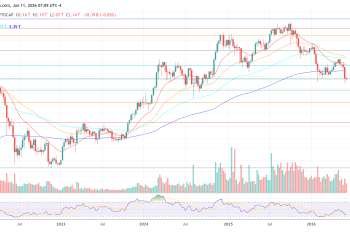
On the daily chart, SOL is testing a key demand zone around $80. That level aligns with pennant support. The confluence strengthens its importance.

If liquidity expands and whale activity persists, the $80 zone could act as a reversal platform. However, if it fails, the structure could weaken and create more room for a further bearish run.

Therefore, Solana’s fundamentals and positioning are improving. The token price is consolidating, and liquidity is being unlocked. Solana now stands at a critical inflection point, with a reversal appearing increasingly likely


Final Summary

  • Jupiter enables native staked SOL as collateral, unlocking $30 billion in capital.
  • Whale orders and active addresses surge as SOL tests $80 support.

Связанные с этим вопросы

QWhat major feature did Jupiter launch on Jupiter Lend to unlock staked SOL for DeFi?

AJupiter launched native staking as collateral, allowing staked SOL to be used without unstaking it.

QHow much value of Solana (SOL) is currently staked and being unlocked for DeFi liquidity?

AOver $30 billion worth of Solana (SOL) is currently staked.

QWhat key price level is SOL testing on the daily chart, and why is it significant?

ASOL is testing the $80 demand zone, which aligns with pennant support, making it a critical level for potential reversal or further decline.

QHow has the recent development affected on-chain metrics like active addresses?

AThe recent sharp drop in active addresses has started to flatten, and participation is gaining momentum as traders return.

QWhy is the activity from SOL whales considered significant in the context of liquidity changes?

AWhales positioning early often signals strategic intent, and their dominance increases the probability of momentum expansion, with retail investors typically following later.

Похожее

Deciphering Circle's Q1 Financial Report: After the Interest Rate Dividend Ebbs, USDC Is Planning a Grand Strategy

Circle's Q1 2026 financial report shows total revenue and reserve income of $6.94 billion, slightly below expectations, with net profit at $550 million, down 15% year-over-year. The company attributes the slowdown in revenue growth to declining reserve asset yields following a Federal Reserve rate cut. However, other revenue streams reached a record $420 million, indicating a diversification away from interest dependence. Key operational highlights include USDC's circulating supply reaching 77 billion, a 28% annual increase, while its on-chain transaction volume surged 263% to $21.5 trillion, showing significantly higher usage frequency. Circle's core RLDC Margin improved to 41%, reflecting better cost control. Looking beyond interest rate reliance, Circle is expanding into new areas. Its Arc Network completed a $2.22 billion ARC token presale at a $30 billion valuation. The company also launched Agent Stack, an infrastructure suite for AI Agent economies, and its Circle Payments Network (CPN) shows an estimated annual transaction volume of $83 billion. The report suggests Circle's strategy is evolving from merely issuing a stablecoin to building USDC into a foundational dollar network for the internet, targeting cross-border payments, enterprise settlement, and the emerging AI-driven economy.

Odaily星球日报6 мин. назад

Deciphering Circle's Q1 Financial Report: After the Interest Rate Dividend Ebbs, USDC Is Planning a Grand Strategy

Odaily星球日报6 мин. назад

The AI Agent Era Accelerates Its Arrival: Questflow Defines a New Paradigm of Financial Intelligence with On-Chain AI Brokerage

The AI Agent era is accelerating, with the CB Insights AI 100 list highlighting global investment confidence. The focus has shifted from whether AI works to its speed of deployment and ability to manage complex workflows, with autonomous AI Agents driving this transformation. At the forefront is Questflow, a Singapore-based startup redefining financial intelligence through its on-chain AI brokerage. Unlike tools that merely provide data dashboards, Questflow deploys AI Agents that proactively scan markets, form judgments, and execute trades via a conversational interface—operating 24/7 without requiring manual confirmation for each decision. This embodies the new AI paradigm of agents capable of executing multi-step workflows autonomously. Questflow's mission is to democratize institutional-grade trading intelligence. Historically reserved for the ultra-wealthy, this capability is now accessible starting from just $1 through Questflow's "AI Clone + Copy Trade" model. The platform charges only a 1% execution fee, aligning its incentives directly with users and eliminating traditional management or performance fees. The timing is opportune, aligning with key trends identified by CB Insights: the scalable deployment of AI Agents, accelerated AI adoption in financial services, and the maturation of on-chain infrastructure. With robust liquidity on platforms like Hyperliquid and Polymarket, alongside advancements in AI reasoning and non-custodial wallet security, Questflow is positioned to merge the roles of broker, fund, and exchange into a single, accessible platform for millions.

链捕手1 ч. назад

The AI Agent Era Accelerates Its Arrival: Questflow Defines a New Paradigm of Financial Intelligence with On-Chain AI Brokerage

链捕手1 ч. назад

Торговля

Спот
Фьючерсы

Популярные статьи

Обсуждения

Добро пожаловать в Сообщество HTX. Здесь вы сможете быть в курсе последних новостей о развитии платформы и получить доступ к профессиональной аналитической информации о рынке. Мнения пользователей о цене на SOL (SOL) представлены ниже.

活动图片