Sharplink’s 15,464 ETH staking milestone sparks fresh debates: Details

ambcryptoОпубликовано 2026-03-19Обновлено 2026-03-19

Введение

Sharplink has reached a significant milestone by earning 15,464 ETH (approximately $36 million) in staking rewards since launching its Ethereum treasury strategy. Unlike simply holding ETH, the firm stakes nearly all its 868,699 ETH to generate yield, creating a compounding effect. This approach differs from Bitmine, which holds a much larger amount of ETH (3.81% of total supply) but focuses on market presence rather than yield generation. The strategy has drawn criticism from some community members who argue that Sharplink is using staking to recover losses rather than attract new capital. Despite this, SharpLink’s stock has risen over 25% in the past month. Meanwhile, Ethereum’s price has seen mixed movement, with strong institutional demand through ETF inflows but conflicting on-chain signals. Ultimately, Sharplink’s model emphasizes reward accumulation over pure price appreciation, though some view it as a short-term recovery tactic rather than sustainable growth.

While much of the market focuses on Ethereum’s price swings, Sharplink is showing that institutional players are increasingly paying attention to yield generation instead.

The firm has crossed an important milestone, earning 15,464 ETH (about $36 million) in total staking rewards since launching its Ethereum [ETH] treasury strategy.

Rather than simply holding ETH, Sharplink is using staking to continuously grow its holdings. In the past week alone, its validators generated 493 ETH, worth over $1.1 million.

This approach allows the company to earn additional ETH over time, creating a compounding effect.

How is Sharplink’s strategy different from Bitmine’s?

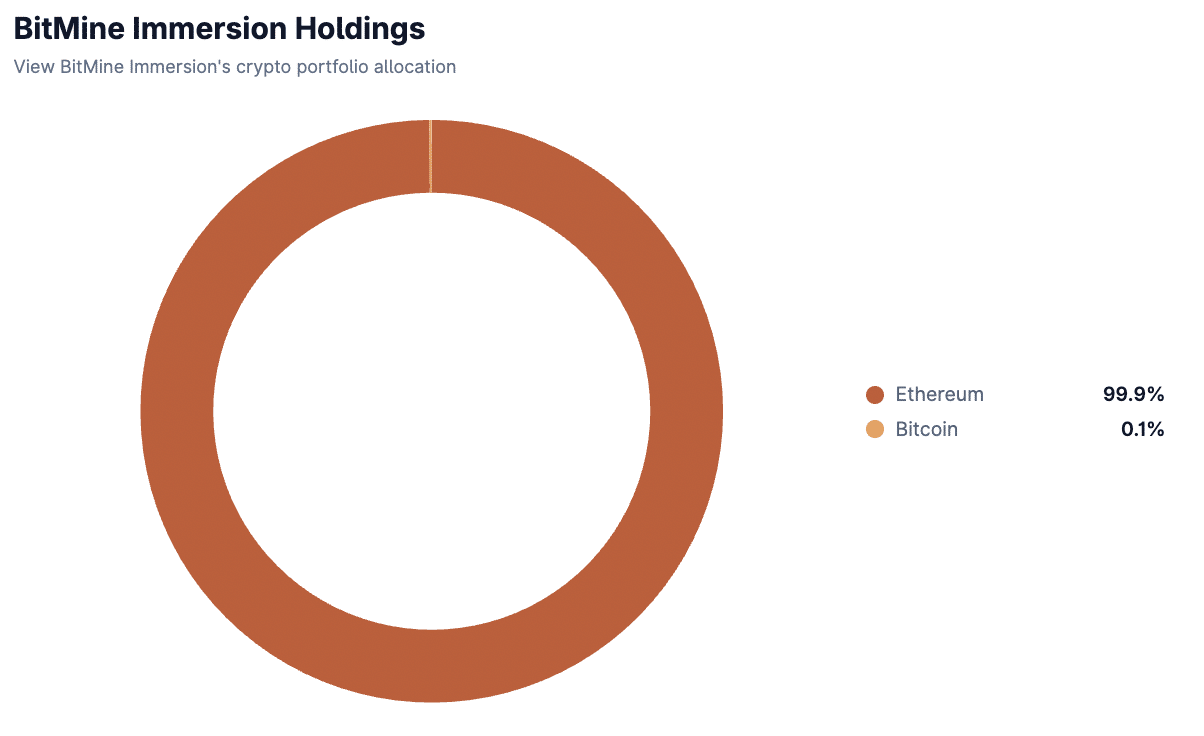
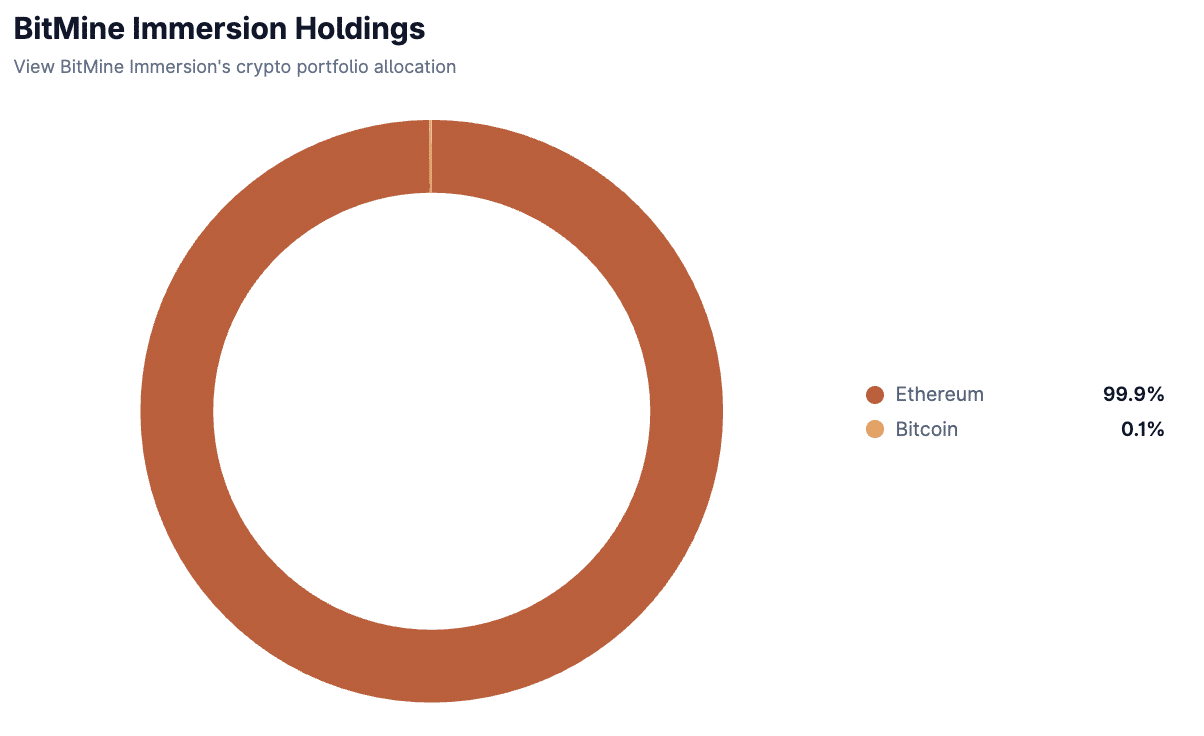
The difference in scale between the two companies is significant. Bitmine currently holds 4,595,562 ETH, which is about 3.81% of Ethereum’s total supply.

In comparison, Sharplink holds 868,699 ETH, or roughly 0.72% of the total supply, making its treasury much smaller.

However, the key difference is how they use their Ethereum. Bitmine focuses on maintaining a large presence in the market, while Sharplink follows a more aggressive strategy by staking almost all of its ETH to generate yield.

This means Sharplink tries to earn as much reward as possible from its holdings instead of simply holding them.

Community mocks Sharplink

However, this strategy has faced a lot of criticism. Some users on X argue that Sharplink is trying to recover losses through staking rewards rather than bringing in new capital.

Remarking on the same, an X user said,

At this rate, it’ll only take about ~33 years to double their total ETH. But seriously, $SBET has to start thinking out of the box or merge with $BMNR to survive.

Echoing similar sentiments, another user questioned,

Why dont you keep buying eth at these prices?

This coincides with SharpLink’s stock trading at $8.31, reflecting a 1.34% daily increase and a gain of more than 25% over the past month, according to Google Finance data.

Ethereum’s market dynamics

Meanwhile, Ethereum was currently trading around $2,331.06, showing a small 0.81% daily increase but a stronger 17% gain over the past month. At the same time, the market environment around ETH is somewhat mixed.

On the institutional side, demand remains strong. Spot Ethereum ETFs have been recording steady inflows since the 10th of March, including a large $138.2 million inflow on the 17th of March.

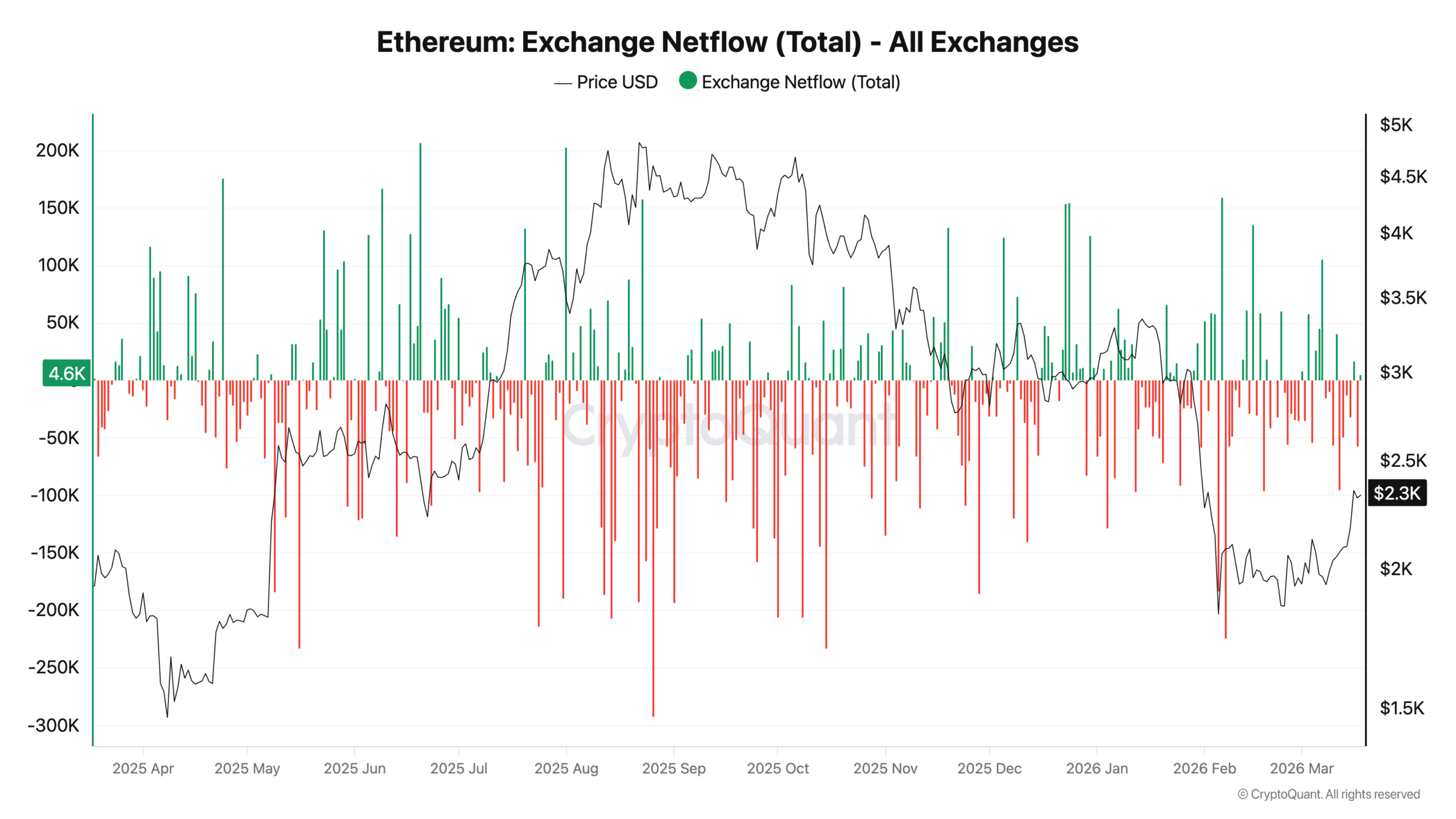
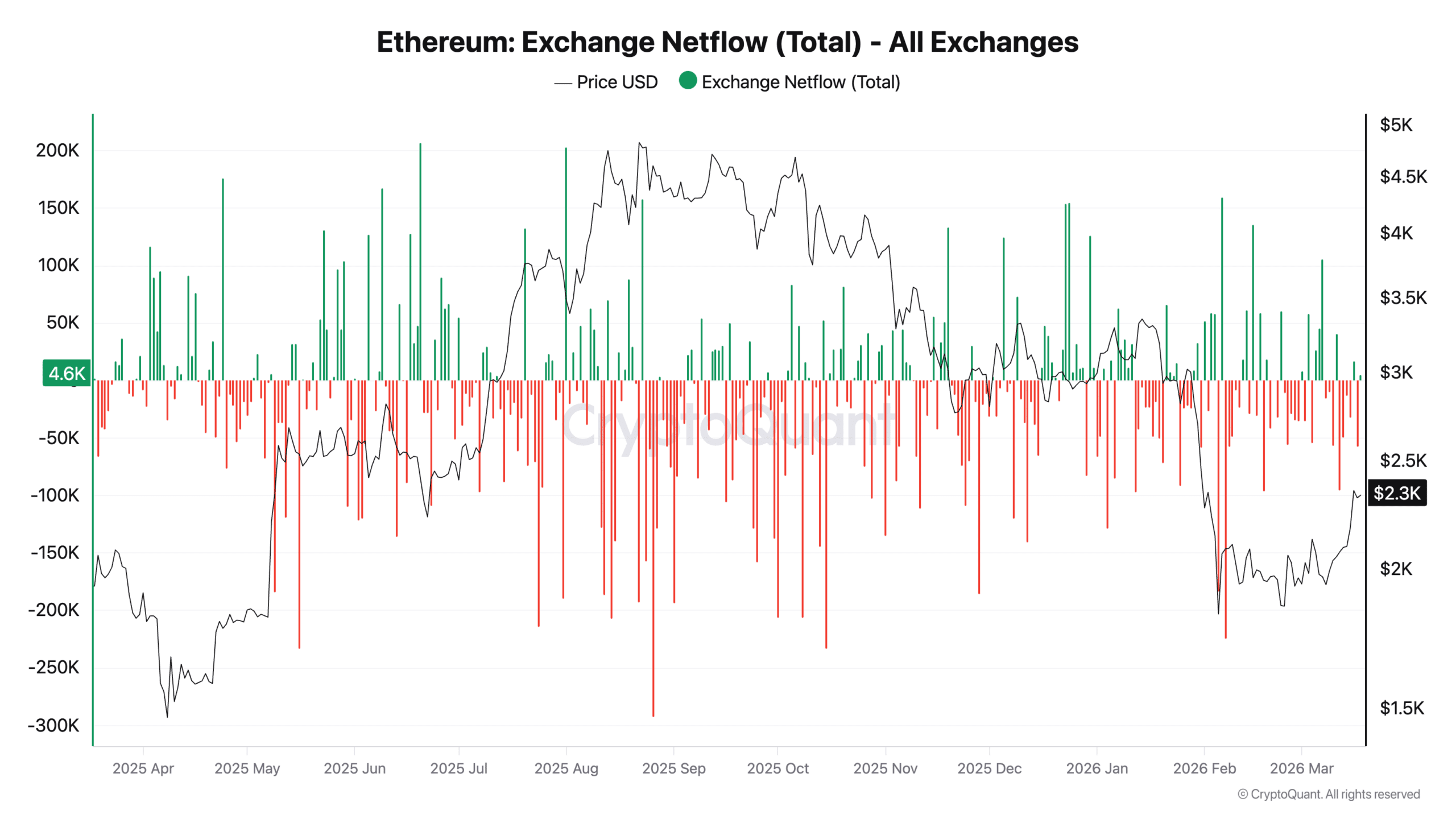
However, on-chain data tells a more confusing story. Since mid-2025, exchange netflows have mostly been negative, meaning investors are moving ETH off exchanges and into private wallets.

Normally, this is considered bullish because it reduces the amount of ETH available for selling.

But despite these large outflows, ETH’s price fell sharply in early 2026, showing that exchange supply alone is no longer driving price movements.


Final Summary

  • By staking nearly all of its ETH, the firm is trying to grow its holdings through compounding rewards rather than relying only on price appreciation.
  • Some observers believe Sharplink’s staking-heavy strategy may be an attempt to offset a high purchase price rather than a long-term growth model.

Связанные с этим вопросы

QWhat milestone has Sharplink recently achieved with its Ethereum staking strategy?

ASharplink has earned 15,464 ETH (approximately $36 million) in total staking rewards since launching its Ethereum treasury strategy.

QHow does Sharplink's Ethereum strategy differ from Bitmine's approach?

ASharplink follows a more aggressive strategy by staking almost all of its ETH to generate yield and earn rewards, while Bitmine focuses on maintaining a large market presence by holding a significant amount of ETH without staking it all.

QWhat is one major point of criticism from the community regarding Sharplink's strategy?

ASome users on X argue that Sharplink is trying to recover losses through staking rewards rather than bringing in new capital, with one user noting it would take about 33 years to double their total ETH at the current rate.

QWhat does the on-chain data show about Ethereum exchange netflows since mid-2025?

ASince mid-2025, exchange netflows have mostly been negative, meaning investors are moving ETH off exchanges and into private wallets, which is normally considered bullish but has not prevented price declines in early 2026.

QWhat is the current trading price of Sharplink's stock and its recent performance?

ASharplink's stock is trading at $8.31, reflecting a 1.34% daily increase and a gain of more than 25% over the past month.

Похожее

Three Months, 35 Billion Yuan: Investors Rush to Grab the OpenAI of the Physical World

Investors flock to a physical AI startup as the race for the "OpenAI of the physical world" heats up. Ji Jia Shi Jie (GigaWorld), a company dedicated to developing Artificial General Intelligence (AGI) for the physical world, has raised 3.5 billion RMB (approximately $490 million) in just three months, according to a report from investment media outlet Touzijie. The latest B2 funding round of 1 billion RMB attracted a wide range of top-tier investors, including sovereign wealth funds, industrial capital, and financial institutions. This brings the total funding for the young company, now valued over 10 billion RMB, to 3.5 billion RMB across three recent rounds. The company is led by Huang Guan, a post-90s Tsinghua University PhD with extensive experience in AI, autonomous driving, and entrepreneurship. Its core innovation is a "dual-pyramid" system comprising a five-layer data pyramid (from internet videos to real-world robot data) and a three-layer algorithm pyramid focused on world simulation, action alignment, and reinforcement learning. This system underpins its key models: the "World Action Model" (e.g., GigaBrain series for robot control) and the "World Generation Model" (e.g., GigaWorld series for simulating and understanding the physical world). Its models have reportedly achieved top rankings in global robotics benchmarks. Ji Jia Shi Jie argues that while current digital AGI excels in information processing, the next frontier is physical AGI—systems that can understand and interact with the real world. The company believes the field is approaching its "GPT-3 moment," a key inflection point in capability scaling. To achieve this, the company is pursuing a dual-market strategy. For the consumer (C) market, it launched the "SeeLight" brand and its S1 general-purpose humanoid robot, which has secured initial orders for deployment in real homes. For the business (B) market, it focuses on industrial automation with its Maker series robots, having signed agreements for large-scale deployment in factories, and its DriveDreamer world model for autonomous driving, which is already in use with over 30 automakers and tech companies. The report concludes that by bridging the gap between digital intelligence and physical action, Ji Jia Shi Jie aims to unlock a new wave of productivity, ultimately bringing physical AGI into everyday life.

marsbit5 мин. назад

Three Months, 35 Billion Yuan: Investors Rush to Grab the OpenAI of the Physical World

marsbit5 мин. назад

What's the Connection Between Pinduoduo's Huang Zheng and Blockchain?

This text explores the unexpected connection between Pinduoduo founder Colin Huang and blockchain, as suggested in his article *Turning Capitalism Upside Down*. Huang argues Pinduoduo's core business is about managing "uncertainty." He posits that wealth flows to the rich because they absorb life's uncertainties (e.g., illness, job loss) that devastate the poor, who pay a premium for certainty through insurance or stable prices. Pinduoduo's model attempts a "reverse insurance": by aggregating consumer demand via group-buying and flash sales, it creates a large, predictable order for manufacturers. This certainty allows factories to remove risk premiums, passing savings back as lower prices, thus partially reversing the wealth flow. The key obstacle, Huang notes, is that an individual's buying intent is an unreliable promise. He then asks if blockchain is the natural solution for this "reverse insurance." The text elaborates that blockchain, through smart contracts with binding deposits, could transform casual intent into a costly-to-break, enforceable commitment. This replaces interpersonal trust with coded rules, making promises credible, pricable, and resistant to fraud. Finally, the author draws a parallel to Bitcoin, framing two paths to creating certainty: the "Pinduoduo path" of aggregating decentralized will into scale, and the "Bitcoin path" of locking rules into immutable code. Both sacrifice something—personal freedom or system flexibility—to manufacture trust and predictability.

链捕手1 ч. назад

What's the Connection Between Pinduoduo's Huang Zheng and Blockchain?

链捕手1 ч. назад

The Storage Magnate Who Conquered a Trillion-Dollar Kingdom, Yet Ultimately Could Not Become the Richest

**Summary:** "The Memory Magnate Who Built a Trillion-Dollar Empire, Yet Never Became the Richest" explores the journey of Zhu Yiming, founder of GigaDevice (603986) and co-founder of the soon-to-IPO ChangXin Memory Technologies (CXMT). The article positions GigaDevice, a fabless chip designer now valued at ~¥340 billion, as a prequel to the massive IDM (Integrated Device Manufacturer) venture, CXMT. Starting in 2005 with minimal capital, Zhu strategically "picked up the pieces" by focusing on niche markets like NOR Flash and microcontrollers (MCUs), areas major players were exiting. This allowed GigaDevice to grow into a diversified semiconductor company, maintaining robust profitability even during industry downturns by controlling costs. However, the piece argues that in the highly cyclical and capital-intensive memory chip industry, the fabless model has limits. True resilience and scale require the ability for "counter-cyclical expansion" – investing heavily during downturns – a tactic only possible for IDMs like Samsung or SK Hynix. This insight led Zhu to partner with the Hefei city government in 2016 to establish CXMT, an IDM focused on DRAM. Zhu's symbolic moves, like forfeiting salary and diluting his equity, were crucial in securing the massive state and bank funding needed. CXMT's equipment base is now valued even higher than that of BYD's vast auto manufacturing empire. Despite the potential for CXMT to reach a market cap of ¥1-2 trillion upon its IPO, Zhu's indirect stake in both companies is estimated below 3%, placing his personal wealth far below that of China's top billionaires. The article concludes that his strategic vision built a trillion-yuan memory landscape, but the capital structure necessary to achieve it precluded a personal fortune of similar scale.

marsbit1 ч. назад

The Storage Magnate Who Conquered a Trillion-Dollar Kingdom, Yet Ultimately Could Not Become the Richest

marsbit1 ч. назад

XRP Ledger Daily Fees Drop Below $400 As Network Activity Question Returns

The XRP Ledger is drawing attention as daily network fees have fallen below $400. While low fees align with XRPL's design for affordable transactions and are often seen as a strength, the metric can also serve as an indicator of network demand and paid transaction volume. This data point of around $3,100 in weekly fee burn highlights the stark contrast with higher-fee chains like Ethereum and Bitcoin. The development fuels an ongoing debate. Proponents view low fees as a sign of efficiency and accessibility, while critics may question if the network is generating sufficient high-value activity relative to its market cap and payments-focused narrative. The article cautions against overstating the finding, noting a single low-fee day does not signify network failure. It instead adds context to discussions about XRPL's usage, especially alongside Ripple's broader initiatives in stablecoins (RLUSD), AI payments, and enterprise infrastructure. The report recommends monitoring for a fee rebound, checking transaction counts for a fuller picture, and confirming the trend via native explorers like Bithomp. It frames the story within a larger market shift where on-chain data, protocol updates, and infrastructure developments are becoming crucial alongside price action. The editorial stance is to present the verified data, explain its significance for assessing network activity, and avoid hype, positioning it as part of the daily crypto conversation.

bitcoinist6 ч. назад

XRP Ledger Daily Fees Drop Below $400 As Network Activity Question Returns

bitcoinist6 ч. назад

Торговля

Спот
Фьючерсы

Популярные статьи

Manyu: восходящая мем-звезда на Ethereum, готовая открыть новую эру культуры Shiba

Manyu - это мемтокен на Ethereum, который приносит децентрализованную культурную и развлекательную ценность через вирусное влияние в соцсетях и вовлечённость сообщества.

2.0k просмотров всегоОпубликовано 2025.11.27Обновлено 2025.11.27

Manyu: восходящая мем-звезда на Ethereum, готовая открыть новую эру культуры Shiba

Неделя обучения по популярным токенам 14: Glamsterdam — самое ожидаемое обновление Ethereum в 2026 году

Ordinals/Runes по-прежнему стимулируют доходы от комиссий за блоки и активность разработчиков, рассматриваются как отправная точка «нативной эмиссии активов» в сети.

1.5k просмотров всегоОпубликовано 2026.04.29Обновлено 2026.04.29

Неделя обучения по популярным токенам 14: Glamsterdam — самое ожидаемое обновление Ethereum в 2026 году

Обсуждения

Добро пожаловать в Сообщество HTX. Здесь вы сможете быть в курсе последних новостей о развитии платформы и получить доступ к профессиональной аналитической информации о рынке. Мнения пользователей о цене на ETH (ETH) представлены ниже.

活动图片