Автор: Coingecko
Перевод: Felix, PANews
После бурного конца 2025 года биткоин продолжил колебаться и падать в начале 2026 года. В то же время геополитические и макроэкономические события способствовали росту цен на золото, серебро и, в последнее время, на нефть. Поскольку криптовалюты как класс активов продолжают получать широкое признание, многие инвесторы с Уолл-стрит, возможно, переживают свой первый медвежий рынок криптовалют. Coingecko изучила эффективность криптовалют по сравнению с другими традиционными классами активов в начале 2026 года.
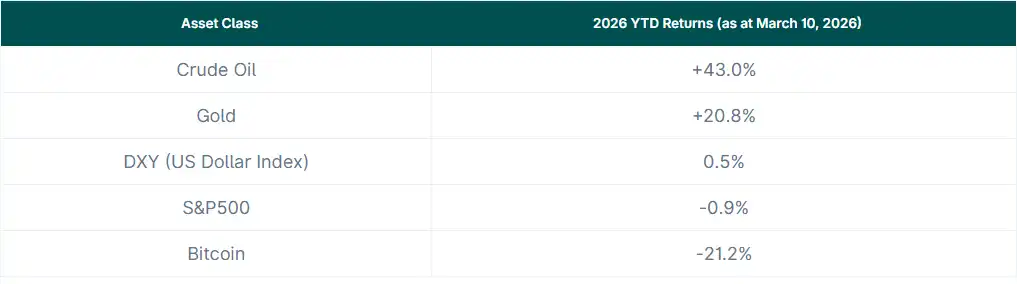
С началом войны в Иране в 2026 году цены на нефть росли быстрее, чем все другие классы активов.
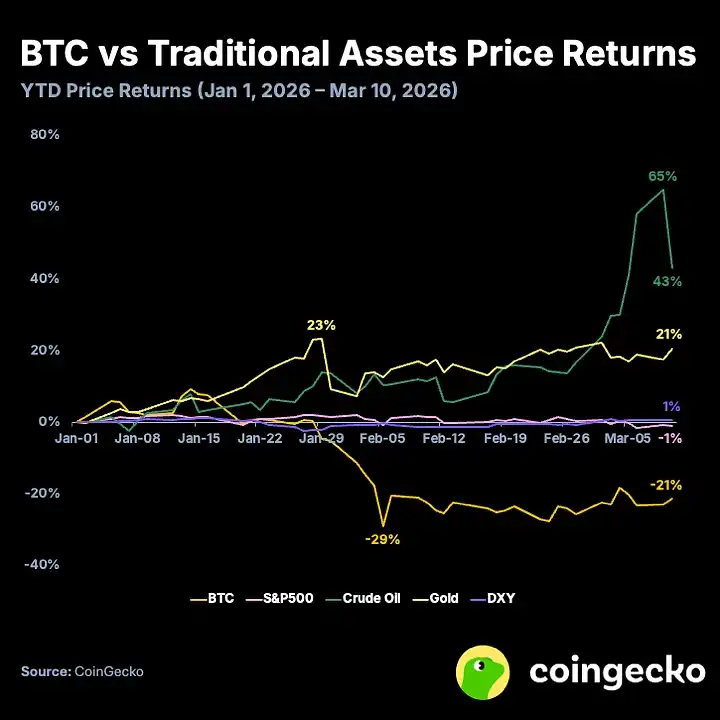
С начала 2026 года цены на нефть медленно росли на фоне эскалации напряженности на Ближнем Востоке и дефицита поставок на ключевых рынках. Однако ситуация достигла пика, когда 28 февраля США и Израиль нанесли новый удар по Ирану. Цены на нефть в ходе внутридневных торгов достигли 119,48 долларов, в то время как в начале года они составляли всего 57,41 доллара.
Между тем, цена биткоина продолжала снижаться в 2026 году, что сделало его худшим по эффективности классом активов на сегодняшний день. Однако с начала марта биткоин, похоже, нашел поддержку в диапазоне от 65 000 до 75 000 долларов, после того как в начале февраля он упал до минимума в 62 800 долларов. Американские спотовые биткоин-ETF с конца февраля показали сильный приток средств (чистый приток с 20 февраля составил 1,9 млрд долларов, но с начала года все еще наблюдается отток в размере 828,9 млн долларов), в то время как Strategy продолжает свой обычный ритм покупок, вложив с начала года 5,6 млрд долларов.
С начала 2026 года криптовалюты показали лишь умеренную корреляцию с S&P 500 и золотом, что, возможно, является сигналом того, что класс активов в конечном итоге начинает «отделяться».
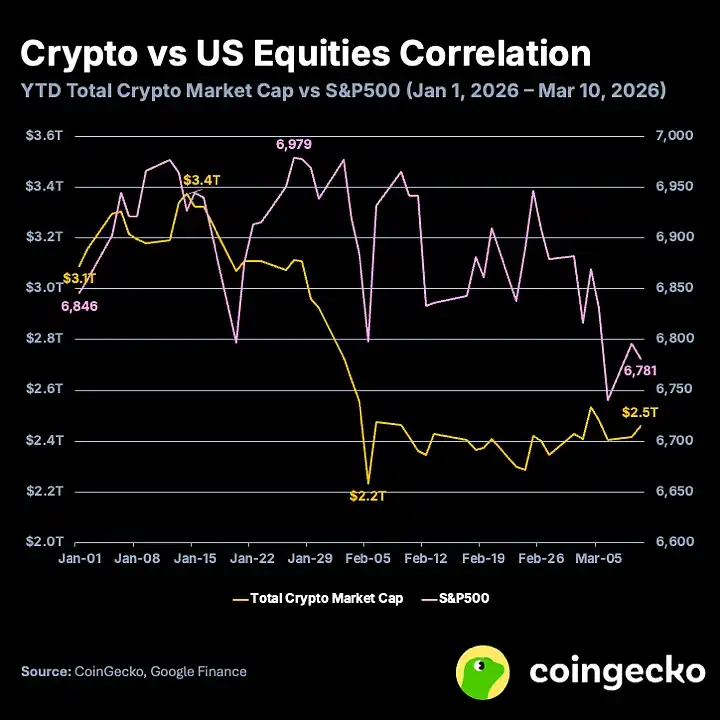
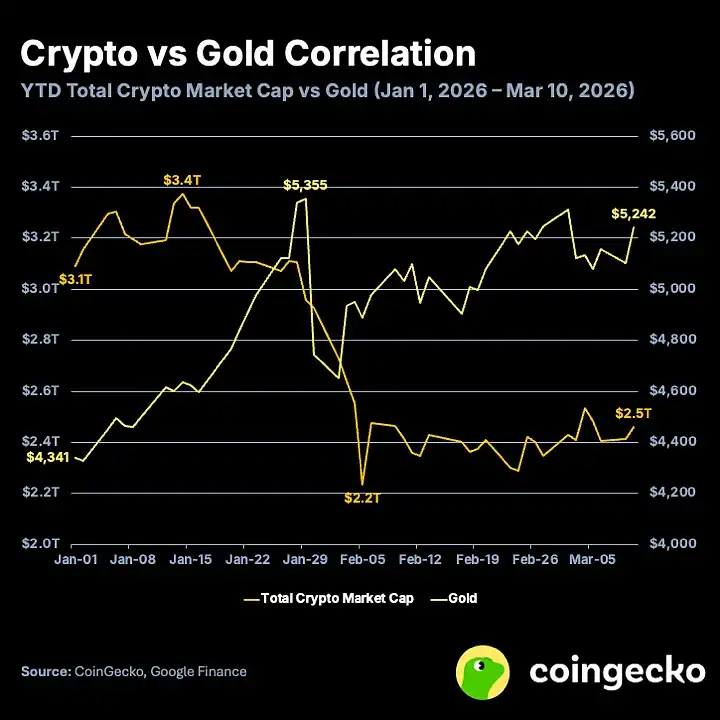
С начала года корреляция между общей рыночной капитализацией криптовалют и индексом S&P 500 составила 0,49, что указывает на умеренную положительную корреляцию, аналогичную ситуации в 2025 году (годовая корреляция тогда составила 0,46). С другой стороны, корреляция криптовалют с золотом с начала года изменилась до -0,69, что указывает на умеренную отрицательную корреляцию. В 2025 году корреляция криптовалют с золотом составляла всего 0,19, показывая слабую корреляцию или ее отсутствие. В совокупности это говорит о том, что криптовалюты как класс активов избавляются от давнего восприятия как чисто рискового актива, поскольку они отделяются от американских акций.
Американские акции, представленные индексом S&P 500, также столкнулись со значительным сопротивлением в 2026 году. Несмотря на растущие инвестиции в область ИИ и в целом сильные экономические и отчетные данные, индекс с начала года фактически снизился. Геополитическая напряженность, несомненно, сыграла свою роль, но сохраняющаяся неопределенность относительно влияния ИИ на будущую экономику и рабочую силу также спровоцировала «SaaS-апокалипсис». С начала года рыночная капитализация публичных программных и SaaS-компаний сократилась на 1,3–1,5 трлн долларов, а вместе с ней значительно снизились форвардные коэффициенты P/E и доходности.
Кроме того, золото продолжило свой сильный восходящий тренд с 2024 года, с начала года прирост составил более 20%. Золото традиционно рассматривается как надежное средство сбережения стоимости и защитный актив, но из-за стремительного роста цен в настоящее время демонстрирует более высокую волатильность. Постоянное геополитическое и макроэкономическое давление продолжает подпитывать его восходящий импульс, как розничные трейдеры, так и суверенные государства активно покупают.
Читайте по теме: Анализ опционов BTC: почему 20 марта является ключевым поворотным моментом для волатильности?
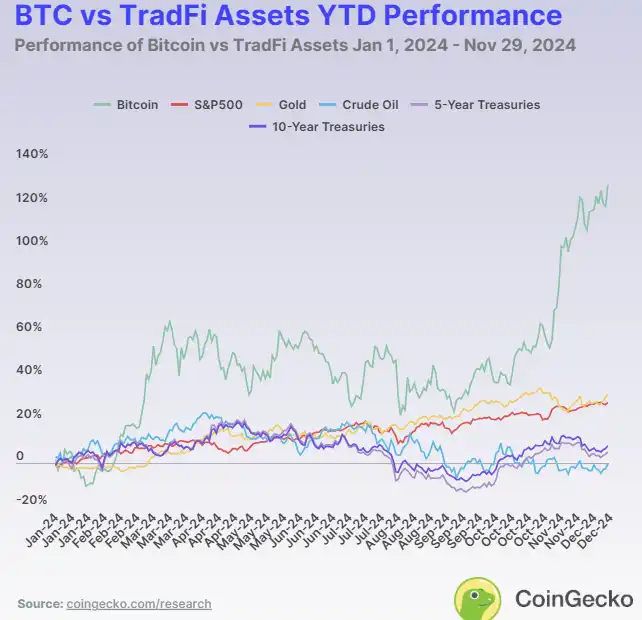
Эффективность в 2026 году кардинально отличается от 2024 года. Для справки, ниже приведены показатели биткоина и других классов активов за 2024 год (опубликовано в декабре 2024 года).
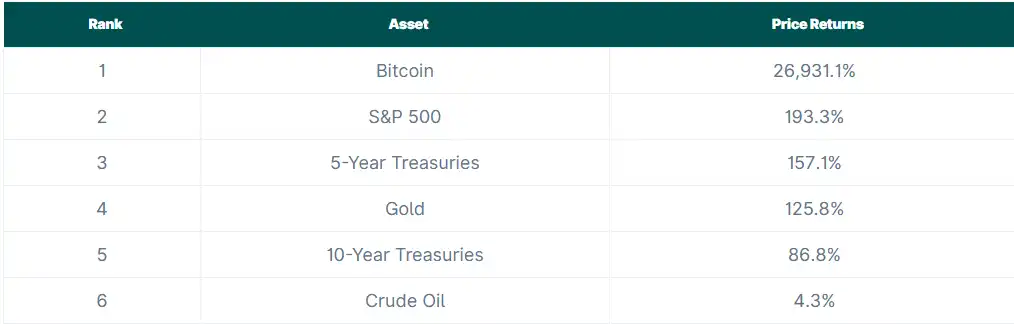
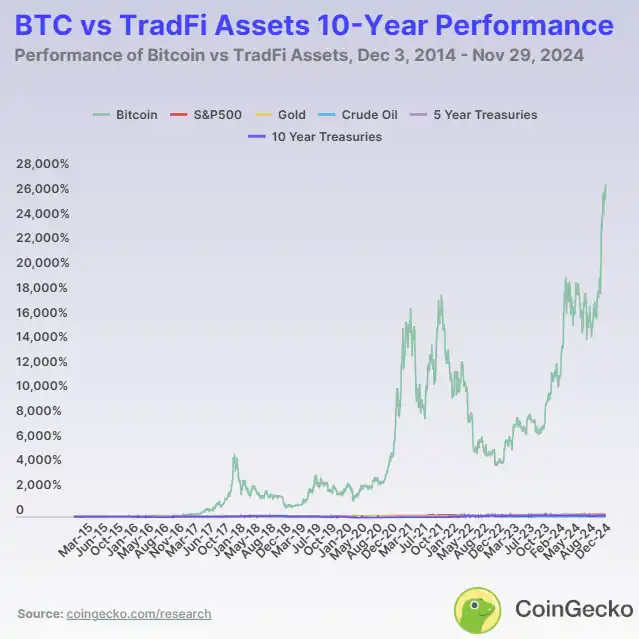
Биткоин, прозванный «магическими интернет-деньгами», возможно, стал законным инвестиционным активом наравне с традиционными активами, такими как акции, товары и облигации. С точки зрения 10-летней доходности биткоин впечатляет с показателем в 26 931,1%. Представьте себе: 100 долларов, вложенные в 2014 году, сегодня превратились бы в 26 931,1 доллара. Хотя эти цифры поражают воображение,同样 важно оценить его эффективность по сравнению с другими активами в краткосрочной и долгосрочной перспективе.
Какой актив показал лучшие результаты в периоды с начала года, за 1 год, 3 года, 5 лет и 10 лет?
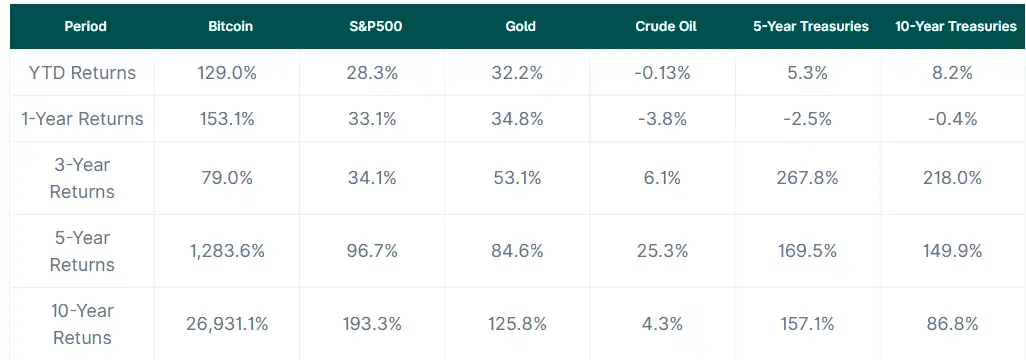
Эффективность за разные периоды времени раскрывает сильные и слабые стороны каждого актива. В 2024 году биткоин был самым эффективным активом с доходностью 129,0%. За ним следовало золото с доходностью 32,2% с начала года, демонстрируя свою надежность как традиционное средство сбережения стоимости. Индекс S&P 500 оставался strong, с доходностью 28,3%. Однако цены на нефть упали, показав доходность -0,13%, в то время как казначейские облигации США обеспечили modest доходность: 5,3% для 5-летних и slightly выше, 8,2% для 10-летних.
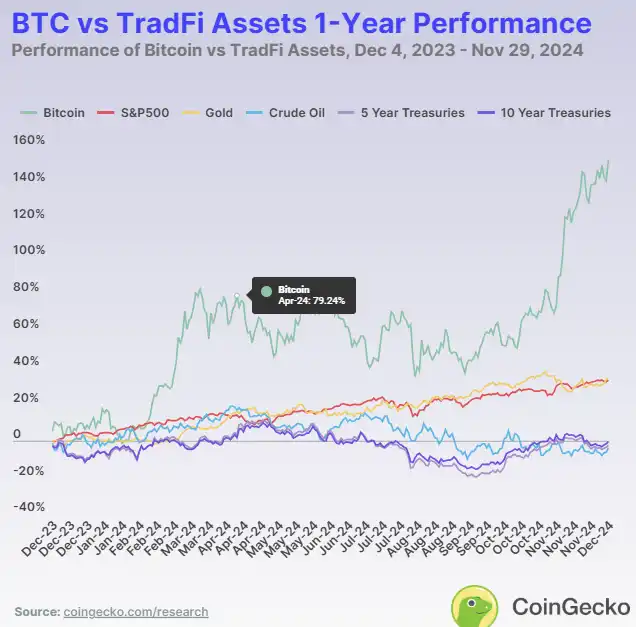
За 1-летний период биткоин продолжал outperforms другие активы с доходностью 153,1%. Золото показало доходность 34,8%, за ним следует S&P 500 с 33,1%. Сильные показатели этих трех активов демонстрируют стабильность рынка за последний год. Однако казначейские облигации оказались более чувствительны к экономическим изменениям, с доходностью -4,3% для 5-летних и -2,6% для 10-летних облигаций. Эти цифры показывают, как облигации колеблются в зависимости от процентных ставок и фискальной политики.
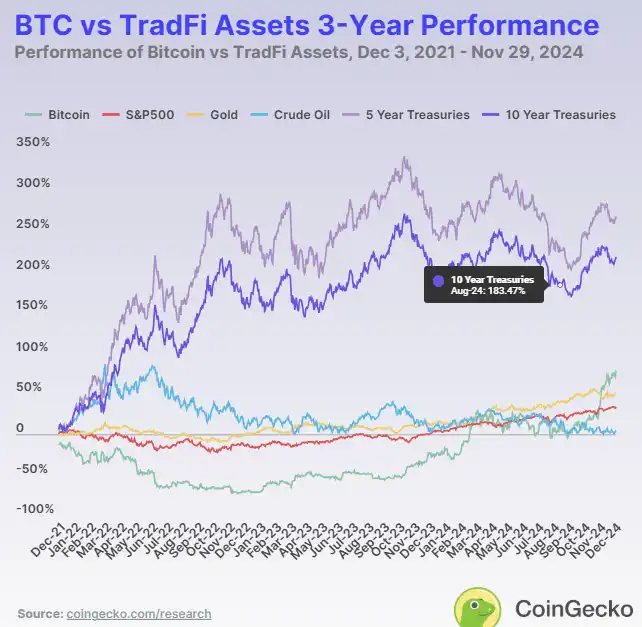
В 3-летнем периоде картина рыночной эффективности изменилась, и облигации стали лидерами по мере того, как экономическая стабильность приобрела большее значение. Среди них лидировали казначейские облигации США: доходность 5-летних облигаций составила 267,8%, а 10-летние облигации closely следуют с доходностью 218%. Биткоин также показал excellent результаты за тот же период с доходностью 79%, в то время как золото заняло второе место с稳健ой доходностью 53,1%, обеспечивая определенную безопасность на фоне рыночной неопределенности. Нефть была единственным активом, который показал худшие результаты по сравнению с другими за этот период, с доходностью всего 6,1%.
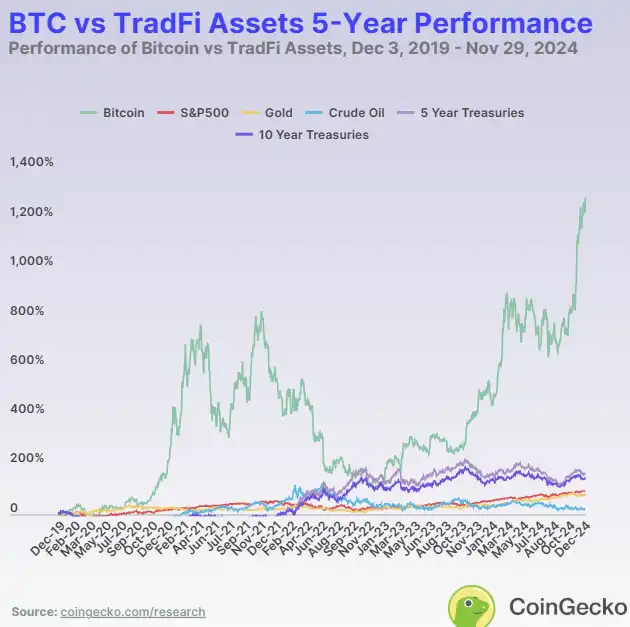
Данные за пятилетний период показывают, что биткоин был самым strong-performing активом с доходностью 1283,6%. Индекс S&P 500 и золото оставались стабильными с доходностью 96,7% и 84,6% соответственно. Казначейские облигации США также показали отличные результаты: доходность 5-летних облигаций составила 157,1%, а 10-летних — 149,9%. Цены на нефть выросли лишь на 25,3%, что свидетельствует об относительно низкой привлекательности для долгосрочных инвестиций. Данные за этот период suggest, что биткоин обладает огромным потенциалом для получения прибыли при среднесрочных инвестициях, в то время как steady рост акций и золота обеспечивает баланс.
В 10-летнем периоде рост биткоина составил 26 931,1%, что является непревзойденным показателем и ярким свидетельством его огромного инвестиционного потенциала для early инвесторов. Хотя доходность других активов намного ниже, чем у биткоина, они все же способны provide стабильную прибыль, например, индекс S&P 500 показал доходность 193,3%, а золото — 125,8%. Казначейские облигации США также сохранили свою стоимость: доходность 5-летних облигаций составила 157,1%, а 10-летних — 86,8%. Однако доходность нефти составила всего 4,3%, что значительно хуже, чем у других активов.
Наблюдения за это десятилетие показывают, что биткоин является ultimate активом с высоким ростом, в то время как золото, облигации и акции предлагают более безопасные, менее доходные альтернативы для risk-averse инвесторов. Однако в то время биткоин все еще оставался относительно новым активом, и его рыночная капитализация была much меньше, чем у других активов. Именно его small база позволила ему расти такими быстрыми темпами.
Была ли волатильность биткоина высокой за последние десять лет?
Огромный рост биткоина за последнее десятилетие сопровождался significant волатильностью. Цена биткоина падала до минимума в 172,15 доллара и достигала максимума в 103 679 долларов. На приведенном ниже графике clearly видны циклы биткоина, которые, по совпадению, происходят каждые четыре года после halving. За это десятилетие биткоин пережил два «бычьих» цикла, в 2017-2018 и 2020-2021 годах, и в настоящее время находится в одном из таких циклов. В конце цикла цена биткоина往往 падает более чем на 70% от пика, что делает его highly волатильным. Эта extreme волатильность подчеркивает特性 высокого риска и высокой доходности, что очень привлекательно для инвесторов, seeking роста, но представляет challenges для тех, кто ищет стабильности.
Коррелирует ли эффективность биткоина с другими активами?
Помимо волатильности, отношения биткоина с другими major активами, такими как индекс S&P 500 и золото, могут further раскрыть его уникальное поведение. Анализ корреляции показывает, как биткоин движется в ногу с традиционными рынками или отстает от них:
Биткоин и индекс S&P 500
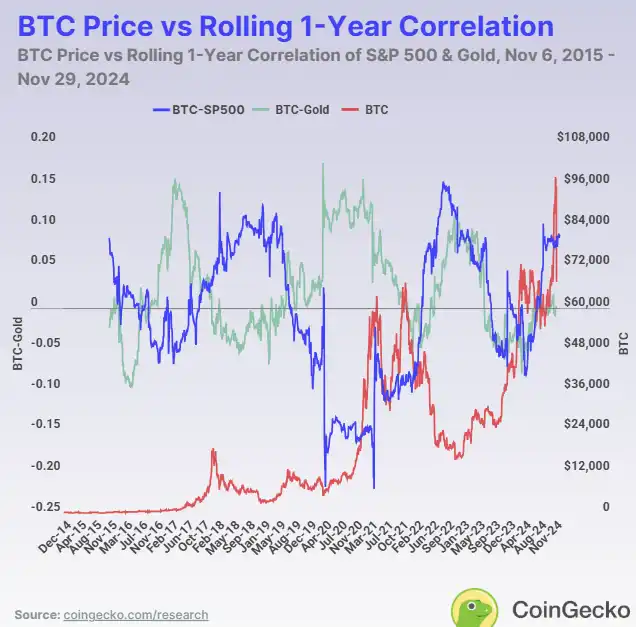
На протяжении лет корреляция между биткоином и индексом S&P 500 (показана синей линией) была нестабильной и обычно была близка к нулю до 2018 года. Эта низкая корреляция indicates, что в этот период поведение биткоина в значительной степени не зависело от фондового рынка. Однако с 2020 года эта корреляция усилилась, и во время major экономических событий, таких как пандемия COVID-19, биткоин двигался более согласованно с акциями. Корреляция цен также совпала с ростом биткоина в 2018, 2020 и 2024 годах.
Биткоин и золото
В случае с золотом корреляция биткоина имеет обратную зависимость с его корреляцией с S&P 500. Это suggests, что хотя оба рассматриваются как alternative инвестиции, биткоин и золото (показано зеленой линией) обычно движутся independently друг от друга. Кроме того, корреляция движется в обратном направлении от цены биткоина. Когда цена растет, корреляция падает, и наоборот. Это indicates, что когда биткоин показывает плохие результаты, инвесторы склонны переключаться на инвестиции в золото. Однако во время макроэкономических событий корреляция обычно briefly резко возрастает, что отражает реакцию обоих активов на similar рыночные условия. Тем не менее, биткоин еще не fully утвердился в качестве «цифрового золота».
Сравнение 10-летней доходности цен биткоина и традиционных активов выглядит следующим образом: