Just Now, Peking University Alumna Lilian Weng Announces Resignation: The Best 'Alignment' in the AI Era Is Taking Care of Yourself

marsbitОпубликовано 2026-07-27Обновлено 2026-07-27

Введение

Lilian Weng, a Peking University alumnus and former OpenAI executive, has announced her departure from Thinking Machines Lab, the AI startup she co-founded with ex-OpenAI CTO Mira Murati 20 months ago. Her resignation comes shortly after the company released its first open-source model, Inkling. In her farewell message, Weng cited health reasons as the primary factor, stating that the past seven months involved more illness than any other period in her life. The intense pressure and guilt of being unable to work during critical periods, like the Inkling launch, became unsustainable. She expressed that she could not continue in a role where she felt unable to give her full effort. Weng joined OpenAI in 2018, contributing to projects like the Dactyl robotic hand and later building the Safety Systems team from scratch. She is also widely known for her influential technical blog, Lil'Log. Her departure follows a period of high expectations and challenges for Thinking Machines, which secured a record $20 billion seed round at a $120 billion valuation in 2025 but has since seen fluctuations in its valuation and the departure of other key co-founders. Weng emphasized that she remains passionate about AI but needs a more predictable and defined role without the relentless pressure of a co-founder. Her exit highlights the immense personal toll and speed of competition in the AI industry, where the drive for progress often clashes with human limits. Her decision underscores that ste...

Lilian Weng has resigned.

Just now, Peking University alumna Lilian Weng posted a resignation letter on social media, announcing that tomorrow will be her last day at Thinking Machines Lab.
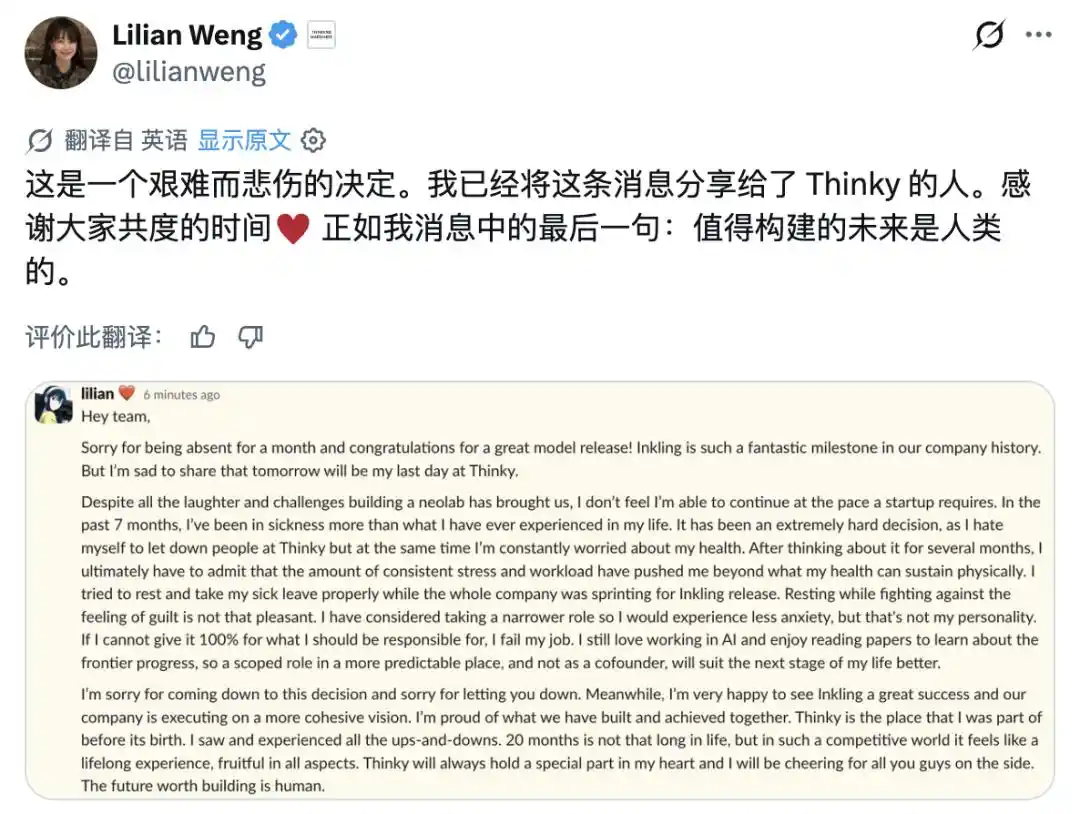
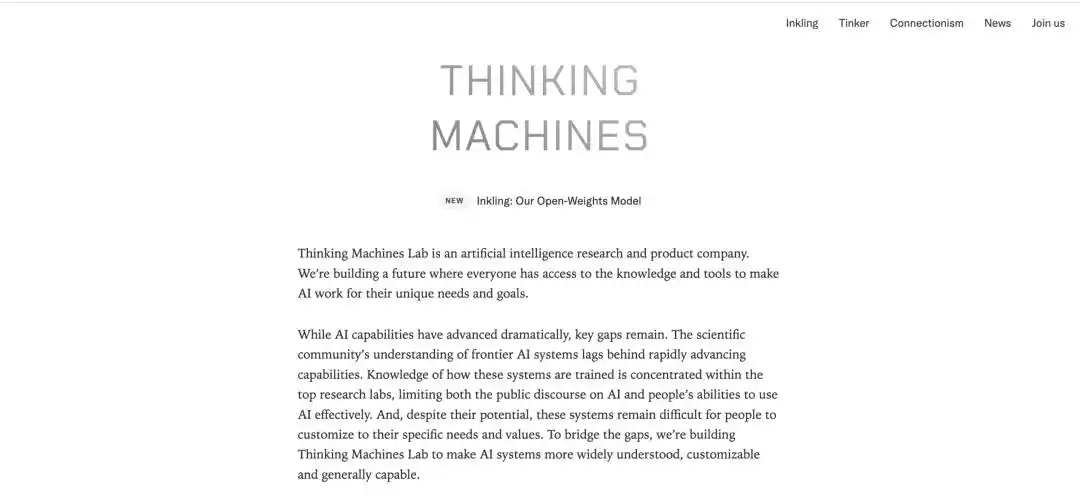
It has been exactly 20 months since she co-founded the company with OpenAI's former CTO Mira Murati. A few days ago, Thinking Machines just released its first open-source large model, Inkling, which Weng called an "incredible milestone in the company's history" in her letter.

It is somewhat surprising that a co-founder chooses to leave just after the release of the first model.

A Resignation Letter Filled with 'Apologies'

A word that appears repeatedly in Lilian Weng's resignation letter is "health".

She mentioned that in the past 7 months, she has been sick more times than in any other period of her life. While the entire company was sprinting for the Inkling release, she had to take sick leave and rest, while also grappling with guilt for being unable to participate in the work.

She described that state of resting while battling feelings of guilt as unpleasant.

Weng also considered scaling back her responsibilities and taking on a role with less pressure and uncertainty. But she ultimately found that such an arrangement didn't suit her. According to her, if she couldn't devote her full energy to the responsibilities at hand, she would feel she wasn't doing the job well.
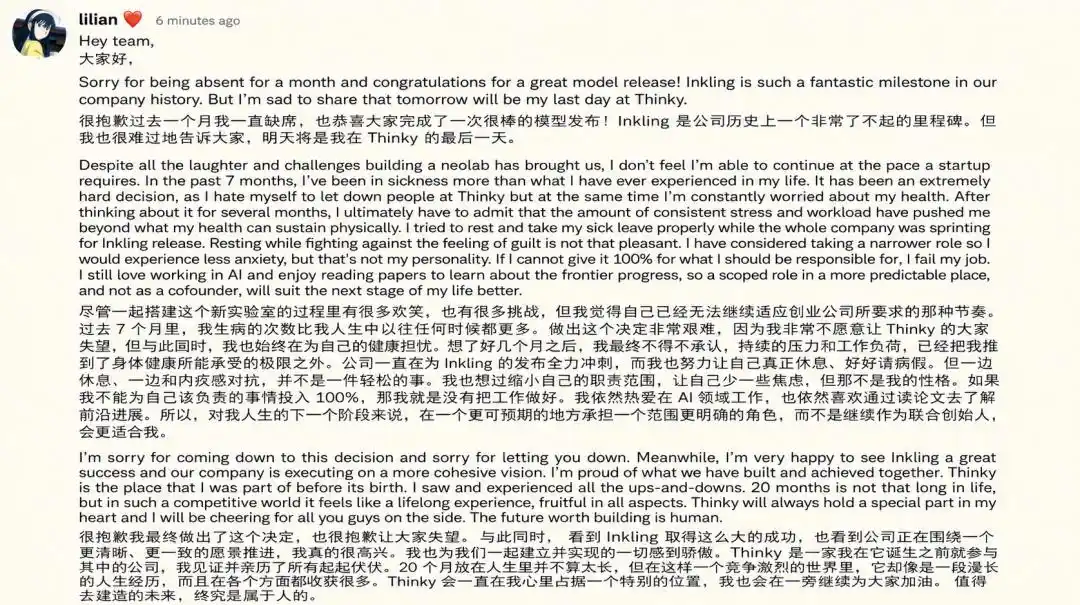
Throughout the letter, expressions like "sorry" and "letting you down" appear multiple times.

Weng, who once built OpenAI's safety team from scratch and led a team of over 80 people, was most worried about letting her colleagues down even at the moment of farewell. The recurring apologies also reflect her guilt and reluctance about leaving.

After the resignation letter was posted, many former colleagues and peers came to leave comments.

Mira Murati said the experience of co-creating Thinking Machines was precious and she was glad Weng was willing to prioritize her health. PyTorch core developer Soumith Chintala, Saurabh Garg, and others also sent their blessings, with most comments conveying the same sentiment: Health is more important, rest well.

The departure is restrained, and the farewell is sufficiently graceful.

Many people might not be familiar with Lilian Weng's background, so a brief introduction to her position in the AI industry is necessary.

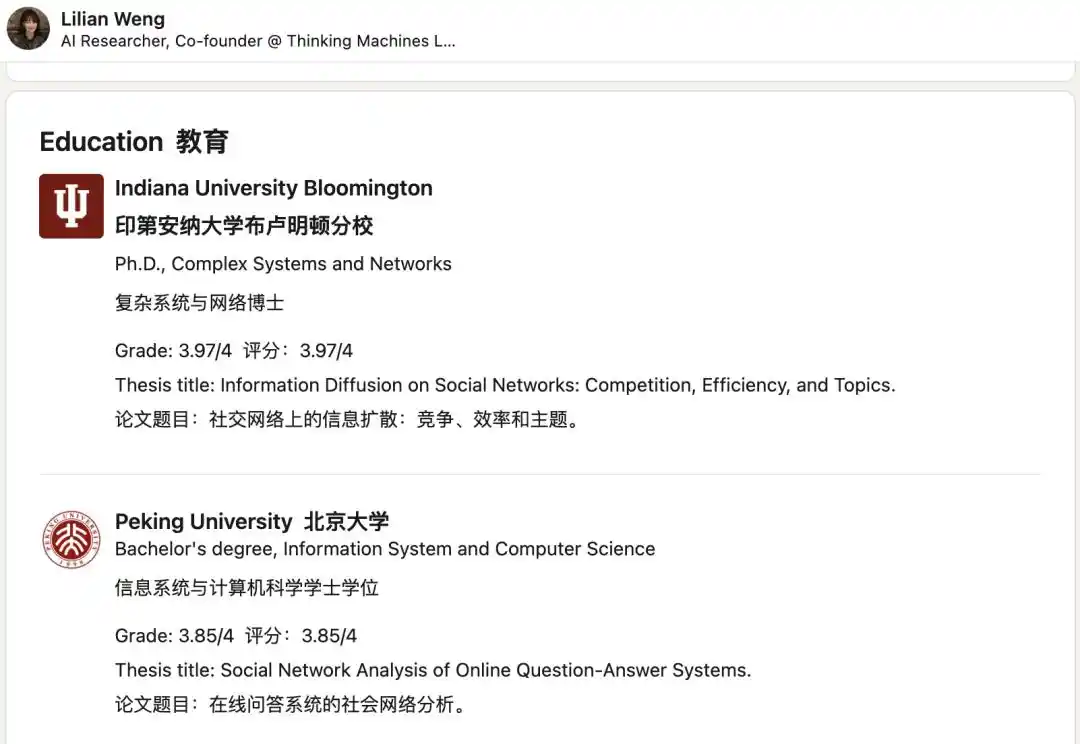
Lilian Weng was born in Shaanxi. In 2004, she won the first prize in the National High School Mathematics League in Shaanxi Province. In 2005, she entered Peking University's Information Management and Information Systems program, where she received a National Scholarship during her undergraduate studies.
Thereafter, she went to Indiana University Bloomington for her Ph.D., with research primarily focused on network science, complex systems, and information diffusion in social networks, which is not exactly the same as the large model research she is more widely known for today.
In 2018, Weng joined OpenAI. The first major project she participated in was the robotic hand Dactyl. The research team spent two years teaching the robotic hand to solve a Rubik's Cube with one hand, and Weng was one of the core contributors to the project.
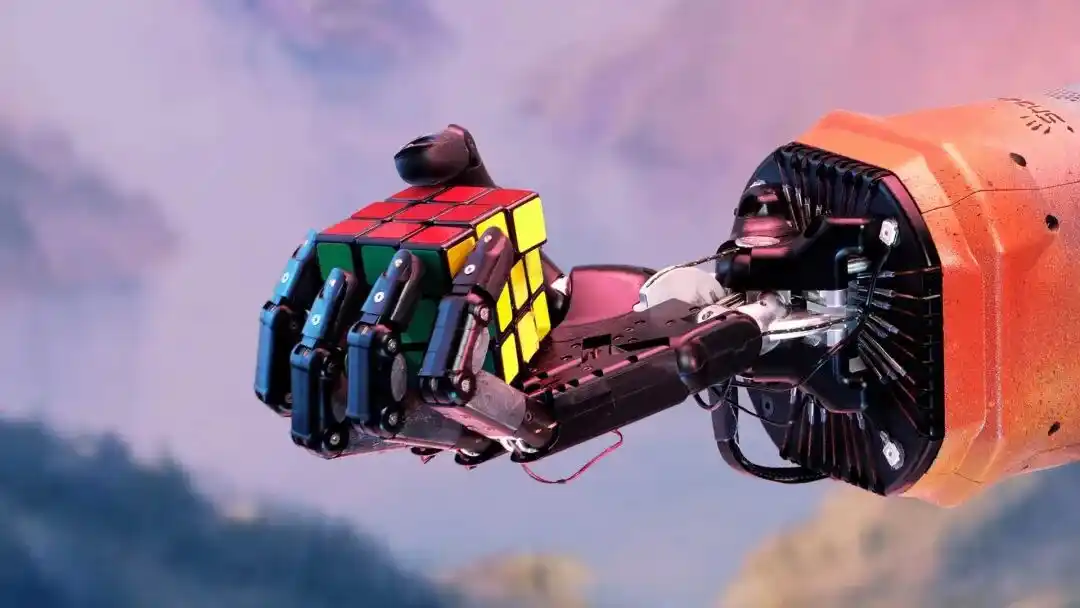
After the release of GPT-4, she started building the Safety Systems team from scratch. By the time she left OpenAI, the team had grown to over 80 people. Some of the safety mechanisms and evaluation systems used by ChatGPT today are also related to the work she promoted during her tenure.

In August 2024, Weng was promoted to Vice President of Research and Safety at OpenAI. Three months later, she left OpenAI. In February 2025, she co-founded Thinking Machines Lab with Mira Murati and others.

In the broader tech community, Weng is also widely known for another identity: the author of the technical blog Lil'Log.
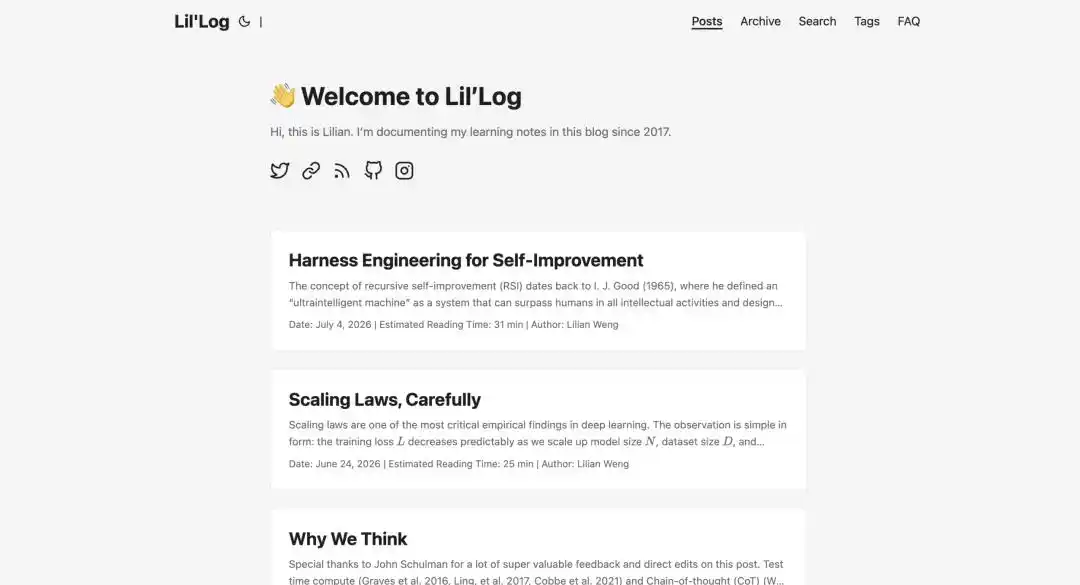
Lil'Log has long been systematically documenting cutting-edge technologies like reinforcement learning, Transformer, and Agents. It is one of the most widely circulated personal technical blogs in the AI field, with some articles even listed as reference materials for university courses.

She once wrote that clearly explaining a concept is the best way to test whether one truly understands it. In a way, this statement also summarizes her influence within the AI community.

Viewing Weng's departure against the backdrop of Thinking Machines' development trajectory over the past year adds further complexity.

High Valuation Brings Pressure on Both Product and Team

Thinking Machines garnered significant attention from its inception.

In July 2025, the company completed a seed round of approximately $20 billion, setting a record for the largest seed round for a startup at that time. The round was led by a16z, with participation from NVIDIA, AMD, Jane Street, and other institutions, resulting in a post-money valuation of $120 billion.

At that time, the company had not released any formal product. Rumors suggested that both Apple and Meta had expressed interest in investing or acquiring, but were turned down by Murati.

The high starting point brought extremely high expectations, but subsequent product progress and personnel changes were not as smooth.
In November 2025, Thinking Machines attempted to initiate a new funding round at a valuation of $50-60 billion. By January 2026, the negotiations fell through, and market valuations returned to around $120 billion.

The core team also experienced ongoing changes.

Co-founder Andrew Tulloch was recruited by Meta. In January 2026, co-founder and CTO Barret Zoph and co-founder Luke Metz resigned and returned to OpenAI.

There was public disagreement surrounding Zoph's departure. Murati stated he was fired for "misconduct," and OpenAI later responded that it did not agree with Thinking Machines' description of the matter. Subsequently, several more researchers left the company.

External skepticism about Thinking Machines has mainly focused on several aspects: overvaluation, relatively slow product releases, massive compute costs, and an unproven business model. The continuous flow of core talent has further amplified market uncertainty.

However, the company still possesses considerable resources.
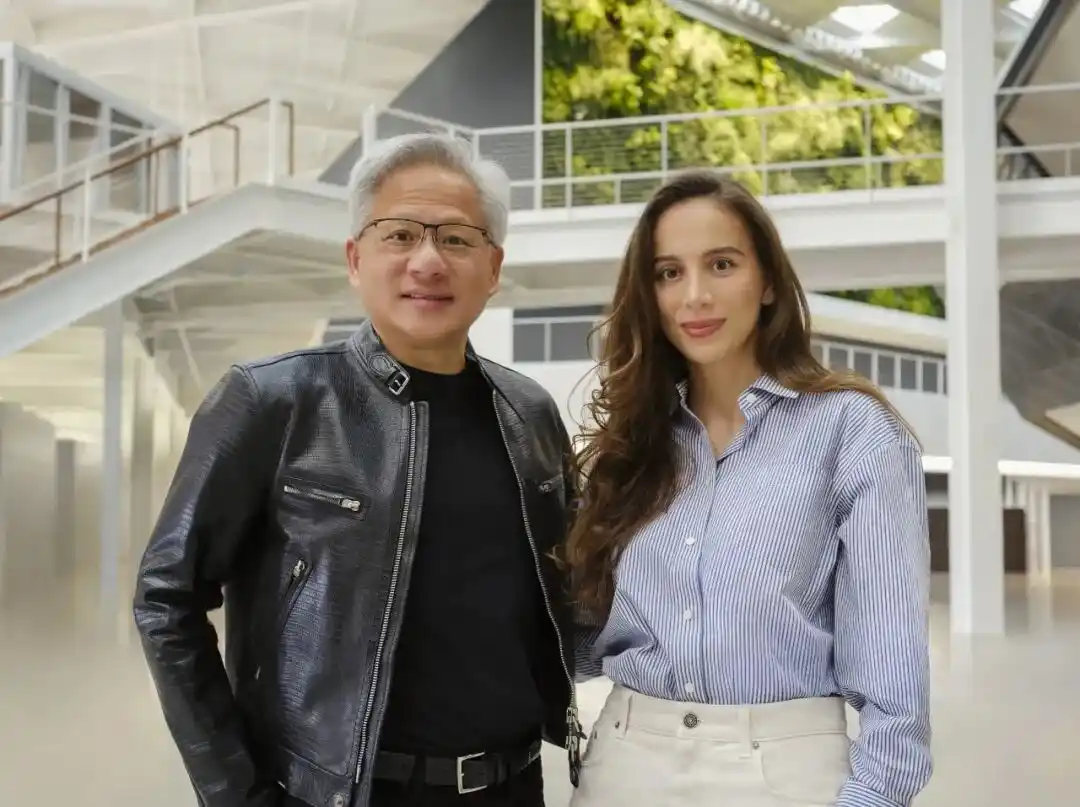
Thinking Machines has entered into a multi-year strategic partnership with NVIDIA, planning to deploy at least 1 gigawatt of next-generation Vera Rubin systems starting in 2027; the company has also signed a compute agreement with Google Cloud worth tens of billions of dollars.

On the product side, the model fine-tuning tool Tinker is already online, and the first open-source large model, Inkling, was released recently. The company is finally shifting from fundraising and talent stories to actual product delivery.

Therefore, market judgment on Thinking Machines has not completely turned pessimistic. It faces many problems, but its financial, talent, and compute resources also far exceed those of most AI startups.

People Cannot Scale Infinitely Like Models

Weng's resignation letter does not discuss valuation, fundraising, or internal personnel changes. The entire letter revolves around one reason: long-term stress has exceeded what her body can endure.

She states that she still loves AI and continues to read papers and track research progress. Moving forward, she hopes to find an environment with a more predictable pace and clearer boundaries of responsibility, free from the constant pressure and uncertainty that a co-founder must face.

This year, competition in the AI industry has accelerated to the point of being measured in "days."

A model is barely released before the countdown to the next update begins; a capability becomes an industry standard, only for a new technical path to emerge soon after. Startups must simultaneously chase product, compute, funding, and talent. Everyone fears that being one step slower means being left behind by the next wave.
In the hottest fields, speed is no longer just a competitive advantage; it is gradually becoming an inescapable pressure.

Models can increase parameters, extend context length, and run continuously on more compute. But people have their limits. Sleep cannot be compressed, the body cannot skip recovery, and accumulated fatigue does not automatically disappear with one product release.

Twenty months is not a long time, yet Weng writes in her letter that the experience "felt like a lifetime."

Perhaps she realized earlier than many that standing at the forefront of the AI wave means participating in shaping an era, but it also means bearing the fastest and most intense pressures of this era.

Inkling has become a milestone for Thinking Machines, and the AI industry will continue to advance. New models will be released, new companies will rise, and leaderboard positions will keep changing.

For Lilian Weng, what's more important now is to allow herself to stop.

Leaving does not always mean failure. Sometimes, admitting that the body can no longer bear the strain, letting go of responsibilities not yet fulfilled, and taking good care of oneself also require great courage.

Reference links:

https://x.com/lilianweng/status/2081816923088814421

https://lilianweng.github.io/

This article is from the WeChat public account "APPSO", author: 发布明日产品的

Трендовые криптовалюты

Связанные с этим вопросы

QWhy did Lilian Weng resign from Thinking Machines Lab?

ALilian Weng resigned from Thinking Machines Lab primarily due to health concerns. She stated that over the past seven months, her frequency of illness had exceeded any other period in her life. The constant pressure and uncertainty of her role as a co-founder became unsustainable for her physical well-being.

QWhat is the significance of the model 'Inkling' mentioned in the article?

AInkling is the first open-source large language model released by Thinking Machines Lab. Lilian Weng referred to its release as a remarkable milestone in the company's history, representing its shift from fundraising and talent narratives towards actual product delivery.

QWhat were some of the challenges Thinking Machines Lab faced according to the article?

AThinking Machines Lab faced several challenges, including a high initial valuation of $12 billion, perceived slow product releases, immense computing costs, an unproven business model, and significant internal talent turnover with several co-founders and researchers leaving the company.

QWhat was Lilian Weng's role at OpenAI prior to founding Thinking Machines?

AAt OpenAI, Lilian Weng started by contributing to the Dactyl robotic hand project. Later, following the release of GPT-4, she built the Safety Systems team from scratch, growing it to over 80 people. She eventually became the Vice President of Research and Safety before leaving in November 2024.

QAccording to the article, what broader point does Lilian Weng's resignation highlight about the AI industry?

AHer resignation highlights the intense, relentless pace and pressure in the forefront of the AI industry, where speed is a competitive necessity. It underscores the human cost of this race, emphasizing that individuals have physical and mental limits, unlike models that can be scaled indefinitely with more compute and parameters.

Похожее

Диалог с Далио: Сейчас мы находимся в пузыре ИИ, 1% моего инвестиционного портфеля — это биткоин

Источник: интервью Рэя Далио, основателя Bridgewater Associates, для подкаста "The Diary Of A CEO". Далио, предсказавший кризис 2008 года, обсуждает "большой цикл" — концепцию, охватывающую долговые проблемы, растущее неравенство и геополитические сдвиги. Он указывает, что текущий ажиотаж вокруг ИИ демонстрирует классические признаки пузыря, который может лопнуть из-за высокой долговой нагрузки, роста процентных ставок и чрезмерной эмиссии акций, что способно привести к рецессии. Для защиты личного капитала в неопределенные времена Далио советует диверсификацию: вместо хранения наличных инвестировать в акции, золото, облигации. Сам он держит около 1% портфеля в биткоине, считая его "твердыми деньгами", но предпочитает физическое золото из-за его статуса резервного актива и независимости от технологических рисков. Говоря о влиянии ИИ, Далио отмечает, что технология заменяет не только физический труд, но и элементы мышления, что увеличит разрыв между капиталом и трудом. Ключевыми останутся человеческие качества — эмоции и интуиция, а успеха добьются те, кто научится работать в партнерстве с ИИ. На геополитической арене, по его мнению, мир движется к регионализации с центрами в виде США и Китая. Вовлечение США в конфликты, подобные иранскому, обнажает снижение их абсолютного влияния. Внутренние вызовы, такие как дебаты о налогах на богатство, риск капитального бегства и низкая производительность, также ставят под вопрос стабильность традиционных держав в текущей фазе цикла.

marsbit1 ч. назад

Диалог с Далио: Сейчас мы находимся в пузыре ИИ, 1% моего инвестиционного портфеля — это биткоин

marsbit1 ч. назад

7.2 трлн вон за один день: иностранные инвесторы установили рекорд чистых покупок в пятницу! Уолл-Стрит: встречный ветер в плане ликвидности на южнокорейском рынке уже утих

Капиталы возвращаются на южнокорейский рынок акций. 31 июля иностранные инвесторы осуществили чистые покупки акций KOSPI на рекордные 7,2 трлн вон за один день, что стало самым высоким показателем в истории. По данным Citigroup, эта цифра знаменует собой кардинальный разворот после месяцев масштабного оттока средств нерезидентов. В июле чистые продажи иностранными инвесторами значительно сократились до 9,8 трлн вон по сравнению с 48,4 трлн и 44,5 трлн вон в июне и мае соответственно. Одновременно внутренние пенсионные и инвестиционные фонды в июле вернулись к чистым покупкам на 1,0 трлн вон. Дополнительным фактором снижения волатильности стали новые правила Комиссии по финансовым услугам (FSC), ужесточившие с 31 июля доступ розничных инвесторов к ETF с плечом на отдельные акции. После введения норм торговый оборот таких инструментов упал примерно вдвое. Citigroup сохраняет целевую точку для KOSPI на уровне 10000 пунктов, отмечая ослабление давления со стороны движения капиталов. Аналитики видят поддержку рынку в устойчивости фундаментальных показателей сектора чипов памяти, низких оценках KOSPI, сильной экономике и благоприятной политике властей, включая возможные меры по поддержке ликвидности.

marsbit1 ч. назад

7.2 трлн вон за один день: иностранные инвесторы установили рекорд чистых покупок в пятницу! Уолл-Стрит: встречный ветер в плане ликвидности на южнокорейском рынке уже утих

marsbit1 ч. назад

Как стать человеком, которого искусственный интеллект никогда не сможет заменить

В статье рассматривается вопрос о том, как остаться незаменимым в эпоху искусственного интеллекта. Автор утверждает, что вместо страха перед ИИ следует сосредоточиться на развитии качеств, которые машины не смогут заменить. Он критикует «зарплатное рабство» — зависимость от работы, не приносящей удовлетворения, и предлагает путь к финансовой независимости через создание собственного дела. Ключ к успеху — развитие пяти элементов: самостоятельности (агентности), вкуса, умения убеждать, упорства и способности к итерациям. Главное — не просто создавать что-либо (сегодня это может каждый), а создавать что-то ценное, востребованное и уметь это продвигать. Автор считает, что наиболее важным навыком будущего является создание контента (медиа), а не просто написание кода, поскольку ценность контента субъективна и требует уникального человеческого вкуса и суждения. ИИ может помочь в производстве, но не заменит оригинальность мысли и связь с аудиторией. В качестве практического шага предлагается упражнение: за 15 минут ответить на вопросы, чтобы обнаружить свои уникальные знания, опыт и точку зрения, которые станут основой для личного бренда и дела жизни. Первый шаг — немедленно опубликовать свою основную идею, чтобы получить обратную связь от реального мира и начать процесс роста. Цель — стать «непригодным для найма», построив жизнь вокруг собственного творчества и экспертизы.

marsbit3 ч. назад

Как стать человеком, которого искусственный интеллект никогда не сможет заменить

marsbit3 ч. назад

Благодаря броскам кубиков ключи от биткоинов хранятся в автономном режиме, но не все будут этим заниматься

Статья посвящена практике генерации сид-фраз для биткоин-кошельков с помощью бросков кубиков в свете уязвимости, обнаруженной в аппаратных кошельках Coldcard. Подчеркивается, что физический бросок кубика (дающий около 2.6 бит энтропии за бросок) создает высококачественную случайность, поскольку предсказать результат практически невозможно из-за множества переменных. Для создания стандартной сид-фразы из 12 слов (128 бит энтропии) требуется около 50 бросков, а для повышенной безопасности рекомендуется 99 и более. В связи с инцидентом Coldcard, когда неисправный генератор случайных чисел в прошивке (2021-2026 гг.) мог создавать предсказуемые ключи, выяснилось, что сид-фразы, сгенерированные вручную через кубики, были защищены от этой уязвимости. Однако исследование показало, что другие функции устройства (создание бумажных кошельков, ключей для мультиподписи, паролей и т.д.) по-прежнему использовали скомпрометированный генератор, подвергая риску владельцев даже с безопасной основной сид-фразой. Автор отмечает, что, хотя метод с кубиками криптографически надежен, он непрактичен для массового использования из-за трудоемкости, высокой вероятности ошибок при вводе и необходимости строгой дисциплины для сохранения секретности процесса. Делается вывод, что будущее безопасности лежит в создании надежных аппаратных генераторов случайных чисел и понятных интерфейсов, а ручные методы остаются нишевым инструментом для опытных пользователей. Владельцам Coldcard рекомендуется обновить прошивку и проверить/заменить все ключи, сгенерированные уязвимыми функциями.

cryptonews.ru6 ч. назад

Благодаря броскам кубиков ключи от биткоинов хранятся в автономном режиме, но не все будут этим заниматься

cryptonews.ru6 ч. назад

Торговля

Спот

Популярные статьи

Как купить ERA

Добро пожаловать на HTX.com! Мы сделали приобретение Caldera (ERA) простым и удобным. Следуйте нашему пошаговому руководству и отправляйтесь в свое крипто-путешествие.Шаг 1: Создайте аккаунт на HTXИспользуйте свой адрес электронной почты или номер телефона, чтобы зарегистрироваться и бесплатно создать аккаунт на HTX. Пройдите удобную регистрацию и откройте для себя весь функционал.Создать аккаунтШаг 2: Перейдите в Купить криптовалюту и выберите свой способ оплатыКредитная/Дебетовая Карта: Используйте свою карту Visa или Mastercard для мгновенной покупки Caldera (ERA).Баланс: Используйте средства с баланса вашего аккаунта HTX для простой торговли.Третьи Лица: Мы добавили популярные способы оплаты, такие как Google Pay и Apple Pay, для повышения удобства.P2P: Торгуйте напрямую с другими пользователями на HTX.Внебиржевая Торговля (OTC): Мы предлагаем индивидуальные услуги и конкурентоспособные обменные курсы для трейдеров.Шаг 3: Хранение Caldera (ERA)После приобретения вами Caldera (ERA) храните их в своем аккаунте на HTX. В качестве альтернативы вы можете отправить их куда-либо с помощью перевода в блокчейне или использовать для торговли с другими криптовалютами.Шаг 4: Торговля Caldera (ERA)С легкостью торгуйте Caldera (ERA) на спотовом рынке HTX. Просто зайдите в свой аккаунт, выберите торговую пару, совершайте сделки и следите за ними в режиме реального времени. Мы предлагаем удобный интерфейс как для начинающих, так и для опытных трейдеров.

871 просмотров всегоОпубликовано 2025.07.17Обновлено 2026.06.02

Как купить ERA

Обсуждения

Добро пожаловать в Сообщество HTX. Здесь вы сможете быть в курсе последних новостей о развитии платформы и получить доступ к профессиональной аналитической информации о рынке. Мнения пользователей о цене на ERA (ERA) представлены ниже.

活动图片













