How XRP’s Utility Will Drive Price Appreciation In The New Year

bitcoinistОпубликовано 2025-12-30Обновлено 2025-12-30

Введение

Crypto pundit SMQKE argues that XRP's utility within Ripple's payment system will drive future price appreciation, citing institutional adoption and transaction efficiency. He claims that as Ripple processes transactions, a small amount of XRP is permanently removed from circulation, potentially causing a supply shock and price increase. However, another expert, Lewis Jackson, disputes this, stating that XRP is recycled in cross-border transactions and that institutions don’t need to hold large amounts, meaning utility may not boost prices. Meanwhile, analyst Ali Martinez warns that XRP could drop to $0.80 due to declining network activity and selling pressure from large holders. XRP is currently trading near $1.85, down over 2% in 24 hours.

Crypto pundit SMQKE has shared a document highlighting why XRP’s utility will drive price appreciation in the new year. This follows a debate sparked by another pundit, Lewis Jackson, who argued that the altcoin’s payment utility doesn’t translate to higher prices.

How XRP’s Utility Will Drive Future Price Appreciation

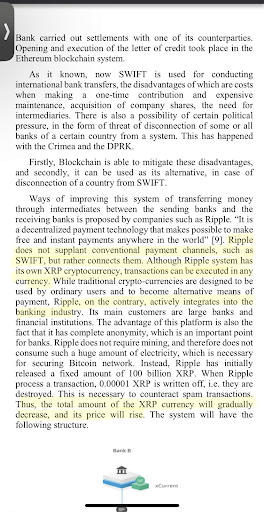
In an X post, SMQKE shared a document that highlighted XRP’s utility through Ripple’s payment system. In line with this, he noted that this is further evidence that the token’s utility will drive future price appreciation. The pundit further remarked that XRP is designed to operate within the global payment infrastructure, a move that could widely boost its adoption.

SMQKE also noted that Ripple integrates with existing systems to improve speed, cost, and settlement efficiency. As such, as financial institutions adopt the XRP Ledger (XRPL), the pundit stated that XRP will be used directly in payment flows. He then alluded to the document, which, from a payments perspective, he said, demonstrates how institutional settlement activity creates sustained demand for XRP. The pundit added that price appreciation is supported through real transaction flow.

Source: Chart from SMQKE on X

The document noted that when Ripple processes a transaction, 0.00001 XRP is removed from circulation. As such, they expect the altcoin’s circulating supply to decline over time and its price to rise in the process due to a potential supply shock. On the other hand, Lewis Jackson claims that XRP is simply recycled whenever institutions use Ripple’s payment system for cross-border transactions.

He declared that XRP’s utility is unlikely to drive higher prices, as these institutions, including banks, do not need to hold a significant amount of XRP to process transactions on Ripple’s payment system. This has sparked debate in the XRP community with another pundit, Apex Crypto, describing these statements as “dangerous junk” that could mislead people, especially new community members.

XRP Still At Risk Of Dropping Below $1

Crypto analyst Ali Martinez has warned that the XRP price is still at risk of dropping to as low as $0.80 amid debate over how the token’s utility will drive price appreciation. He outlined reasons why this massive price decline is a possibility, including that the XRP Ledger’s activity has cooled significantly. Martinez noted that daily active addresses have fallen to around 38,500, indicating fading participation and interest.

Furthermore, the analyst stated that XRP whales have turned into sellers, offloading over 40 million coins in recent days. He added that if the selling pressure continues, the altcoin risks losing the $1.77 support level, with a breakdown opening the door to the next major support near $0.80.

At the time of writing, the XRP price is trading at around $1.85, down over 2% in the last 24 hours, according to data from CoinMarketCap.

XRP trading at $1.87 on the 1D chart | Source: XRPUSDT on Tradingview.com

Связанные с этим вопросы

QAccording to SMQKE, how will XRP's utility drive future price appreciation?

ASMQKE argues that XRP's utility within Ripple's payment system, specifically its integration into global payment infrastructure for improved speed and efficiency, will create sustained demand. As financial institutions adopt the XRP Ledger (XRPL) for direct use in payment flows, real transaction activity and a potential supply shock from a small amount of XRP being removed from circulation per transaction will support price appreciation.

QWhat is Lewis Jackson's opposing view on XRP's utility and its impact on price?

ALewis Jackson argues that XRP's payment utility does not translate to higher prices. He claims that XRP is simply recycled in Ripple's payment system for cross-border transactions and that institutions like banks do not need to hold significant amounts of XRP, meaning its utility is unlikely to drive price appreciation.

QWhat two key metrics did analyst Ali Martinez cite as reasons XRP's price could drop?

AAli Martinez cited a significant cooling in XRP Ledger activity, with daily active addresses falling to around 38,500, and selling pressure from XRP whales who have offloaded over 40 million coins as key reasons the price could drop.

QWhat potential price levels does Ali Martinez warn that XRP could fall to if selling pressure continues?

AAli Martinez warned that if selling pressure continues, XRP risks losing the $1.77 support level, which could then lead to a drop to the next major support level near $0.80.

QWhat was the community reaction to Lewis Jackson's statements, as mentioned in the article?

AAnother pundit, Apex Crypto, described Lewis Jackson's statements as 'dangerous junk' that could mislead people, especially new members of the XRP community, indicating a strong negative reaction.

Похожее

The Tao (τ) Law Makes EDA Go Viral

In May 2026, Huawei's semiconductor division introduced the "Tao (τ) Law" at IEEE ISCAS, shifting the industry focus from Moore's Law's geometric scaling to "time scaling." Unlike traditional approaches relying on transistor miniaturization, τ Law optimizes the time constant (τ) across device, circuit, chip, and system levels to improve information processing speed and efficiency. Huawei has already applied this principle, mass-producing 381 chips across various applications, with a target to achieve performance equivalent to 1.4nm technology by 2031. The implementation of τ Law, involving techniques like Chiplet, 3DIC, and Logic Folding, places new demands on EDA tools, highlighting gaps in current offerings. Traditional 2D or pseudo-3D EDA flows lack native support for true 3D design, cross-layer co-optimization (STCO), and coupled multi-physics analysis (thermal, power, stress), which are crucial for advanced integration. Chinese EDA companies, such as Empyrean Software, Primarius Technologies, and Xpeedic, are evolving from point-tool specialists to providing full-flow, system-level solutions. For instance, Peking University has developed a prototype "true 3D" EDA tool showing significant improvements in wirelength and timing. Empyrean Software has also launched a comprehensive 3DIC design and verification platform. The τ Law framework presents an opportunity for the domestic EDA industry to transition from achieving basic functionality to developing robust, integrated toolsets essential for next-generation chip design.

marsbit53 мин. назад

The Tao (τ) Law Makes EDA Go Viral

marsbit53 мин. назад

It's Not Jensen Huang Who Wants to Change the PC, But the PC That's Revolting Against Itself

The 40-year-old PC industry is undergoing a fundamental transformation, driven by the rise of AI PCs. At the GTC Taipei 2026 event, NVIDIA, backed by Microsoft and major PC OEMs, announced the RTX Spark super chip for Windows PCs, marking its official entry into the PC core processor market. This move aims to redefine the AI PC by shifting its core from the CPU to an AI-focused SoC (System on Chip). NVIDIA envisions the PC evolving from a personal computer to a "personal AI"—a platform where local AI Agents can autonomously perform tasks. While Intel pioneered the AI PC concept earlier in 2026, NVIDIA's aggressive push, leveraging its vast CUDA developer ecosystem of 6 million, positions it to potentially reshape the industry's long-standing Wintel (Windows-Intel) power structure. NVIDIA's strategy extends beyond hardware; it's about embedding its CUDA, RTX, and AI software stack into the PC platform itself. The article identifies key shifts: 1) The move from a CPU-centric to an AI SoC-centric architecture, similar to Apple's approach with its M-series chips. 2) The PC's evolution from a human-operated tool to a platform for human-Agent collaboration. 3) The extension of NVIDIA's data center-centric CUDA ecosystem to personal devices via RTX Spark. Ultimately, the change is driven by the broader trend of AI moving to personal devices. Companies like Intel, AMD, Qualcomm, and Apple are all participating in this shift. NVIDIA's entry accelerates the competition, but the core driver is the technology itself finding its optimal expression in the PC. The industry is reinventing itself, with the outcome hinging on execution, ecosystem development, and the creation of compelling local AI applications.

marsbit3 ч. назад

It's Not Jensen Huang Who Wants to Change the PC, But the PC That's Revolting Against Itself

marsbit3 ч. назад

Торговля

Спот
Фьючерсы

Популярные статьи

Как купить S

Добро пожаловать на HTX.com! Мы сделали приобретение Sonic (S) простым и удобным. Следуйте нашему пошаговому руководству и отправляйтесь в свое крипто-путешествие.Шаг 1: Создайте аккаунт на HTXИспользуйте свой адрес электронной почты или номер телефона, чтобы зарегистрироваться и бесплатно создать аккаунт на HTX. Пройдите удобную регистрацию и откройте для себя весь функционал.Создать аккаунтШаг 2: Перейдите в Купить криптовалюту и выберите свой способ оплатыКредитная/Дебетовая Карта: Используйте свою карту Visa или Mastercard для мгновенной покупки Sonic (S).Баланс: Используйте средства с баланса вашего аккаунта HTX для простой торговли.Третьи Лица: Мы добавили популярные способы оплаты, такие как Google Pay и Apple Pay, для повышения удобства.P2P: Торгуйте напрямую с другими пользователями на HTX.Внебиржевая Торговля (OTC): Мы предлагаем индивидуальные услуги и конкурентоспособные обменные курсы для трейдеров.Шаг 3: Хранение Sonic (S)После приобретения вами Sonic (S) храните их в своем аккаунте на HTX. В качестве альтернативы вы можете отправить их куда-либо с помощью перевода в блокчейне или использовать для торговли с другими криптовалютами.Шаг 4: Торговля Sonic (S)С легкостью торгуйте Sonic (S) на спотовом рынке HTX. Просто зайдите в свой аккаунт, выберите торговую пару, совершайте сделки и следите за ними в режиме реального времени. Мы предлагаем удобный интерфейс как для начинающих, так и для опытных трейдеров.

1.4k просмотров всегоОпубликовано 2025.01.15Обновлено 2026.06.02

Как купить S

Sonic: Обновления под руководством Андре Кронье – новая звезда Layer-1 на фоне спада рынка

Он решает проблемы масштабируемости, совместимости между блокчейнами и стимулов для разработчиков с помощью технологических инноваций.

2.3k просмотров всегоОпубликовано 2025.04.09Обновлено 2025.04.09

Sonic: Обновления под руководством Андре Кронье – новая звезда Layer-1 на фоне спада рынка

HTX Learn: Пройдите обучение по "Sonic" и разделите 1000 USDT

HTX Learn — ваш проводник в мир перспективных проектов, и мы запускаем специальное мероприятие "Учитесь и Зарабатывайте", посвящённое этим проектам. Наше новое направление .

1.8k просмотров всегоОпубликовано 2025.04.10Обновлено 2025.04.10

HTX Learn: Пройдите обучение по "Sonic" и разделите 1000 USDT

Обсуждения

Добро пожаловать в Сообщество HTX. Здесь вы сможете быть в курсе последних новостей о развитии платформы и получить доступ к профессиональной аналитической информации о рынке. Мнения пользователей о цене на S (S) представлены ниже.

活动图片