How to Mass-Produce AI Projects to Encrypt VC Money?

比推Опубликовано 2026-03-19Обновлено 2026-03-19

Введение

This article investigates how crypto venture capital (VC) firms are shifting investments toward AI-related projects, despite lacking access to top-tier AI startups. As traditional AI ventures prefer established investors, crypto VCs are funding less credible “Crypto” projects that often have minimal AI functionality or product-market fit. The author analyzes five recently funded projects: - **Derivio**: Originally a DEX, now rebranded as an “AI-native trading platform” with no actual AI features. - **Superpower**: An AI agent revenue protocol with a non-functional website and unclear product. - **Finrob**: A crypto research tool using free AI models; failed login attempts prevent testing. - **PlutonAI**: A DeFAI platform for automated trading, but inaccessible and potentially obsolete. - **Unicity**: A more serious infrastructure project for AI agents, yet unproven and undelivered. While a few legitimate AI projects exist (e.g., RoboForce), most are superficial attempts to capitalize on AI hype. Crypto VCs fund these projects primarily for liquidity and narrative appeal, prioritizing the “AI” label over substance, hoping to profit from the trend despite minimal real-world utility.

Author: Golem

Original Title: I Investigated 5 Crypto AI Projects That Raised Millions and Found...


The AI boom has left VCs focused on Web3 in disarray. When Paradigm announced on February 28 that it was planning to raise a new fund of up to $1.5 billion for AI and robotics, I analyzed it as a signal that crypto capital was shifting its focus from Web3 to AI. With no good projects to invest in within the crypto industry, AI, as a booming sector, has become the new battleground for crypto capital. (Related reading: When Openclaw's Founder Advised Young People to Stay Away from Crypto)

But what I overlooked is that top AI projects aren't available for crypto VCs to invest in. Good projects often choose investors based on "pedigree" and resources. While a renowned crypto VC like Paradigm might squeeze into the first-tier AI investment circle, other small crypto VCs with no reputation in traditional finance can only watch from the sidelines as the big players feast.

So, is sitting back and waiting the only option? Of course not. Where there's a will, there's a way. Since they can't invest in top AI projects, they can settle for the next best thing—finding some projects within their crypto comfort zone that are tangentially related to AI也算买到了张时代船票也算买到了一张 ticket for the times.

However, as an online joke调侃, a Web3 company only needs to change all the "loading..." in its product to "thinking..." to transform into a startup related to AI. Under the anxiety of crypto VCs, some Crypto+AI projects can raise millions of dollars with just a whitepaper and a product without Product-Market Fit (PMF).

To make this "industry abstraction" more concrete, I selected 5 recently funded "paper AI projects" as examples.

Derivio: A DEX That Doesn't Do Meme Tools Is Not a Good AI Trading Platform

A fresh example is Derivio, an AI-native trading platform that announced the completion of a $6 million funding round on March 18, with investors including YZiLabs and other crypto VCs. However, the official announcement added a footnote stating that the $6 million is the total funds raised to date, not the amount raised in this specific announcement.

It's rare to see very early-stage projects announce cumulative funding without mentioning the new funding amount. Is it because the VCs gave too little to mention? Or is it a PR release配合 AI 转型的 PR 发布? According to research, Derivio was a Binance Labs (now named YZiLabs) Season 6 incubation project in 2023, and back then it was a decentralized derivatives exchange on zkSync.

In 2024, Derivio launched the Ethereum L2 Derivio Network and also claimed to be fully compatible with the Solana Virtual Machine (SVM), aiming to develop across both ecosystems. Unfortunately, or perhaps fortunately, it failed.

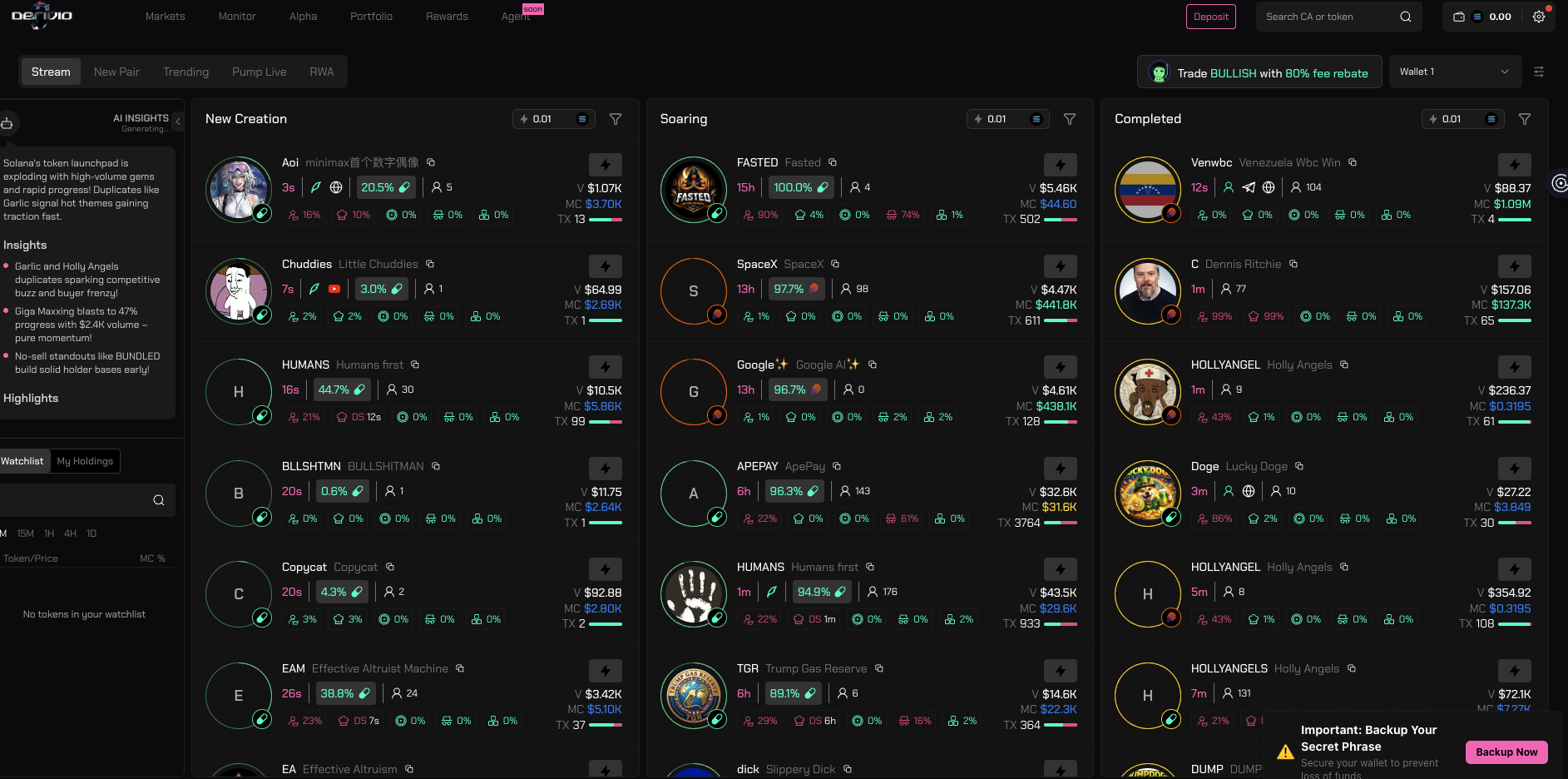
Now, if you visit Derivio's website, what greets you is not a trading chart or the usual Swap page of a DEX, but a Pump.fun链监控 scanner.

Yes, you read that right. This former centralized derivatives exchange, now an AI-native trading platform, primarily operates by helping degen traders扫链. A DEX that doesn't do Meme tools is not a good AI trading platform. Additionally, you can even buy tokenized U.S. stocks on this platform.

So, as an AI-native trading platform, Derivio must have some AI-related functions, right? But when you click on "Agent" in the top left corner, the page that pops up says "COMING SOON"......

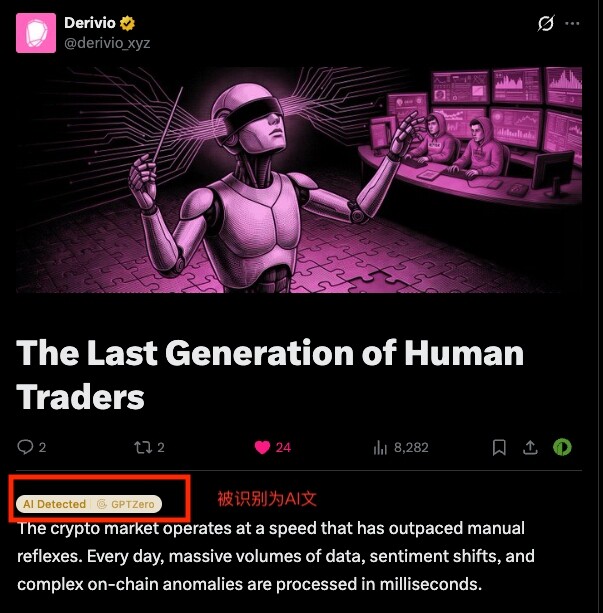
Although Derivio has nothing right now, its described vision is still imaginative. In an article titled "The Last Generation of Human Traders" published on platform X, it wrote that most trading terminals are designed for humans, and Derivio is building the first full-stack trading terminal designed specifically for AI, and has independently developed a high-performance data stream engine from scratch, compressing the latency from "on-chain event" alerts to "front-end AI processing" to near the physical limit.

After reading it, I also thought this idea was great, not something just anyone could do. So I checked it with an AI detector and found that the article was indeed not written by a human but was AI-generated. Derivio is indeed超前, replacing employees with AI before replacing human traders.

Superpower: The Vanishing AI Agent Product

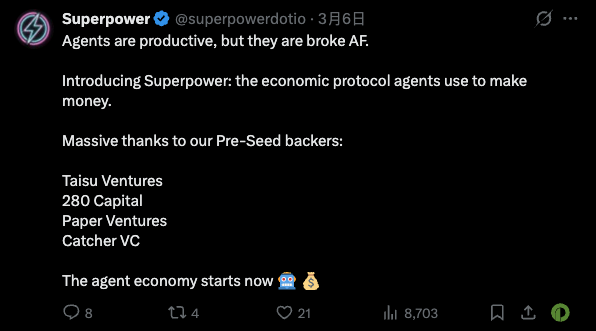
Superpower is an AI agent revenue protocol that announced the completion of a Pre-seed round on March 6, with participation from Taisu Ventures, Paper Ventures, CatcherVC, and 280 Capital, but the specific amount was not disclosed. Superpower aims to build a platform for AI agents to autonomously generate revenue, gain access to funding, and achieve capital appreciation.

To achieve such a grand project vision, technological accumulation and continuous development are essential, but Superpower hasn't even finished its website. March 6 was not only the day they announced funding but also the day their official X account posted its first tweet.

Superpower official X account's first tweet

Derivio, although it has no AI Agent, at least has something to interact with. But if you unfortunately open Superpower's official website, your vision will be severely impacted. Superpower's website has no clickable buttons, only a string of "YOUR AGENT IS BROKE AF" playing in a slideshow. I don't even know what this means because the slides change too fast, and I'm not sure if the last word is "AI" or "AF".

In the link posted on Superpower's official X account, I also found a prediction market project called Prolly, which even described how Agents could make money on this Prolly. I wanted to try it, but the product requires an invitation code, so I had to give up. Of course, the introductory post about the project on Superpower's homepage is, without exception, also written by AI.

finrob: The Unusable Proprietary Model for the Cryptocurrency Field

Finrob is an AI-driven crypto market research platform that completed a $3.9 million seed round on February 25, with participation from Maven11, Placeholder, Archetype, Fabric Ventures, Dispersion Capital, and Node Capital. What does this project do? Simply put, it's a conversational large language model, not much different from interacting with ChatGPT or Gemini, and Finrob actually connects to these very models.

You might ask what the difference is between using Finrob and users talking directly to ChatGPT or Gemini. Finrob's answer is that it is specifically built for the cryptocurrency field, featuring real-time data integration, on-chain analysis, and dedicated tools. Specifically, it integrates with CoinGecko for real-time prices and market data, Glassnode for over 200 types of on-chain analysis, Tavily for web search and news, Perplexity for in-depth research, and other sources including DefiLlama, Etherscan, and LunarCrush for social sentiment.

This means that after Finrob connects these free large models to these data sources (Finrob does not support users choosing advanced models like ChatGPT5.4), it can claim to be specifically built for the cryptocurrency field and be worth $3.9 million. From another perspective, this is indeed much cheaper than spending money to train a large model.

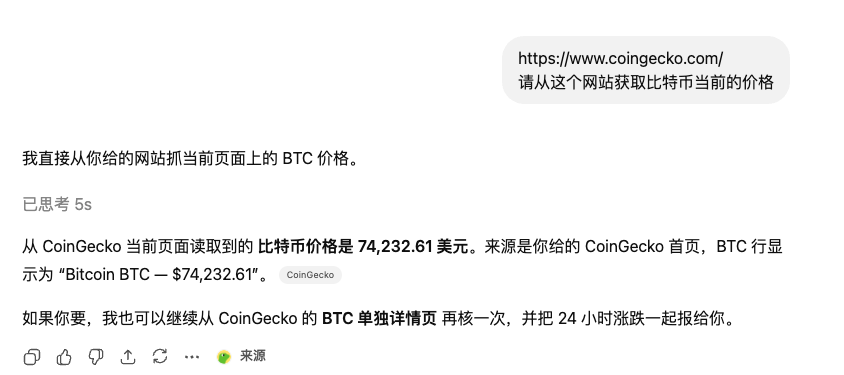
Judging from the use cases demonstrated officially, Finrob's ultimate purpose seems to be to provide users with investment advice. Leaving aside whether AI can really guide actual trading decisions, is the intelligence of Finrob using free models really higher than that of GPT5.4, Claude Opus 4.6, etc.? I originally thought Finrob would be genuinely better than ChatGPT at获取实时获取 real-time token prices, but after testing it, I found that with a simple prompt, ChatGPT5.4 can also get BTC's real-time price from CoinGecko.

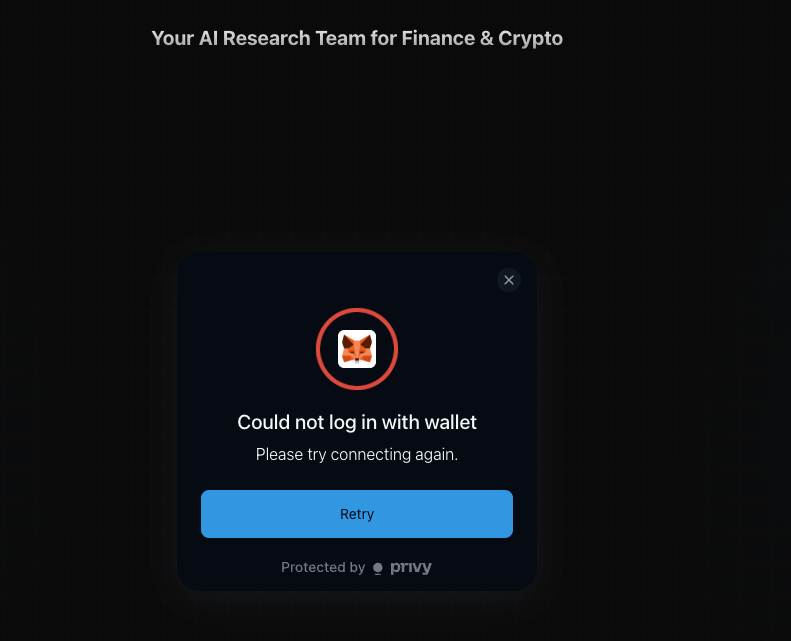
After all these complaints, I actually still wanted to experience finrob firsthand, but it didn't give me the chance. Whether I tried logging in with an email or a wallet, the page提示错误 showed an error.

PlutonAI: DeFAI in the Corner

PlutonAI is a DeFAI (Decentralized Finance AI) platform aimed at enabling AI agents to analyze markets, optimize strategies, manage yield opportunities, and perform complex on-chain operations on behalf of users. On February 17, PlutonAI completed a $2.7 million private round led by kitchenvc, with participation from HyperGPT.

From the project positioning, PlutonAI is a standard Crypto+AI project. Leaving aside whether DeFAI actually has PMF, is safe, or can help users make money, in today's rapidly iterating AI technology, it's already very easy for AI to perform on-chain operations代替人类完成链上操作代替 humans.

Especially after the explosion of OpenClaw, the crypto circle掀起养龙虾热掀起 a lobster-raising craze, countless bloggers have already shared how to install OpenClaw and how to make OpenClaw participate in on-chain transactions or prediction markets. Meanwhile, exchanges like Binance and OKX have also launched similar AI Agent trading tools/assistants. (Related reading: Under the OpenClaw Frenzy, CEXs Vie for AI Agent Trading Entry Points)

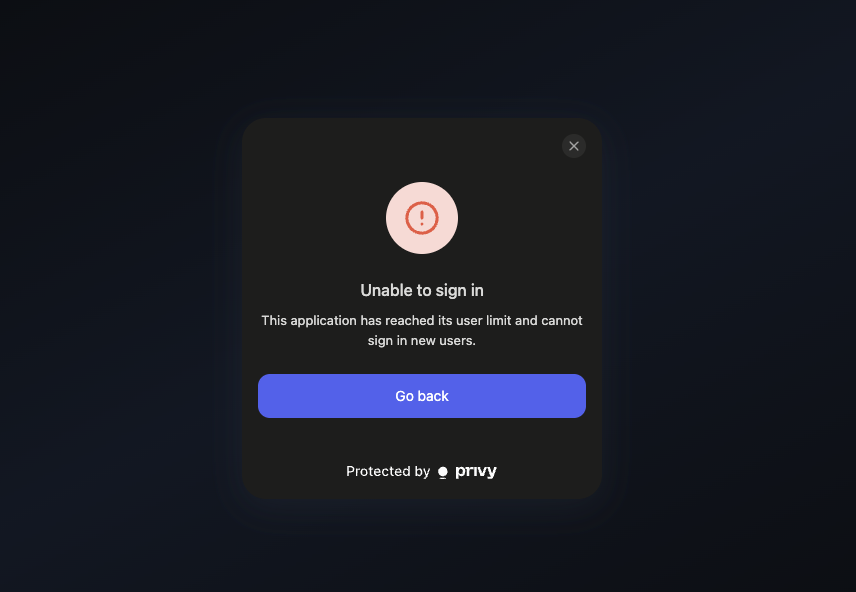
Therefore, one could even judge DeFAI as a pseudo-proposition. I also wanted to try the AI Agent on PlutonAI, but unfortunately, I still couldn't log in.

Unicity: The True Master of Painting Pies (Making Grand Promises)

Unicity is an infrastructure developer committed to building the "Agentic Autonomous Internet," dreaming of enabling billions of AI Agents to perform trustless discovery,交易, and结算 at machine speed. On February 19, Unicity completed a $3 million seed round led by Blockchange, with participation from Outlier Ventures and Tawasal.

This is another company with a grand vision. To find out what business they actually want to do, I特意去读特意 went to read their project whitepaper (finally not written by AI). Overall, Unicity believes that existing chains are unsuitable for AI's high-frequency automated trading and collaboration in terms of throughput, latency, privacy, and fees. Therefore, they want to build an underlying network for AI Agents. The specific solution is to move transactions off-chain for peer-to-peer completion, with the chain only determining state changes to prevent "double-spending," while pairing it with verifiable Agents responsible for supervising execution.

Compared to the projects listed above, Unicity sounds very serious and may indeed form a public chain ecosystem in the future. But what has Unicity, founded in 2025, actually delivered so far? No testnet, 0 ecosystem projects. In a project update released on March 10, it mentioned plans to launch an agent operating system, AstridOS, allowing tools like Claude Code and OpenClaw to run on it. But whether anyone will use it in the end is another matter.

Are Crypto VCs Stupid?

Of course, among the recently funded AI projects, there are still solid ones. For example, RoboForce, which completed a $52 million funding round led by YZi Labs on March 17, is an AI robotics company with no relation to the crypto field. The project is building physical AI, and Jensen Huang mentioned this track as a future direction during his speech at GTC 2026.同时, RoboForce's robots were indeed亮相亮相 showcased at NVIDIA GTC 2025.

There are also others, like Kled, an AI data marketplace that raised $5.5 million on March 11, and VeryAI, which raised $10 million on March 12专注于构建专注于 building an AI Agent identity system. They not only have product-market fit but also real product ecosystems and业绩交付 performance delivery.

But such projects are rare in the crypto industry. So the question is, are other crypto VCs stupid? Knowing full well that many so-called AI projects lack a truly validated product logic, why are they still willing to pour money into them?

The answer lies in the question itself. What crypto VCs want is merely the liquidity of the two letters "AI." Although they can't挤进挤进 squeeze into the table of top projects to share chips, the money must still be spent. So,制造些制造 some "AI substitutes" in the crypto context is未尝不是未尝不是 not a bad business. Project parties only need to负责负责包装包装 package themselves as AI, and VCs can blindly stuff money into them. As long as both sides can eventually get their money back, it's good AI.


Twitter:https://twitter.com/BitpushNewsCN

Bitpush TG Discussion Group:https://t.me/BitPushCommunity

Bitpush TG Subscription: https://t.me/bitpush

Original link:https://www.bitpush.news/articles/7621275

Связанные с этим вопросы

QWhy are crypto VCs investing in AI projects according to the article?

ACrypto VCs are investing in AI projects because they lack quality Web3 projects to fund, and AI is a booming industry. However, since top AI projects are inaccessible to most crypto VCs, they resort to funding crypto-related projects that merely incorporate AI elements to capitalize on the trend and generate liquidity.

QWhat is the main criticism of Derivio, one of the AI projects mentioned?

ADerivio is criticized for being a former decentralized exchange that rebranded as an 'AI-native trading platform' but lacks actual AI functionality. Its website primarily features a meme token scanner, and its promised AI agent feature is not yet available. Additionally, its promotional content was generated by AI.

QWhat common issue did the author find with several AI projects like Superpower and finrob?

AThe author found that projects like Superpower and finrob had non-functional or inaccessible products. Superpower's website had no interactive elements, and finrob's platform failed to allow login attempts, despite claiming to offer specialized AI services for cryptocurrency.

QHow does the article describe the quality of most AI projects funded by crypto VCs?

AThe article describes most AI projects funded by crypto VCs as low-quality 'paper AI projects' with little to no product-market fit. They often rely on vague visions, AI-generated content, and lack tangible products or technological innovation, serving primarily as vehicles for liquidity rather than genuine advancements.

QWhat is the ultimate goal of crypto VCs when investing in these AI projects, as per the article?

AThe ultimate goal of crypto VCs is to gain liquidity and capitalize on the AI trend by funding projects that superficially incorporate AI elements. They prioritize financial returns over genuine innovation, accepting that these 'AI substitutes' are a means to deploy capital and profit in the absence of better investment opportunities.

Похожее

WeChat Agent Issues a 'Heroic Summons,' Half of the Internet Responds

WeChat AI Agent is on the horizon. The WeChat Open Platform has issued a guide for developers, offering them ways to integrate into the WeChat AI ecosystem. This will enable mini-programs to be discovered and invoked by the AI. Meituan has already announced its integration, allowing users to access services like food delivery through WeChat AI. Other platforms like Ctrip and Tongcheng have followed suit. Furthermore, WeChat is collaborating with major smartphone manufacturers to enable their native AI assistants to perform actions within WeChat, such as initiating calls or sending messages, through a controlled protocol called Agent-to-Agent (A2A). Reports indicate the WeChat AI Agent will be accessible by swiping right on the main interface. It aims to understand user intent within the rich context of chats, groups, and past interactions, then automatically call upon relevant mini-programs to complete tasks like ordering coffee or booking restaurants. This positions it as a potential "super app" with direct access to WeChat's vast ecosystem of services, social connections, and payment systems. Technically, this is a complex endeavor. It requires advanced natural language understanding, a "world model" to predict interactions within mini-programs (UI-Oceanus), multi-model orchestration for cost efficiency, and careful coordination with millions of third-party service providers. Tencent's development follows a "Co-Design" approach, where product teams and the Hunyuan model team collaborate closely, allowing capabilities honed in other AI products (like Yuanbao for chat, ima for search, WorkBuddy for office tasks) to be transferred to the WeChat Agent. Tencent is strategically opting for the A2A protocol over GUI-based automation (which it has blocked in the past), maintaining control over its ecosystem. To manage the immense scale and cost of serving 1.4 billion monthly active users, Tencent is deepening its ties with DeepSeek, known for its cost-effective training, to secure a low-cost inference backbone. The ultimate goal is to solve practical, everyday problems for users within the WeChat ecosystem, moving beyond technical benchmarks to deliver real utility, which Tencent sees as the key to winning in the long-term AI game.

marsbit6 мин. назад

WeChat Agent Issues a 'Heroic Summons,' Half of the Internet Responds

marsbit6 мин. назад

Humanity Loses $31 Million in Attack, Token Price Plummets 90% Due to a Single Private Key

On June 9th, the digital identity project Humanity Protocol suffered a major security breach resulting in over $31 million in losses. According to on-chain analyst Specter, hundreds of wallets holding the project's H token were drained. The attack was confirmed by founder Terence Kwok to be caused by the compromise of a foundation member's private key. As a precaution, users are advised to avoid interacting with Humanity's cross-chain bridge or liquidity pools. The incident caused the H token price to crash over 90%, from around $0.70 to a low of $0.052, wiping its market cap from $2 billion to approximately $35.7 million. The attacker allegedly minted 100 million new H tokens and is selling them for BNB. This breach adds to existing controversies surrounding Humanity Protocol. Founded in 2024, it aimed to verify human users via palm-print biometrics and zero-knowledge proofs. However, a leaked conversation in 2025 revealed that only about 1 million of its 9 million claimed Human IDs had completed biometric verification, suggesting 88% might be bots. Furthermore, the project has faced allegations of being a repackaged product from a Chinese access control vendor, raising privacy and authenticity concerns. Founder Terence Kwok's previous venture, Tink Labs, a hotel smartphone startup that raised $170 million, failed and entered bankruptcy in 2020 after burning through its funding. The current attack highlights the persistent critical issue of private key management in crypto. Unlike smart contract exploits, a private key compromise bypasses all on-chain security mechanisms. With no user compensation plan announced yet, this $31 million breach may be a final blow to the project's credibility, already weakened by previous controversies and a heavily depreciated token.

marsbit40 мин. назад

Humanity Loses $31 Million in Attack, Token Price Plummets 90% Due to a Single Private Key

marsbit40 мин. назад

MicroStrategy Will Not Die in This Downturn: Reflexivity, STRC Anchoring Back to Par, and the Self-Rescue Logic of "Sell Stock, Not Bitcoin"

This article analyzes the recent sharp decline in Bitcoin and MicroStrategy (MSTR), framing it as a targeted "reflexivity" attack. The trigger was MSTR using its cash reserves to buy back convertible notes, raising market concerns about a liquidity crisis. The playbook follows George Soros's principle: market expectations can shape reality. Fears that MSTR might be forced to sell BTC caused panic selling, lowering BTC's price and worsening MSTR's financial ratios, thus reinforcing the negative narrative. The author argues that MSTR's Structured Convertible (STRC), while falling in price, is a floating-rate security that will eventually return to par value (100). The price drop reflects the market demanding a higher yield due to perceived risk, but as a floating-rate instrument, its coupon can adjust, naturally pulling the price back to par over time. This is crucial for MSTR's continued ability to raise funds. The core thesis is that MSTR's best move to counter the attack is to **issue new equity (sell shares)**, not sell its Bitcoin holdings. While selling BTC would solve the immediate cash crunch, it would destroy the company's core investment thesis and premium. It would dilute the BTC per share, likely erase the market premium over its net asset value (mNAV > 1), and worsen its debt-to-asset ratio. Issuing shares while mNAV is high (e.g., 1.25x) allows MSTR to raise cash for reserves without harming shareholder value or the "perpetual accumulation" narrative. It improves the debt ratio and reassures STRC holders, breaking the negative reflexivity cycle. In conclusion, while MSTR could survive this episode even by selling BTC, doing so would fundamentally alter its investment proposition and weaken it for future cycles. The optimal, value-preserving strategy is to sell equity to rebuild reserves and maintain the long-term growth flywheel.

marsbit41 мин. назад

MicroStrategy Will Not Die in This Downturn: Reflexivity, STRC Anchoring Back to Par, and the Self-Rescue Logic of "Sell Stock, Not Bitcoin"

marsbit41 мин. назад

Humanity Loses $31 Million, a Private Key Causes Token Price to Plunge 90%

On June 9th, the digital identity project Humanity Protocol suffered a major security breach resulting in over $31 million stolen from hundreds of wallets holding its H token. The attack was caused by the compromise of a private key belonging to a foundation member, leading the team to advise users against interacting with its bridge or liquidity pools. Following the incident, the price of the H token plummeted by over 90%, from around $0.70 to a low of $0.052, wiping out a significant portion of its market capitalization. The attacker allegedly minted 100 million new H tokens and began selling them for BNB. Humanity Protocol, founded in 2024, aimed to verify human users through palm-print biometrics and zero-knowledge proofs on Polygon CDK. Despite raising $50 million across two funding rounds and achieving a unicorn valuation, the project faced prior controversies. Shortly after its June 2025 token launch, reports emerged that only about 1 million of its 9 million registered IDs had completed biometric verification, suggesting 88% might be bots. Furthermore, allegations surfaced that the project might be a rebranded "shell" of a Chinese access control company, raising concerns about data privacy and authenticity. The project's founder, Terence Kwok, has a controversial business history. His previous venture, Tink Labs, burned through $170 million in funding before collapsing in 2020. The breach highlights the persistent critical risk of private key management in crypto. With no user compensation plan detailed in the initial response, the incident deals a severe blow to trust in a project already struggling with credibility issues.

Foresight News1 ч. назад

Humanity Loses $31 Million, a Private Key Causes Token Price to Plunge 90%

Foresight News1 ч. назад

Торговля

Спот
Фьючерсы

Популярные статьи

Неделя обучения по популярным токенам (2): 2026 может стать годом приложений реального времени, сектор AI продолжает оставаться в тренде

2025 год — год институциональных инвесторов, в будущем он будет доминировать в приложениях реального времени.

1.8k просмотров всегоОпубликовано 2025.12.16Обновлено 2025.12.16

Неделя обучения по популярным токенам (2): 2026 может стать годом приложений реального времени, сектор AI продолжает оставаться в тренде

Обсуждения

Добро пожаловать в Сообщество HTX. Здесь вы сможете быть в курсе последних новостей о развитии платформы и получить доступ к профессиональной аналитической информации о рынке. Мнения пользователей о цене на AI (AI) представлены ниже.

活动图片