Автор: HashGlobal KK, основатель Hash Global
Компиляция: Цзяхуань, ChainCatcher
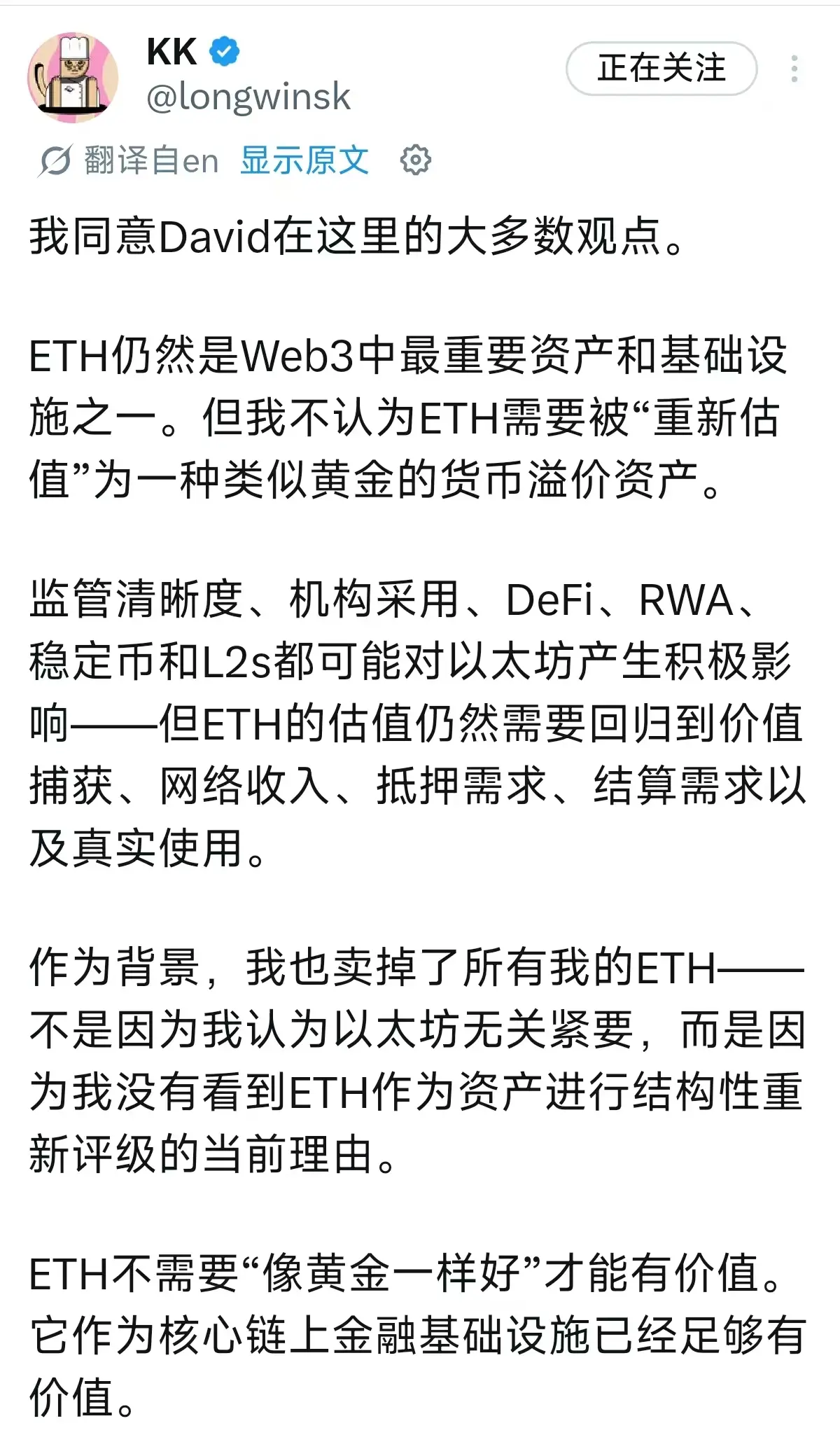
Автор продал все свои позиции ETH, статья опубликована 24 мая.
Недавно я прочитал статью, в которой утверждается, что если американский закон CLARITY будет принят, Ethereum станет крупнейшим победителем.
Её ключевой аргумент заключается в том, что ETH может стать единственным активом, сочетающим свойства "децентрализованного цифрового товара" и "программируемой платформы для смарт-контрактов" в рамках американского регуляторного поля. Следовательно, оценочная модель ETH должна сместиться с логики доходов сети к логике денежной премии, аналогичной BTC, золоту или даже суверенным резервным активам.
Я считаю эту точку зрения вдохновляющей, но вывод может быть чрезмерно растянутым.
Это не означает, что я настроен медвежье в отношении ETH или отрицаю позитивное влияние CLARITY.
Напротив, регуляторная ясность, безусловно, является значительным позитивом для ETH. Она уменьшит проблемы с соблюдением нормативных требований для институционального размещения ETH и поможет дальнейшему развитию ETF, услуг хранения, стейкинга, институционального DeFi, RWA и бизнеса ончейн-расчётов.
Однако, регуляторная ясность не равнозначна денежной премии.
CLARITY может решить проблему "регуляторной скидки" для ETH, но он не откроет автоматически оценочное пространство, связанное с золотом, недвижимостью или глобальными резервными активами.
Это две совершенно разные вещи, и их следует анализировать отдельно.
1. Рынок пока не покупает эту логику
Если бы рынок действительно воспринимал ETH как "программируемое золото" или "приносящий доход денежный актив", его оценка должна была бы быть ближе к BTC.
Но это не так.
Оценивая ETH, рынок по-прежнему обращает внимание на конкретные показатели:
- Доходы основной сети Ethereum;
- Активность DeFi;
- Осуществляются ли расчёты стейблкоинов и RWA в основном внутри экосистемы Ethereum;
- Потоки стоимости от L2 к L1;
- Доходность от стейкинга ETH;
- Приток средств в ETH ETF;
- Конкуренция со стороны таких экосистем, как Solana, BNB Chain и Base.
По своей сути это логика оценки сетевых активов, активов платформы и активов экосистемы.
BTC другой. У него нет денежного потока, нет экосистемы приложений, и нет необходимости обсуждать доходы сети. Его логика проста: 21 миллион монет, несуверенный, устойчивый к цензуре, цифровое золото. Люди могут не соглашаться с этим нарративом, но он прост, понятен и легко распространяется.
Нарратив ETH гораздо сложнее. ETH служит платой за газ (Gas), активом для стейкинга, залоговым обеспечением в DeFi, активом для расчётов на L2 и инфраструктурой для институциональных ончейн-финансов. Хотя множественные функции являются преимуществом, для денежной премии обычно требуется предельно простой нарратив.
Сложность полезна для развития экосистемы, но не обязательно способствует формированию денежной премии, подобной той, что у золота и BTC.
2. Юридическая классификация — это лишь входной билет
В исходной статье был сделан ключевой скачок: поскольку ETH может быть юридически признан децентрализованным цифровым товаром, он должен войти в оценочную модель активов первого эшелона с денежной премией.
Я считаю такое умозаключение проблематичным.
Юридическая классификация решает вопросы: могут ли институты легально владеть? Могут ли легально торговать? Могут ли легально хранить? Могут ли легально разрабатывать связанные продукты?
Денежная премия решает вопрос: готов ли глобальный рынок держать его как долгосрочное средство сохранения богатства?
Это два разных вопроса.
Золото обладает денежной премией не потому, что какой-то отдельный закон так его классифицирует, а потому что многовековой исторический консенсус, физическая редкость, потребность центральных банков в резервах и геополитические свойства убежища совместно формируют огромный консенсус.
BTC обладает денежной премией не потому, что он может выполнять смарт-контракты, а потому что он достаточно прост, достаточно чист и достаточно похож на "цифровое золото".
Для того чтобы ETH получил денежную премию, одной лишь регуляторной классификации недостаточно. Ему также необходимо доказать, что глобальный капитал готов держать ETH как долгосрочное средство сохранения стоимости, а не просто как важный актив инфраструктуры ончейн-финансов.
Между этими двумя состояниями по-прежнему существует большой разрыв.
3. DeFi может ослабить нарратив о "единственном приносящем доход" ETH
В исходной статье подчёркивалось одно преимущество ETH: ETH может приносить доход через стейкинг, в то время как BTC и золото — нет.
Хотя сегодня в этом есть определённый смысл, в ближайшие годы ситуация может измениться.
С развитием DeFi и RWA в будущем многие активы будут токенизированы. Золото, казначейские облигации, фонды денежного рынка, фонды недвижимости, права на доход, товары и ETF на акции — всё это может войти в систему ончейн-финансов в виде токенов.
Как только эти активы окажутся в блокчейне, они также получат новые возможности:
- Могут использоваться в качестве залога;
- Могут использоваться для кредитования;
- Могут использоваться для маркетмейкинга;
- Могут комбинироваться в структурированные продукты с доходом;
- Могут интегрироваться с протоколами DeFi;
- Могут формировать замкнутые ончейн-денежные потоки со стейблкоинами.
Следовательно, в будущем ETH не будет единственным активом, "приносящим доход".
Токенизированное золото, интегрированное с DeFi, также может приносить ончейн-доход. Токенизированные казначейские облигации и фонды денежного рынка сами по себе имеют базовый доход. Токенизированные фонды недвижимости и другие RWA также могут генерировать денежный поток.
Тогда вопрос будет не в том, "ETH может приносить доход, а золото — нет".
Настоящий вопрос будет следующим: Что является лучшим залоговым обеспечением? У кого меньше волатильность? Чей источник дохода более ясен? Чей регуляторный статус выше? Что больше подходит для балансов институтов? Что глобальный капитал с большей вероятностью будет держать в долгосрочной перспективе?
С этой точки зрения у ETH может и не быть преимуществ по сравнению с токенизированным золотом, токенизированными казначейскими облигациями или токенизированными фондами денежного рынка.
Доход от стейкинга ETH происходит от механизма безопасности сети, а не от традиционной безрисковой доходности. Он несёт в себе риски протокола, риски валидаторов, риски слэшинга, риски протоколов ликвидного стейкинга, регуляторные риски и риски ценовой волатильности.
Для институтов стейкинг ETH, конечно, является ценной особенностью, но её не следует напрямую приравнивать к "превосходству над золотом".
4. Денежная премия принадлежит BTC, золоту и токенизированному золоту
Я склонен полагать, что в будущем денежная премия будет в основном принадлежать BTC, золоту и потенциально токенизированному золоту.
Позиционирование BTC ясно: цифровое золото.
Позиционирование золота также ясно: важнейшее несуверенное средство сохранения стоимости в традиционном мире.
Если токенизированное золото получит развитие, ситуация может стать очень привлекательной. Оно унаследует исторический кредит золота и одновременно получит ончейн-ликвидность, композабилити и способность служить залогом. В этом случае денежная премия золота не обязательно потечёт к ETH; напротив, она может усилиться благодаря токенизированному золоту.
Это не обязательно плохо для ETH. Эти токенизированные активы также нуждаются в ончейн-инфраструктуре и могут выпускаться, торговаться и использоваться в качестве залога на Ethereum или Ethereum L2.
Однако это означает, что ETH — это скорее актив инфраструктуры, а не конечный актив денежной премии.
Инфраструктура, конечно, имеет ценность. Но оценка инфраструктуры обычно возвращается к показателям использования, доходам, сетевым эффектам и захвату стоимости, а не к прямой аналогии с общей рыночной капитализацией золота, денежной премией недвижимости или пулом глобальных резервных активов.
5. Проблема захвата стоимости Ethereum всё ещё не решена
В исходной статье утверждалось, что CLARITY увеличит разрыв между ETH и другими платформами для смарт-контрактов, другие L1 могут войти во второй эшелон оценки, а ETH останется в первом.
К этому суждению также следует подходить с осторожностью.
Реальный мир не будет выбирать блокчейн исключительно на основе американской регуляторной классификации.
Разные страны, активы и институты будут выбирать базовую сеть на основе множества факторов:
- Стоимость;
- Производительность;
- Интерфейсы соответствия;
- Требования KYC/AML;
- Отношение местных регуляторов;
- Ресурсы экосистемы;
- Ликвидность;
- Отношения с эмитентами активов и поставщиками услуг;
- Нужна ли разрешённая среда.
Многие сценарии RWA, стейблкоинов и платежей не обязательно выберут основную сеть Ethereum. Они могут выбрать L2, аппчейны, консорциумные блокчейны или другие L1, которые больше соответствуют местным нормам и бизнес-потребностям.
Что ещё более важно, даже если в экосистеме Ethereum происходит много активности, это не гарантирует, что ETH сможет пропорционально захватывать стоимость.
Как мы видели в последние годы, хотя L2 расширили экосистему Ethereum, они также подняли вопрос: как только L2 масштабируются, сколько стоимости действительно вернётся к ETH?
Если большие объёмы транзакций происходят на L2 со снижающимися комиссиями, и прикладной уровень и сами L2 захватывают больше пользовательской стоимости, а основная сеть ETH обрабатывает только финальные расчёты и безопасность, то способность ETH захватывать стоимость всё ещё требует доказательств.
Нельзя предполагать, что рост экосистемы Ethereum автоматически приведёт к пропорциональному росту стоимости ETH.
Вот почему я считаю, что оценка ETH должна вернуться к конкретным вопросам: доходы сети, потребность в расчётах, спрос на залог, доходность от стейкинга и потоки стоимости в экосистеме.
6. Использовать Ethereum ≠ покупать ETH
Также необходимо сделать различие: вход институтов в ончейн-финансы не означает, что они будут размещать ETH как основной актив.
Институты могут:
- Использовать сеть Ethereum;
- Использовать Ethereum L2;
- Выпускать токенизированные фонды;
- Использовать стейблкоины для расчётов;
- Использовать ончейн-хранилища и инструменты для соответственных переводов;
- Использовать DeFi или лицензированный DeFi;
- Косвенно получать доступ к ончейн-финансам через поставщиков услуг.
Для всего этого им не нужно покупать большое количество ETH.
Подобно тому, как компании, интенсивно использующие облачные сервисы, не обязательно покупают акции облачных компаний, институты, использующие блокчейн-инфраструктуру, также не обязательно должны долгосрочно держать базовый токен.
Чтобы ETH превратился из "используемой сети" в "долгосрочно удерживаемый актив", необходим чёткий механизм захвата стоимости.
Если этот механизм всё ещё не ясен, рынок продолжит оценивать ETH на основе доходов, комиссий, доходности от стейкинга и роста экосистемы.
7. Грандиозные нарративы больше не поддерживают оценку
В предыдущем цикле рынок был готов давать оценку за грандиозные нарративы.
"Мировой компьютер", "Интернет стоимости", "Глобальный слой расчётов", "Основа децентрализованных финансов" — эти нарративы были очень сильны. Ethereum, несомненно, был их важнейшим представителем.
Но рынок изменился.
Инвесторы всё чаще спрашивают: Где доходы? Где пользователи? Где захват стоимости? Где реальный спрос? Где регуляторный путь? Где замкнутая бизнес-логика?
Как мы неоднократно подчёркивали в последние годы, Web3 не может оставаться лишь на уровне видения; в конечном итоге он должен вернуться к фундаментальной стоимости и базовой бизнес-логике.
Может ли он зарабатывать деньги? Обеспечивает ли он лучший пользовательский опыт? Создаёт ли он реальную экономическую ценность? Если на эти вопросы нельзя ответить, даже самый грандиозный нарратив вряд ли сможет долго поддерживать оценку.
То же самое относится и к ETH.
Хотя он, безусловно, является одной из важнейших инфраструктур Web3, для получения более высокой оценки рынку, возможно, необходимо увидеть:
- Повторный рост DeFi;
- Восстановление доходов основной сети;
- Более чёткие потоки стоимости от L2 к L1;
- Реальный спрос на расчёты стейблкоинов и RWA внутри экосистемы Ethereum;
- Постоянный рост спроса на залог ETH;
- Институтам действительно необходимо держать ETH, а не просто использовать Ethereum.
Ничего из этого не может быть автоматически достигнуто с помощью одного закона.
8. Истинное значение CLARITY — исправить регуляторную скидку
Поэтому я склонен рассматривать влияние CLARITY на ETH скорее как снижение регуляторной скидки, а не как разблокировку потенциала переоценки на триллионы долларов за счёт денежной премии.
В прошлом ETH действительно сталкивался с регуляторной неопределённостью. Если американские регуляторы более чётко признают товарные свойства ETH, это будет значительным позитивом.
Однако это превратит ETH из "сетевого актива с регуляторным риском хвостовых событий" в "сетевой актив с более ясным регулированием".
Это уже имеет большое значение.
Но это не означает, что ETH автоматически станет заменой золоту, BTC или глобальным резервным активам.
Если рынок продолжит оценивать ETH на основе доходов сети, доходности от стейкинга, потоков стоимости L2, активности DeFi, объёмов расчётов RWA и использования институтами, то оценка ETH по-прежнему будет ограничиваться фундаментальными показателями.
Это не обязательно плохо. Качественные активы инфраструктуры заслуживают высокой стоимости. Но они не эквивалентны активам денежной премии.
9. Моя позиция по ETH
Я по-прежнему верю, что ETH является одним из важнейших активов в индустрии цифровых активов.
Его долгосрочная стоимость проистекает из нескольких аспектов: во-первых, это важнейшая открытая сеть для смарт-контрактов.
Во-вторых, это ключевой слой расчётов для DeFi, стейблкоинов, RWA и ончейн-финансов.
В-третьих, с регуляторной точки зрения, это одна из наиболее защищённых децентрализованных инфраструктур.
В-четвёртых, он накопил долгосрочное признание со стороны разработчиков, приложений, активов и институтов.
В-пятых, по мере того как Web3 входит в фазу массового коммерческого применения, он может стать чрезвычайно важным базовым активом доверия и расчётов.
Однако эта стоимость больше похожа на стоимость инфраструктуры, сетевую стоимость, стоимость экосистемы и стоимость залога.
Он может пользоваться некоторой премией за редкость, премией за регуляторную ясность и премией за сетевые эффекты, но не обязательно той чистой денежной премией, которой пользуются BTC или золото.
ETH обладает значительной долгосрочной стоимостью, но его оценочная модель не должна быть ошибочно заменена.
10. CLARITY полезен для ETH, но не считайте ETH золотом
Моя ключевая оценка этой ситуации проста:
CLARITY полезен для ETH, но это не означает, что ETH следует оценивать как золото.
Регуляторная ясность — это позитив, но она не эквивалентна денежной премии.
ETH — это чрезвычайно важный актив инфраструктуры ончейн-финансов, но он не обязательно станет конечным средством хранения глобального богатства.
В будущем денежную премию, вероятно, будут получать в основном BTC, золото, а также потенциально токенизированное золото и другие высоконадёжные активы сохранения стоимости. ETH, скорее всего, будет служить ключевой инфраструктурой для выпуска в блокчейн, обращения, залога, расчётов и комбинирования этих активов.
Это положение уже достаточно важно, и нет необходимости втискивать ETH в нарратив "лучше золота".
Более устойчивой оценочной моделью для ETH может быть следующая: регуляторная ясность стимулирует исправление скидки; вход институтов стимулирует рост спроса; экосистемы DeFi, RWA, стейблкоинов и L2 определяют объём использования сети; доходы сети, спрос на залог и потоки стоимости определяют долгосрочную оценку; денежная премия может рассматриваться как оптимистичный сценарий, но не должна быть базовым предположением.
Вот мои основные возражения относительно тезиса о переоценке ETH.
Индустрия Web3 часто превращает реальные позитивы в огромные истории оценки. Хотя воображение ценно, возвращение к фундаментальным вопросам является более ключевым.
Какие реальные проблемы решает этот актив? Кто будет держать его в долгосрочной перспективе? Каковы вознаграждение и риски от его владения? Откуда на самом деле происходит его стоимость? Если экосистема развивается, будет ли стоимость действительно накапливаться в этом токене?
Если на эти вопросы нельзя чётко ответить, одной лишь регуляторной классификации будет трудно поддержать настоящий скачок в оценке.