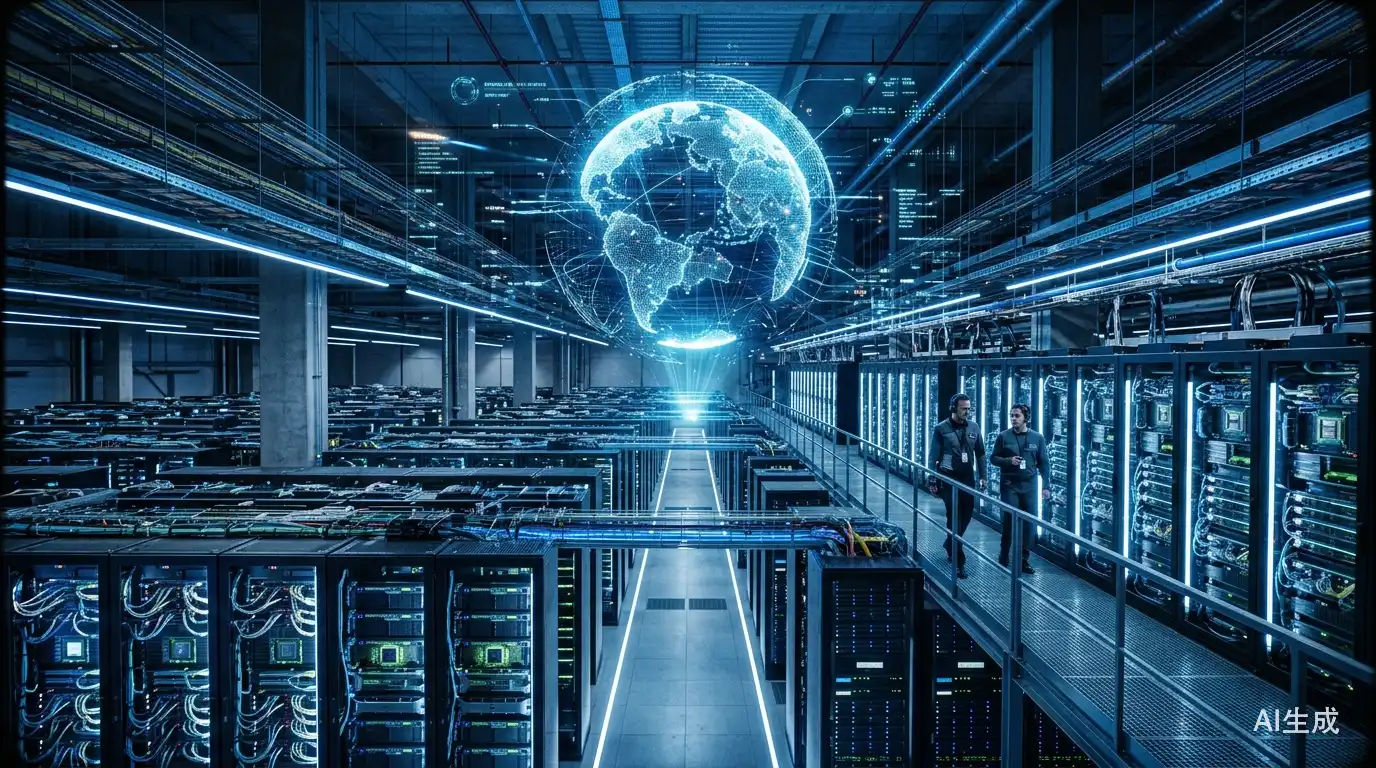
Gensyn AI: Don't Let AI Repeat the Mistakes of the Internet

marsbitОпубликовано 2026-05-10Обновлено 2026-05-10

Введение

In recent months, the rapid growth of the AI industry has attracted significant talent from the crypto sector. A persistent question among researchers intersecting both fields is whether blockchain can become a foundational part of AI infrastructure. While many previous AI and Crypto projects focused on application layers (like AI Agents, on-chain reasoning, data markets, and compute rentals), few achieved viable commercial models. Gensyn differentiates itself by targeting the most critical and expensive layer of AI: model training. Gensyn aims to organize globally distributed GPU resources into an open AI training network. Developers can submit training tasks, nodes provide computational power, and the network verifies results while distributing incentives. The core issue addressed is not decentralization for its own sake, but the increasing centralization of compute power among tech giants. In the era of large models, access to GPUs (like the H100) has become a decisive bottleneck, dictating the pace of AI development. Major AI companies are heavily dependent on large cloud providers for compute resources. Gensyn's approach is significant for several reasons: 1) It operates at the core infrastructure layer (model training), the most resource-intensive and technically demanding part of the AI value chain. 2) It proposes a more open, collaborative model for compute, potentially increasing resource utilization by dynamically pooling idle GPUs, similar to early cloud computin...

Over the past few months, due to the vigorous development of the entire AI industry, a large number of crypto industry talents have shifted to AI. Researchers involved in both fields are also exploring a proposition that no one has yet successfully realized:

Can blockchain become a part of AI infrastructure?

In the past two years, the market has seen many versions of the integration of AI and Crypto: AI Agents, on-chain inference, data markets, compute power leasing. The hype is high, but there aren't many projects that have truly formed a closed business loop. The reason is simple: most projects remain at the "AI application layer." But Gensyn is targeting the most core and expensive layer of the AI industry:

"Model Training"

How to achieve this? By organizing globally distributed GPU resources into an open AI training network. Developers can submit training tasks, nodes provide computing power, the network is responsible for verifying the training results and completing incentive distribution. What is truly worth paying attention to behind this is not "decentralization" itself, but a problem that is becoming increasingly impossible to ignore in the AI industry:

Computing resources have rapidly concentrated in the hands of a few giants. Large companies are already competing for chips several years in advance. Over the past year, a clear trend has gradually formed in the AI industry: whoever controls GPUs controls the speed of AI development, especially in the era of large models, where training resources have become a core barrier to entry.

H100 supply is tight, cloud service prices continue to rise. The first step for major domestic companies to develop AI is not to expand teams, but to lock in computing resources. This is also why behind OpenAI, Anthropic, and xAI, there are large cloud vendors. Because behind model competition, it has essentially become infrastructure competition. And the significance of Gensyn lies in:

Providing a new way to organize resources for AI training.

1. It Targets the Most Core Infrastructure Layer of the AI Industry

Many AI+Crypto projects lean more towards application-layer narratives. To put it bluntly, everyone is just building apps. But Gensyn directly enters the training phase. This is the part of the entire AI value chain with the highest technical barriers and the greatest resource consumption, and it is currently the layer most prone to forming platform barriers. Because once the training network reaches scale, it is not just a compute marketplace; it may become an important entry point for future AI development. This is also why the market continues to pay attention to Gensyn, and why A16Z has made two major investments leading the rounds.

2. It Provides a More Open Model of Compute Collaboration

Traditional AI training heavily relies on centralized cloud platforms. The advantage is stability, but costs are also continuously rising. Especially for small and medium-sized AI teams, training resources have gradually become a limiting factor for innovation. The idea Gensyn provides is: bring more idle GPUs into the network, allowing training resources to be dynamically scheduled, thereby improving overall compute utilization. Behind this logic is somewhat similar to when cloud computing first emerged: not reinventing computing, but reorganizing computing resources. If this model can be consistently proven, it will bring not only cost optimization but also potentially improve the resource efficiency of the entire AI industry.

3. Technical Barriers Are Its Important Moat

The truly difficult part of a training network is never "connecting GPUs," but rather: how to verify training results, how to ensure nodes honestly execute tasks, how to maintain training reliability in a distributed environment. What Gensyn has been working on is precisely this part, including mechanisms like probabilistic verification, task distribution models, node coordination systems, etc. These things might not be as "eye-catching" as Agent narratives, but they determine whether the network is truly usable. To some extent, Gensyn is more like a deep-tech infrastructure company. This is also its biggest difference from many projects in the same track.

4. It Has Formed a Closed Business Loop

One of the biggest controversies in the Crypto industry in the past has been: many projects have narratives but lack real demand. However, AI training is different. This is a proven, fast-growing real market. Global AI training demand continues to expand, the GPU resource gap persists in the long term, and Gensyn is targeting an industrial chain segment where clear demand already exists. In other words, it's not "on-chain for the sake of being on-chain," but because the AI industry itself needs a more flexible, more open resource scheduling system. This is also why more and more capital is starting to focus on the AI Infra direction. Because compared to short-cycle applications, infrastructure, once it forms network effects, often has a longer lifecycle.

Finally, a very interesting change is taking place. In the past, people always thought: Crypto is a financial system, AI is a technical system.

But now, the boundary between the two is becoming increasingly blurred. AI needs resource coordination, incentive mechanisms, and global collaboration. And these are precisely the areas where Crypto excels the most. It's about making training capability no longer belong only to a few giants, but becoming a more open, more collaborative system. At least from what we can see now, this is no longer just a conceptual story but is evolving towards a real AI infrastructure. And the most valuable companies of the AI era often also emerge from the infrastructure layer.

Связанные с этим вопросы

QAccording to the article, what is the core proposition that many AI+Crypto projects explore?

AThe article states that the core proposition being explored is whether blockchain can become part of AI infrastructure.

QWhat specific layer of the AI industry does Gensyn target, and why is it significant?

AGensyn targets the 'model training' layer, which is the most core, expensive, and technically demanding part of the AI value chain, representing a high barrier to entry and platform advantage.

QWhat is the major problem in the AI industry that Gensyn aims to address, according to the text?

AGensyn aims to address the problem of centralized control of GPU computing power by a few giants, which limits access, increases costs, and controls the pace of AI development, especially in the large model era.

QWhat is the fundamental value proposition of Gensyn's decentralized training network?

AIts value proposition is to organize globally distributed GPU resources into an open AI training network, providing a new, more flexible, and open model for resource coordination and scheduling to improve overall computing power utilization.

QWhat does the article identify as Gensyn's key technological challenge and moat, compared to other AI+Crypto projects?

AThe key technological challenge and moat is not simply connecting GPUs, but developing systems for verifying training results, ensuring node honesty, and maintaining training reliability in a distributed environment (e.g., probabilistic verification mechanisms).

Похожее

Standing in the Light: A Comprehensive Guide to the Optical Module and CPO Supply Chain

"Standing in the Light: Understanding the Optical Module and CPO Industry Chain" This article analyzes the critical role of optical communication technology, specifically optical modules and Co-Packaged Optics (CPO), as the "nervous system" for modern AI data centers. With exponential growth in AI computational demands (e.g., NVIDIA's Vera Rubin architecture), traditional electrical interconnects using copper cables face severe bottlenecks in bandwidth, power consumption, and signal integrity over distance. The core function of an optical module is to act as a "translator," converting electrical signals from chips into optical signals for transmission over fiber (and vice-versa). Key internal components include lasers, modulators, photodetectors, drivers, and DSP chips. The industry is currently transitioning from 800G to 1.6T modules. However, the future lies in CPO. This next-generation technology integrates the optical engine directly with the switch ASIC/XPU on the same package substrate, drastically reducing power consumption (by ~3.5x according to NVIDIA), overcoming bandwidth density limits, and minimizing signal attenuation compared to traditional pluggable modules. Key challenges for CPO include advanced packaging capacity (dominated by TSMC), thermal management, repairability, and standardization. The article details the broader technology landscape, including Near-Packaged Optics (NPO, a pragmatic intermediate step), Linear-drive Pluggable Optics (LPO), Optical I/O (OIO for chip-level integration), and Optical Circuit Switches (OCS). A comprehensive CPO industry chain is mapped, highlighting shifting power dynamics: * **Architecture Definers:** NVIDIA, Broadcom, and Marvell now hold greater influence. * **Advanced Packaging & Manufacturing:** TSMC is central; Fabrinet is a key EMS player. * **Lasers ("The Heart"):** A strategic bottleneck. EML lasers are led by Lumentum and Coherent (both receiving major NVIDIA investments). CW lasers, favored for CPO/silicon photonics, see strong Chinese players like Source Photonics and Sicoya. * **Silicon Photonics Chips:** The mainstream path for CPO engines, with key players like Broadcom, Intel, Marvell, and China's Accelink. * **Fiber Connectivity Components:** A major new, high-growth market created by CPO, including Fiber Array Units (FAU), Polarization-Maintaining Fiber (PMF), and MPO connectors. Companies like Tianfu Communication and US Conec are leaders. * **Fiber & Cable:** Experiencing a super-cycle (e.g., Corning, Yangtze Optical Fiber). * **PCB/Substrates:** Requiring advanced materials (e.g., Shengyi Tech). * **DSP & SerDes:** Functions are integrated into switch ASICs in the CPO era (e.g., Broadcom, Astera Labs). * **Optical Module Makers:** Transitioning from standalone module suppliers to providers of optical engines and NPO/LPO solutions while riding the current pluggable boom (e.g., Zhongji Innolight, Eoptolink). The investment timeline is segmented: Short-term (2026-2027) features the "last feast" for pluggable modules and CPO's initial rollout. Medium-term (2027-2029) will see CPO expand and NPO peak. Long-term (2029-2032+) involves CPO/OIO penetration into intra-rack scaling. In conclusion, optical interconnects are fundamental to AI infrastructure. The competitive landscape sees US firms leading in architecture and high-end chips, TSMC in advanced packaging, and Chinese firms holding strong positions in modules, connectivity components, CW lasers, and fiber/cable. The future belongs to companies that can navigate the technological shift from "selling shovels" (modules) to "building highways" (CPO/OIO infrastructure).

marsbit9 мин. назад

Standing in the Light: A Comprehensive Guide to the Optical Module and CPO Supply Chain

marsbit9 мин. назад

Торговля

Спот
Фьючерсы

Популярные статьи

Неделя обучения по популярным токенам (2): 2026 может стать годом приложений реального времени, сектор AI продолжает оставаться в тренде

2025 год — год институциональных инвесторов, в будущем он будет доминировать в приложениях реального времени.

1.8k просмотров всегоОпубликовано 2025.12.16Обновлено 2025.12.16

Неделя обучения по популярным токенам (2): 2026 может стать годом приложений реального времени, сектор AI продолжает оставаться в тренде

Обсуждения

Добро пожаловать в Сообщество HTX. Здесь вы сможете быть в курсе последних новостей о развитии платформы и получить доступ к профессиональной аналитической информации о рынке. Мнения пользователей о цене на AI (AI) представлены ниже.

活动图片