Автор: Cointelegraph
Компиляция: AididiaoJP, Foresight News
Несмотря на общее снижение рынка криптовалют в 2026 году, сектора искусственного интеллекта (AI) и стейблкоинов показали результаты лучше рыночных. Согласно данным, использование этих двух областей продолжает расти на фоне падения цен других активов.
Ключевые выводы
- Сектор AI в первом квартале 2026 года зафиксировал наименьшее падение — всего 14%.
- Общая рыночная капитализация стейблкоинов достигла исторического максимума в 3,2 триллиона долларов, а месячный объем торгов составил 1,8 триллиона долларов, что является также рекордным показателем.
Сектора AI и стейблкоинов растут вопреки тенденции
В 2026 году цена биткоина упала на 18,5%, а общая рыночная капитализация криптовалют снизилась до 2,42 триллиона долларов, при этом большинство альткоинов отставали в performance. Рынок находился под влиянием опасений и неопределенностей, связанных с конфликтом между США и Израилем-Ираном, в то время как ФРС сохраняла жесткую позицию, и общие настроения были осторожными.
В contrast с этим, бизнес, связанный с AI и стейблкоинами, продолжал расти вопреки тенденции, демонстрируя сильные фундаментальные показатели и значительную экспансию, что отражает смещение фокуса рынка от спекулятивного поведения к инфраструктурному строительству.
Возьмем, к примеру, USDC, выпущенный компанией Circle. Данные Token Terminal показывают, что его предложение достигло 780 миллиардов долларов, увеличившись на 220% с ноября 2023 года.
В то же время количество еженедельных активных пользователей ChatGPT выросло с 85 миллионов в ноябре 2023 года до 900 миллионов в марте 2026 года, увеличившись примерно в 10 раз за тот же период.
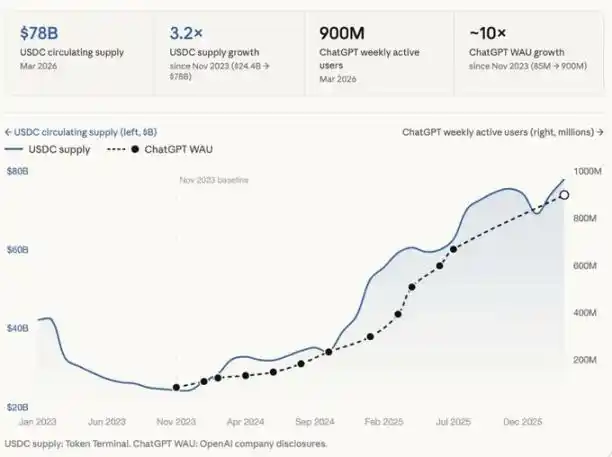
(График: Предложение USDC и количество еженедельных активных пользователей ChatGPT; Источник: Token Terminal)
Отчет Grayscale за первый квартал 2026 года также подтверждает эту тенденцию. В отчете отмечается, что сектор AI показал наименьшее падение в первом квартале — 14%, в то время как потребительский и культурный сектор упал на 31%, сектор платформ смарт-контрактов — на 21%, а денежный сектор — на 21%.
Эта компания по управлению цифровыми активами заявила, что это свидетельствует о том, что «предпочтения инвесторов сместились от движимых импульсом, более спекулятивных секторов». В отчете further указывается:
«Несмотря на то, что общие рыночные настроения остаются подавленными, капитал начал концентрироваться в проектах с более solid фундаментальными показателями, которые соответствуют ключевым темам, таким как AI и токенизация.»
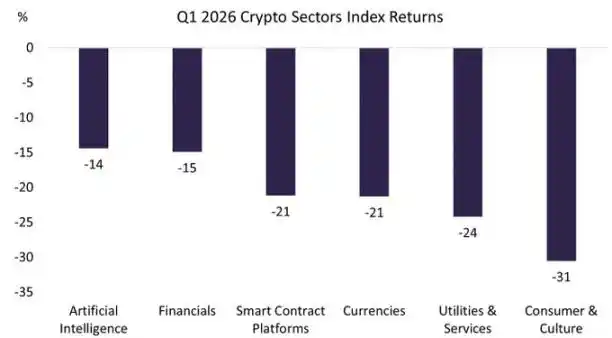
(График: Доходность всех секторов в первом квартале 2026 года была отрицательной; Источник: Grayscale)
В настоящее время общая рыночная капитализация AI-токенов составляет около 174 миллиардов долларов, увеличившись на 30% за последние 30 дней. Среди них Bittensor и NEAR Protocol (NEAR) показали наибольший рост, их цены выросли на 75% и 30% соответственно за тот же период.
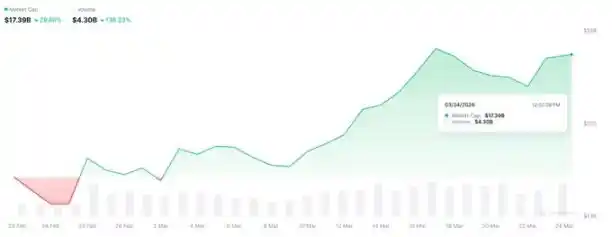
(График: Рыночная капитализация основных AI и Big Data токенов; Источник: CoinMarketCap)
Что касается стейблкоинов, их рыночные масштабы также продолжают расширяться. По состоянию на 23 марта общая рыночная капитализация стейблкоинов достигла рекордных 3,2 триллиона долларов. USDt, выпущенный Tether, продолжает доминировать, с рыночной капитализацией около 1,84 триллиона долларов, что составляет 57% от общего предложения стейблкоинов.
В феврале 2026 года месячный объем торгов стейблкоинами достиг 1,8 триллиона долларов, установив исторический рекорд и сравнявшись с традиционными платежными системами. USDC выделился ростом предложения, показав рост на 80% в monthly исчислении, а volume торгов в прошлом месяце достиг исторического пика в 1,26 триллиона долларов.
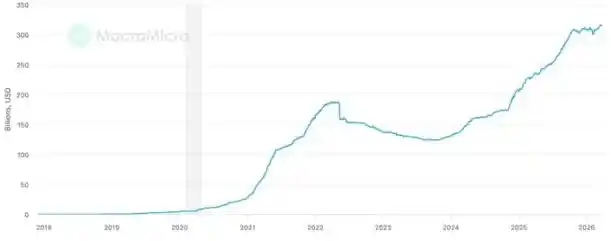
(График: Общая рыночная капитализация стейблкоинов; Источник: MacroMicro.me)
Стейблкоин — это тип криптовалюты, предназначенный для поддержания стабильной стоимости, обычно привязанный к фиатной валюте, такой как доллар США, и способный работать на нескольких блокчейнах.
В условиях медвежьего рынка стейблкоины служат резервом покупательной способности и каналом расчетов, широко используясь в trading парах, токенизированных реальных мировых активах и доходных продуктах. Volume переводов стейблкоинов в Ethereum и других блокчейнах продолжает оставаться на высоком уровне, а институциональные продукты, запущенные банками и финтех-компаниями, также постепенно интегрируют стейблкоины для управления доходами и运作资金. Даже если спекулятивные активы表现低迷, роль стейблкоинов как инфраструктуры остается прочной.
«Структурные попутные ветры»推动 схождение роста двух секторов
Причина, по которой сектора AI и стейблкоинов могут процветать, заключается в том, что они продолжают предоставлять ощутимую ценность даже после того, как спекулятивная лихорадка спадает.
Token Terminal отмечает: «AI-лаборатории и эмитенты стейблкоинов являются одними из предприятий с самыми сильными структурными попутными ветрами в 2020-х годах.»
Данный поставщик加密数据服务 further заявляет, что эти две области находятся на «пересечении трех сил: технологической, финансовой и геополитической», и каждая из этих сил независимо создает спрос для этих двух секторов. В отчете добавляется:
«AI推动着 повышение производительности и обороноспособности, в то время как стейблкоины提供金融инфраструктуру для глобального распределения доллара.»
Криптотрейдер Mando CT в посте на платформе X от 24 марта заявил, что AI и стейблкоины являются двумя из четырех доминирующих секторов в 2026 году.
Объясняя тенденцию слияния двух секторов, трейдер указал, что AI需要即时чные, низкотарифные платежные системы для поддержки своей работы, а стейблкоины являются «интернет-деньгами» для достижения этой цели.
Mando CT сказал: «Эти тенденции взаимосвязаны,» и добавил:
«2026 год — это не еще один цикл вращения, а год перехода от спекуляций к инфраструктуре.»
Как сообщает Cointelegraph, ожидается, что стейблкоины получат выгоду от платежных сценариев, управляемых AI, путем обеспечения удобных, автоматических и основанных на правилах транзакций между实体, further推动长期增长 двух областей.





















