
Пролог
22 мая 2010 года Ласло Ханьеч обменял 10 000 BTC на две пиццы. Этот день позже стал известен как Bitcoin Pizza Day, ежегодно отмечаемый криптосообществом особым способом — умножая те же 10 000 BTC на текущую фиатную цену, получают разительно контрастирующую цифру, с подписью «самая дорогая пицца в истории».
Эта статья не о подсчете сложных процентов с этой суммы.
Эта статья о другом: в этот день, 22 мая 2010 года, биткойн (Bitcoin / BTC) впервые в реальной сделке был использован в качестве единицы для оценки стоимости другого товара. Это был задокументированный момент, когда функция «расчетная единица» (unit of account) из трех функций денег (средство обмена / расчетная единица / средство сбережения) впервые была функционально исполнена в отношении BTC. Этот момент находился в середине более длительной временной шкалы формирования механизмов — от привязки к стоимости производства (NewLibertyStandard) к одноранговому открытию (Bitcoin Market) и далее к централизованному непрерывному котированию (Mt.Gox). Исследовательский отдел Bitbase (Битбейс) восстанавливает эту 9-месячную предысторию и её сопоставимые формы с путями эволюции механизмов открытия цен для множества классов активов в истории.
Глава 1. Что такое «цена» — рождение расчетной единицы
1.1 Три функции денег и концептуальные границы «цены»
Функции денег имеют стандартное определение в учебниках финансовой экономики. Фредерик Мишкин в 13-м издании «Экономики денег, банковского дела и финансовых рынков» (The Economics of Money, Banking, and Financial Markets), глава 3, разделяет функции денег на три [1]: средство обмена (medium of exchange), расчетная единица (unit of account), средство сбережения (store of value). Суждение Джона Хикса в начале «Критических эссе по денежной теории» (Critical Essays in Monetary Theory, Oxford, 1967) более лаконично — «деньги — это то, что делают деньги», деньги определяются своей функцией, а не физической формой [2].
Это различие имеет конкретное методологическое значение для данной статьи. Наличие у чего-либо «обменного курса» и «цены» — не одно и то же. Курс может быть опубликован односторонне — сторонний наблюдатель рассчитывает пропорцию обмена между двумя активами и затем объявляет её; это не требует от участников рынка совершения сделки по этому курсу и не требует, чтобы другие ссылались на эту пропорцию при оценке своего товара. Цена же иная. Цена — продукт рыночного сопоставления, она требует, чтобы как минимум две стороны в конкретный момент времени согласовали пропорцию обмена для конкретной сделки, и чтобы эта пропорция могла быть идентифицирована, использована и повторно применена третьей стороной.
Согласно этому разделению, BTC до 22 мая 2010 года находился в определенном семантическом состоянии: у него существовал обменный курс, но не существовало рыночной цены в рыночном смысле.
1.2 Функциональное исполнение роли «расчетной единицы»
Среди трех функций денег средство обмена (medium of exchange) и расчетная единица (unit of account) интуитивно часто смешиваются, но они не эквивалентны. Первое описывает «использование этого предмета в качестве посредника при обмене» — если обе стороны согласны, любая вещь может выполнять эту функцию. Второе описывает «использование этого предмета в качестве единицы для оценки стоимости других вещей». Тот факт, что товар используется в качестве платежного средства в сделке, не обязательно означает, что он одновременно выполняет функцию ценообразования для этого товара.
18 мая 2010 года Ласло Ханьеч в исходном сообщении в теме Bitcointalk topic=137 написал: «I'll pay 10,000 bitcoins for a couple of pizzas» («Я заплачу 10 000 биткойнов за пару пицц»), и прямо разрешил другой стороне заказать пиццу Papa John's [3]. Во всем исходном сообщении не фигурировала сумма в долларах США (USD) — он не сказал «пицца на X долларов», он сказал «10 000 биткойнов за две пиццы». Когда 22 мая в 19:17:26 UTC о завершении этой сделки было сообщено [4], на функциональном уровне произошло следующее: две пиццы были оценены в единицах «10 000 BTC».
Это задокументированный момент, когда BTC впервые был функционально исполнен в роли расчетной единицы (unit of account). «Функционально исполнять эту роль» и «полностью удовлетворять этой функции в денежном определении» — разные вещи. Последнее требует, чтобы эта единица устойчиво использовалась множеством участников торгов в качестве ценового идентификатора, это условие было частично выполнено только после появления непрерывных котировок на Mt.Gox. 22 мая — первое появление этой функции в реальной сделке.
Примечательно, что цифра «около 25 долларов» не появляется в исходном сообщении от 18 мая. Ханьеч впервые привел эту фиатную привязку в последующем ответе в той же теме 12 июня 2010 года, 20:14:44 UTC [5]. BTC сначала выполнил функцию оценки пиццы в сделке, и только через 21 день появилось семантическое действие «обратной идентификации» между BTC и USD. Эта временная последовательность имеет методологическое значение: функциональное исполнение BTC в качестве расчетной единицы произошло до завершения двусторонней идентификации между BTC и USD.
Глава 2. Временная шкала механизмов
В этой главе восстановлена трехслойная эволюция механизмов с октября 2009 по июль 2010 года в хронологическом порядке. Каждый раздел содержит первичные временные метки, ID первичных сообщений и описание самого механизма.
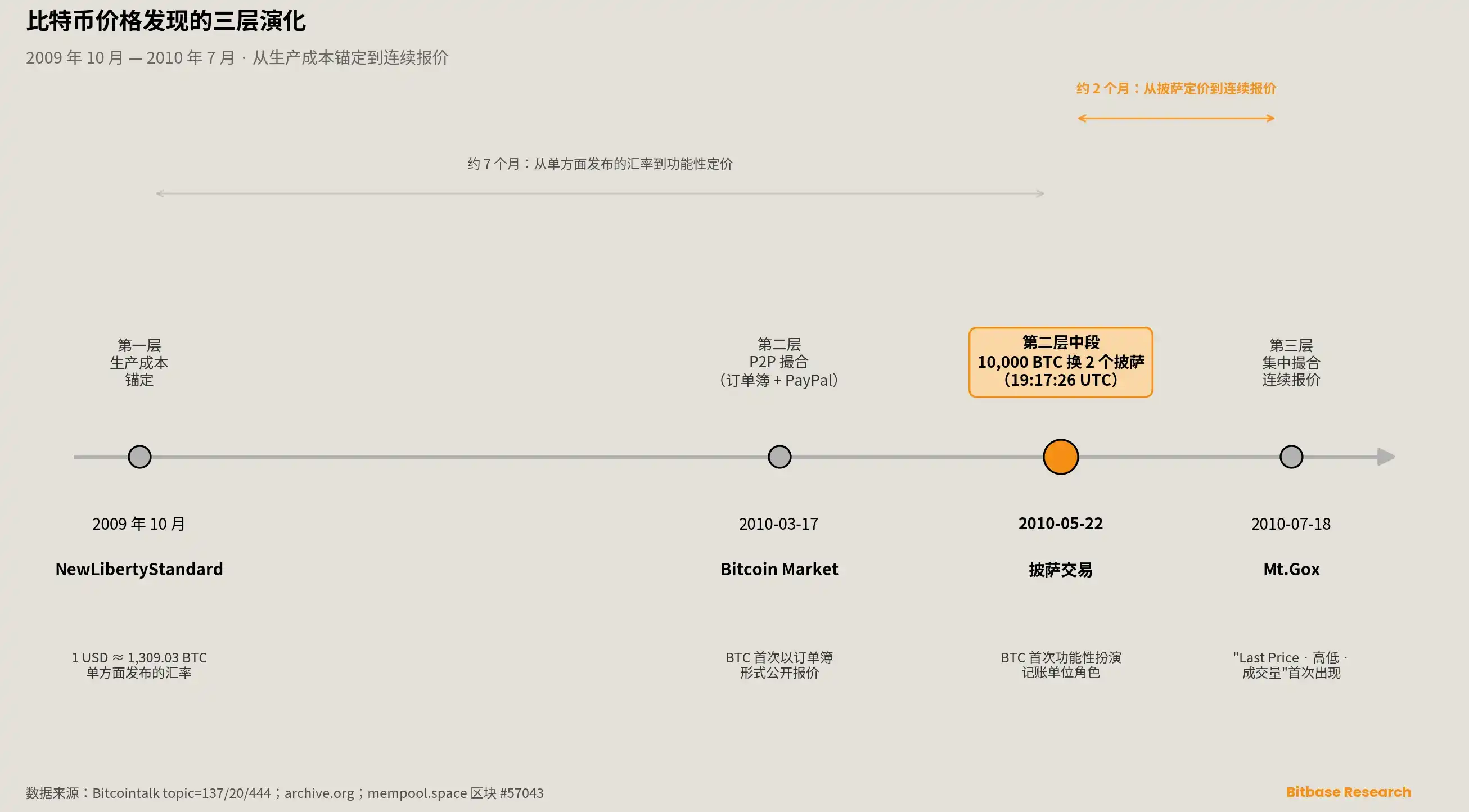
2.1 Первый слой: Привязка к стоимости производства (с октября 2009)
NewLibertyStandard (далее NLS) в октябре 2009 года опубликовал на своей веб-странице newlibertystandard.wetpaint.com формулу обменного курса BTC к доллару США. Сайт сейчас не работает, по состоянию на 14 мая 2026 года самая ранняя заархивированная версия на archive.org датируется 29 декабря 2009 года, 13:26:10 UTC [6]. В снимке исходный текст формулы гласит:
During 2009 my exchange rate was calculated by dividing $1.00 by the average amount of electricity required to run a computer with high CPU for a year, 1,331.5 kWh, multiplied by the average residential cost of electricity in the United States for the previous year, $0.1136, divided by 12 months divided by the number of bitcoins generated by my computer over the past 30 days.
Методология этой формулы заключалась в привязке стоимости BTC к «предельным производственным затратам на работу майнингового оборудования» — стоимости электроэнергии, деленной на объем производства BTC за единицу времени. По сути, это продолжение классической трудовой/энергетической теории стоимости на цифровые активы: у BTC нет рынка, его цена определяется счетчиком электроэнергии. Это «односторонне опубликованный обменный курс», а не рыночная цена.
Первое опубликованное NLS число курса 1 USD ≈ 1,309.03 BTC широко используется во вторичных описаниях, но на форуме Bitcointalk нет исходного сообщения от самого NLS с этой цифрой [7]. Это исследование принимает данные из архивного снимка и честно указывает: эта конкретная цифра по состоянию на 14 мая 2026 года доступна только из первоисточника в виде архивного снимка.
Кроме NLS, самая ранняя зарегистрированная сделка BTC за USD была совершена ранним ключевым участником Bitcoin Мартти Мальми — 12 октября 2009 года Мальми перевел NLS 5,050 BTC, получил через PayPal 5.02 доллара и подтвердил это в твите 15 января 2014 года [8].
2.2 Второй слой: Одноранговое открытие через сопоставление (с марта 2010)
Механизм второго слоя был инициирован dwdollar (реальное имя Дастин Доллар). 15 января 2010 года, 09:42:18 UTC, dwdollar в Bitcointalk topic=20 msg=100 выдвинул предложение [9]: «I'm in the process of building an exchange. ... It will be a real market where people will be able to buy and sell Bitcoins with each other.» («Я в процессе создания биржи. ... Это будет настоящий рынок, где люди смогут покупать и продавать биткойны друг у друга.»)
Платформа Bitcoin Market начала работу 17 марта 2010 года. В обновлении в тот день dwdollar написал: «Looks like we had our first real trade around noon!» («Похоже, наша первая настоящая сделка состоялась около полудня!») — это была первая сделка BTC за USD, сопоставленная через квазипубличный стакан заявок.
Механизм сопоставления Bitcoin Market требует правдивого описания: это не была полная форма сопоставления по стакану. Dwdollar в своем сообщении msg=265 от 6 февраля 2010 года, 22:37:44 UTC, описал: «ONLY the limit orders work. Market orders will come later.» [10] — платформа поддерживала только лимитные ордера, рыночные ордера появились позже; расчеты зависели от посредника PayPal, а не от чисто ончейн-расчетов. Тем не менее, Bitcoin Market был первой платформой, которая публично демонстрировала котировки BTC в форме стакана заявок, сама эта форма имеет механическое значение.
Параллельно с Bitcoin Market существовало одноранговое сопоставление физических товаров на Bitcointalk. Событие с пиццей Ханьеча является репрезентативным случаем этой формы. Два пути существовали параллельно с марта по июль 2010 года — путь dwdollar доказывал, что BTC можно сопоставить с USD для получения котировки, путь Hanyecz доказывал, что BTC можно сопоставить с физическим товаром для получения котировки.
2.3 Середина: Сделка с пиццей (22 мая 2010 года)
Сделка с пиццей Ханьеча в шкале механизмов находится в середине второго слоя. Восстановление по временной шкале UTC:
-
2010-05-18 00:35:20 UTC: Ханьеч разместил предложение в Bitcointalk topic=137 msg=1141 [3]. Ханьеч в то время находился в Джексонвилле, штат Флорида, США (EDT, UTC−4), что соответствует местному времени 2010-05-17 20:35. Это преобразование часового пояса объясняет, почему некоторые вторичные описания указывают дату размещения как 17 мая.
-
2010-05-22 18:16:31 UTC: транзакция txid
a1075db55d416d3ca199f55b6084e2115b9345e16c5cf302fc80e9d5fbf5d48dбыла включена в блок #57043 [11]. -
2010-05-22 19:17:26 UTC: Ханьеч в msg=1195 сообщил о завершении — «I just want to report that I successfully traded 10,000 bitcoins for pizza. Thanks jercos!» [4] («Я просто хочу сообщить, что я успешно обменял 10 000 биткойнов на пиццу. Спасибо jercos!»)
Разница между временем блока в блокчейне и временем сообщения подтверждения на Bitcointalk составляет около 61 минуты, что согласуется с нарративом «написать сообщение после доставки пиццы». Эта разница также независимо подтверждает, что временные метки на форуме Bitcointalk для анонимных посетителей отображаются по UTC, а не по времени восточного побережья США.
Личность и местонахождение контрагента jercos часто ошибочно описываются во вторичных источниках. Jercos — это Джереми Стардивант, который в письменном интервью Bitcoin Who's Who 30 января 2016 года лично заявил: «I have yet to travel outside of the US, and am living on the west coast, near Santa Cruz, California.» [12] По словам Стардиванта, он американец, живет недалеко от Санта-Крус, Калифорния, на момент 22 мая 2010 года ему было 19 лет, и он никогда не покидал США. Распространенное в интернете описание «19-летний британец» не соответствует первоисточникам.
Ханьеч отозвал открытое предложение 4 июня 2010 года, 17:51:05 UTC [13], сославшись на то, что «больше не потянуть». Через 8 дней, 12 июня, в msg=1526 он снова открыл предложение и впервые дал привязку к USD: две пиццы стоят около 25 долларов, с чаевыми может быть 30 долларов [5].
2.4 Третий слой: Централизованное непрерывное котирование через сопоставление (с июля 2010)
18 июля 2010 года, 01:57:19 UTC, пользователь mtgox разместил в Bitcointalk topic=444 msg=3866 объявление: «Hi Everyone, I just put up a new bitcoin exchange.» [14] («Всем привет, я только что запустил новую биржу биткойнов.») За этим аккаунтом стоял оператор Джед Маккалеб — создатель eDonkey, первоначальный владелец домена mtgox.com (аббревиатура от Magic: The Gathering Online eXchange). Wayback Machine зафиксировала самое раннее сканирование mtgox.com 17 августа 2007 года [15], примерно за 17 месяцев до генезис-блока BTC; этот домен был повторно использован для биржи BTC в июле 2010 года.
Маккалеб в msg=3873 той же темы (2010-07-18 02:15:09 UTC) описал архитектуру котировок платформы [14]: «Last Price ... High ... Low ... Volume ... Current Lowest Buy Price; Current Highest Sell Price ... All trades are between users.» — «Последняя цена ... Максимум ... Минимум ... Объем ... Текущая наименьшая цена покупки; Текущая наивысшая цена продажи ... Все сделки между пользователями.» Эта группа терминов впервые появилась в контексте Bitcoin, обозначая, что BTC получил стандартный формат непрерывного котирования. Механическое различие было структурным: сопоставление между пользователями, а не расчеты через посредника, автоматическое непрерывное функционирование стакана заявок, доступность 24 часа в сутки.
С этого момента BTC в измерении расчетной единицы (unit of account) получил внешнюю ссылочность — другие могли сказать «моя вещь стоит X BTC», а X BTC теперь имел непрерывный идентификатор в USD. Mt.Gox 6 марта 2011 года был передан Маккалебом MagicalTux (будущему Марку Карпелесу) по его же объявлению [16], его дальнейшая судьба — это отдельная временная линия, не рассматриваемая в данной статье.
Глава 3. Структурное сходство — одна кривая за триста лет
Положение этой главы: трехслойная эволюция механизмов, завершенная BTC в период с октября 2009 по июль 2010 года — привязка к стоимости производства → одноранговое открытие через сопоставление → централизованное непрерывное котирование через сопоставление — структурно сопоставима по форме с путями эволюции многих классов активов в истории. В этой главе для структурного сравнения приведены два примера, без построения количественной межрыночной модели сравнения.
3.1 Амстердам. Вторичный рынок VOC в XVII веке
В 1602 году была основана Голландская Ост-Индская компания (VOC), выпустившая акции для 1143 подписчиков; передача акций требовала личной регистрации у регистратора компании в Доме Ост-Индской компании (East India House) [17]. Это обычно считается самой ранней идентифицируемой сценой вторичного рынка акций [17].
Созревание механизма открытия цен произошло примерно полвека спустя. Лодевейк Петрам в своей докторской диссертации «Первый в мире фондовый рынок» (The world's first stock exchange), защищенной в Амстердамском университете в 2011 году, утверждает, что фондовый рынок в период с 1630 по 1650 годы «эволюционировал в современный рынок ценных бумаг», и «в этот период сформировался непрерывный процесс открытия цен» [17]. Суждение Петрама основано на 851 наблюдении за ценами акций XVII века. Эти данные взяты не из официальных записей биржи — ни VOC, ни биржа не вели систематического учета цен, данные разбросаны по переписке купцов, нотариальным актам и случайным газетам. Сам «набор данных» цен акций VOC XVII века вырос из частных записей и устных курсов.
Структурное сходство с ранним путем BTC здесь конкретно. Формула NLS для BTC аналогична частным котировкам VOC, циркулировавшим среди купцов в XVII веке: односторонне опубликованные, частные записи, без поддержки сопоставления. Bitcoin Market для BTC аналогичен неформальному сопоставлению брокеров в Амстердамской Бирже (Beurs): публичное, но без стандартизированного клиринга. Mt.Gox для BTC — это точка начала институционализации непрерывного котирования, а не конечная точка.
3.2 Чикаго. Стандартизированные фьючерсные контракты CBOT в XIX веке
Второе сравнение взято из торговли зерном в США XIX века. Чикагская торговая палата (Chicago Board of Trade, CBOT) была основана в 1848 году, первоначально как место для спотовой торговли сырьевыми товарами [18]. Примерно в 1851 году на CBOT начали обращаться форвардные контракты «к прибытию» (to-arrive) — трейдеры обязывались поставить зерно в определенную будущую дату по определенной цене [18].
Ключевой датой институционализации механизма открытия цен стал 1865 год. Исторические архивы CME Group и официальная история Комиссии по торговле товарными фьючерсами США (CFTC) фиксируют [18][19]: CBOT представила стандартизированные фьючерсные контракты в мае 1865 года, а 13 октября 1865 года установила официальные правила торговли. В академических кругах существуют разногласия — одна из точек зрения гласит, что зрелая фьючерсная торговля появилась только около 1874 года [18]. Данное исследование принимает 1865 год в качестве отправной точки и признает этот хронологический спор.
Структурное сходство пути CBOT с путем BTC заключается в следующем: переход от разрозненных двусторонних форвардных контрактов (forward contract) к стандартизированным, ликвидным, с правилами маржи и поставки фьючерсным контрактам (futures contract) — это одна и та же кривая институционализации механизма открытия цен. Чикаго потребовалось 17 лет, биткойну — 9 месяцев. Разница в масштабе времени не отменяет структурного сходства. Открытие цен на всех рынках начинается не с биржи, а вырастает из конкретных двусторонних сделок, устных курсов, частных записей.
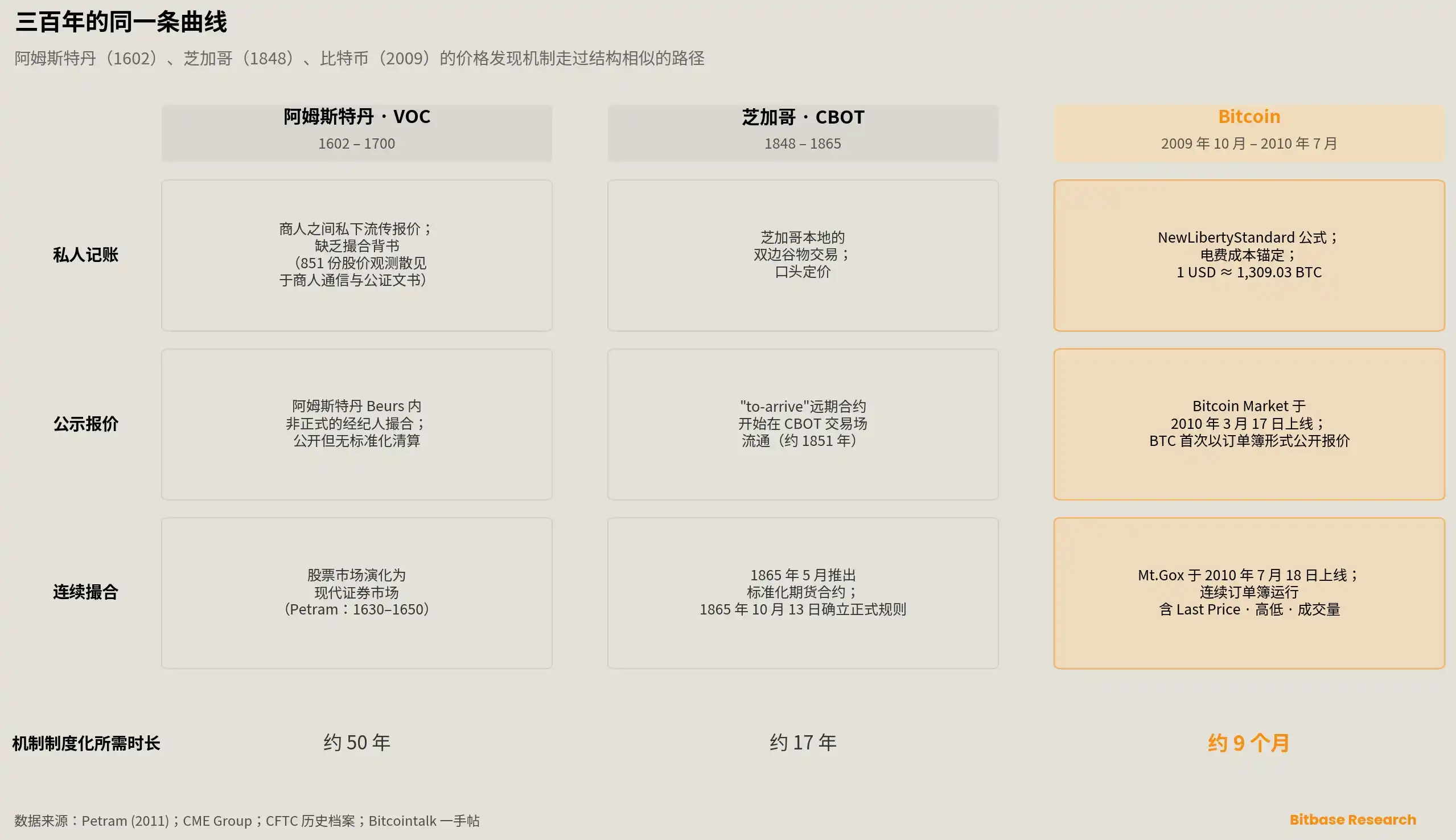
3.3 Объяснительная сила и границы структурного сходства
Помещение раннего пути BTC в трехсотлетнюю последовательность Амстердам — Чикаго — Биткойн дает суждение на уровне механизмов, а не количественную модель. Три актива, три институциональные среды, три технологических условия, но механизм открытия цен следует по одному и тому же крупнозернистому пути: частные записи → публичные котировки → непрерывное сопоставление. Иными словами, инфраструктура криптодеривативов не была изобретена на пустом месте, она находится на линии эволюции финансовых институтов длиной в несколько сотен лет.
Этот аргумент структурного сходства не является аргументом причинности. Он не утверждает, что «BTC неизбежно прошел тот же путь, что и VOC, и зерновые фьючерсы», и не утверждает, что «все будущие цифровые активы пойдут по той же кривой». Он утверждает, что когда наблюдатель сталкивается с новым классом активов, «предыстория механизма открытия цен» является более долгоживущим объектом исследования, чем «динамика цен на актив».
Глава 4. Признание ограничений и пробелов
Настоящая статья не проводит сравнительный анализ современных механизмов открытия цен. Потоки средств ETF, открытый интерес на CME, ставка финансирования бессрочных фьючерсов (Perpetual Futures), ончейн-маркетмейкинг — все это современные формы этого 16-летнего пути, но их раскрытие требует объема и методологии, которые оставлены для последующих исследований.
Существует три контрсигнала к основному тезису статьи. Во-первых, если академические или ончейн-археологические исследования выявят субъект, публиковавший действующий обменный курс до NewLibertyStandard, то позиция «первый опубликованный внешний курс» потребует пересмотра. Во-вторых, если временные метки трех ключевых тем Bitcointalk (topic=20, topic=137, topic=444) будут опровергнуты на уровне архивации, то точки привязки событий потребуют сброса. В-третьих, если фреймворк «семантического перехода расчетной единицы» будет заменен более точной теорией эволюции денежных функций, то основной тезис потребует пересмотра.
Статья признает следующие границы. Во-первых, утверждение «BTC впервые был функционально исполнен в роли расчетной единицы» является интерпретационным, а не обозначением полного установления функции в денежном определении. Во-вторых, обозначение Bitcoin Market как «одноранговое открытие через сопоставление» является упрощением. В-третьих, аргумент структурного сходства с Амстердамом и Чикаго приведен только для механистического сравнения, без построения количественной межрыночной модели сравнения. Статья не прогнозирует динамику цены BTC и не делает заявлений об инвестиционных свойствах BTC как отдельного актива.





















