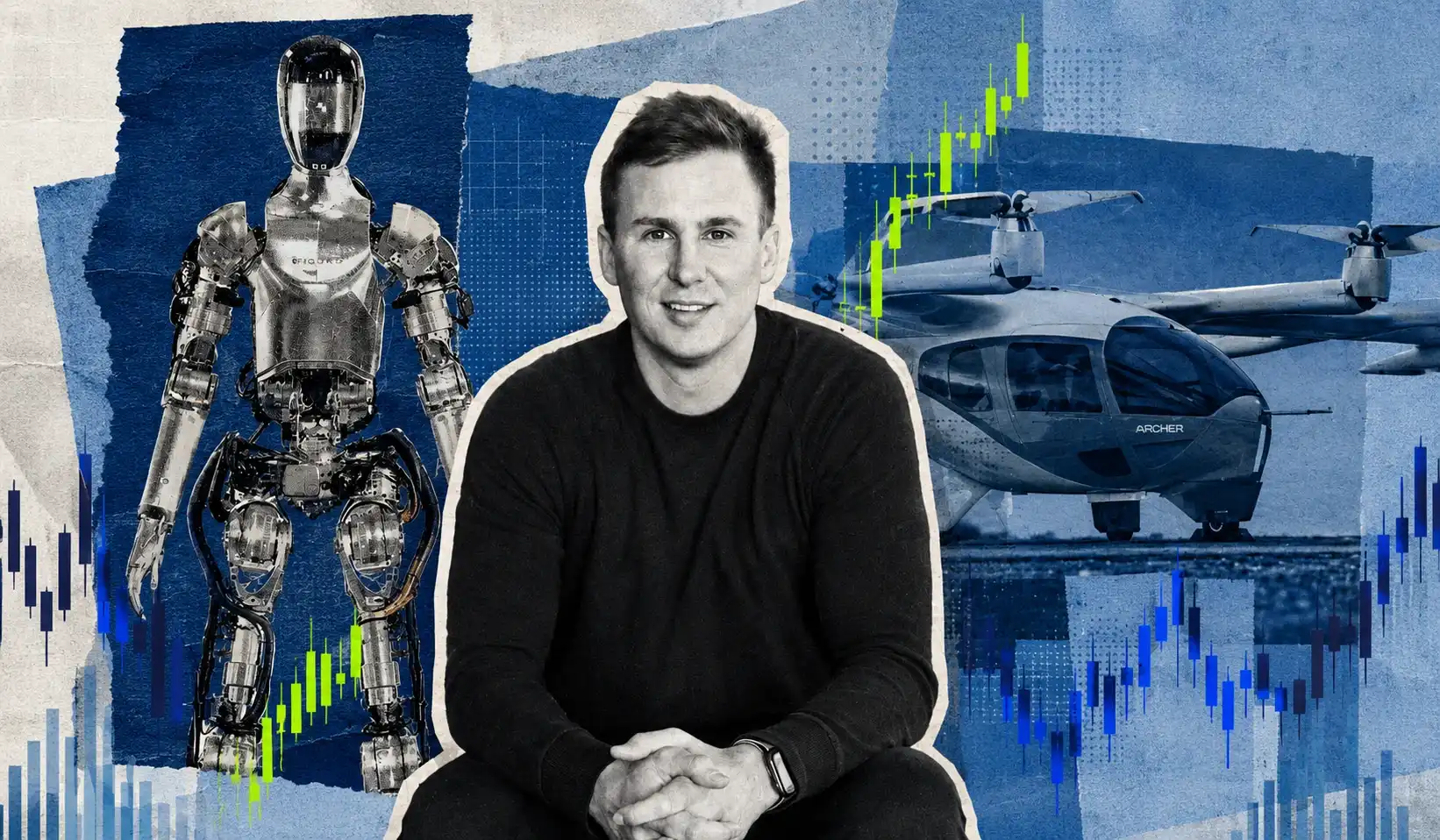
From Farm to Entrepreneur: After Building Flying Cars, He Bet on the Robot Sector and Created a $39 Billion Giant

marsbitОпубликовано 2026-05-20Обновлено 2026-05-20

Введение

From Farm to Tech Tycoon: Brett Adcock's Journey to a $39B Robot Giant Brett Adcock, a serial entrepreneur from an Illinois farm, has built his third major venture, humanoid robotics company Figure AI, into a $39 billion behemoth backed by NVIDIA, Intel, and others. His path began with the sale of his recruiting platform Vettery for $110 million in 2018. He then co-founded and took electric air taxi company Archer Aviation public in 2021 before departing over strategic differences. Adcock founded Figure AI in 2022 with a 30-year vision to create general-purpose humanoid robots that can work in human-designed environments, aiming to address labor shortages in manufacturing, logistics, and retail. The company gained attention through live-streamed robot sorting challenges and a viral demo, though it faces skepticism over its high valuation versus early commercial progress. A key moment was Figure's split from OpenAI in 2024 after a brief collaboration, with Adcock claiming OpenAI provided limited value and deciding to develop AI models internally—a move OpenAI contested. Adcock's pattern is tackling capital-intensive, long-term tech frontiers, moving from software to aviation to robotics, betting on AI and automation as the future of labor.

Author: Zen, PANews

Humanoid robotics company Figure AI recently initiated a "Human vs. Robot" parcel sorting challenge, attracting global attention. This competition, narrowly won by humans, led many to conclude that "humans won the present but lost the future." This statement is not baseless. Before the competition began, Figure had already started a live stream of robot sorting, which has now been broadcasting continuously for seven days. In terms of tireless endurance and continuous work capability, robots far surpass humans.

This sorting challenge live stream, along with the earlier heavyweight promotional video for a home robot, has also earned Figure the label of being a showman. However, there is no doubt that Figure AI is becoming one of Silicon Valley's most-watched humanoid robotics companies. This company, founded just three years ago, saw its valuation soar to $39 billion after a new round of financing, with investors including top-tier corporations and capital such as NVIDIA, Intel Capital, Salesforce, LG, and Qualcomm.

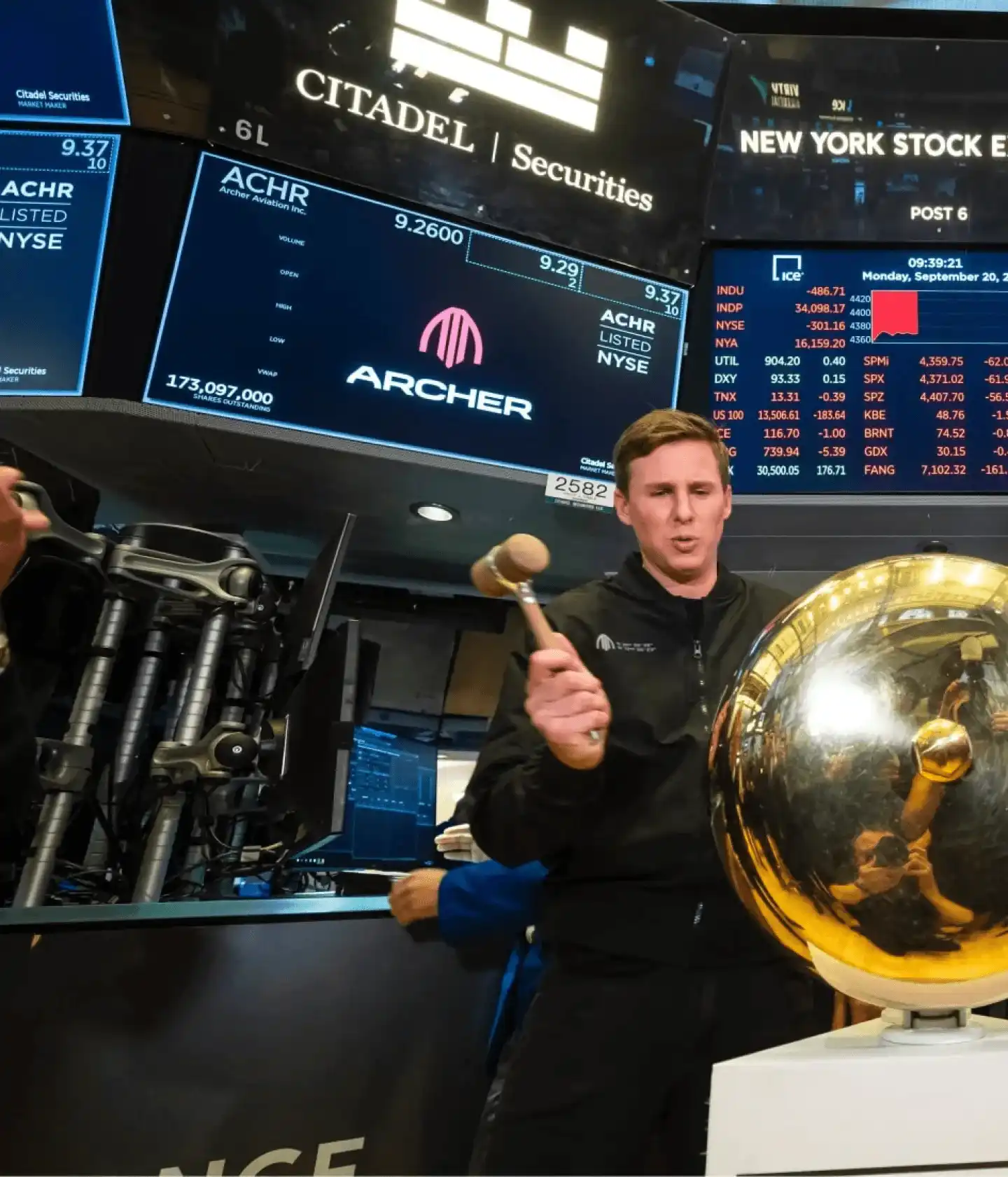
Standing behind this company is serial entrepreneur Brett Adcock, who hails from a farm. Before founding Figure, he had already had two distinct entrepreneurial experiences. First, he built the recruitment platform Vettery, selling it to the Adecco Group for $110 million in 2018. Subsequently, he co-founded electric vertical takeoff and landing (eVTOL) aircraft company Archer Aviation, driving its listing on the New York Stock Exchange in 2021.

Brett Adcock is not a founder who has dug deep in one industry over a long period. Instead, he continuously ventures into more complex, capital-intensive, and harder-to-validate fields. Figure is his most high-profile bet to date, placing him at the center of the AI robotics boom.

Surrounding this company, there are grand visions about a general-purpose robotic workforce, as well as skepticism regarding overvaluation, premature commercialization, safety risks, and technological approaches. To understand Figure, one must first understand how its founder has progressed step by step to reach this point.

Serial Entrepreneur from a Corn and Soybean Farm

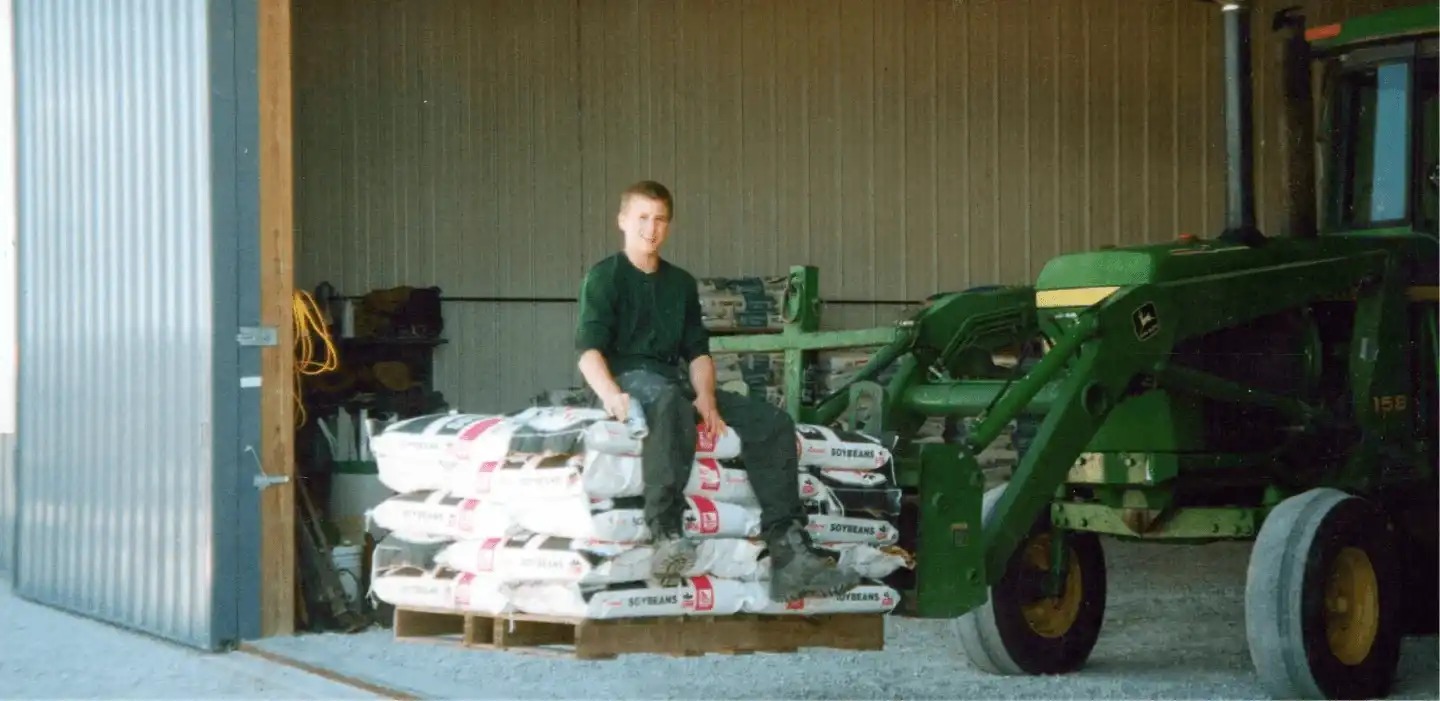
Brett Adcock was born in 1986 on a corn and soybean farm in central Illinois. Growing up in this multi-generational farming family environment instilled in Adcock a strong emphasis on "how to create value for the world from scratch." He began starting internet companies at the age of 16. By the time he graduated as valedictorian of his high school class, his family clearly understood that he should perhaps leave the farm and venture into the world of entrepreneurship and business.

Brett Adcock during childhood

During university, Adcock continued to independently develop various software, initially creating a website selling outdoor electronics. Later, he focused his efforts on the job recruitment sector, developing content websites to help job seekers prepare for interviews in fields like finance ("Street of Walls"), a mobile job search app ("Working App"), and a video interview website. These projects were not successful and resembled early, immature entrepreneurial experiments.

In 2012, while striving in New York, Adcock turned his attention back to the recruitment market. He co-founded Vettery with Adam Goldstein. Initially, Vettery was a platform targeting third-party recruitment agencies, but this model was quickly proven uncompetitive. After several adjustments, Adcock and the team decided to pivot, placing job seekers and companies directly on the same platform and improving matching efficiency through software and machine learning.

Brett Adcock (5th from right) with his team

After the Vettery platform launched, growth accelerated. Adcock later recalled that platform users experienced consecutive weeks of doubling growth. By 2017, Vettery's employee count had grown to 300, with about 20,000 clients and approximately 30,000 interviews conducted monthly through the system. The company also caught the attention of the world's largest recruitment company, the Adecco Group, and was acquired by the latter for $110 million in 2018.

This transaction provided Adcock, just past his thirties, with a substantial personal fortune. He began looking for more complex, longer-cycle problems that also required capital and engineering prowess, specifically in hardware and sustainable development. Thus, he moved west to California, heading to Silicon Valley to seek the next opportunity.

In Three Years, Building a Flying Car Startup into a Public Company

Aiming to tackle more challenging problems, Adcock could no longer randomly throw out ideas and conduct low-cost experiments like he did in university. After careful consideration, he chose to focus on solving transportation problems by entering the three-dimensional airspace. Adcock wanted to try creating the flying cars seen in sci-fi movies, making electric vertical takeoff and landing (eVTOL) aircraft the most suitable choice.

In 2018, Adcock teamed up with Adam Goldstein again to co-found Archer Aviation. Compared to Vettery, Archer was an entirely different world. It required a top-tier engineering team, hardware R&D, supply chain management, engineering manufacturing, aviation certification, public safety, and long-term patience from capital markets.

The founding of Archer Aviation also involved a fortuitous opportunity. At the time, French aviation giant Airbus was relocating all its flying car "Vahana" business to France, and flight car company Kitty Hawk's cost-cutting measures due to its partnership with Boeing caused dissatisfaction among some engineering team members (Kitty Hawk later dissolved in 2022). Seizing the opportunity, Adcock absorbed a large number of personnel from these two projects, rapidly assembling a seasoned team.

In 2021, Adcock and his team successfully conducted the maiden flight of the full-scale, two-seat, autonomous prototype aircraft "Maker." They also partnered with automotive giant Fiat Chrysler on supply chain, advanced composite materials, and engineering, design, and production aspects, and secured a $1 billion order from United Airlines. That same year, Archer Aviation went public on the New York Stock Exchange via a SPAC merger, valued at approximately $2.7 billion. Today, the company's market capitalization stands at $4.5 billion and it is part of Cathie Wood's Ark Invest portfolio.

Brett Adcock rings the opening bell at the NYSE

Despite entering the market relatively late, Archer Aviation's rapid rise has made it a major contender in the emerging eVTOL industry. In November 2022, Archer's five-seater "Midnight" aircraft made a stunning debut. Once it receives type certification from the Federal Aviation Administration (FAA), it will become the company's first air taxi product.

However, Adcock quietly left the company shortly after its IPO. In April 2022, Archer announced that Adam Goldstein would serve as the sole CEO, with Adcock stepping down as co-CEO but remaining on the board. The company explained at the time that the move was to simplify the operating structure and advance flight testing, certification, and commercialization.

The real reason for his departure may be more complex and is unknown to the public. Judging by the company's stock performance, it was indeed in a post-IPO slump. Adcock later stated that he left Archer due to "differences" with the board, especially after the company went public, regarding what he wanted to do versus what the team wanted to do.

Perhaps for him, the governance of a public company, the regulatory path, and the pace of commercialization no longer suited a founder who always wanted to leap into the next technological revolution.

Final Venture? Adcock Plans to Build Figure with a 30-Year Vision

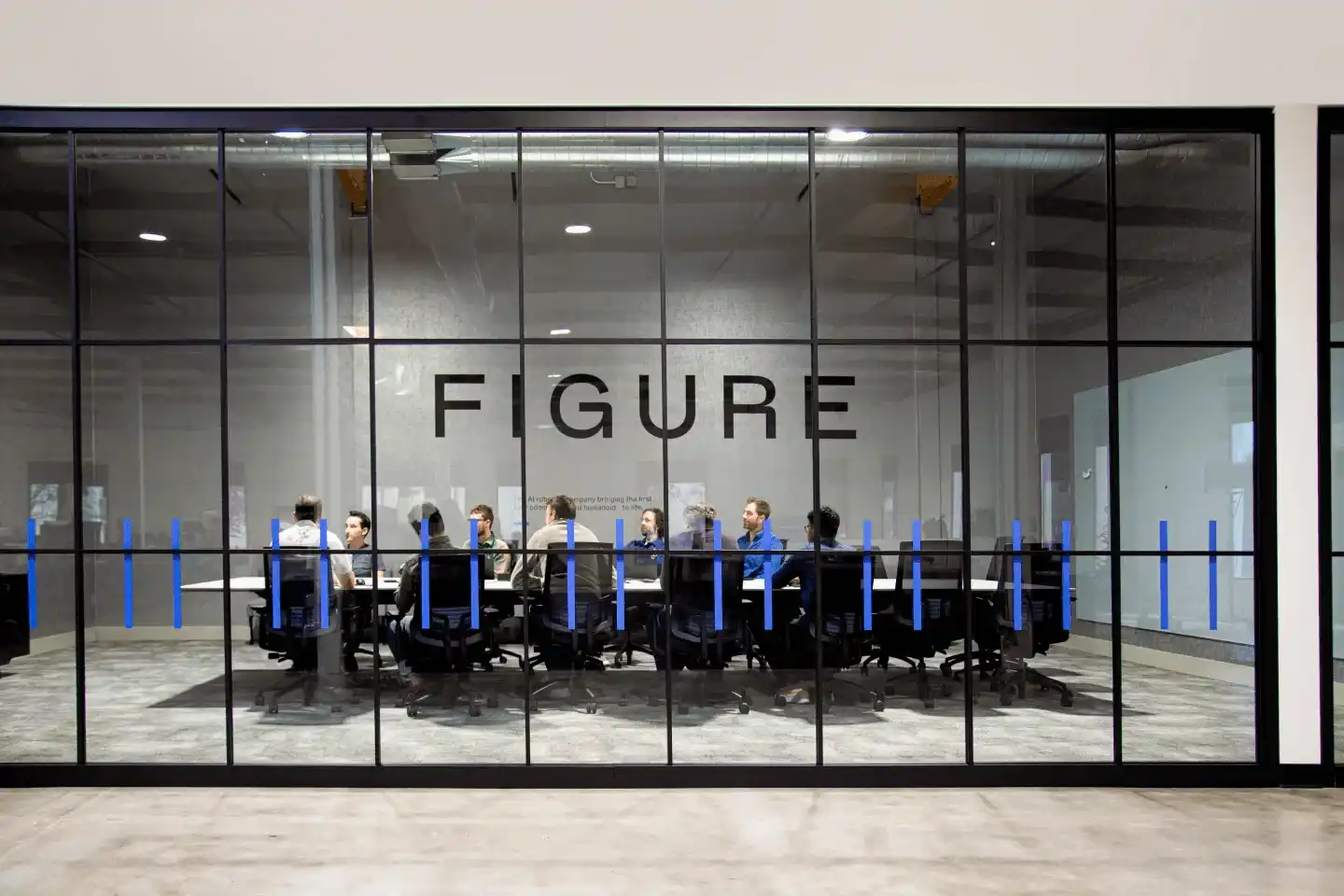
After leaving Archer, Adcock quickly entered the next equally sci-fi and currently even larger bet. In 2022, he founded Figure AI, entering the field of general-purpose humanoid robotics. In Figure's Master Plan, he wrote that his goal is to build the company with a 30-year vision, investing time and resources into "maximizing utility impact on humanity."

Regarding team composition, Adcock adopted a strategy similar to when he founded Archer. He rapidly assembled a team of 60 people, with members primarily hailing from renowned companies and projects such as Boston Dynamics, Tesla, Apple's autonomous vehicle project, and Google DeepMind.

Giving AI a physical body is the proposition Adcock set for Figure. Figure aims not to create industrial robotic arms or service robots, but rather general-purpose humanoid robots capable of entering human environments, using human tools, and performing a variety of tasks. Adcock believes that the world is inherently designed for the human body; therefore, creating robots that interact with the world in a similar way can automate a vast amount of work.

The underlying rationale for this vision is Adcock's assessment of the labor market. In Figure's Master Plan, he writes that the United States has over 10 million "unsafe or undesirable" jobs, and an aging population will further exacerbate the difficulty for businesses to expand their workforce. If the economy is to continue growing, it requires more productivity, which in turn demands more automation. Consequently, Figure has identified manufacturing, logistics, warehousing, retail, and home scenarios as its long-term directions.

As Figure's valuation rises, the skepticism directed at Adcock intensifies. The first category of doubt centers on the vast gap between commercialization and valuation. Essentially, the market is buying a distant future expectation. While Figure has attracted market enthusiasm with a valuation nearing $40 billion, its revenue scale and mass production capabilities remain limited. Its future revenue projections heavily rely on the ability to deploy a large number of robots before 2029.

Furthermore, Figure's split with OpenAI has attracted significant attention and controversy. In 2024, Figure partnered with OpenAI to develop next-generation robot AI models and received investment support from OpenAI, Microsoft, NVIDIA, Jeff Bezos, and others. However, less than a year later, Adcock decided to terminate the partnership and instead develop the models internally.

According to Business Insider, Adcock later stated that OpenAI brought little value to Figure beyond its brand, and that robot AI requires a different technical approach than chatbots. He also mentioned that when OpenAI indicated it wanted to build its own humanoid robots, he considered the partnership over. The report also noted that a technical employee from OpenAI shared a related clip, calling Adcock's claims "untrue."

"Preference" for More Difficult Problems and Larger Narratives

Looking back at Adcock's three main entrepreneurial ventures, Vettery, Archer, and Figure appear unrelated on the surface—one is a recruitment platform, one is a flying car company, and one is a humanoid robot company. However, they share the same entrepreneurial philosophy: targeting a massive, inefficient market where a technological inflection point is emerging, and advancing simultaneously with capital, engineering teams, and bold narratives.

With Vettery, he bet that machine learning could improve recruitment matching efficiency. With Archer, he bet that batteries, motors, and aerospace engineering could unlock urban air mobility. With Figure, he is betting that AI models, robotic hardware, and manufacturing capabilities can fuse into a new type of labor force. Adcock's thinking does not start from a single-point product but works backward from "how the future world should operate" to determine what kind of company to build today.

Brett Adcock's career resembles a curve of increasing asset intensity: from software platforms to aircraft, and then to humanoid robots. He is not a technical expert who has dug deep in a single field for decades. He is more like an "entrepreneurial hunter," sensing opportunities, organizing resources, recruiting teams, amplifying the narrative, and then moving on.

Now, standing under the spotlight of Figure AI, he faces skepticism as loud as the applause. But regardless of the outcome, he has already etched his name into the first chapter of AI robotics business history.

Связанные с этим вопросы

QWhat is Figure AI and why has it attracted significant attention recently?

AFigure AI is a humanoid robotics company. It recently gained global attention by hosting a 'Human vs. Robot' parcel sorting challenge and conducting a 7-day live stream of its robots performing sorting tasks. The company, founded just three years ago, reached a valuation of $390 billion after a new funding round, attracting investments from top-tier firms like NVIDIA, Intel Capital, Salesforce, LG, and Qualcomm.

QWho is Brett Adcock and what are his previous entrepreneurial ventures?

ABrett Adcock is a serial entrepreneur and the founder of Figure AI. His previous ventures include co-founding Vettery, a recruitment platform sold to the Adecco Group for $110 million in 2018, and co-founding Archer Aviation, an electric vertical takeoff and landing (eVTOL) aircraft company that went public on the NYSE in 2021.

QWhat is the core mission and long-term vision Brett Adcock has for Figure AI?

ABrett Adcock's mission for Figure AI is to build general-purpose humanoid robots that can operate in human environments, use human tools, and perform a variety of tasks. He views this as a 30-year project aimed at maximizing utility for humanity by automating labor in sectors like manufacturing, logistics, warehousing, retail, and eventually homes, to address workforce shortages and boost productivity.

QWhy did Brett Adcock leave Archer Aviation shortly after it went public?

AAdcock left his co-CEO role at Archer Aviation due to what he later described as a 'misalignment' with the board. After the company went public, he felt that what he wanted to do differed from what the team wanted to do. This suggests disagreements over the company's direction, governance, and commercialization pace post-IPO.

QWhat are some of the major challenges and criticisms facing Figure AI?

AFigure AI faces several criticisms: 1) Its $390 billion valuation is seen as extremely high compared to its current commercial scale and production capabilities. 2) Its revenue projections depend heavily on deploying large numbers of robots by 2029, which is uncertain. 3) It ended a high-profile partnership with OpenAI on robot AI models, citing a divergence in technical needs and OpenAI's own robotics ambitions, a move that was publicly disputed.

Похожее

Deconstructing the U.S. Stock Quantum Computing Sector: IonQ, Rigetti, D-Wave, Which of These Concept Stocks is Worth Betting On?

**Title:** Analyzing the US Quantum Computing Race: IonQ, Rigetti, D-Wave – Which Concept Stock is Worth Betting On? **Summary:** The podcast discusses the resurgence of quantum computing as a national priority for both the US and China, driven by its potential to break current encryption, revolutionize drug discovery, finance, and logistics. The core challenge is commercializing the technology, which is hampered by high error rates in quantum bits (qubits). Quantum error correction, requiring thousands of physical qubits per reliable logical qubit, is key but years away. The analysis compares three main publicly traded US quantum computing firms: * **IonQ (Ion Trap):** Considered the most financially stable with the fastest commercial progress (2025 revenue: $130M, +202%) and high-quality clients. Its valuation is very high, pricing in significant future growth. * **Rigetti (Superconducting):** Seen as the highest-risk, highest-potential-reward bet. It has the smallest revenue but recently launched a 108-qubit system. Its valuation multiples are extreme, making it highly sensitive to news. * **D-Wave (Quantum Annealing):** Has the most unique positioning with real-world enterprise clients today (e.g., Mastercard, Volkswagen) solving optimization problems. Its recent acquisition moves it into general-purpose quantum computing ("dual-platform"), adding execution risk. Major tech giants like Google, IBM, and Microsoft are also heavily invested, pursuing various technical approaches. Nvidia is positioning itself as the essential bridge between classical and quantum computing. The investment phase is likened to AI in 2018-2020: promising underlying technology with accelerating breakthroughs but a commercial inflection point still 3-7 years away, suggesting potential for a market correction ("bubble washout"). For investors, suggested approaches include gaining exposure through tech giants with quantum divisions (e.g., Google, IBM) or using niche ETFs like WQTM for pure-play quantum exposure, rather than direct stock picks in the highly volatile pure-play companies at this early stage.

marsbit11 мин. назад

Deconstructing the U.S. Stock Quantum Computing Sector: IonQ, Rigetti, D-Wave, Which of These Concept Stocks is Worth Betting On?

marsbit11 мин. назад

From Parallel Finance to Mainstream Finance: The On-Chain Securities Era Ushers in a Historic Window

From Parallel Finance to Mainstream: The Dawn of On-Chain Securities For over a decade, the crypto industry has operated as a parallel financial system with its own currencies, markets, and assets—from Bitcoin and ICOs to DeFi, NFTs, and memecoins. Despite building a robust internal ecosystem, a wall has separated it from the traditional financial world. That barrier is now crumbling. The industry's first act was one of internal evolution: ICOs streamlined fundraising, DeFi recreated financial services on-chain, and layer-2 networks competed for scalability—all within the crypto bubble. While innovative, this cycle remained closed, with capital and users circulating internally, leading to volatile boom-bust cycles. Even Bitcoin ETFs, while attracting Wall Street capital, merely provided a channel to buy crypto assets without bridging the systems. The next, larger narrative is Real-World Assets (RWA) moving on-chain. This involves tokenizing stocks, bonds, funds, and future cash flows. Blockchain can compress the complex traditional processes of trading, settlement, clearing, and custody into a seamless, automated network operating in seconds. This shift is creating a new financial gateway: the native crypto securities broker. This entity will combine functions of an exchange, broker, bank, and custodian into a unified global financial operating system. Consequently, the next major battleground won't be the "public chain wars" focused on speed and cost, but the competition to build the financial infrastructure capable of hosting high-quality, liquid real-world assets. Access to global equities, index funds, or stakes in companies like SpaceX could erase the boundary between crypto and traditional finance, unlocking a market orders of magnitude larger than crypto's current valuation. In summary, after years of creating a separate financial world, crypto's next decade will be defined by its integration into the existing global financial system, marking the true beginning of its largest growth story.

marsbit32 мин. назад

From Parallel Finance to Mainstream Finance: The On-Chain Securities Era Ushers in a Historic Window

marsbit32 мин. назад

Wang Chuan: When the Neighbor Old Wang Made 30x on Memory Stocks, How to Avoid Anxiety (Part Six) - The Trap of Commoditized Goods

Wang Chuan: When the Neighbor Lao Wang Made 30x on Storage Stocks, How to Stay Anxiety-Free (Part 6) - The Trap of Commoditized Goods. This essay uses historical and current examples to analyze the cyclical and high-risk nature of the data storage industry. It begins with the 1990s rise and dramatic fall of Iomega, whose stock soared over 160x in 18 months before collapsing 97% from its peak, illustrating the fleeting success of storage "meme stocks." The core problem is that storage products, like DRAM and flash memory, are highly commoditized. This leads to extreme volatility: prices have plummeted over 80% multiple times, and company stocks often crash 95% or go bankrupt. The industry's dynamic is defined by "elastic demand facing heavy-asset, long-cycle, rigid supply." When demand spikes and supply is fixed, prices skyrocket, as seen recently with AI-driven demand for High Bandwidth Memory (HBM). Companies like Sandisk and Micron have reported massive revenue and gross margin jumps (e.g., Sandisk's gross margin rising from 22.5% to 78.3%) despite minimal increases in production volume. However, these high margins are self-defeating. They incentivize massive new capacity investments (hundreds of billions planned from 2026), with supply expected to surge by late 2027. Once new supply meets demand, prices and profits will crash, potentially leading to a scenario where "selling more results in earning less." The article debunks the safety of long-term supply agreements, comparing them to fragile non-aggression pacts easily broken when market conditions shift. It warns that when an industry is highly profitable but trades at low P/E ratios, the risk is greatest, as plummeting prices quickly erase those earnings. Multiple asymmetric risks loom, including economic recession, reduced AI spending, faster-than-expected capacity expansion (especially from Chinese firms), and technological innovations that reduce memory requirements. In conclusion, the storage sector is a cyclical trap where periods of euphoric profits are often precursors to devastating downturns, luring unprepared investors into a "wealth incinerator."

marsbit41 мин. назад

Wang Chuan: When the Neighbor Old Wang Made 30x on Memory Stocks, How to Avoid Anxiety (Part Six) - The Trap of Commoditized Goods

marsbit41 мин. назад

Wang Chuan: When the neighbor Lao Wang earned thirty times from investing in memory storage stocks, how can you still avoid anxiety (6) - The trap of homogeneous products

The article, "Wang Chuan: How to Remain Unanxious After Neighbor Lao Wang's Thirty-Fold Gain on Storage Stocks (Part 6) - The Trap of Commoditized Goods," analyzes the cyclical and perilous nature of the data storage industry through historical and current case studies. It begins with the example of Iomega, whose Zip drives led to a stock surge of over 160x in the mid-1990s before collapsing over 97% from its peak due to competition from cheaper CD-R technology. This pattern is characteristic of storage, where products like DRAM are highly commoditized, leading to extreme price volatility. The sector has seen prices crash over 80% multiple times, with companies often facing bankruptcy. The core dynamic is "elastic demand facing heavy-asset, long-cycle, rigid supply." High prices attract new capacity, but the long lead time means supply eventually overshoots, causing sharp price corrections. The current AI-driven boom, exemplified by surging demand for High-Bandwidth Memory (HBM), has led to skyrocketing prices and profit margins for companies like SanDisk and Micron, despite relatively flat production volumes. However, the author warns this high-margin environment is self-defeating. The high profits are already triggering massive new capacity investments (hundreds of billions starting 2026), with supply expected to ramp up by late 2027. When supply catches up, total revenue and profits may fall even as more units are sold. Long-term supply agreements offer little protection, as buyers can find ways to renegotiate if market prices drop, similar to fragile political treaties. Key risks include economic downturns, cuts in AI spending, faster-than-expected capacity expansion (especially from Chinese firms), and innovations in chip/algorithm design that reduce memory needs. A critical trap is that at the cycle's peak, storage stocks often appear cheap with low P/E ratios, luring value investors just before an impending downturn where profits evaporate. The conclusion cautions that for commoditized goods like storage, high margins inevitably destroy themselves, and the current asymmetry favors downside risk over further upside. The neighbor's dream of easy wealth from storage stocks is portrayed as a precarious illusion.

链捕手59 мин. назад

Wang Chuan: When the neighbor Lao Wang earned thirty times from investing in memory storage stocks, how can you still avoid anxiety (6) - The trap of homogeneous products

链捕手59 мин. назад

Торговля

Спот
Фьючерсы

Популярные статьи

Как купить ZEN

Добро пожаловать на HTX.com! Мы сделали приобретение Horizen (ZEN) простым и удобным. Следуйте нашему пошаговому руководству и отправляйтесь в свое крипто-путешествие.Шаг 1: Создайте аккаунт на HTXИспользуйте свой адрес электронной почты или номер телефона, чтобы зарегистрироваться и бесплатно создать аккаунт на HTX. Пройдите удобную регистрацию и откройте для себя весь функционал.Создать аккаунтШаг 2: Перейдите в Купить криптовалюту и выберите свой способ оплатыКредитная/Дебетовая Карта: Используйте свою карту Visa или Mastercard для мгновенной покупки Horizen (ZEN).Баланс: Используйте средства с баланса вашего аккаунта HTX для простой торговли.Третьи Лица: Мы добавили популярные способы оплаты, такие как Google Pay и Apple Pay, для повышения удобства.P2P: Торгуйте напрямую с другими пользователями на HTX.Внебиржевая Торговля (OTC): Мы предлагаем индивидуальные услуги и конкурентоспособные обменные курсы для трейдеров.Шаг 3: Хранение Horizen (ZEN)После приобретения вами Horizen (ZEN) храните их в своем аккаунте на HTX. В качестве альтернативы вы можете отправить их куда-либо с помощью перевода в блокчейне или использовать для торговли с другими криптовалютами.Шаг 4: Торговля Horizen (ZEN)С легкостью торгуйте Horizen (ZEN) на спотовом рынке HTX. Просто зайдите в свой аккаунт, выберите торговую пару, совершайте сделки и следите за ними в режиме реального времени. Мы предлагаем удобный интерфейс как для начинающих, так и для опытных трейдеров.

546 просмотров всегоОпубликовано 2024.04.02Обновлено 2025.08.05

Как купить ZEN

Обсуждения

Добро пожаловать в Сообщество HTX. Здесь вы сможете быть в курсе последних новостей о развитии платформы и получить доступ к профессиональной аналитической информации о рынке. Мнения пользователей о цене на ZEN (ZEN) представлены ниже.

活动图片