From $399 to $599: Your PS5 Is Paying Taxes for AI and War

marsbitОпубликовано 2026-03-31Обновлено 2026-03-31

Введение

Sony announced a global price increase for all PS5 models, effective April 2, marking the second hike in a year. The digital edition rose from $399 at launch in 2020 to $599, while the disc version and PS5 Pro saw increases of $100 and $150, respectively. This breaks the industry tradition of consoles becoming cheaper over time. Sony cited "global economic pressures," with analysts pointing to surging memory chip costs as a primary driver. High demand from AI data centers has constrained DRAM and NAND supply, raising prices. Sony likely exhausted fixed-price supplier agreements and now passes costs to consumers. Additionally, missile attacks by Iran on major aluminum plants in the UAE and Bahrain disrupted 6% of global aluminum supply, spiking prices. These facilities supplied materials for aerospace and defense, including PS5 components like heat sinks and structural parts. Earlier U.S. tariff hikes also contributed to a previous $50 price increase. The $200 total price jump reflects broader geopolitical and economic shifts—trade policies, AI-driven resource competition, and military conflicts—rather than product improvements. Consumers are indirectly funding these global tensions through everyday electronics purchases.

Author: David, Shenchao TechFlow

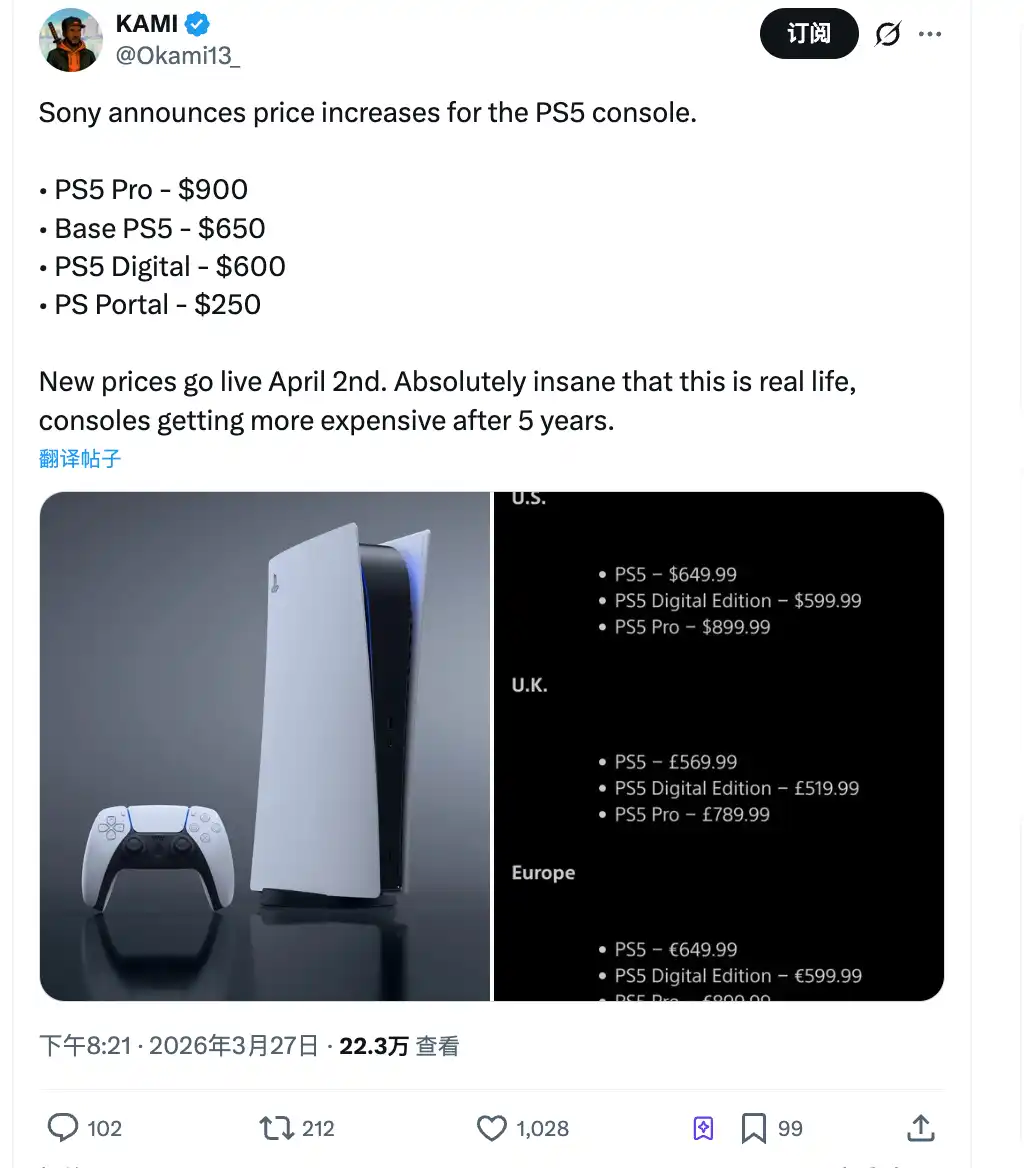
On March 27, Sony announced a price increase for all PS5 models, effective April 2.

In the US market, the PS5 Disc Edition rose from $549 to $649, the Digital Edition from $499 to $599, and the PS5 Pro jumped directly from $749 to $899.

This is the second increase within a year. The last one was in August last year, with only a $50 hike in the US, a market Sony deliberately shielded. This time, it's at least $100, with the PS5 Pro up by $150, and it's global—no market is exempt.

The pressure to raise prices has become too great for Sony to absorb alone.

Gamers know there's an ironclad rule in the console industry: consoles only get cheaper over time. Component costs decline, and manufacturers recoup early R&D through later profit improvements.

The PS5 is the first console in history to break this rule. Launched in 2020 at $399 for the Digital Edition. Six years later, the same machine costs $599.

Sony's official explanation is six words: "global economic pressures."
The AI Tax

Sony didn't elaborate much. But multiple analysts point to the same thing: memory chips.

The PS5 contains memory and a custom SSD, both requiring DRAM and NAND flash memory chips. These two components began rising significantly in mid-2025, for reasons entirely unrelated to the gaming industry: the construction of global AI data centers is snatching away memory production capacity, squeezing the share available for consumer electronics.

Your game console and AI use memory from the same production lines. AI can afford to pay more; you can't.

Piers Harding-Rolls, Research Director at Ampere Analysis, told CNBC that Sony had likely signed price protection agreements with suppliers, locking in procurement costs for a period. But after these agreements expired, memory prices showed no signs of easing, forcing Sony to pass the cost on to consumers.

According to Fox Business, Sony also admitted during its February earnings call that it was dealing with rising memory costs and planned to offset hardware losses with revenue from software and network services.

Translating for Sony: Hardware is no longer profitable, maybe even losing money. Sony intends to make up for it by selling games and subscriptions.

This is the first cut. The extra money you pay isn't for a better console; it's because AI took your memory.

Missile Strikes, Aluminum Prices Soar

The memory price hike was painful enough. Then came the missiles.

On March 28, the day after Sony's price announcement, Iran's Revolutionary Guard Corps launched several missiles at the UAE and Bahrain. Their target wasn't military bases; it was aluminum plants.

Emirates Global Aluminium (EGA) is the largest aluminum producer in the Middle East. According to its website, 1 out of every 25 tons of aluminum produced globally comes from this factory. Aluminium Bahrain (Alba) has an annual capacity of 1.62 million tons. Combined, they account for 6% of global aluminum production capacity.

According to EGA's website, the company's products are sold to over 400 customers in more than 60 countries, spanning various industries.

Hours after the missiles landed, aluminum prices jumped on the London Metal Exchange. According to the Securities Times, overseas aluminum spot premiums surged to a 19-year high. Alba subsequently declared force majeure, suspending deliveries to some customers.

Citibank analysts predict that if supply continues to deteriorate, aluminum prices could rise from the current ~$3,300 to $4,000 per ton.
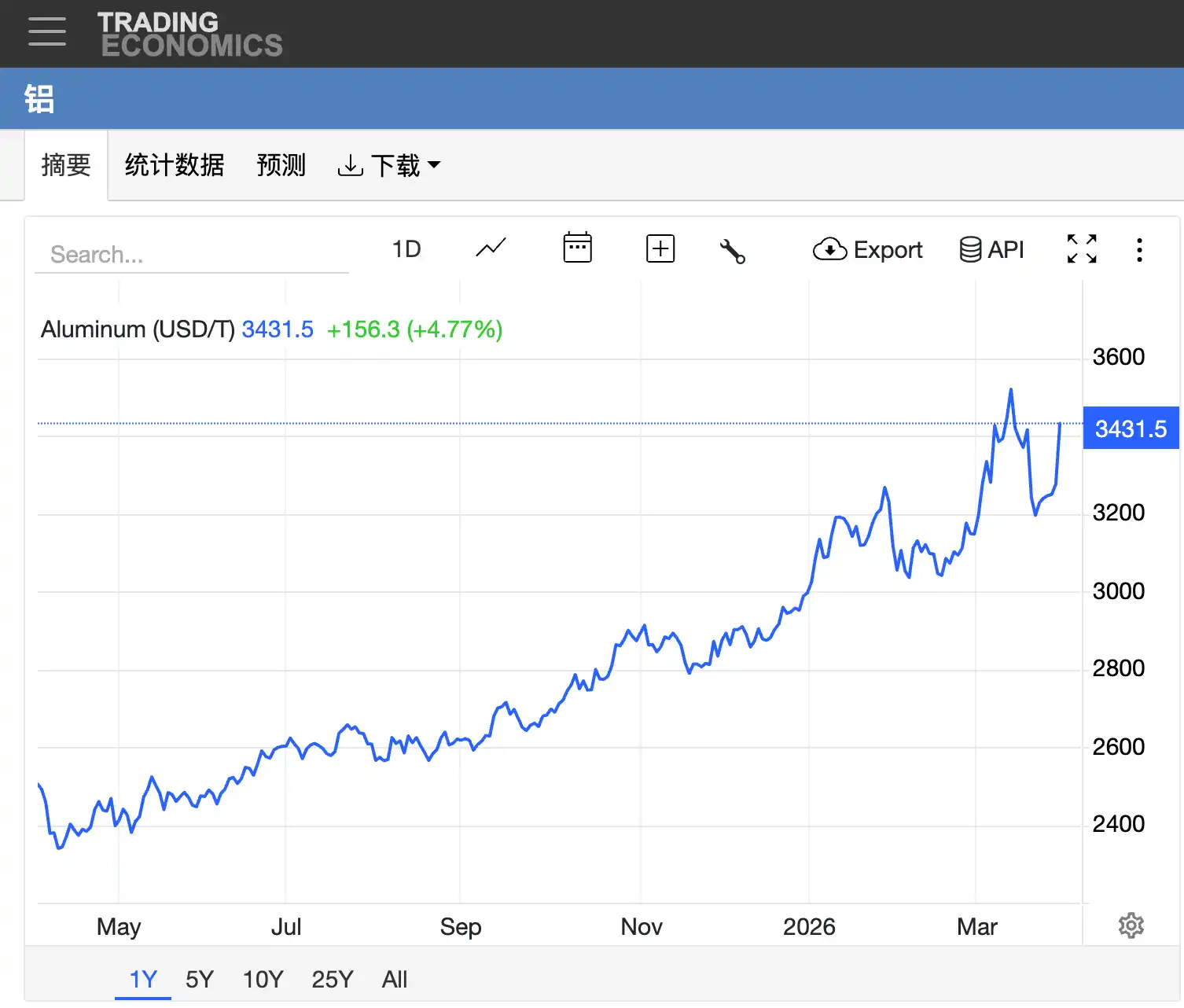
The PS5's heat sink module, structural components, and electromagnetic shielding layers all require aluminum alloy. Memory dealt the first blow; aluminum delivered the second.

And the bombing of these two plants was no accident.

The Revolutionary Guard stated in a declaration that these factories were "linked to the U.S. military and aerospace industry." In May last year, RTX, the American aerospace giant that makes Patriot missiles and F-35 radars, had just signed a memorandum of understanding with EGA to develop a production line for extracting gallium, a core material for military radars, at the Abu Dhabi plant.

According to an RTX press release, Paolo Dal Cin, Senior Vice President of Operations & Supply Chain, said at the signing ceremony that the agreement was to ensure the supply of critical minerals for the aerospace and defense industries.

Iran was targeting the supply chain of the U.S. military-industrial complex.

But bombing a military base means the loss is borne by a nation's defense department. Bombing an aluminum plant means the bill is split by the whole world, from airplanes to cars to phones to your PS5.

The Revolutionary Guard's statement also included a line: future retaliations will no longer be limited to tit-for-tat military responses but will aim for "more deadly blows" to the enemy's economic system.

According to Sina Finance, last month Saudi Arabia's largest chemical company, SABIC, already declared force majeure on its styrene and methanol production.

From aluminum to chemical raw materials, "force majeure" is spreading across the Middle East.

Paying for a Changing World

Hidden within the $200 price increase of the PS5 is actually a third cut, though that one landed last year.

In August 2025, Sony first raised US prices by $50. That move came against the backdrop of the U.S. imposing additional tariffs on global trading partners, increasing the import cost of electronics. The PS5 is designed in Japan, with components produced and assembled across multiple Asian countries—every step was skimmed by tariffs.

Tariffs, AI snatching capacity, missiles bombing aluminum plants.

Three bills, from three completely different sources. One from Washington, one from Silicon Valley, one from the Middle East. $399 to $599—each part of the increase has nothing to do with the console itself getting better.

You just want to buy a game console. But your price tag is分担 (sharing the cost) for U.S. trade policy,分担 for the AI arms race, and分担 for war in the Middle East.

And the PS5 might be the most honest one.

Sony issued an announcement, clearly stating the price hike. But aluminum isn't only used for game consoles, and memory isn't only in PS5s. Your phone, your laptop, the electric scooter you ride—all use the same aluminum and the same chips.

Traditionally, how was war paid for? Government taxes, or printing money. The U.S. issued war bonds during WWII; Truman raised taxes during the Korean War. You knew you were paying, and you knew where the money was going.

The next time these products quietly get more expensive, there might not be an announcement.

In 2020, you paid $399 for a PS5—you paid for a game console. In 2026, you pay $599 for the same PS5. The extra $200 isn't paying for better performance.

In the end, we all pay for what has happened in the world over the past six years.

Трендовые криптовалюты

Связанные с этим вопросы

QWhy did Sony increase the price of the PS5, according to the article?

ASony increased the price of the PS5 due to rising costs of memory chips (DRAM and NAND) driven by AI data center demand, increased aluminum prices following missile strikes on Middle Eastern aluminum plants, and the impact of US tariffs on global trade.

QWhat specific global events contributed to the increased cost of aluminum used in the PS5?

AThe price of aluminum increased after Iran's Revolutionary Guard fired missiles at major aluminum plants in the UAE (Emirates Global Aluminium) and Bahrain (Alba), which together account for 6% of global aluminum production. These plants are also linked to the US military-industrial supply chain.

QHow did the demand for AI infrastructure impact the price of the PS5?

AThe massive construction of AI data centers created high demand for memory chips (DRAM and NAND), which are also used in the PS5. This competition for memory production capacity increased prices, and Sony passed these higher costs on to consumers.

QWhat was unique about the PS5's pricing strategy in the context of console history?

AThe PS5 is the first console in history to break the industry rule that consoles become cheaper over time. Instead, its price increased from $399 at launch in 2020 to $599 in 2026 for the same digital edition model.

QWhat does the article suggest consumers are ultimately paying for with the $200 price increase on the PS5?

AThe article suggests that the $200 increase is not for improved console performance but rather represents a hidden tax where consumers are paying for US trade policies, the AI industry's resource competition, and the economic impact of conflict in the Middle East.

Похожее

Из Кореи в США: благодаря ИИ рабочие профессии становятся всё востребованнее

Искусственный интеллект меняет структуру рынка труда, повышая спрос и зарплаты квалифицированных рабочих специальностей, в то время как традиционное высшее образование теряет привлекательность. Данные из США показывают, что доходы профессиональных училищ выросли на 11.4% в 2025 году, а число увольнений из-за внедрения ИИ достигло рекордных 38 579 в мае. Молодое поколение всё чаще выбирает рабочие профессии, считая их более стабильными в эпоху автоматизации. В США зарплаты таких специалистов, как электрики и сантехники, уже сравнялись или превзошли доходы многих офисных работников. В Корее выпускники профильных школ, например, полупроводниковой, практически гарантированно получают работу в таких компаниях, как Samsung. Дефицит кадров усугубляется массовым выходом на пенсию старшего поколения и бумом строительства инфраструктуры, в том числе для дата-центров. Крупные компании, такие как Meta и JPMorgan, инвестируют миллионы в программы обучения. Несмотря на растущий интерес, преодоление стереотипов о "непрестижности" рабочих профессий остаётся ключевой задачей для полного удовлетворения рыночного спроса.

marsbit3 мин. назад

Из Кореи в США: благодаря ИИ рабочие профессии становятся всё востребованнее

marsbit3 мин. назад

От TPU к самосовершенствующимся агентам: как Джефф Дин видит следующий шаг в развитии ИИ

В статье на основе выступления Джеффа Дина на YC Startup School обсуждается эволюция ИИ от больших моделей к системам с долгосрочными агентами. Дин подчеркивает, что следующий этап ИИ — не просто более умные модели, а создание систем, способных к продолжительной автономной работе, самообучению и автоматизированным экспериментам. Ключевые темы включают смещение фокуса с размера моделей на организацию интеллекта, важность контекстной инженерии, аппаратной эффективности (особенно для вывода), а также возможности для стартапов в нишевых областях, где большие модели слабы. Он отмечает, что по мере удешевления генерации кода возрастает ценность четких спецификаций, правильной постановки задач и "вкуса" в выборе направлений. В итоге, главным становится не ответ модели, а создание надежных систем, способных выполнять сложные, многошаговые задачи.

marsbit6 мин. назад

От TPU к самосовершенствующимся агентам: как Джефф Дин видит следующий шаг в развитии ИИ

marsbit6 мин. назад

Qualcomm: спад ажиотажа вокруг ИИ. Когда наступит выздоровление на рынке смартфонов?

Компания Qualcomm (QCOM.O) опубликовала финансовый отчёт за третий квартал 2026 финансового года (по состоянию на июнь 2026 года). Выручка составила 9,95 млрд долларов США, что на 4% меньше, чем годом ранее, но превысило рыночные ожидания. Однако маржинальность снизилась до 53,1%, не достигнув прогнозируемых 54,6%, главным образом из-за роста себестоимости, включая затраты на производство и память. Основное давление на выручку оказал сегмент мобильных устройств, который упал на 19,6% до 5,09 млрд долларов. Это связано со снижением глобальных поставок смартфонов (кроме Apple) на 11%, а также с тенденцией производителей использовать старые платформы для снижения затрат. В то же время автомобильный бизнес продемонстрировал рост на 61% до 1,59 млрд долларов, а сегмент IoT вырос на 9% до 1,83 млрд. Чистая прибыль составила 2 млрд долларов, однако операционная прибыль снизилась на 41% из-за падения маржинальности и роста расходов. Прогноз на следующий квартал по выручке (97-105 млрд долларов) соответствует ожиданиям, но прогноз по прибыли на акцию оказался ниже рыночных оценок. На фоне слабости основного бизнеса Qualcomm активно развивает направление центров обработки данных (ЦОД) в сфере ИИ, представив четыре продуктовые линии: ускорители ИИ, коммерческие CPU, индивидуальные чипы и решения для подключения. Компания сотрудничает с Microsoft и Meta и ставит амбициозную цель по выручке от этого направления в 15 млрд долларов к 2029 финансовому году. Однако, поскольку данный бизнес ещё не вносит существенного вклада в выручку, а ожидания рынка в отношении ИИ снижаются, акции компании откатились с пиков, достигнутых на волне энтузиазма по поводу ИИ. В краткосрочной перспективе производительность компании по-прежнему зависит от восстановления рынка смартфонов и снижения цен на компоненты, такие как память.

marsbit7 мин. назад

Qualcomm: спад ажиотажа вокруг ИИ. Когда наступит выздоровление на рынке смартфонов?

marsbit7 мин. назад

Эксплойт Coldcard вызывает исход биткойнов, «бычья» консолидация крипторынка: Дайджест Ходлера, 2 августа

После утечки средств из кошельков Coldcard на сумму около $90 млн в биткойнах, мелкие держатели стали активно переводить средства на централизованные биржи. Объём переводов менее 1 BTC достиг максимума с 2022 года. По данным Galaxy Research, в результате трёх волн атак было скомпрометировано более 4500 адресов. Эксплойт использовал уязвимость в процессе генерации сида кошелька. В США обсуждение "Закона о ясности" (Clarity Act) зашло в тупик из-за разногласий по этическим нормам для политиков и регулированию стейблкоинов. Вероятность принятия закона до истечения срока крайне мала. Отчётность компаний за второй квартал показала снижение доходов: Coinbase сообщила о чистых убытках, а доход Robinhood от криптовалютных операций упал на 38%. При этом аналитик ARK Invest заявил, что индустрия вступает в фазу крупнейшей консолидации, что, по его мнению, является бычьим сигналом. Чемпионат мира по футболу 2026 года принёс $20 млрд объёма на блокчейн-рынках прогнозов. За неделю Bitcoin и Ether потеряли около 3% стоимости. Среди альткоинов лучше всего себя показали Cardano (ADA) и Uniswap (UNI). Аналитики Grayscale предположили, что дно рынка Bitcoin, возможно, уже достигнуто раньше традиционного четырёхлетнего цикла. В разделе FUD: основатель Telegram Павел Дуров объявлен в розыск в России, платформа Pump.fun уволила сотрудников перед получением ими токенов на миллионы долларов, а сотрудник Белого дома покинул пост на фоне обвинений в использовании инсайдерской информации для ставок на прогнозных рынках.

cointelegraph24 мин. назад

Эксплойт Coldcard вызывает исход биткойнов, «бычья» консолидация крипторынка: Дайджест Ходлера, 2 августа

cointelegraph24 мин. назад

ПОСЛЕДНИЕ НОВОСТИ: Дональд Трамп сделал резкое заявление по поводу Ирана! Он остановил атаки

Президент США Дональд Трамп заявил о приостановке запланированных масштабных военных действий против Ирана. Это решение было принято после обращения к нему Саудовской Аравии, ОАЭ, Катара и самого Ирана с просьбой предоставить время для дипломатических переговоров. Союзники в регионе полагают, что соглашение близко. Первоначальный этап переговоров будет сосредоточен на вопросах безопасности и возобновлении нормальной работы Ормузского пролива — ключевого маршрута для мировой нефтеторговли, чья безопасность критически важна для глобальных цен на энергоносители. После решения этих вопросов планируется начать переговоры по иранской ядерной программе. Новый раунд переговоров с Ираном начнётся завтра. В своём выступлении Трамп также коснулся темы валютного рынка, заявив, что США вмешались в поддержку японской иены, подчеркнув крепкие союзнические и взаимовыгодные экономические отношения с Японией.

cryptonews.ru2 ч. назад

ПОСЛЕДНИЕ НОВОСТИ: Дональд Трамп сделал резкое заявление по поводу Ирана! Он остановил атаки

cryptonews.ru2 ч. назад

Торговля

Спот

Популярные статьи

Неделя обучения по популярным токенам (2): 2026 может стать годом приложений реального времени, сектор AI продолжает оставаться в тренде

2025 год — год институциональных инвесторов, в будущем он будет доминировать в приложениях реального времени.

1.9k просмотров всегоОпубликовано 2025.12.16Обновлено 2025.12.16

Неделя обучения по популярным токенам (2): 2026 может стать годом приложений реального времени, сектор AI продолжает оставаться в тренде

Обсуждения

Добро пожаловать в Сообщество HTX. Здесь вы сможете быть в курсе последних новостей о развитии платформы и получить доступ к профессиональной аналитической информации о рынке. Мнения пользователей о цене на AI (AI) представлены ниже.

活动图片















