"Fat Apps" Are Dead, Welcome to the Era of "Fat Distribution"

marsbitОпубликовано 2025-12-19Обновлено 2025-12-19

Введение

The article "Fat Apps Are Dead, Welcome to the Era of Fat Distribution" argues that crypto applications are becoming commoditized infrastructure, shifting value from the applications themselves to the distribution channels and front-end interfaces that control user access. The author traces the evolution of value accumulation theories in crypto, from the 2016 "Fat Protocol" thesis (value accrues to base layers like Ethereum) to the 2022 "Fat App" thesis (value accrues to applications like Uniswap that built liquidity and user experience). By 2025, the thesis has shifted again. Excessive investment in infrastructure has led to diminishing returns; technical improvements (e.g., minor reductions in oracle costs or interest rate optimizations) are now imperceptible to end-users. Users prioritize familiar interfaces over marginally better backend performance. Consequently, applications like Aave and Morpho are increasingly focusing on B2B partnerships, embedding their services as backends within other platforms (e.g., traditional fintech apps like Robinhood). The author posits that convincing an existing platform to integrate a feature is far easier than onboarding millions of new users to complex, native crypto workflows. A case study illustrates this: Coinbase directs its users' borrowing activity to Morpho on Base, even though competitors offer better rates, because the seamless, integrated user experience within the Coinbase app is more valuable to customers than optimizin...

Original Author: Matt

Original Compilation: Chopper, Foresight News

Today, even cryptocurrency applications are gradually becoming standardized infrastructure, serving Web2 and traditional financial institutions with user-friendly front-end interfaces.

Each cryptocurrency cycle gives rise to a new theory about "how value accumulates in the crypto ecosystem," and these theories are reasonable at the time.

  • In 2016, Joel Monegro proposed the "Fat Protocol Theory": value converges toward underlying public chains like Ethereum through shared data, tokens, and network effects.
  • In 2022, Westie proposed the "Fat App Theory": as Layer 2 networks significantly reduce transaction costs, applications like Uniswap, Aave, and OpenSea build liquidity and user experience barriers, earning even more fees than the public chains they belong to.
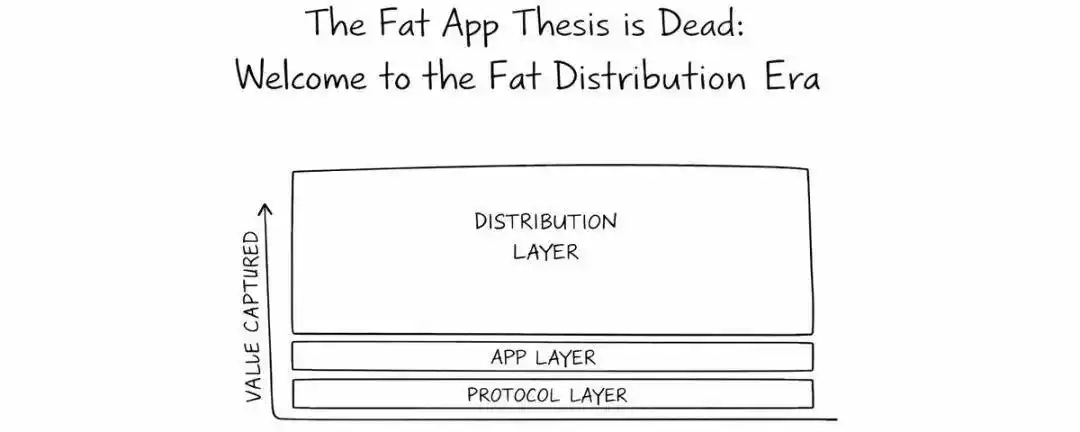
By 2025, the industry has officially entered a new phase: cryptocurrency applications themselves have become replaceable, standardized products.

The reason for this shift is simple: the crypto industry has invested excessive resources in infrastructure and technical optimization. We have relentlessly researched complex automated market maker (AMM) algorithms, innovative liquidation mechanisms, customized consensus protocols, and zero-knowledge proof cost optimizations, but now we are facing diminishing marginal returns. Technical improvements in applications are no longer perceptible to end users.

Users don’t care about a 1-basis-point reduction in oracle data costs, a 10-basis-point increase in lending rates, or improved pricing accuracy in decentralized exchange liquidity pools. What they truly care about is using an interface they already trust and are familiar with.

This trend is becoming increasingly evident: applications like Polymarket, Kalshi, Hyperliquid, Aave, Morpho, and Fluid are investing more time and resources into B2B partnerships. Instead of struggling to attract new users to adapt to cumbersome on-chain operations, they are transforming into backend services embedded in other product ecosystems.
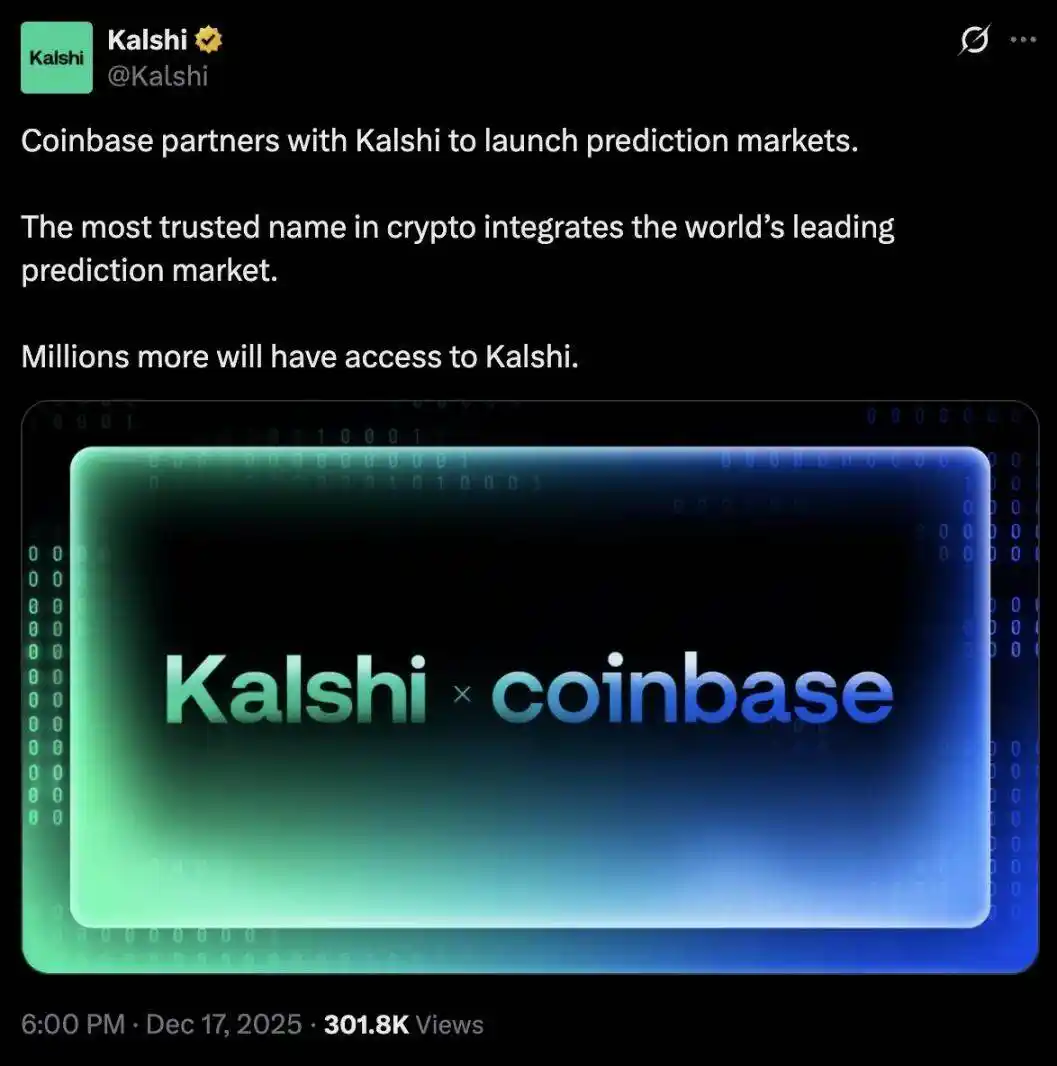
Convincing 25 million new users to download browser extensions, manage private keys, prepare gas fees, transfer assets across chains, and adapt to complex on-chain processes—or having platforms like Robinhood add an "earnings" feature to directly channel user deposits into your lending market. Clearly, the latter is easier to achieve.

Integration partnerships will ultimately win out, distribution channels will ultimately win out, front-end interfaces will ultimately win out; and crypto applications will merely become simple conduits for traffic.

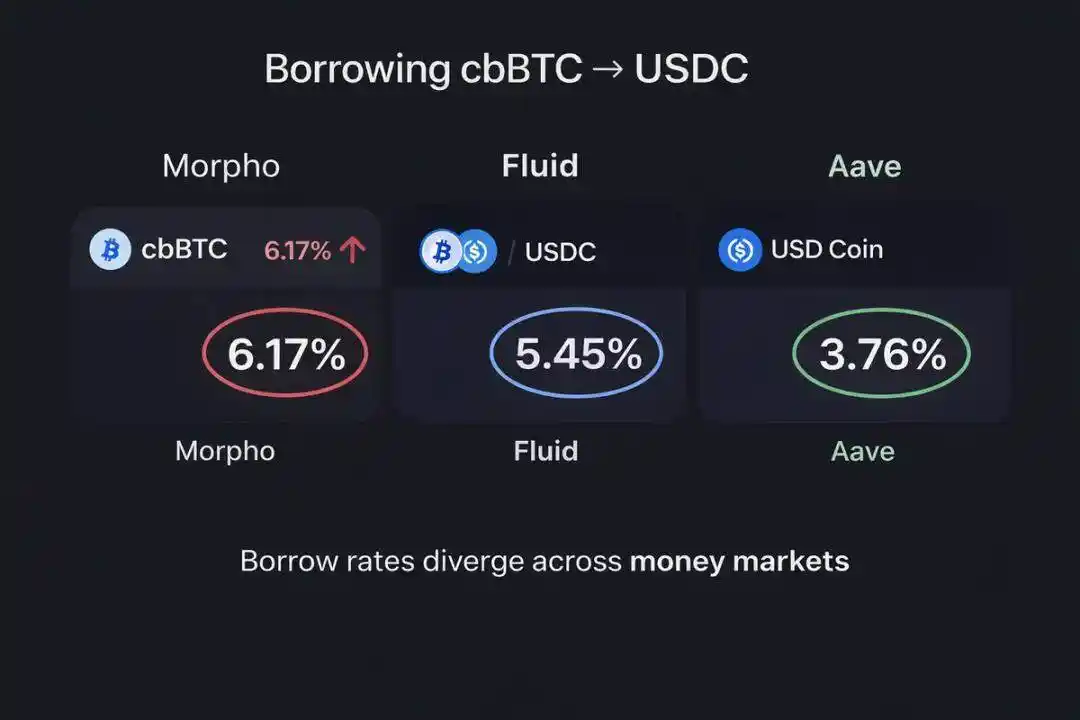
Coinbase’s case perfectly illustrates this: users can borrow USDC by using their platform’s Bitcoin (cbBTC) as collateral, and this transaction flow is directed to the Morpho lending market on the Base chain. Although Aave and Fluid on the Base chain offer significantly better interest rates for borrowing stablecoins using cbBTC as collateral, Morpho still dominates the market. The reason is simple: Coinbase users are willing to pay extra for "immediate and convenient operations."
However, not all applications will become invisible infrastructure. Some will still adhere to the B2C (business-to-consumer) track and will not adopt B2B2C (business-to-business-to-consumer) as their primary profit model. But they must undergo a complete transformation: adjusting core priorities, restructuring profit logic, building new competitive barriers, optimizing marketing strategies and development plans, and rethinking the core pathways for users to enter the crypto space.

This does not mean that infrastructure-type applications can no longer create value, but rather that the front-end platforms that truly control user traffic will capture a larger share of the value.

In the future, competitive barriers will no longer be built around liquidity or crypto-native user experience but will focus on distribution capabilities.


Связанные с этим вопросы

QWhat is the main shift described in the article regarding the evolution of crypto applications?

AThe article describes a shift from 'fat applications' to 'fat distribution,' where crypto applications are becoming standardized infrastructure, and value is increasingly captured by front-end platforms that control user distribution rather than the applications themselves.

QAccording to the article, why are technical improvements in crypto applications becoming less impactful for end users?

ATechnical improvements, such as minor reductions in oracle data costs or slight increases in lending rates, have reached a point of diminishing returns and are no longer perceptible or meaningful to end users, who prioritize familiar and trusted interfaces.

QHow does the examples of Polymarket, Kalshi, and Aave illustrate the trend mentioned in the article?

AThese applications are increasingly focusing on B2B partnerships, embedding their services as back-end infrastructure into other products rather than directly attracting users with complex on-chain processes, highlighting the shift toward distribution-driven value capture.

QWhat example does the article use to demonstrate that users prefer convenience over optimal rates?

AThe article cites Coinbase users opting to borrow USDC using cbBTC as collateral through Morpho on Base, despite better rates being available on Aave or Fluid, because they value the convenience of a familiar interface.

QWhat will be the primary competitive barrier in the future, as stated in the article?

AThe primary competitive barrier will shift from liquidity or crypto-native user experience to distribution capabilities, with front-end platforms that control user traffic capturing a larger share of value.

Похожее

New Paradigms and Investment Logic in the Era of AI+Web3

In the era of AI+Web3, a venture capital firm shares insights from reviewing numerous projects. The AI industry is seen as still early-stage, structured in a "seven-layer matrix" from power infrastructure to AI agents. Investment timing is crucial, especially in cyclical sectors like AI data centers. The integration of AI and Crypto is deemed essential for two reasons: 1) AI agents require "financial sovereignty" for micro, high-frequency, machine-to-machine transactions, and 2) blockchain provides trust and auditability to address AI "hallucinations" and ensure transparency. The core investment principle is "honesty." Teams must be genuine, not hastily assembled, and products must be substantiated by real metrics, not just flashy demos. Projects built on honesty are valued for long-term success over short-term hype. Looking ahead, the most underestimated opportunity for 2026 is the deep fusion of AI, blockchain, and entertainment. While most investment focuses on B2B infrastructure like payments and decentralized computing (DePIN), the future lies in consumer applications. As AI automates most human labor, society will shift towards leisure, creating massive demand for high-quality entertainment. AI can power immersive experiences (e.g., NPCs with autonomous consciousness in games), while blockchain secures digital ownership and economic systems. This convergence could unlock tremendous value in user time and capital within virtual worlds. *Disclaimer: The content represents the author's views for discussion only and does not constitute investment advice.*

marsbit13 мин. назад

New Paradigms and Investment Logic in the Era of AI+Web3

marsbit13 мин. назад

Fantasy's Closing Notes: After Two and a Half Years of Trial and Error in SocialFi, What Have We Learned?

"Fantasy Shutdown Notes: Two and a Half Years of SocialFi Trial, What Have We Learned?" Fantasy, a SocialFi/crypto card game, is shutting down. The team is refunding 100% of investments to angel/seed round backers, as operational costs were fully covered by revenue. Over 2.5 years, the project returned approximately $20M to its community. The core reason for failure was building crypto economics on a foundation not designed for it. Traditional card games (Magic, Pokémon) succeed by prioritizing gameplay; financial value is a secondary outcome. Crypto card games invert this, attracting speculators first, not genuine players. This financialization trapped the team into managing a financial instrument instead of developing a game. This is a sector-wide issue. Embedding tokenomics into social products or creator-fan relationships often attracts short-term traders over genuine users, undermining the core value. The article also critiques premature token launches. Most tokens fail because they're issued before product-market fit is proven, diverting team and community focus to price speculation instead of building. Successful examples like Hyperliquid or Jupiter built sustainable businesses first. Fantasy's journey highlights key crypto pitfalls: the distorting effect of upfront financialization in gaming/social apps, and the dangers of launching tokens too early. The team hopes sharing these lessons helps future builders avoid the same traps.

marsbit56 мин. назад

Fantasy's Closing Notes: After Two and a Half Years of Trial and Error in SocialFi, What Have We Learned?

marsbit56 мин. назад

Торговля

Спот
Фьючерсы

Популярные статьи

Как купить ERA

Добро пожаловать на HTX.com! Мы сделали приобретение Caldera (ERA) простым и удобным. Следуйте нашему пошаговому руководству и отправляйтесь в свое крипто-путешествие.Шаг 1: Создайте аккаунт на HTXИспользуйте свой адрес электронной почты или номер телефона, чтобы зарегистрироваться и бесплатно создать аккаунт на HTX. Пройдите удобную регистрацию и откройте для себя весь функционал.Создать аккаунтШаг 2: Перейдите в Купить криптовалюту и выберите свой способ оплатыКредитная/Дебетовая Карта: Используйте свою карту Visa или Mastercard для мгновенной покупки Caldera (ERA).Баланс: Используйте средства с баланса вашего аккаунта HTX для простой торговли.Третьи Лица: Мы добавили популярные способы оплаты, такие как Google Pay и Apple Pay, для повышения удобства.P2P: Торгуйте напрямую с другими пользователями на HTX.Внебиржевая Торговля (OTC): Мы предлагаем индивидуальные услуги и конкурентоспособные обменные курсы для трейдеров.Шаг 3: Хранение Caldera (ERA)После приобретения вами Caldera (ERA) храните их в своем аккаунте на HTX. В качестве альтернативы вы можете отправить их куда-либо с помощью перевода в блокчейне или использовать для торговли с другими криптовалютами.Шаг 4: Торговля Caldera (ERA)С легкостью торгуйте Caldera (ERA) на спотовом рынке HTX. Просто зайдите в свой аккаунт, выберите торговую пару, совершайте сделки и следите за ними в режиме реального времени. Мы предлагаем удобный интерфейс как для начинающих, так и для опытных трейдеров.

688 просмотров всегоОпубликовано 2025.07.17Обновлено 2025.07.17

Как купить ERA

Обсуждения

Добро пожаловать в Сообщество HTX. Здесь вы сможете быть в курсе последних новостей о развитии платформы и получить доступ к профессиональной аналитической информации о рынке. Мнения пользователей о цене на ERA (ERA) представлены ниже.

活动图片