Farewell to the Altcoin Boom Cycle: Delphi Digital's Top 10 Predictions for the 2026 Crypto Market

比推Опубликовано 2026-01-13Обновлено 2026-01-13

Введение

Delphi Digital's "10 Predictions for 2026" outlines a transformative future for crypto, moving beyond altcoin cycles toward institutionalization and infrastructure maturity. Key predictions include: AI agents will autonomously conduct transactions via protocols like x402 and ERC-8004; Perp DEXs like Hyperliquid will consolidate traditional finance roles; prediction markets will become mainstream hedging tools; ecosystems will reclaim stablecoin revenue from issuers; DeFi will solve uncollateralized lending using zkTLS proofs; on-chain FX will gain traction in emerging markets; gold and Bitcoin will lead as fiat hedges amid monetary debasement; major exchanges will evolve into "everything apps" with broad financial services; privacy infrastructure will become critical for adoption amid regulatory pressure; and altcoin returns will be selective, favoring tokens with real utility, ETFs, and economic activity. The report concludes that crypto is becoming a foundational layer of global finance.

Source: Delphi Digital

Original Title: 10 Predictions for 2026

Compiled and Edited by: BitpushNews


Perpetual Decentralized Exchanges (Perp DEXs) will become the new Wall Street; AI Agents will achieve autonomous trading; exchanges will evolve into "Everything Apps".

Here are 10 key predictions from our 2026 annual report:

1. AI Agents Begin Autonomous Trading

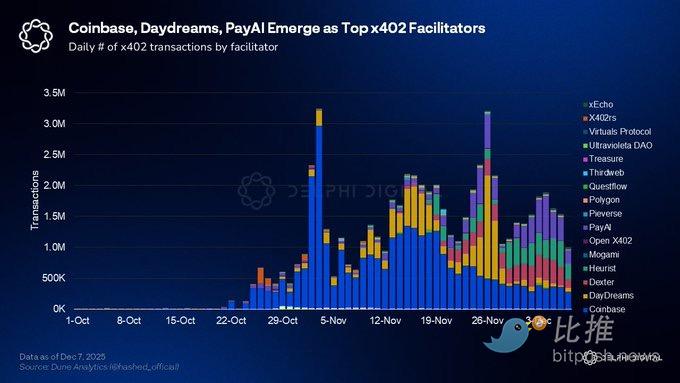
The x402 protocol allows any API to manage access permissions through crypto payments. When an AI agent needs a service, it can pay instantly with stablecoins—no shopping cart, no subscription. The ERC-8004 standard adds trust by creating a reputation registry for agents containing historical performance data and staked collateral.

Combine the two, and you get an autonomous agent economy. A user can delegate a travel planning agent, which automatically subcontracts a flight search agent (paying for data via x402), and then completes the booking on-chain—all without human intervention.

2. Perpetual DEXs Devour Traditional Finance

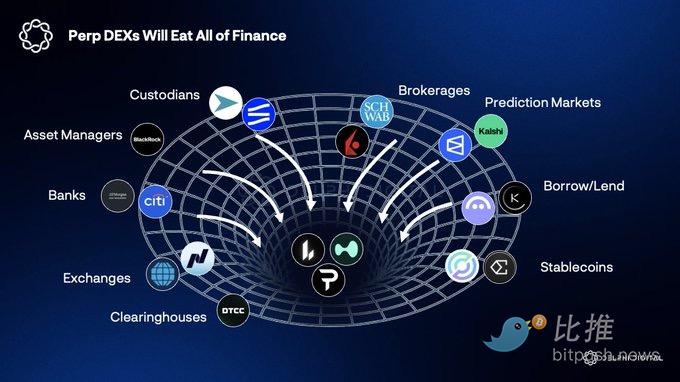
Traditional Finance (TradFi) is expensive because of its fragmented nature: trading happens on exchanges, settlement through clearinghouses, and custody with banks. Blockchain compresses all of this into a single smart contract.

Currently, Hyperliquid is building native lending functionality. Perp DEXs will likely act as brokers, exchanges, custodians, banks, and clearinghouses all at once. Competitors like @Aster_DEX, @Lighter_xyz, and @paradex are rapidly catching up.

3. Prediction Markets Ascend to Traditional Financial Infrastructure

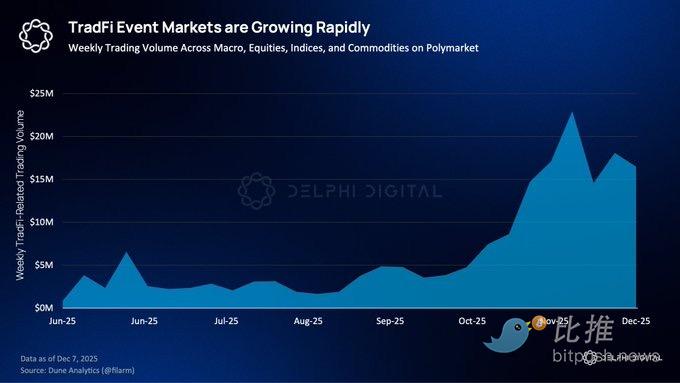
Thomas Peterffy, Chairman of Interactive Brokers, defines prediction markets as a real-time information layer for portfolios. Early demand at Interactive Brokers focused on weather contracts related to energy, logistics, and insurance risks.

2026 will open new categories: stock event markets for earnings surprises and guidance ranges; markets for macro indicators like CPI and Fed decisions; and cross-asset relative value markets. A trader holding tokenized Apple stock (AAPL) can hedge earnings risk with a simple binary contract instead of researching complex options. Prediction markets will become a "first-class" derivative.

4. Ecosystems Reclaim Stablecoin Revenue from Issuers

Last year, just by controlling the issuance channel, Coinbase captured over $900 million in USDC reserve revenue. Public chains like Solana, BSC, Arbitrum, Aptos, and Avalanche have a total annual fee revenue of about $800 million, but they host over $30 billion in USDC and USDT. This means the platforms driving stablecoin usage are losing more revenue to issuers than they earn in fees.

Now, this is changing. Hyperliquid runs a competitive bidding process for USDH and now captures half the reserve revenue for its aid fund. Ethena's "Stablecoin-as-a-Service" model is being adopted by Sui, MegaETH, and Jupiter. Revenue that was passively enjoyed by incumbent issuers is being reclaimed by the platforms creating demand.

5. DeFi Conquers Uncollateralized Lending

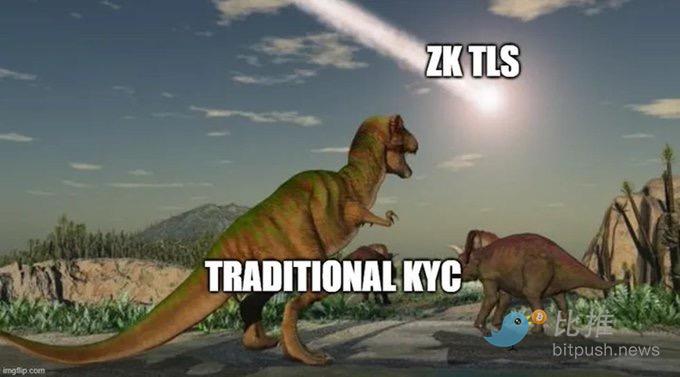
DeFi lending protocols have billions in Total Value Locked (TVL), but almost all require over-collateralization. zkTLS (Zero-Knowledge Transport Layer Security) opens new doors. Users can prove their bank balance exceeds a certain amount without revealing account numbers, transaction history, or true identity.

@3janexyz uses verified Web2 financial data to provide instant uncollateralized USDC credit lines. Algorithms monitor borrowers in real-time and adjust rates dynamically. The same framework can also underwrite AI agents based on their historical performance as a "credit score." @maplefinance, @centrifuge, and @USDai_Official are also tackling related areas.

2026 will be the year uncollateralized lending moves from experiment to infrastructure.

6. Onchain FX Finds Product-Market Fit

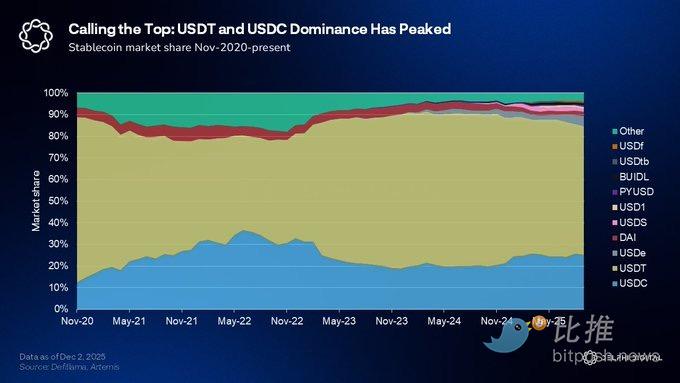
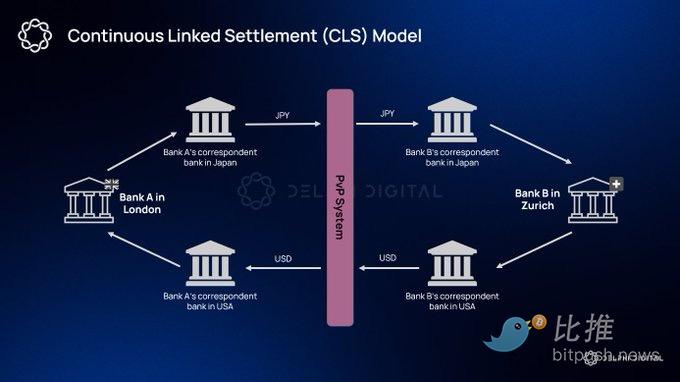
While USD stablecoins account for 99.7% of supply, this may have peaked. Traditional foreign exchange (FX) is a multi-trillion dollar market, but it's full of intermediaries, fragmented settlement paths, and expensive fees. Onchain FX compresses this entire structure by turning all currencies into tokenized assets on a shared execution layer, eliminating multiple middlemen.

Its product-market fit (PMF) will likely emerge in emerging market currency pairs where traditional FX paths are most expensive and inefficient. These neglected corridors are where crypto's value proposition is clearest.

7. Gold and Bitcoin Lead the "Fiat Debasement Hedge" Trade

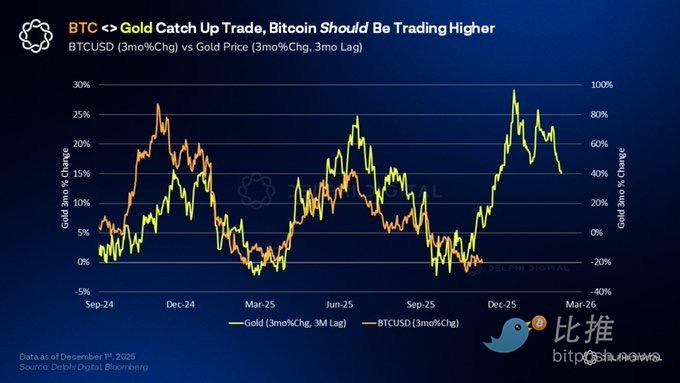
After we pointed out gold was one of the most watchable charts, it surged 60%. Despite record highs, global central banks bought over 600 tons, with China being the most aggressive buyer.

The macro environment supports further strength: global central banks are cutting rates; fiscal deficits will persist until 2027; global M2 supply is hitting new highs; the Fed is ending quantitative tightening (QT). Typically, gold leads Bitcoin by three to four months. As currency debasement becomes a mainstream topic in the 2026 midterm elections, both assets will attract flight-to-quality flows.

8. Exchanges Evolve into "Everything Apps"

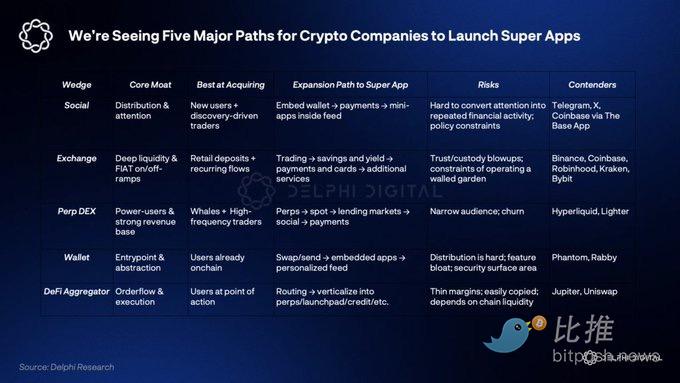
Coinbase, Robinhood, Binance, and Kraken are no longer just building exchanges; they are building everything apps.

Coinbase has Base as an operating system, Base App as an interface, USDC yield as underlying profit, and derivatives from Deribit. Robinhood's Gold membership grew 77% year-over-year, becoming a retention engine. Binance already operates at super-app scale with over 270 million users and $250 billion in Pay transaction volume. When distribution costs become cheap, value flows to platforms with users. In 2026, the winners will begin to win comprehensively.

9. Privacy Infrastructure Catches Up with Demand

Privacy rights are under pressure. The EU passed the Chat Control Act; cash transaction limits are capped at €10,000; the ECB's planned digital euro will have a €3,000 holding limit.

Privacy infrastructure is catching up. @payy_link is launching private crypto cards; @SeismicSys provides protocol-level encryption for fintech companies; @KeetaNetwork enables on-chain KYC without revealing personal data; @CantonNetwork offers privacy infrastructure for large financial institutions. Without a privacy path, stablecoin adoption will hit a ceiling.

10. Altcoin Returns Remain Dispersed

The kind of broad-based "rising tide" rebounds of past cycles will not return.

Over $3 billion in token unlocks are imminent. Competition from AI, robotics, and biotech industries is intensifying. ETF flows are highly concentrated in Bitcoin and a few large-cap assets.

Capital will coalesce around structural demand: tokens with ETF flows, protocols with real revenue and buybacks, and apps with genuine product-market fit. Winners will be concentrated in teams that build defensive moats in categories generating real economic activity.

Conclusion

The crypto industry is entering its next phase. Institutionalization has arrived. Prediction markets, on-chain credit, the agent economy, and stablecoins as infrastructure represent real paradigm shifts.

Crypto is becoming the infrastructure layer for global finance. The teams that understand this will define the next decade.


Twitter:https://twitter.com/BitpushNewsCN

Bitpush TG Community:https://t.me/BitPushCommunity

Bitpush TG Subscription: https://t.me/bitpush

Original link:https://www.bitpush.news/articles/7602460

Связанные с этим вопросы

QWhat are the key predictions made by Delphi Digital for the 2026 crypto market?

AThe key predictions include: 1) AI agents will achieve autonomous trading, 2) Perpetual DEXs will consume traditional finance, 3) Prediction markets will become traditional financial infrastructure, 4) Ecosystems will reclaim stablecoin revenue from issuers, 5) DeFi will solve uncollateralized lending, 6) Onchain FX will find product-market fit, 7) Gold and Bitcoin will lead the 'fiat devaluation hedge' trade, 8) Exchanges will evolve into 'Everything Apps', 9) Privacy infrastructure will catch up with demand, and 10) Altcoin returns will remain dispersed.

QHow do x402 and ERC-8004 standards contribute to the autonomous agent economy?

AThe x402 protocol allows any API to manage access permissions via crypto payments, enabling an AI agent to pay for services instantly with stablecoins without a shopping cart or subscription. The ERC-8004 standard adds trust by creating a reputation registry for agents, containing historical performance data and staked collateral. Combining these allows for an autonomous agent economy where tasks can be delegated and completed without human intervention.

QWhy are Perpetual DEXs predicted to disrupt traditional finance (TradFi)?

APerpetual DEXs are predicted to disrupt TradFi because blockchain technology compresses the fragmented structure of traditional finance—where trading happens on exchanges, settlement through clearing houses, and custody with banks—into a single smart contract. Projects like Hyperliquid are building native lending features, allowing a Perp DEX to act as broker, exchange, custodian, bank, and clearinghouse simultaneously.

QWhat is the significance of prediction markets becoming 'first-class citizen' derivatives?

APrediction markets becoming 'first-class citizen' derivatives signifies their evolution into a real-time information layer for investment portfolios. They will expand into new categories like equity event markets for earnings reports, macro indicator markets for data like CPI, and cross-asset relative value markets. This allows traders to hedge risks using simple binary contracts instead of complex options, integrating them as a core part of the financial infrastructure.

QHow are ecosystems reclaiming stablecoin revenue from issuers according to the report?

AEcosystems are reclaiming stablecoin revenue from issuers by implementing new models. For example, Hyperliquid runs a competitive bidding process for USDH, capturing half of the reserve revenue for its aid fund. Ethena's 'stablecoin-as-a-service' model is being adopted by platforms like Sui, MegaETH, and Jupiter. This shifts the revenue, which was passively enjoyed by incumbent issuers, back to the platforms that are creating the demand for the stablecoins.

Похожее

Who Will Define the Rules of the AI Era? Anthropic Discusses the 2028 US-China AI Landscape

This article, based on Anthropic's analysis, outlines the intensifying systemic competition between the U.S./allies and China for AI leadership by 2028. It argues that access to advanced computing power ("compute") is the critical bottleneck, where the U.S. currently holds a significant advantage through chip export controls and allied innovation. However, China's AI labs remain competitive by exploiting policy loopholes—via chip smuggling, overseas data center access, and "model distillation" attacks to copy U.S. model capabilities—keeping them close to the frontier. The piece presents two contrasting scenarios for 2028. In the first, decisive U.S. action to tighten compute controls and curb distillation locks in a 12-24 month AI capability lead, cementing democratic influence over global AI norms, security, and economic infrastructure. In the second, policy inaction allows China to achieve near-parity through continued access to U.S. technology, enabling Beijing to promote its AI stack globally and integrate advanced AI into its military and governance systems, altering the strategic balance. Anthropic contends that maintaining a decisive U.S. lead is essential for shaping safe AI development and governance. The core recommendation is for U.S. policymakers to urgently close compute and model access loopholes while promoting global adoption of the U.S. AI technology stack to secure a lasting strategic advantage.

marsbit1 ч. назад

Who Will Define the Rules of the AI Era? Anthropic Discusses the 2028 US-China AI Landscape

marsbit1 ч. назад

“Why Didn’t You Buy 2x Long SK Hynix?”

The article discusses the immense popularity of the "2x Long SK Hynix ETF" (07709.HK) in Hong Kong, which became the world's largest single-stock leveraged ETF by May 2026. Launched in October 2025, the ETF's net value soared over 1000% in seven months, significantly outperforming the 324% gain of SK Hynix's underlying stock, driven by the AI boom and a critical shift in industry demand from computing power to memory. It highlights the mechanics and risks of daily-rebalanced leveraged ETFs. In a smooth bullish market, they generate amplified returns, but during volatile periods—exemplified by market swings during geopolitical tensions in the Strait of Hormuz in March-April 2026—they suffer severe "volatility decay," where choppy price action can cause losses far exceeding twice the drop of the underlying asset. The piece frames SK Hynix, as NVIDIA's primary HBM supplier, within the classic cycle of the memory chip industry—a commoditized sector prone to boom-and-bust cycles of shortage, price hikes, overcapacity, and crashes. While current AI-driven demand and high margins (Q1 2026毛利率~79%) create a "super cycle," the article questions its sustainability. It warns that extreme profits will inevitably tempt competitors like Samsung and Micron to ramp up HBM production, potentially eroding scarcity. Furthermore, the entire narrative remains tethered to the massive AI capital expenditure of tech giants. In conclusion, the ETF's trajectory symbolizes the accelerated, all-in nature of the current AI revolution, where timeframes are compressed and market moves are extreme. However, it also underscores that while industry trends define ultimate returns, macro-geopolitical risks dictate the volatile and uncertain path to get there.

marsbit1 ч. назад

“Why Didn’t You Buy 2x Long SK Hynix?”

marsbit1 ч. назад

a16z Crypto: A Guide to the CLARITY Act for Crypto Entrepreneurs

The CLARITY Act, a bipartisan crypto market structure bill, has advanced through the Senate Banking Committee, marking a potential historic shift in U.S. digital asset regulation. For years, a lack of clear rules has stifled innovation, pushed development overseas, and exposed consumers to risk. This bill aims to establish a comprehensive framework, providing long-needed regulatory clarity for blockchain networks and digital assets. It builds upon previous legislative efforts like FIT21 and the House version of CLARITY, which gained strong bipartisan support. CLARITY is crucial because it recognizes that blockchain networks are fundamentally different from traditional companies. Networks operate through decentralized, shared rules rather than centralized control. Applying corporate legal frameworks to networks forces them into a centralized model, concentrating power and value. In contrast, decentralized blockchain networks can function as user-owned public infrastructure, distributing value more equitably among participants. The bill seeks to enable the safe launch of networks in the U.S., clarify regulatory jurisdiction between the SEC and CFTC, oversee crypto exchanges, and enhance consumer protections. Its passage would align U.S. law with the nature of decentralized technology, allowing builders to operate transparently and fund projects domestically without structural compromises due to regulatory uncertainty. Similar to the positive impact seen after the stablecoin-focused GENIUS Act, CLARITY could unlock a new wave of innovation, helping the U.S. reclaim leadership in the crypto space while combating fraud and abuse.

链捕手1 ч. назад

a16z Crypto: A Guide to the CLARITY Act for Crypto Entrepreneurs

链捕手1 ч. назад

Торговля

Спот
Фьючерсы

Популярные статьи

Как купить S

Добро пожаловать на HTX.com! Мы сделали приобретение Sonic (S) простым и удобным. Следуйте нашему пошаговому руководству и отправляйтесь в свое крипто-путешествие.Шаг 1: Создайте аккаунт на HTXИспользуйте свой адрес электронной почты или номер телефона, чтобы зарегистрироваться и бесплатно создать аккаунт на HTX. Пройдите удобную регистрацию и откройте для себя весь функционал.Создать аккаунтШаг 2: Перейдите в Купить криптовалюту и выберите свой способ оплатыКредитная/Дебетовая Карта: Используйте свою карту Visa или Mastercard для мгновенной покупки Sonic (S).Баланс: Используйте средства с баланса вашего аккаунта HTX для простой торговли.Третьи Лица: Мы добавили популярные способы оплаты, такие как Google Pay и Apple Pay, для повышения удобства.P2P: Торгуйте напрямую с другими пользователями на HTX.Внебиржевая Торговля (OTC): Мы предлагаем индивидуальные услуги и конкурентоспособные обменные курсы для трейдеров.Шаг 3: Хранение Sonic (S)После приобретения вами Sonic (S) храните их в своем аккаунте на HTX. В качестве альтернативы вы можете отправить их куда-либо с помощью перевода в блокчейне или использовать для торговли с другими криптовалютами.Шаг 4: Торговля Sonic (S)С легкостью торгуйте Sonic (S) на спотовом рынке HTX. Просто зайдите в свой аккаунт, выберите торговую пару, совершайте сделки и следите за ними в режиме реального времени. Мы предлагаем удобный интерфейс как для начинающих, так и для опытных трейдеров.

1.3k просмотров всегоОпубликовано 2025.01.15Обновлено 2025.03.21

Как купить S

Sonic: Обновления под руководством Андре Кронье – новая звезда Layer-1 на фоне спада рынка

Он решает проблемы масштабируемости, совместимости между блокчейнами и стимулов для разработчиков с помощью технологических инноваций.

2.2k просмотров всегоОпубликовано 2025.04.09Обновлено 2025.04.09

Sonic: Обновления под руководством Андре Кронье – новая звезда Layer-1 на фоне спада рынка

HTX Learn: Пройдите обучение по "Sonic" и разделите 1000 USDT

HTX Learn — ваш проводник в мир перспективных проектов, и мы запускаем специальное мероприятие "Учитесь и Зарабатывайте", посвящённое этим проектам. Наше новое направление .

1.8k просмотров всегоОпубликовано 2025.04.10Обновлено 2025.04.10

HTX Learn: Пройдите обучение по "Sonic" и разделите 1000 USDT

Обсуждения

Добро пожаловать в Сообщество HTX. Здесь вы сможете быть в курсе последних новостей о развитии платформы и получить доступ к профессиональной аналитической информации о рынке. Мнения пользователей о цене на S (S) представлены ниже.

活动图片