Источник: Подкаст «Milk Road»
Подготовил: Felix, PANews
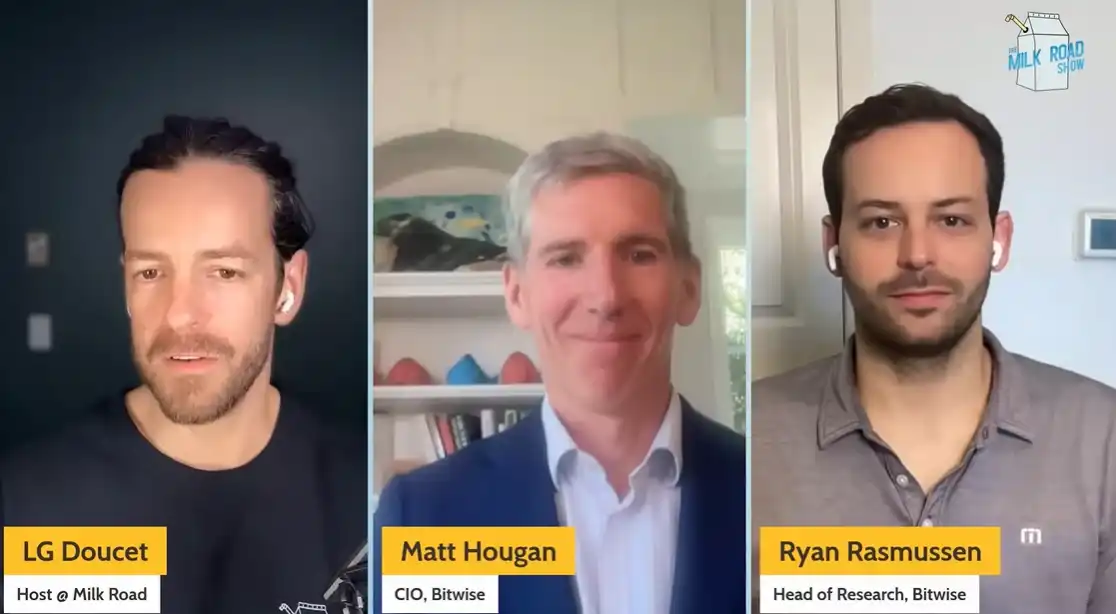
Главный инвестиционный директор Bitwise Мэтт Хоуган и руководитель отдела исследований Райан Расмуссен стали гостями шоу «Milk Road Show» (запись от 6 апреля), где подробно обсудили реальные движущие силы текущего крипторынка и почему институциональный спрос может быть ключом к следующему движению биткоина.
Они отметили, что, несмотря на общий пессимистичный настрой на крипторынке, институциональные инвесторы продолжают тихо наращивать позиции. От притока средств в ETF до регуляторной динамики и макроэкономических изменений — есть несколько ключевых сигналов, которые могут подтолкнуть биткоин к отметке в 95 000 долларов к 2026 году. PANews подготовила精华(основные моменты) диалога.
Ведущий: Райан, я видел статью, где ты прогнозируешь, что биткоин достигнет диапазона в 95 000 долларов к концу года. Это правда?
Райан: Это был интересный разговор, потому что мы тогда говорили о многих долгосрочных позитивных факторах, способных подтолкнуть рынок вверх. Приведенный мной пример заключался в том, что к 2026 году мы увидим определенные катализаторы, которые могут вернуть рынок к уровню в 95 000 долларов, что как раз является позицией, которую нам нужно достичь, чтобы打破(прервать) четырехлетний цикл. Я считаю, что это вполне вероятно, мы甚至(даже) можем закрыть год выше 95 000 долларов. Есть несколько очень конкретных катализаторов, которые подтолкнут нас к этой цели, конечно, при соблюдении некоторых условий. Я действительно так сказал и верю, что это произойдет.
Ведущий: Что это за катализаторы?
Райан: Есть три конкретных фактора окружающей среды, которые должны измениться в пользу биткоина, чтобы подтолкнуть цену вверх. Первый — это макроэкономическая и геополитическая ситуация, я твердо верю, что она успокоится в относительно короткие сроки. Многие опасаются, что этот затянувшийся конфликт может длиться много-много месяцев и будет иметь каскадные последствия для инфляции, процентных ставок и экономик США и мира. Я в это не верю. Я считаю, что это относительно кратковременный шок, который сойдет на нет, и через 6 месяцев мы будем говорить о нем так же, как о тарифных скандалах или других краткосрочных рыночных потрясениях, вызванных Трампом. Поэтому я считаю, что макрогеополитическая环境(среда) должна перейти от состояния неопределенности, нестабильности и持续(постоянного) хаоса к более нормализованной среде. Я думаю, это произойдет в ближайшие месяцы. У нас будет Кевин Уорс у власти, я думаю, мы увидим, что ставки останутся стабильными или будут снижены. Я не думаю, что будет повышение ставок, а это благоприятно для положительной доходности цены биткоина.
Следующее — это ясность регулирования. Регуляторная среда для биткоина一直(всегда) была очень неопределенной, Закон о ясности(«Clarity Act») все еще в подвешенном состоянии, но я верю, что «Закон о ясности» будет принят до закрытия окна 2026 года. Я считаю, что это позитивная новость для биткоина и других криптоактивов.
И самый большой катализатор (не только для 2026 года, а долгосрочный) — это то, что институциональный спрос на биткоин очень силен. В прошлом месяце, amid(на фоне) всей этой геополитической макронеопределенности и регуляторной неопределенности, о которой я только что упомянул, мы все равно видели приток более 1 миллиарда долларов в биткоин-ETF.所以(Так что) можно представить, что произойдет, если эти вопросы утихнут и станут хвостовым ветром(попутным ветром) для криптовалют, с точки зрения институционального спроса. Я считаю, что эти факторы подтолкнут биткоин к возврату выше 95 000 долларов к концу года.
Ведущий: Есть ли вероятность, что эти позитивные моменты действительно произойдут, но конфликт также продолжится, и они нейтрализуют друг друга?
Райан: Возможно взаимное抵消. Если мы увидим повышение ставок и конфликт продлится 6 месяцев или даже дольше, то任何(любому) финансовому активу будет трудно показать относительно强劲(сильную) результативность. Однако интересно, что рынок начинает менее остро реагировать на эти угрозы или заявления. Например, Трамп выдвигает ультиматум, Иран отвечает, что не подчинится, Трамп меняет сроки — каждый раз, когда такое происходит, реакция рынка ослабевает.所以(Так что) я думаю, это просто явление постепенной десенсибилизации рынка, после чего другие силы займут主导(доминирующее) положение.
В конечном счете, цена биткоина основана на спросе и предложении, поэтому институциональный спрос будет самым сильным драйвером. Судя по нашим разговорам с инвесторами, они рассматривают текущие цены как хорошую точку входа и делают много долгосрочных аллокаций в своих портфелях. Я не думаю, что этот долгосрочный спрос будет нейтрализован, вопрос в том, придет ли он в следующем месяце, через шесть или через девять месяцев.
Ведущий: Мэтт, чувствуешь ли ты импульс к достижению 95 000 долларов к концу года?
Мэтт: Я действительно считаю, что это зависит от упомянутых Райаном условий. Я бы также добавил еще один катализатор: Нам нужно иметь какое-то решение или четкую дорожную карту для решения растущих опасений по поводу угрозы квантовых вычислений для биткоина. Единственное, в чем я, возможно, не согласен с Райаном, это то, что если все наши карты лягут позитивно, я думаю, цена будет значительно выше 95 000 долларов; если будет смешанный исход, мы можем консолидироваться; если все факторы ухудшатся, мы можем закрыться на более низком уровне. Мой взгляд имеет большую дисперсию. Но если мы получим ясность регулирования, иранский вопрос разрешится, и мы решим проблему квантовых вычислений, я думаю, конец года будет прекрасным. Но для этого нужна череда событий, развивающихся в благоприятном направлении.
Ведущий: Действительно ли проблема квантовых вычислений так легко решаема? Я недавно采访(брал интервью) у некоторых гостей, и это звучало somewhat( somewhat) сложно, тебе нужно, чтобы все в биткоин-пространстве заново достигли консенсуса для решения этой проблемы. А фонд Ethereum Foundation最近(недавно), кажется, более активен, и система тоже совсем другая. Это проблема, которую можно быстро решить или защититься от нее в биткоине?
Мэтт: Мое мнение таково, что вещи, которые вы хотите видеть для решения квантовой угрозы, на самом деле происходят. А именно, высокорепутационные люди высказывают опасения, и таких людей становится все больше, поэтому сообщество更加(более) серьезно关注(обращает внимание) на это и готово взвешивать за и против. С точки зрения готовности, сегодня мы находимся в лучшем положении, чем 12 месяцев назад. Я не думаю, что нам нужно решить все проблемы, нам нужна надежная дорожная карта, чтобы высвободить спрос тех «OG»-инвесторов в биткоин, которые выведут нас из зимы в весну четырехлетнего цикла. Это не значит, что Ethereum已经完全(полностью) решил проблему, у них просто есть надежная дорожная карта. Если бы у нас тоже была надежная дорожная карта и обязательства, этого было бы достаточно, чтобы вернуть на рынок ранних OG-инвесторов. Я думаю, институциональные инвесторы придут в любом случае, потому что они осознают, что их аллокация в биткоин отклоняется от рынка, и держать нулевую позицию больше не является терпимой позицией. Моя точка зрения заключается в том, чтобы выйти за пределы восходящего пространства в 95 000 долларов, о котором говорил Райан, нам нужно вовлечь этих OG-криптоигроков, розничных криптоигроков, и я думаю, они захотят четкую дорожную карту.
Ведущий: Ты имеешь в виду, что эти OG должны чувствовать, что после Google и предупреждений на прошлой неделе, ситуация решается или скоро будет под контролем. Тогда Мэтт, для этих OG, которые начали massively(массово) продавать свои позиции в прошлом году, было ли это беспокойство изначальной причиной оттока спроса?
Мэтт: Да. Я обычно считаю, что объяснения单一(единственной) причиной ошибочны, но было ли это способствующим фактором? Да. Было ли это так же важно, как четырехлетний цикл и желание избежать исторического отката на 75%? Нет. Но это определенно был предлог для людей, чтобы эмоционально调整(скорректировать) свои риски до наступления четырехлетнего цикла. Так что это немного сложно, но это确实(действительно) был фактор, и внимание людей к этому резко возросло. И я считаю, это хорошо, это показывает, что система самовосстанавливается. Но я действительно считаю, что если это будет хорошо организовано, то в данный момент это станет катализатором.
Ведущий: Райан, на Саммите цифровых активов обсуждалась эта квантовая проблема? Если нет, то о чем говорили?
Райан: Квантовые вычисления确实(действительно) упоминались на Саммите цифровых активов, но не с той степенью внимания, которую можно было бы ожидать. А статья Google об ускорении графика квантовых рисков была опубликована уже после окончания конференции, так что она стала более заметной только на прошлой неделе. Я бы сказал, что большая часть внимания на саммите была сосредоточена на институциональном принятии, регуляторной ясности, а также на таких вещах, как токенизация, стейблкоины и сейфы (Vaults), меньше внимания уделялось квантовым рискам, хотя они确实(действительно) волнуют инвесторов. В течение последнего месяца многие инвесторы спрашивали о квантовых рисках для биткоина и эфириума. Они видят沟通(коммуникацию) об усилиях по解决(решению) этих рисков, что дает им некоторое утешение, но нам действительно нужно看到(увидеть) принятие существенных действий, чтобы真正(действительно)缓解(снять) долгосрочные опасения.
Ведущий: Райан, ты сказал, что институциональные инвесторы «любопытны», означает ли это, что у них все еще存在(есть) информационный разрыв, они не понимают эти активы, или они пытаются получить внутреннюю поддержку? Что ты имеешь в виду под «любопытны»?
Райан: Когда ты говоришь с разными институциональными инвесторами и профессиональными инвесторами об уровне их внимания к криптоиндустрии и к конкретным разработкам внутри индустрии, ты обнаруживаешь большой разброс. Многие профессиональные инвесторы тратят очень мало времени на размышления о биткоине или криптовалютах в целом. Их информация об этом пространстве обычно comes from(приходит из) заголовков The Wall Street Journal или CNBC, или они слышат, как кто-то на CNBC谈论(говорит) о потенциальных рисках для рынка. Поэтому, когда они слышат о квантовых вычислениях, или о том, что Google выпустил важную статью, это привлекает их внимание, и они приходят спросить нас: насколько велик этот риск? Вы, как профессиональные управляющие активами, которые следят за этой сферой 24/7 и общаются с核心(core) разработчиками биткоина и жертвуют им деньги, что вы думаете?所以(Так что) информационный разрыв заключается в том, что они полагаются на нас, чтобы понять, что реально, а что — шум.
Ведущий: Мэтт, на саммите, что еще больше всего волновало институциональную аудиторию относительно рисков или возможностей? Или чему вы научились, что ранее недооценивали?
Мэтт: Один из моих больших выводов заключается в том, что за последние пять лет одежда людей на саммите изменилась. Пять лет назад, наверное, только два или три человека были в костюмах; в этом году от 80% до 85% людей были в костюмах, что удивительно. Это говорит о том, что в криптопространстве происходит неудержимый институциональный бычий рынок, который проявляется в стейблкоинах, токенизации и сейфах (Vaults), происходит реальная эволюция самой сути криптовалют. Достаточно对比(сравнить) фотографии аудитории саммита 2020 года и сейчас, чтобы увидеть огромную трансформацию. Еще одна горячая тема — это «Сейфы (Vaults)». Было проявлено огромное интереса к сейфам, я охарактеризовал их как следующий ETF. Я думаю, что институциональный интерес к сейфам даже превышает текущий уровень реальных активов и роста на этом рынке.
Ведущий: В чем именно разница между ETF и сейфами (Vaults)?
Мэтт: Исторически управление активами решало проблему того, что частные лица хотят инвестировать в рынок, но не могут получить необходимое диверсифицированное распределение и управление (потому что это не их основная работа), поэтому они отдают деньги управляющему активами для размещения. 300 лет назад (в 17 веке) управление активами только начиналось и было очень громоздким и дорогим. К 20-м годам у нас появились открытые фонды; в 90-х у нас появились ETF, что сделало его более эффективным. Разница между сейфами и ETF заключается в том, что они further(еще больше) повышают эту эффективность. В традиционном мире управляющие активами занимаются хранением, аудитом, налоговой отчетностью и т.д. и сочетают это с интеллектуальной собственностью (IP) о том, куда идут инвестиции. Сейфы же剥离(отделяют) все эти «хлопоты реального мира», оставляя только интеллектуальную собственность. Инвесторы вкладывают средства в смарт-контракт, который распределяет их согласно операциям управляющего активами. Таким образом, это более упрощенная, эффективная, совершенная версия управления активами, а другие громоздкие части оставляются на усмотрение самих individuals(частных лиц).
Ведущий: Райан, у меня вопрос. Будут ли сейфы областью, где ИИ окажет огромное влияние? Потому что, как описывает Мэтт, это звучит так, как будто это будет involve(включать) очень сложные стратегии. Я спрашиваю тебя, потому что на прошлой неделе ты поделился твитом, что люди, занимающиеся ИИ, более взволнованы криптовалютами, чем люди, занимающиеся криптовалютами.
Райан: Совершенно верно. Это был очень интригующий твит. В последние 6-9 месяцев настроения в криптовалютах были near(около) исторических минимумов, близко к минимумам после краха FTX в 2022 году, цены大幅(значительно) упали, ликвидность枯竭(иссякла). Но когда ты говоришь с институциональными инвесторами, они видят не медвежий рынок по ценам, а позитивные факторы, которые будут двигать рынок вверх в долгосрочной перспективе: сейфы, токенизация, стейблкоины и т.д. А когда ты говоришь с людьми, создающими продукты ИИ, они видят множество преимуществ базовой технологии: ИИ需要(нуждается) решить проблему подтверждения личности, с чем крипто/блокчейн справляется очень хорошо;需要(нужно) решить проблему конфиденциальности, с чем криптография тоже справляется хорошо;需要(необходимо)提供(предоставить) способ совершения транзакций для ИИ-агентов без доступа к банковскому счету, с чем стейблкоины и блокчейн также очень хорошо справляются.所以(Так что) разработчики ИИ видят синергию и极度(чрезвычайно) настроены бычье; институциональные инвесторы видят синергию между традиционными финансами и криптотехнологиями и также становятся все более бычьими. А крипто-нативные инвесторы видят только падение цен, иссякание ликвидности, постоянные ликвидации, крах мемкоинов, они думают, что все кончено. Это огромный разрыв. Это как если бы криптовалюты держали зонтик под дождем в солнечном месте.
Ведущий: Почему криптосообщество такое эмоциональное? Это из-за его волатильности? Может ли оно избавиться от этих эмоциональных американских горок?
Райан: Я думаю, это частично связано с разницей в инвестиционных горизонтах. Многие криптоинвесторы пришли в эту сферу, потому что хотели получить большое богатство за относительно короткое время, опередив институты. По мере того как рынок проходит через циклы бума и спада, люди становятся разочарованными и сильно пострадавшими. А профессиональные инвесторы, с которыми мы общаемся из управляющих благосостоянием и платформ, обычно ориентированы на долгосрочную перспективу. Они планируют для своих клиентов на 5 или даже 45 лет выхода на пенсию, они видят большие тренды и воодушевлены. Криптоинвесторы, из-за чрезмерно концентрированных инвестиций, проявляют высоко эмоциональное поведение, когда рынок波动(колеблется), что极其(чрезвычайно) опасно в инвестициях. Профессиональные инвесторы лучше систематически(систематически) инвестировать для получения долгосрочной доходности, они布局(размещаются) сейчас, потому что предвидят, что эта технология окупится через 10 лет.
Мэтт: Я думаю, это верно. Я бы также добавил, что某些(некоторые) области крипторынка (такие как мемкоины, альт-L1, пустые приложения) действительно переживают «зиму». Многие люди держат эти активы, и перспективы действительно мрачные. Это совершенно иначе, чем mindset(образ мышления) при первоначальном размещении с нуля. Если ты входишь сейчас и видишь, что стейблкоины и токенизация готовы процветать, и эти активы упали на 50%, ты воспринимаешь это как возможность. Но если ты持有(держал) активы, которые упали на 90% или даже могут упасть еще на 99%, perspective(перспектива), конечно, completely(совершенно) иная.
Ведущий: Мэтт, ты сегодня опубликовал отличный меморандум, отвечающий на пять самых больших вопросов о预测(прогнозных) рынках. Как профессиональный «Деген», я люблю ставить на различные странные вещи, но预测(прогнозные) рынки в настоящее время确实(действительно) сталкиваются с множеством споров и проблем. Ты намекнул в своей статье, что预测(прогнозные) рынки являются одним из самых важных инструментов в финансовом мире. Почему ты так говоришь?
Мэтт: Потому что они предоставляют миру новую关键(ключевую) информацию, а также являются полезным инструментом для портфеля. Во-первых, качество информации. Мы все разочарованы тем, что ФРС всегда смотрит на отстающие данные, данные по занятости часто大幅(значительно) пересматриваются, что оказывает огромное влияние на экономику и решения инвесторов. Если мы сможем повысить качество экономических данных, мир будет работать.
Я упомянул в статье документ ФРС, который показывает, что预测(прогнозные) рынки, такие как Kalshi (даже если они currently(в настоящее время) еще малы), уже более точны в预测(прогнозировании) снижения ставок ФРС, ВВП, ИПЦ и других данных, чем лучшие экономисты Bloomberg и собственное исследование ожиданий ФРС, и это в реальном времени. С точки зрения портфеля, реальный мир подвержен влиянию политических и экономических событий. Если ты считаешь, что после выборов через несколько лет Элизабет Уоррен возглавит SEC, это повлияет на криптовалюты, но у тебя currently(сейчас) нет способа чисто хеджировать эту вероятность. Это касается не только криптопространства, акции оборонного сектора, акции ИИ также пострадают, а наши текущие портфели не могут выразить это. Упаковка этих рисков через预测(прогнозные) рынки была бы очень ценным инструментом хеджирования. Они идеальны? Нет. Некоторые рынки需要(нуждаются) в наведении порядка? Абсолютно. Но в целом, я считаю их очень позитивными явлениями.
Ведущий: Самый большой скептицизм в отношении预测(прогнозных) рынков заключается в том, что это просто другая форма азартных игр, особенно когда они связаны с криптовалютами, как мемкоины. Как ты отвечаешь на это?
Мэтт: Некоторые из них действительно являются азартными играми. Если ты ставишь на футбольный матч на预测(прогнозном) рынке, это то же самое, что сделать ставку в букмекерской конторе, и это нормально. Но если ты делаешь прогноз на результат ставок ФРС, это эквивалентно рынку фьючерсов на федеральные фонды (Federal Funds Futures) на Чикагской товарной бирже (CME), где крупнейшие финансовые институты мира ежедневно торгуют на 5-15 триллионов долларов, и мы называем это инвестициями.预测(Прогнозные) рынки могут охватывать оба этих сценария. Мы можем отделить сложные финансовые инвестиции/хеджирование от спортивных событий или событий поп-культуры. Это очень мощные инструменты.
Ведущий: Будут ли эти预测(прогнозные) рынки分化(дифференцироваться) в будущем? Например, если сейчас зайти на Polymarket,可以看到(увидеть) тысячи тем, что может сбить с толку. Появятся ли в будущем预测(прогнозные) рынки, специализирующиеся исключительно на финансовой категории?
Мэтт: Я считаю, что это绝对(абсолютно) возможно. Когда мы рассматриваем возможность подачи заявки на запуск ETF на预测(прогнозные) рынки, мы, конечно, focused on(сфокусированы) на финансовых рыночных показателях, а не на доходах с концертов Тейлор Свифт. Так же, как и на существующем рынке ETF, есть самые простые ETF на S&P 500, а есть ETF с тройным leverage(левереджем) на отдельные акции. Поисковые инструменты будут четко区分(различать) обычные и специальные ETF.所以(Так что) по мере того, как больше финансовых пользователей принимают эти рынки, я думаю, они будут区分(дифференцироваться), и я毫不(нисколько) не удивлюсь, если看到(увижу), что спортивные ставки отделятся от них, ведь в этой области还有(есть) дополнительные法律(юридические) риски.
Райан: Для инвесторов, я считаю,预测(прогнозные) рынки дают инвесторам возможность表达(выразить) свое мнение о某种(некотором) бинарном исходе, и эта возможность非常重要(очень важна). Раньше тебе было трудно разложить ожидание того, что кто-то выиграет выборы, на сложный跨(кросс)-asset(классовый) инвестиционный портфель, включающий товары, технологии, золото, облигации и т.д.预测(Прогнозные) рынки极大地(значительно) упрощают способность инвесторов хеджировать портфель или进行(осуществлять) планирование. Упаковка ETF等(и других) финансовых продуктов вокруг событий конкретных预测(прогнозных) рынков сделает操作(операции) очень прямыми и легкими. Кроме того, как упомянул Мэтт, точность预测(прогнозных) рынков в макро- или экономических событиях (таких как Kalshi)甚至(даже) превышает точность традиционных опросов и экспертного консенсуса, точность агрегированной информации очень мощна.
Мэтт: Я очень согласен. Еще одна вещь, которая не была сказана явно, это то, что в прошлом крупнейшие институты мира имели свои собственные методы получения этих вероятностей напрямую (например, хедж-фонды платили деньги высокооплачиваемым лоббистам, чтобы те выведывали информацию в Вашингтоне). Что мне нравится в预测(прогнозных) рынках, так это то, что они выводят эту информацию на поверхность, показывая ее каждому инвестору, это более справедливая игровая площадка. Это имеет преимущество в виде равенства, что очень важно для справедливости инвестиционной экосистемы.
Ведущий: Наступит ли день, когда люди перестанут читать новости, а будут просто смотреть информацию, предоставляемую Polymarket?
Мэтт: Это моя любимая часть. Я думаю, что Polymarket должна получить Пулитцеровскую премию за освещение победы Трампа на выборах. Это было единственное место, которое точно сказало, что произойдет, лучше, чем опросы, лучше, чем каждая медиа-компания. Если это не новости, то я не знаю, что такое новости. Это была самая важная новость года, и это было единственное место, которое сделало это правильно.所以(Так что) я думаю, многие люди будут смотреть на Polymarket и Kalshi так же часто, как на The New York Times и The Wall Street Journal, чтобы понять, что происходит в мире, и, возможно, получат благодаря этому лучшую информацию.
相关阅读(Связанное чтение): Диалог с аналитиком ETF Bloomberg: Почему держатели биткоин-ETF не продавали во время падения на 50%





















