Cursor, Why Boarded Musk's Starship?

链捕手Опубликовано 2026-06-17Обновлено 2026-06-17

Введение

SpaceX announced its acquisition of AI programming startup Cursor's parent company, Anysphere, for $60 billion in an all-stock deal, just days after its record-breaking IPO. The move sent SpaceX's stock soaring, briefly making it the most valuable U.S. company. Cursor, founded in 2022 by MIT graduate Michael Truell and his classmates, is a popular AI coding assistant that allows developers to switch between models from OpenAI, Anthropic, and others. It saw explosive revenue growth, reaching a $4 billion annualized run rate in early 2026. However, its market share was eroded by the launch of competitor Claude Code from its key AI supplier, Anthropic. This dependence prompted Cursor to develop its own AI model, Composer, in early 2026. To scale Composer, Cursor needed immense computing power. In April 2026, it struck a deal with SpaceX, granting the latter an option to acquire it post-IPO. SpaceX exercised this option, offering Cursor access to its Colossus supercomputer, powered by hundreds of thousands of top-tier Nvidia AI chips. For SpaceX, the acquisition is a strategic move to bolster its AI capabilities, particularly for its xAI division, and advance its broader ambition of building orbital, solar-powered data centers. While the deal surprised some employees and investors given Truell's earlier stance on independence, it represents a high-stakes partnership. SpaceX CEO Elon Musk has projected the company could reach $1 trillion in revenue by 2030. For Truell, joining ...

Original Text丨Boyang, Tencent Technology

On June 16th, US local time, just four days after completing the largest IPO in history, SpaceX announced its first major acquisition following the listing.

According to documents filed with the US Securities and Exchange Commission (SEC), SpaceX will acquire AI programming startup Cursor's parent company Anysphere in an all-stock transaction valued at $60 billion. The deal is expected to close in the third quarter of 2026, subject to regulatory approvals.

Following the announcement, SpaceX's stock price surged by over 16% intraday, with its market cap once exceeding $2.94 trillion, briefly surpassing Microsoft. By the close, SpaceX had overtaken Amazon to become the fourth most valuable company in the US. From its IPO price of $135 per share, SpaceX's stock has accumulated gains of nearly 50%.

CNBC host Jim Cramer commented on this: "Buying SpaceX is essentially buying Musk's brain." He believes traditional valuation models struggle to measure Musk's ability to translate grand visions into commercial reality.

01 What is Cursor, and Why is it Worth $60 Billion?

Cursor is one of the hottest AI programming tools globally, co-founded in 2022 by Michael Truell and his MIT classmates Sualeh Asif, Arvid Lunnemark, and Aman Sanger. Headquartered in San Francisco, the company has about 700 employees and serves 60% of Fortune 500 companies.

Cursor's core product is an AI coding assistant that allows developers to flexibly switch between mainstream AI models from OpenAI, Anthropic, xAI, Google, etc. It can automatically generate, edit, and review code, directly competing with Anthropic's Claude Code and OpenAI's Codex.

In terms of revenue, Cursor's growth has been staggering. In November 2025, its annualized revenue surpassed $1 billion, roughly tenfold growth from a year earlier. It's reported that within the following three months, Cursor's annualized revenue doubled again to $4 billion. Currently, Cursor ranks 37th on the 2026 CNBC Disruptor 50 list.

However, according to Ramp spending data, Cursor's market share has dropped from 41% in June 2025 to around 26% in May 2026, while Anthropic's Claude Code now occupies about half of the market in this segment.

02 The Entrepreneurial Journey of a Prodigy

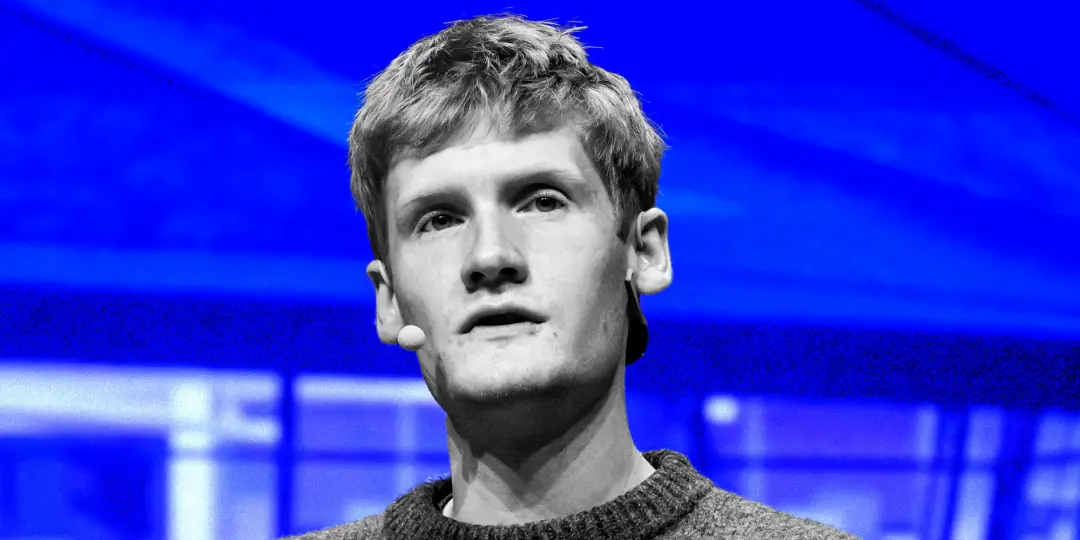
Cursor CEO Michael Truell

The story of Cursor begins with a quiet, red-haired teenager.

In 2019, as an 18-year-old MIT freshman, Truell faced a coding test expected to take an hour. He submitted his answers in under ten minutes. Tech investor Ali Partovi was the examiner that day, leading a program scouting top student coding talent. Partovi later had Truell test him, finding the teenager's code neat and concise, while his own answer sheet was a mess.

Growing up in New York with parents who were both journalists, Truell displayed exceptional programming talent from a young age. At 15, attending the prestigious private school Horace Mann School, he co-developed a programming game called Halite with classmates. The game taught coding basics by having players conquer grid territories, attracting thousands of middle and college students with no prior coding experience and earning him a $10,000 prize from a top math association.

At MIT, Truell majored in both Computer Science and Mathematics while incubating startup ideas. Claire Shorall, who mentored him in a startup bootcamp, recalls being impressed by his curiosity and humility. "I gave him some advice, but he clearly already knew his mind."

After graduating in 2022, Truell co-founded Anysphere with three MIT classmates, initially positioning it as a code editing platform. By building an enhanced version of Microsoft's open-source editor VS Code, they achieved monthly recurring revenue of $1 million within a year. Cursor officially launched in March 2023 and was quickly embraced by developers and enterprise users.

03 The "Strange" Relationship with Anthropic

Cursor's rise wasn't smooth sailing, with the biggest variable coming from its core AI supplier—Anthropic.

The two companies were highly interdependent: Cursor's product heavily relied on Anthropic's AI models, while Cursor's explosive growth once contributed about 40% to 50% of Anthropic's revenue. Both sides were aware of each other's importance.

However, before launching its own code editor Claude Code, Anthropic privately told Cursor's management that the product was more research-oriented and not a major commercial deployment. Yet Claude Code quickly swept through the developer community.

By February 2026, Claude Code's annualized revenue had grown to $2.5 billion, about $500 million higher than Cursor's revenue at the time. Many developers began posting on social media announcing they were abandoning Cursor for Claude Code. Meanwhile, Anthropic's previous severing of model access to Windsurf during its acquisition talks with OpenAI further heightened Cursor management's concerns about over-reliance on a single supplier.

On January 5, 2026, Truell held an all-hands meeting described by internal employees as "urgent," announcing that Cursor must develop its own AI model. His message was concise and powerful: We cannot fall behind. Cancel all unnecessary meetings, be ready for cross-team collaboration at any time. We must stay agile and adapt quickly.

Subsequently, Cursor launched its self-developed programming model suite, Composer, initially based on an open-source model from Chinese AI lab Moonshot. However, according to Cursor, in the Composer 2.5 version released in May, over 85% of the work was Cursor's own R&D (based on the Kimi K2.5 model). Cursor engineer Lucas Garza stated that with its low price and extremely fast response speed, Composer received an "extremely enthusiastic" response from developers.

04 Moving Closer to Musk: A Win-Win Gamble

Developing its own model required massive computing power, a weakness for Cursor. This spring, Truell found another founder with grand ambitions to fill this gap.

On April 21st, Truell posted on X in his typically concise style: "Excited to partner with the SpaceX team to scale Composer. A significant step on our journey to building the best AI platform for programming."

On the same day, SpaceX also publicly announced on X that it had secured an acquisition option from Cursor. SpaceX could choose to acquire Cursor for $60 billion in an all-stock transaction after completing its IPO. If SpaceX declined the acquisition, it would have to pay a $1 billion breakup fee and provide $8.5 billion worth of free computing resources.

Days after SpaceX successfully completed the largest IPO in history, SpaceX formally exercised the acquisition option, announcing the $60 billion acquisition of Cursor, fulfilling the "foreshadowing" planted in April.

The deal serves different purposes for both parties. Cursor gains access to SpaceX's Colossus supercomputer. This system is composed of hundreds of thousands of top-tier Nvidia AI chips. SpaceX, on the other hand, hopes to leverage Cursor's deep penetration among top software engineers to achieve a leapfrog advantage in the AI programming race. Musk's AI chatbot Grok currently lags behind mainstream models in programming; an xAI contractor once admitted Grok "is not good at programming."

After the announcement, many Cursor employees were caught off guard. After all, Truell had repeatedly expressed his intention to build Cursor into an "enduring company" and viewed selling as "a significant risk and a major gamble." Early investor Partovi, who wrote Cursor's first check, said he considered Truell the type of founder inclined to remain independent, "He has the ambition, confidence, and drive to go much further."

SpaceX stated that the Colossus supercomputer was its core bargaining chip to attract Cursor. "Cursor's leading product and distribution among top software engineers, combined with SpaceX's Colossus supercomputer with a million H100 compute equivalents, will enable us to build the world's most useful AI models."

05 A Larger Ambition: Satellite Data Centers and Trillion-Dollar Revenue

This acquisition also serves SpaceX's broader AI strategy. The company is seeking regulatory approval to deploy up to 1 million AI satellites, exploring solar-powered orbital data centers to handle ground computing tasks. Meanwhile, SpaceX has announced multi-billion-dollar cloud computing agreements with Anthropic and Google, significantly bolstering its pre-IPO revenue base.

However, Musk also stated on X that SpaceX reserves the right to cancel these agreements if Colossus computing power becomes constrained.

On June 14th, Musk posted that SpaceX "might achieve around $1 trillion in revenue by 2030." Compared to the company's $18.7 billion revenue in 2025, this would be a qualitative leap. In 2025, SpaceX reported a net loss of $4.9 billion, and the loss widened to $4.28 billion in the first quarter of this year.

For Musk, the goal is always clear. He wrote on X: "Whether it will become the best remains to be seen, but I will never give up. Never."

For Truell, this is perhaps the biggest test of his life: Can he deliver on the bet with Musk? "It's all a bit crazy," he said, "But we know how special this is—how unprecedented it is in history."

Связанные с этим вопросы

QWhat is Cursor, and why did SpaceX acquire its parent company Anysphere for $60 billion?

ACursor is a popular AI-powered programming tool that allows developers to switch between major AI models (like OpenAI, Anthropic, xAI) for code generation, editing, and review. SpaceX acquired its parent company, Anysphere, primarily to gain access to Cursor's leading product and its strong penetration within the elite software engineering community. In return, Cursor gains access to SpaceX's immense computing power (the Colossus supercomputer), which it needs to scale its self-developed AI models and compete more effectively.

QWho founded Cursor, and what was the key event that led to its accelerated growth in 2026?

ACursor was founded in 2022 by Michael Truell and his MIT classmates Sualeh Asif, Arvid Lunnemark, and Aman Sanger. A key event in 2026 was the competitive threat from Anthropic's Claude Code, which surpassed Cursor in revenue and market share. This prompted CEO Michael Truell to declare an urgent internal shift, leading Cursor to rapidly develop and launch its own AI model suite, Composer, to reduce dependency on external AI providers like Anthropic.

QWhat was the nature of the relationship between Cursor and Anthropic, and why did it become a problem?

AThe relationship was highly interdependent. Cursor relied heavily on Anthropic's AI models to power its product, and at one point, Cursor contributed about 40-50% of Anthropic's revenue. The problem arose when Anthropic launched its own code editor, Claude Code, which quickly became a major competitor, capturing about half the market. This, coupled with fears of being cut off from AI models (as happened to another company), forced Cursor to develop its own AI models to ensure business stability and independence.

QWhat specific strategic assets does SpaceX's Colossus supercomputer bring to the partnership with Cursor?

ASpaceX's Colossus supercomputer provides Cursor with access to a massive computing infrastructure comprising hundreds of thousands of top-tier Nvidia AI chips (H100 equivalents). This immense computational power is critical for Cursor to train, scale, and improve its self-developed Composer AI models efficiently, allowing it to compete in the high-stakes AI programming tool market.

QAccording to the article, what is Elon Musk's broader AI vision for SpaceX beyond the Cursor acquisition?

AElon Musk's broader AI vision for SpaceX involves deploying up to 1 million AI satellites to create solar-powered orbital data centers that can handle computing tasks traditionally done on Earth. This aligns with SpaceX's goal of becoming a major AI infrastructure player. The company has also signed multi-billion dollar cloud computing deals with Anthropic and Google. Musk has expressed an ambitious target for SpaceX to achieve roughly $1 trillion in revenue by 2030.

Похожее

Has the Crypto Market Bottomed? Here's What Institutions Think

The crypto market is in a period of significant debate, with leading institutions offering differing views on whether a bottom has been reached. Three prominent firms have published detailed analyses: * **Galaxy Digital** argues Bitcoin has **not yet bottomed**. Their analysis of 13 historical indicators across six dimensions (valuation, profit-taking, miner pressure, etc.) shows only four are fully met. They project a potential bottom range between $30k and $54k. * **NYDIG** states a bottom is **possible but not likely**. While metrics are close to historic bear market extremes, they note the absence of a classic panic-selling event. They also suggest increased institutional adoption may have structurally altered the market cycle, potentially leading to a shallower downturn. * **Standard Chartered Bank** asserts the **bottom has already occurred** at around $59k. They cite two key factors: potential US-Iran diplomatic progress and the anticipated SpaceX IPO, which they believe absorbed capital and caused ETF selling pressure that is now subsiding. They forecast a year-end price target of $100k. Despite the surface-level disagreement, the reports share critical common ground more valuable for long-term investors: 1. All three believe the market bottom will form **within this year**. 2. All agree the current price is **closer to the bottom than to previous highs**. 3. All maintain a **bullish long-term outlook** for Bitcoin and a new cycle. The core takeaway is that while the exact bottom price ($40k, $50k, or $60k) is debated, the consensus is that a bottom is imminent. For long-term holders, the primary focus should not be pinpointing the absolute low, but on the future potential for prices to reach $100k, $200k, or higher. The fundamental thesis for Bitcoin—sovereign debt accumulation, inflation, declining trust in centralized institutions, global digitization, and improved accessibility—remains intact and is arguably strengthening. The overall landscape is viewed as more favorable than in previous crypto winters.

marsbit8 мин. назад

Has the Crypto Market Bottomed? Here's What Institutions Think

marsbit8 мин. назад

The 'Chip' Challenge and Breakthroughs in China's Optical Industry Chain

China's Photonics Industry: Bottlenecks and Breakthroughs In the global AI race, computing chips dominate the narrative, but the underlying bottleneck increasingly defining the scale of AI clusters is light—or more specifically, optical connectivity. Optical modules, which translate electrical signals to light and vice versa, are crucial for connecting thousands of GPUs in AI data centers, preventing data congestion and ensuring efficient model training. High-speed modules (800G, 1.6T) are now standard, with performance hinging on advanced DSP (Digital Signal Processor) chips. This is where a critical dependency lies. Two US giants—Marvell and Broadcom—collectively dominate over 90% of the high-end DSP chip market. Chinese optical module leaders like Zhongji Innolight and Eoptolink rely on these chips to manufacture modules for overseas AI customers, primarily in North America. While this creates a supply chain vulnerability, complete decoupling is difficult. Marvell derives over half its revenue from Greater China, and the US firms depend on Chinese partners for chip packaging and optical components. The risk from laser chips (e.g., from Lumentum), another key component, is considered more manageable due to multiple global suppliers and faster progress in domestic alternatives from companies like YOFC and Accelink. To mitigate risks, China's industry is pursuing a multi-pronged strategy: diversifying supply chains and locking in long-term orders; fostering a domestic market ecosystem to adopt homegrown DSPs from firms like Huawei HiSilicon and CETC; accelerating R&D in high-speed DSPs and advanced packaging; and investing in next-gen technologies like silicon photonics and Co-Packaged Optics (CPO) to reduce reliance on discrete DSPs. The ultimate solution lies not in short-term博弈 but in persistent advancement of domestic high-end chip R&D and manufacturing. While challenges remain in performance, certification, and ecosystem building, China's vast domestic market and manufacturing base provide a crucial buffer, buying time for the industry to achieve greater technological independence.

marsbit22 мин. назад

The 'Chip' Challenge and Breakthroughs in China's Optical Industry Chain

marsbit22 мин. назад

Behind SpaceX's $2 Trillion Market Cap: Why Does Musk Always Have the Next Move Planned?

On June 12th, SpaceX debuted on the Nasdaq, reaching a valuation that briefly touched $2 trillion. This marked the culmination of a 24-year journey from its founding in 2002, driven by Elon Musk's frustration at the high cost of buying rockets. The company's path was defined by early failures, with its first three Falcon 1 launches ending in explosions before a successful 2008 flight opened the era of commercial spaceflight. Key to its model was a fixed-price NASA contract, incentivizing cost reduction. SpaceX mastered rocket reusability, first achieving a Falcon 9 landing in 2015, which drastically cut launch costs. This enabled its profitable Starlink satellite internet constellation, envisioned years before reusability was proven, to create an internal market for frequent launches. Similarly, the next-generation Starship rocket was in development long before its first flight, with its business case evolving from Mars colonization to supporting the emerging concept of in-orbit data centers for AI—a story now central to its valuation. The company's recent IPO, a reversal of its long-standing "no IPO" stance, is funding this ambitious "space-based compute" vision. While major tech players like Google, Blue Origin, and others are investing heavily, significant technical and cost hurdles remain. Ultimately, SpaceX's history is one of creating its own demand: first with Starlink and now with space-based AI compute, betting that its next rocket will enable its next giant market.

marsbit24 мин. назад

Behind SpaceX's $2 Trillion Market Cap: Why Does Musk Always Have the Next Move Planned?

marsbit24 мин. назад

When Crypto Meets the World Cup: CoinW and Modrić's Art of "Navigating Cycles"

When Encryption Meets the World Cup: CoinW and Modrić's "Transcending Cycles" Philosophy In the context of the 2026 FIFA World Cup and its massive global audience, the crypto exchange CoinW announced football legend Luka Modrić as its global brand ambassador. This move is framed not merely as a marketing tactic, but as a strategic experiment in user profile migration. It targets mature, financially stable football fans—particularly in Europe, Southeast Asia, and Latin America—who traditionally have low crypto awareness but value trusted, time-tested authority figures like Modrić. The article draws parallels between Modrić's enduring, disciplined career—marked by consistency and success at the highest level over two decades—and CoinW's own development path. Founded in 2017 during a volatile industry period, CoinW focused on building robust infrastructure and risk management. It weathered the 2022 industry crisis without major security incidents, subsequently earning recognition like "Europe's Most Trusted Exchange" and growing to over 20 million registered users. This "long-termism" is translated into user-centric products. CoinW Academy lowers the initial knowledge barrier. Its integrated ecosystem (CoinW, GemW, DeriW, PropW) and the recent launch of a TradFi section—offering perpetual contracts on traditional assets like stocks, gold, and oil—aim to create a unified platform for diverse assets. For the World Cup, CoinW launched the "We Are The Game" campaign, collaborating with Alchemy Pay to offer zero-fee deposits and local payment options, aiming to transform spectators into participants and lower entry barriers. Ultimately, CoinW's sports partnerships and product strategy are presented as a concerted effort to build trust and accessibility for the "silent majority" still outside crypto—shifting the industry narrative toward inclusivity and long-term value.

Foresight News30 мин. назад

When Crypto Meets the World Cup: CoinW and Modrić's Art of "Navigating Cycles"

Foresight News30 мин. назад

Торговля

Спот
Фьючерсы

Популярные статьи

Как купить S

Добро пожаловать на HTX.com! Мы сделали приобретение Sonic (S) простым и удобным. Следуйте нашему пошаговому руководству и отправляйтесь в свое крипто-путешествие.Шаг 1: Создайте аккаунт на HTXИспользуйте свой адрес электронной почты или номер телефона, чтобы зарегистрироваться и бесплатно создать аккаунт на HTX. Пройдите удобную регистрацию и откройте для себя весь функционал.Создать аккаунтШаг 2: Перейдите в Купить криптовалюту и выберите свой способ оплатыКредитная/Дебетовая Карта: Используйте свою карту Visa или Mastercard для мгновенной покупки Sonic (S).Баланс: Используйте средства с баланса вашего аккаунта HTX для простой торговли.Третьи Лица: Мы добавили популярные способы оплаты, такие как Google Pay и Apple Pay, для повышения удобства.P2P: Торгуйте напрямую с другими пользователями на HTX.Внебиржевая Торговля (OTC): Мы предлагаем индивидуальные услуги и конкурентоспособные обменные курсы для трейдеров.Шаг 3: Хранение Sonic (S)После приобретения вами Sonic (S) храните их в своем аккаунте на HTX. В качестве альтернативы вы можете отправить их куда-либо с помощью перевода в блокчейне или использовать для торговли с другими криптовалютами.Шаг 4: Торговля Sonic (S)С легкостью торгуйте Sonic (S) на спотовом рынке HTX. Просто зайдите в свой аккаунт, выберите торговую пару, совершайте сделки и следите за ними в режиме реального времени. Мы предлагаем удобный интерфейс как для начинающих, так и для опытных трейдеров.

1.5k просмотров всегоОпубликовано 2025.01.15Обновлено 2026.06.02

Как купить S

Sonic: Обновления под руководством Андре Кронье – новая звезда Layer-1 на фоне спада рынка

Он решает проблемы масштабируемости, совместимости между блокчейнами и стимулов для разработчиков с помощью технологических инноваций.

2.3k просмотров всегоОпубликовано 2025.04.09Обновлено 2025.04.09

Sonic: Обновления под руководством Андре Кронье – новая звезда Layer-1 на фоне спада рынка

HTX Learn: Пройдите обучение по "Sonic" и разделите 1000 USDT

HTX Learn — ваш проводник в мир перспективных проектов, и мы запускаем специальное мероприятие "Учитесь и Зарабатывайте", посвящённое этим проектам. Наше новое направление .

1.8k просмотров всегоОпубликовано 2025.04.10Обновлено 2025.04.10

HTX Learn: Пройдите обучение по "Sonic" и разделите 1000 USDT

Обсуждения

Добро пожаловать в Сообщество HTX. Здесь вы сможете быть в курсе последних новостей о развитии платформы и получить доступ к профессиональной аналитической информации о рынке. Мнения пользователей о цене на S (S) представлены ниже.

活动图片