Bringing Web3 to 'Daily Life': Zakk Details the 'Next Phase' of OKX Web3

marsbitОпубликовано 2026-01-25Обновлено 2026-01-25

Введение

At the OKX "New Year's Eve Dinner" event on January 24, 2026, Zakk, Head of OKX Wallet, outlined the next phase of OKX Web3’s strategy: making crypto part of everyday life. The vision is built on three core principles: security and self-custody as the foundation, user experience as the bridge, and ecosystem infrastructure as the driving force. Zakk emphasized that a "superior Web3 experience" requires uncompromising security—such as protection against address poisoning scams—coupled with simplicity for users. OKX Wallet supports ~140 blockchains and aggregates ~500 DEXs, using smart routing to improve speed and pricing. Three key products were highlighted: - **Smart Account**: Integrates AA, MPC, and seedless technology with TEE-secured private keys, enabling advanced self-custody trading features like limit orders. - **CeDeFi**: A new wallet blending CEX and DEX functionalities, targeting new users with a TEE-based, non-custodial model that requires no seed phrases. - **OKX Pay**: A payment product designed to merge crypto payments with DeFi, aiming for mass adoption. X Layer, OKX’s blockchain, was positioned as the scalable backbone, targeting 5,000 TPS, 400ms block times, and near-zero fees. Zakk stressed the importance of sustainable ecosystem growth—focusing on project incubation and diverse applications beyond trading, such as RWA and AI. With stablecoins approaching trillion-dollar scale, OKX aims to make Web3 accessible, secure, and practical for billions.

On January 24, 2026, OKX's "New Year's Eve Dinner" event was held as scheduled. For OKX, the "New Year's Eve Dinner" has entered its second year and has gradually become an important annual node connecting the team, the community, and partners. It is not just a "reunion dinner," but more like an end-to-end alignment of industry trends, product roadmaps, and community consensus: OKX aims to clearly explain the things that are "truly going to be implemented" and solidly execute the things that "can be accomplished together."

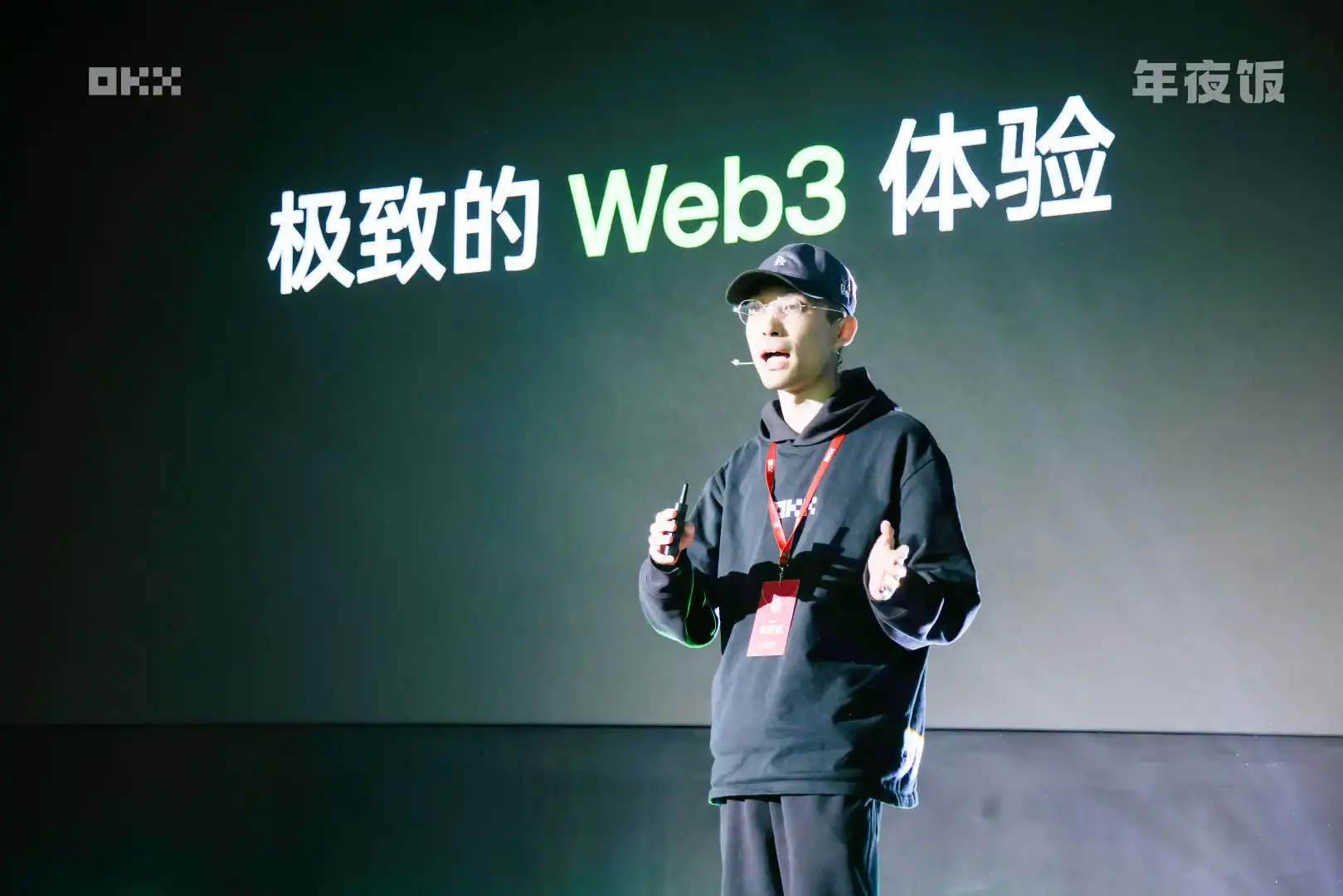
At the event, Zakk, Head of OKX Wallet, systematically shared the core methodology of OKX Web3 products and the key directions for the next few years: rooted in security and self-custody, bridged by product experience, and driven by ecosystem and infrastructure, ultimately pushing crypto assets from "professional tools" to "daily life."

Pushing Web3 Experience to the "Extreme"

In Zakk's explanation, the "extreme Web3 experience" is not a slogan, but a set of verifiable, sustainable, and iterable product standards—firstly, security and self-custody, and secondly, "leaving complexity to the system and simplicity to the user." He emphasized the underlying principle of self-custody: Not your key, Not your asset, which is the long-term criterion for OKX Wallet's design and trade-offs.

More "down-to-earth" was his use of personal experience to explain why security capabilities must be built into the product: for example, the common on-chain "similar address poisoning" scam, which quickly generates highly similar addresses after a large transfer is completed and initiates a small transfer, inducing users to "copy the wrong address" when copying historical records. In response, OKX Wallet has clearly identified "similar address scams" as a key risk in its official security content and provided protective measures such as similar address prompts on the transfer page and address labeling. The core goal is to reduce irreversible losses caused by "misreading a single character."

On the proposition that "self-custody must be more secure and also easier to use," Zakk further broke down OKX Wallet's capabilities into two parts:

First, the "security and self-custody" system, including open source, third-party audits, and continuous security governance; he mentioned that OKX's self-custody system adheres to open source and multi-party audits, which is a core principle. This aligns with the roadmap disclosed on OKX's official "Security Audit Report Collection" page: OKX Wallet's front-end, mobile-end, and SDK components have undergone third-party audits, with relevant reports and audit scopes publicly summarized.

Second, "parsing and aggregation," which involves converting fragmented on-chain information into an integrated experience that users can directly understand and operate. Zakk provided a set of core capability metrics at the event: support for about 140 public chains, aggregation of about 500 DEX protocols, and emphasized that this is not a simple stacking but aims to improve transaction speed and quotation quality through smart routing and global deployment.

Three Product Lines Pointing to One Goal: "Easy to Use" and "Accessible to Everyone"

The information density of this "New Year's Eve Dinner" was reflected in three key products: Smart Account, CeDeFi, and OKX Pay. These three lines are advancing in parallel, pointing to the same goal: making Web3 products "smooth for professionals" while also ensuring "easy for beginners to use."

First, the OKX Wallet Smart Account. Zakk provided a clear generational division of industry wallet evolution: the early stage was based on trust with "end-side direct interaction with the chain, open source and auditable"; followed by a stage of "automatic parsing, more user-friendly experience"; and the third-generation wallet that OKX is exploring aims to integrate "point technologies" such as AA, MPC, and seedless recovery into a practical, integrated product capability, with the core being the introduction of stronger automated trading and strategy capabilities under the premise of self-custody.

The Smart Account emphasizes using TEE to provide an "encrypted vault" level of isolation and protection for private keys and bringing advanced trading capabilities (such as limit orders, take-profit, and stop-loss) that were previously more common on centralized platforms into the self-custody experience. Zakk particularly emphasized the direction of "intent verification": ensuring that user command intent is verified on the client side to avoid tampering when passing through the service layer, with plans to promote open source and drive industry standardization.

The second line is CeDeFi. Zakk's judgment is very "trend-oriented": he believes that 2026 may be the "year of the novice user," as more regional regulatory frameworks are established and stablecoin scale continues to expand, the market will need a more widely accepted product form—it could be Pay, a wallet, or a new entry point connecting CEX and DEX. The first critical product OKX is building is a CeDeFi wallet form for exchange users, allowing them to "embrace the on-chain": based on the TEE architecture, achieving "more decentralized and without needing a mnemonic phrase," and enabling CEX and DEX to work synergistically within the same framework, with plans to expand more on-chain asset types (including Meme, RWA, etc.) in the future.

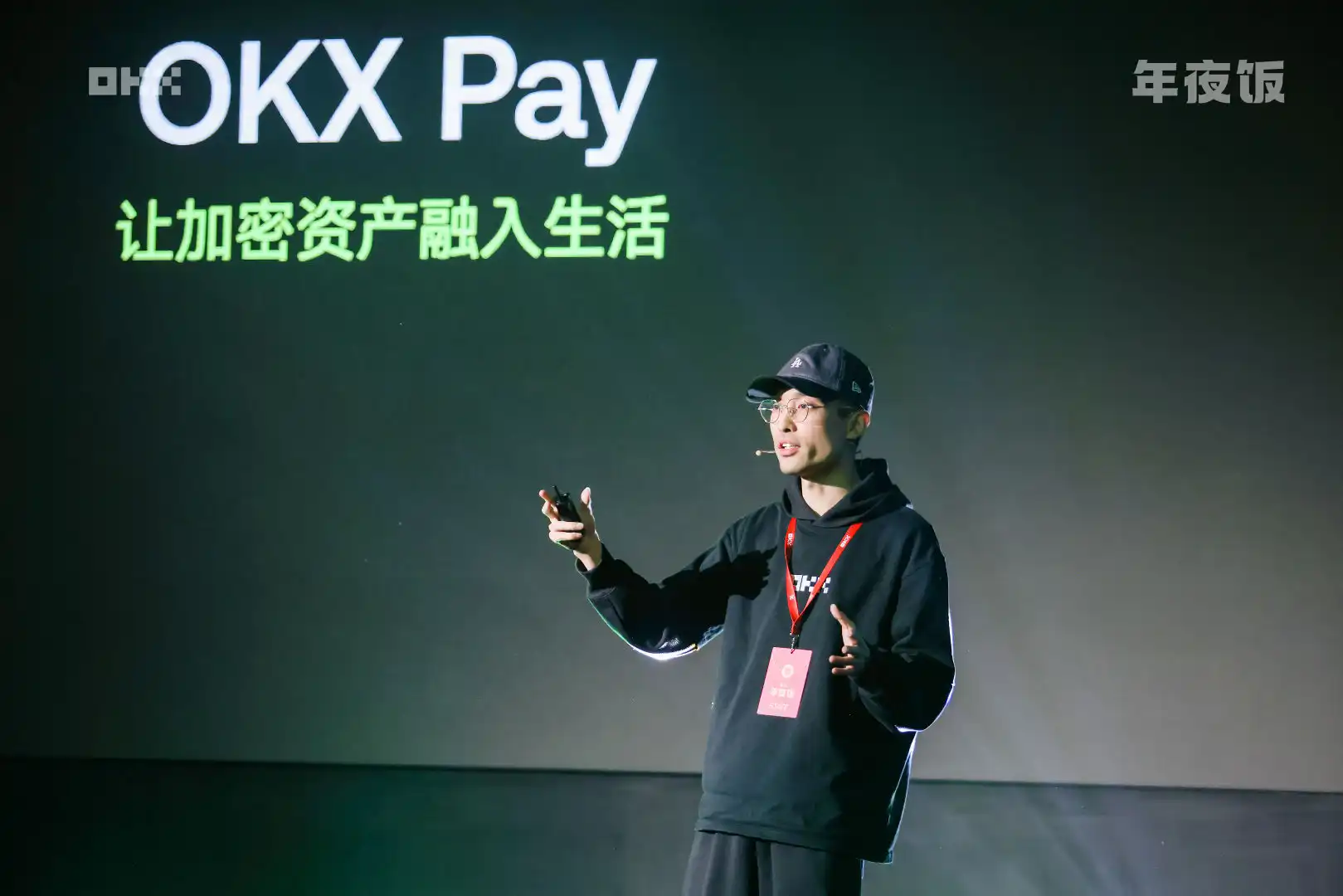
The third line is OKX Pay. Zakk positioned it at the event as a key product to "embrace hundreds of millions of users" and proposed a very everyday product vision: further integrating payment and DeFi, making it possible for crypto products to integrate into daily life—only then can the industry break through the long-term ceiling of its circle.

X Layer and OKX Web3 Ecosystem: The Foundation for Continuous Advancement

If wallets and payments solve the "entry and scenarios," then X Layer solves "speed, cost, and scalability." Zakk was very direct in positioning X Layer at the event: it must first fulfill its "historical responsibility" by solidifying the technical foundation to be responsible to the community in the long term; and summarized the current stage as the "foundation for continuous advancement."

For the three-step process of the "foundation," Zakk provided a more engineering-oriented path at the event: the first step is solid technology and long-term sustainable performance; the second step is to "harden" infrastructure such as Swap and DeFi, making users willing to put real money into on-chain interactions; the third step is to form a combination around payment infrastructure (cards, Pay, etc.), enabling wallets, DApps, payments, and chain resources to work in parallel and synergistically.

In the official description of the upgraded performance, X Layer can achieve 5,000 TPS after the PP upgrade, with a block time of about 400ms and near-zero transaction costs.

What really heated up the audience was "how to make the ecosystem run." During the Q&A session, in response to community questions about the Meme ecosystem and the implementation of support funds, Zakk provided a longer-term answer: rather than relying on constant "hype" to create short-term heat, it is more important to establish a sufficiently large project pool and incubation mechanism, allowing the ecosystem to naturally proliferate like the "AI Season" of the past. Demo Days will also be集中 presented in the future, and fund support will be more transparently implemented after projects and products are judged by the community. At the same time, he clearly welcomed more track-specific applications to grow on X Layer: from Perp DEX and prediction markets to RWA, stablecoins, payments, and AI, the space is far more than just "trading infrastructure."

Moving Towards a New Cycle Where Hundreds of Millions of Users "Use It"

Zakk positioned "stablecoins moving towards a trillion-scale" as an important era anchor at the event. His judgment is not based on a single factor but on the rising infrastructure status of stablecoins in the global financial system. As stablecoins gradually become a universal carrier for cross-border payments, on-chain transactions, and value settlement, more universal, lower-threshold product forms that balance security and recoverability are becoming key to meeting real demand.

For global crypto ecosystem builders and participants, what truly matters is whether technology, products, and the ecosystem can be advanced together: security must be able to combat real on-chain risks, the experience must be able to onboard more new users, and the ecosystem must provide builders with space, a stage, and clear incentive mechanisms to participate. OKX will continue in an open and pragmatic manner, inviting users, developers, and ecosystem partners to together push Web3 from "usable" to "easy to use, commonly used, and accessible to everyone."

Связанные с этим вопросы

QWhat are the three key product lines that OKX Web3 is focusing on to achieve its goal of making Web3 'easy to use' and 'accessible to everyone'?

AThe three key product lines are Smart Account, CeDeFi, and OKX Pay. They aim to provide a seamless experience for both professional users and newcomers by integrating advanced features with user-friendly interfaces.

QAccording to Zakk, what is the core principle behind OKX Wallet's design and long-term approach to self-custody?

AThe core principle is 'Not your key, Not your asset,' emphasizing security and self-custody as the foundation of OKX Wallet's design and decision-making.

QHow does OKX Wallet address the risk of 'similar address poisoning' scams in blockchain transactions?

AOKX Wallet mitigates this risk by providing features such as similar address warnings on the transfer page and address labeling, aiming to prevent irreversible losses caused by copying incorrect addresses.

QWhat role does X Layer play in OKX Web3's strategy, and what are its key technical capabilities after the PP upgrade?

AX Layer serves as the technical foundation for speed, cost-efficiency, and scalability. After the PP upgrade, it achieves 5,000 TPS, approximately 400ms block time, and near-zero transaction costs.

QWhy does Zakk believe that stablecoins reaching trillion-scale is a significant milestone for the industry?

AZakk sees stablecoins as increasingly critical infrastructure in the global financial system, facilitating cross-border payments, on-chain transactions, and value settlement, which drives the need for more accessible and secure product forms.

Похожее

Will the Next Crypto Bull Run Start with On-Chain Trading of SpaceX?

This article presents a scenario-based forecast for the crypto industry from 2026 to 2029, arguing that the next major cycle will be driven not by technological narratives but by legal access to real-world assets. The author predicts that by mid-2026, pre-IPO perpetual contracts for top private companies like SpaceX, OpenAI, and Anthropic on platforms like Hyperliquid will become the primary gateway for accessing quality assets, as most crypto-native tokens fail to capture real value. The much-hyped AI x Crypto intersection largely fails except for prediction markets, which thrive on betting on AI model supremacy. By 2027, public blockchain foundations are forced to choose between catering to retail speculation or building compliant infrastructure for institutions, with many opting for the latter. Growth in stablecoins and tokenized private credit/equity hits a "triple ceiling" due to regulatory and political uncertainty rather than market demand. The pivotal shift is forecast for 2028. A major liquidation event in pre-IPO perpetuals exposes the structural flaw of synthetic markets lacking a real underlying asset anchor. In response, regulatory changes finally allow the public solicitation of private securities resales to verified accredited investors. This creates a legitimate secondary market for real company equity, which then becomes the core asset class of the new bull market, relegating synthetic perps to a niche role. By 2029, the industry becomes "boring" but foundational. Tokens without claims on real cash flows or assets cease trading. Stablecoin growth is steady but politically capped. Crypto infrastructure fades from view as it gets absorbed into traditional finance backends. The article's central thesis is that the key bottleneck for crypto's next phase is legal and regulatory channels for real asset ownership, not technology.

marsbit1 ч. назад

Will the Next Crypto Bull Run Start with On-Chain Trading of SpaceX?

marsbit1 ч. назад

The Value Distribution of Stablecoins

**Summary: The Value Distribution of Stablecoins** The article argues that stablecoins are evolving from mere trading tools into broader channels for dollar access. It divides the stablecoin ecosystem into four layers to analyze how value is distributed: 1. **Issuance Layer:** Mints stablecoins, holds reserve assets, and captures the spread between reserve yield and user costs (e.g., Tether, Circle). This layer currently earns the largest profit margin. 2. **Infrastructure Layer:** Connects stablecoins to the traditional financial system, handling fiat on/off-ramps, banking integration, compliance (KYC/AML), and asset management (e.g., Bridge, BVNK). This is the "unglamorous" but critical work, building the essential bridges between crypto and real-world finance. 3. **Acquiring/Distribution Layer:** Integrates stablecoins into merchant systems, manages payment flows, and provides enterprise financial software (e.g., Stripe, Coinbase). They act as the access point for businesses. 4. **Application Layer:** The end-users and businesses that ultimately use stablecoins for payments, settlements, or as a store of value. They benefit from convenience but have little pricing power. The core thesis is that while the issuance layer currently dominates profits, the often-overlooked **infrastructure layer holds significant long-term potential**. The real challenge and barrier to mass adoption is not the on-chain transfer of stablecoins (which is simple), but the complex "last mile" integration into existing business workflows, banking systems, and regulatory frameworks across different countries. Companies in this layer are currently in a "land grab" phase, investing heavily to build networks, secure bank partnerships, and establish compliance pathways. While their position is currently pressured by the profitable issuers above and distribution platforms below, the article suggests that if stablecoins become a default financial rail for businesses, the infrastructure providers who have done the hard work of integration will ultimately gain strong pricing power and become entrenched, essential players.

marsbit7 ч. назад

The Value Distribution of Stablecoins

marsbit7 ч. назад

The Value Distribution of Stablecoins

The Value Distribution of Stablecoins The article argues that stablecoins are evolving from a mere trading tool into a broad "dollar channel." It analyzes the industry's value chain through four layers: 1. **Issuance Layer (e.g., Tether, Circle):** The top layer that mints stablecoins, holds reserve assets, and captures the thickest interest rate spread. 2. **Infrastructure Layer (e.g., Bridge, BVNK):** Connects stablecoins to the traditional financial system, handling critical but complex "dirty work" like fiat on/off-ramps, banking integration, compliance (KYC/AML), and cross-border settlement. 3. **Acquiring/Distribution Layer (e.g., Stripe, Coinbase):** Embeds stablecoins into merchant systems, manages payment flows, and integrates with enterprise software. 4. **Application Layer:** End-users and businesses that ultimately use stablecoins for payments, settlement, or storing value. The author posits that while the issuance layer currently captures the most profit, the most overlooked and potentially critical layer is infrastructure. The core challenge for stablecoin adoption isn't the on-chain transfer (which is simple), but bridging the gap between blockchain and the real-world financial system. This involves solving practical problems for businesses: fiat conversion, reconciliation, tax handling, and user onboarding. Infrastructure companies are currently in a difficult "land-grab" phase—building networks, securing banking relationships, and achieving compliance country-by-country. They face pressure from both the profitable issuance layer above and distribution platforms below. However, the author suggests this layer is building a crucial moat. Once stablecoins become a default business rail, the infrastructure players who have done the hard work of integration may gain significant, durable value and pricing power.

链捕手7 ч. назад

The Value Distribution of Stablecoins

链捕手7 ч. назад

Торговля

Спот
Фьючерсы

Популярные статьи

Как купить S

Добро пожаловать на HTX.com! Мы сделали приобретение Sonic (S) простым и удобным. Следуйте нашему пошаговому руководству и отправляйтесь в свое крипто-путешествие.Шаг 1: Создайте аккаунт на HTXИспользуйте свой адрес электронной почты или номер телефона, чтобы зарегистрироваться и бесплатно создать аккаунт на HTX. Пройдите удобную регистрацию и откройте для себя весь функционал.Создать аккаунтШаг 2: Перейдите в Купить криптовалюту и выберите свой способ оплатыКредитная/Дебетовая Карта: Используйте свою карту Visa или Mastercard для мгновенной покупки Sonic (S).Баланс: Используйте средства с баланса вашего аккаунта HTX для простой торговли.Третьи Лица: Мы добавили популярные способы оплаты, такие как Google Pay и Apple Pay, для повышения удобства.P2P: Торгуйте напрямую с другими пользователями на HTX.Внебиржевая Торговля (OTC): Мы предлагаем индивидуальные услуги и конкурентоспособные обменные курсы для трейдеров.Шаг 3: Хранение Sonic (S)После приобретения вами Sonic (S) храните их в своем аккаунте на HTX. В качестве альтернативы вы можете отправить их куда-либо с помощью перевода в блокчейне или использовать для торговли с другими криптовалютами.Шаг 4: Торговля Sonic (S)С легкостью торгуйте Sonic (S) на спотовом рынке HTX. Просто зайдите в свой аккаунт, выберите торговую пару, совершайте сделки и следите за ними в режиме реального времени. Мы предлагаем удобный интерфейс как для начинающих, так и для опытных трейдеров.

1.5k просмотров всегоОпубликовано 2025.01.15Обновлено 2026.06.02

Как купить S

Sonic: Обновления под руководством Андре Кронье – новая звезда Layer-1 на фоне спада рынка

Он решает проблемы масштабируемости, совместимости между блокчейнами и стимулов для разработчиков с помощью технологических инноваций.

2.3k просмотров всегоОпубликовано 2025.04.09Обновлено 2025.04.09

Sonic: Обновления под руководством Андре Кронье – новая звезда Layer-1 на фоне спада рынка

HTX Learn: Пройдите обучение по "Sonic" и разделите 1000 USDT

HTX Learn — ваш проводник в мир перспективных проектов, и мы запускаем специальное мероприятие "Учитесь и Зарабатывайте", посвящённое этим проектам. Наше новое направление .

1.8k просмотров всегоОпубликовано 2025.04.10Обновлено 2025.04.10

HTX Learn: Пройдите обучение по "Sonic" и разделите 1000 USDT

Обсуждения

Добро пожаловать в Сообщество HTX. Здесь вы сможете быть в курсе последних новостей о развитии платформы и получить доступ к профессиональной аналитической информации о рынке. Мнения пользователей о цене на S (S) представлены ниже.

活动图片