BOLTS Launches Quantum-Resilience Pilot On Canton Network To Future-Proof $6T Real-World Assets

TheNewsCryptoОпубликовано 2025-12-10Обновлено 2025-12-10

Введение

BOLTS Technologies has launched a pilot program to integrate its quantum-resilient software, QFlex, into the Canton Network, a blockchain for institutional finance. The initiative aims to protect over $6 trillion in real-world assets from future quantum computing threats, specifically addressing risks posed by cryptographically relevant quantum computers (CRQC) and Shor’s algorithm. QFlex enables cryptographic agility at the transaction level, allowing asset owners to adopt quantum-resistant measures without code changes. The pilot supports regulatory readiness for standards like PQS 2030 and DLT 2030. BOLTS’ technology, backed by grants from NIST, the U.S. Air Force, and Navy, offers a proactive solution to safeguard institutional digital assets against quantum vulnerabilities.

Glencoe, Illinois, USA, December 10th, 2025, Chainwire

Today, BOLTS Technologies (BOLTS), a cybersecurity company pioneering crypto-agile and cipher-neutral security infrastructure, announced the launch of a pilot program to explore bringing quantum-resilience on the Canton Network, the public, permissionless blockchain purpose-built for institutional finance.

The pilot will explore how BOLTS’ quantum-resilient software product, QFlex, could potentially bring quantum-resistant transaction assurance to Canton Network. QFlex addresses the multi-faceted complexities around fortifying blockchain networks against Q-Day. This refers to the day when a cryptographically relevant quantum computer (CRQC) arrives, and undermines the foundations of current Internet security using Shor’s algorithm.

Following the EU’s introduction of PQS 2030, flexible support for post-quantum cryptography (PQS) will become an increasing focus for Canton Network, which has an extensive roster of institutional ecosystem participants, processing over $4T in repos monthly.

Bernhard Elsner, Chief Product Officer of Digital Asset, said, “We’re excited to explore QFlex’s promise of allowing sub-networks to enable flexible, user-controlled use of a wide range of cutting-edge cryptographic algorithms without code-changes. This would further strengthen the Canton Network’s cryptographic agility and position it well to seamlessly support stakeholders adopting rules like DLT 2030 and beyond.”

Yoon Auh, CEO of BOLTS affirms, “We are proud that our proven expertise and technology are in this pilot test with Canton Network. This collaboration represents a meaningful step in our mission to deliver durable, future-ready security infrastructure solutions for institutions operating on distributed ledger platforms.

QFlex gives assurance to the industry that Q-Day fears can be overcome efficiently today, with a clear path to becoming quantum-ready. The industry can no longer delay this, given the trillions of dollars in institutional digital assets at stake. With Canton Network supporting over $6 trillion in on-chain real-world assets, this pilot will have a significant impact on the industry.”

Built on the Structured Data Folding with Transmutations (SDFT) protocol, QFlex delivers cryptographic agility at the transaction level. As such, it empowers each asset owner to respond to new threats in real time on their next transaction unlike existing static or hybrid-algo solutions.

About BOLTS Technologies

BOLTS Technologies provides advanced, validated quantum-resilient solutions for Web3 systems. Its flagship technology, QFlex, enables crypto-agile protection of blockchain transactions controlled by the owner/wallet. QFlex saves blockchains from future cryptography transitions. QFlex has its roots in secure data centric technologies providing scalable privacy solutions originally developed by its sister company, NUTS Technologies. QFlex (SDFT) has won numerous grants from The National Institute of Standards and Technology, The United States Air Force, and The United States Navy for advanced cryptographic technologies. SDFT/NUTS advanced applied cryptographic technologies are backed by more than 30 international patents. More: https://boltstechnologies.xyz/

Contact

Media Contact
Candice Teo
[email protected]
Похожее

USDC Begins Nested Issuance, Coinbase Launches Custom Stablecoin Branding Service

Coinbase has launched its "Custom Stablecoins" platform, enabling businesses to offer branded stablecoins. The first client is Flipcash, a social payments app, which has introduced USDF. USDF is a Solana-based stablecoin, pegged 1:1 to USDC, and is designed to serve as a stable pricing and settlement unit for Flipcash's user-created community currencies. This move shifts the focus of stablecoins from being standalone assets or investment products to becoming embedded payment and settlement components within broader applications. For businesses like Flipcash, the core need is not to become a stablecoin issuer, but to integrate stable, reliable digital cash functionality—handling pricing, payments, and settlements—without managing the complex underlying infrastructure of issuance, reserves, on-chain contracts, fiat on-ramps, and compliance. Coinbase's platform provides this infrastructure as a service, positioning the exchange as a stablecoin infrastructure provider. While USDC remains the foundational reserve asset, the branded token (e.g., USDF) offers applications a tailored, user-facing financial tool. This development highlights a potential path for stablecoins to become ubiquitous backend utilities in social, gaming, and e-commerce applications, though it also brings significant regulatory and operational complexities associated with handling real user funds.

链捕手55 мин. назад

USDC Begins Nested Issuance, Coinbase Launches Custom Stablecoin Branding Service

链捕手55 мин. назад

Detained for 37 Days: The First Wave of People Who Got Rich from 'AI Gateways' Are Starting to Go to Jail

A prominent AI proxy service operator was reportedly detained for 37 days and is now on bail pending trial, highlighting the legal risks in China's booming but unregulated AI intermediary market. These services act as "AI scalpers," providing domestic users with access to restricted overseas models (like OpenAI, Claude) by bundling APIs, handling payments, and bypassing network blocks, all for a fee. Their controversial profitability stems from practices like bulk-registering accounts to resell free credits, exploiting refund policies, overcharging for tokens, substituting cheaper models, and illegally selling user conversation data. Major figures, including cryptocurrency entrepreneurs, are now entering this space. Legally, these operations face severe risks. Their core model often involves unauthorized API access and operating without required telecom licenses, potentially constituting illegal business operations. They fail to meet data security obligations for the vast amounts of user data they process, risking charges for failing to fulfill network security duties. Crucially, the unauthorized collection and sale of user data, which can include personal and commercial secrets, easily meets the threshold for the crime of infringing on personal information. The case underscores a critical juncture for the AI industry. While proxies lower access barriers, they expose user data to unsecured middlemen and undermine the business models of AI developers, forcing them to divert resources to security and distorting market value perceptions. The article argues that the industry's sustainable future depends on building trust, protecting data, and fostering compliant competition, moving away from its current "wild growth" phase.

marsbit1 ч. назад

Detained for 37 Days: The First Wave of People Who Got Rich from 'AI Gateways' Are Starting to Go to Jail

marsbit1 ч. назад

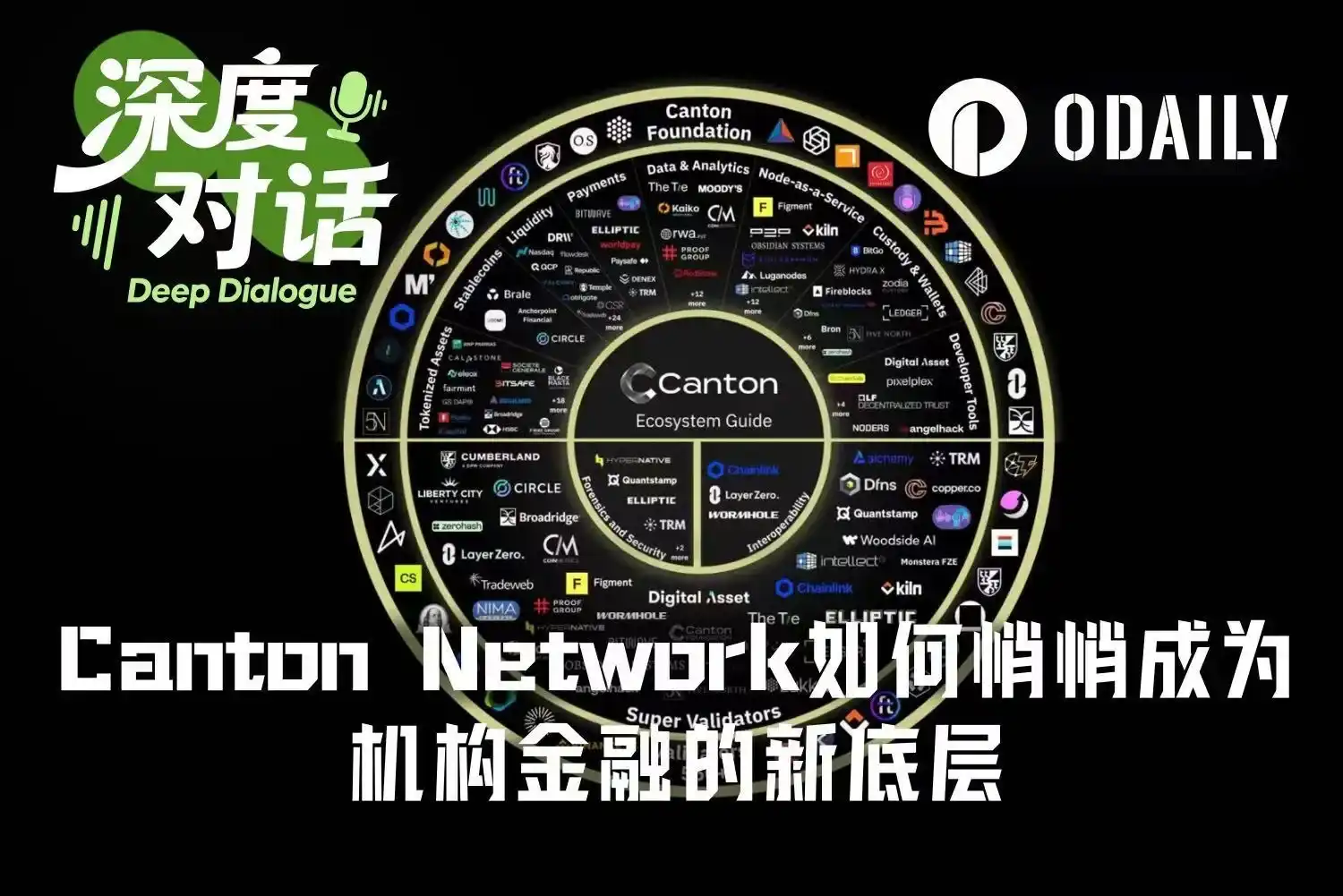
Putting Markets On-Chain: Canton Network Quietly Becomes the New Backbone of Institutional Finance

**Title: Letting the Market Itself Go On-Chain: Canton Network Quietly Becomes the New Backbone for Institutional Finance** **Summary:** The Canton Network, a blockchain platform designed for institutional finance, is gaining significant traction. A key sign of its maturity was Visa's recent entry as a super-validator, a proposal approved in just three days—highlighting prior, extensive collaboration between traditional finance and crypto. Unlike public chains like Ethereum that prioritize transparency and asset onboarding, Canton focuses on enabling confidential, compliant business operations for regulated institutions. Its core design features built-in **data visibility control**, meaning transaction details are only shared between direct counterparties. This privacy is fundamental, allowing competing institutions (like banks Goldman Sachs, JPMorgan, and BNP Paribas, all validators) to interact on the same network without exposing sensitive positions or strategies. Developed by Wall Street veterans at Digital Asset, Canton has taken a slow, deliberate approach to onboard real financial activity. It now handles over **$9 trillion monthly** in transaction volume, primarily from real-world institutional use cases like **tokenized repo agreements**, Treasury settlements, and collateral mobility. Major live applications include **JPM Coin** for institutional payments and **DTCC's tokenized U.S. Treasuries** project. Canton's native token, **CC**, is framed as a "network utility asset" with zero pre-mine or VC allocations. Its value is intended to be driven by the volume of real financial activity on the network. Looking ahead, Canton aims to become the invisible foundational layer for global finance—enabling atomic settlement (where payment and asset delivery occur simultaneously), 24/7 capital flows, and the native issuance and settlement of various asset classes, from corporate bonds to potentially equities. The main challenges are no longer technical but involve navigating fragmented global regulations and integrating with legacy financial systems.

marsbit1 ч. назад

Putting Markets On-Chain: Canton Network Quietly Becomes the New Backbone of Institutional Finance

marsbit1 ч. назад

Торговля

Спот
Фьючерсы

Популярные статьи

Как купить T

Добро пожаловать на HTX.com! Мы сделали приобретение Threshold Network Token (T) простым и удобным. Следуйте нашему пошаговому руководству и отправляйтесь в свое крипто-путешествие.Шаг 1: Создайте аккаунт на HTXИспользуйте свой адрес электронной почты или номер телефона, чтобы зарегистрироваться и бесплатно создать аккаунт на HTX. Пройдите удобную регистрацию и откройте для себя весь функционал.Создать аккаунтШаг 2: Перейдите в Купить криптовалюту и выберите свой способ оплатыКредитная/Дебетовая Карта: Используйте свою карту Visa или Mastercard для мгновенной покупки Threshold Network Token (T).Баланс: Используйте средства с баланса вашего аккаунта HTX для простой торговли.Третьи Лица: Мы добавили популярные способы оплаты, такие как Google Pay и Apple Pay, для повышения удобства.P2P: Торгуйте напрямую с другими пользователями на HTX.Внебиржевая Торговля (OTC): Мы предлагаем индивидуальные услуги и конкурентоспособные обменные курсы для трейдеров.Шаг 3: Хранение Threshold Network Token (T)После приобретения вами Threshold Network Token (T) храните их в своем аккаунте на HTX. В качестве альтернативы вы можете отправить их куда-либо с помощью перевода в блокчейне или использовать для торговли с другими криптовалютами.Шаг 4: Торговля Threshold Network Token (T)С легкостью торгуйте Threshold Network Token (T) на спотовом рынке HTX. Просто зайдите в свой аккаунт, выберите торговую пару, совершайте сделки и следите за ними в режиме реального времени. Мы предлагаем удобный интерфейс как для начинающих, так и для опытных трейдеров.

794 просмотров всегоОпубликовано 2024.03.29Обновлено 2025.03.21

Как купить T

Обсуждения

Добро пожаловать в Сообщество HTX. Здесь вы сможете быть в курсе последних новостей о развитии платформы и получить доступ к профессиональной аналитической информации о рынке. Мнения пользователей о цене на T (T) представлены ниже.

活动图片