Автор: @BlazingKevin_, исследователь Blockbooster
Слияние Web3 и ИИ выходит из начальной стадии. Рыночная оценка криптосектора ИИ смещается с ранних «спекуляций на концепциях» в сторону «фундаментальных показателей и технологического внедрения». В этом переходе проекты, демонстрирующие исключительную устойчивость и технологические прорывы, переопределяют рыночные системы оценки.
1 Bittensor прочно закрепляет лидирующие позиции
Текущая общая рыночная капитализация сектора криптовалют, связанных с ИИ, составляет около 17,46 миллиарда долларов, а объем торгов за 24 часа приближается к 1,94 миллиарда долларов. В этой гонке Bittensor (TAO) с рыночной капитализацией около 3,43 миллиарда долларов прочно удерживает первое место. На его долю приходится почти 19,6% всего криптосектора ИИ, что подтверждает его абсолютное лидерство.
Сравнение с основными конкурентами наглядно показывает его нишу:
| Конкурент | Токен | Рыночная капитализация (млрд $) | Ключевая позиция | Отличие от TAO |
|---|---|---|---|---|
| Bittensor | TAO | 3.43 | Децентрализованная стимулирующая сеть ИИ | |
| NEAR Protocol | NEAR | 1.49 | Высокопроизводительный публичный блокчейн L1 | Универсальный публичный блокчейн, ИИ — часть экосистемы |
| Render Network | RENDER | 0.864 | Децентрализованный рендеринг/вычисления на GPU | Чистая инфраструктура вычислений, без стимулов за качество ИИ |
| Fetch.ai (ASI) | FET | 0.533 | Сеть автономных агентов ИИ | Акцент на уровне приложений ИИ, не на обучении базовых моделей |
| Akash Network | AKT | 0.126 | Децентрализованный рынок облачных вычислений | Универсальный рынок вычислительных мощностей, без сложного механизма консенсуса ИИ |
Ключевые конкурентные барьеры
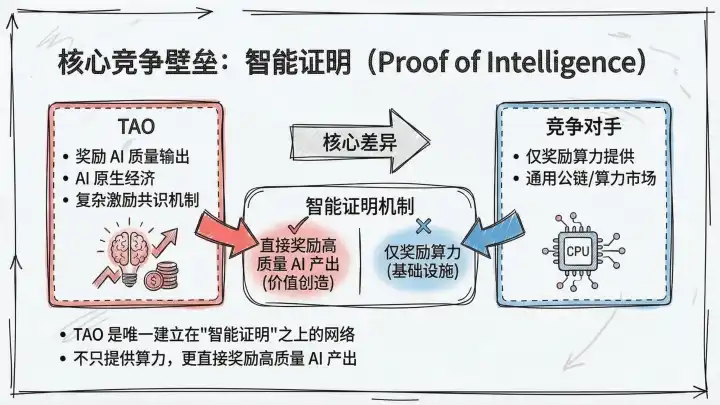
Ключевым конкурентным барьером Bittensor является его уникальная сеть «Доказательства Интеллекта» (Proof of Intelligence). Она выходит за рамки простого предоставления вычислительных мощностей. Сеть внедряет сложные механизмы стимулирования, напрямую вознаграждая создание высококачественных моделей ИИ. Эта позиция уникальна среди конкурентов и ее крайне сложно просто скопировать.
2 Проверка реальной «способности зарабатывать» и переосмысление логики оценки
Оставив в стороне грандиозное технологическое видение. Ключом к проверке способности протоколов Web3 переживать бычьи и медвежьи рынки является их реальная коммерческая экспансия и способность генерировать доход.
На крипторынке Bittensor демонстрирует редкую реальную способность к заработку. Согласно данным за первый квартал 2026 года, сеть Bittensor получила около 43 миллионов долларов дохода от реальных клиентов ИИ (не от фиктивных транзакций, созданных токенными стимулами). Эта цифра уже превышает годовой доход многих традиционных протоколов Web3.
Ключевые показатели оценки (по состоянию на 29 марта 2026 г.):
| Показатель | Значение | Пояснение |
|---|---|---|
| Рыночная капитализация в обращении | ~$3.42 млрд | На основе примерно 10.78M токенов в обращении |
| Полная разводненная оценка (FDV) | ~$6.68 млрд | На основе общего предложения в 21M |
| Реальный доход за Q1 2026 | ~$43 млн | Не токенные стимулы, оплата реальными клиентами ИИ |
| Экстраполяция годового дохода | ~$172 млн | На основе данных Q1, линейная экстраполяция |
| Коэффициент P/S (цена/выручка) | ~20x | На основе рыночной капитализации / годового дохода |
| FDV/Годовой доход | ~39x | На основе FDV / годового дохода |
| Общая рыночная капитализация экосистемы подсетей | ~$1.47 млрд | Общая рыночная капитализация токенов Alpha dTAO |
Традиционные централизованные компании-инфраструктуры ИИ на частном рынке обычно получают оценку в 15-25 раз превышающую их будущие доходы. Bittensor обладает атрибутами высокой ликвидности, премией за сетевой эффект и нарративом дефицита. Его текущий коэффициент P/S около 20x находится в разумном или даже заниженном диапазоне. Общая рыночная капитализация токенов подсетей в его экосистеме достигла 1,47 миллиарда долларов. Эта структура экосистемы способствует захвату стоимости основной сетью TAO.
3 Прорыв SN3
Финансовые данные устанавливают нижний предел оценки протокола. Технологический прорыв в децентрализованном обучении полностью открывает пространство для воображения относительно его рыночной капитализации.
Ключевым драйвером этого роста TAO вопреки тренду отнюдь не являются простые спекуляции деньгами. Базовые технологии достигли исторического прорыва. Его логика оценки фундаментально изменилась с «нарративно-ориентированной» на «продуктово-ориентированную».
3.1 Covenant-72B подтверждает осуществимость децентрализованного обучения
10 марта 2026 года, подсеть экосистемы Bittensor Templar (SN3) и стоящая за ней команда Covenant Labs опубликовали технический отчет на arXiv. Команда объявила об успешном завершении предварительного обучения большой языковой модели Covenant-72B. На сегодняшний день это модель самого большого масштаба с плотной архитектурой, обученная в полностью децентрализованной, не требующей разрешений интернет-среде.
Модель имеет 72 миллиарда параметров и обучена на 1,1 триллионе токенов. Ее оценка MMLU достигает 67,1, что соответствует базовой производительности модели Meta LLaMA-2-70B. Модель преодолела узкое место пропускной способности связи при децентрализованном обучении. Ключевую роль сыграло внедрение алгоритма SparseLoCo. Узлам требуется передавать только 1%-3% основных компонентов градиента с применением 2-битного квантования, что обеспечивает сверхсжатие данных в 146 раз (сжатие данных со 100 МБ до менее 1 МБ). При обычной интернет-полосе пропускания утилизация вычислений по-прежнему достигает 94,5%. Это веха доказывает, что глобально распределенные гетерогенные вычислительные мощности способны производить передовые модели, обладающие коммерческой конкурентоспособностью. Данная техническая схема избавляет от зависимости от дорогостоящих выделенных линий InfiniBand и централизованных суперкомпьютерных кластеров.
Успех Covenant-72B быстро вызвал震动 (волнение) в традиционном сообществе ИИ:
- Высокая оценка сооснователя Anthropic: 16 марта Джек Кларк в своем исследовательском отчете большими частями процитировал этот прорыв. Он охарактеризовал его как «вызов политической экономии ИИ через распределенное обучение». Он отметил, что это технология, за которой стоит продолжать следить, и предсказал, что будущий ИИ на устройствах будет широко использовать такие децентрализованно обученные модели.
- Аналогия Дженсена Хуанга с «Folding@home»: 20 марта в подкасте All-In VC Чамат представил CEO NVIDIA Дженсену Хуангу технологические достижения Bittensor. Хуанг положительно на это отреагировал. Он сравнил это с «современной версией Folding@home» и подтвердил необходимость сосуществования открытых и распределенных моделей.
3.2 Два ключевых компонента SN3: решение проблем эффективности связи и совместимости стимулов
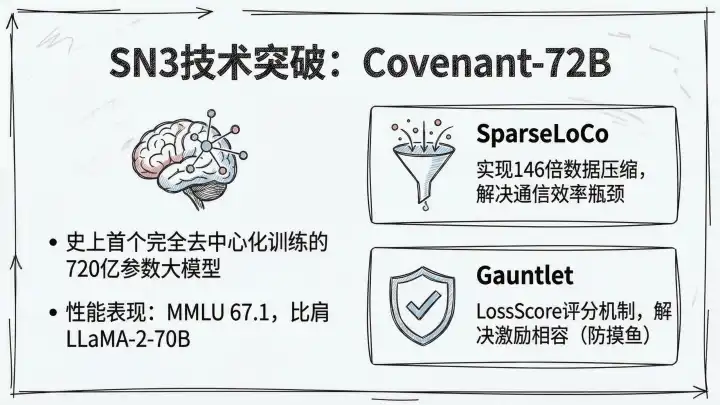
Десятки узлов, не доверяющих друг другу, с разным оборудованием и качеством сети, совместно обучают одну и ту же модель на 72B параметров. SN3 полагается на два ключевых компонента для решения проблем пропускной способности связи и злонамеренного поведения:
- SparseLoCo (решение для эффективности связи): Традиционное распределенное обучение требует синхронизации полного градиента на каждом шаге. Объем данных огромен. SparseLoCo позволяет каждому узлу локально выполнять 30 шагов внутренней оптимизации (AdamW). Затем узел сжимает и загружает полученный «псевдоградиент». Система использует Top-k разрежение (сохранение только 1%-3% ключевых компонентов градиента), обратную связь по ошибке и 2-битное квантование. Этот процесс обеспечивает сверхсжатие данных в 146 раз (сжатие данных со 100 МБ до менее 1 МБ). При обычной интернет-полосе пропускания (исходящая 110 Мбит/с, входящая 500 Мбит/с) утилизация вычислений по-прежнему достигает 94,5%. Каждый раунд связи занимает всего 70 секунд.
- Gauntlet (решение для совместимости стимулов): Этот компонент работает на блокчейне Subnet 3. Он отвечает за проверку качества псевдоградиента, представленного каждым узлом. Система использует небольшой пакет данных для тестирования «степени снижения потерь модели при использовании градиента этого узла» (LossScore). Система также проверяет, использует ли узел выделенные ему данные для обучения (предотвращение мошенничества). В каждом раунде агрегации выбираются только градиенты узлов с наивысшим рейтингом. Этот механизм фундаментально решает проблему «как предотвратить бездельничание майнеров» в децентрализованном сценарии.
4 Экосистема подсетей и супер-рычаг механизма dTAO
Bittensor представил механизм динамического TAO (dTAO) в 2025 году. Этот механизм сыграл ключевую роль «усилителя» в этом росте. dTAO позволяет каждой подсети выпускать собственные токены Alpha. Подсети через механизм автоматического маркет-мейкера (AMM) создают пулы ликвидности с TAO.
4.1 Эффект рычага токенов подсетей
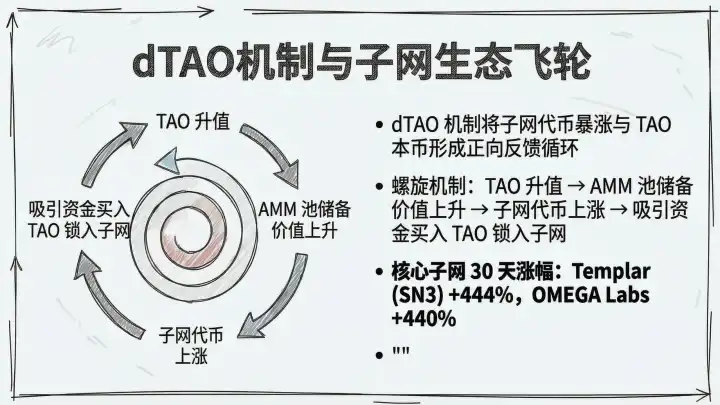
В механизме dTAO цена токена подсети напрямую определяется объемом TAO, поставленного в стейкинг в пуле этой подсети. Рост стоимости нативного токена TAO приводит к росту стоимости базовых резервов всех подсетей. Цена токенов подсети пассивно растет вслед за этим. Резкий рост токенов подсети привлекает больше спекулятивных и стейкинговых средств для покупки TAO и блокировки в подсетях. Таким образом, формируется сильная положительная обратная связь.
| Ключевые токены подсетей | Прирост цены за 30 дней | Ключевая бизнес-позиция |
|---|---|---|
| Templar (SN3) | +444% | Распределенное предварительное обучение больших моделей |
| OMEGA Labs | +440% | Сбор и обработка мультимодальных данных |
| Level 114 | +280% | - |
| BitQuant | +230% | - |
| Targon | +166% | Вычислительные мощности и сервисы логического вывода |
Как показывают данные в таблице выше, под прямым стимулом успеха Covenant-72B, токен SN3 (Templar) взлетел более чем на 440% за месяц. Его рыночная капитализация достигла 130 миллионов долларов. Проявляется эффект создания богатства на уровне подсетей. Общая рыночная капитализация токенов подсетей к концу марта достигла 1,47 миллиарда долларов. Дневной объем торгов превысил 118 миллионов долларов. Этот эффект действует как «супер-рычаг», передавая огромное давление покупателей обратно на нативный токен TAO.
4.2 Интеграция вертикальной экосистемы
Пока Covenant Labs управляет SN3, она также развертывает SN39 (Basilica, фокус на сервисах вычислений) и SN81 (Grail, фокус на последующем обучении с подкреплением и оценке). Такая вертикальная интеграция охватывает весь процесс от предварительного обучения до выравнивания и оптимизации. Этот шаг демонстрирует рынку завершенный замкнутый цикл децентрализованной индустрии ИИ, уже сформировавшейся в экосистеме Bittensor.
5 Распределение стейков (筹码分布)
Согласно последним данным в链е (on-chain) от taostats и CoinMarketCap по состоянию на 29 марта 2026 года, состояние здоровья сети Bittensor можно глубоко оценить по следующим измерениям:
| Показатель в链е | Данные | Оценка и инсайты |
|---|---|---|
| Уровень стейкинга | 68% - 75% от объема в обращении | Крайне высокий уровень стейкинга (заблокировано ~7.34M TAO) значительно сокращает реальный объем в обращении. Формируется сильный эффект сжатия предложения. Восходящая спираль цен получает поддержку. |
| Активность подсетей | 128 активных подсетей | Процветание экосистемы. Рыночная капитализация ведущих подсетей, таких как Templar (SN3), Targon (SN4), достигает сотен миллионов долларов. Данные доказывают успех токенов подсетей как «рычагов для ставок» в механизме dTAO. |
| Общая рыночная капитализация токенов Alpha | ~$1.47 млрд | С момента запуска dTAO этот показатель вырос более чем в 50 раз. Отражается высокое признание рынком экосистемы подсетей. Основная сеть TAO продолжает получать поддержку спроса. |
| Концентрация валидаторов | Крупные валидаторы занимают основной вес | tao.bot, Taostats, Opentensor Foundation и др. имеют высокий вес. Объективно существует определенная степень централизации. Также отражается глубокая привязка ключевых разработчиков к сети. |
| Дневной объем торгов | ~$241 млн | Соотношение объема торгов к рыночной капитализации составляет около 7.03%. Ликвидность чрезвычайно высока. Активная рыночная активность. Высокое участие институциональных и частных инвесторов. |
| Развернуто агентов ИИ за 90 дней | 14,500 | Отражает рост реального использования сети. Это важный показатель для измерения реального спроса. |
Комплексная оценка данных в链е:
Данные в链е Bittensor демонстрируют характеристики чрезвычайно здоровой экономики. Высокий уровень стейкинга блокирует ликвидность. Реальный доход поддерживает фундаментальные показатели. Механизм dTAO стимулирует инновации в подсетях. Постоянное сжатие со стороны предложения (включая halving и высокий стейкинг) в сочетании с постоянным ростом со стороны спроса (охватывая вход институций и усиление нарратива ИИ) создает очень выгодную модель ценовой динамики.
6 Скрытые опасения по оценке
Важно отметить, что прозрачность данных в链е в основном проявляется на стороне предложения, характеристики спроса (реальный объем вызовов сервисов ИИ) вне цепи остаются важной слепой зоной информации:
Риск 1: Высокие токенные субсидии маскируют реальные коммерческие затраты Текущие низкие цены услуг во многих подсетях сильно зависят от инфляционных субсидий токена TAO. Возьмем, к примеру, ведущую подсеть логического вывода Chutes (SN64). Соотношение эмиссионных субсидий к внешнему доходу в этой сети составляет 22-40:1. Исключая фактор токенных субсидий, реальная цена ее услуг значительно превышает таковую у централизованных конкурентов. По сравнению с такими платформами, как Together.ai, ее ценовая надбавка составляет от 1,6 до 3,5 раз. Последующее продолжение циклов halving полностью обнажит хрупкость этой бизнес-модели.
Риск 2: Отсутствие коммерческого рва приводит к легкому оттоку пользователей Сеть Bittensor в основном предоставляет открытые модели и стандартизированные API. Эта модель fundamentally отличается от таковой у традиционных облачных гигантов, таких как AWS. Внутри экосистемы极度 отсутствуют (крайне отсутствуют) специализированные платформы, глубокая интеграция с предприятиями или маховик данных — то, что традиционно считается «эффектом блокировки». Издержки переключения для разработчиков крайне низки. Как только токенные субсидии начнут сокращаться, B2B-пользователи, чувствительные к цене, быстро уйдут. Централизованные платформы с более низкими затратами легко поглотят этот уходящий трафик.
Риск 3: Риск отрыва оценки после «выжимания воды» из данных Что касается упомянутого выше дохода в 43 миллиона долларов за квартал, некоторые осторожные институциональные исследования предлагают совершенно другие модели расчета. Исключая внутренние связанные сделки и субсидии в экосистеме и учитывая только тщательно проверенный реальный внешний доход в фиате, годовой масштаб дохода сети может резко упасть до диапазона от 3 до 15 миллионов долларов. Используя эту «очищенную» от воды реальную базу дохода, фактический коэффициент P/S сети взлетит до крайне опасного диапазона в 175-400 раз. Объективно существует риск лопнувшего пузыря оценки.