Bitcoin's 'No One to Take Over' Plunge: Where Is the Bottom?

比推Опубликовано 2026-02-23Обновлено 2026-02-23

Введение

Bitcoin's price continues to decline, briefly falling below $64,000 over the weekend and hitting its lowest level since early February, with a nearly 4% drop in 24 hours. The market has turned extremely fearful, as shown by the Crypto Fear & Greed Index dropping to a low of 5. Macro factors are contributing to the downturn, including potential global tariff increases and heightened geopolitical risks. Bitcoin's correlation with tech stocks has strengthened, and the decline in AI-related stocks like IBM has added pressure. Institutional outflows are another concern. U.S. spot Bitcoin ETFs have seen net outflows for multiple consecutive weeks, reducing support from passive long-term capital. Basis trades have become less profitable, and leveraged positions are vulnerable in a weakening macro environment. On-chain data indicates that selling pressure from short-term holders, while still present, has slowed. Long-term holders remain relatively calm, but miner selling—such as Bitdeer liquidating its entire Bitcoin holdings—adds to the negative sentiment. Technically, Bitcoin has broken below key support levels, and some analysts warn of a potential further drop to the $40,000–$50,000 range, or even lower in a severe bear scenario. However, prominent bulls remain optimistic about a long-term recovery. The upcoming NVIDIA earnings report is seen as a near-term catalyst that could influence market sentiment, given Bitcoin’s heightened sensitivity to tech stock performance. Overa...

This past weekend, the crypto market found no respite. After a narrow-range consolidation on Saturday and Sunday, Bitcoin came under renewed pressure during today's European and American trading hours, briefly falling below the $64,000 mark to hit $63,924.44, setting a new low since February 6th. At the time of writing, the price has rebounded slightly to around $64,800, with a nearly 4% drop over 24 hours.
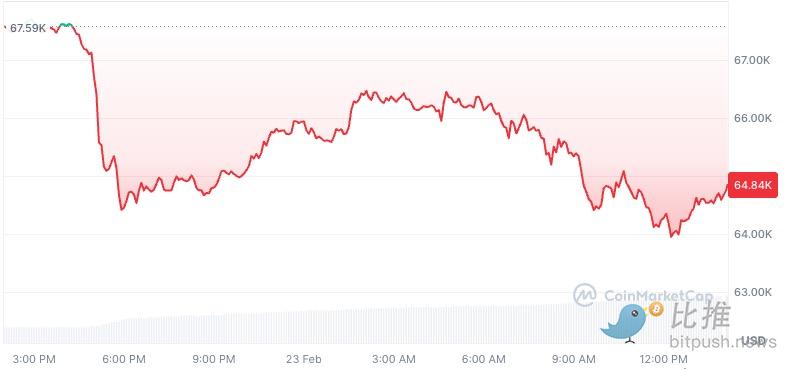
This is a liquidity drought that has lasted for days. Since February 20th, Bitcoin has been in a downward trend for four consecutive trading days, with a cumulative drop of over 7%. Compared to the all-time high of nearly $127,000 in October last year, the current price has almost halved.

Market sentiment has frozen over amidst the persistent volatility. The Crypto Fear & Greed Index slipped to a single-digit 5 yesterday, remaining in the extreme "Fear" zone for three consecutive days: this is the lowest reading since the market panic in January this year.

Macro: Tariff Turmoil and Shaken AI Narrative

Although last week's US CPI data showed easing inflationary pressures, the market's focus has quickly shifted to new variables in the global trade situation.

Last Friday, the US Supreme Court rejected former President Trump's previous use of "emergency powers" to impose tariffs. Subsequently, Trump's camp indicated it would pursue a new legal path to advance temporary global tariffs, potentially raising the rate from 10% to 15%. The EU immediately responded, demanding the US comply with existing trade agreements. This back-and-forth has forced the market to reassess the possibility of escalating global trade friction. Additionally, heightened geopolitical uncertainty in the Middle East, with a new round of US-Iran negotiations scheduled for the 26th in Geneva, Switzerland, adds to the mix.

Risk assets are extremely sensitive to this. US tech stocks fell in tandem, with software and AI-related companies under pressure.

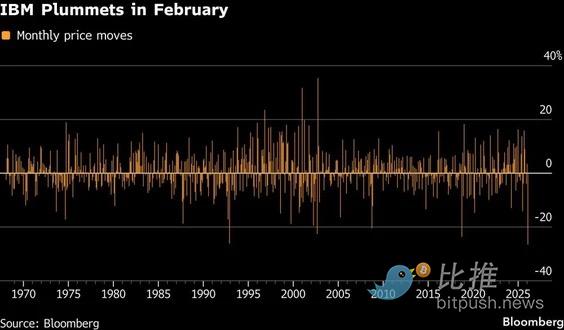
Adding to the woes, during Monday's US trading session, AI bellwether IBM plunged over 11% due to Anthropic's release of an AI tool that automates COBOL language, dragging down the broader tech sector. Market analysis firm Ecoinometrics pointed out that Bitcoin is currently extremely sensitive to downside risks in the US stock market. When US tech stocks confirm a structural downtrend, Bitcoin often follows closely behind and amplifies the decline. The low-volatility structure that previously supported Bitcoin's independent rally has been broken due to deep institutional involvement, shifting to a higher correlation with tech stocks.
Institutions: From "Basis Trade" to Full Risk-Off

A more critical variable lies with institutional capital.

According to SoSoValue data, for the week ending February 20th, US spot Bitcoin ETFs recorded approximately $316 million in net outflows; Ethereum ETFs saw about $123 million in net outflows. This marks multiple consecutive weeks of net capital withdrawal.
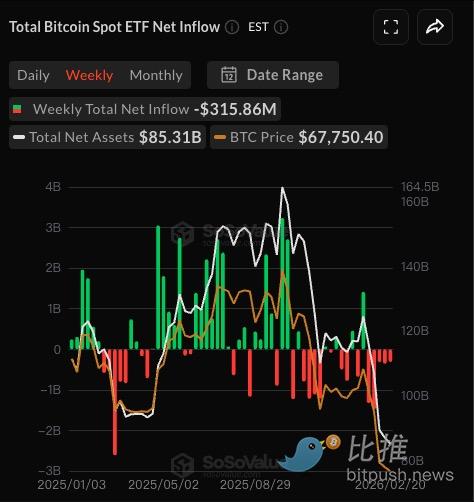
ETF flows were the core marginal driver of the previous bull run. Net outflows imply two things:

First, institutions do not see the current price as "significantly undervalued" in the short term;
Second, the price lacks the support of passive, long-term capital.

The "basis trade" (buying spot or ETFs while shorting futures to lock in the price difference), previously popular among institutions, has become unprofitable as prices have fallen. In the absence of sustained ETF inflows, the price action relies more on derivative-driven capital. Once macro conditions weaken, leveraged positions are prone to stampedes.

On-Chain: Long-Term Holder Selling Slows, Miner Selling

Amid the gloom of continued price declines, on-chain data also reveals some subtle signals.

Glassnode notes that the 7-day average net realized profit/loss for investors (short-term holders) has narrowed from -$1.24 billion/day on February 6th to -$480 million/day, indicating that loss-selling is weakening but has not yet ended.
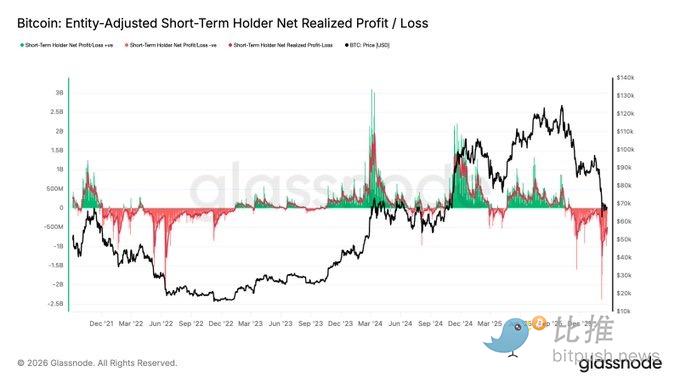
This suggests a typical "bottom handover period": selling pressure still exists, but the intensity of panic has subsided.

Stratifying the market:

  • Long-term holders show no significant panic;

  • Short-term capital is still exiting at a loss;

  • In terms of sentiment indicators, the Crypto Fear & Greed Index has slipped into the "Extreme Fear" zone.

This combination usually corresponds to a consolidation and bottoming process, rather than a trend reversal.

Meanwhile, subtle changes are also occurring on the supply side.

Bitdeer disclosed that as of February 20th, it had sold all 943 of its self-held Bitcoins, reducing its book BTC to zero, stating this move was to储备 liquidity for land and data center expansion. Against the backdrop of falling prices and compressed mining profits, miners selling their reserve coins can exacerbate阶段性 selling pressure. While this is not industry-wide behavior, it can be magnified and overinterpreted by the market during fragile sentiment phases.

Outlook: NVIDIA Earnings Could Be Short-Term Inflection Point

The market is searching for the next directional cue amidst the panic. Currently, Bitcoin is struggling at a key technical support level—the 200-week Exponential Moving Average (EMA) around $68,350 has been breached.

Analyst Tom McClellan warned that although the "smart money" in CME futures is rapidly reducing short positions, this merely reflects market conditions rather than a clear rebound signal. If key support is lost, Bitcoin still risks a further decline into the $40,000 to $50,000 range. Ned Davis Research strategists offered an even more pessimistic hypothesis, suggesting that if this bear market turns into a "crypto winter," Bitcoin could fall to $31,000.

Against this backdrop, Google searches for "Bitcoin is dead" have quietly climbed in recent months.
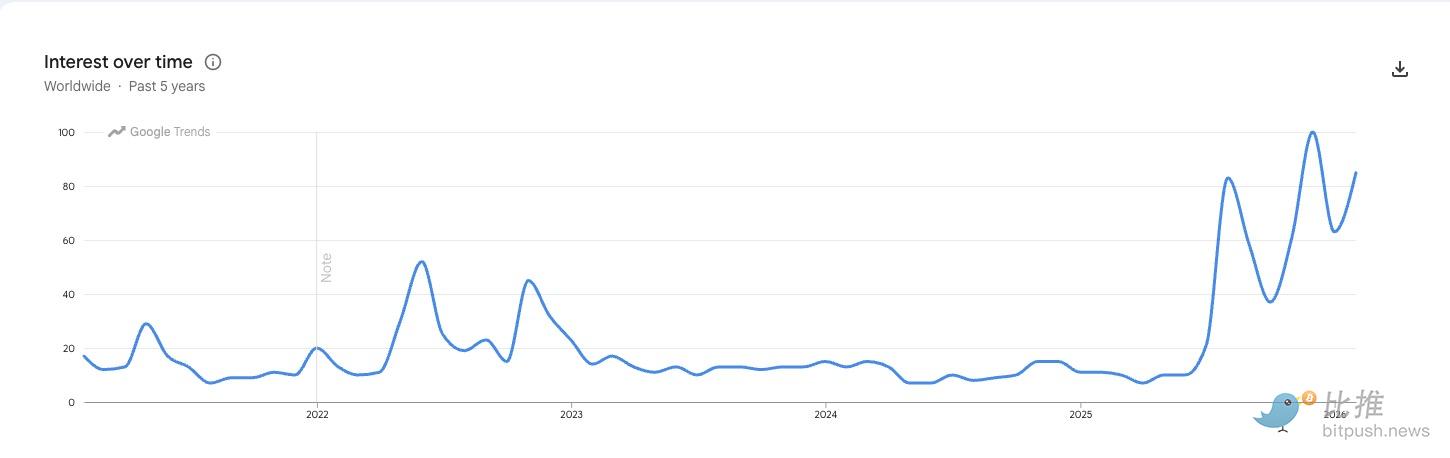
But bulls like Arthur Hayes, Tom Lee, and Michael Saylor are still vocal through various channels: it's only a matter of time before Bitcoin returns to and even surpasses its historical highs.

In the short term, a potential variable lies in this week's macro events. Digital asset company Keyrock pointed out that NVIDIA's earnings report, scheduled for February 25th, could be the next major catalyst for the market. Given the current market's extreme sensitivity to the AI narrative and Bitcoin's high correlation with tech stocks, NVIDIA's earnings guidance will directly impact the risk appetite of the tech sector and the overall market, subsequently transmitting to the crypto market.

In summary, amidst heightened macro uncertainty and liquidity drought, Bitcoin is in a phase of lacking liquidity and fragile confidence. The market's self-repair might require waiting for the complete cessation of selling by long-term holders or the emergence of new macro policy signals (such as a clear dovish tilt from the Fed). Until then, any rebound is likely to face heavy selling pressure.

Author: Bootly


Twitter:https://twitter.com/BitpushNewsCN

Bitpush TG Discussion Group:https://t.me/BitPushCommunity

Bitpush TG Subscription: https://t.me/bitpush

Original link:https://www.bitpush.news/articles/7613885

Связанные с этим вопросы

QWhat is the current price of Bitcoin and how much has it fallen from its all-time high?

AAs of the time of writing, Bitcoin's price has rebounded slightly to around $64,800, with a 24-hour drop of nearly 4%. It has fallen nearly 50% from its all-time high of nearly $127,000 in October of last year.

QWhat major macroeconomic events are contributing to the pressure on Bitcoin and risk assets?

AKey macroeconomic factors include renewed global trade tensions, with the possibility of new U.S. tariffs being raised from 10% to 15%, and heightened geopolitical uncertainty in the Middle East. Additionally, a sell-off in AI and tech stocks, triggered by news about IBM and Anthropic, is negatively impacting risk sentiment.

QWhat does the data show about institutional investment in Bitcoin ETFs recently?

AAccording to SoSoValue data, U.S. spot Bitcoin ETFs saw a net outflow of approximately $316 million for the week ending February 20th, and Ethereum ETFs saw a net outflow of about $123 million. This represents multiple consecutive weeks of net capital outflows.

QAccording to on-chain data, what is the current state of selling pressure from different investor groups?

AGlassnode data indicates that selling from short-term holders is slowing, with the 7-day average net realized profit/loss narrowing. Long-term holders are not shown to be in a state of panic, while short-term capital is still exiting at a loss. This is typical of a bottoming phase, not a trend reversal.

QWhat potential short-term catalyst for the market is highlighted in the article, and why is it significant?

ANVIDIA's earnings report, scheduled for February 25th, is highlighted as a potential short-term catalyst. Given the market's current high sensitivity to the AI narrative and Bitcoin's high correlation with tech stocks, NVIDIA's performance and guidance could significantly impact overall market risk appetite and, by extension, the crypto market.

Похожее

Торговля

Спот
Фьючерсы

Популярные статьи

Тест по Bitcoin Биткоина

HTX Learn: Изучите Bitcoin halving и Заработаете Токены USDT

3.0k просмотров всегоОпубликовано 2024.04.16Обновлено 2024.04.16

Тест по Bitcoin  Биткоина

Что такое $BITCOIN

ЦИФРОВОЕ ЗОЛОТО ($BITCOIN): Комплексный анализ Введение в ЦИФРОВОЕ ЗОЛОТО ($BITCOIN) ЦИФРОВОЕ ЗОЛОТО ($BITCOIN) — это проект на основе блокчейна, работающий в сети Solana, который стремится объединить характеристики традиционных драгоценных металлов с инновациями децентрализованных технологий. Хотя он носит имя Биткойн, часто называемого “цифровым золотом” из-за его восприятия как средства хранения ценности, ЦИФРОВОЕ ЗОЛОТО является отдельным токеном, предназначенным для создания уникальной экосистемы в ландшафте Web3. Его цель — позиционировать себя как жизнеспособный альтернативный цифровой актив, хотя детали его применения и функциональности все еще развиваются. Что такое ЦИФРОВОЕ ЗОЛОТО ($BITCOIN)? ЦИФРОВОЕ ЗОЛОТО ($BITCOIN) — это токен криптовалюты, специально разработанный для использования в блокчейне Solana. В отличие от Биткойна, который выполняет широко признанную роль хранения ценности, этот токен, похоже, сосредоточен на более широких приложениях и характеристиках. Примечательные аспекты включают: Инфраструктура блокчейна: Токен построен на блокчейне Solana, известном своей способностью обрабатывать высокоскоростные и недорогие транзакции. Динамика предложения: ЦИФРОВОЕ ЗОЛОТО имеет максимальное предложение, ограниченное 100 квадриллионами токенов (100P $BITCOIN), хотя детали о его обращающемся предложении в настоящее время не раскрыты. Утилита: Хотя точные функциональные возможности не описаны, есть указания на то, что токен может быть использован для различных приложений, потенциально связанных с децентрализованными приложениями (dApps) или стратегиями токенизации активов. Кто создатель ЦИФРОВОГО ЗОЛОТА ($BITCOIN)? На данный момент личность создателей и команды разработчиков, стоящих за ЦИФРОВЫМ ЗОЛОТОМ ($BITCOIN), остается неизвестной. Эта ситуация типична для многих инновационных проектов в области блокчейна, особенно тех, которые связаны с децентрализованными финансами и феноменом мем-криптовалют. Хотя такая анонимность может способствовать культуре, ориентированной на сообщество, она усиливает опасения по поводу управления и ответственности. Кто инвесторы ЦИФРОВОГО ЗОЛОТА ($BITCOIN)? Доступная информация указывает на то, что у ЦИФРОВОГО ЗОЛОТА ($BITCOIN) нет известных институциональных спонсоров или значительных венчурных капиталовложений. Проект, похоже, функционирует по модели пирингового взаимодействия, сосредоточенной на поддержке и принятии сообществом, а не на традиционных путях финансирования. Его активность и ликвидность в основном сосредоточены на децентрализованных биржах (DEX), таких как PumpSwap, а не на устоявшихся централизованных торговых платформах, что еще больше подчеркивает его подход, ориентированный на grassroots. Как работает ЦИФРОВОЕ ЗОЛОТО ($BITCOIN) Операционные механизмы ЦИФРОВОГО ЗОЛОТА ($BITCOIN) можно подробно описать на основе его дизайна блокчейна и характеристик сети: Механизм консенсуса: Используя уникальный механизм доказательства истории (PoH) Solana в сочетании с моделью доказательства доли (PoS), проект обеспечивает эффективную валидацию транзакций, что способствует высокой производительности сети. Токеномика: Хотя конкретные дефляционные механизмы не были подробно описаны, большое максимальное предложение токенов подразумевает, что оно может быть предназначено для микротранзакций или нишевых случаев использования, которые еще предстоит определить. Интероперабельность: Существует потенциал для интеграции с более широкой экосистемой Solana, включая различные платформы децентрализованных финансов (DeFi). Однако детали относительно конкретных интеграций остаются неуточненными. Хронология ключевых событий Вот хронология, которая подчеркивает значимые вехи, касающиеся ЦИФРОВОГО ЗОЛОТА ($BITCOIN): 2023: Первоначальное развертывание токена происходит в блокчейне Solana, отмеченное его адресом контракта. 2024: ЦИФРОВОЕ ЗОЛОТО приобретает видимость, когда оно становится доступным для торговли на децентрализованных биржах, таких как PumpSwap, позволяя пользователям обменивать его на SOL. 2025: Проект наблюдает спорадическую торговую активность и потенциальный интерес к инициативам, возглавляемым сообществом, хотя на данный момент не зафиксировано никаких значительных партнерств или технических достижений. Критический анализ Сильные стороны Масштабируемость: Основная инфраструктура Solana поддерживает высокие объемы транзакций, что может повысить полезность $BITCOIN в различных сценариях транзакций. Доступность: Потенциально низкая цена торговли за токен может привлечь розничных инвесторов, способствуя более широкому участию благодаря возможностям дробного владения. Риски Отсутствие прозрачности: Отсутствие публично известных спонсоров, разработчиков или процесса аудита может вызвать скептицизм относительно устойчивости и надежности проекта. Волатильность рынка: Торговая активность сильно зависит от спекулятивного поведения, что может привести к значительной волатильности цен и неопределенности для инвесторов. Заключение ЦИФРОВОЕ ЗОЛОТО ($BITCOIN) является интригующим, но неоднозначным проектом в быстро развивающейся экосистеме Solana. Хотя он пытается использовать нарратив “цифрового золота”, его отход от установленной роли Биткойна как средства хранения ценности подчеркивает необходимость более четкого различения его предполагаемой утилиты и структуры управления. Будущее принятие и усвоение, вероятно, будут зависеть от решения текущей непрозрачности и более четкого определения его операционных и экономических стратегий. Примечание: Этот отчет охватывает синтезированную информацию, доступную на октябрь 2023 года, и с тех пор могут произойти события.

99 просмотров всегоОпубликовано 2025.05.13Обновлено 2025.05.13

Что такое $BITCOIN

Fractal Bitcoin: масштабирование Биткоина с помощью рекурсивной системы

Fractal Bitcoin — масштабное Layer-1-решнение, созданное на базе кода Биткоина, позволяющего достигать бесконечного масштабирования с помощью рекурсивного подхода.

2.2k просмотров всегоОпубликовано 2025.06.30Обновлено 2025.06.30

Fractal Bitcoin: масштабирование Биткоина с помощью рекурсивной системы

Обсуждения

Добро пожаловать в Сообщество HTX. Здесь вы сможете быть в курсе последних новостей о развитии платформы и получить доступ к профессиональной аналитической информации о рынке. Мнения пользователей о цене на BTC (BTC) представлены ниже.

活动图片