Bitcoin's Creator Has Not Appeared Publicly for Exactly 15 Years. Where Did Satoshi Disappear To?

RBK-cryptoОпубликовано 2025-12-12Обновлено 2025-12-12

Введение

Bitcoin's creator, Satoshi Nakamoto, has been absent from the public eye for exactly 15 years, with his last known communication dating back to April 26, 2011. His final public forum post on December 12, 2010, addressed a DoS attack on the Bitcoin network. Shortly before disappearing, he privately corresponded with early developers, informing them he had "moved on to other things" and that Bitcoin was in good hands, specifically naming Gavin Andresen as the lead developer. His withdrawal is speculated to be linked to Andresen's planned talk about Bitcoin at the CIA headquarters. Satoshi's true identity remains one of cryptocurrency's greatest mysteries. Numerous theories exist, ranging from him being an individual to a group, or even a project by the CIA. Several individuals, including cryptographers Hal Finney and Nick Szabo, have been proposed as candidates, but all have either denied it or remained silent. Some speculate he may be deceased. The mystery is fueled further by the immense wealth potentially held by Satoshi. Research based on a unique mining pattern, dubbed "Patoshi," suggests he may have mined approximately 1.1 million BTC, worth over $100 billion at current prices. This was possible due to minimal mining competition and a high coin emission rate in Bitcoin's early days, when it could be mined on a regular laptop. The network's computational power has since grown by over 10 billion times.

Exactly 15 years ago, on December 12, 2010, the anonymous creator of Bitcoin, known as Satoshi Nakamoto, published his last message on the BitcoinTalk forum. Since then, there have been a few more non-public appearances—until the end of April 2011, Satoshi corresponded with some of Bitcoin's first developers. The last message was sent on April 26, 2011, to developer Gavin Andresen, asking him to downplay his figure as "mysterious and behind-the-scenes".

Satoshi's last public message on December 12, 2010, concerned a DoS attack on the first cryptocurrency's network and Bitcoin software updates. In those years, forums were one of the most popular platforms for communication. And BitcoinTalk, which appeared around the same time as the Bitcoin network launch in 2009, became the main open platform for Bitcoin developers to communicate.

On April 23, 2011, in a message to developer Mike Hearn, Satoshi wrote that he had "moved on to other things and that Bitcoin is in good hands with Gavin and everyone else," referring to developer Gavin Andresen, who had been actively involved in Bitcoin's development since 2010. In 2011, he was named by Satoshi Nakamoto as the lead developer of Bitcoin Core (Bitcoin's software).

The last known message, on April 26, was sent by Satoshi to Andresen, who announced on April 27 that he would give a presentation on Bitcoin at the CIA headquarters in June at a conference on new technologies for the US intelligence community. It is assumed that this may have influenced Satoshi Nakamoto's decision to cease public activities. After this letter, Bitcoin's creator handed over to Andresen codes containing a copy of the cryptographic key from the system for alerting Bitcoin network participants about critical errors.

Who is Satoshi

Subsequently, the identity of Bitcoin's anonymous creator became shrouded in theories and speculation about who was really behind the name Satoshi Nakamoto. One of them is that the direct creators of Bitcoin are the CIA themselves.

"Obviously, it's the CIA, we all understand that," said popular journalist Tucker Carlson during a closed panel discussion at the Bitcoin 2024 conference.

There is a version that the secrecy for so many years is explained by Satoshi's death. Nevertheless, researchers to this day continue to put forward candidates for the role of Bitcoin's first developer. For example, the authors of the documentary Money Electric: The Bitcoin Mystery, which aired on the American channel HBO in October of last year, named Peter Todd as the alleged creator of Bitcoin.

Other candidates for this role also include the famous cryptographer and one of the first Bitcoin proponents Hal Finney, an early advocate of digital privacy, cryptographer Len Sassaman, programmer and cypherpunk Paul Le Roux, computer scientist and cryptographer Nick Szabo, and the head of the crypto company Blockstream, Adam Back. However, some do not confirm these assumptions, while others categorically deny being Satoshi.

"If Satoshi were alive, and I don't think he is alive, I'm sure he'd have a big smile on his face," said the head of the investment company Galaxy Digital, Mike Novogratz, commenting to CNBC on Bitcoin's historic surge above the $100,000 mark.

Satoshi's Bitcoins

Speculation around the identity of Satoshi Nakamoto heats up along with the growth of the main cryptocurrency. But years of research and many theories about the amount of cryptocurrency Satoshi might hold have not led to finding definitive answers.

Although there is a public consensus in the crypto market, based on the work of researcher Sergio Demian Lerner. Based on data from the Bitcoin blockchain, Lerner identified a pattern called Patoshi—a distinctive feature of the blocks mined in Bitcoin's early years.

He suggested that the pattern could have arisen due to Satoshi's possible use of specialized mining software. Based on this marker, the researcher calculated the number of bitcoins that could have been mined by Satoshi—about 1.1 million bitcoins or over $100 billion at the current rate (over $92,000 as of December 12).

Such a huge amount of bitcoins, Satoshi, like any other network participant at that time, could have accumulated over several years of work on an ordinary laptop. This was possible due to low competition among miners and the high rate of new coin emission in those years.

For comparison, by the end of April 2011, when Satoshi sent the letter to Andresen, over 6 million bitcoins had been mined. Up to 10,000 coins could be mined per day. At the current moment, the rate of bitcoin creation rarely exceeds 500 coins per day.

The network's hash rate has grown from 0.1 Th/s (terahashes per second) at the end of April 2011 to over 1 billion Th/s at the beginning of December, which is a growth in power of more than 10 billion times—this figure reflects the growth of the Bitcoin network's computational power, according to Blockchain.com. As for the price, in 2011 Bitcoin was valued at tens of cents.

From AI Agents to New Crypto Media. The Main Points from the a16z Report for 2026

Bitcoin's Losses Against the Dollar Are 10 Times Lower Than Against the Ruble. How Did That Happen

"A Pause, Not a Reversal". When Will Bitcoin Break the Lull

Связанные с этим вопросы

QWhen did Satoshi Nakamoto publish his last public message, and what was the topic?

ASatoshi Nakamoto published his last public message on December 12, 2010. The topic was a DoS attack on the Bitcoin network and Bitcoin software updates.

QWho did Satoshi Nakamoto name as the lead developer of Bitcoin Core in 2011?

AIn 2011, Satoshi Nakamoto named Gavin Andresen as the lead developer of Bitcoin Core.

QWhat is the 'Patoshi pattern' and what does it suggest about Satoshi's Bitcoin holdings?

AThe 'Patoshi pattern' is a distinctive pattern in the early-mined Bitcoin blocks identified by researcher Sergio Demian Lerner. It suggests that Satoshi Nakamoto could have mined approximately 1.1 million bitcoins, worth over $100 billion at the time of the article's writing.

QWhat is one theory mentioned in the article about why Satoshi Nakamoto has remained hidden for so long?

AOne theory mentioned is that Satoshi Nakamoto has passed away.

QAccording to the article, what event involving Gavin Andresen is speculated to have influenced Satoshi's decision to cease public activity?

AIt is speculated that Gavin Andresen's announcement that he would give a presentation about Bitcoin at the CIA headquarters in June 2011 influenced Satoshi's decision to cease public activity.

Похожее

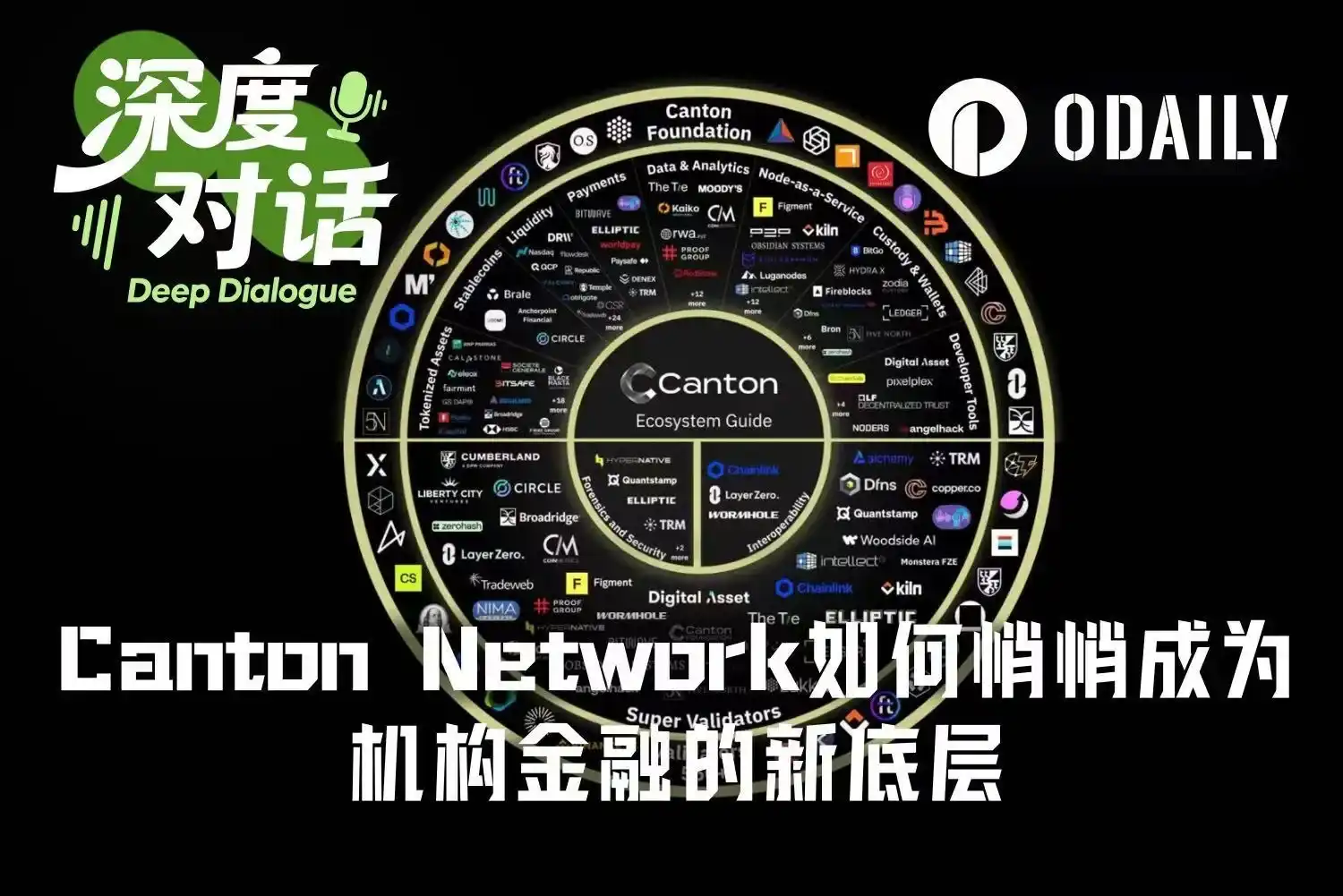
Putting Markets On-Chain: Canton Network Quietly Becomes the New Backbone of Institutional Finance

**Title: Letting the Market Itself Go On-Chain: Canton Network Quietly Becomes the New Backbone for Institutional Finance** **Summary:** The Canton Network, a blockchain platform designed for institutional finance, is gaining significant traction. A key sign of its maturity was Visa's recent entry as a super-validator, a proposal approved in just three days—highlighting prior, extensive collaboration between traditional finance and crypto. Unlike public chains like Ethereum that prioritize transparency and asset onboarding, Canton focuses on enabling confidential, compliant business operations for regulated institutions. Its core design features built-in **data visibility control**, meaning transaction details are only shared between direct counterparties. This privacy is fundamental, allowing competing institutions (like banks Goldman Sachs, JPMorgan, and BNP Paribas, all validators) to interact on the same network without exposing sensitive positions or strategies. Developed by Wall Street veterans at Digital Asset, Canton has taken a slow, deliberate approach to onboard real financial activity. It now handles over **$9 trillion monthly** in transaction volume, primarily from real-world institutional use cases like **tokenized repo agreements**, Treasury settlements, and collateral mobility. Major live applications include **JPM Coin** for institutional payments and **DTCC's tokenized U.S. Treasuries** project. Canton's native token, **CC**, is framed as a "network utility asset" with zero pre-mine or VC allocations. Its value is intended to be driven by the volume of real financial activity on the network. Looking ahead, Canton aims to become the invisible foundational layer for global finance—enabling atomic settlement (where payment and asset delivery occur simultaneously), 24/7 capital flows, and the native issuance and settlement of various asset classes, from corporate bonds to potentially equities. The main challenges are no longer technical but involve navigating fragmented global regulations and integrating with legacy financial systems.

marsbit3 мин. назад

Putting Markets On-Chain: Canton Network Quietly Becomes the New Backbone of Institutional Finance

marsbit3 мин. назад

It's Bankless That Needs Ethereum, Not Ethereum That Needs Bankless

Titled "Bankless Needs Ethereum, Not the Other Way Around," this article analyzes the significant recent news involving Bankless, a prominent crypto media outlet. Bankless co-founder David Hoffman announced the sale of all his ETH holdings, while the company also reportedly underwent major layoffs, with its founders parting ways. The news, likened to a high-profile defection, initially sent shockwaves through the Ethereum community, given Bankless's historical role as a key evangelist and "semi-official" narrative builder for Ethereum. For years, through its podcasts and writings, Bankless championed core Ethereum ideas like "ultrasound money" and the blockchain's role as a new financial settlement layer, acting as a crucial community hub and belief system during its growth phase. However, the article argues this development is not necessarily negative for Ethereum. It suggests Bankless's "first mission"—serving as Ethereum's passionate, inward-facing "propaganda department"—has largely been completed. As Ethereum matures and moves towards mainstream, institutional adoption, the narrative baton has shifted. Today, the value propositions of ETH are increasingly communicated to traditional finance by asset managers like BlackRock and VanEck, public companies adding ETH to their treasuries, and established financial figures. This represents a natural evolution towards a more decentralized, professional, and institutionally-focused narrative network. Therefore, while Bankless's retreat marks the end of an era, it signifies Ethereum's growing resilience and its reduced reliance on any single entity for belief, as its story is now carried forward by a broader and more mature ecosystem of advocates.

链捕手25 мин. назад

It's Bankless That Needs Ethereum, Not Ethereum That Needs Bankless

链捕手25 мин. назад

Google Officially Declares War

Google Declares War with AI-First I/O 2026 At its 2026 I/O developer conference, Google launched an aggressive, multi-pronged offensive, embedding AI across its ecosystem and challenging rivals on performance and price. The event showcased three major releases: Gemini 3.5 Flash, the video-centric Gemini Omni Flash, and the system-level AI assistant Spark. Gemini 3.5 Flash, despite being a smaller "Flash" model, outperforms its Pro counterpart in key benchmarks like mathematical reasoning (GSM8K) and coding (SWE-bench). Google attributes this to "extreme knowledge distillation" from a larger teacher model and a novel, highly granular MoE (Mixture of Experts) architecture with 256 experts, achieving sub-65ms response times. The native multi-modal model, Gemini Omni Flash, offers real-time video understanding with 120ms latency, enabling applications like preventing a cup from overfilling. The new Spark assistant gains deep Android system integration, allowing it to automate complex multi-app workflows based on voice commands. Complementing these, Google unveiled lightweight AI glasses featuring Micro-OLED displays and on-device Gemini chips for instant, offline translation and scene analysis. CEO Sundar Pichai announced Gemini has reached 900 million monthly active users, leveraged through integration into Chrome, Android, and Workspace. Google also slashed prices dramatically: the Gemini 3.5 Flash API is priced at a fraction of competitor rates. This price war is enabled by Google's vertically integrated TPU infrastructure. The strategy signals a shift: standalone AI models are becoming commoditized. Google's advantage lies in its "device + cloud + ecosystem + hardware" integration, aiming to reshape internet traffic from user-initiated searches to AI-driven service distribution. This move pressures pure-play AI firms like OpenAI and Anthropic on business models, and challenges Apple to respond in the next-generation, screen-less device race.

链捕手44 мин. назад

Google Officially Declares War

链捕手44 мин. назад

Top 10 Promising Emerging Hyperliquid Native Protocols to Watch

Title: A Review of 10 Emerging Native Protocols on Hyperliquid Hyperliquid is evolving beyond perpetual contracts into a comprehensive on-chain financial stack. This article highlights 10 key native protocols driving this growth: 1. **Monetrix**: A yield-optimizing protocol akin to Ethena, aggregating funding rates, HLP rewards, maker rebates, and HIP-3 into a single stablecoin yield. 2. **ROSETTA**: An automated stablecoin yield router, allocating USDC across top protocols (e.g., Felix, Aave, HLP) for optimal returns, factoring in gas and slippage. 3. **papertrade.xyz**: A fair-launched perpetuals protocol offering up to 1000x leverage, no funding rates, no slippage, and fully on-chain, oracle-based execution. 4. **alt.fun**: A launchpad where tokens are paired with leveraged perpetual positions (2x-5x), linking token price to trading activity and underlying position performance. 5. **Ventuals**: Pre-IPO perpetual contracts (built on HIP-3) allowing up to 10x leveraged speculation on valuations of private companies like SpaceX and Stripe. 6. **Liminal**: A delta-neutral yield protocol that captures funding rates via automated short positions and uses generated xTokens (xBTC, etc.) as DeFi collateral. 7. **Melt**: Brings tokenized stocks, commodities, and RWAs to Hyperliquid spot markets, enabling 24/7 trading alongside crypto assets. 8. **Chainsight**: An oracle and data infrastructure protocol providing low-latency (<3s) price feeds, volatility indices, and risk metrics for novel derivatives. 9. **rip.xyz**: Tokenized vault strategies on HyperEVM; its flagship rHYPURR offers liquidity and fractional exposure to a Hypurr NFT basket, priced hourly via NAV. 10. **Markets**: A perpetuals exchange (by Kinetiq) for trading stocks, forex, commodities, bonds, and crypto with up to 50x leverage, using USDH collateral and Kaiko oracles. These protocols form the foundational layer for generating real yield, liquidity, and innovative financial products natively on Hyperliquid.

marsbit1 ч. назад

Top 10 Promising Emerging Hyperliquid Native Protocols to Watch

marsbit1 ч. назад

Торговля

Спот
Фьючерсы

Популярные статьи

Как купить S

Добро пожаловать на HTX.com! Мы сделали приобретение Sonic (S) простым и удобным. Следуйте нашему пошаговому руководству и отправляйтесь в свое крипто-путешествие.Шаг 1: Создайте аккаунт на HTXИспользуйте свой адрес электронной почты или номер телефона, чтобы зарегистрироваться и бесплатно создать аккаунт на HTX. Пройдите удобную регистрацию и откройте для себя весь функционал.Создать аккаунтШаг 2: Перейдите в Купить криптовалюту и выберите свой способ оплатыКредитная/Дебетовая Карта: Используйте свою карту Visa или Mastercard для мгновенной покупки Sonic (S).Баланс: Используйте средства с баланса вашего аккаунта HTX для простой торговли.Третьи Лица: Мы добавили популярные способы оплаты, такие как Google Pay и Apple Pay, для повышения удобства.P2P: Торгуйте напрямую с другими пользователями на HTX.Внебиржевая Торговля (OTC): Мы предлагаем индивидуальные услуги и конкурентоспособные обменные курсы для трейдеров.Шаг 3: Хранение Sonic (S)После приобретения вами Sonic (S) храните их в своем аккаунте на HTX. В качестве альтернативы вы можете отправить их куда-либо с помощью перевода в блокчейне или использовать для торговли с другими криптовалютами.Шаг 4: Торговля Sonic (S)С легкостью торгуйте Sonic (S) на спотовом рынке HTX. Просто зайдите в свой аккаунт, выберите торговую пару, совершайте сделки и следите за ними в режиме реального времени. Мы предлагаем удобный интерфейс как для начинающих, так и для опытных трейдеров.

1.3k просмотров всегоОпубликовано 2025.01.15Обновлено 2025.03.21

Как купить S

Sonic: Обновления под руководством Андре Кронье – новая звезда Layer-1 на фоне спада рынка

Он решает проблемы масштабируемости, совместимости между блокчейнами и стимулов для разработчиков с помощью технологических инноваций.

2.2k просмотров всегоОпубликовано 2025.04.09Обновлено 2025.04.09

Sonic: Обновления под руководством Андре Кронье – новая звезда Layer-1 на фоне спада рынка

HTX Learn: Пройдите обучение по "Sonic" и разделите 1000 USDT

HTX Learn — ваш проводник в мир перспективных проектов, и мы запускаем специальное мероприятие "Учитесь и Зарабатывайте", посвящённое этим проектам. Наше новое направление .

1.8k просмотров всегоОпубликовано 2025.04.10Обновлено 2025.04.10

HTX Learn: Пройдите обучение по "Sonic" и разделите 1000 USDT

Обсуждения

Добро пожаловать в Сообщество HTX. Здесь вы сможете быть в курсе последних новостей о развитии платформы и получить доступ к профессиональной аналитической информации о рынке. Мнения пользователей о цене на S (S) представлены ниже.

活动图片