Bitcoin изо всех сил пытается удержаться выше уровня $90 000 после очередной неудачной попытки пробить критическую зону сопротивления в $94 000. То, что изначально казалось попыткой восстановления, постепенно теряет импульс, оставляя BTC в широком диапазоне консолидации, который сохраняется с конца ноября. Каждый всплеск вверх встречал давление продаж, что подтверждает идею о том, что быки теряют контроль над краткосрочным трендом.
Рыночные настроения остаются хрупкими. Волатильность сжалась, направленная убежденность слаба, и ценовое действие все больше отражает нерешительность, а не накопление. Хотя долгосрочные держатели в основном неактивны, отсутствие агрессивных покупок на падениях говорит о том, что уверенность на широком рынке все еще приглушена. Эта среда создала благодатную почву для резких реакций, но пока не для устойчивого разворота тренда.
Ключевым моментом является то, что данные on-chain показывают, что розничные инвесторы все еще отсутствуют. Показатели, отслеживающие розничный спрос, указывают на продолжающуюся слабость, подчеркивая, что недавняя стабилизация цен не была вызвана возобновлением участия мелких инвесторов.
Исторически сильные подъемы Bitcoin совпадают с растущим участием розничных инвесторов, поскольку новый спрос усиливает восходящий импульс. Без возвращения этой когорты текущая ценовая поддержка выглядит все более уязвимой.
Розничный спрос остается отсутствующим
Согласно данным, предоставленным Maartunn, 30-дневное изменение спроса розничных инвесторов Bitcoin остается глубоко отрицательным, что подчеркивает критическую слабость под поверхностью текущего ценового действия. Проще говоря, толпа еще не вернулась на рынок — по крайней мере, не значимым образом.
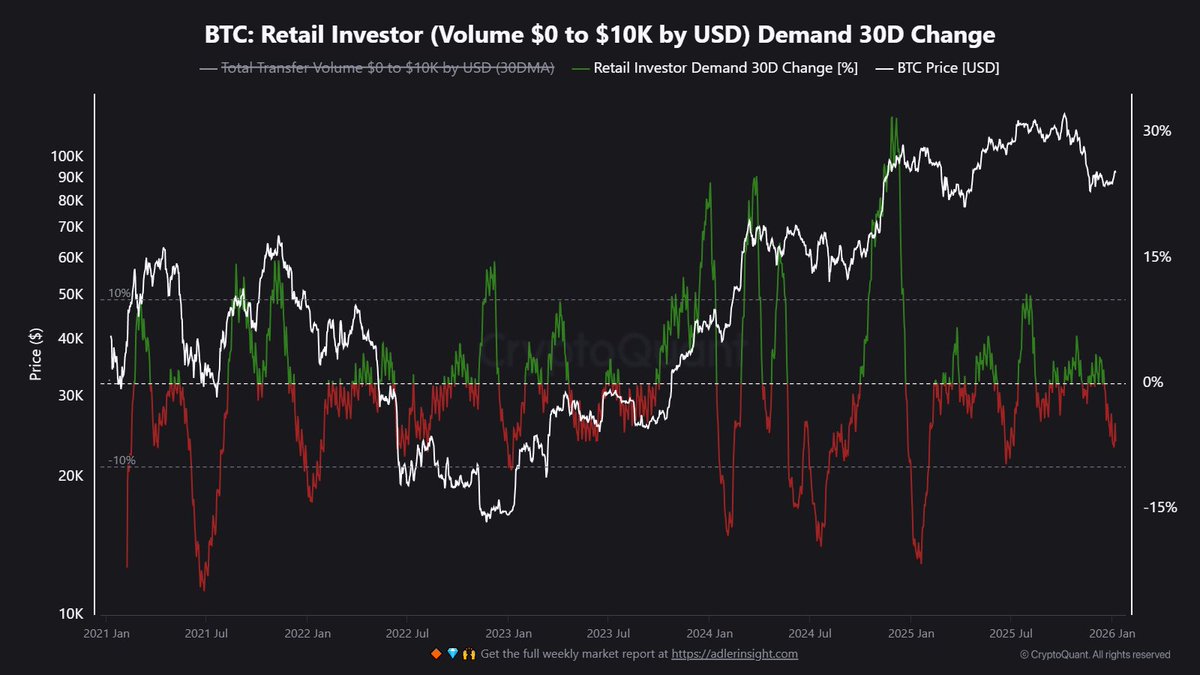
Розничные инвесторы исторически играют crucialную роль в поддержании бычьих трендов. Они обеспечивают инкрементный спрос, усиливают импульс и часто приходят после периодов консолидации или раннего восстановления. Когда розничный спрос расширяется, ценовые подъемы tend to быть более устойчивыми. Обратное также верно. Постоянно отрицательный 30-дневный показатель розничного спроса сигнализирует о том, что мелкие инвесторы либо остаются в стороне, либо продолжают сокращать exposure.
Это помогает объяснить, почему недавние попытки Bitcoin вернуть более высокие уровни оказались трудными. Без притока свежих розничных средств восходящие движения почти полностью зависят от более крупных игроков, поглощающих предложение. Такая динамика может поддерживать временные отскоки, но часто ей не хватает глубины, необходимой для устойчивого пробоя.
С точки зрения риска, слабое участие розничных инвесторов также увеличивает хрупкость. Если цена растет к сопротивлению без нового спроса, входящего в систему, она становится более уязвимой для откатов, вызванных фиксацией прибыли или внешними шоками.
Пока розничный спрос не начнет восстанавливаться и не перейдет в положительную территорию, ценовое действие Bitcoin, вероятно, останется в рамках диапазона, при этом ралли будут сталкиваться со структурными препятствиями, а не с широкой поддержкой.





















