Bitcoin ETF Two Years On: The Financialization Journey from Breakthrough to Convergence

marsbitОпубликовано 2026-01-12Обновлено 2026-01-12

Введение

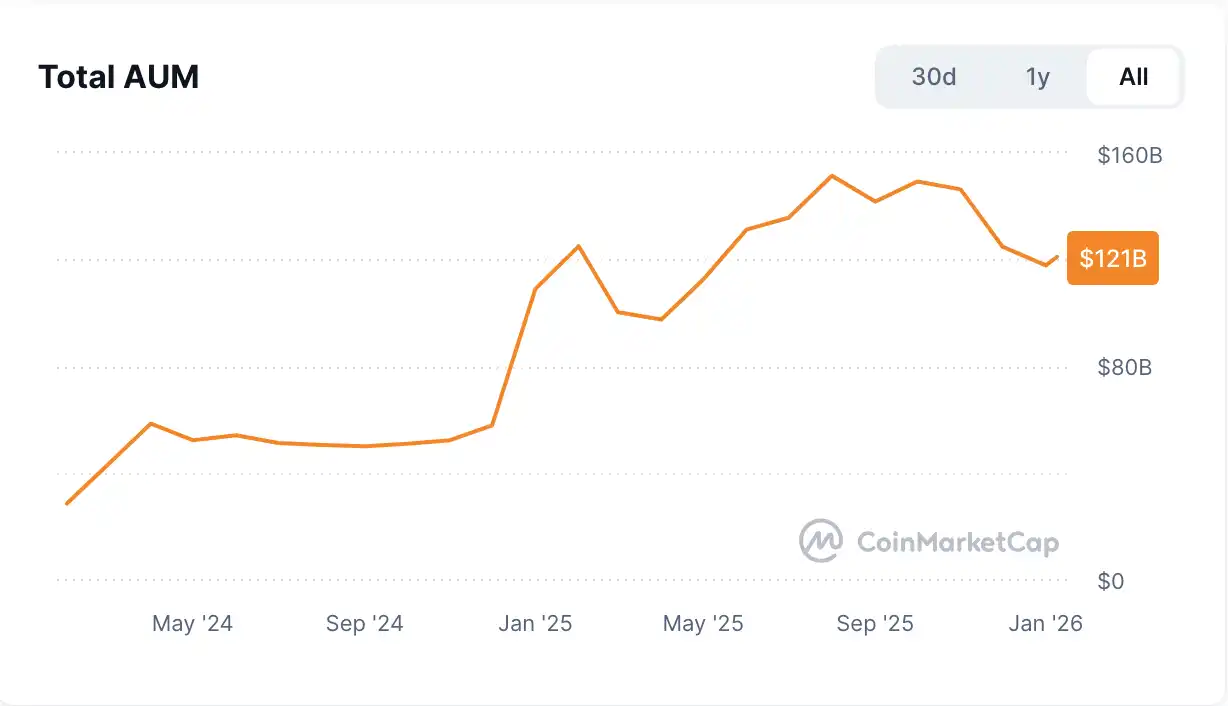
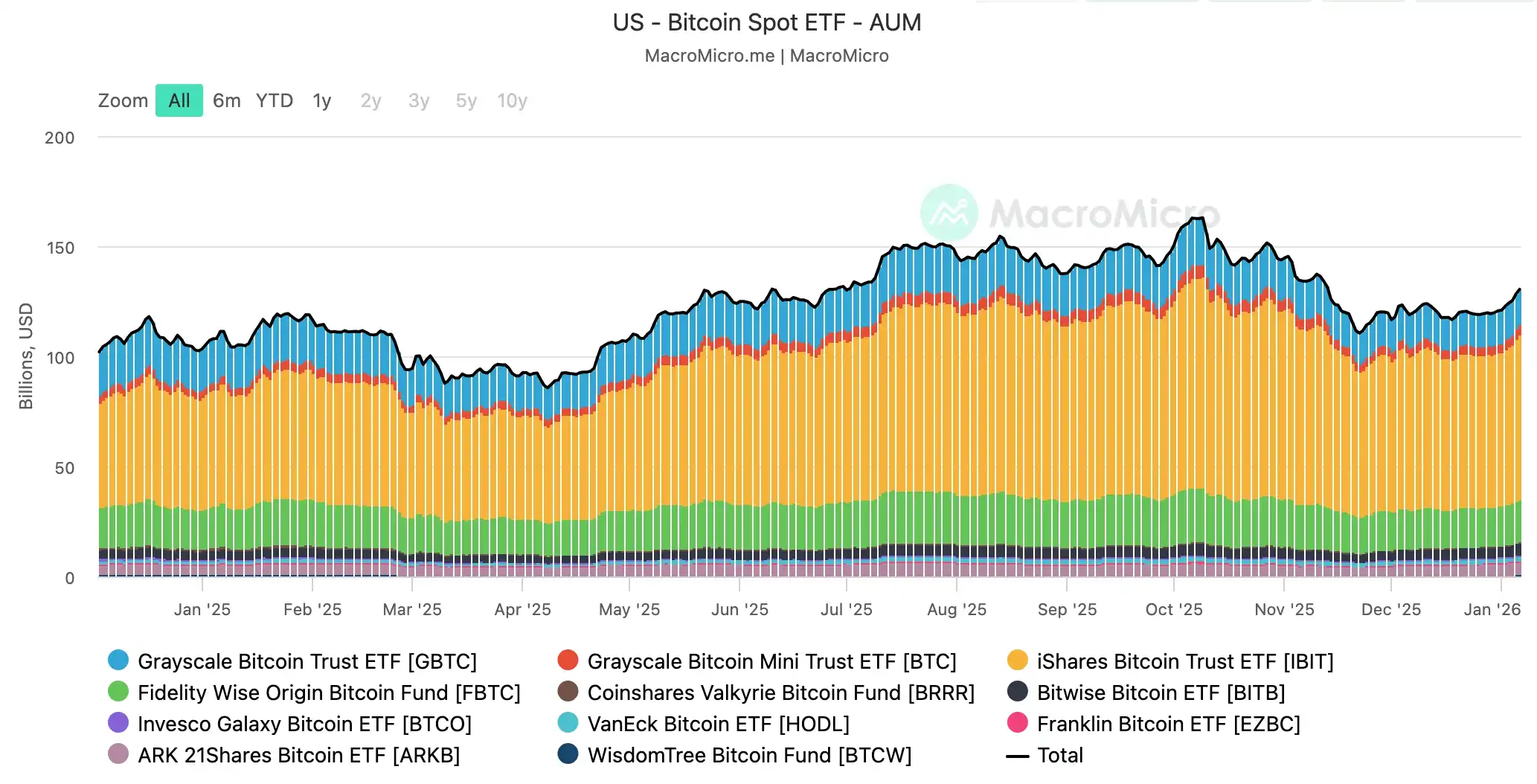
Two years after the launch of Bitcoin spot ETFs, the financialization of Bitcoin has accelerated significantly, with total assets under management (AUM) reaching $124.85 billion. The top five ETFs—IBIT, GBTC, FBTC, ARKB, and BITB—account for 96.6% of the market, highlighting strong institutional dominance. Trading volume surpassed $2 trillion, with the second trillion taking only 8 months compared to 16 months for the first. Bitcoin ETFs have significantly outperformed Ethereum ETFs in net inflows, reinforcing Bitcoin’s leading position in the crypto ETF market. The approval of Bitcoin spot ETFs in January 2024 marked a milestone after over a decade of regulatory scrutiny, reflecting maturation in market infrastructure, custody, and investor protection frameworks. Unlike the first gold ETF, which took years to gain traction, Bitcoin ETFs achieved rapid adoption, accelerating liquidity and institutional participation. ETFs have simplified Bitcoin investment, enabling regulated, accessible exposure without direct asset management. Major institutions like BlackRock and Fidelity have facilitated broader acceptance, integrating Bitcoin into mainstream portfolios and retirement plans. However, financialization introduces challenges, including Bitcoin’s inherent volatility and ETF management fees. Beyond price speculation, alternative participation methods like cloud mining offer cost-stable Bitcoin acquisition and support network infrastructure. In summary, Bitcoin ETFs have fa...

In January 2024, the spot Bitcoin ETF was officially approved.

For the crypto industry, this was a milestone moment that had been awaited for over a decade, and the news quickly captured the focus of global financial markets.

Two years have passed in the blink of an eye, and the spot Bitcoin ETF is no longer a novel topic. A set of solid data is quietly reshaping the market's understanding of the boundaries of this asset class.

As of now, the total assets under management (AUM) of Bitcoin ETFs have climbed to $124.5 billion. The concentration is extremely significant: five products—IBIT ($74.11 billion), GBTC ($16.4 billion), FBTC ($18.89 billion), ARKB ($5.81 billion), and BITB ($5.35 billion)—collectively manage $120.56 billion in assets, accounting for 96.6% of the total market, clearly outlining an institutionally-dominated market structure.

The trading activity has also exceeded expectations. According to data from The Block, the cumulative trading volume of U.S. spot cryptocurrency ETFs officially surpassed $2 trillion on January 2nd. Looking back at this progression: it took a full 16 months to first reach $1 trillion on May 6th, 2025; but it took only 8 months to go from $1 trillion to $2 trillion, with the growth rate doubling. Among them, BlackRock's IBIT remains firmly in the top spot, accounting for a whopping 70% of the trading volume.

The divergence in fund flows is also very clear. In 2025, U.S. spot Bitcoin ETFs accounted for the majority of the net inflows in the cryptocurrency ETF market, performing far better than Ethereum ETFs, further solidifying Bitcoin's dominant position in the crypto ETF space.

If the approval of the Bitcoin ETF symbolized Bitcoin officially knocking on the door of the mainstream financial system; then these figures today prove that it has become a structurally significant allocation asset in institutional investment portfolios. Behind these numbers is not just a leap in scale, but also institutional-level recognition: Bitcoin is integrating into the常规 operational framework of the global financial system at an unprecedented speed.
History of the Bitcoin ETF: A Breakthrough That Was No Accident

The launch of the spot Bitcoin ETF was not a sudden act of regulatory goodwill, but the result of a long-term game.

Before 2024, the core concerns of regulators regarding Bitcoin ETF applications and rejections always focused on three points: whether the underlying market was mature and could effectively prevent manipulation; whether the asset custody, clearing, and audit mechanisms were reliable; and whether the investor protection system was complete. These issues were not about judging Bitcoin's intrinsic value, but were institutional thresholds that any asset must cross to be incorporated into the formal financial product system.

Tracing the timeline, the demand for a Bitcoin ETF can be traced back to 2013. At that time, Bitcoin's price began to enter the public eye, and some investors and brokers found it difficult for ordinary investors to access this emerging asset within a compliant framework, leading to the earliest conceptions of a Bitcoin ETF. However, for many years thereafter, the U.S. Securities and Exchange Commission (SEC) consistently rejected related proposals, citing reasons revolving around the three core issues of market manipulation risk, custody security, and information transparency.

It wasn't until October 2021 that the SEC first relented, approving the ProShares Bitcoin Strategy ETF (BITO). But this product was based on futures contracts, not a true spot ETF, and was more like a regulatory test.

The real turning point occurred on January 10, 2024. The SEC approved 10 spot Bitcoin ETFs at once, including those from BlackRock, Fidelity, Grayscale, Ark Invest, and Invesco. This decision marked the official entry of U.S. crypto asset investment into the spot ETF era and became the most important institutional link between the traditional financial system and crypto assets.

The arrival of this moment was no accident. By 2024, the infrastructure around Bitcoin, including trading systems, custody mechanisms, compliance frameworks, and information disclosure standards, had developed to a stage acceptable to regulators. The emergence of the ETF was essentially the financial system's recognition and response to this market maturity.

From a longer-cycle perspective, this is by no means the end point of Bitcoin's financialization, but a clearly visible, officially confirmed阶段性 node in its financialization process.

Beyond Gold: Bitcoin ETF Presses the "Fast-Forward" Button

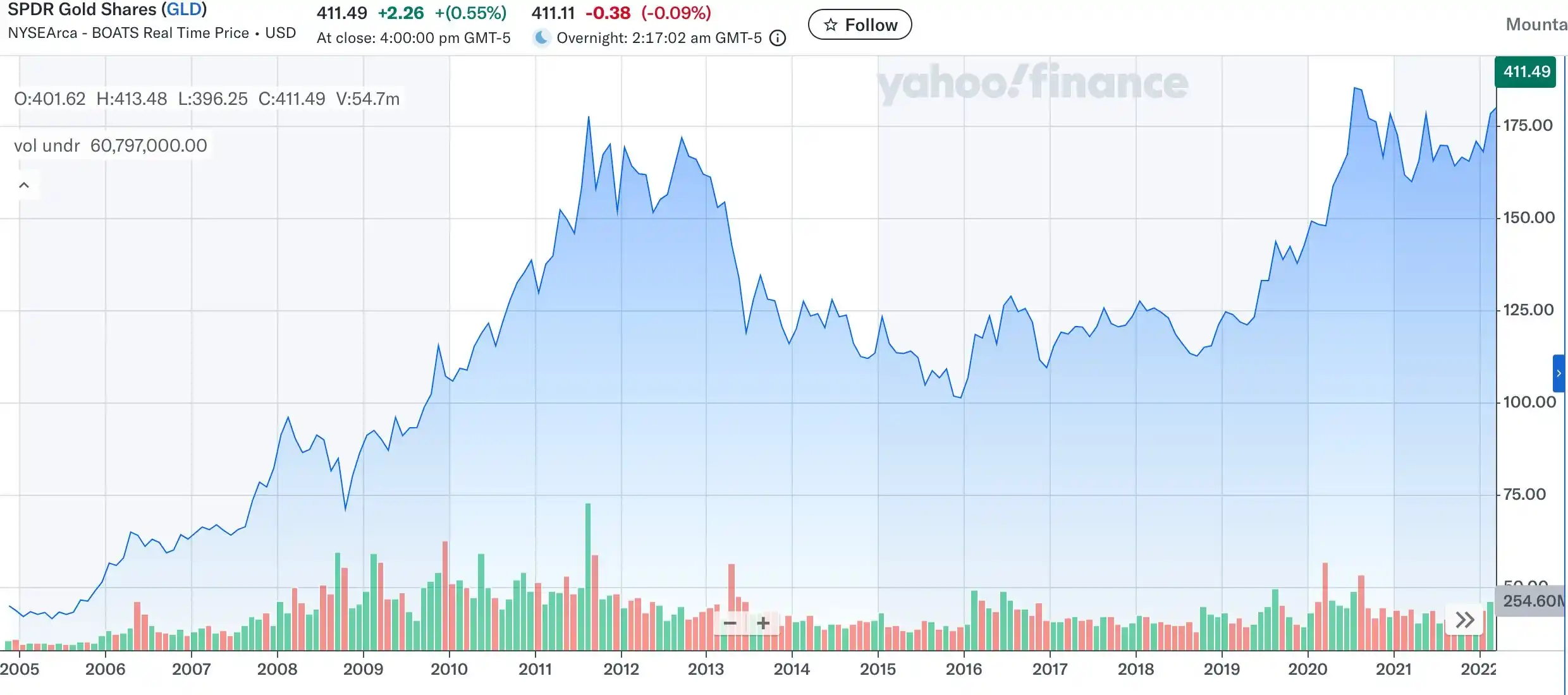
In 2004, the SPDR Gold Trust ETF (GLD) was approved, becoming the first spot gold ETF in history. At that time, the global market capitalization of gold was approximately $1 to $2 trillion. Subsequently, driven by ETFs and related financial instruments, gold's financialization process began to accelerate. By 2025, the global AUM of gold ETFs had climbed to $559 billion, and the average daily trading volume of the gold market reached about $361 billion, both hitting record highs.

With this history as a backdrop, when the spot Bitcoin ETF was approved in 2024, many market participants naturally compared the two. Everyone had a similar question in mind: could the ETF once again play the role of a "catalyst," injecting unprecedented liquidity and vitality into the Bitcoin market?

Now, two years later, the Bitcoin ETF has given a clear answer.

According to data from Chainalysis, the pace of fund flows into Bitcoin ETFs has already surpassed the early-stage inflow speed of the first *net* gold ETF (inflation-adjusted) launched in 2005.

After the launch of the spot gold ETF, not only did its own scale rise rapidly, but it also spurred activity across the entire gold ecosystem: the trading volumes of spot, futures, options, and even various derivative markets achieved quantum growth in the following years.

This history provides a vivid reference for understanding the potential impact of the Bitcoin ETF. It confirms that ETFs, as a financial medium, inherently possess a kind of "leverage effect," capable of rapidly increasing an asset's liquidity and attracting broader market participation.

Therefore, the Bitcoin ETF is not simply retreading gold's old path. It has demonstrated a faster market acceptance rate in a shorter time and received a more enthusiastic response from capital.
The Significance of ETFs: Accelerators of the Financialization Process

Looking at the development over two years, spot Bitcoin ETFs have promoted Bitcoin's financialization process on multiple levels.

First, the method of participation has been institutionalized.

Spot Bitcoin ETFs provide investors with a regulated, standardized participation path, significantly reducing technical and operational barriers. Investors can participate in its price fluctuations without directly holding, storing, or managing Bitcoin, making Bitcoin investment more aligned with the usage habits of mainstream financial markets.

Second, the investment process has been greatly simplified.

Investors can buy and sell Bitcoin ETF shares like stocks or other ETFs, using market or limit orders, improving both convenience and security, thereby making it easier for Bitcoin to be incorporated into常规 investment portfolio systems.

Third, mainstream acceptance of Bitcoin as an asset class continues to increase.

Spot Bitcoin ETFs have significantly enhanced market recognition of Bitcoin as an independent asset class, gradually moving it from within the crypto market into the mainstream asset allocation and wealth management discussion framework, and beginning to appear in some long-term investment and retirement planning scenarios.

Fourth, institutional capital and global market participation have been systematically opened up.

The participation of global top asset management institutions like BlackRock and Fidelity has turned Bitcoin ETFs from symbolic compliant products into important entry points for institutional funds into the crypto market. Meanwhile, the successive advancement of spot Bitcoin ETFs in markets like the U.S. and Hong Kong also indicates that this financialization process is showing a trend of global diffusion.

Structural Challenges and Diversified Participation Paths Under Accelerated Financialization

The rapid development of Bitcoin ETFs has significantly accelerated Bitcoin's financialization process, but it has also simultaneously amplified some long-standing structural challenges.

First, from a market perspective, spot Bitcoin ETFs are still directly exposed to Bitcoin's inherent high volatility, and rapid price changes can lead to short-term valuation fluctuations;同时, the management fees and operational costs of ETFs will also affect the investment return structure in the long run.

More importantly, the high degree of financialization represented by ETFs is itself a double-edged sword. On one hand, it significantly amplifies Bitcoin's market liquidity and participation scale; on the other hand, it can easily cause the market to focus more on price performance at the financial product level, thereby overlooking the fact that the Bitcoin network itself still requires continuous investment in computing power and infrastructure construction to maintain its long-term security and stability.

From an investor's perspective, ways to participate in Bitcoin are not limited to price-level trading and holding. Besides obtaining price returns through spot, spot ETFs, or trading strategies, cloud mining offers another approach: participating in Bitcoin through a path of locking in costs and stabilizing output.

Through cloud mining, investors can lock in hashrate and costs in advance, obtaining relatively stable Bitcoin output over a certain period. This model essentially equates to locking in the cost of acquiring Bitcoin for a future period, allowing investors to establish a more controllable cost structure and return expectations in a highly volatile market, and also providing another potential path to outperform the spot price over a cycle.

同时, this method also allows individual capital to continue participating in the Bitcoin network's hashrate system, rather than staying only at the level of financial price speculation. Cloud mining is both a way to acquire Bitcoin and a form of continuous support for the network infrastructure. Against the backdrop of deepening financialization, it preserves a richer, more diverse participation structure for the market.

As Bitcoin continues to integrate into the global financial system, different levels and forms of participation will together form an important foundation for its long-term operation and development.

Conclusion

Two years is enough for a new financial product to undergo a complete market test. This journey of the spot Bitcoin ETF clearly tells us: the speed at which Bitcoin is entering the mainstream financial track is much faster than most people initially imagined.

But this is clearly not the终点. The ETF is more like a lit beacon, making Bitcoin's financialization path clear from模糊, and预示着 that more institutionalized forms will appear ahead.

In the future, Bitcoin will continue to evolve between financial markets, technological systems, and infrastructure. Different forms of participation will共同塑造 its long-term position in the global financial system.

Two years is just the prologue. This journey is still extending, and the new pages truly worth writing may have just been turned.


Похожее

Arbitrum Pretends to Be the Hacker, 'Steals' Back the Money Lost by KelpDAO

Title: Arbitrum Poses as Hacker to Recover Stolen Funds from KelpDAO Last week, KelpDAO suffered a hack resulting in nearly $300 million in losses, marking the largest DeFi security incident this year. Approximately 30,765 ETH (worth over $70 million) remained on an Arbitrum address controlled by the attacker. In an unprecedented move, Arbitrum’s Security Council utilized its emergency authority to upgrade the Inbox bridge contract, adding a function that allowed them to impersonate the hacker’s address and initiate a transfer without access to its private key. The council’s action, approved by 9 of its 12 members, moved the stolen ETH to a frozen address in a single transaction before reverting the contract to its original state. The operation was coordinated with law enforcement, which attributed the attack to North Korea’s Lazarus Group. Community reactions are divided: some praise the recovery of funds, while others question the centralization of power, as the council can upgrade core contracts without governance votes. However, such emergency mechanisms are common among major L2s. Despite the partial recovery, over $292 million was stolen in total, with more than $100 million in bad debt on Aave and remaining funds scattered across other chains. The incident highlights escalating security challenges in DeFi, with state-sponsored hackers employing advanced tactics and L2s responding with elevated countermeasures.

marsbit7 мин. назад

Arbitrum Pretends to Be the Hacker, 'Steals' Back the Money Lost by KelpDAO

marsbit7 мин. назад

iQiyi Is Too Impatient

The article "iQiyi Is Too Impatient" discusses the controversy surrounding the Chinese streaming platform IQiyi's recent announcement of an "AI Actor Library" during its 2026 World Conference. IQiyi claimed over 100 actors, including well-known names like Zhang Ruoyun and Yu Hewei, had joined the initiative. CEO Gong Yu suggested AI could enable actors to "star in 14 dramas a year instead of 4" and that "live-action filming might become a world cultural heritage." The announcement quickly sparked backlash. Multiple actors named in the list issued urgent statements denying they had signed any AI-related authorization agreements. This forced IQiyi to clarify that inclusion in the library only indicated a willingness to *consider* AI projects, with separate negotiations required for any specific role. The incident, which trended on social media with hashtags like "IQiyi is crazy," is presented as a sign of the company's growing desperation. Facing intense competition from short-video platforms like Douyin and Kuaishou, as well as Bilibili and Xiaohongshu, IQiyi's financial performance has weakened, with revenues declining for two consecutive years. The author argues that IQiyi is "too impatient" to tell a compelling AI story to reassure the market, especially as it pursues a listing on the Hong Kong stock exchange. The piece concludes by outlining three key "AI questions" IQiyi must answer: defining its role as a tool provider versus a content creator, balancing the "coldness" of AI with the human element audiences desire, and properly managing the interests of platforms, actors, and viewers. The core dilemma is that while AI can reduce costs and increase efficiency, it risks creating homogenized, formulaic content and devaluing human performers.

marsbit1 ч. назад

iQiyi Is Too Impatient

marsbit1 ч. назад

Торговля

Спот
Фьючерсы

Популярные статьи

Тест по Bitcoin Биткоина

HTX Learn: Изучите Bitcoin halving и Заработаете Токены USDT

3.0k просмотров всегоОпубликовано 2024.04.16Обновлено 2024.04.16

Тест по Bitcoin  Биткоина

Что такое $BITCOIN

ЦИФРОВОЕ ЗОЛОТО ($BITCOIN): Комплексный анализ Введение в ЦИФРОВОЕ ЗОЛОТО ($BITCOIN) ЦИФРОВОЕ ЗОЛОТО ($BITCOIN) — это проект на основе блокчейна, работающий в сети Solana, который стремится объединить характеристики традиционных драгоценных металлов с инновациями децентрализованных технологий. Хотя он носит имя Биткойн, часто называемого “цифровым золотом” из-за его восприятия как средства хранения ценности, ЦИФРОВОЕ ЗОЛОТО является отдельным токеном, предназначенным для создания уникальной экосистемы в ландшафте Web3. Его цель — позиционировать себя как жизнеспособный альтернативный цифровой актив, хотя детали его применения и функциональности все еще развиваются. Что такое ЦИФРОВОЕ ЗОЛОТО ($BITCOIN)? ЦИФРОВОЕ ЗОЛОТО ($BITCOIN) — это токен криптовалюты, специально разработанный для использования в блокчейне Solana. В отличие от Биткойна, который выполняет широко признанную роль хранения ценности, этот токен, похоже, сосредоточен на более широких приложениях и характеристиках. Примечательные аспекты включают: Инфраструктура блокчейна: Токен построен на блокчейне Solana, известном своей способностью обрабатывать высокоскоростные и недорогие транзакции. Динамика предложения: ЦИФРОВОЕ ЗОЛОТО имеет максимальное предложение, ограниченное 100 квадриллионами токенов (100P $BITCOIN), хотя детали о его обращающемся предложении в настоящее время не раскрыты. Утилита: Хотя точные функциональные возможности не описаны, есть указания на то, что токен может быть использован для различных приложений, потенциально связанных с децентрализованными приложениями (dApps) или стратегиями токенизации активов. Кто создатель ЦИФРОВОГО ЗОЛОТА ($BITCOIN)? На данный момент личность создателей и команды разработчиков, стоящих за ЦИФРОВЫМ ЗОЛОТОМ ($BITCOIN), остается неизвестной. Эта ситуация типична для многих инновационных проектов в области блокчейна, особенно тех, которые связаны с децентрализованными финансами и феноменом мем-криптовалют. Хотя такая анонимность может способствовать культуре, ориентированной на сообщество, она усиливает опасения по поводу управления и ответственности. Кто инвесторы ЦИФРОВОГО ЗОЛОТА ($BITCOIN)? Доступная информация указывает на то, что у ЦИФРОВОГО ЗОЛОТА ($BITCOIN) нет известных институциональных спонсоров или значительных венчурных капиталовложений. Проект, похоже, функционирует по модели пирингового взаимодействия, сосредоточенной на поддержке и принятии сообществом, а не на традиционных путях финансирования. Его активность и ликвидность в основном сосредоточены на децентрализованных биржах (DEX), таких как PumpSwap, а не на устоявшихся централизованных торговых платформах, что еще больше подчеркивает его подход, ориентированный на grassroots. Как работает ЦИФРОВОЕ ЗОЛОТО ($BITCOIN) Операционные механизмы ЦИФРОВОГО ЗОЛОТА ($BITCOIN) можно подробно описать на основе его дизайна блокчейна и характеристик сети: Механизм консенсуса: Используя уникальный механизм доказательства истории (PoH) Solana в сочетании с моделью доказательства доли (PoS), проект обеспечивает эффективную валидацию транзакций, что способствует высокой производительности сети. Токеномика: Хотя конкретные дефляционные механизмы не были подробно описаны, большое максимальное предложение токенов подразумевает, что оно может быть предназначено для микротранзакций или нишевых случаев использования, которые еще предстоит определить. Интероперабельность: Существует потенциал для интеграции с более широкой экосистемой Solana, включая различные платформы децентрализованных финансов (DeFi). Однако детали относительно конкретных интеграций остаются неуточненными. Хронология ключевых событий Вот хронология, которая подчеркивает значимые вехи, касающиеся ЦИФРОВОГО ЗОЛОТА ($BITCOIN): 2023: Первоначальное развертывание токена происходит в блокчейне Solana, отмеченное его адресом контракта. 2024: ЦИФРОВОЕ ЗОЛОТО приобретает видимость, когда оно становится доступным для торговли на децентрализованных биржах, таких как PumpSwap, позволяя пользователям обменивать его на SOL. 2025: Проект наблюдает спорадическую торговую активность и потенциальный интерес к инициативам, возглавляемым сообществом, хотя на данный момент не зафиксировано никаких значительных партнерств или технических достижений. Критический анализ Сильные стороны Масштабируемость: Основная инфраструктура Solana поддерживает высокие объемы транзакций, что может повысить полезность $BITCOIN в различных сценариях транзакций. Доступность: Потенциально низкая цена торговли за токен может привлечь розничных инвесторов, способствуя более широкому участию благодаря возможностям дробного владения. Риски Отсутствие прозрачности: Отсутствие публично известных спонсоров, разработчиков или процесса аудита может вызвать скептицизм относительно устойчивости и надежности проекта. Волатильность рынка: Торговая активность сильно зависит от спекулятивного поведения, что может привести к значительной волатильности цен и неопределенности для инвесторов. Заключение ЦИФРОВОЕ ЗОЛОТО ($BITCOIN) является интригующим, но неоднозначным проектом в быстро развивающейся экосистеме Solana. Хотя он пытается использовать нарратив “цифрового золота”, его отход от установленной роли Биткойна как средства хранения ценности подчеркивает необходимость более четкого различения его предполагаемой утилиты и структуры управления. Будущее принятие и усвоение, вероятно, будут зависеть от решения текущей непрозрачности и более четкого определения его операционных и экономических стратегий. Примечание: Этот отчет охватывает синтезированную информацию, доступную на октябрь 2023 года, и с тех пор могут произойти события.

99 просмотров всегоОпубликовано 2025.05.13Обновлено 2025.05.13

Что такое $BITCOIN

Fractal Bitcoin: масштабирование Биткоина с помощью рекурсивной системы

Fractal Bitcoin — масштабное Layer-1-решнение, созданное на базе кода Биткоина, позволяющего достигать бесконечного масштабирования с помощью рекурсивного подхода.

2.2k просмотров всегоОпубликовано 2025.06.30Обновлено 2025.06.30

Fractal Bitcoin: масштабирование Биткоина с помощью рекурсивной системы

Обсуждения

Добро пожаловать в Сообщество HTX. Здесь вы сможете быть в курсе последних новостей о развитии платформы и получить доступ к профессиональной аналитической информации о рынке. Мнения пользователей о цене на BTC (BTC) представлены ниже.

活动图片