Автор: Glassnode
Компиляция: AididiaoJP, Foresight News
Краткое содержание
- Цена биткоина остается вблизи ключевых ценовых уровней on-chain, и уровни поддержки подвергаются проверке. Для предотвращения дальнейшего ослабления структуры рынку необходима достаточная уверенность.
- Настроения краткосрочных держателей хрупки. Если цена не сможет восстановиться выше ключевого уровня безубыточности, инвесторы, купившие недавно, могут столкнуться с новым давлением продаж.
- В целом поведение держателей остается консервативным. Это указывает на то, что текущий рынок находится в фазе поглощения, а не в фазе экспансионистского роста.
- Ликвидность остается ключевой переменной. Несмотря на снижение участия, цена остается стабильной. Однако для устойчивого пробоя вверх все еще необходим последующий приток покупателей.
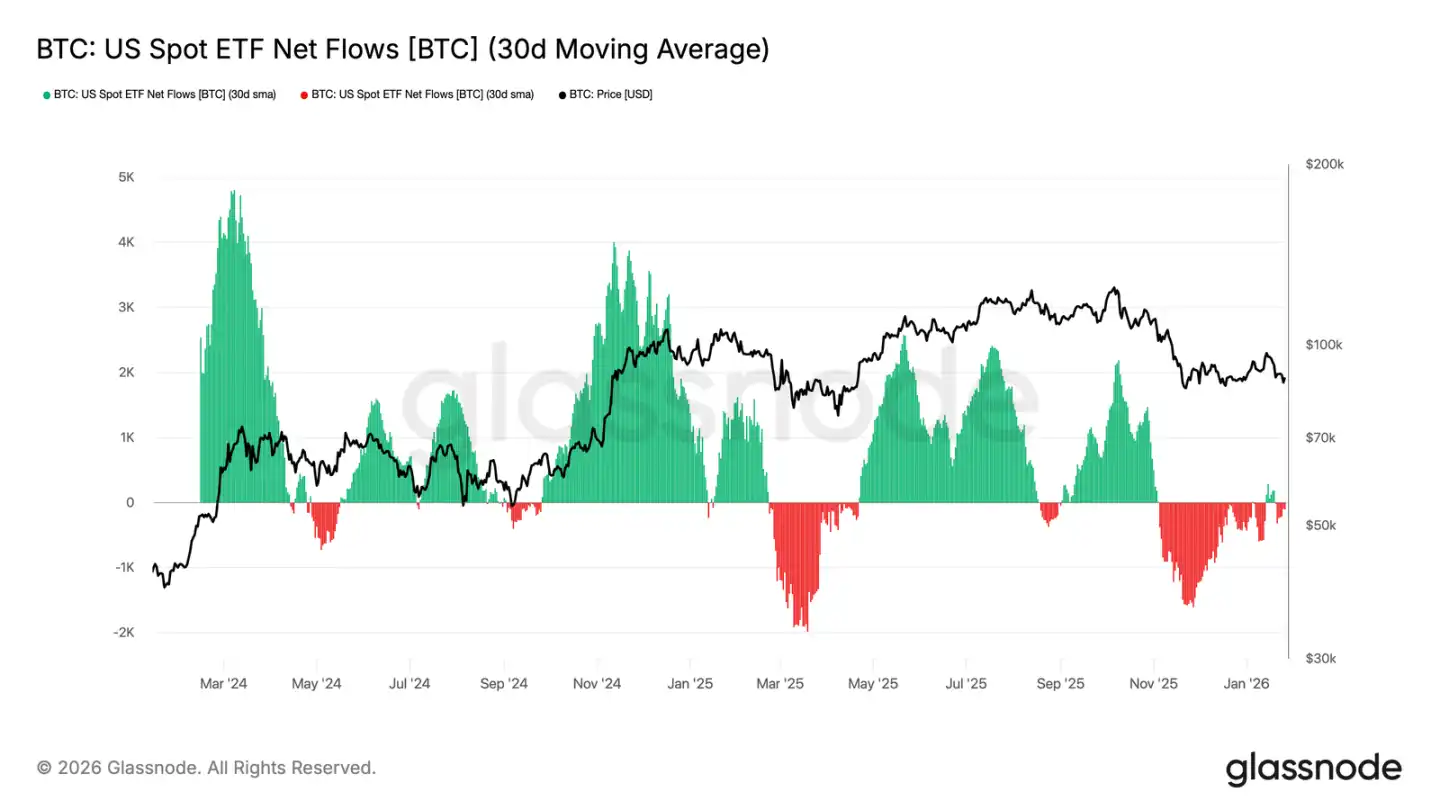
- Потоки спотовых ETF стабилизируются. После периода устойчивых оттоков 30-дневное среднее значение потоков вернулось к нейтральным уровням, механическое давление продаж ослабло.
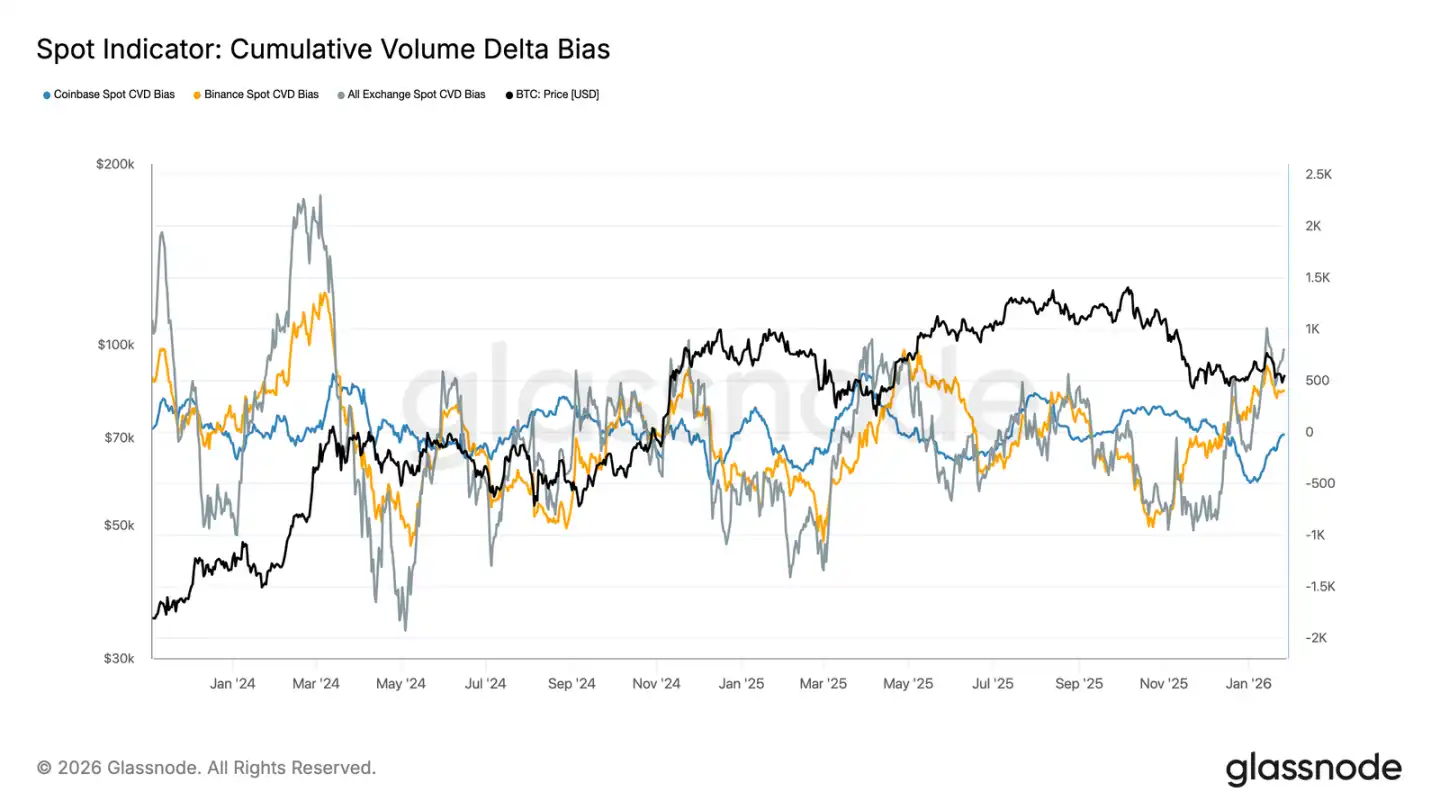
- Спотовые CVD (Cumulative Volume Delta) на различных биржах демонстрируют улучшение, во главе с Binance, что указывает на возвращение маржинального покупательского давления. На Coinbase ситуация относительно спокойная.
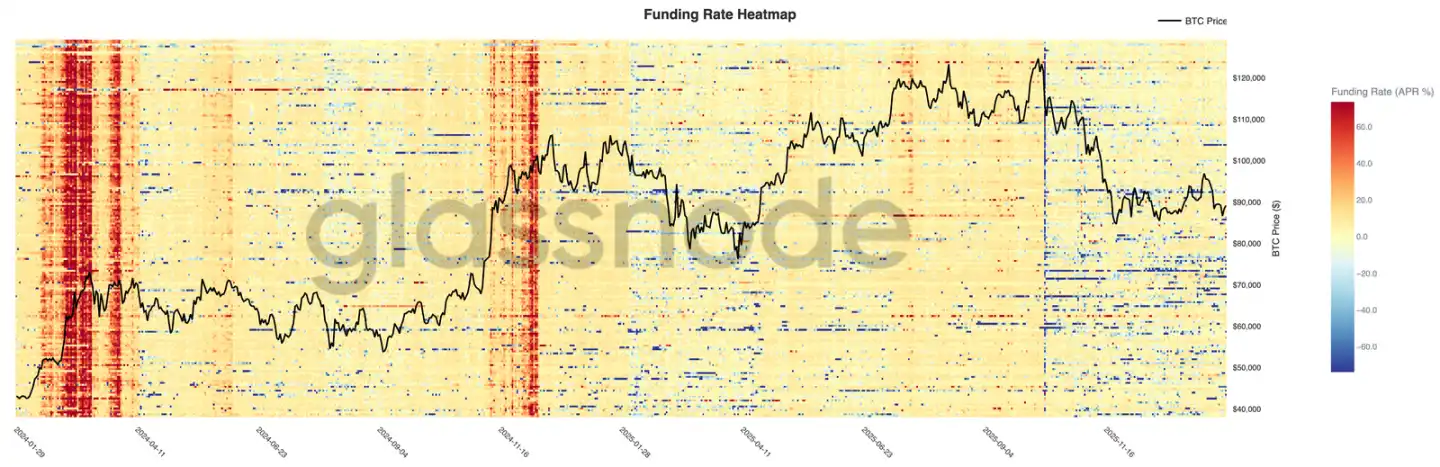
- Уровень левериджа на перпетуальных фьючерсах по-прежнему невысок, финансирование в основном нейтральное. Спекулятивные позиции остаются осторожными и уязвимыми для волатильности.
- Рынок опционов смещается в сторону поиска защиты от падения: перекос в сторону пут-опционов, рост краткосрочной подразумеваемой волатильности, гамма-экспозиция дилеров стала отрицательной, что увеличивает чувствительность к нисходящему движению цены.
On-chain инсайты
Повторное ослабление
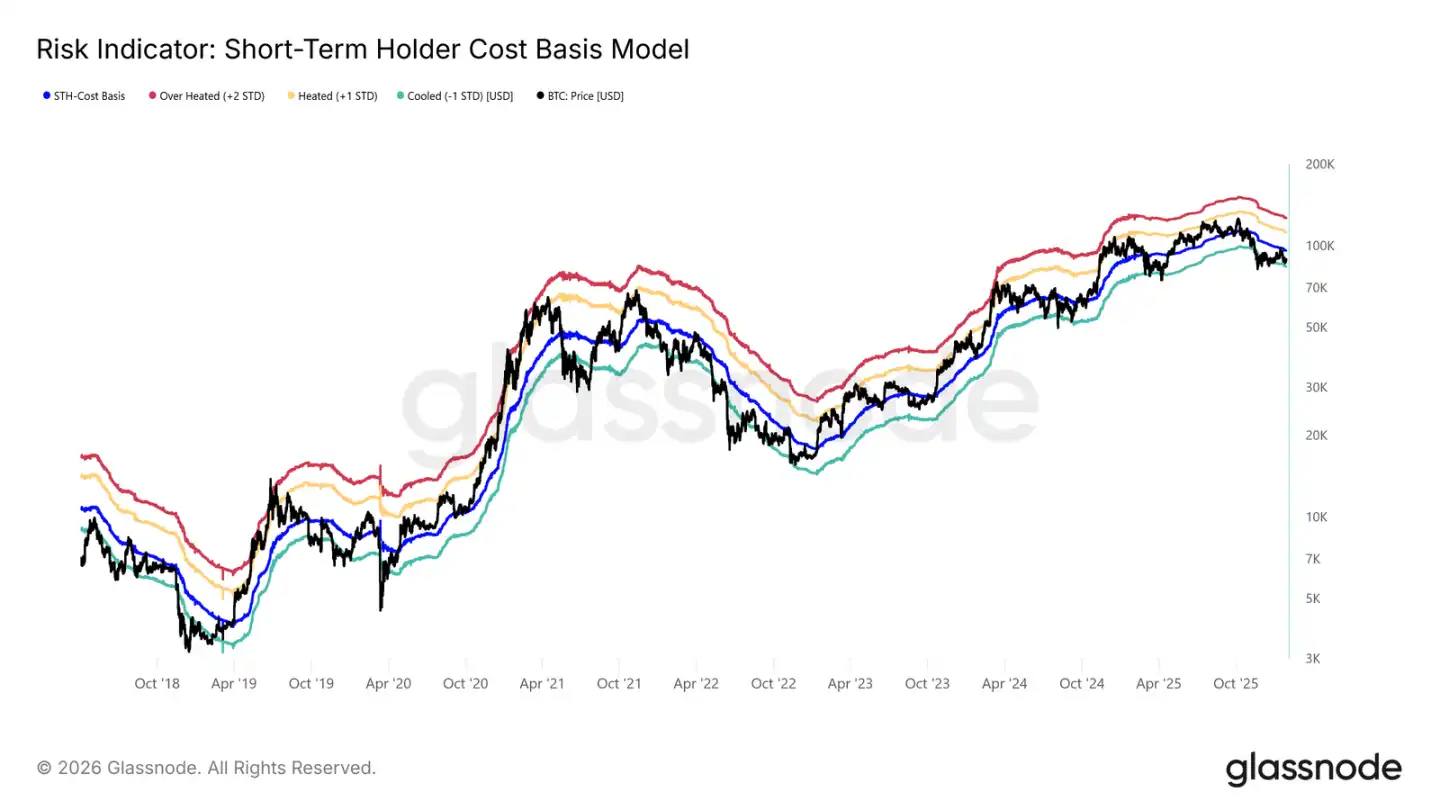
Рынок вошел в небольшую коррекцию после того, как спотовая цена не смогла удержаться выше стоимости краткосрочных держателей.
В настоящее время цена находится ниже ключевой линии быков и медведей в 96,5 тыс. долларов, что очень похоже на ситуацию в первом квартале 2022 года и втором квартале 2018 года.
Как показано на графике, нижняя граница текущего консолидационного диапазона (-1 стандартное отклонение) находится на уровне 83,4 тыс. долларов. Это ключевой уровень поддержки в ближайшей перспективе, пробитие которого может спровоцировать более глубокую коррекцию к истинной рыночной средней цене в 80,7 тыс. долларов.
Чувствительность уровней поддержки
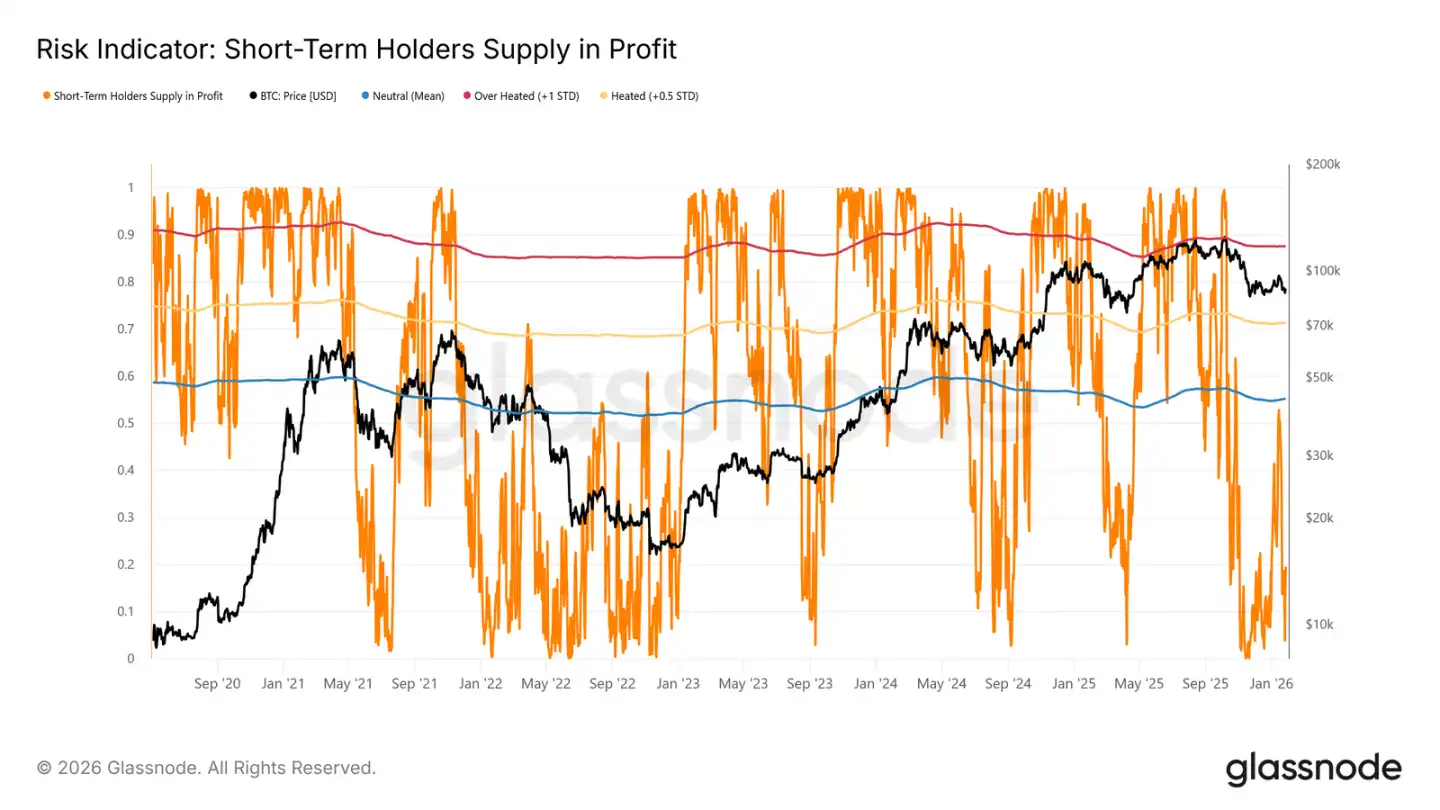
Рынок так чувствителен к нижней границе стоимости краткосрочных держателей и истинной рыночной средней, потому что значительная часть недавно купленных монет находится в убытке. В такой ситуации краткосрочные держатели, исторически чувствительные к цене, с большей вероятностью продают при убытках, увеличивая давление продаж.
Следовательно, эти ценовые уровни являются последним рубежом обороны от сползания рынка к глубокому медвежьему рынку, подобному 2022-2023 годам.
В настоящее время доля монет краткосрочных держателей в убытке снизилась до 19,5%, что значительно ниже нейтрального порога в 55%. Это указывает на то, что, хотя риски снижения сохраняются, масштабной панической распродажи со стороны краткосрочных держателей еще не произошло.
Ликвидность — это ключ
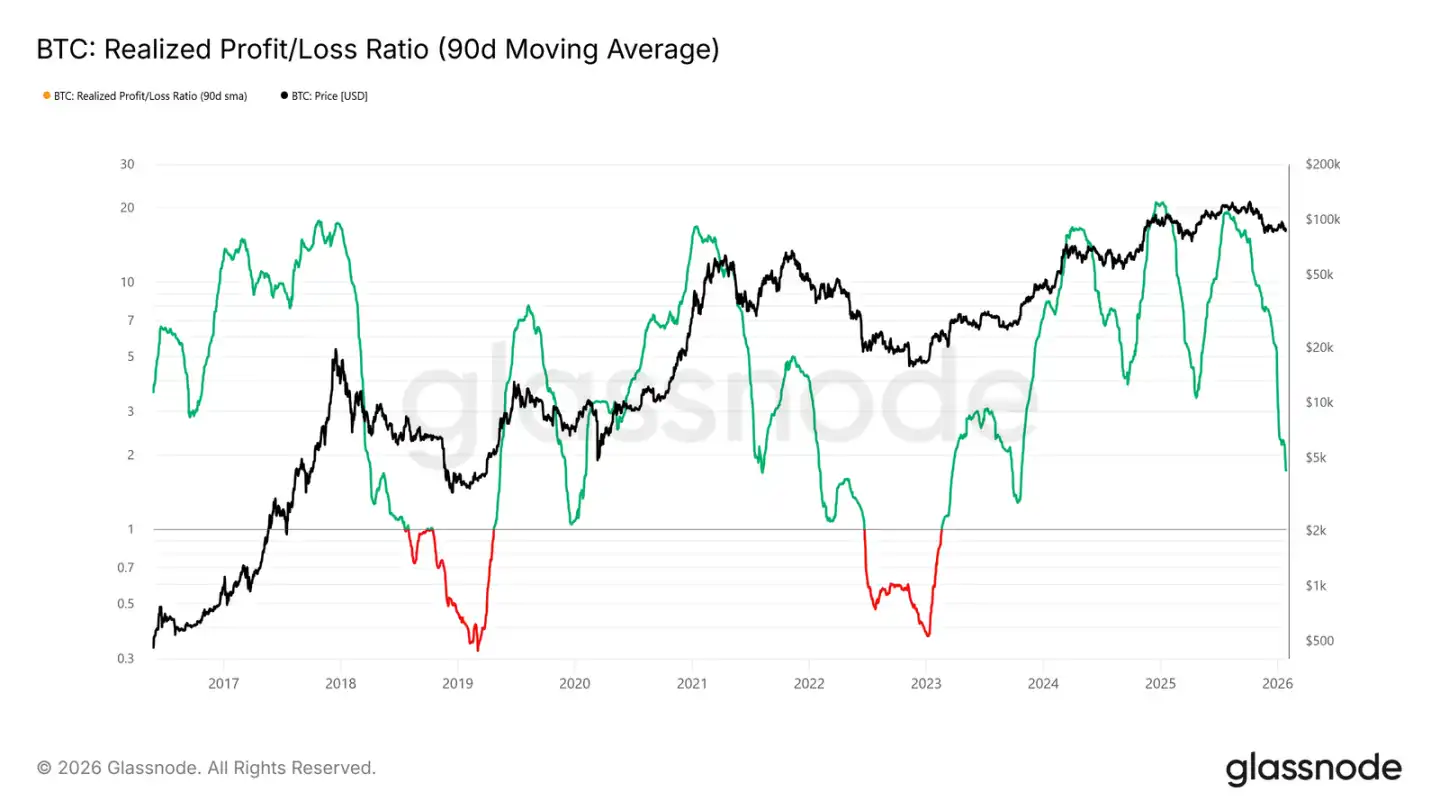
Учитывая важность удержания ключевой зоны поддержки между 80,7 и 83,4 тыс. долларов, состояние ликвидности становится главным фокусом. Любое существенное изменение в сторону устойчивого восстановления должно отражаться в показателях, чувствительных к ликвидности, таких как «Соотношение реализованной прибыли и убытка (90-дневное скользящее среднее)».
Исторически, включая цикличные восстановления за последние два года, для сильных восходящих фаз требовалось, чтобы этот показатель рос и удерживался около уровня 5. Это сигнализирует о том, что новые средства возвращаются на рынок.
Напряжение в предложении
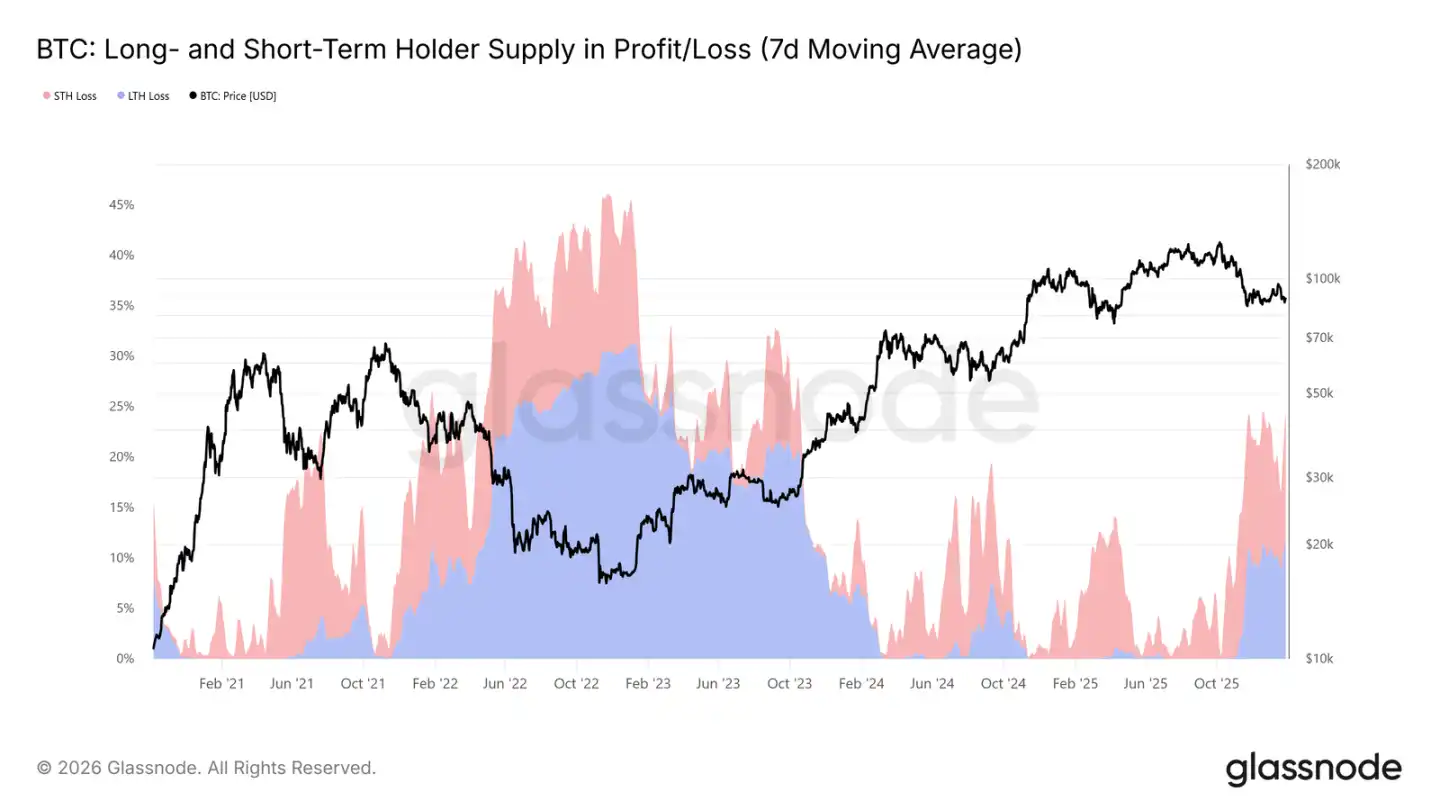
Еще одним ключевым on-chain показателем, влияющим на среднесрочную структуру рынка, является «Объем прибыльной/убыточной supply долгосрочных/краткосрочных держателей». Данные показывают, что в настоящее время более 22% circulating supply находится в убытке, что аналогично ситуации в первом квартале 2022 года и втором квартале 2018 года.
По мере того как монеты, купленные на пиках, постепенно «оседают» у долгосрочных держателей, а инвесторы предпочитают держать монеты, купленные во время предыдущего роста, доля убыточных монет у долгосрочных держателей со временем увеличивается.
Эти стойкие держатели в настоящее время испытывают давление как со стороны времени, так и со стороны цены. Если цена пробивает упомянутые ключевые уровни поддержки (нижняя граница стоимости краткосрочных держателей и истинная рыночная средняя), это может привести к тому, что долгосрочные держатели также решат зафиксировать убытки, увеличивая среднесрочные риски снижения.
Off-chain инсайты
Отток спотовых ETF замедляется
Чистые потоки американских спотовых биткоин-ETF вернулись к балансу. После длительного периода чистого оттока их 30-дневное скользящее среднее приблизилось к нулевой линии. Это указывает на то, что структурное давление продаж со стороны ETF значительно ослабло.
Примечательно, что недавнее восстановление притока средств значительно уступает по силе волнам накопления в начале и конце 2024 года. Это говорит о том, что институциональный спрос остается осторожным, а не активно растущим. В условиях ослабления импульса притока средств способность цены BTC удерживаться в较高ом диапазоне, по-видимому, больше зависит от уверенности спотовых держателей, чем от нового спроса со стороны ETF.
Если потоки смогут вернуться к устойчивому чистому притоку, это будет способствовать продолжению восходящего тренда. В противном случае BTC может продолжить консолидацию, поскольку рынку не хватает внешнего притока ликвидности, который ранее двигал цену вверх.
Улучшение спотовых потоков
Спотовые CVD на основных биржах склоняются к росту, что свидетельствует о возвращении покупательского давления на рынок после длительного затишья. Binance возглавляет восстановление, быстро поднявшись из глубоких отрицательных значений; сводный CVD по всем биржам также стал положительным.
Однако CVD на Coinbase все еще колеблется в диапазоне, что указывает на относительно стабильный, но менее активный внутренний спрос в США по сравнению с офшорными рынками. Это различие показывает, что маржинальные покупательские силы возвращаются, но их основной движущей силой является глобальный аппетит к риску, а не решительные покупки внутри США.
Если доминирование покупателей сохранится, это поддержит дальнейшую стабилизацию или даже рост цен. Однако в этом цикле рынку неоднократно не удавалось поддерживать позитивные тренды CVD, поэтому устойчивость последующих покупок будет ключевой.
Рынок перпетуальных фьючерсов остается спокойным
Ставки финансирования перпетуальных контрактов на большинстве бирж остаются в основном нейтральными, несмотря на значительные ценовые колебания. Это указывает на то, что леверидж был очищен, long/short позиции относительно сбалансированы, и ни одна из сторон не платит постоянно высокое финансирование.
Примечательно, что во время локальных отскоков все еще возникают кратковременные пики положительного финансирования, отражающие кратковременное поведение покупателей. Но эти пики не сохраняются, что подтверждает观点 о хрупких и быстро исчезающих спекулятивных настроениях.
В условиях сжатого и несбалансированного финансирования рынок все больше зависит от спросовых спроса для движения тренда. Если финансирование сможет оставаться устойчиво положительным, это укажет на восстановление левериджа и возвращение аппетита к риску; если оно останется нейтральным, это может означать вхождение рынка в медленную и волатильную фазу консолидации.
Подразумеваемая волатильность: краткосрочный рост, долгосрочная стабильность
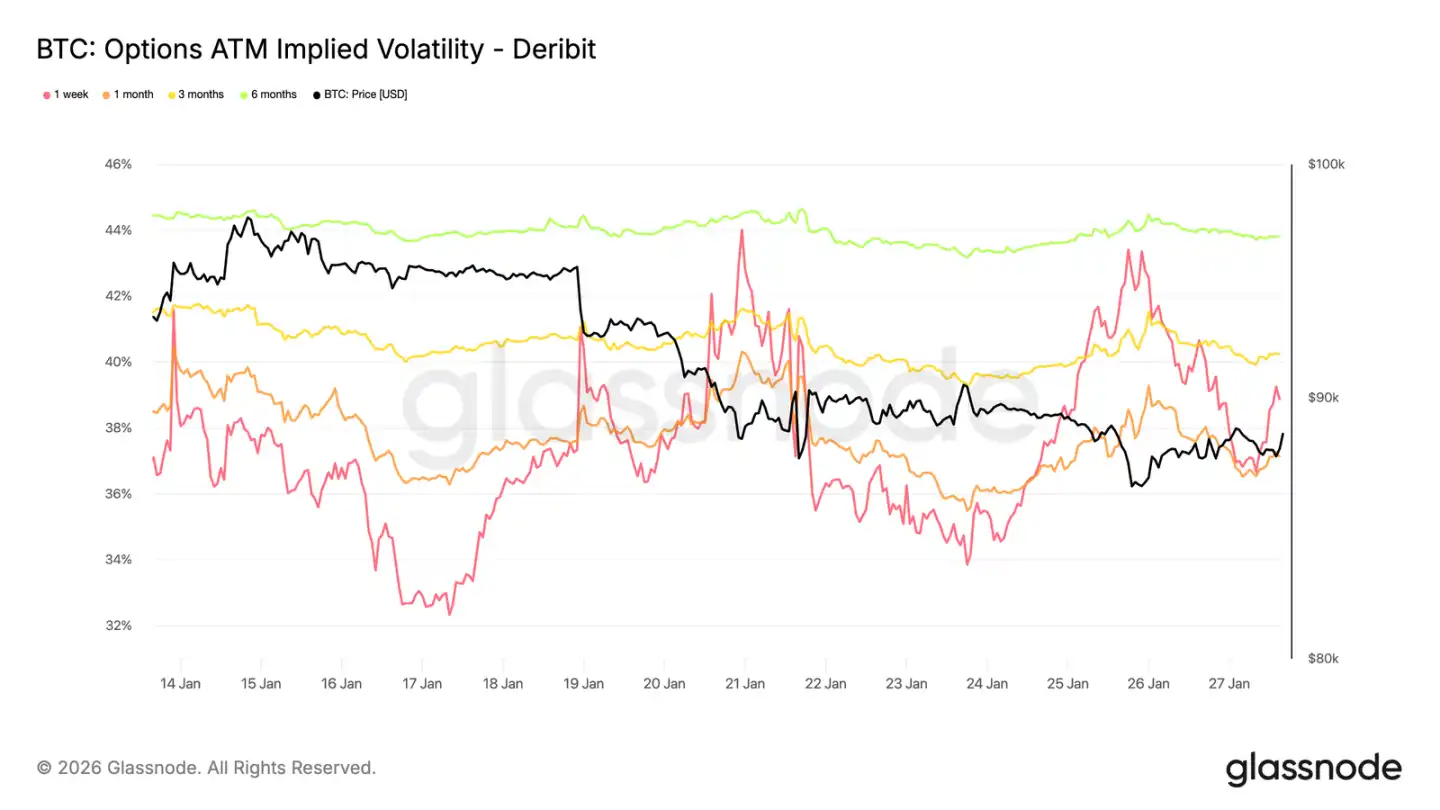
В минувшие выходные краткосрочная подразумеваемая волатильность ATM (at-the-money) резко выросла, что отражает повышенную чувствительность рынка к общему краткосрочному риску, а не только к криптовалютному.
Это изменение произошло одновременно с ростом геополитической неопределенности и макрорисков, которые обычно в первую очередь влияют на ближний конец кривой волатильности. Переоценка волатильности в основном сосредоточена на краткосрочных опционах, в то время как волатильность долгосрочных опционов остается относительно стабильной.
Это указывает на то, что рынок переоценивает краткосрочную неопределенность, а не меняет долгосрочные ожидания риска, что является реакцией на внешние риски, а не признаком внутреннего давления или структурного дисбаланса.
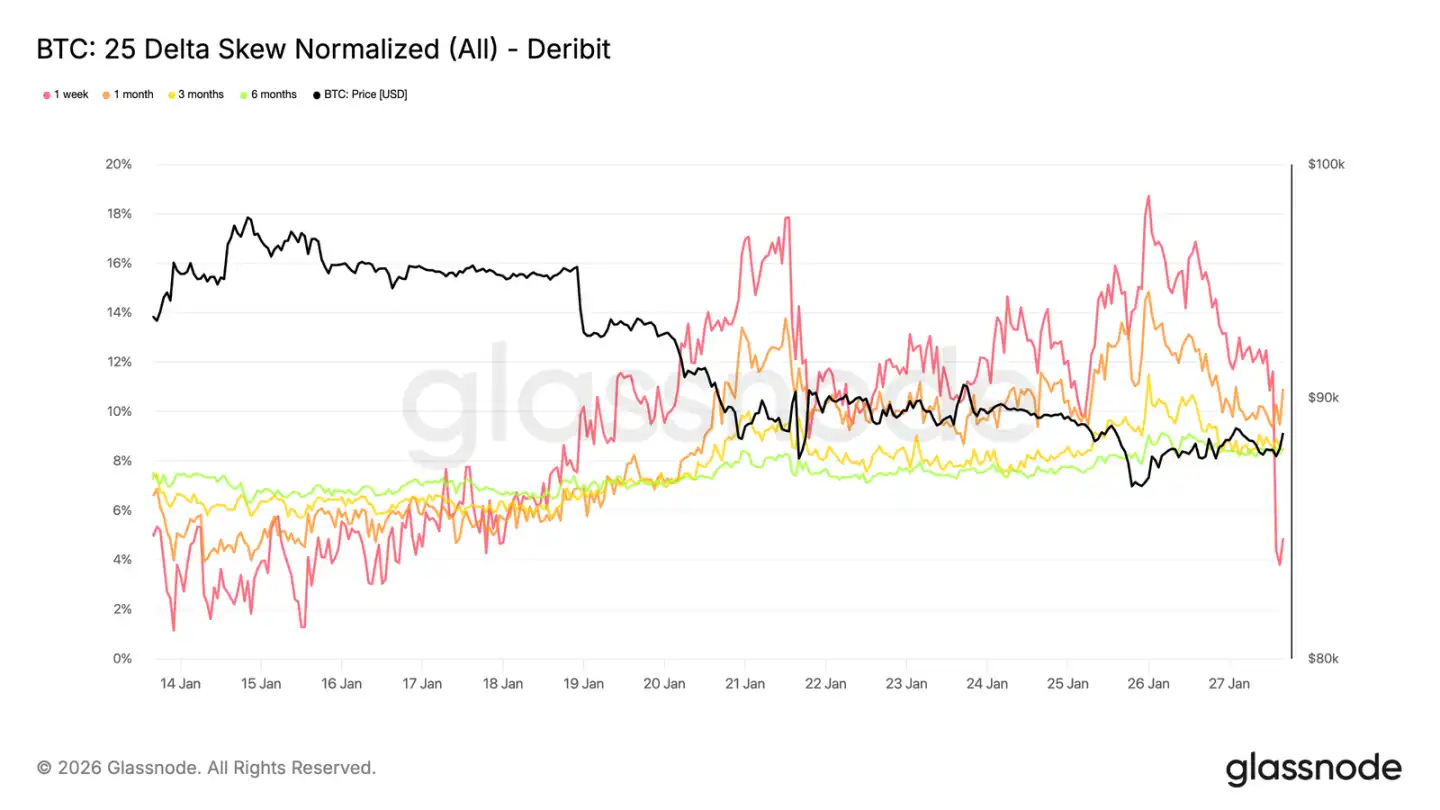
25 Delta Skew: распространяются медвежьи настроения
По мере корректировки волатильности skew (перекос) более четко отражает настроения рынка. 25 Delta Skew по всем срокам Expiry сместился в медвежью сторону, что указывает на относительно возросший спрос на защиту от падения.
Этот сдвиг предполагает более осторожный взгляд на среднесрочную и долгосрочную перспективу, несмотря на упорядоченное движение спотовой цены. Корректировка постепенна, что указывает на плановые хеджирование, а не на панические покупки пут-опционов.
Краткосрочный skew (особенно недельный) более волатилен, в то время как общая кривая слегка смещена в медвежью сторону по сравнению с прошлой неделей. Это различие показывает, что рынок проявляет осторожность на всех временных горизонтах, но не впадает в крайнее напряжение.
Подразумеваемая волатильность пут-опционов: защита есть, но крах не заложен
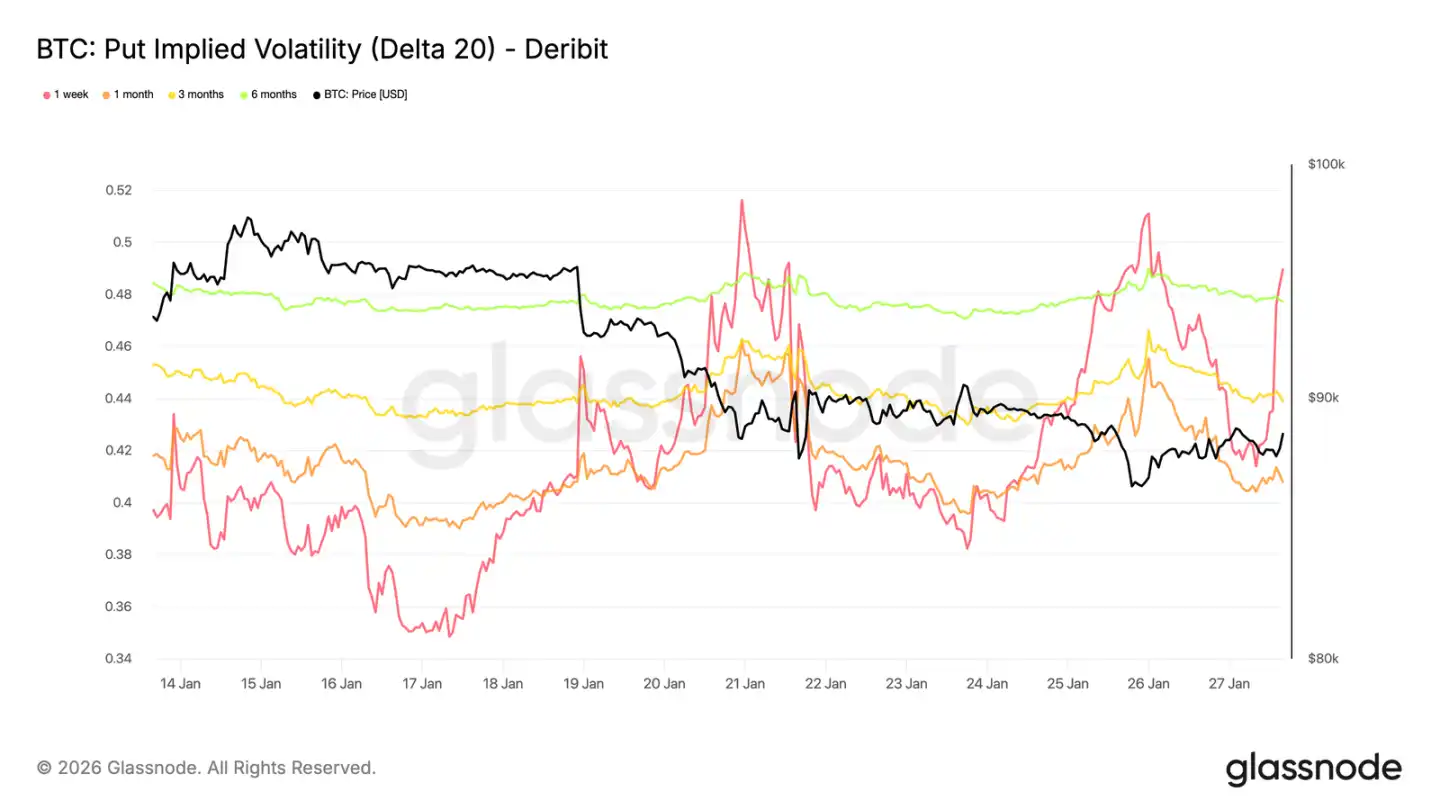
Интерполированная подразумеваемая волатильность для конкретных дельт позволяет сгладить наблюдение за волатильностной поверхностью для разных сроков. Здесь основное внимание уделяется пут-опционам с дельтой 20, которые четко отражают долгосрочный спрос на защиту от падения.
Несмотря на медвежий skew, подразумеваемая волатильность пут-опционов для всех сроков остается относительно умеренной. Даже рассматривая опционы до конца 2026 года, рынок закладывает лишь возможность умеренного снижения.
Это раскрывает важную деталь: участники готовы платить за защиту от падения больше, чем за колл-опционы, но не ожидают резкого обвала. Настроения явно защитные, но ожидания относительно масштабов снижения остаются ограниченными.
Это согласуется с характеристиками недавнего спотового рынка, демонстрирующего «упорядоченное снижение, а не панические продажи».
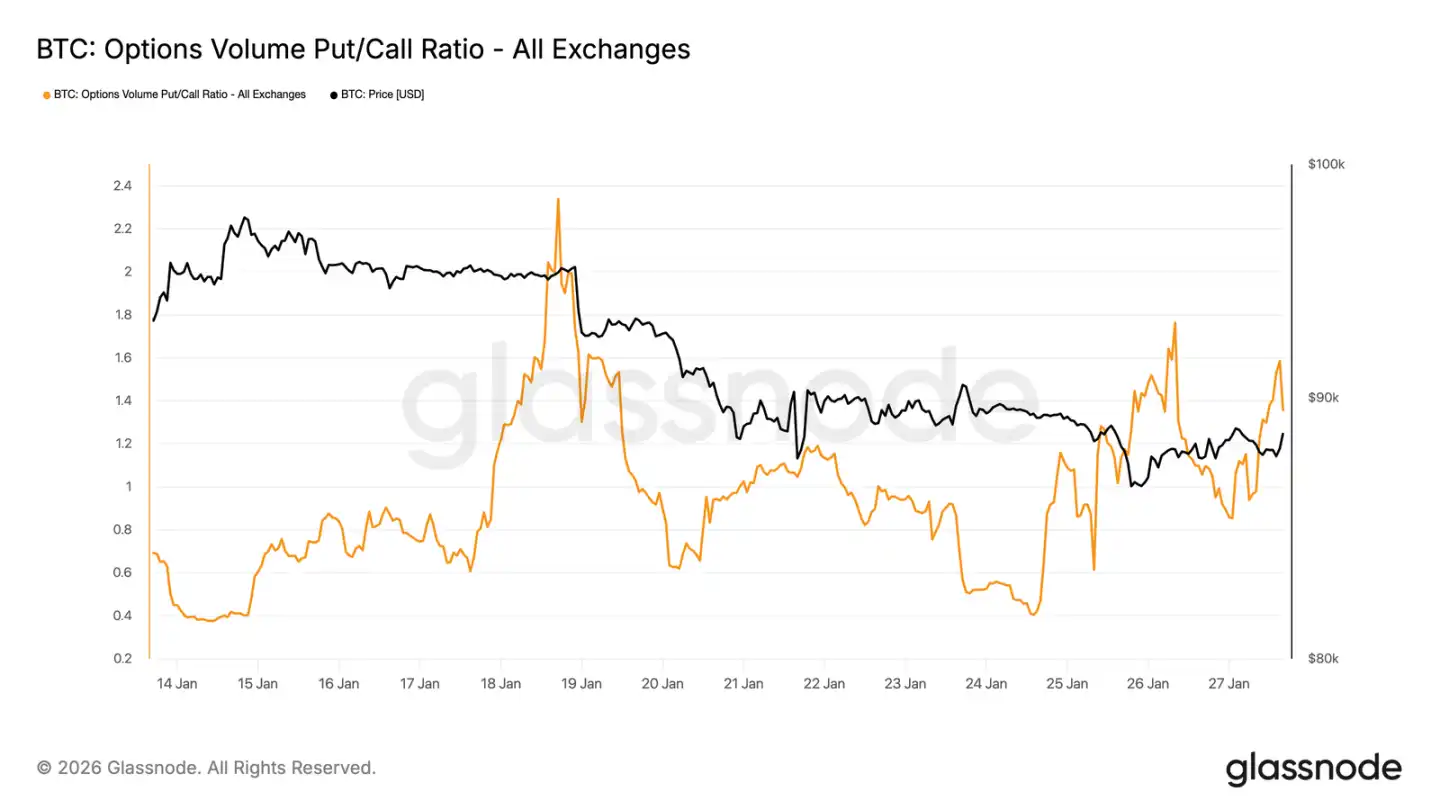
Объем пут-опционов лидирует
С точки зрения объема, соотношение пут/колл на опционном рынке также подтверждает эту оборонительную позицию. Объем пут-опционов увеличился относительно колл-опционов, но не наблюдается всплеска объема, обычно связанного с паническим хеджированием.
Активность объема упорядочена, что указывает на то, что трейдеры постепенно корректируют позиции, а не эмоционально гонятся за движением. Это согласуется с осторожным тоном рынка, который признает downside risks, одновременно снижаясь контролируемым образом.
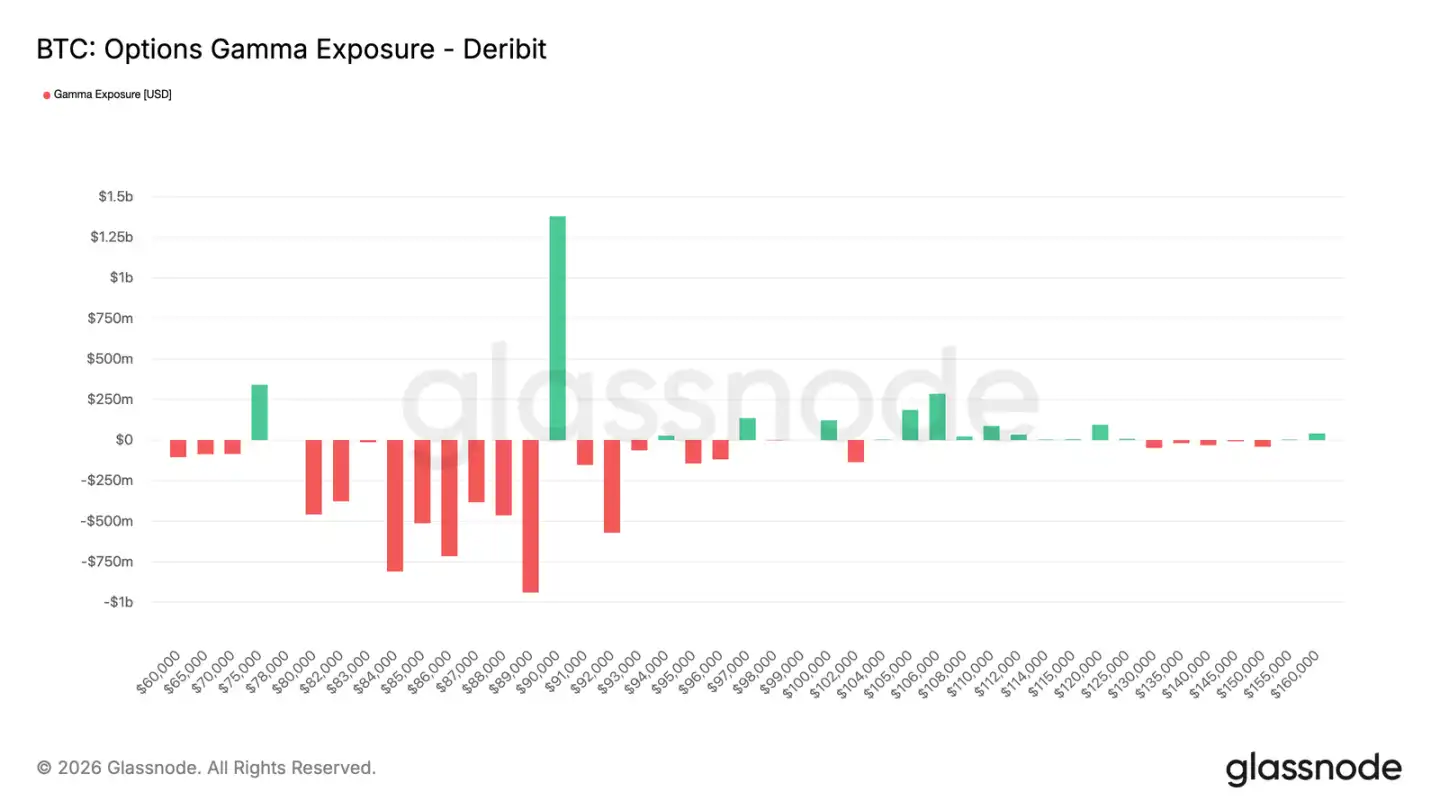
Гамма-экспозиция дилеров: ниже 90 000 благоприятствует снижению
Гамма-экспозиция дилеров раскрывает важную структурную особенность текущего рынка. Дилеры имеют короткую гамму в широком диапазоне от 90 000 долларов вниз до примерно 75 000 долларов. Этот диапазон совпадает с важной полосой поддержки.
В условиях короткой гаммы хеджирующее поведение дилеров усиливает ценовые движения. Когда спот падает, дилеры, хеджируя риски по своим коротким пут-опционам, продают фьючерсы или спот, механически усугубляя нисходящую динамику. Это объясняет, почему коррекция может углубляться даже без значительных продаж.
В то же время около уровня 90 000 долларов по-прежнему существует значительная концентрация длинной гаммы. Это означает, что для прорыва выше этого уровня вверх необходимы устойчивые и сильные покупки, а не零星чные.
До появления вышеуказанных условий рыночная структура более благоприятствует медленному, контролируемому снижению цены, а не быстрому развороту.
Премия пут-опционов: краткосрочные покупают, долгосрочные продают
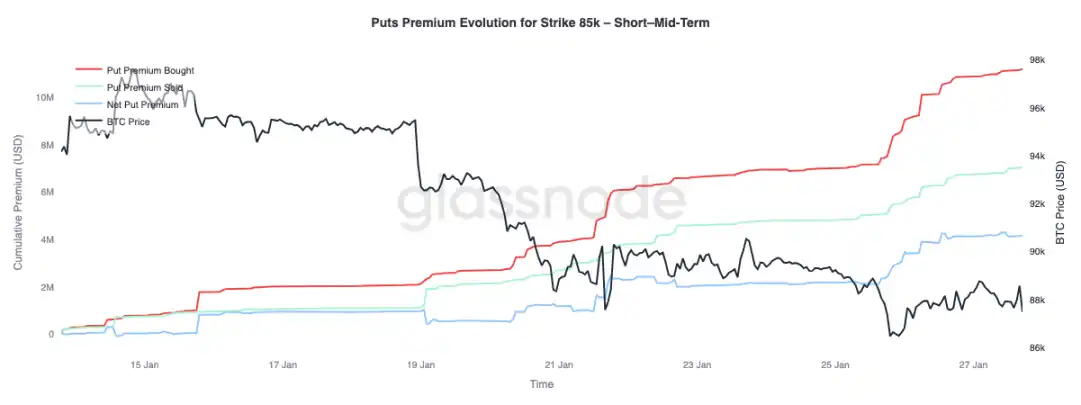
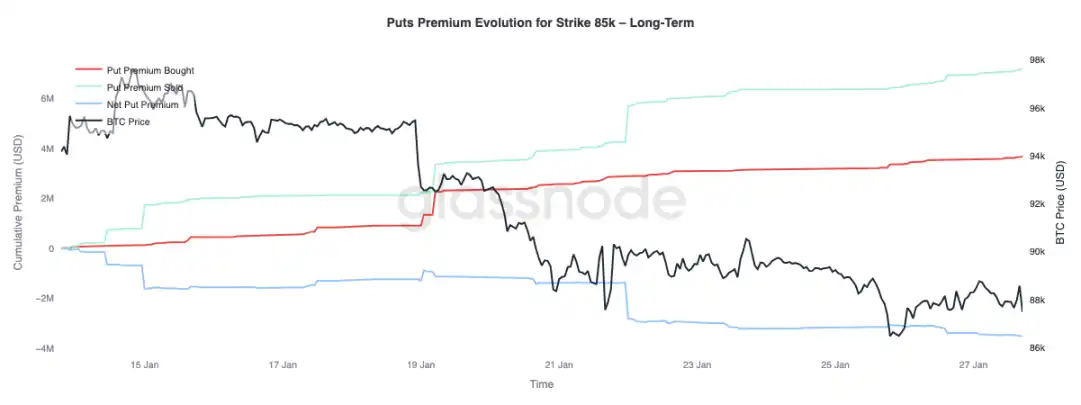
Фокусируясь на изменении премии пут-опционов с страйком 85 000 долларов, можно наблюдать дифференцированное поведение по срокам: для краткосрочных опционов (до трех месяцев) доминирует чистая покупка премии, что推动 рост чистой премии; для долгосрочных опционов (свыше трех месяцев) наблюдается чистая продажа премии.
Это отражает реакцию рынка на потенциальное падение биткоина из среднего диапазона 90 000 долларов в высокий диапазон 80 000 долларов: хеджирование краткосрочных рисков снижения при одновременной готовности продавать защиту от падения в долгосрочной перспективе. Такая структура указывает на то, что рынок лишь краткосрочно осторожен, долгосрочные ожидания риска не ухудшились.
Заключение
Биткоин продолжает консолидироваться вблизи ключевых on-chain ценовых уровней, и баланс между уверенностью держателей и маржинальным спросом остается微妙ным. Состояние краткосрочных держателей по-прежнему хрупкое, и потеря поддержки может привести к новой волне продаж.
Тем не менее, общие потоки стабилизировались: давление продаж со стороны ETF ослабло, позиции на спотовом рынке (особенно на офшорных) показали первые признаки улучшения, что свидетельствует о возрождении интереса покупателей. В то же время производные рынки демонстрируют сдержанность, нейтральное финансирование означает низкий леверидж рынка и снижение зависимости цены от спекулятивных средств.
Опционные позиции усиливают осторожность рынка: skew сместился в медвежью сторону, вырос спрос на краткосрочную защиту, отрицательная гамма-экспозиция дилеров увеличила риск усиления волатильности цены.
Будущее направление зависит от того, сможет ли спрос через спотовые и ETF каналы сохраниться. Если потоки смогут вернуться к устойчивому чистому притоку и спотовые покупки усилятся, это поддержит продолжение тренда; в противном случае, если хрупкость рынка сохранится и спрос на хеджирование падения возрастет, может последовать дальнейшая консолидация или более глубокая коррекция.





















