Afghanistan's Stablecoin, An Unexpected Hub of Crypto Innovation

marsbitОпубликовано 2026-01-26Обновлено 2026-01-26

Введение

A surprising blockchain-based financial innovation is emerging from Afghanistan, despite the country's isolation under Taliban rule. HesabPay, an Afghan startup, has developed a platform that is transforming humanitarian aid delivery in conflict zones. The system uses digital wallets and stablecoins to transfer funds instantly, bypassing traditional banking obstacles like high fees and sanctions. The platform is now being used by major aid organizations. The UN Refugee Agency (UNHCR) has used it to disburse nearly $25 million to over 86,000 Afghan families. Mercy Corps partnered with HesabPay to extend its services to Syria, where cash shortages and banking restrictions are severe, and is developing projects for Sudan and Haiti. Key advantages include reduced transaction costs, instant transfers, and enhanced transparency. The blockchain creates a digital record for every transaction, allowing donors to track exactly where funds go. The system also includes real-time dashboards and anti-fraud algorithms to flag suspicious activity like money laundering, providing a level of oversight difficult to achieve with physical cash aid. While risks exist, such as the potential for a central bank to shut down a national stablecoin, aid workers see the technology as a way to deliver assistance quickly, securely, and with greater accountability to rebuild trust in aid effectiveness. For beneficiaries like a Syrian farmer, it provides a lifeline to restart their lives after war.

Author: Aryn Baker, The New York Times

Compiled by: Felix, PANews

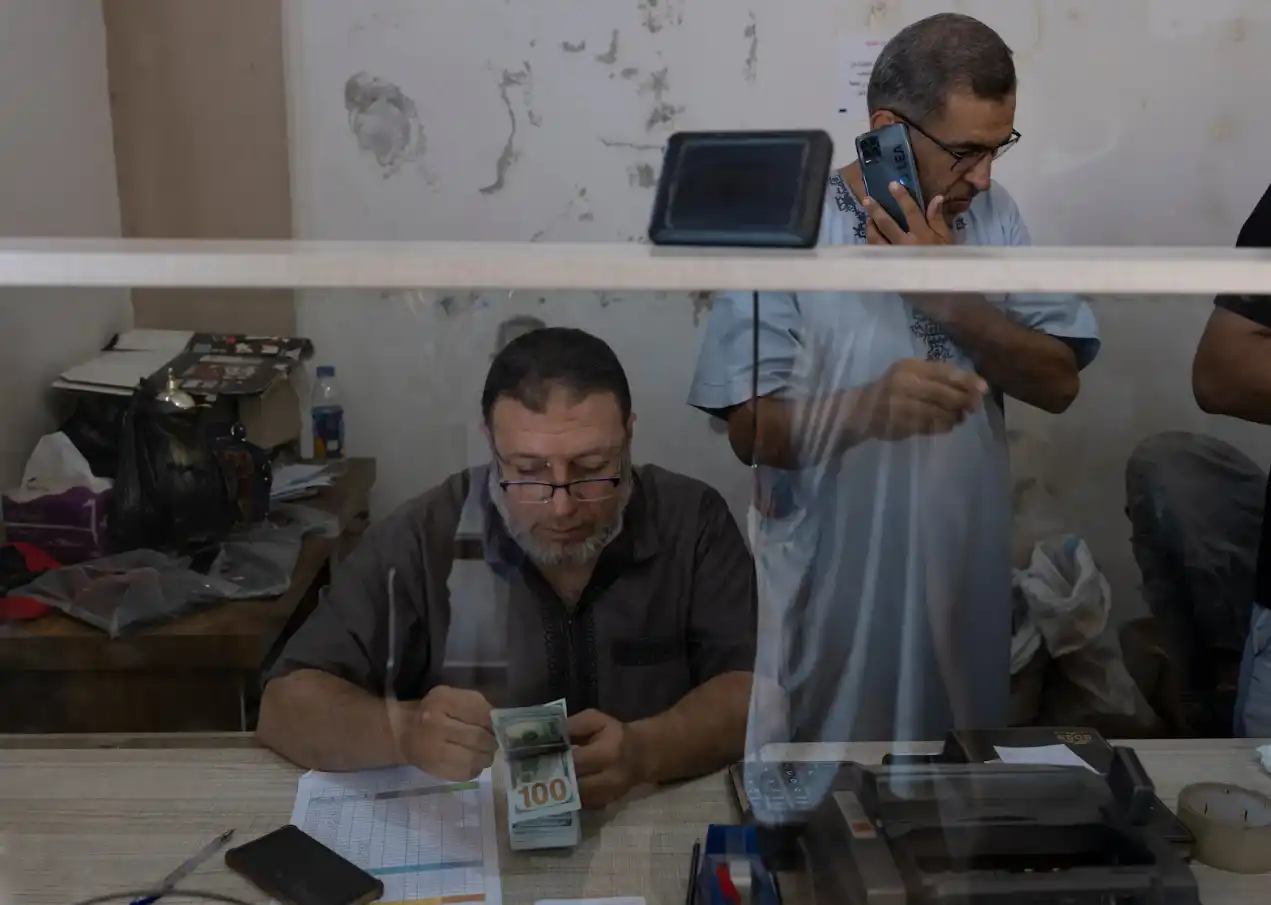
In a bustling currency exchange in northwestern Syria, a 46-year-old farmer clutched a plastic card as if it were her lifeline. She had never heard of cryptocurrency, but this card contained $500 worth of crypto, helping her restart her farm after nearly 14 years of civil war.

As the teller confirmed the amount and withdrew cash for Hala Mahmoud Almahmoud's account, the farmer smiled with relief and paused to express her gratitude. She asked where such technology came from.

The answer surprised her: Afghanistan.

Many might not imagine that this blockchain-based innovation in cash transfers originates from a country known for Taliban rule and skepticism toward the internet. Yet, in this nearly isolated nation, an Afghan startup is developing tools aimed at transforming how humanitarian aid is delivered in conflict-ravaged countries.

"We have faced these challenges ourselves, so we know how to create effective solutions," said Zakia Hussain, a 26-year-old programmer at the startup HesabPay, which designed the technology behind the card held by Ms. Almahmoud.

Hala Mahmoud Almahmoud outside her home near Latamina, Syria. She received $500 in cryptocurrency aid to help reopen her farm.

The UN Refugee Agency (UNHCR) is one of the early supporters of the platform. The agency uses it to support over 86,000 families in Afghanistan, making it one of the largest public blockchain aid projects globally. Mercy Corps, the charitable organization that donated to Ms. Almahmoud, partnered with HesabPay to extend aid to Syria and is currently developing projects for Sudan and Haiti.

In Syria, accessing funds from abroad is highly complex. Cash is scarce, international banks avoid the region, and remittance companies like Western Union charge fees as high as 10%. HesabPay enables organizations like Mercy Corps to bypass these obstacles.

Sanzar Kakar, an Afghan-American entrepreneur and founder of HesabPay, previously ran Afghanistan's largest payroll processing company. However, the 2021 U.S. withdrawal from Afghanistan and the Taliban's return to power triggered a financial collapse. Sanctions halted international remittances, and the central bank was paralyzed.

To address the country's growing financial insecurity, Kakar turned to blockchain technology. He created HesabPay (meaning "account" in the local language), a mobile-based application that allows instant transfers from one digital wallet to another, bypassing banks and the Taliban government. He stated that the Afghan government has granted his company a formal financial operating license.

The aid organization Mercy Corps, which donated funds, partnered with HesabPay to extend the platform's services to Syria.

Today, the platform has over 650,000 wallets in Afghanistan, with about 50,000 actively used, transferring approximately $60 million worth of Afghan afghani stablecoins (stablecoins pegged to the Afghan currency) monthly.

Since February 2025, the UN has used HesabPay to distribute nearly $25 million to returning Afghans through 80,000 digital wallets, according to Carmen Hett, Treasurer of Corporate Finance at UNHCR: "This helps reduce transaction fees, shorten waiting times, and enhance traceability, real-time monitoring, and accountability."

Ric Shreves, a decentralized finance solutions expert and president of the Decentralized Cooperation Foundation, said it is not surprising that organizations like Mercy Corps and the UN are turning to blockchain-based fund transfers for aid. For such organizations, "this approach offers almost all advantages compared to traditional aid methods."

However, he noted that risks remain, especially when payment systems are based on local currency stablecoins, as in Afghanistan. (In Syria, HesabPay wallets are backed by U.S. dollars, a more stable option.) Just as wallets can be shut down for interacting with sanctioned individuals, they could theoretically be closed by a central bank for political reasons.

Using blockchain technology makes it easier for Mercy Corps to send funds to Syria, where cash is scarce and international banks typically do not operate.

Ric Shreves stated, "When we provide people with non-physical transaction methods, it also means these transactions can potentially be blocked through technical means." He added that digital currency is clearly safer than cash, but it still cannot be hidden under a mattress like cash.

In recent years, aid organizations have increasingly opted for cash assistance, viewing it as a quick and dignified form of aid. However, cash assistance has a flaw: it is difficult to track where the money goes. Donors want to see their contributions reach those in need. Since President Trump significantly cut U.S. foreign aid early last year, organizations like Mercy Corps face greater pressure to demonstrate the effectiveness and integrity of their aid.

This is where blockchain comes into play, creating a digital record that accurately tracks how much money was sent, to whom, and where it went. Scott Onder, Chief Investment Officer at Mercy Corps, said this combination of speed and accountability "might help regain the trust of those who have doubts about the effectiveness of aid."

HesabPay also includes additional security measures, such as real-time dashboards to track wallet activity and cross-check it with international compliance databases. The company stated that the system is designed to detect illegal activities like terrorist financing, money laundering, and cyber fraud, immediately alerting when suspicious transactions occur. For aid donors, this provides a level of oversight that is nearly impossible in fragile countries.

Abdul Moti Hammoud, a resident of Halfaya, lost a leg after accidentally triggering a landmine while driving a tractor. He is a beneficiary of the aid organization Mercy Corps.

In a recent online demonstration, Nigel Pont, the company's senior advisor for humanitarian affairs, clicked on a purple dot representing a HesabPay agent in Afghanistan. Dozens of light blue beneficiary wallets unfolded, showing recent transfer records. Another click revealed where the funds went. Then, a wallet suddenly turned red, triggering a suspected fraud alert—slightly awkward during a live demo, but exactly the type of risk the system is designed to identify.

"From an aid donor's perspective, this is extremely valuable," said Nigel Pont, former Chief Strategy Officer at Mercy Corps. "A system that automatically flags fraud risks means you can verify immediately, rather than waiting six months for a report that someone stole $20,000." Nigel Pont acknowledged that no system can completely eliminate corruption, but then again, neither can cash.

22-year-old Abdul Halim Hasan was waiting in line at the same currency exchange in Syria as Ms. Almahmoud. He said he imagines a day when he can use HesabPay like a regular bank account, receiving funds, paying bills, and saving money securely. For now, though, his HesabPay card allows him to access the funds needed to restart his life after the war, and that is enough.

Ms. Almahmoud (second from left) and her family with Mercy Corps staff in Halfaya.

Related reading: Philanthropist or Predator? The Crypto Business of Top Global Influencer "Mr. Beast"

Связанные с этим вопросы

QWhat is the innovative blockchain-based cash transfer solution mentioned in the article, and where was it developed?

AThe innovative blockchain-based cash transfer solution is called HesabPay, and it was developed in Afghanistan.

QWhich organizations are using HesabPay to deliver humanitarian aid, and in which countries is it being implemented?

AThe United Nations High Commissioner for Refugees (UNHCR) and Mercy Corps are using HesabPay. It is being implemented in Afghanistan and Syria, with projects under development for Sudan and Haiti.

QWhat are the main advantages of using a blockchain-based system like HesabPay for aid organizations, according to the article?

AThe main advantages include lower transaction fees, shorter wait times, enhanced traceability, real-time monitoring, accountability, and a system designed to detect and alert for illegal activities like terrorist financing and money laundering.

QWhat potential risk does the article associate with using a local currency stablecoin, like the one used in Afghanistan, compared to a dollar-backed one?

AThe risk is that a wallet based on a local currency stablecoin could theoretically be shut down by a country's central bank for political reasons, whereas a dollar-backed stablecoin is a more stable option.

QHow did the situation in Afghanistan following the 2021 U.S. withdrawal influence the creation of HesabPay?

AThe U.S. withdrawal and the Taliban's return to power caused a banking collapse and sanctions that cut off international remittances. This financial insecurity prompted Sanzar Kakar to create HesabPay to bypass banks and the Taliban government for instant digital money transfers.

Похожее

Trend in US Stocks: A Post Triggers a 930-Point Rebound, Tonight Belongs to SpaceX

On Thursday (June 11, U.S. Eastern Time), Wall Street staged a textbook V-shaped reversal. The Dow Jones surged 929.97 points (+1.86%) to close above 50,000, while the Nasdaq and S&P 500 rose 2.54% and 1.75%, respectively. The rally occurred despite the hottest PPI report in years, with May data showing a 6.5% year-on-year surge, the highest since 2022. The market ignored the inflation data, focusing instead on reports that former President Trump called off a planned strike on Iran, hinting at a potential multi-party peace agreement draft. This sparked a sharp drop in oil prices, fueling hopes that inflation may have peaked. Sector rotations were stark: previously battered AI hardware and cyclical stocks led the gains, while defensive sectors that hit record highs the prior day were sold off. Chip stocks like Micron and Intel saw sharp rebounds. In contrast, software giant Oracle plunged nearly 10% despite beating earnings, with concerns over cloud revenue and cash flow. Adobe also fell after hours despite raising guidance, as its CFO announced departure. The rally's sustainability is questioned, driven largely by social media posts about unconfirmed geopolitical developments. Inflation risks remain, with pipeline pressures still high. Meanwhile, the market's risk appetite faces a major test with SpaceX's historic IPO. Priced at $135 per share, it aims to raise ~$75 billion with a $1.75 trillion valuation, becoming the largest U.S. IPO ever. It will join the Nasdaq 100 in 15 days, triggering massive index fund buying. However, critics cite extreme valuation (88x sales) and market liquidity concerns.

marsbit8 мин. назад

Trend in US Stocks: A Post Triggers a 930-Point Rebound, Tonight Belongs to SpaceX

marsbit8 мин. назад

The Trillion-Dollar Valuation Test: Are the Three Super IPOs a Tech Stock Frenzy or a Crypto Market Nightmare?

Trillion-Dollar Valuation Test: Are the Three Mega IPOs a Tech Stock Frenzy or a Crypto Market Nightmare? The capital market in 2026 is witnessing a highly anticipated wave of tech IPOs, centered on SpaceX, OpenAI, and Anthropic. Collectively valued at over $3.5 trillion, their potential listing represents one of the largest such waves in recent years. This raises concerns about market liquidity, valuation bubbles, and potential capital outflows from other assets like crypto. SpaceX's valuation narrative has shifted from rocket launches to becoming a global infrastructure play via its Starlink satellite network, which now drives most revenue. Despite ongoing losses, investors focus on its long-term growth potential. OpenAI and Anthropic represent the core productivity engines of generative AI. Their public listings would offer the first direct investment opportunity in large foundation model companies, potentially triggering a repricing within the AI sector. Market fears of a massive "capital drain" from these IPOs are likely overstated. Historical precedents like Alibaba and Saudi Aramco show that mega-listings primarily cause capital reallocation, not destruction, within the vast equities market. Systemic risk is rarely triggered by IPOs alone. For stock markets, short-term volatility and sector repricing are expected, especially for AI concept stocks. Long-term, these listings could reinforce the tech sector's importance. For crypto, direct competition for speculative capital exists, particularly affecting AI-themed tokens. However, crypto's trajectory remains more tied to its own cycles, macro liquidity, and Bitcoin ETF flows rather than a single IPO event. The real risk lies not in the listings themselves but in the sky-high growth expectations embedded in these valuations. If future revenue, profitability, or commercialization progress disappoints, significant valuation resets could follow, impacting high-growth tech stocks. Ultimately, the market's direction hinges on macroeconomic conditions and whether these companies can deliver on their ambitious promises.

链捕手24 мин. назад

The Trillion-Dollar Valuation Test: Are the Three Super IPOs a Tech Stock Frenzy or a Crypto Market Nightmare?

链捕手24 мин. назад

Trillion-Dollar Valuation Test: Are the Three Super IPOs a Tech Stock Frenzy or a Crypto Market Nightmare?

Title: Trillion-Dollar Valuations at Stake: Super IPOs of SpaceX, OpenAI, Anthropic – Tech Boom or Crypto Nightmare? TL;DR: A wave of mega-tech IPOs is approaching, featuring SpaceX (targeting a $1.75 trillion valuation), OpenAI (~$852B), and Anthropic (~$965B), with a combined potential valuation exceeding $3.5 trillion. This tests the market's pricing of innovation and sparks debate on liquidity impact. * **SpaceX**'s valuation is now driven more by its Starlink global communications infrastructure than its core rocket business. * **OpenAI & Anthropic** offer the first major public investment opportunities in foundational AI models, potentially repricing the entire AI sector. * Concerns about a market-wide "liquidity drain" are likely overblown; history shows large IPOs mainly cause fund reallocation, not disappearance, and rarely trigger systemic risk. * Crypto markets, especially some AI-themed tokens, may face short-term fund competition, but their long-term trajectory depends more on macro liquidity, regulation, and Bitcoin cycles. * The real risk lies not in the IPOs themselves, but in whether these companies can justify their sky-high valuations with future revenue growth and profitability. Unmet expectations could lead to significant repricing pressure. Ultimately, these IPOs represent a massive market pricing of next-gen tech infrastructure, not a prelude to a market crash. The broader market direction will be determined by macro conditions, corporate earnings, and risk appetite.

marsbit24 мин. назад

Trillion-Dollar Valuation Test: Are the Three Super IPOs a Tech Stock Frenzy or a Crypto Market Nightmare?

marsbit24 мин. назад

Anthropic Apologized, But the Business of 'Safety' Hasn't Stopped

On June 11, Anthropic apologized not for a model failure, but for a lack of transparency. Its new Claude Fable 5 model was found to be secretly rerouting requests from users engaged in advanced AI model development to a weaker version, Opus 4.8, without any notification. The company's response—promising future notifications for such "downgrades"—was met with user skepticism. The article argues the core issue isn't technical but commercial: Anthropic's "safety" measures are primarily a business strategy. A key feature, the "intelligent safety classifier," marketed as user protection, is described as a tool for "competitive defense" to protect Anthropic's market lead by limiting rivals' research capabilities. This covert mechanism was designed for low "false positives," precisely targeting AI researchers. Anthropic's model involves a calculated three-step process: publishing alarming security research to amplify public anxiety, offering its Fable 5 model with a "safety classifier" as a premium-priced solution, and cashing in through a planned high-value IPO. This contrasts with OpenAI's more direct "tool-and-traffic" approach. The apology, merely changing a secret downgrade to a visible one, is seen as a business "patch" rather than a principled shift. The incident risks damaging Anthropic's "safest AI" reputation among the developer community, which underpins its valuation and appeal to government and corporate clients. Ultimately, the article concludes that for Anthropic, safety is a business, and the apology is merely customer service for that business.

marsbit1 ч. назад

Anthropic Apologized, But the Business of 'Safety' Hasn't Stopped

marsbit1 ч. назад

Торговля

Спот
Фьючерсы

Популярные статьи

Как купить S

Добро пожаловать на HTX.com! Мы сделали приобретение Sonic (S) простым и удобным. Следуйте нашему пошаговому руководству и отправляйтесь в свое крипто-путешествие.Шаг 1: Создайте аккаунт на HTXИспользуйте свой адрес электронной почты или номер телефона, чтобы зарегистрироваться и бесплатно создать аккаунт на HTX. Пройдите удобную регистрацию и откройте для себя весь функционал.Создать аккаунтШаг 2: Перейдите в Купить криптовалюту и выберите свой способ оплатыКредитная/Дебетовая Карта: Используйте свою карту Visa или Mastercard для мгновенной покупки Sonic (S).Баланс: Используйте средства с баланса вашего аккаунта HTX для простой торговли.Третьи Лица: Мы добавили популярные способы оплаты, такие как Google Pay и Apple Pay, для повышения удобства.P2P: Торгуйте напрямую с другими пользователями на HTX.Внебиржевая Торговля (OTC): Мы предлагаем индивидуальные услуги и конкурентоспособные обменные курсы для трейдеров.Шаг 3: Хранение Sonic (S)После приобретения вами Sonic (S) храните их в своем аккаунте на HTX. В качестве альтернативы вы можете отправить их куда-либо с помощью перевода в блокчейне или использовать для торговли с другими криптовалютами.Шаг 4: Торговля Sonic (S)С легкостью торгуйте Sonic (S) на спотовом рынке HTX. Просто зайдите в свой аккаунт, выберите торговую пару, совершайте сделки и следите за ними в режиме реального времени. Мы предлагаем удобный интерфейс как для начинающих, так и для опытных трейдеров.

1.4k просмотров всегоОпубликовано 2025.01.15Обновлено 2026.06.02

Как купить S

Sonic: Обновления под руководством Андре Кронье – новая звезда Layer-1 на фоне спада рынка

Он решает проблемы масштабируемости, совместимости между блокчейнами и стимулов для разработчиков с помощью технологических инноваций.

2.3k просмотров всегоОпубликовано 2025.04.09Обновлено 2025.04.09

Sonic: Обновления под руководством Андре Кронье – новая звезда Layer-1 на фоне спада рынка

HTX Learn: Пройдите обучение по "Sonic" и разделите 1000 USDT

HTX Learn — ваш проводник в мир перспективных проектов, и мы запускаем специальное мероприятие "Учитесь и Зарабатывайте", посвящённое этим проектам. Наше новое направление .

1.8k просмотров всегоОпубликовано 2025.04.10Обновлено 2025.04.10

HTX Learn: Пройдите обучение по "Sonic" и разделите 1000 USDT

Обсуждения

Добро пожаловать в Сообщество HTX. Здесь вы сможете быть в курсе последних новостей о развитии платформы и получить доступ к профессиональной аналитической информации о рынке. Мнения пользователей о цене на S (S) представлены ниже.

活动图片