Автор: Клод, Deep Tide TechFlow
Введение от Deep Tide: Независимый майнер с хешрейтом всего 70 TH/s, используя соло-режим CKpool, успешно добыл блок биткоина 944,306, в одиночку получив полную награду в размере 3,128 BTC (примерно 222 тысячи долларов США). Этот хешрейт составляет всего 0,000007% от общей сети, и теоретически в среднем на добычу одного блока ушло бы 300 лет.
Независимый майнер биткоина только что совершил подвиг с точки зрения теории вероятностей.
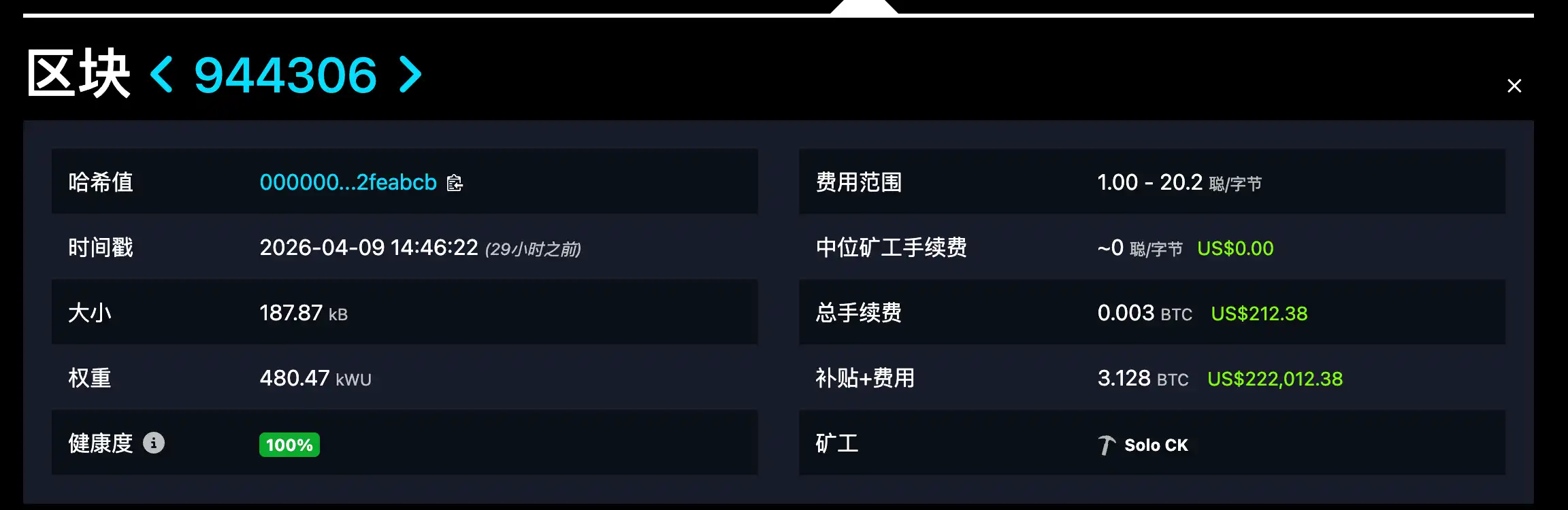
9 апреля майнинговая установка с хешрейтом около 70 TH/s через сервис соло-майнинга CKpool успешно решила блок биткоина 944,306, получив полную награду за блок в размере 3,128 BTC, что по тогдашнему курсу составляло около 222 тысяч долларов США. Из них 3,125 BTC — это субсидия за блок, а 0,003 BTC — комиссия за транзакции.
70 TH/s примерно эквивалентны майнеру Bitmain Antminer S17+ 2019 года выпуска. По сравнению с текущим общим хешрейтом сети биткоина около 1,02 ZH/s (то есть 1 миллиард TH/s), хешрейт этой установки составляет всего 0,000007%.
Вероятность одна стотысячная в день, теоретически раз в 300 лет
Разработчик CKpool Con Kolivas подтвердил это событие на платформе X, указав, что вероятность добычи блока майнером такого уровня хешрейта составляет примерно одну стотысячную в день, что в пересчете на математическое ожидание равно примерно одному разу в 300 лет.
CKpool — это сервис пула для майнинга, который позволяет майнерам работать в соло-режиме. В отличие от традиционных пулов, которые объединяют хешрейт и распределяют награды пропорционально, в соло-режиме майнер самостоятельно несет крайне низкую вероятность успеха, но в случае удачи оставляет себе полную награду за блок (за вычетом 2% комиссии платформы). Майнерам не нужно самостоятельно поддерживать полный узел биткоина, достаточно направить свою установку на серверы CKpool.
Это 313-й соло-блок, добытый с момента запуска CKpool в 2014 году.
Второй джекпот за десять дней, маленькие майнеры продолжают удивлять
Это не единственный неожиданный случай соло-майнинга в последнее время. Всего около недели назад другой майнер CKpool добыл блок 943,411, получив награду около 210 тысяч долларов. Хешрейт того майнера был выше, но все равно небольшим, с ежедневной вероятностью успеха примерно одна двадцать восемь тысячная.
Два джекпота подряд за десять дней — это редкое статистическое скопление событий, но оно не меняет базовых принципов. В настоящее время майнинг биткоина доминируют крупные пулы. Согласно открытым данным, Foundry USA, AntPool и ViaBTC вместе контролируют более 65% хешрейта сети. Операционные хешрейты публичных майнинговых компаний, таких как Bitdeer и MARA Holdings, составляют 71 EH/s и 61,7 EH/s соответственно, что на шесть порядков больше, чем 70 TH/s.
Для независимого майнера соло-майнинг по сути является лотереей: ежедневные расходы на электроэнергию составляют всего несколько долларов, но выигрыш превышает 220 тысяч долларов. Математическое ожидание отрицательное, но асимметричная структура выплат по-прежнему привлекает ряд энтузиастов майнинга к постоянному участию.





















