CBDC Ban Stalls Five Months After the House Passed Anti-Surveillance Act

ccn.comОпубликовано 2025-12-10Обновлено 2025-12-10

Введение

Key Takeaways: Despite unanimous Republican opposition to central bank digital currencies (CBDCs) in Congress, efforts to ban them have stalled. Five months after the House passed the Anti-CBDC Surveillance State Act, the legislation has not progressed further. Republican leaders, including Speaker Mike Johnson, reportedly promised to include anti-CBDC language in the National Defense Authorization Act (NDAA) but failed to do so. Lawmakers like Rep. Keith Self and Rep. Marjorie Taylor Greene have expressed frustration with the party's inaction, citing broken promises and a lack of priority for the issue amid other legislative conflicts and the government shutdown. The GOP leadership has missed multiple opportunities to advance the ban, leaving the bill's future uncertain.

Key Takeaways
  • On the surface, Republicans in Congress appear universally opposed to central bank digital currencies.
  • However, efforts to ban CBDCs have stalled.
  • The GOP leadership has passed over several opportunities to pass anti-CBDC legislation.

Five months after the House of Representatives passed the Anti-CBDC Surveillance State Act, Republican efforts to ban central bank digital currencies (CBDCs) in the U.S. haven’t progressed any further.

The anti-CBDC bill was initially hailed as a victory in the battle against financial surveillance. However, despite having multiple chances to seal the deal, lawmakers have failed to deliver on the legislation’s promise.

New Trending Crypto Wallet Offers
Sponsored
Disclosure
We sometimes use affiliate links in our content, when clicking on those we might receive a commission at no extra cost to you. By using this website you agree to our terms and conditions and privacy policy.

Tangem

promotions
Trusted & Secure
Coins
111
Claim Offer

BitBox

promotions
Trusted, Secure & Crypto Friendly
Coins
Claim Offer

Blockstream

promotions
Trusted, Secure & Crypto Friendly
Coins
Claim Offer

What Happened to the Anti-CBDC Bill?

With most Republicans united in their opposition to CBDCs, when the House passed a bill that would prohibit the Federal Reserve from issuing its own digital currency in July, the stage seemed to be set for a swift ban.

However, few Senators have championed the cause.

Between partisan clashes over spending, healthcare, and crypto market structure legislation, not to mention the longest government shutdown in U.S. history, banning CBDCs doesn’t seem to be a priority for Congress.

Anti-CBDC Lawmakers Betrayed by GOP Leadership

In a recent interview , Rep. Keith Self said Republican leaders had promised to include anti-CBDC language in the National Defense Authorization Act (NDAA).

This spending bill sets the annual U.S. defense budget.

But when the must-pass bill’s text was published on Sunday, Dec. 7, the promised ban was nowhere to be seen.

Calling out Speaker Mike Johnson’s apparent betrayal, Self filed an amendment to the NDAA on Tuesday, seeking to secure anti-CBDC language ahead of an expected vote on Wednesday.

However, he wasn’t optimistic about the amendment’s chances of being included. “I would be very surprised” if Congress manages to finalize a CBDC ban in the near term, Self said.

Voicing her dissatisfaction with the party’s top brass, Rep. Marjorie Taylor Greene also condemned the Speaker for backtracking on anti-CBDC commitments.

“I voted NO on the GENIUS Act because it contained a back door to a Central Bank Digital Currency,” she stated on Tuesday.

Back then, Johnson corralled conservatives into supporting the stablecoin legislation by promising to include a provision banning CBDCs in the NDAA, Greene claimed,

“As usual, he didn’t keep his promise,” she asserted.

Top Trending Crypto Articles
  • Best Exchanges Check Out Our Recommended Exchanges Here
  • Buy Crypto Fast How To Buy Crypto with a Credit Card Now
  • Safe Crypto Gambling See Our Picks for the Best Crypto Gambling Sites

Похожее

USDC Begins Nested Issuance, Coinbase Launches Custom Stablecoin Branding Service

Coinbase has launched its "Custom Stablecoins" platform, enabling businesses to offer branded stablecoins. The first client is Flipcash, a social payments app, which has introduced USDF. USDF is a Solana-based stablecoin, pegged 1:1 to USDC, and is designed to serve as a stable pricing and settlement unit for Flipcash's user-created community currencies. This move shifts the focus of stablecoins from being standalone assets or investment products to becoming embedded payment and settlement components within broader applications. For businesses like Flipcash, the core need is not to become a stablecoin issuer, but to integrate stable, reliable digital cash functionality—handling pricing, payments, and settlements—without managing the complex underlying infrastructure of issuance, reserves, on-chain contracts, fiat on-ramps, and compliance. Coinbase's platform provides this infrastructure as a service, positioning the exchange as a stablecoin infrastructure provider. While USDC remains the foundational reserve asset, the branded token (e.g., USDF) offers applications a tailored, user-facing financial tool. This development highlights a potential path for stablecoins to become ubiquitous backend utilities in social, gaming, and e-commerce applications, though it also brings significant regulatory and operational complexities associated with handling real user funds.

链捕手40 мин. назад

USDC Begins Nested Issuance, Coinbase Launches Custom Stablecoin Branding Service

链捕手40 мин. назад

Detained for 37 Days: The First Wave of People Who Got Rich from 'AI Gateways' Are Starting to Go to Jail

A prominent AI proxy service operator was reportedly detained for 37 days and is now on bail pending trial, highlighting the legal risks in China's booming but unregulated AI intermediary market. These services act as "AI scalpers," providing domestic users with access to restricted overseas models (like OpenAI, Claude) by bundling APIs, handling payments, and bypassing network blocks, all for a fee. Their controversial profitability stems from practices like bulk-registering accounts to resell free credits, exploiting refund policies, overcharging for tokens, substituting cheaper models, and illegally selling user conversation data. Major figures, including cryptocurrency entrepreneurs, are now entering this space. Legally, these operations face severe risks. Their core model often involves unauthorized API access and operating without required telecom licenses, potentially constituting illegal business operations. They fail to meet data security obligations for the vast amounts of user data they process, risking charges for failing to fulfill network security duties. Crucially, the unauthorized collection and sale of user data, which can include personal and commercial secrets, easily meets the threshold for the crime of infringing on personal information. The case underscores a critical juncture for the AI industry. While proxies lower access barriers, they expose user data to unsecured middlemen and undermine the business models of AI developers, forcing them to divert resources to security and distorting market value perceptions. The article argues that the industry's sustainable future depends on building trust, protecting data, and fostering compliant competition, moving away from its current "wild growth" phase.

marsbit1 ч. назад

Detained for 37 Days: The First Wave of People Who Got Rich from 'AI Gateways' Are Starting to Go to Jail

marsbit1 ч. назад

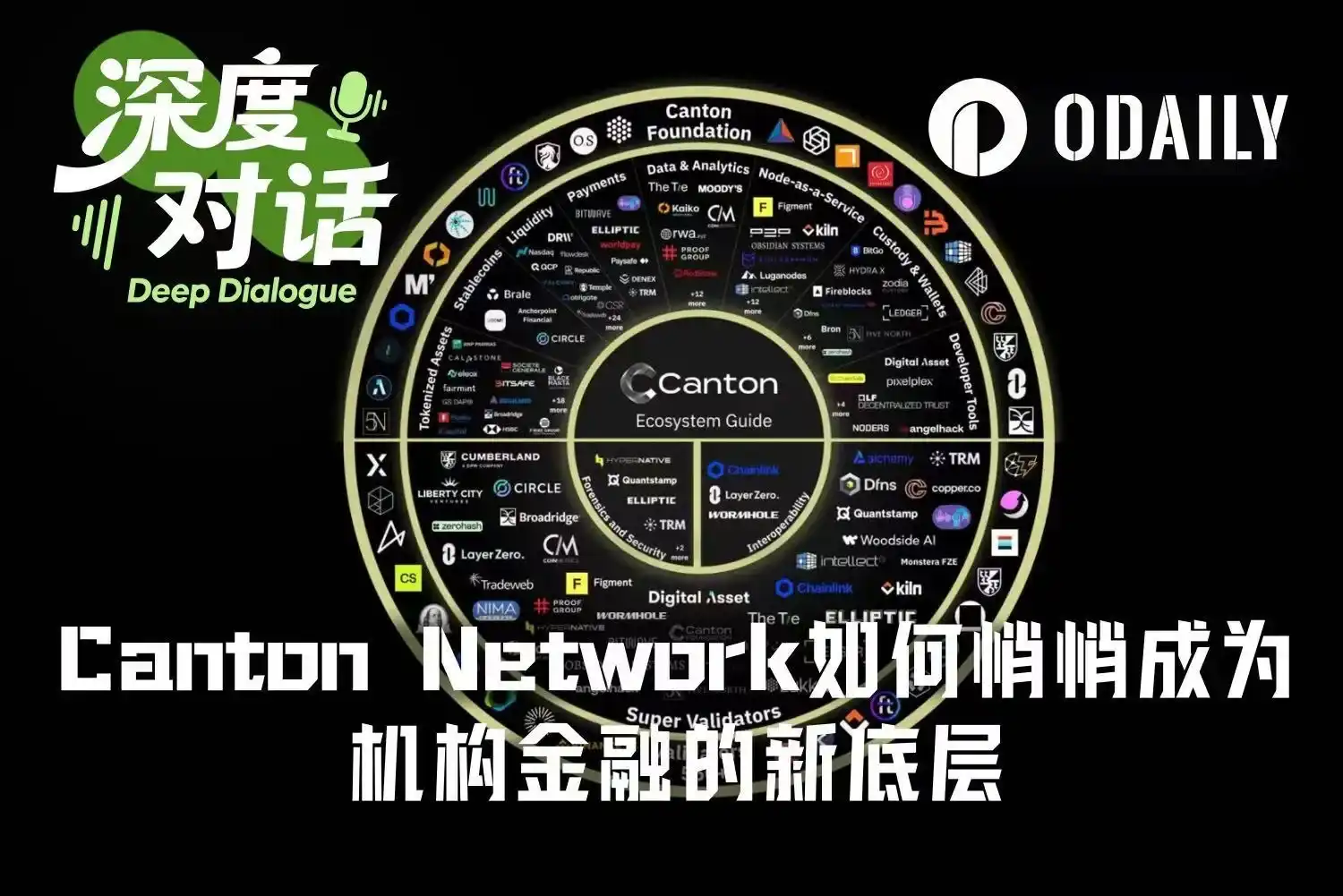
Putting Markets On-Chain: Canton Network Quietly Becomes the New Backbone of Institutional Finance

**Title: Letting the Market Itself Go On-Chain: Canton Network Quietly Becomes the New Backbone for Institutional Finance** **Summary:** The Canton Network, a blockchain platform designed for institutional finance, is gaining significant traction. A key sign of its maturity was Visa's recent entry as a super-validator, a proposal approved in just three days—highlighting prior, extensive collaboration between traditional finance and crypto. Unlike public chains like Ethereum that prioritize transparency and asset onboarding, Canton focuses on enabling confidential, compliant business operations for regulated institutions. Its core design features built-in **data visibility control**, meaning transaction details are only shared between direct counterparties. This privacy is fundamental, allowing competing institutions (like banks Goldman Sachs, JPMorgan, and BNP Paribas, all validators) to interact on the same network without exposing sensitive positions or strategies. Developed by Wall Street veterans at Digital Asset, Canton has taken a slow, deliberate approach to onboard real financial activity. It now handles over **$9 trillion monthly** in transaction volume, primarily from real-world institutional use cases like **tokenized repo agreements**, Treasury settlements, and collateral mobility. Major live applications include **JPM Coin** for institutional payments and **DTCC's tokenized U.S. Treasuries** project. Canton's native token, **CC**, is framed as a "network utility asset" with zero pre-mine or VC allocations. Its value is intended to be driven by the volume of real financial activity on the network. Looking ahead, Canton aims to become the invisible foundational layer for global finance—enabling atomic settlement (where payment and asset delivery occur simultaneously), 24/7 capital flows, and the native issuance and settlement of various asset classes, from corporate bonds to potentially equities. The main challenges are no longer technical but involve navigating fragmented global regulations and integrating with legacy financial systems.

marsbit1 ч. назад

Putting Markets On-Chain: Canton Network Quietly Becomes the New Backbone of Institutional Finance

marsbit1 ч. назад

Торговля

Спот
Фьючерсы

Популярные статьи

Как купить BAN

Добро пожаловать на HTX.com! Мы сделали приобретение Comedian (BAN) простым и удобным. Следуйте нашему пошаговому руководству и отправляйтесь в свое крипто-путешествие.Шаг 1: Создайте аккаунт на HTXИспользуйте свой адрес электронной почты или номер телефона, чтобы зарегистрироваться и бесплатно создать аккаунт на HTX. Пройдите удобную регистрацию и откройте для себя весь функционал.Создать аккаунтШаг 2: Перейдите в Купить криптовалюту и выберите свой способ оплатыКредитная/Дебетовая Карта: Используйте свою карту Visa или Mastercard для мгновенной покупки Comedian (BAN).Баланс: Используйте средства с баланса вашего аккаунта HTX для простой торговли.Третьи Лица: Мы добавили популярные способы оплаты, такие как Google Pay и Apple Pay, для повышения удобства.P2P: Торгуйте напрямую с другими пользователями на HTX.Внебиржевая Торговля (OTC): Мы предлагаем индивидуальные услуги и конкурентоспособные обменные курсы для трейдеров.Шаг 3: Хранение Comedian (BAN)После приобретения вами Comedian (BAN) храните их в своем аккаунте на HTX. В качестве альтернативы вы можете отправить их куда-либо с помощью перевода в блокчейне или использовать для торговли с другими криптовалютами.Шаг 4: Торговля Comedian (BAN)С легкостью торгуйте Comedian (BAN) на спотовом рынке HTX. Просто зайдите в свой аккаунт, выберите торговую пару, совершайте сделки и следите за ними в режиме реального времени. Мы предлагаем удобный интерфейс как для начинающих, так и для опытных трейдеров.

664 просмотров всегоОпубликовано 2024.10.27Обновлено 2025.03.21

Как купить BAN

Обсуждения

Добро пожаловать в Сообщество HTX. Здесь вы сможете быть в курсе последних новостей о развитии платформы и получить доступ к профессиональной аналитической информации о рынке. Мнения пользователей о цене на BAN (BAN) представлены ниже.

活动图片