Over 100 Illegal Mining Farms Found in the North Caucasus Since the Beginning of the Year

RBK-cryptoОпубликовано 2025-12-11Обновлено 2025-12-11

Введение

Since the beginning of 2025, over 100 illegal cryptocurrency mining farms have been discovered in Russia's North Caucasus Federal District, according to "Rosseti Severny Kavkaz." The total financial damage from their operations is estimated at over 656 million rubles. Although cryptocurrency mining is officially banned in the region until Spring 2031, many illegal miners continue to operate by stealing electricity, either bypassing meters or connecting directly to the grid without contracts. The breakdown of discovered farms by region is as follows: 79 in Dagestan (causing 89.5 million rubles in damage), 14 in Ingushetia (455.5 million rubles), 5 in Karachay-Cherkessia (104.1 million rubles), 2 in Stavropol Krai (1 million rubles), 2 in North Ossetia (390,000 rubles), and 1 in Kabardino-Balkaria (5.8 million rubles). Dagestan leads in the number of cases, which the energy company attributes to individuals attempting to generate profit without using their own funds for electricity. In response to the widespread issue, Russian Deputy Prime Minister Alexander Novak announced on December 8th that the government plans to establish both administrative and criminal liability for violations related to cryptocurrency mining.

More than 100 illegal mining farms have been identified since the beginning of 2025 in the North Caucasus Federal District, according to the company "Rosseti Severny Kavkaz" (Russian Grids of the North Caucasus) as cited by TASS. The total amount of damage exceeded 656 million rubles.

Cryptocurrency mining is prohibited in the republics of the North Caucasus until the spring of 2031. However, many illegal miners remain in the regions, stealing electricity by bypassing meters or connecting to the grid directly without contracts.

5 underground farms were discovered in Karachay-Cherkessia (damage of 104.1 million rubles), two in the Stavropol Territory (1 million rubles) and North Ossetia (390 thousand rubles), and one more in Kabardino-Balkaria (5.8 million rubles).

The most significant damage to energy companies was caused by 14 farms in Ingushetia — 455.5 million rubles. The largest number of illegal miners was identified in Dagestan. There, 79 farms were found, which caused damage amounting to 89.5 million rubles.

"Dagestan still leads in the number of illegal mining cases. This is related to attempts by certain citizens to profit without using their own funds," the energy company reported.

On December 8, at a meeting of the Council for Strategic Development and National Projects, Deputy Prime Minister Alexander Novak stated that the government plans to establish both administrative and criminal liability for violations related to cryptocurrency mining. Lawyers told "RBC-Crypto" where the line between administrative and criminal offenses in the field of mining might be drawn.

In Belarus, reasons for blocking crypto exchange websites have been named. What is known.

Bitcoin mining difficulty has fallen for the third time in a row. What this indicates.

The Central Bank has proposed limiting ordinary Russians' right to purchase cryptocurrency.

Связанные с этим вопросы

QHow many illegal mining farms were discovered in the North Caucasus since the beginning of 2025?

AMore than 100 illegal mining farms were discovered.

QWhat is the total amount of financial damage caused by these illegal mining operations?

AThe total financial damage amounted to more than 656 million rubles.

QUntil when is cryptocurrency mining banned in the republics of the North Caucasus?

ACryptocurrency mining is banned until the spring of 2031.

QWhich Russian region suffered the most financial damage from these illegal mining farms?

AIngushetia suffered the most financial damage, with 14 farms causing 455.5 million rubles in damage.

QWhat did the Russian government plan to establish regarding cryptocurrency mining violations, as stated by Deputy Prime Minister Alexander Novak?

AThe government plans to establish both administrative and criminal liability for violations related to cryptocurrency mining.

Похожее

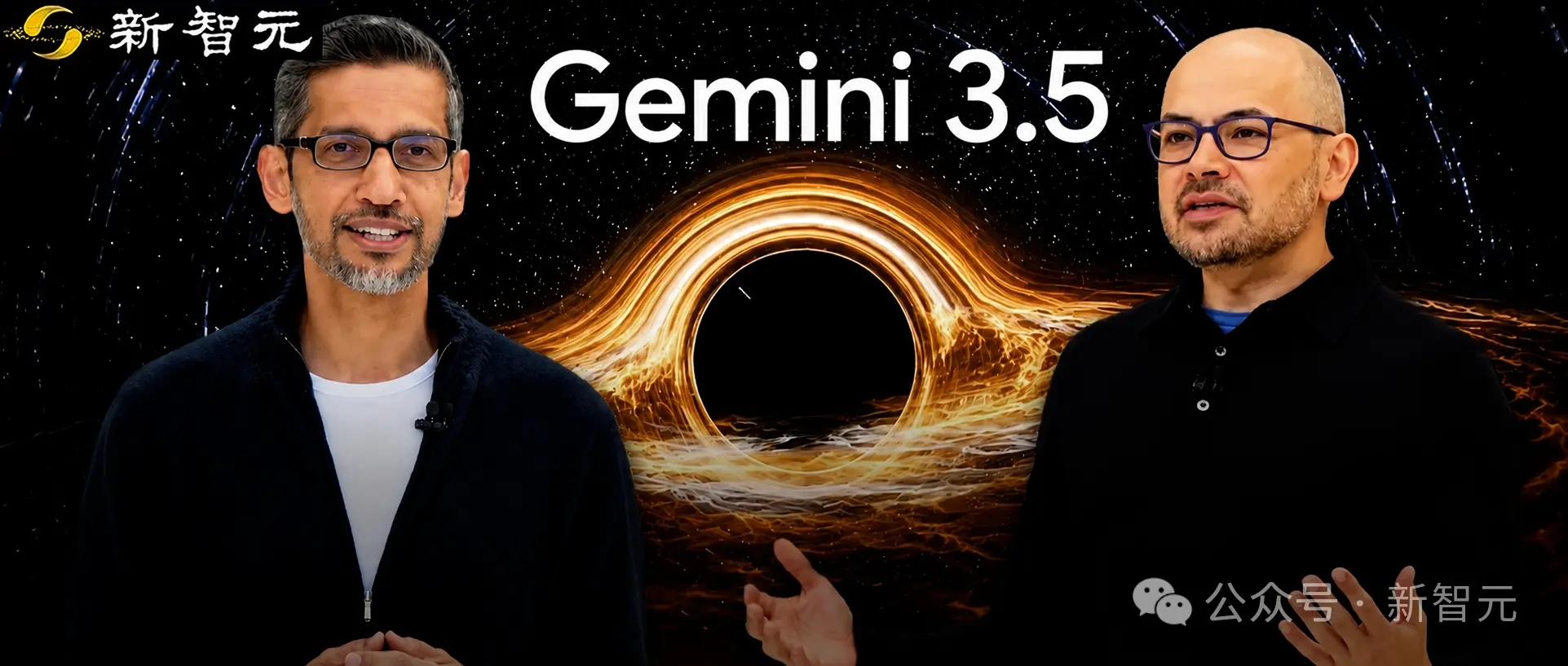
Gemini 3.5 is Here! Tonight, Google Overtakes Google

Gemini 3.5 Launches: Google Renders Itself Obsolete at I/O 2026 At Google I/O 2026, the company unveiled a transformative suite of AI advancements headlined by three major releases. First, **Gemini Omni**, a true "omnimodal" model, can generate high-quality, coherent videos from any combination of text, image, audio, or video inputs, maintaining character consistency and physical logic across iterative edits. Second, the new flagship **Gemini 3.5 Flash** was introduced, decisively outperforming the previous Gemini 3.1 Pro on key benchmarks for coding, agent tasks, and multimodal reasoning. It is also significantly faster than competitors. This model powers the upgraded **Antigravity 2.0**, an independent Agent development platform that demonstrated the ability to orchestrate 93 sub-agents to build a functional operating system from scratch in just 12 hours. Third, **Gemini Spark** debuted as a personal, always-on AI agent. Running 24/7 in the cloud and integrated with Google Workspace, it can autonomously execute complex multi-step tasks like drafting emails, managing schedules, and planning events by accessing apps like Gmail, Docs, and Sheets. These releases collectively mark a significant leap, moving AI beyond simple generation towards autonomous understanding, decision-making, and task execution, signaling rapid progress on the path toward more advanced AI systems.

链捕手37 мин. назад

Gemini 3.5 is Here! Tonight, Google Overtakes Google

链捕手37 мин. назад

Cryptocurrency Asset Recovery: A Lucrative, Low-Profile Business

Summary: The article explores the growing business of cryptocurrency asset recovery, highlighting it as a quiet but profitable niche. While many assume recovery involves dramatic hacking or theft cases, the most common issues are everyday operational errors: sending crypto to the wrong blockchain network, forgetting transaction memos/Tags, hardware wallet failures, incorrect seed phrase backups, and frozen centralized exchange accounts. As cryptocurrency adoption expands to less technical users, the volume of such costly mistakes increases. This creates a genuine, recurring demand for professional recovery services. The article notes a paradox: while the technology emphasizes user-controlled assets, the complexity often necessitates expert intermediaries, similar to traditional financial services. However, the field is fraught with risks, including middlemen and secondary scammers who prey on desperate users. Truly professional teams avoid promising guaranteed results, instead focusing on diagnosing the specific problem—whether it's a technical wallet issue, an exchange compliance matter, or an unsolvable private key loss. The author concludes by noting the professionalization of this market and announces a partnership with a specialized recovery team, offering readers a preliminary assessment for issues like wrong-chain deposits, lost access, or frozen accounts, while emphasizing ethical practices and realistic expectations.

marsbit44 мин. назад

Cryptocurrency Asset Recovery: A Lucrative, Low-Profile Business

marsbit44 мин. назад

Cryptocurrency Asset Recovery: A Lucrative, Under-the-Radar Business

Cryptocurrency Asset Recovery: A Lucrative, Low-Key Business The article discusses the burgeoning business of cryptocurrency asset recovery, driven by common yet often crippling user errors rather than sensational hacking incidents. Key problem areas include selecting the wrong blockchain for a deposit, omitting required memos/tags when sending to exchanges, physical wallet device failures, errors in backing up or modifying seed phrases, and issues with frozen accounts or withdrawals on centralized exchanges. As cryptocurrency adoption grows among mainstream users—including retail investors and businesses—these operational mistakes increase. The decentralized nature of crypto places full responsibility for asset security on users, who may lack the technical expertise to navigate complex chains, wallets, and protocols. Even centralized exchanges, while offering some support, often present users with cumbersome, non-intuitive processes for resolving issues. This creates a persistent and growing demand for professional recovery services. However, the field is rife with risks, including middlemen without real expertise and outright scammers who promise guaranteed recovery, request sensitive information like private keys, or charge advance "fees." Legitimate service providers typically avoid absolute guarantees, as recovery feasibility depends heavily on the specific technical or administrative circumstances of each case. The business is evolving from an informal market into a professional one requiring a combination of technical analysis, exchange/platform communication, and legal/compliance knowledge. The article concludes by noting the author's partnership with a professional recovery team, offering preliminary assessments for issues like incorrect deposits, wallet access problems, or exchange account freezes, with an emphasis on realistic evaluation over promises.

链捕手50 мин. назад

Cryptocurrency Asset Recovery: A Lucrative, Under-the-Radar Business

链捕手50 мин. назад

YC Partner: How to Build a Self-Evolving AI-Native Company

YC Partner Tom Blomfield argues that the future lies in building AI-native companies designed as self-evolving systems, not just applying AI to traditional, hierarchical "Roman legion" structures. The core idea is to extract and codify all organizational knowledge—scattered across emails, Slack, documents, and human minds—into a central, AI-readable "company brain." This enables the creation of recursive AI loops that sense changes (from emails, support tickets, data), make decisions, execute via tools, and learn from feedback, all with minimal human intervention. YC exemplifies this with an agent that monitors failed queries, autonomously diagnoses the issue (e.g., needing a new database or index), writes code, submits it for review, and deploys fixes—optimizing the company while founders sleep. This shift redefines organizational structure: the bottleneck becomes token usage and context quality, not headcount. Middle management for coordination is largely obsolete. The critical human roles are individual contributors (ICs) and those handling high-risk, real-world judgments at the system's edge. Key steps include recording all organizational activity for AI, creating self-improving artifacts (like an AI-generated, living handbook), and treating internal software as temporary and disposable, while preserving valuable business context and data. The fundamental question for founders is whether to build their company as this new type of intelligent, self-optimizing system from the start.

marsbit56 мин. назад

YC Partner: How to Build a Self-Evolving AI-Native Company

marsbit56 мин. назад

Торговля

Спот
Фьючерсы
活动图片