Wall Street Takes Over Bitcoin and Stablecoins, But Where Are the Real Profit Opportunities for Retail Investors?

marsbitОпубликовано 2026-05-27Обновлено 2026-05-27

Введение

Wall Street is taking over Bitcoin and stablecoins, but where can retail investors really make money now? The common narrative is that Wall Street's dominance via ETFs and regulated stablecoins has structurally ended the era of easy 100x returns from altcoins. While this is true for Bitcoin and stablecoins, which are becoming traditional financial products, it's only half the story. Other crypto sectors are failing for their own reasons. GameFi is largely dead, with 93% of projects failed. NFTs are at multi-year lows with most collections losing all value. Memecoins persist but overwhelmingly benefit insiders and whales at the expense of late retail buyers. These sectors aren't being consumed by TradFi; they've exhausted their growth narratives. The real opportunities for retail in the next 6-12 months lie elsewhere: 1. **Prediction Markets:** Platforms like Polymarket have seen explosive growth (21x in a year) with a genuine, active retail user base. The utility of forecasting events provides sustainable demand beyond mere speculation. 2. **DeFi Yield:** While the era of 1000% APY farms is over, sustainable yields of 4-8% are available through liquid staking, regulated stablecoin platforms, and RWA lending. 3. **Select Altcoins:** If Bitcoin breaks its all-time high, a selective altcoin season could emerge. The favorable bets would be on ETH, assets within the Base and Solana ecosystems with real users, and asymmetric opportunities in AI-crypto and DePIN presales. Th...

Author: stacy_muur

Compiled by: Baihua Blockchain
This is a story currently circulating about cryptocurrency, and almost every analyst says the same thing: Wall Street is taking over, ETFs and stablecoins are attracting funds into traditional finance, and the era of "easy money" where buying any altcoin could yield 10-100x returns has structurally ended.

But this story only captures half of what's actually happening.

Bitcoin and stablecoins are indeed becoming Wall Street products, but the rest of the cryptocurrency space is not being swallowed up along with them. Some of it is simply self-destructing, while others, quietly, are becoming the best places for retail investors to genuinely make money in the next six to twelve months. The real problem is that most people are looking at the wrong market sectors when trying to find their footing.

Bitcoin and Stablecoins Now Belong to Wall Street

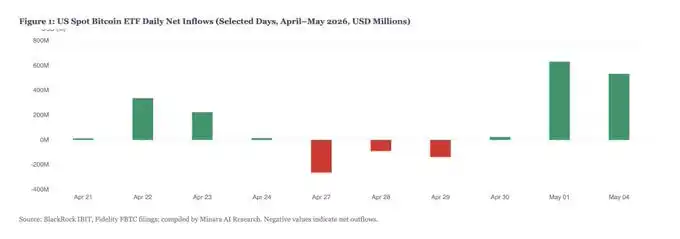
Bitcoin ETFs have attracted $59 billion since their launch. Institutions are buying more Bitcoin daily than is being mined. MicroStrategy alone holds over 800,000 BTC.

Stablecoins are even more consolidated. Their supply reached $3.15 trillion in Q1. They now account for 75% of all crypto trading volume. Once the CLARITY Act passes, regulated banks will issue them directly.

This is real. This is permanent. And this is absolutely no longer where retail investors can earn 10x or 100x returns. Buying Bitcoin through your brokerage account gives you clean, stable exposure. The kind of crazy, outsized profits that defined past cycles—those airdrops, presales, and liquidity mining—don't exist inside this TradFi shell.
GameFi, NFTs, and Memecoins are Self-Destructing

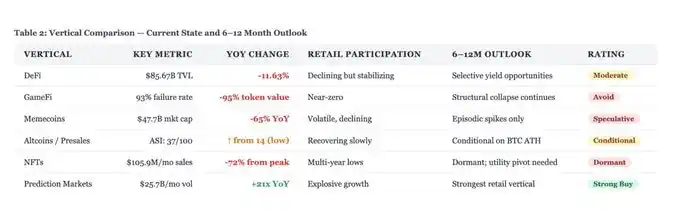
GameFi is essentially over. Roughly 93% of projects have failed, and Axie Infinity, the poster child of the 2021 bull run, has seen its daily active users collapse from a peak of 2.7 million to about 5,500 today. GameFi didn't lose to Wall Street. It lost to its own mechanism design. "Play-to-earn" only works as long as there is a constant influx of new users to pay the earnings of earlier users, and the moment growth stops, the entire token economy implodes.

NFTs are at multi-year lows. Monthly sales in March 2026 fell to $105.9 million, the lowest reading for that market since April 2021. While a handful of blue-chip collections still trade, the vast majority of NFTs have lost almost all value and are essentially illiquid. The narratives that were supposed to drive long-term adoption—NFTs as digital identity and NFTs as in-game assets—never truly materialized at scale.

Memecoins refuse to die completely, but the math is now stacked against retail. This sector still produces short, sharp rallies. Its total market cap surged 23% in a single week earlier this year. But the real question is who is trading them. On-chain data shows that KOLs and whales account for the vast majority of volume, meaning the average retail investor buying late into a viral pump is basically giving their money to early insiders.

None of these three categories are being eaten by anything. They've simply run out of new users to attract, and the narratives that fueled their 2021 explosions have lost their power. The TradFi integration is a fundamentally different problem that requires a fundamentally different answer.
Where Retail Can Actually Win Right Now

1. Prediction Markets

Prediction markets have built the strongest retail user base in crypto. Polymarket's monthly trading volume exploded from $1.2 billion in 2025 to $25.7 billion in March 2026. That's a 21x growth in a year. It has over 1.29 million active wallets. Most users trade under $10,000, meaning it's genuinely retail, not disguised institutions.

People are also participating more deeply. The average active days per user increased from 2.5 days to 9.9 days. They aren't just hitting and quitting.

Why does this work when memecoins are flaming out? Because prediction markets have utility beyond gambling. People want to know what happens next in the world. The data itself has value beyond trading. This demand doesn't burn out like memecoin demand does. Bernstein predicts that by year-end, prediction markets will see $240 billion in annual trading volume, reaching $1 trillion by 2030.

2. DeFi Yield

DeFi TVL (Total Value Locked) has held a line. It's down from peaks but stabilizing. The KelpDAO security incident in April hurt sentiment, but the yield infrastructure itself works fine.

Actual yield available right now:

  • Liquid Staking: 4-8% APY

  • Stablecoin yield on regulated platforms: 5-8%

  • RWA (Real World Asset)-backed lending

This isn't 2020 anymore. Those crazy 1000% APY farms are gone. What's left is smaller, more sustainable, and accessible yield for normal people. That's a better deal than it sounds.

3. If Bitcoin Breaks Out, There's Still Hope for Altcoins

The Altcoin Season Index is currently at 37. It needs to hit 75 for a true altcoin season. We're not there yet.

If Bitcoin breaks its all-time high in Q3, the index will likely move. If that happens, the most advantageous positions are ETH, Base ecosystem tokens, and Solana ecosystem assets with real users. If you can handle the due diligence, AI-crypto and DePIN (Decentralized Physical Infrastructure Networks) presales have asymmetric upside potential.

Note, this is positioning, not a guarantee.

What Will Actually Happen

Three prediction scenarios for the next six months:

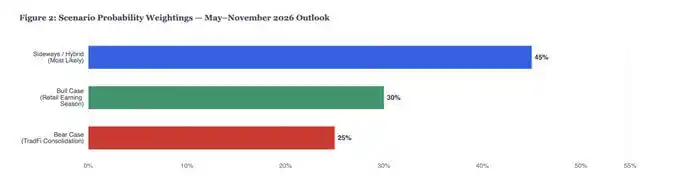
  • Bull Case: 30% probability. The Fed cuts rates, Bitcoin breaks $110k, the CLARITY Act passes. All of these are possible. But all of them need to happen at the same time. That's the hard part.

  • Sideways Grind: 45% probability. Bitcoin trades between $70k - $95k. Prediction markets keep growing. DeFi holds steady. Altcoins move on specific news, not collective pumps.

  • Bear Case: 25% probability. Inflation roars back, the Fed hikes, Bitcoin slides to $50k-$60k. Retail money flows into ETFs, and everything else bleeds.

The honest read is that the most likely outcome is not a massive retail bull market. It's a sideways market where what you pick matters far more than what the market does. This is completely different from the last two cycles.
How to Actually Play This

  1. Put your time into prediction markets. This is currently the only growing vertical in crypto that is retail. Real users are showing up, they're returning regularly, and the platforms have uses beyond trading, meaning this growth is going to stick.

  2. Use DeFi for stable yield, not for moonshots. Liquid staking pays 4-8%, regulated stablecoin yield pays 5-8%. These returns are small, but they're reliable, and you can earn them without taking on massive risk.

  3. Only buy altcoins that have real users behind them. Stick to tokens in the Ethereum and Solana ecosystems that have actual products people are using. Do not expect to buy a basket of random altcoins and ride an altseason wave, because that play is dead this cycle.

  4. Stay away from GameFi, random NFTs, and new memecoins. These assets are not getting a fix in the next six to twelve months. The problem isn't the market cycle, it's that the mechanics of these things were broken from the start, so waiting won't solve it.

The Core Takeaway

The "TradFi is eating crypto" story explains Bitcoin and stablecoins. But it doesn't explain why GameFi, NFTs, and memecoins are dying. Those things are dying for their own reasons. And it misses the sectors of the market that are actually growing—the places where prediction markets, DeFi yield, and curated altcoins live.

The era of 100x returns from buying any altcoin is over. What's left is a market that is more niche, more selective, and more demanding. You have to actually understand what you're investing in.

For those who can do that, the next six to twelve months aren't the end. They're just a different version of making money in crypto.


Связанные с этим вопросы

QWhat is the main argument of the article regarding the current state of cryptocurrency?

AThe article argues that while Bitcoin and stablecoins are being absorbed by Wall Street (e.g., through ETFs and regulated banks), the era of easy 10-100x returns on random altcoins is over. However, opportunities still exist for retail investors in specific, growing areas like prediction markets, DeFi yields, and selective altcoins with real user bases, while sectors like GameFi, NFTs, and most memecoins are failing due to inherent design flaws.

QAccording to the article, what are the three areas where retail investors can currently find real opportunities?

AThe three areas are: 1) Prediction markets (e.g., Polymarket), which are experiencing massive user and volume growth. 2) DeFi yields, offering sustainable, single-digit returns from activities like liquid staking and stablecoin lending. 3) Selective altcoins from ecosystems like Ethereum and Solana that have genuine products and users, with potential upside if Bitcoin breaks out.

QWhy does the author believe GameFi, NFTs, and most memecoins are failing?

AThe author believes these sectors are failing due to their own internal design flaws, not because of Wall Street's influence. GameFi's 'play-to-earn' model collapses without constant new users. NFTs have lost most of their value and trading activity as adoption narratives failed. Most memecoins benefit insiders and whales, leaving average retail investors at a severe disadvantage and prone to losses.

QWhat is the most likely market scenario for the next six months according to the article's predictions?

AThe most likely scenario (45% probability) is a range-bound market where Bitcoin trades between $70k and $95k. In this environment, prediction markets continue growing, DeFi remains stable, and altcoin movements are driven by specific news rather than a broad-based 'altseason.' Success depends more on specific asset selection than overall market direction.

QWhat is the article's final core message or conclusion for retail investors?

AThe core conclusion is that the era of making 100x returns by buying any altcoin is structurally over. The remaining market is more niche, selective, and demanding. To succeed, investors must focus on areas with real growth (prediction markets, sustainable DeFi yields) and altcoins with genuine utility and users, while avoiding flawed sectors like GameFi and most memecoins. Understanding what you invest in is now crucial.

Похожее

Retail Investors' 'Lead Brother' Serenity vs. Newly Minted Stock God Leopold: How Are the Two Top Hunters Mining AI's 'Physical Limits'?

The article profiles two prominent figures, Serenity and Leopold Aschenbrenner, who are gaining attention for their unconventional investment strategies focused on the physical constraints of the AI boom, moving beyond mainstream software narratives. Serenity, an anonymous online trader, advocates a "shiso leaf" theory. He targets small-cap companies with monopolies on critical, overlooked components in the AI hardware supply chain, such as specific semiconductor materials. His deep, technical analysis of bottlenecks in areas like co-packaged optics (CPO) has reportedly yielded massive returns, though his anonymity and focus on illiquid micro-cap stocks pose significant risks for followers. Leopold Aschenbrenner, a former OpenAI researcher, founded a multi-billion dollar hedge fund. His macro thesis argues that physical infrastructure—power grids, land, data centers—is the true bottleneck for AI growth, lagging far behind chip production. Consequently, his fund employs an infrastructure arbitrage strategy: heavily investing in storage and compute infrastructure companies while placing massive bearish bets (put options) against major semiconductor stocks, betting their valuations will correct as physical constraints become apparent. While their methods differ—Serenity drills into microscopic supply chain details, while Leopold takes a macroscopic, infrastructure-focused view—both share a core belief: the real power and investment alpha in the AI era lie in controlling scarce physical resources, not just software. The article concludes by noting the inherent risks in both approaches, such as liquidity issues for micro-caps and timing risks for macro bets, but suggests they signal a broader market re-evaluation of AI's foundational assets.

marsbit3 мин. назад

Retail Investors' 'Lead Brother' Serenity vs. Newly Minted Stock God Leopold: How Are the Two Top Hunters Mining AI's 'Physical Limits'?

marsbit3 мин. назад

Who Will Make Money in the Age of Agents?

In the Agents era of blockchain, traditional value capture theories face challenges. The "Fat Protocol" theory, dominant since 2016, suggested protocols capture most value as their tokens are essential for network use. However, the proliferation of interchangeable L1s, L2s, and modular layers has eroded protocol scarcity and pricing power. Conversely, the "Fat App" theory posits that applications capturing user relationships (like wallets and exchanges) become the primary value layer by controlling distribution and transaction flows. This aligns with the current "Great Repricing" cycle. Agents disrupt this logic. As software users, they lack brand loyalty, prioritize cost and efficiency, and switch between platforms seamlessly. This undermines the front-end UX moats that "Fat Apps" rely on. The article explores several potential futures: 1. **Headless Applications:** Current leading apps could strip their front-ends and become backend API infrastructure for Agents, preserving their role. 2. **Protocol Resurgence:** If integration becomes trivial, Agents might bypass aggregators and interact directly with protocols, reviving "Fat Protocol" dynamics. 3. **Pricing Power Collapse:** Agents' rational, frictionless routing could commoditize the entire stack, compressing margins toward cost and leaving little profit for intermediaries. 4. **Unprecedented Activity:** Agents may enable new, high-frequency, machine-to-machine economic activities, expanding the total value pie even if margins are thin. 5. **A New, Unnamed Model:** Historically, major tech shifts (like the internet's attention economy) create unforeseen business models. The Agents era may spawn entirely new ways to capture value. The most likely outcome is a coexistence where "Fat Apps" continue to serve human users valuing UX, while a separate, Agent-driven economy emerges governed by different rules—where loyalty is based on factors like liquidity, latency, and settlement guarantees rather than brand.

marsbit1 ч. назад

Who Will Make Money in the Age of Agents?

marsbit1 ч. назад

Торговля

Спот
Фьючерсы

Популярные статьи

Тест по Bitcoin Биткоина

HTX Learn: Изучите Bitcoin halving и Заработаете Токены USDT

3.0k просмотров всегоОпубликовано 2024.04.16Обновлено 2024.04.16

Тест по Bitcoin  Биткоина

Что такое $BITCOIN

ЦИФРОВОЕ ЗОЛОТО ($BITCOIN): Комплексный анализ Введение в ЦИФРОВОЕ ЗОЛОТО ($BITCOIN) ЦИФРОВОЕ ЗОЛОТО ($BITCOIN) — это проект на основе блокчейна, работающий в сети Solana, который стремится объединить характеристики традиционных драгоценных металлов с инновациями децентрализованных технологий. Хотя он носит имя Биткойн, часто называемого “цифровым золотом” из-за его восприятия как средства хранения ценности, ЦИФРОВОЕ ЗОЛОТО является отдельным токеном, предназначенным для создания уникальной экосистемы в ландшафте Web3. Его цель — позиционировать себя как жизнеспособный альтернативный цифровой актив, хотя детали его применения и функциональности все еще развиваются. Что такое ЦИФРОВОЕ ЗОЛОТО ($BITCOIN)? ЦИФРОВОЕ ЗОЛОТО ($BITCOIN) — это токен криптовалюты, специально разработанный для использования в блокчейне Solana. В отличие от Биткойна, который выполняет широко признанную роль хранения ценности, этот токен, похоже, сосредоточен на более широких приложениях и характеристиках. Примечательные аспекты включают: Инфраструктура блокчейна: Токен построен на блокчейне Solana, известном своей способностью обрабатывать высокоскоростные и недорогие транзакции. Динамика предложения: ЦИФРОВОЕ ЗОЛОТО имеет максимальное предложение, ограниченное 100 квадриллионами токенов (100P $BITCOIN), хотя детали о его обращающемся предложении в настоящее время не раскрыты. Утилита: Хотя точные функциональные возможности не описаны, есть указания на то, что токен может быть использован для различных приложений, потенциально связанных с децентрализованными приложениями (dApps) или стратегиями токенизации активов. Кто создатель ЦИФРОВОГО ЗОЛОТА ($BITCOIN)? На данный момент личность создателей и команды разработчиков, стоящих за ЦИФРОВЫМ ЗОЛОТОМ ($BITCOIN), остается неизвестной. Эта ситуация типична для многих инновационных проектов в области блокчейна, особенно тех, которые связаны с децентрализованными финансами и феноменом мем-криптовалют. Хотя такая анонимность может способствовать культуре, ориентированной на сообщество, она усиливает опасения по поводу управления и ответственности. Кто инвесторы ЦИФРОВОГО ЗОЛОТА ($BITCOIN)? Доступная информация указывает на то, что у ЦИФРОВОГО ЗОЛОТА ($BITCOIN) нет известных институциональных спонсоров или значительных венчурных капиталовложений. Проект, похоже, функционирует по модели пирингового взаимодействия, сосредоточенной на поддержке и принятии сообществом, а не на традиционных путях финансирования. Его активность и ликвидность в основном сосредоточены на децентрализованных биржах (DEX), таких как PumpSwap, а не на устоявшихся централизованных торговых платформах, что еще больше подчеркивает его подход, ориентированный на grassroots. Как работает ЦИФРОВОЕ ЗОЛОТО ($BITCOIN) Операционные механизмы ЦИФРОВОГО ЗОЛОТА ($BITCOIN) можно подробно описать на основе его дизайна блокчейна и характеристик сети: Механизм консенсуса: Используя уникальный механизм доказательства истории (PoH) Solana в сочетании с моделью доказательства доли (PoS), проект обеспечивает эффективную валидацию транзакций, что способствует высокой производительности сети. Токеномика: Хотя конкретные дефляционные механизмы не были подробно описаны, большое максимальное предложение токенов подразумевает, что оно может быть предназначено для микротранзакций или нишевых случаев использования, которые еще предстоит определить. Интероперабельность: Существует потенциал для интеграции с более широкой экосистемой Solana, включая различные платформы децентрализованных финансов (DeFi). Однако детали относительно конкретных интеграций остаются неуточненными. Хронология ключевых событий Вот хронология, которая подчеркивает значимые вехи, касающиеся ЦИФРОВОГО ЗОЛОТА ($BITCOIN): 2023: Первоначальное развертывание токена происходит в блокчейне Solana, отмеченное его адресом контракта. 2024: ЦИФРОВОЕ ЗОЛОТО приобретает видимость, когда оно становится доступным для торговли на децентрализованных биржах, таких как PumpSwap, позволяя пользователям обменивать его на SOL. 2025: Проект наблюдает спорадическую торговую активность и потенциальный интерес к инициативам, возглавляемым сообществом, хотя на данный момент не зафиксировано никаких значительных партнерств или технических достижений. Критический анализ Сильные стороны Масштабируемость: Основная инфраструктура Solana поддерживает высокие объемы транзакций, что может повысить полезность $BITCOIN в различных сценариях транзакций. Доступность: Потенциально низкая цена торговли за токен может привлечь розничных инвесторов, способствуя более широкому участию благодаря возможностям дробного владения. Риски Отсутствие прозрачности: Отсутствие публично известных спонсоров, разработчиков или процесса аудита может вызвать скептицизм относительно устойчивости и надежности проекта. Волатильность рынка: Торговая активность сильно зависит от спекулятивного поведения, что может привести к значительной волатильности цен и неопределенности для инвесторов. Заключение ЦИФРОВОЕ ЗОЛОТО ($BITCOIN) является интригующим, но неоднозначным проектом в быстро развивающейся экосистеме Solana. Хотя он пытается использовать нарратив “цифрового золота”, его отход от установленной роли Биткойна как средства хранения ценности подчеркивает необходимость более четкого различения его предполагаемой утилиты и структуры управления. Будущее принятие и усвоение, вероятно, будут зависеть от решения текущей непрозрачности и более четкого определения его операционных и экономических стратегий. Примечание: Этот отчет охватывает синтезированную информацию, доступную на октябрь 2023 года, и с тех пор могут произойти события.

99 просмотров всегоОпубликовано 2025.05.13Обновлено 2025.05.13

Что такое $BITCOIN

Fractal Bitcoin: масштабирование Биткоина с помощью рекурсивной системы

Fractal Bitcoin — масштабное Layer-1-решнение, созданное на базе кода Биткоина, позволяющего достигать бесконечного масштабирования с помощью рекурсивного подхода.

2.3k просмотров всегоОпубликовано 2025.06.30Обновлено 2025.06.30

Fractal Bitcoin: масштабирование Биткоина с помощью рекурсивной системы

Обсуждения

Добро пожаловать в Сообщество HTX. Здесь вы сможете быть в курсе последних новостей о развитии платформы и получить доступ к профессиональной аналитической информации о рынке. Мнения пользователей о цене на BTC (BTC) представлены ниже.

活动图片