Microsoft CEO: In the AI Era, How Do You Define a Company's Moat?

marsbitОпубликовано 2026-06-15Обновлено 2026-06-15

Введение

Microsoft CEO Satya Nadella argues that in the AI era, a company's true competitive edge, or "moat," is not determined by choosing the single most powerful model, but by its ability to build a continuous "learning loop." This system integrates and evolves by connecting human workflows, domain expertise, organizational judgment, and employee experience. He posits that future companies will accumulate two types of capital: Human Capital (employee knowledge, judgment, creativity) and "Token Capital" (a firm's own built and owned AI capabilities). Importantly, AI amplifies rather than devalues human capital. Human direction is essential to guide progress, as computational power alone is aimless. The core opportunity lies in creating a closed-loop system where human and token capital reinforce each other in a compound, self-improving cycle. A company must be able to preserve its unique institutional knowledge—its "company veteran" expertise—even if it switches underlying general-purpose AI models. This requires private evaluation benchmarks, reinforcement learning environments based on internal data, and queryable knowledge bases. Nadella warns against a future where economic value is concentrated by a few dominant models that commoditize entire industries' knowledge. Instead, the priority should be building a broad "frontier ecosystem" where every company, industry, and nation can own its learning loop. This allows organizations to retain control of their intellectual property...

Editor's Note: Microsoft CEO Satya Nadella believes that the true competitive advantage for enterprises in the AI era does not lie in betting on the single strongest model, but in whether they can distill their workflows, domain knowledge, organizational judgment, and employee experience into a continuously evolving learning system. In other words, companies cannot just purchase AI capabilities; they must own their own "learning loop" (a system where human experience, business processes, and model capabilities constantly reinforce each other).

Within this framework, future companies will simultaneously accumulate two types of capital: Human Capital, which includes employees' knowledge, judgment, relationship networks, creativity, and pattern recognition abilities; and Token Capital (the AI capabilities that a company builds and owns itself). Nadella emphasizes that AI will not devalue human capital; on the contrary, it will make human capabilities in goal-setting, cross-domain connection, and key pattern recognition more important. Without human direction, computing power just spins its wheels; without an organization's own knowledge base, even the strongest model is just an external tool.

The core judgment of this article is: A frontier without an ecosystem will not be a stable future. The value of AI should not be swallowed by a few general-purpose models but should form a frontier ecosystem, allowing every company, every industry, and every country to own its learning loop. Enterprises need to establish private evaluations, private reinforcement learning environments, and queryable knowledge bases, turning tacit experience into reusable, scalable, and iterable system capabilities. The true moat may not be a specific model itself, but rather the "company veteran"-style experience an enterprise would not lose even after switching out the underlying general model.

This is also key to corporate sovereignty in the AI era: Those who can turn organizational knowledge into a system that generates continuous compound interest will retain intellectual property, amplify employee capabilities amidst rapid model iteration, and keep the economic value brought by AI within their own business, industry, and community.

Here is the original text:

I've been thinking a lot lately about what the future of the enterprise will look like in an AI-driven economy.

This transition is different from any previous platform shift. In the past, we used digital systems to augment human capital. This time, it's the first time we can establish a true cognitive loop between people and digital systems. This is very disruptive because it changes how we understand the very nature of "work" inside an enterprise.

The truly critical question is not how a particular digital tool or system is used, but rather how an organization continues to learn, accumulate intellectual property, differentiate itself, and thrive in a world where AI models can continuously absorb human and organizational expertise and productize it.

Every company must build what I call Human Capital and Token Capital. Human Capital includes employees' knowledge, judgment, relationship networks, creativity, and pattern recognition. Token Capital is the AI capability that the enterprise itself builds and owns.

Importantly, as Token Capital grows, Human Capital does not become less important. Quite the opposite—it becomes even more critical. I believe human agency will be the core driver of Token Capital growth. Humans set ambitious goals, connect dots across domains, build relationships, and identify the patterns that truly matter. Without the direction of human purpose, compute just churns.

This means the real opportunity is not in choosing the best model, but in building a learning loop on top of the model that allows Human Capital and Token Capital to compound each other. You can outsource a task, you can even outsource a job, but you can never outsource your learning. The future of the enterprise lies in whether it can make this learning compound continuously between people and AI.

This requires a new architectural mindset: Every enterprise should be able to build agentic systems that improve over time, while still retaining control over their intellectual property. A company should be able to swap out a "generalist" model without losing the "company veteran" expertise ingrained in its learning system. This will be a key test of control and sovereignty for the future enterprise.

Enterprises need to transform their workflows, domain knowledge, and accumulated long-term judgment into AI systems that get better with every use. Private evaluations should measure whether a model is actually improving on business outcomes the company cares about, not just external benchmarks. Private reinforcement learning environments should make models stronger based on real internal trajectories. Corporate knowledge bases should make institutional memory queryable and improve token efficiency.

This closed loop becomes the new intellectual property of the enterprise. I think of it as a "hill-climbing machine." And unlike most assets, it compounds. Every workflow improvement yields a better training signal, accelerating the accumulation of a company's unique tacit knowledge. Companies that build this system earlier will gain a hard-to-replicate advantage, regardless of how individual model capabilities break through in the future.

What we least want to see is a world where companies across every industry cede their value to a handful of models that ingest everything they see. If all value ultimately accrues to a few models, the political economy simply will not tolerate it. An AI future that hollows out entire industries will not gain a social license.

Think about what happened in the first phase of globalization: entire industrial economies were hollowed out by outsourcing. On the surface, GDP numbers looked okay, but the real shifts in industry and employment shocks occurred, and their consequences are still felt today. We cannot let this dynamic play out in the AI era—where a handful of AI systems capture all the economic returns while the knowledge of entire industries is commodified and hollowed out beneath them.

In my view, our priority must be to build a frontier *ecosystem*, not just a frontier *model*. Only then can value flow widely to every company, every industry, every country. In such an ecosystem, every organization can own its learning loop, encode its institutional knowledge into it, and compound its Human Capital alongside its Token Capital.

This is also the platform ethos I have always believed in: The value created on the platform should be greater than the value captured by the platform; every company should be able to innovate continuously and create its own value.

When that happens, enterprises will create value for themselves and for the economy they operate in. Employees' professional capabilities will be amplified; their judgment will become part of the system, replicable and scalable, and those returns will flow back to the company and its surrounding community.

That is how enterprises create value for themselves and the broader economy. And it is the stable equilibrium we should all build toward.

Связанные с этим вопросы

QAccording to Microsoft CEO Satya Nadella, what is the key to a company's true competitive advantage in the AI era?

AThe key is not choosing the strongest AI model, but a company's ability to codify its workflows, domain knowledge, organizational judgment, and employee experience into a continuously evolving learning system—a 'learning flywheel' where human experience, business processes, and model capabilities reinforce each other.

QWhat are the two types of capital that Nadella says companies will accumulate in the future?

ACompanies will accumulate Human Capital (employee knowledge, judgment, networks, creativity, pattern recognition) and Token Capital (the proprietary AI capabilities a company builds and owns).

QWhy does Nadella argue that human capital becomes more, not less, important as Token Capital grows?

ABecause human agency is the core driver for Token Capital growth. Humans set ambitious goals, make cross-domain connections, build relationships, and identify critical patterns. Without human direction, computing power just spins in place.

QWhat is the 'key test' Nadella proposes for measuring a company's control and sovereignty in the AI future?

AThe key test is whether a company can replace a generalist AI model without losing the 'senior employee'-like expertise that has been accumulated and encoded within its own learning system.

QWhat kind of AI future does Nadella warn against, and what alternative does he advocate for?

AHe warns against a future where a handful of giant models capture all economic value by commoditizing and hollowing out industry knowledge. Instead, he advocates for building a 'frontier ecosystem' where every company, industry, and nation can own its own learning flywheel, ensuring value flows widely and is retained within businesses and their communities.

Похожее

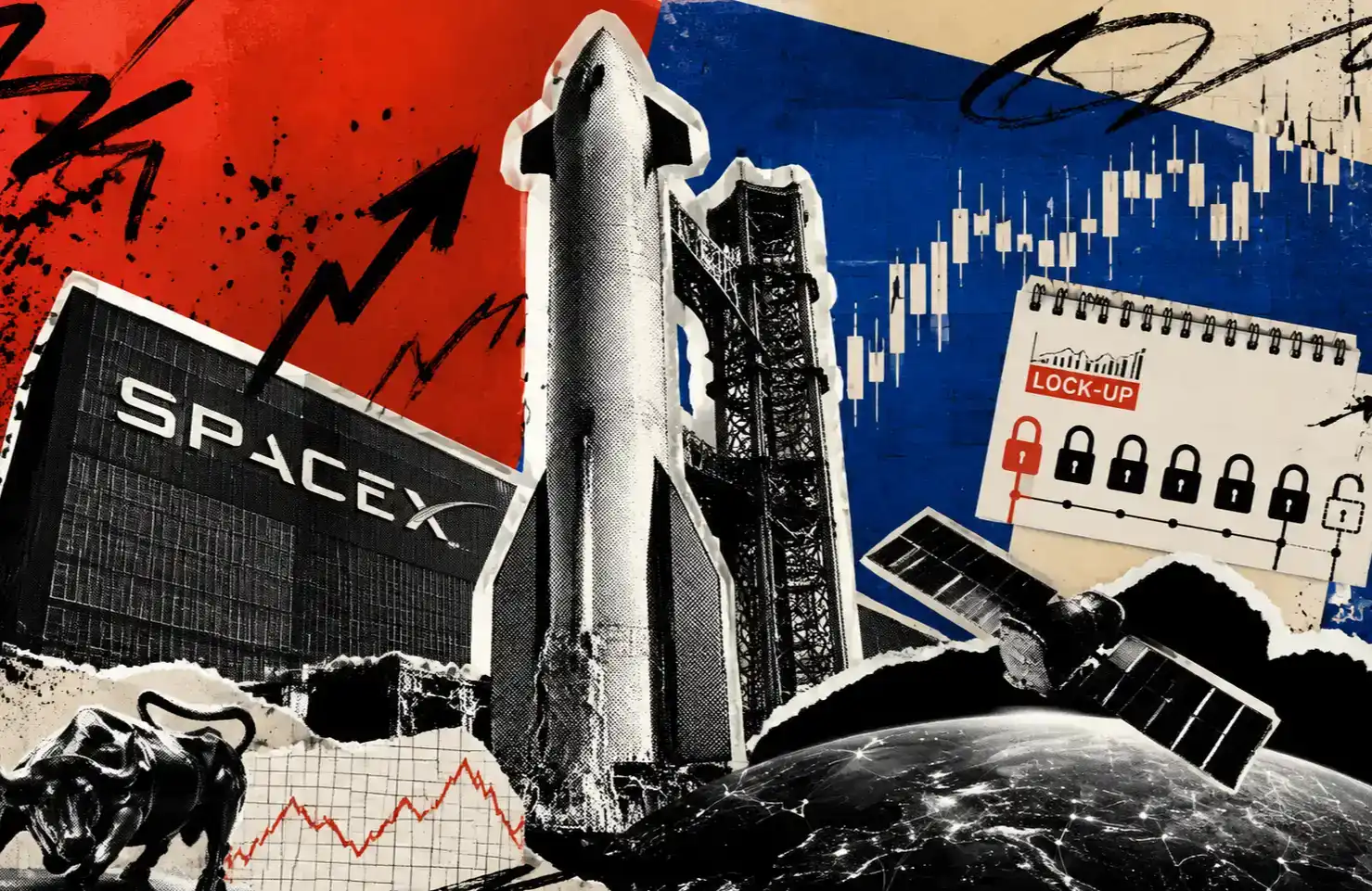
How Will the Price Move Before SpaceX's Next Share Unlock?

TL;DR Investors buying SPCX after SpaceX's IPO are not simply investing in a typical tech stock. It’s a high-valuation asset driven by Musk's narrative, Starlink, and space transport potential, but with a key twist: a very small initial float of ~4% has led to significant post-listing price appreciation. The current price action reflects a timing gap. Before the first lock-up expiration (estimated around August, subject to official confirmation), scarcity and high demand could continue to push prices up. Short-term bulls focus on low float, FOMO, and potential index inclusion. However, bears point to the supply dynamics that will change post-lockup. Existing shareholders still hold over 95% of shares, which will be released in stages starting from the first unlock window. This introduces future selling pressure from low-cost holders. The upcoming Q2 earnings report is a critical catalyst before the unlock. It will test whether the company's fundamentals can justify the current ~$2.1T valuation. Strong results could support the pre-unlock momentum, while weak figures could amplify concerns about future supply. The trading thesis is shifting from immediate scarcity ("can't buy enough") to evaluating future absorption capacity ("who will buy when more supply hits"). The path ahead hinges on the specifics of the unlock schedule, Q2 earnings performance, and whether anticipated passive index buying materializes.

marsbit22 мин. назад

How Will the Price Move Before SpaceX's Next Share Unlock?

marsbit22 мин. назад

Bitcoin Short-Term Bullish Structure Validated, HYPE Low-Entry Window Opens | Guest Analysis

**Market Analysis Summary (Week of June 2026)** **Overall Market Context:** The market environment is exceptionally complex, with the unexpected US-Iran agreement and the reopening of the Strait of Hormuz triggering a global asset repricing and significant volatility. This heightened noise underscores the importance of a structured analytical framework. **Bitcoin (BTC) Analysis & Strategy:** * **Current Status:** The price has climbed above $65,000, currently in a rebound phase (segment 38-39) following a complex 12-segment correction from the May high of $82,850. * **Key Levels:** * **Primary Resistance:** $69,500–$70,500. A successful breakout above $65,000 targets this zone. * **Primary Support:** $65,000 (immediate), followed by $59,000–$60,000 and $55,000. * **Weekly Outlook & Strategy:** The focus is on the confirmation of the $65,000 level. * **Bullish Scenario (Hold $65K):** A move toward the $69.5K–$70.5K resistance zone is anticipated, which is a potential area for initiating medium-term short positions. * **Bearish Scenario (Break below $65K):** A retest of the $60,000–$62,000 support range is likely. * **Medium-Term Strategy:** Currently neutral. Plan to establish short positions (up to 60% allocation) either in the $69.5K–$70.5K resistance zone upon signs of rejection, or on a confirmed breakdown below $65,000 and further below $59K–$60K. * **Short-Term Strategy:** Utilize 30% capital for scalping opportunities based on support/resistance levels, using 30/60-minute charts. **HYPE Analysis & Strategy:** * **Current Status:** The price has stabilized around $52 after a four-segment decline from the June high of $75.87 and is now in a rebound (segment 50-51). * **Key Levels:** * **Primary Resistance:** $62.50–$64.57. Watch for potential rejection here to form a lower high. * **Primary Support:** $52–$55.50, followed by $47–$49. * **Weekly Outlook & Strategy:** Adopt a "buy on dips, avoid chasing rallies" approach. * **Core View:** Monitor the price action and potential formation of a lower high ("endpoint 51") in the $62.50–$64.57 resistance zone. * **Short-Term Strategy:** Consider light long positions (max 30% allocation) if the price finds support and shows reversal signals in the $52–$54.50 or deeper $47–$49 support zones, confirmed by proprietary quantitative bottom signals. **Trade Review:** Last week's HYPE short-term long trade, executed based on proprietary "Price Difference" and "Momentum" model signals, yielded a profit of approximately 11.88%. The entry was near $54.39 and exit near $60.85. **Risk Management Reminder:** Always set an initial stop-loss upon entry. Move stop-loss to breakeven at +1% profit, then trail it upwards to lock in gains as the trade progresses. *Disclaimer: All analysis, models, and strategies are based on personal technical analysis for educational purposes only, not investment advice. The market carries inherent risk.*

Odaily星球日报27 мин. назад

Bitcoin Short-Term Bullish Structure Validated, HYPE Low-Entry Window Opens | Guest Analysis

Odaily星球日报27 мин. назад

Bitcoin Short-Term Bullish Structure Validated, HYPE Accumulation Window Opens | Guest Analysis

**Bitcoin and HYPE Market Analysis: Short-Term Outlook and Trading Strategies** This market analysis examines Bitcoin (BTC) and HYPE amid volatile conditions, providing short-term outlooks and specific trading strategies. **Key Outlooks:** * **Bitcoin (BTC):** Focus is on whether BTC's recent move above $65,000 holds. A successful breakout could lead to a test of the $69,500-$70,500 resistance zone, where medium-term short positions are considered. A failure, breaking below $65,000, may trigger a decline towards the $59,000-$60,000 support area. * **HYPE:** The token completed a four-wave correction and is now rebounding. The key resistance zone is $62.5-$64.57. The trading strategy is "buy on dips," looking for entry opportunities near the $52-$54.5 or deeper $47-$49 support zones, pending confirmation from proprietary models. **BTC Trading Strategy:** * **Medium-term:** Primarily looking to establish short positions (up to 60% allocated capital) if price rallies to the $69,500-$70,500 resistance area and shows signs of reversal. Alternative plans involve initiating shorts on a breakdown below $65,000. * **Short-term:** Allocate up to 30% capital for intraday "spread" trades based on support/resistance levels on 30/60-minute charts. **HYPE Trading Strategy:** * **Short-term:** Adopt a dip-buying approach. Consider light long positions (under 30% capital) when price tests key support levels ($52-$54.5 or $47-$49) and shows stabilization, confirmed by proprietary "Price Spread" and "Momentum Quant" models. **Trade Recap:** The analysis reviews a successful HYPE long trade from the previous week, executed at ~$54.39 and closed at ~$60.85 for an ~11.88% gain, based on signals from the aforementioned models. **Risk Management Emphasis:** The article stresses strict capital allocation (under 30-60%), immediate initial stop-loss placement, and a trailing stop-loss protocol to lock in profits as trades move favorably. ***Disclaimer:** All analysis, models, and strategies are for educational purposes based on technical analysis, not investment advice. Markets are volatile; trade with caution.*

marsbit29 мин. назад

Bitcoin Short-Term Bullish Structure Validated, HYPE Accumulation Window Opens | Guest Analysis

marsbit29 мин. назад

Торговля

Спот
Фьючерсы

Популярные статьи

Как купить S

Добро пожаловать на HTX.com! Мы сделали приобретение Sonic (S) простым и удобным. Следуйте нашему пошаговому руководству и отправляйтесь в свое крипто-путешествие.Шаг 1: Создайте аккаунт на HTXИспользуйте свой адрес электронной почты или номер телефона, чтобы зарегистрироваться и бесплатно создать аккаунт на HTX. Пройдите удобную регистрацию и откройте для себя весь функционал.Создать аккаунтШаг 2: Перейдите в Купить криптовалюту и выберите свой способ оплатыКредитная/Дебетовая Карта: Используйте свою карту Visa или Mastercard для мгновенной покупки Sonic (S).Баланс: Используйте средства с баланса вашего аккаунта HTX для простой торговли.Третьи Лица: Мы добавили популярные способы оплаты, такие как Google Pay и Apple Pay, для повышения удобства.P2P: Торгуйте напрямую с другими пользователями на HTX.Внебиржевая Торговля (OTC): Мы предлагаем индивидуальные услуги и конкурентоспособные обменные курсы для трейдеров.Шаг 3: Хранение Sonic (S)После приобретения вами Sonic (S) храните их в своем аккаунте на HTX. В качестве альтернативы вы можете отправить их куда-либо с помощью перевода в блокчейне или использовать для торговли с другими криптовалютами.Шаг 4: Торговля Sonic (S)С легкостью торгуйте Sonic (S) на спотовом рынке HTX. Просто зайдите в свой аккаунт, выберите торговую пару, совершайте сделки и следите за ними в режиме реального времени. Мы предлагаем удобный интерфейс как для начинающих, так и для опытных трейдеров.

1.5k просмотров всегоОпубликовано 2025.01.15Обновлено 2026.06.02

Как купить S

Sonic: Обновления под руководством Андре Кронье – новая звезда Layer-1 на фоне спада рынка

Он решает проблемы масштабируемости, совместимости между блокчейнами и стимулов для разработчиков с помощью технологических инноваций.

2.3k просмотров всегоОпубликовано 2025.04.09Обновлено 2025.04.09

Sonic: Обновления под руководством Андре Кронье – новая звезда Layer-1 на фоне спада рынка

HTX Learn: Пройдите обучение по "Sonic" и разделите 1000 USDT

HTX Learn — ваш проводник в мир перспективных проектов, и мы запускаем специальное мероприятие "Учитесь и Зарабатывайте", посвящённое этим проектам. Наше новое направление .

1.8k просмотров всегоОпубликовано 2025.04.10Обновлено 2025.04.10

HTX Learn: Пройдите обучение по "Sonic" и разделите 1000 USDT

Обсуждения

Добро пожаловать в Сообщество HTX. Здесь вы сможете быть в курсе последних новостей о развитии платформы и получить доступ к профессиональной аналитической информации о рынке. Мнения пользователей о цене на S (S) представлены ниже.

活动图片