TL;DR
После выхода SpaceX на публичный рынок в форме SPCX, инвесторы покупают не обычную технологическую IPO-акцию.
С одной стороны, Маск, Starlink, космические перевозки, оборонные заказы и нарратив о Марсе — эти слова несут в себе естественную премию к оценке. С другой стороны, это акция, которая в первый же день резко выросла, закрылась с рыночной капитализацией около 2,1 трлн долларов, но на начальном этапе IPO имела очень мало акций в свободном обращении. Реальный вопрос, на который должны ответить рядовые инвесторы, прост: покупая SPCX сейчас, делаешь ли ставку на самый дефицитный космический актив на публичном рынке или обеспечиваешь ликвидность для будущего выхода существующих акционеров?
Разногласия в дискуссиях сообщества X и китайских инвесторов за последние несколько дней также сосредоточены здесь. Быки полагают, что низкий флоат, FOMO, нарратив Маска, а также потенциальные пассивные покупки в случае включения в индексы в будущем могут продолжать подталкивать цену вверх до первой разблокировки. Медведи смотрят на другую таблицу: помимо выпущенных в рамках IPO акций, существующие акционеры по-прежнему владеют примерно 95%+ акций. По мере поэтапного снятия блокировок вторичный рынок столкнется с увеличением количества низкозатратных бумаг, поступающих в торговый пул.
То, чем торгуется SPCX сейчас, — это не только финальное воображение о SpaceX, но и разрыв во времени: насколько высокая цена может быть выжата из-за дефицита предложения до первой разблокировки; и насколько нарративная премия будет переварена после первой разблокировки, когда появится новое предложение.
Рост в первый день усилил давление низкого флоата
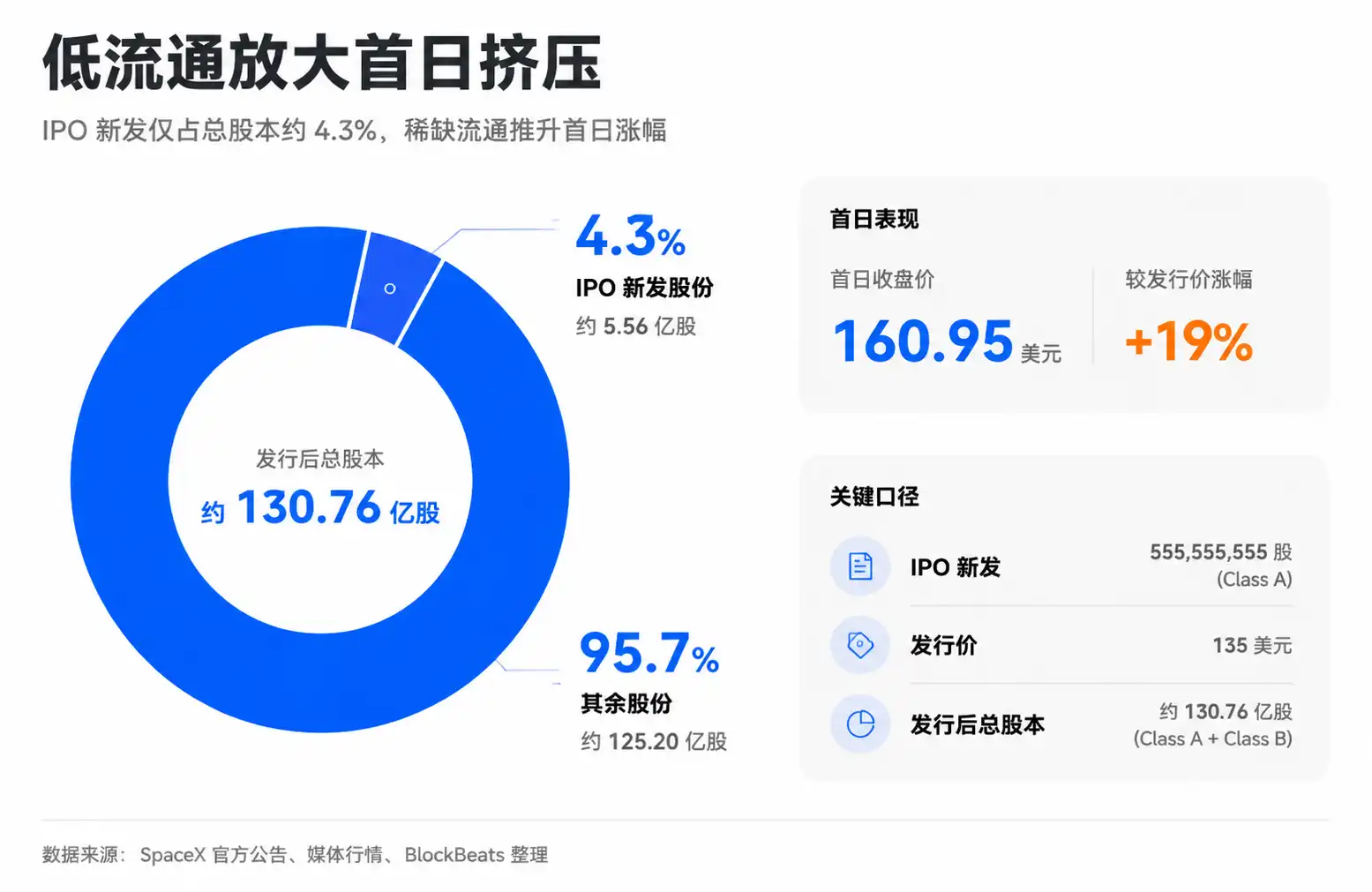
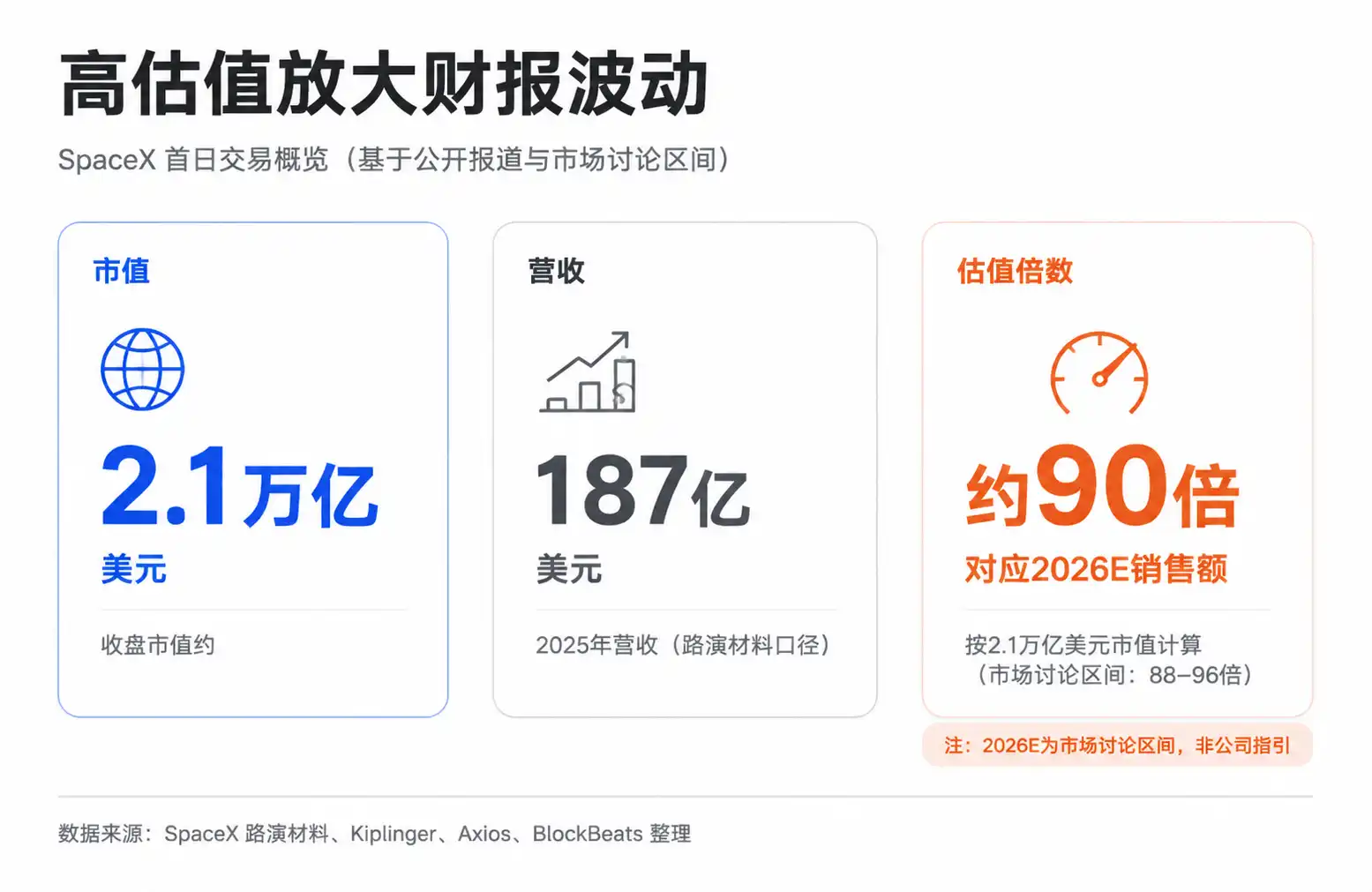
Согласно официальному заявлению SpaceX, компания провела IPO, выпустив 555 555 555 акций класса А по цене 135 долларов за акцию, ожидается, что 12 июня они начнут торговаться на Nasdaq Global Select Market и Nasdaq Texas под тикером «SPCX», с дополнительным опционом на дополнительное размещение 83 333 333 акций. Как сообщают несколько СМИ, SPCX закрылась в первый день примерно на уровне 160,95 доллара, что примерно на 19% выше цены размещения, с рыночной капитализацией на закрытии около 2,1 трлн долларов.
Это оставляет достаточно простора для воображения краткосрочным деньгам. Для акции крупной компании, только что вышедшей на биржу, это уже не просто хайп вокруг IPO, а то, как рынок оценивает дефицитный актив по крайне высокой цене.
Низкий флоат — это первый строительный блок для понимания этой торговой волны. Согласно проспекту эмиссии, после размещения акций класса А будет примерно 7,38 млрд штук, класса B — примерно 5,696 млрд штук, а новые акции, выпущенные в рамках IPO, составят чуть более 4% от общего количества акций. Другими словами, доля акций, которые действительно стали публично торгуемыми через IPO на начальном этапе, очень мала.
Когда предложение акций небольшое, а спрос подогревается хайпом, СМИ, соцплатформами и общими ожиданиями институционалов, цена может оказаться под давлением. Дело не в том, что фундаментальные показатели за одну ночь стали лучше, а в том, что желающих купить много, а тех, кто может продать, — мало.
Это объясняет, почему некоторые инвесторы рассматривают SPCX как краткосрочную торговую возможность, а не оценивают её только по традиционным моделям. Starlink предоставляет более чёткую доходную базу, космические запуски и оборонный бизнес обеспечивают уникальность, а сам Маск усиливает нарратив об активе. Для краткосрочных денег эти факторы не обязательно должны немедленно превращаться в прибыль — достаточно того, чтобы они привлекали устойчивый спрос, чтобы поддержать силу на начальном этапе после IPO.
Потенциальные индексные деньги — это тоже переменная в бычьем нарративе. Логика не сложна: если SPCX в будущем будет включена в важные индексы, фондам, отслеживающим эти индексы, придётся распределять активы согласно правилам — такого рода покупки обычно происходят не из-за активного оптимизма в отношении компании, а из-за необходимости следовать индексу. Когда флоат мал, пассивные покупки могут ещё больше усилить дисбаланс спроса и предложения.
Но это всё ещё остаётся лишь торговым предположением. Включение в индекс официально не подтверждено, и так называемое окно для распределения также нельзя считать определённым. Для SPCX индексные деньги — это не реализованный плюс, а вариант, который быки используют для объяснения возможного продолжения краткосрочного спроса.
Первая разблокировка изменит кривую предложения
Риск SPCX заключается не в том, что «компания недостаточно велика», а в том, что соотношение цены акции и доступного для торговли предложения изменится.
Срок блокировки после IPO предназначен для предотвращения немедленной продажи существующими акционерами и сотрудниками после выхода на биржу, что может обрушить цену новой акции. Многие рядовые инвесторы легко упускают из виду, что срок блокировки — это в первую очередь вопрос предложения. Акции одной и той же компании могут оказывать совершенно разное давление на рынок, когда доступно мало акций для торговли и когда доступно много акций для продажи.
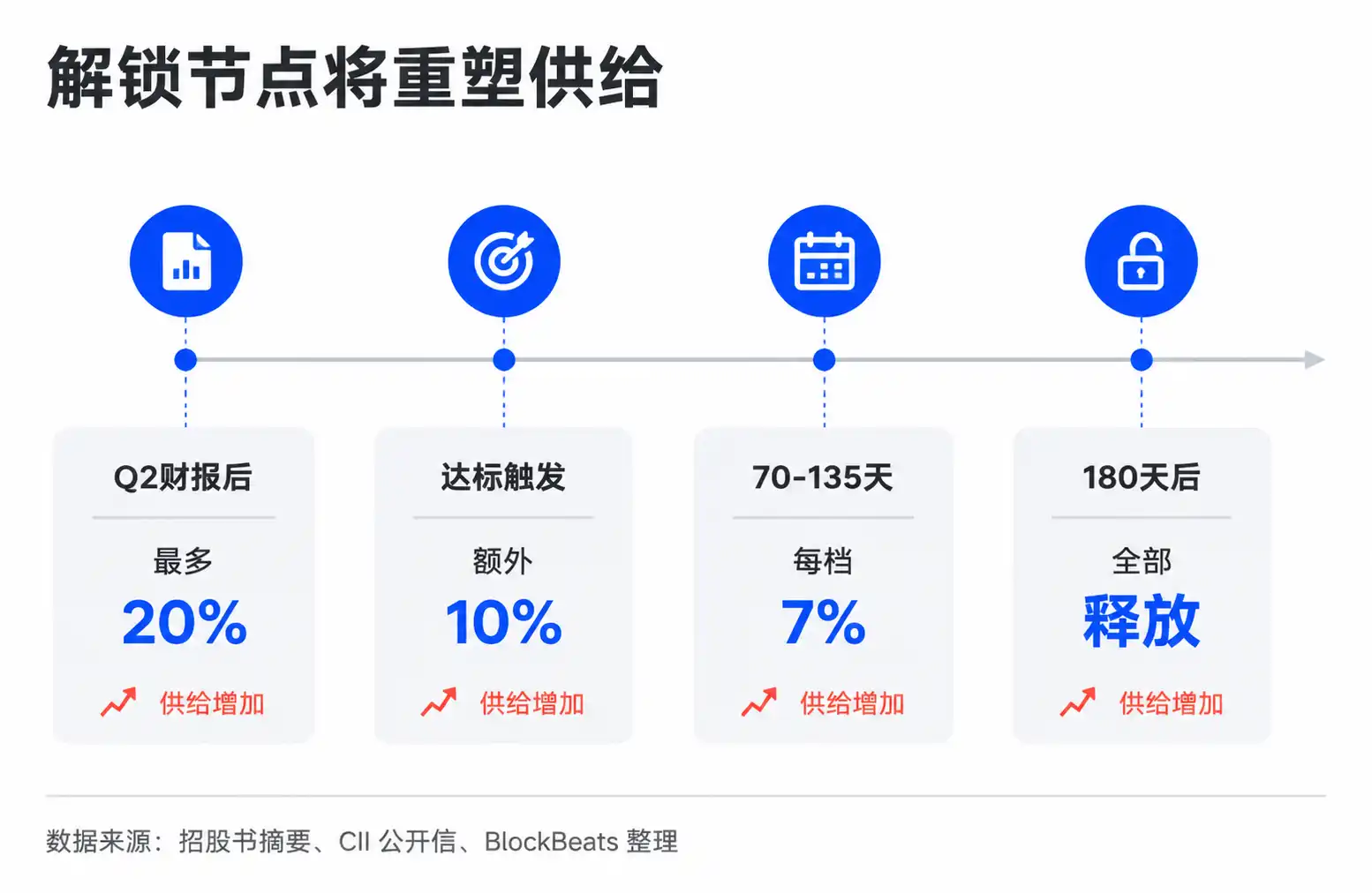
График разблокировки SPCX также не является простым «одномоментным выпуском через 180 дней». В проспекте указано, что акции, заблокированные на 180 дней, могут быть переданы в количестве до 20%, начиная со второго полного торгового дня после публикации отчётности за второй квартал 2026 года. Если в то время цена акции будет как минимум на 30% выше цены размещения и будет соответствовать условиям, включая соответствие этому критерию как минимум в течение 5 из 10 последовательных торговых дней, можно будет выпустить дополнительные 10%. Затем, на 70-й, 90-й, 105-й, 120-й, 135-й день и других этапах можно выпустить по 7%, а через 180 дней — все оставшиеся.
Конкретная дата публикации отчёта за второй квартал ещё не подтверждена. Если следовать обычному графику раскрытия информации, предполагаемое первое окно может выпасть примерно на август, но это всё ещё требует подтверждения последующими объявлениями и документами SEC. В документах также указано, что акции Маска заблокированы на 366 дней, а часть крупных акционеров продлила срок блокировки до публикации отчёта за второй квартал 2027 года с поэтапным выпуском.
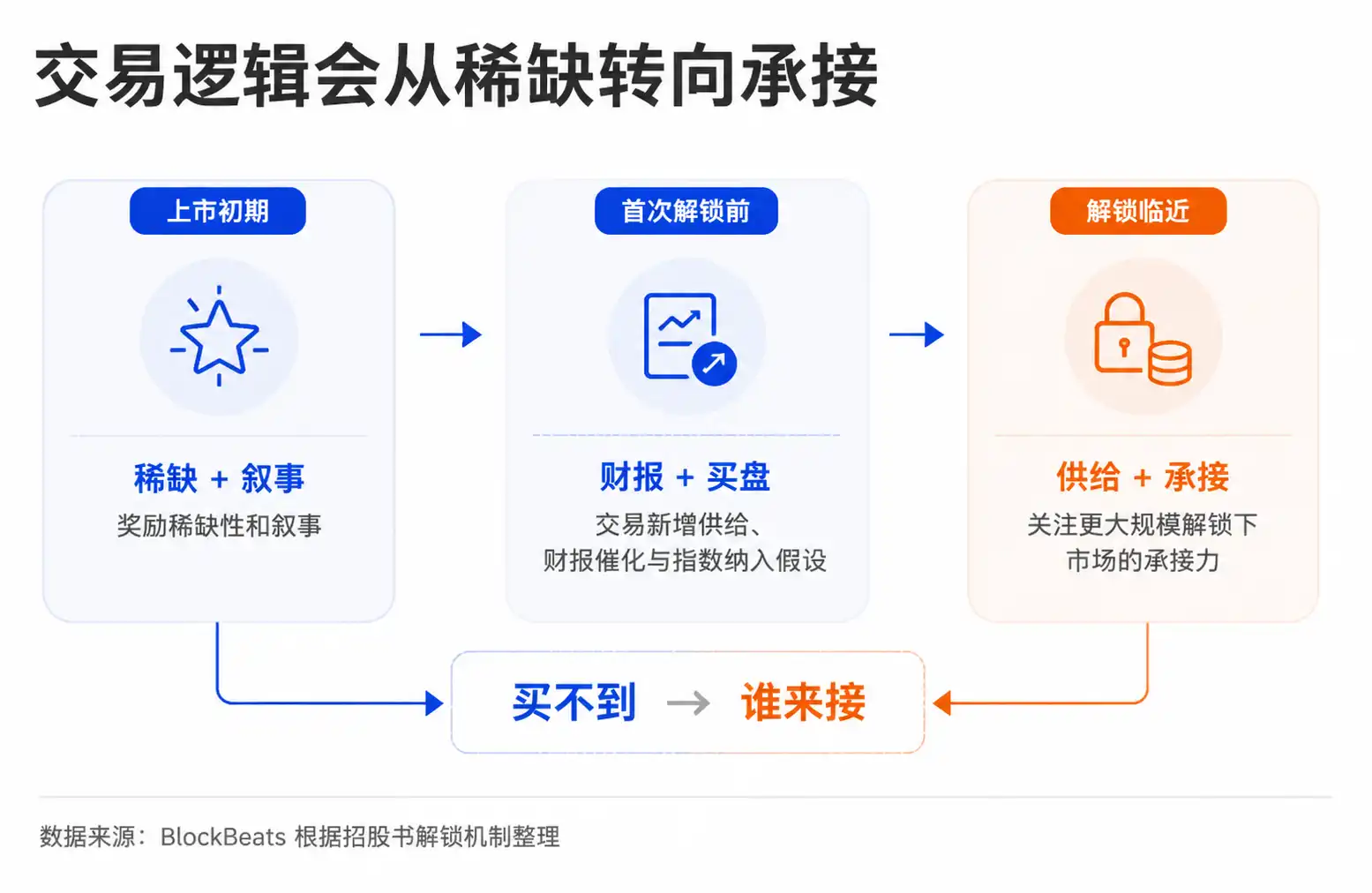
Вот на чём сосредоточены медведи. Пока первая разблокировка не наступила, низкий флоат — друг быков. Как только приближается разблокировка, низкий флоат становится предупреждением о риске, потому что рынок заранее начинает задаваться вопросом: сколько именно низкозатратных акций готовы к продаже?
Потенциальное давление продаж не означает, что в день разблокировки обязательно будет обвал. Более распространённое его влияние заключается в том, что оно делает покупки более осторожными, отскоки чаще сталкиваются с продажами, а расширение мультипликаторов становится сложнее. Особенно когда акция уже на начальном этапе после IPO поднята до уровня выше 2 трлн долларов, новое предложение, даже если оно не выходит на рынок единовременно, изменит суждение рынка о том, «кто же будет покупателем».
Таким образом, утверждения «сможет ли цена ещё вырасти до первой разблокировки» и «стоит ли покупать на среднесрочную перспективу» могут сосуществовать. В краткосрочной перспективе предложение ограничено, настроения горячие, нарратив сильный — цена акции всё ещё может быть под давлением. В среднесрочной перспективе потребность в выходе существующих акционеров и сотрудников реально существует, и их стоимость владения обычно намного ниже, чем у покупателей на вторичном рынке. Эти два суждения относятся не к одному и тому же временному периоду.
Высокая оценка превращает отчётность в усилитель
Если бы SPCX была просто новой акцией с низким флоатом, давление от разблокировки уже было бы достаточно важно. Но всё сложнее, потому что это ещё и акция с низким флоатом, помещённая в очень высокий диапазон оценок.
Согласно материалам роуд-шоу SpaceX, выручка компании в 2025 году составила около 18,7 млрд долларов. Диапазон обсуждений рынка относительно выручки за 2026 год в основном находится между 22 и 24 млрд долларов, но это не подтверждённые компанией прогнозы. При рыночной капитализации на закрытии первого дня около 2,1 трлн долларов очевидно, что рынок покупает не только текущий доход Starlink, а долгосрочный опцион на спутниковый интернет, коммерческие космические полёты, оборонное сотрудничество, транспортные возможности Starship и даже синергию экосистемы Маска.
Платить высокую цену за будущую историю само по себе не проблема. В истории технологических акций это состояние повторялось неоднократно: когда рынок верит, что компания владеет уникальным доступом, он закладывает прибыль многих лет вперёд в текущую цену. Проблема в том, что такого рода ценообразование чувствительно к ритму. Как только отчётность, заказы, маржинальность или рост пользователей не оправдывают ожиданий, рынок не обязательно отрицает конечный результат, но пересматривает скорость его реализации.
Это делает отчёт за второй квартал ключевым моментом перед первой разблокировкой. Это не только первый отчёт после выхода на биржу, но и потенциальный усилитель ожиданий относительно разблокировки. Если отчёт будет сильным, быки скажут, что фундаментальные показатели могут выдержать оценку, и логика краткосрочного давления может продолжиться. Если отчёт будет слабым, медведи свяжут это с окном разблокировки: фундаментальные показатели ещё не подтвердили обоснованность текущей капитализации, а больше акций вот-вот поступят на рынок — зачем вторичному рынку покупать на таких высоких уровнях?
Это также отличает SPCX от зрелых технологических акций. Отчётность зрелых технологических акций больше влияет на прогнозы прибыли и мультипликаторы оценки. Отчётность SPCX также повлияет на торговую уверенность до и после срока блокировки. Ей необходимо одновременно ответить на два вопроса: может ли рост бизнеса поддержать долгосрочный нарратив и останется ли достаточный спрос для поглощения, когда доступное для торговли предложение вот-вот увеличится.
Аналогия с TGE: суть в том, что у низкого флоата есть срок годности
В китайском сообществе некоторые инвесторы сравнивают SPCX с «торговлей активами с низким флоатом после TGE топового VC-проекта».
TGE — это момент выпуска токенов криптопроектом. Когда многие топовые проекты только запускаются, доля токенов в обращении мала, нарратив сильный, а токены ранних инвесторов и команды заблокированы. На начальном этапе после запуска, из-за малого количества доступных для покупки токенов и высокого внимания, цена легко может быть поднята. Но по мере приближения цикла разблокировки рынок начинает заранее торговать будущим давлением продаж, и цена может вступить в фазу консолидации.
Эта аналогия не совсем точна. IPO акций и выпуск криптотокенов различаются по регулированию, раскрытию информации и структуре инвесторов. Но она улавливает один и тот же рыночный механизм: низкий флоат — это не долгосрочный плюс, а дисбаланс спроса и предложения, у которого есть срок годности.
В рамках этой структуры торговлю SPCX после IPO можно разделить на несколько этапов. На начальном этапе после выхода на биржу рынок в основном вознаграждает уникальность и нарратив, спрос интересуется, можно ли ещё поднять цену. Перед первой разблокировкой торговля начинает усложняться, инвесторы одновременно рассчитывают новое предложение, катализаторы от отчётности и потенциальное включение в индексы. Когда приближается разблокировка большего масштаба, рынок перейдёт от «нельзя купить» к «выдержит ли он нагрузку».
Это также объясняет, почему в обсуждениях сообщества появляется комбинация взглядов «краткосрочный умеренный оптимизм, среднесрочная осторожность». Это не колебания, а разные временные срезы в рамках одной и той же структуры спроса и предложения. На этапе низкого флоата быкам легче доминировать. На этапе разблокировки логика медведей начинает усиливаться. Нужно судить не о том, велик ли SpaceX, а о том, не заложена ли в текущей цене уже вся уникальность до первой разблокировки.
В дальнейшем нужно следить за документами о разблокировке, отчётностью и пассивным спросом
Дальнейшее движение SPCX зависит не от нарратива о Марсе и не от настроений в соцсетях, а от нескольких более конкретных переменных.
Первое, на что нужно смотреть, — это окончательные документы и последующие раскрытия компании относительно графика разблокировки. Первоначальная доля, доступная для передачи, ценовые триггерные условия, время публикации отчётности, круг акционеров с продлённой блокировкой — всё это напрямую повлияет на будущую кривую предложения. Для инвесторов это важнее, чем однодневные колебания.
Затем, сможет ли отчётность за второй квартал выдержать текущую оценку. Долгосрочная история SPCX грандиозна, но в краткосрочной перспективе вторичный рынок всё равно будет смотреть на выручку, заказы, маржинальность и денежный поток. Чем сильнее отчётность, тем легче продолжится давление из-за низкого флоата. Чем слабее отчётность, тем легче давление продаж от разблокировки станет основной линией ценообразования.
Включение в индексы также требует дальнейшего наблюдения, но до чёткого объявления это всё ещё лишь торговая гипотеза быков. Если в будущем действительно появятся потребности во включении и распределении, в краткосрочной перспективе это может смягчить часть давления от разблокировки, но это также не означает, что это навсегда поглотит потребность в выходе существующих акционеров и сотрудников.
Сейчас SPCX больше похожа на эксперимент со спросом и предложением с обратным отсчётом. До первой разблокировки низкий флоат и сильный нарратив могут по-прежнему поддерживать устойчивость цены. После первой разблокировки рынок начнёт проверять, сколько реальной способности к поглощению есть у этого космического актива стоимостью 2 трлн долларов. Для рядового инвестора важнее, чем угадывать целевую цену, — следить за этой точкой переключения: когда история «нельзя купить» превращается в вопрос «кто же будет покупателем», торговая логика уже изменилась.