2026-06-09 Вторник

Новостной центр - Страница 154

Получайте криптоновости и тенденции рынка в режиме реального времени с помощью Новостного центра HTX.

AI Relay Stations: The Hidden Pitfalls Behind Low Costs, How to Screen and Avoid Them?

AI Relay Stations: The Hidden Risks Behind Low Costs and How to Avoid Pitfalls AI relay stations are becoming a popular gateway to various models, offering lower prices, a wider selection, and a unified interface for tools like Claude Code and Cursor. However, their appeal masks significant risks. Users may unknowingly surrender prompts, code, business documents, customer data, and even full project contexts. The demand is driven by genuine needs: cost savings compared to expensive official APIs (e.g., GPT, Claude), easier access amid regional restrictions, and the push from AI-powered development tools. But not everyone needs a relay station. Light users should exhaust free official quotas first. Heavy users, like developers, can adopt a layered approach, using top models for critical tasks and cheaper local models for routine work. If a relay station is necessary, follow a careful selection and usage protocol: 1. **Verify First:** Test model authenticity, latency, and stability before purchasing credits. Check the quality of provided documentation. 2. **Isolate Configuration:** Use unique API keys for each service, manage them via environment variables, and set usage limits to control costs and potential damage from leaks. 3. **Classify Your Data:** Develop a habit of data grading before sending requests. Only send non-sensitive, public information directly. Desensitize semi-sensitive data (e.g., internal documents) by removing names and specifics. Never send highly sensitive data like passwords, private keys, or confidential customer information. 4. **Handle AI Coding Tools Separately:** Tools like Cursor can send extensive project context (file contents, directory structures, error logs). Use relay stations only for independent, non-core code tasks. For sensitive projects, switch back to official APIs or local models. 5. **Monitor and Prepare an Exit:** Regularly check billing statements, follow platform updates and community feedback, and always have a backup provider. Ensure your setup uses standard OpenAI-compatible APIs for easy migration. Ultimately, relay stations are tools, not default solutions. Their value lies in solving access needs at a controlled cost, but maintaining that control requires proactive risk management through verification, isolation, data classification, and continuous monitoring.

marsbit05/09 10:16

AI Relay Stations: The Hidden Pitfalls Behind Low Costs, How to Screen and Avoid Them?

marsbit05/09 10:16

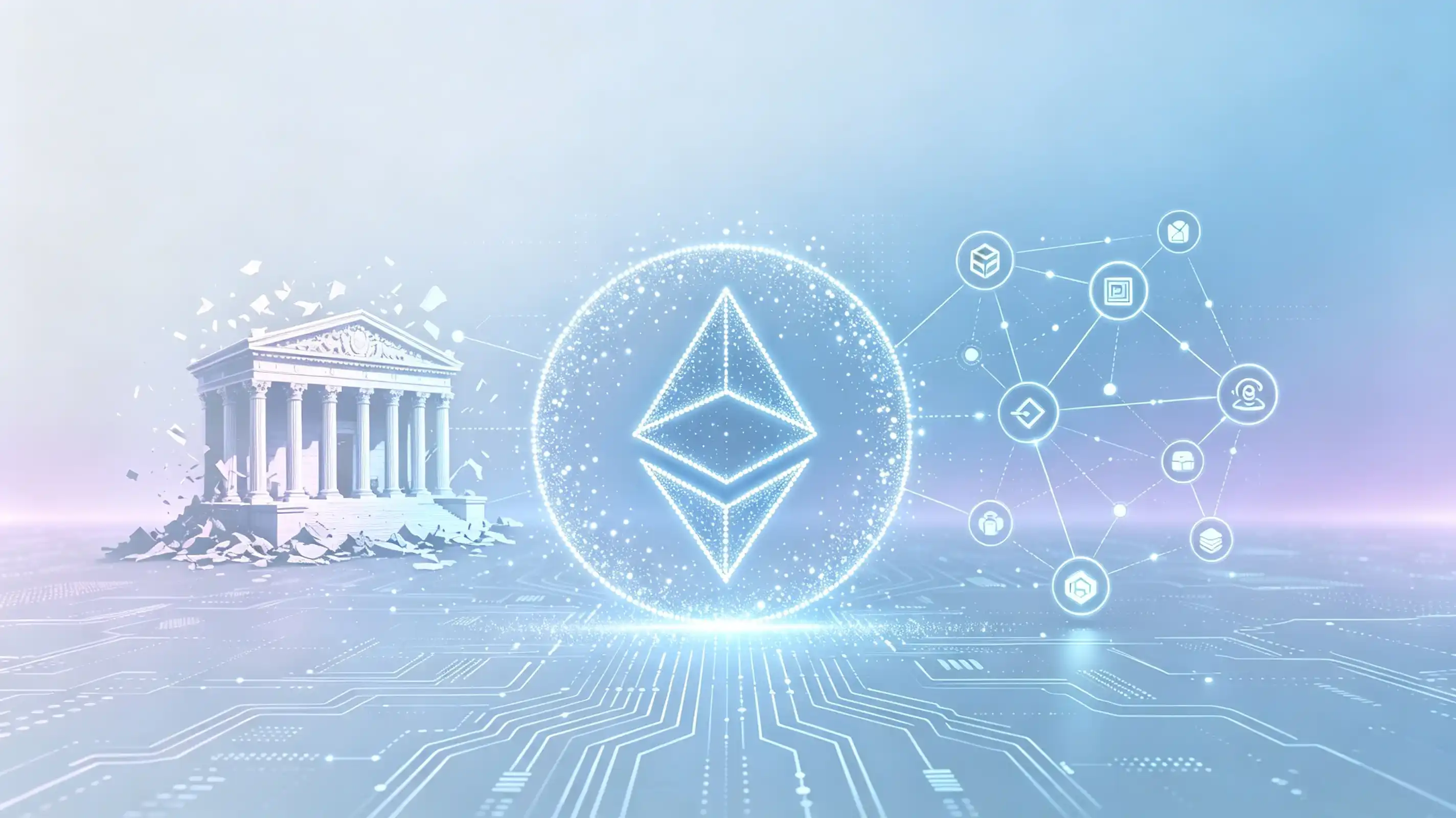
US Stock Registration Giant Acquired by Cryptocurrency Exchange, Accelerating Stock Tokenization

Bullish (NYSE: BLSH), a crypto asset trading platform, announced a $4.2 billion acquisition of Equiniti, a major Wall Street transfer agent serving nearly 3,000 public companies. This move aims to accelerate stock tokenization by securing a critical, regulated piece of financial infrastructure that maintains official shareholder records and handles dividends. The deal signals intensifying competition in the tokenization race. True "native" on-chain securities require a licensed transfer agent for legal ownership registration—a bottleneck Bullish now aims to solve. The acquisition positions Bullish to bridge traditional equity markets with blockchain, leveraging Equiniti's extensive client network and compliance credentials. This follows recent key developments: ICE (NYSE's parent) plans a new tokenized securities platform, and the SEC approved Nasdaq's tokenized stock pilot. Bullish's strategy is to establish a neutral, cross-platform infrastructure ahead of these initiatives. The combined company expects high growth from its tokenization business, targeting the vast U.S. equity market. The narrative is shifting from "crypto vs. Wall Street" to convergence, where legacy infrastructure is upgraded onto blockchain rails. The next 18 months will be crucial for observing the rollout of NYSE's platform, Bullish-Equiniti integration, and the broader adoption of tokenized securities by institutions.

marsbit05/09 09:52

US Stock Registration Giant Acquired by Cryptocurrency Exchange, Accelerating Stock Tokenization

marsbit05/09 09:52

Plummeting Around 12%, Duan Yongping's Bottom-Fishing CoreWeave Turns into a Fierce Battlefield Between Bulls and Bears

On May 8th, AI cloud computing provider CoreWeave (CRWV) plunged 11.4% following its Q1 2026 earnings report, intensifying the polarized market view on the stock. While revenue doubled year-over-year to $2.08B and its Remaining Performance Obligations (RPO) surged to nearly $100B, its net loss also widened to $740M. The key trigger was a weaker-than-expected Q2 revenue forecast, coupled with rising costs that compressed adjusted operating margin to just 1%. The bull thesis centers on CoreWeave's massive order backlog, deep strategic ties with NVIDIA as a key customer and investor, and client diversification with major names like Anthropic and Meta. Supporters point to its 'hyperscale' status and over $20B in recent financing. Bears highlight the "growth at all costs" model: despite soaring revenue, losses are expanding, capital expenditures are massive (~$6.8B in Q1), and total debt has ballooned to around $25B. Significant insider selling by executives adds to skepticism. This contrast is embodied by investor Duan Yongping (known as "China's Buffett"), who initiated a small, exploratory position (~0.12% of his portfolio) in Q4 2025 near the stock's lows, viewing it as a speculative bet on the AI infrastructure chain. The upcoming Q2 report is seen as a critical test for management's promise of a profit margin rebound. CoreWeave remains a battleground stock where long-term narrative clashes with near-term financial reality.

marsbit05/09 09:15

Plummeting Around 12%, Duan Yongping's Bottom-Fishing CoreWeave Turns into a Fierce Battlefield Between Bulls and Bears

marsbit05/09 09:15

Smart Money Hoards $40 Billion in Cash, Retail Bets $2.6 Trillion on Calls: The Critical Moment of the US Stock Market's AI Narrative

Title: Smart Money Hoards $40 Billion in Cash, Retail Traders Bet $2.6 Trillion on Call Options: The Tipping Point for the AI Narrative in U.S. Stocks The U.S. stock market is experiencing a striking divergence. While the S&P 500 hits new highs, the financial sector is down 6% year-to-date, underperforming more than during the 2008 and COVID crises. In contrast, a record $2.6 trillion in S&P 500 call options traded in a single day, and the Philadelphia Semiconductor Index RSI is at its highest since 1999. This reflects a clear split: "smart money" is retreating while retail traders chase gains. Key data points highlight this critical juncture in the AI-driven rally: 1. SoftBank had to cut its $10 billion loan target against its OpenAI stake to $6 billion, as lenders questioned the valuation of the private AI giant, signaling primary market skepticism. 2. The explosive $2.6 trillion daily options volume, with 60% being calls, is described by a Goldman Sachs partner as a "semi-irrational chase," drawing parallels to the 1999 tech bubble. 3. The financial sector's severe underperformance relative to the S&P 500 is a classic technical warning signal, indicating potential underlying economic stress. 4. Apollo Global Management, despite strong earnings, is building a $40 billion cash buffer in its insurance business, preparing for what its CEO calls a 30-35% probability of an exogenous shock from geopolitics, inflation, and AI's economic disruption. 5. Consumer behavior mirrors this split: while Whirlpool plunged on a worsening macro outlook for big-ticket items, DoorDash rose on strong demand for small, immediate services. Together, these conflicting signals from primary markets, secondary markets, leading sectors, and top institutions suggest market risk premia have compressed to a precarious level. The current price action may be increasingly reliant on speculative sentiment rather than fundamental support, marking a potential tipping point for the AI investment narrative.

marsbit05/09 07:40

Smart Money Hoards $40 Billion in Cash, Retail Bets $2.6 Trillion on Calls: The Critical Moment of the US Stock Market's AI Narrative

marsbit05/09 07:40

Tiger Research: AI Agents Will Now Need Identity Verification

Tiger Research: AI Agents Now Need "ID Verification" AI agents are increasingly capable of autonomously executing contracts, making payments, and conducting trades. However, a critical issue remains unresolved: how to verify the identity of the agent on the other side of a transaction. This article examines the emerging competition to establish a KYA (Know Your Agent) standard and the current state of regulatory progress. **Core Points:** 1. As AI agents operate independently in A2A (agent-to-agent) scenarios, the focus shifts from KYC (Know Your Customer) to KYA for identity verification. 2. KYA is not universally required; it's essential primarily when independently deployed agents interact with open ecosystems like DEXs, engage in A2A payments, or pay merchants, not within centralized platforms. 3. A standards battle is underway, with four key players approaching KYA from different angles: * **ERC-8004:** A blockchain-native approach, creating agent IDs as NFTs with on-chain registries for identity, reputation, and validation. * **Visa TAP:** Leverages Visa's payment network to issue verified "Agent Intent" credentials, bundling agent identity into its payment rails. * **Trulioo:** Adapts the SSL certificate model to issue dynamic "Digital Agent Passports," verifying both developer (KYB) and user (KYC) credentials. * **Sumsub:** Focuses on real-time risk detection and re-verification of the human behind an agent during suspicious transactions, rather than pre-issuing certificates. 4. Regulatory momentum is building. The EU AI Act, the U.S. NIST, and Singapore's national AI governance framework are prioritizing agent identity management. The rollout of KYA standards is likely to follow a pattern similar to the FATF Travel Rule, becoming a watershed moment for the industry. The market is unlikely to have a single winner. Different approaches will dominate specific niches: ERC-8004 for on-chain autonomous transactions, Visa TAP for payment-bound commerce, Trulioo for regulated finance, and Sumsub for fraud-prone scenarios. The key differentiator will be which players successfully integrate their identity infrastructure earliest as adoption scales.

marsbit05/09 06:56

Tiger Research: AI Agents Will Now Need Identity Verification

marsbit05/09 06:56

Perspective: The current AI supercycle will last 15 years, but most are still buying stocks in the first FOMO stage

This article outlines a 15-year AI supercycle, segmented into four investment stages. It argues that while most investors are still focused on the first stage, smart money is already moving to the third. **Stage 1: The Foundation (2023-2025) - Priced In** The semiconductor layer (e.g., NVIDIA, AMD) is complete. While growth continues, the historic entry opportunity is over as risk/reward has compressed. **Stage 2: The Build-Out (2025-2027) - In Progress** This phase involves building the necessary physical infrastructure: power/utilities (CEG), cooling (VRT), networking (ANET), and nuclear SMRs (OKLO, SMR). Significant upside remains, but obvious names have already moved. **Stage 3: The Asymmetric Bet (2026-2028) - Positioning Window** AI moves into the physical world. Key areas include robotics/autonomy (Tesla Optimus), space/defense/drones (Rocket Lab, LUNR), and critical materials. This stage presents the best asymmetric risk/reward and is where positioning should occur now. **Stage 4: The Endgame (2028+) - Software Dominance** The mega-cap cloud platforms (Microsoft, Alphabet, Amazon, Meta), with their massive capital expenditure, will build the AI software layer and AGI infrastructure, aiming to win the entire cycle. **Core Conclusion:** The cycle is confirmed in Stage 2. Stage 3 (robotics, space, defense, nuclear SMRs) is where capital is currently rotating for maximum opportunity, while the majority of investors are expected to be 12 months behind this shift.

marsbit05/09 06:37

Perspective: The current AI supercycle will last 15 years, but most are still buying stocks in the first FOMO stage

marsbit05/09 06:37

活动图片