Global economic outlook tanks in February as Bitcoin decouples from traditional market

cryptoslateОпубликовано 2022-03-12Обновлено 2022-03-12

Введение

February has been a busy month at the crypto front. Many vital changes took place, which was easily missed by the community as the Russian invasion of Ukraine kept the headlines occupied.

February has been a busy month at the crypto front. Many vital changes took place, which was easily missed by the community as the Russian invasion of Ukraine kept the headlines occupied.

The war affected the customer sentiment index and caused minor but significant changes in the market, which lowered the Ethereum gas fees and caused Anchor and LUNA to record substantial growth.

The numbers also demonstrate a surprisingly sharp drop in the NFT and metaverse real estate sales. At the same time, specific actions from corporations signal Bitcoin’s potential to create greener energy may finally be utilized.

1- Macro Analysis

February was the month of war — Russia’s invasion of Ukraine hit the financial markets, which were already showing high inflation alarms. The result was high distress and low customer sentiment.
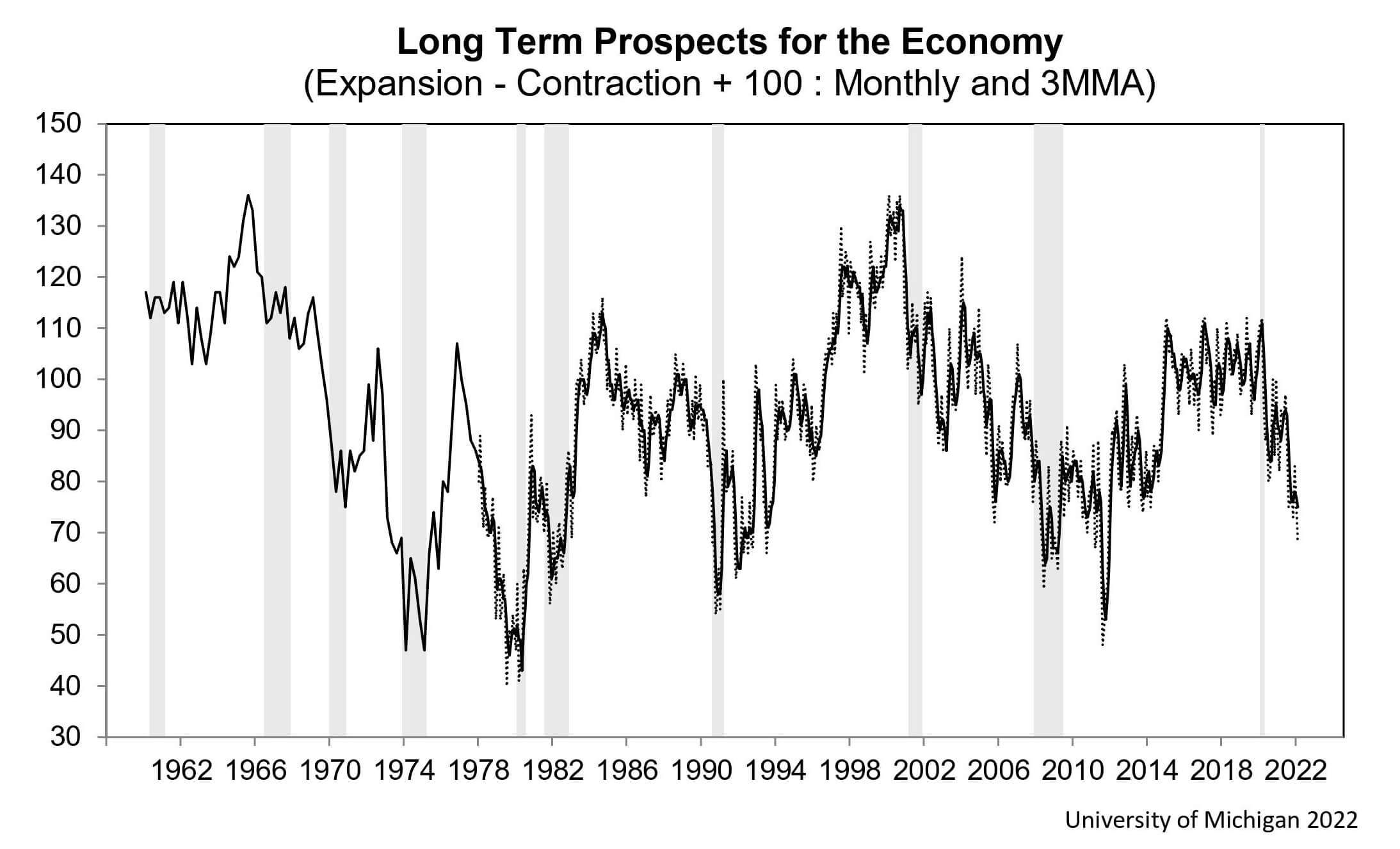
Customer Sentiment Index (via sca.isr.umich.edu)

According to the Customer Sentiment Index (CSI) published annually by the University of Michigan, February’s CSI was 61.7, the lowest since the 2011 global financial crisis. Genesis warns that CSI may continue to drop in the following months if the war escalates.

2 – Bitcoin

Bitcoin showed the same reaction to the war as the traditional markets throughout the month. However, the end of February witnessed a sudden spike in BTC prices.
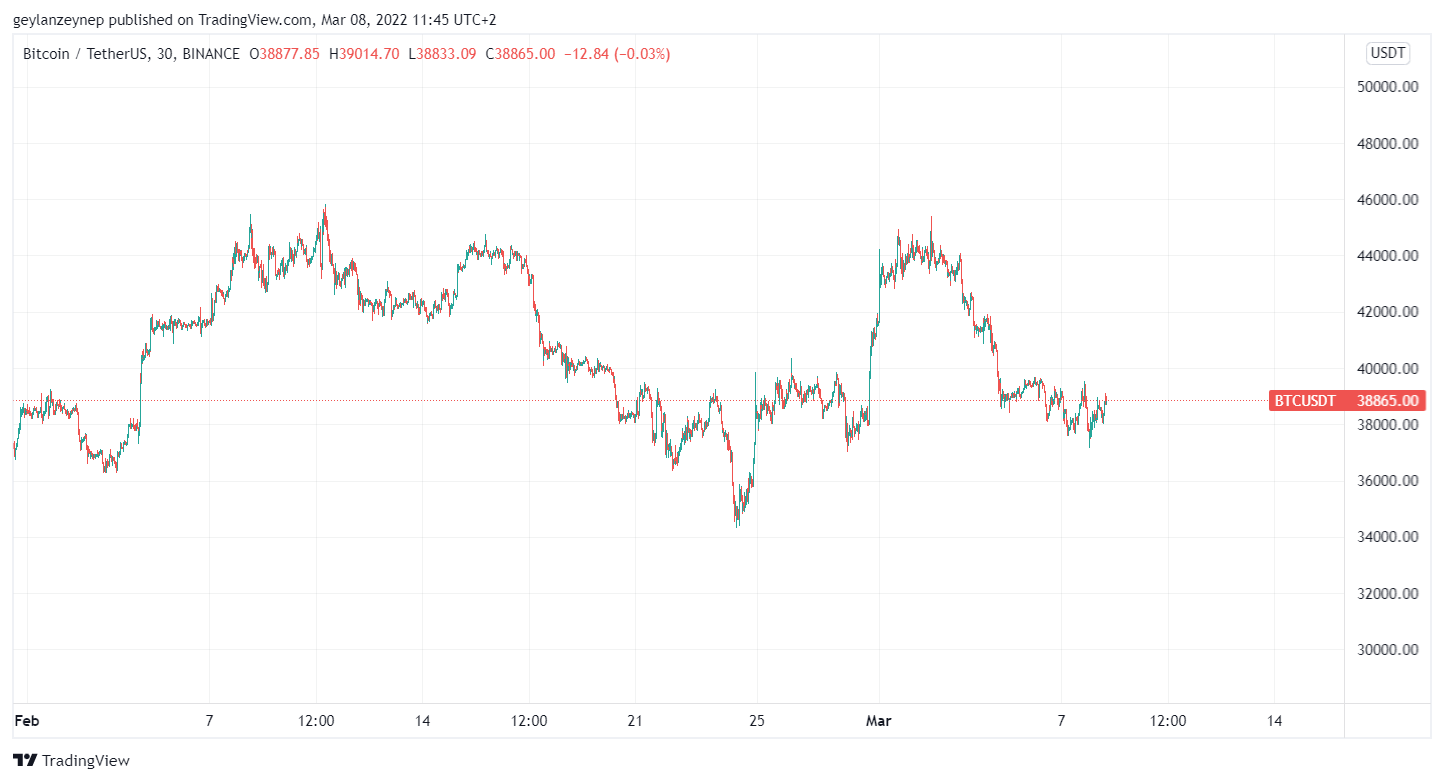
BTC to USDT in February (via tradingview.com)

During the last hours of February, Bitcoin prices increased by almost 16% to $44,125. Genesis states that time will tell if this spike decoupled Bitcoin from the traditional market. The report also noted that 80% of BTC was held in long-term addresses at the end of the month, which supports the possibility of BTC’s decoupling from the “risk asset” narrative.

Firms are entering Bitcoin mining

As a result of traditional energy firms’ involvement in Bitcoin mining, the network hash rate reached an all-time high during February. In addition, the Genesis report claims that Bitcoin mining could contribute to greener energy by reducing flare contamination, which seems to be the goal of the traditional energy firms that started investing in Bitcoin mining.

3- Ethereum
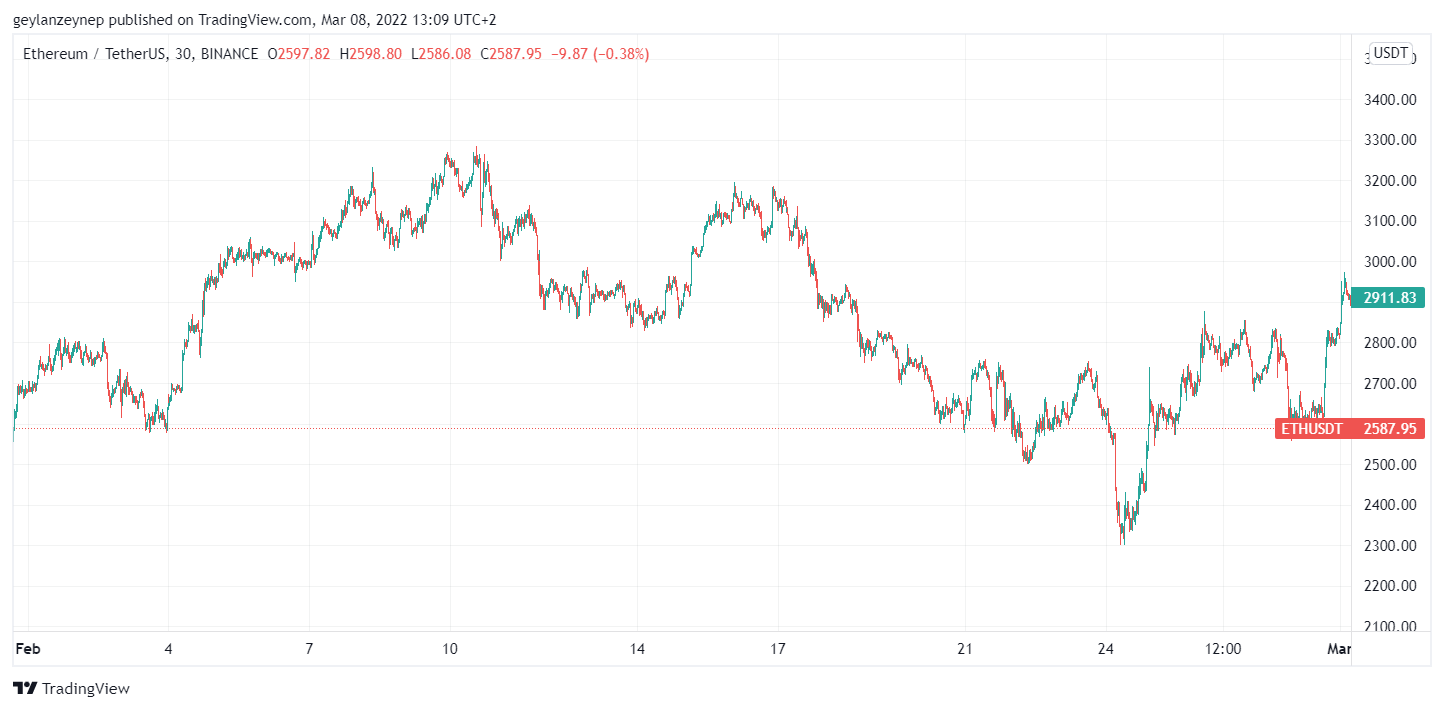
ETH to USDT (via tradingview.com)

Ethereum prices also accompanied BTC’s upwards trend at the end of the month by increasing more than 8%.

One of the significant highlights of Ethereum was the reduction in its transaction fees, which was hindering the development of Layer-2 scaling solutions. Since January, transaction fees have dropped and hit $17 in February, which is an all-time low since September 2021.

Genesis states that Tether, Opensea, and Uniswap, which account for most of the gas fees on Ethereum, showed significant drops in volume during February, which affected the gas fees.

Despite lowering gas fees, February was a slow month for the growth of layer-2 solutions on Ethereum. The numbers show that TVL diminished by 0.68% throughout the month.

4- Layer 1s

Among tokens with a market cap larger than $5, LUNA showed the highest performance by increasing 75%, followed by Avalanche, which increased by 21.7%. On the other hand, Solana had a rough month due to a hack attempt.

LUNA
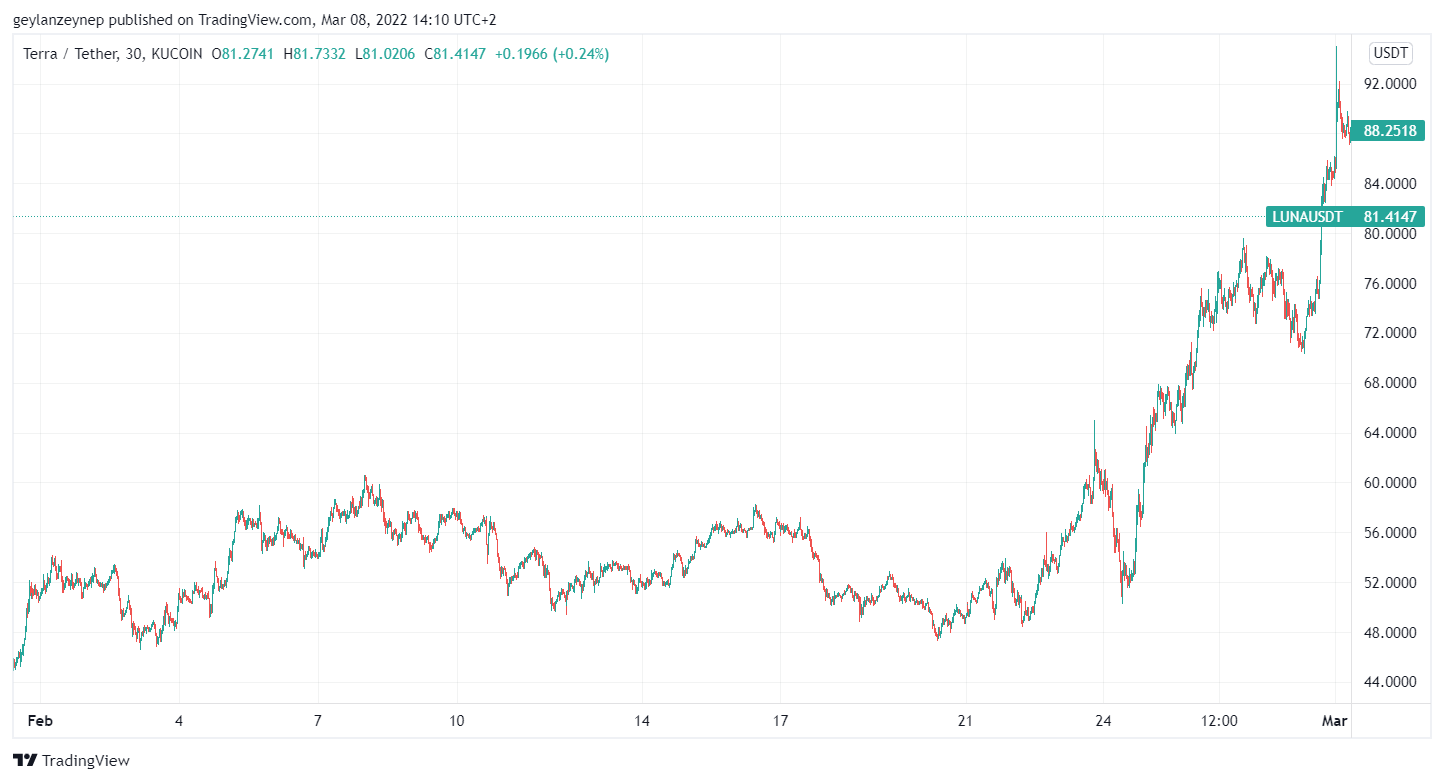
LUNA to USDT (via tradingview.com)

Genesis analyses LUNA’s exponential growth in relation to the increased demand towards USDT throughout February, fueled by Avalance-based DEX Pangolin’s decision to adopt USDT as their default stablecoin and signals of long-awaited MARS airdrop to users who locked over $208 million worth of USDTs.

USDT is minted by burning LUNA, which increases its price by reducing supply. As a result, increased USDT demand burned more LUNAs, leading to grow further.

Moreover, Terra also received $1 billion in support, made a $40 million sponsorship deal with the Washington Nationals, and announced their affiliation with FTX starting March 1, contributing to the price increase.

Avalance
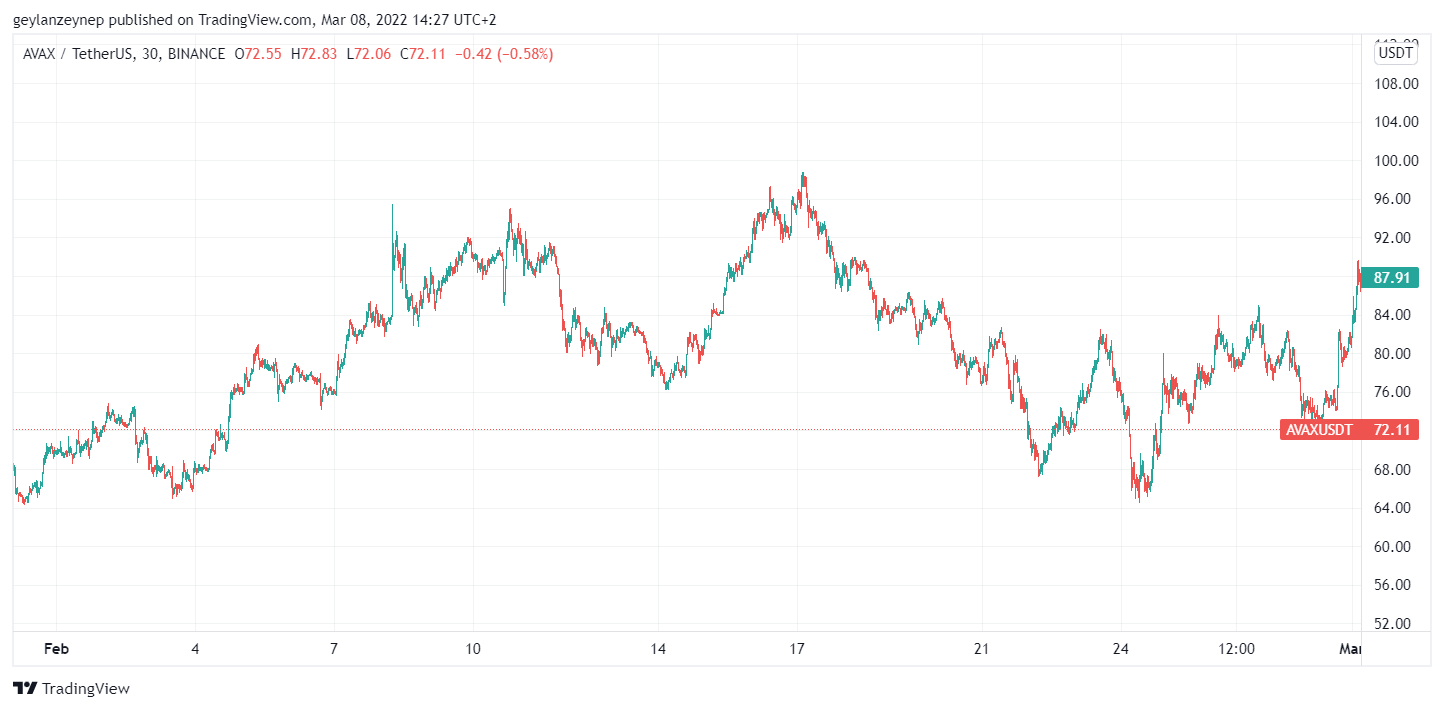
AVAX to USDT (via tradingview.com)

While Avalanche has an overall price increase, its real growth took place in its transactions counts, which are approaching that of Ethereum. Genesis notes this increase could result from increasing subnets on Avalanche, WGM Airdrops and Avalanche’s first significant developer conference.

Solana

Solana was faced with a $320 million exploit in February due to an attack on a Wormhole. Wormholes behave as bridges connecting multiple blockchains where users can deposit their Ethereums to receive wrapped Ethereums (whETH), compatible with another blockchain.

The hacking attempt was made by an attacker who found a way to mint whETH without providing any deposits. The loss was compensated by Jump Crypto, who deposited 120 ETH into the Wormhole to provide for the missing collateral.
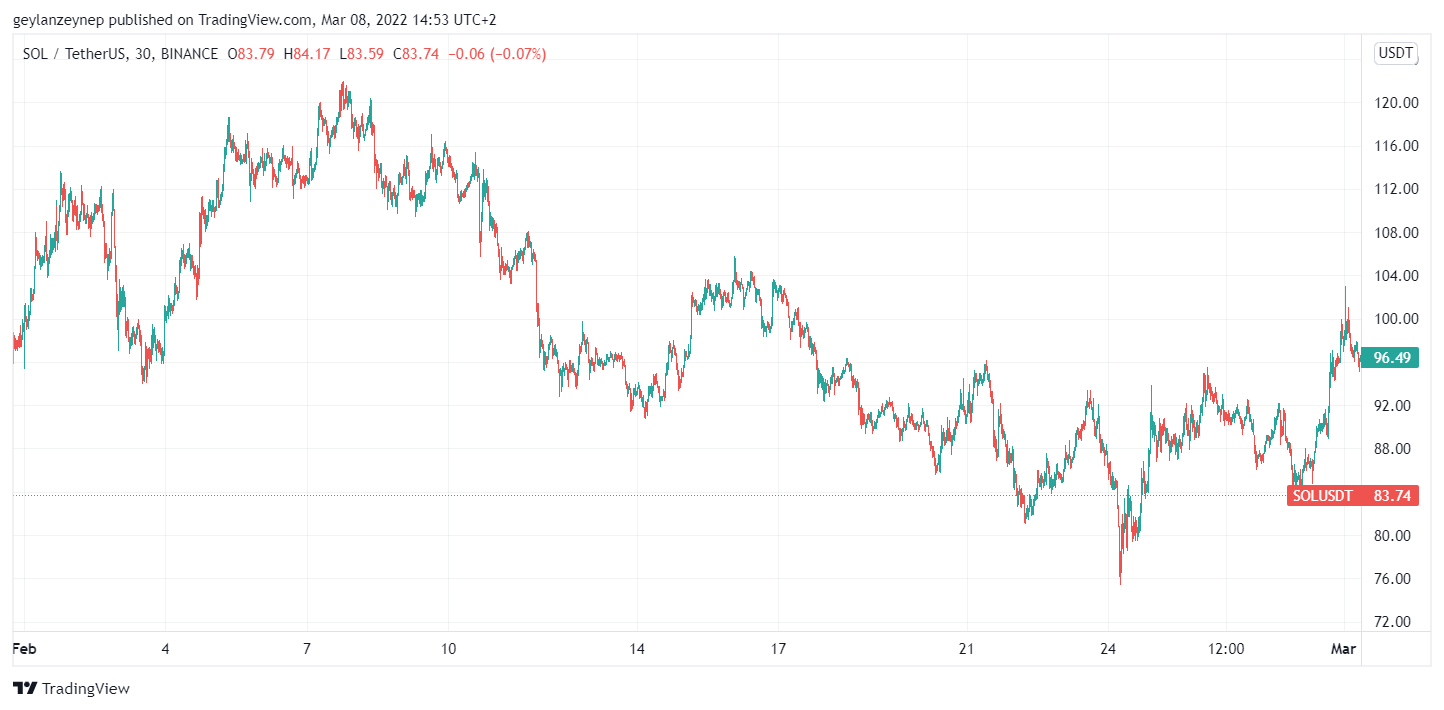
SOL to USDT (via tradingview.com)

As a result of this attack, Solana prices saw a downwards trend throughout February.

5- DeFi

Even though TVL mainly remained the same at over $220 million at the end of February as the beginning, Anchor protocol overperformed, increasing its market cap by 127.2%.
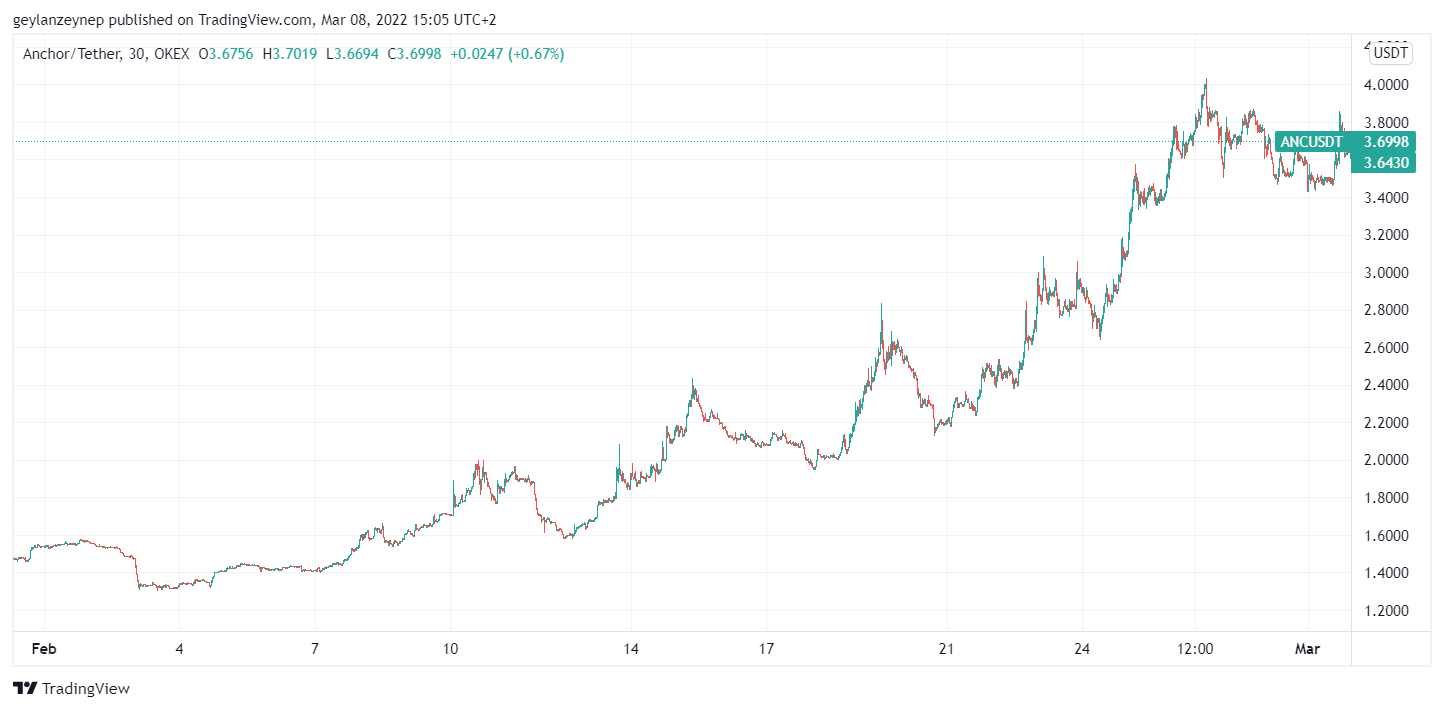
ANC to USDT (via tradingview.com)

Anchor’s TVL also showed a 45% increase from $7.13 billion to $10.32 billion.

According to Genesis, this increase is a sum of the tendency to turn towards yield in recent weak market conditions, the impressive growth of Terra and the Terra ecosystem’s decision to burn $450 million worth of LUNA  from the Anchor reserves.

6- Metaverse/NFT

Despite extensive publication during the Super Bowl, metaverse real estate showed little growth while NFT sales declined during February.

Metaverse

According to metametric solutions, real estate sales on Decentraland, The Sandbox, Axie Infinity, Enjin Coin, and Illuvium reached $501 million in 2021 and is expected to increase up to $1 billion in 2022.
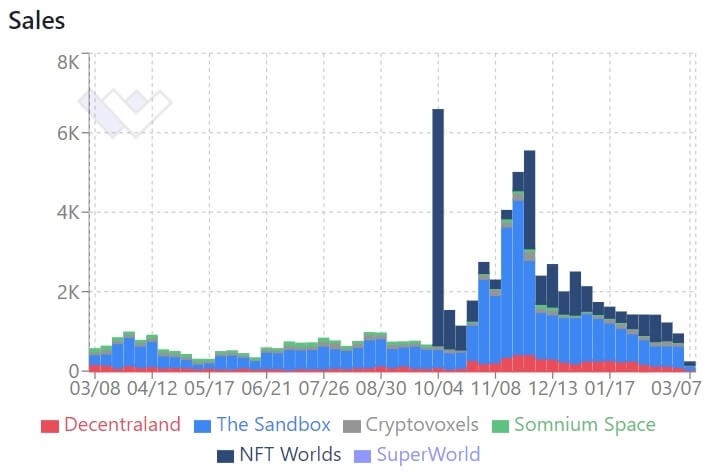
Metaverse real estate sales (via analytics.wemeta.world)

On the other hand, the above chart shows that after a very active November, metaverse real estate sales continue their downwards trend in February.

However, the metaverse publicity showed significant growth as J.P. Morgan opened its first metaverse branch, Gucci bought land in The Sandbox, and Everyrealm received a $60 million investment during February.

NFT

NFTs received good publicity throughout February as Super Bowl commercials were seen by over 100 million; Samsung announced that the new Galaxy S22 would come with a commemorative NFT, Reese Witherspoon, Zynga and Take-Two announced their NFT related projects, and Twitch’s creator tweeted about gaming NFTs.
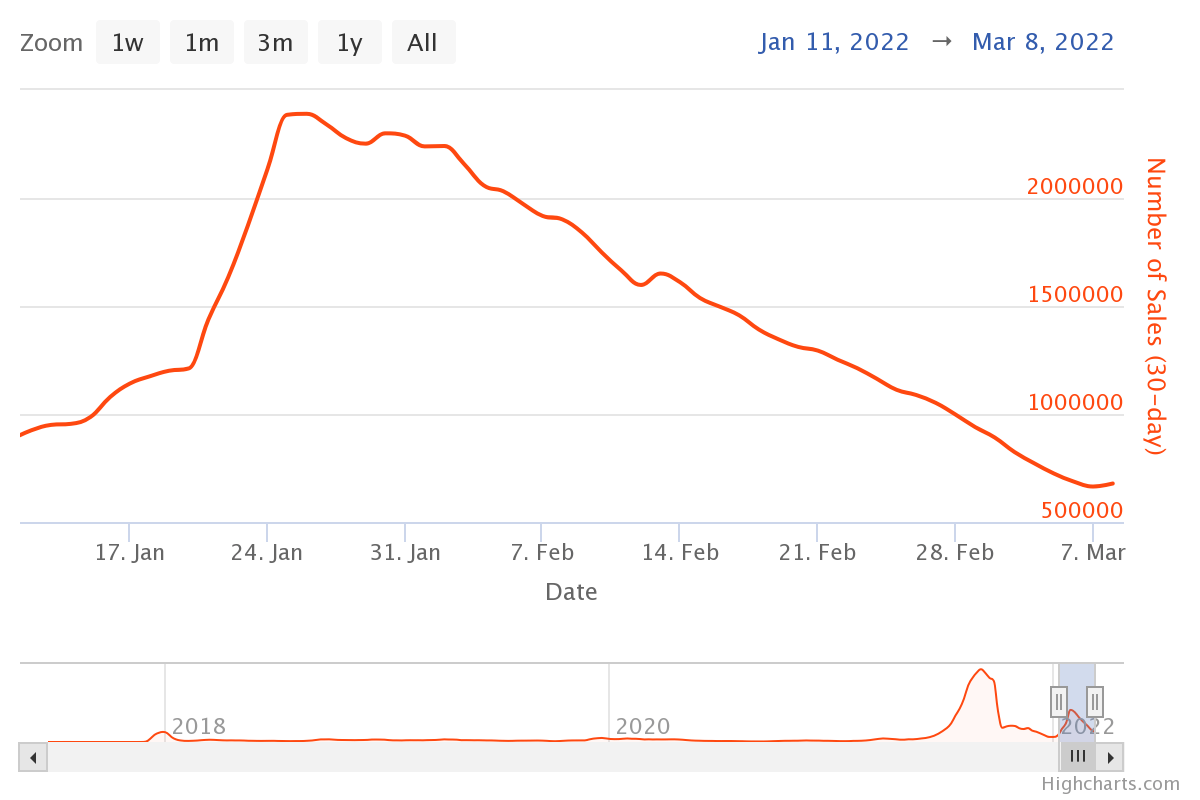
NFT Sales (via nonfungible.com)

However, despite the publicity, numbers clearly show a sharp decline in NFT sales throughout February 2022.

A significant crisis hit the NFT space when 17 OpenSea users were subjected to a phishing attack, leading to the loss of nearly $3 million worth of NFTs.

In addition, CryptoPunks also lost its surge. The sale of 104 CryptoPunks was pulled at the last minute since supposedly they received only one bid, which was well below the expected price. This was after the creators of CryptoPunks publicly apologized for mishandling some V1 CryptoPunks due to an ill smart contract.

7- Regulations

Regulatory attention was focused on the stablecoins and the States started to get involved in the crypto space throughout February.

Propositions on stablecoins

The month started with two official hearings from the House and the Senate, where the propositions of the President’s Working Group to treat stablecoin issuers as banks were rejected.

Another proposition came from Congressman Josh Gotthiemer, which set protections to stablecoins, issued by a qualified non-bank entity that maintains 100% reserves.

Right after Congressman’s proposition, NY Federal Reserve published a paper pointing out that requiring 100% reserve for safe assets could lead to scarcity.

States’ involvement

In February, Wyoming became the first state to authorize crypto banks, officially recognize the custody of digital assets as a regulated activity and allow the registration of DAOs as LLCs.

In addition, Tennessee introduced a bill to allow the state and its municipalities to invest in crypto; Colorado announced that they would accept taxes in cryptocurrency, and California presented a statement indicating their interest in accepting cryptocurrency as payment for government services.

Conclusion

While Russia’s aggression occupied the newsrooms throughout February with depressing news, many positive advancements took place in DeFi, Bitcoin and Ethereum. Nevertheless, customer sentiment rankings took a significant hit from the war, while NFTs and metaverse real estate sales faced recessions of their own.


Похожее

Bitcoin Trading Strategy Breakdown: Celebrity Predictions and Classic Models All Fail, Only These Four Indicators Remain

Analysis of Bitcoin Trading Strategies: Why Celebrity Forecasts and Classic Models Fail, Leaving Only These Four Reliable Indicators This analysis examines the failure of common Bitcoin prediction methods and identifies four reliable indicators for constructing a trading strategy. The author reviewed all major BTC prediction approaches from 2017-2025, categorizing them into three groups: celebrity price targets (consistently over-optimistic), analytical models like Stock-to-Flow (broken post-2022), and on-chain signals. The key finding is that more data often creates confusion, not clarity. The strategy discards unreliable elements: celebrity predictions (incentivized to be extreme), pure models (invalidated by post-ETF market changes), and the Fear & Greed Index used alone (too many false signals). Four reliable indicators were selected: 1. **MVRV Z-Score:** Accurately identifies cycle bottoms when entering its green zone (e.g., 2018, 2020, 2022). Note: Its ability to call tops is now ineffective post-2024. 2. **SOPR (28-day MA):** Consistently signals bottoms when below 1.0, indicating holders are selling at a loss. 3. **ETF Net Flow:** A crucial post-2024 metric showing institutional momentum (e.g., sustained inflows = buying). 4. **Macro Liquidity (Fed policy & M2):** Sets the overall directional bias (e.g., bullish during easing cycles). The core strategy involves waiting for a multi-signal共振 (resonance). For example, a bottom signal requires MVRV in the green zone + SOPR < 1.0. A top signal requires overheated on-chain data + sustained ETF outflows. Macro policy sets the overall direction. The Fear & Greed Index is only used as a weighted confirmatory signal, never alone. Action is only taken when three or more indicators align. The author automated this into a monitoring system that sends Telegram alerts only when signals trigger. As of the article's date (April 15, 2026), the system showed a strong bottom signal: extreme fear (F&G=12), MVRV in the buy zone, and SOPR < 1.0. The only contrary signal was weak ETF flows. Historically, such triple on-chain共振 has preceded 100%+ returns. The conclusion emphasizes building a personal framework over relying on external predictions, allowing for iterative improvement and customization based on individual risk tolerance.

marsbit1 ч. назад

Bitcoin Trading Strategy Breakdown: Celebrity Predictions and Classic Models All Fail, Only These Four Indicators Remain

marsbit1 ч. назад

Торговля

Спот
Фьючерсы

Популярные статьи

Тест по Bitcoin Биткоина

HTX Learn: Изучите Bitcoin halving и Заработаете Токены USDT

2.9k просмотров всегоОпубликовано 2024.04.16Обновлено 2024.04.16

Тест по Bitcoin  Биткоина

Что такое $BITCOIN

ЦИФРОВОЕ ЗОЛОТО ($BITCOIN): Комплексный анализ Введение в ЦИФРОВОЕ ЗОЛОТО ($BITCOIN) ЦИФРОВОЕ ЗОЛОТО ($BITCOIN) — это проект на основе блокчейна, работающий в сети Solana, который стремится объединить характеристики традиционных драгоценных металлов с инновациями децентрализованных технологий. Хотя он носит имя Биткойн, часто называемого “цифровым золотом” из-за его восприятия как средства хранения ценности, ЦИФРОВОЕ ЗОЛОТО является отдельным токеном, предназначенным для создания уникальной экосистемы в ландшафте Web3. Его цель — позиционировать себя как жизнеспособный альтернативный цифровой актив, хотя детали его применения и функциональности все еще развиваются. Что такое ЦИФРОВОЕ ЗОЛОТО ($BITCOIN)? ЦИФРОВОЕ ЗОЛОТО ($BITCOIN) — это токен криптовалюты, специально разработанный для использования в блокчейне Solana. В отличие от Биткойна, который выполняет широко признанную роль хранения ценности, этот токен, похоже, сосредоточен на более широких приложениях и характеристиках. Примечательные аспекты включают: Инфраструктура блокчейна: Токен построен на блокчейне Solana, известном своей способностью обрабатывать высокоскоростные и недорогие транзакции. Динамика предложения: ЦИФРОВОЕ ЗОЛОТО имеет максимальное предложение, ограниченное 100 квадриллионами токенов (100P $BITCOIN), хотя детали о его обращающемся предложении в настоящее время не раскрыты. Утилита: Хотя точные функциональные возможности не описаны, есть указания на то, что токен может быть использован для различных приложений, потенциально связанных с децентрализованными приложениями (dApps) или стратегиями токенизации активов. Кто создатель ЦИФРОВОГО ЗОЛОТА ($BITCOIN)? На данный момент личность создателей и команды разработчиков, стоящих за ЦИФРОВЫМ ЗОЛОТОМ ($BITCOIN), остается неизвестной. Эта ситуация типична для многих инновационных проектов в области блокчейна, особенно тех, которые связаны с децентрализованными финансами и феноменом мем-криптовалют. Хотя такая анонимность может способствовать культуре, ориентированной на сообщество, она усиливает опасения по поводу управления и ответственности. Кто инвесторы ЦИФРОВОГО ЗОЛОТА ($BITCOIN)? Доступная информация указывает на то, что у ЦИФРОВОГО ЗОЛОТА ($BITCOIN) нет известных институциональных спонсоров или значительных венчурных капиталовложений. Проект, похоже, функционирует по модели пирингового взаимодействия, сосредоточенной на поддержке и принятии сообществом, а не на традиционных путях финансирования. Его активность и ликвидность в основном сосредоточены на децентрализованных биржах (DEX), таких как PumpSwap, а не на устоявшихся централизованных торговых платформах, что еще больше подчеркивает его подход, ориентированный на grassroots. Как работает ЦИФРОВОЕ ЗОЛОТО ($BITCOIN) Операционные механизмы ЦИФРОВОГО ЗОЛОТА ($BITCOIN) можно подробно описать на основе его дизайна блокчейна и характеристик сети: Механизм консенсуса: Используя уникальный механизм доказательства истории (PoH) Solana в сочетании с моделью доказательства доли (PoS), проект обеспечивает эффективную валидацию транзакций, что способствует высокой производительности сети. Токеномика: Хотя конкретные дефляционные механизмы не были подробно описаны, большое максимальное предложение токенов подразумевает, что оно может быть предназначено для микротранзакций или нишевых случаев использования, которые еще предстоит определить. Интероперабельность: Существует потенциал для интеграции с более широкой экосистемой Solana, включая различные платформы децентрализованных финансов (DeFi). Однако детали относительно конкретных интеграций остаются неуточненными. Хронология ключевых событий Вот хронология, которая подчеркивает значимые вехи, касающиеся ЦИФРОВОГО ЗОЛОТА ($BITCOIN): 2023: Первоначальное развертывание токена происходит в блокчейне Solana, отмеченное его адресом контракта. 2024: ЦИФРОВОЕ ЗОЛОТО приобретает видимость, когда оно становится доступным для торговли на децентрализованных биржах, таких как PumpSwap, позволяя пользователям обменивать его на SOL. 2025: Проект наблюдает спорадическую торговую активность и потенциальный интерес к инициативам, возглавляемым сообществом, хотя на данный момент не зафиксировано никаких значительных партнерств или технических достижений. Критический анализ Сильные стороны Масштабируемость: Основная инфраструктура Solana поддерживает высокие объемы транзакций, что может повысить полезность $BITCOIN в различных сценариях транзакций. Доступность: Потенциально низкая цена торговли за токен может привлечь розничных инвесторов, способствуя более широкому участию благодаря возможностям дробного владения. Риски Отсутствие прозрачности: Отсутствие публично известных спонсоров, разработчиков или процесса аудита может вызвать скептицизм относительно устойчивости и надежности проекта. Волатильность рынка: Торговая активность сильно зависит от спекулятивного поведения, что может привести к значительной волатильности цен и неопределенности для инвесторов. Заключение ЦИФРОВОЕ ЗОЛОТО ($BITCOIN) является интригующим, но неоднозначным проектом в быстро развивающейся экосистеме Solana. Хотя он пытается использовать нарратив “цифрового золота”, его отход от установленной роли Биткойна как средства хранения ценности подчеркивает необходимость более четкого различения его предполагаемой утилиты и структуры управления. Будущее принятие и усвоение, вероятно, будут зависеть от решения текущей непрозрачности и более четкого определения его операционных и экономических стратегий. Примечание: Этот отчет охватывает синтезированную информацию, доступную на октябрь 2023 года, и с тех пор могут произойти события.

99 просмотров всегоОпубликовано 2025.05.13Обновлено 2025.05.13

Что такое $BITCOIN

Fractal Bitcoin: масштабирование Биткоина с помощью рекурсивной системы

Fractal Bitcoin — масштабное Layer-1-решнение, созданное на базе кода Биткоина, позволяющего достигать бесконечного масштабирования с помощью рекурсивного подхода.

2.2k просмотров всегоОпубликовано 2025.06.30Обновлено 2025.06.30

Fractal Bitcoin: масштабирование Биткоина с помощью рекурсивной системы

Обсуждения

Добро пожаловать в Сообщество HTX. Здесь вы сможете быть в курсе последних новостей о развитии платформы и получить доступ к профессиональной аналитической информации о рынке. Мнения пользователей о цене на BTC (BTC) представлены ниже.

活动图片