GPT-5.6 Sol Major Price Cut: OpenAI Brings Price War to Its Flagship Model

marsbitОпубликовано 2026-08-24Обновлено 2026-08-24

Введение

OpenAI has slashed the API pricing for its flagship model GPT-5.6 Sol by over 20%, effective immediately. Input token costs dropped from $5 to $4 per million, while output tokens saw a more significant 33% reduction from $30 to $20 per million. This makes high-volume API users, especially those with output-heavy workloads like code generation, the biggest beneficiaries, with potential savings exceeding 30%. The price cut applies to API and credit-based usage, but subscription plans (Pro, Plus, Business) and their included allowances remain unchanged. OpenAI attributes the降价 to improved model efficiency and infrastructure scale, citing a 20% reduction in end-to-end service costs. Industry analysts view this move as a strategic play in the competitive AI landscape. It is seen as direct pressure on rival Anthropic, which is currently in its IPO roadshow phase aiming for a late 2024 listing. Simultaneously, it serves as a defensive response against aggressively priced models from Chinese competitors like DeepSeek. In related news, OpenAI's coding assistant Codex surpassed 20 million weekly active users. To mark the milestone, users received a one-time credit reset. The company also clarified policies against reselling or sharing subscription API quotas.

Within the next three months, both API prices and credit prices (the pay-as-you-go usage beyond the plan's included quotas) will be reduced by over 20%.

Currently, the price cuts on the API side have taken immediate effect. Eligible ChatGPT Work and Codex credits are being rolled out progressively.
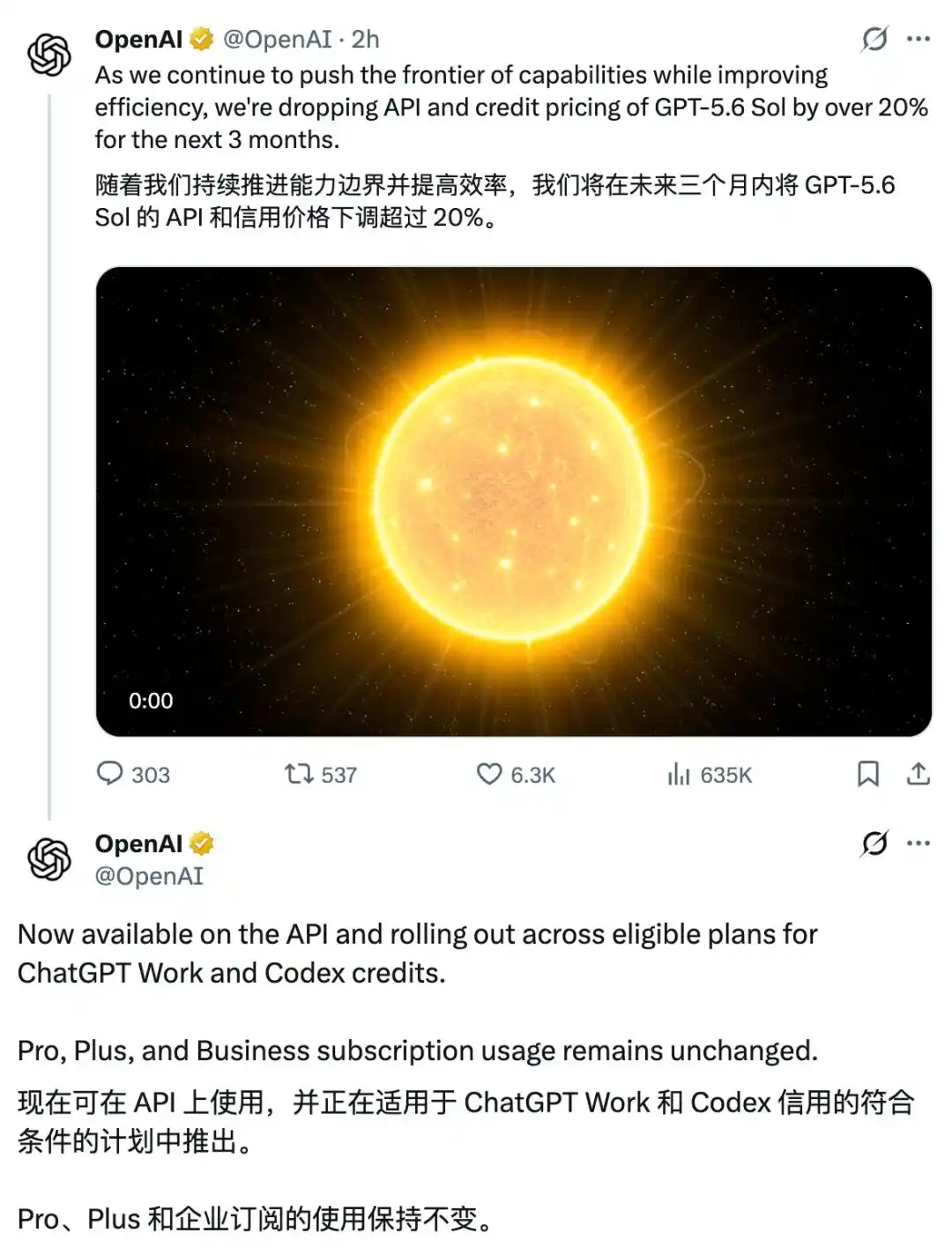
However, the prices for the Pro, Plus, and Business subscription tiers remain unchanged. The usage included in these plans has also not been increased.

The cuts are applied entirely to the token-based billing portion. This means the more API calls you make, the more you save.

How Much Can You Actually Save?

Previously, Sol's API pricing was $5 per million input tokens and $30 per million output tokens, making it the most expensive in the GPT-5.6 family.

Now, looking at the pricing page, it's $4 for input and $20 for output.

The input price dropped by 20%, which is straightforward. But the output price was slashed from $30 to $20, a full one-third reduction.
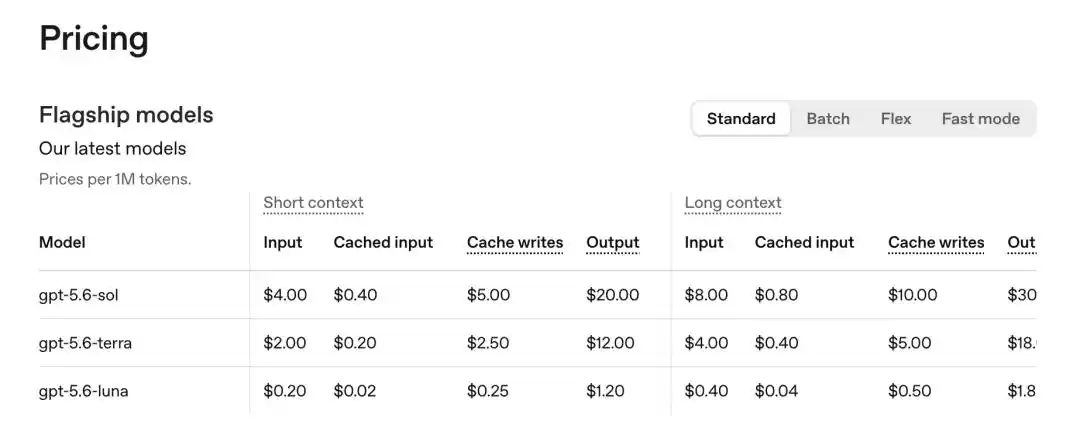
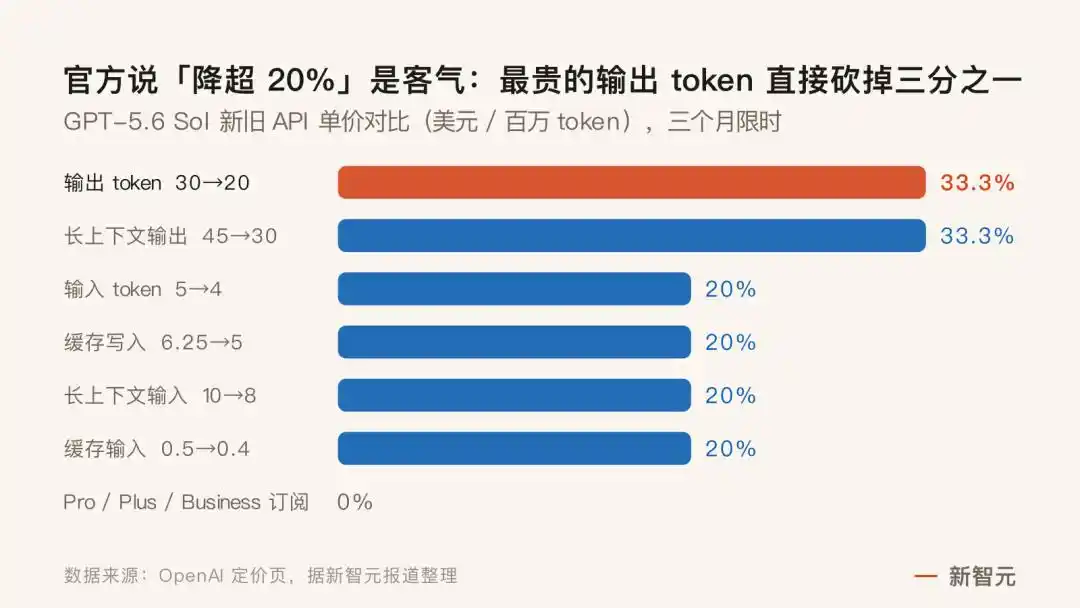
So, the official "over 20%" price cut statement is quite conservative. The truly expensive output tokens saw a 33% reduction.

Assuming a large-scale Agent consumes 100 million input tokens and 20 million output tokens per month, the cost would have been $1100. Now it's $800, a comprehensive reduction of approximately 27.3%.

How much you save specifically depends entirely on your input-to-output ratio. For input-heavy tasks like batch document processing, savings are around 20% or more. For scenarios like Codex, where code generation is intensive and output dominates, savings can exceed 30%.
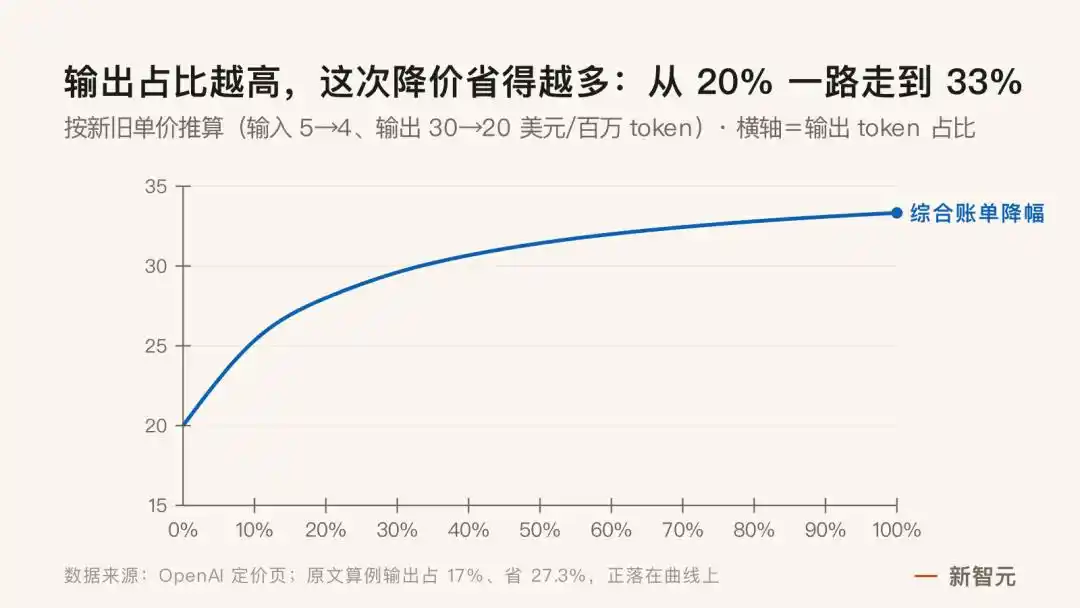
In short, the more you treat Sol as a productivity tool and push it to its limits, the more you save this time.

The cached tier has also been adjusted: cached input dropped from $0.5 to $0.4 per million tokens, and cached writes from $6.25 to $5 per million tokens. The long context window prices were similarly reduced: input from $10 to $8, output from $45 to $30 per million tokens.
OpenAI Developers subsequently posted, stating that the price reduction is possible because Sol now runs more efficiently.
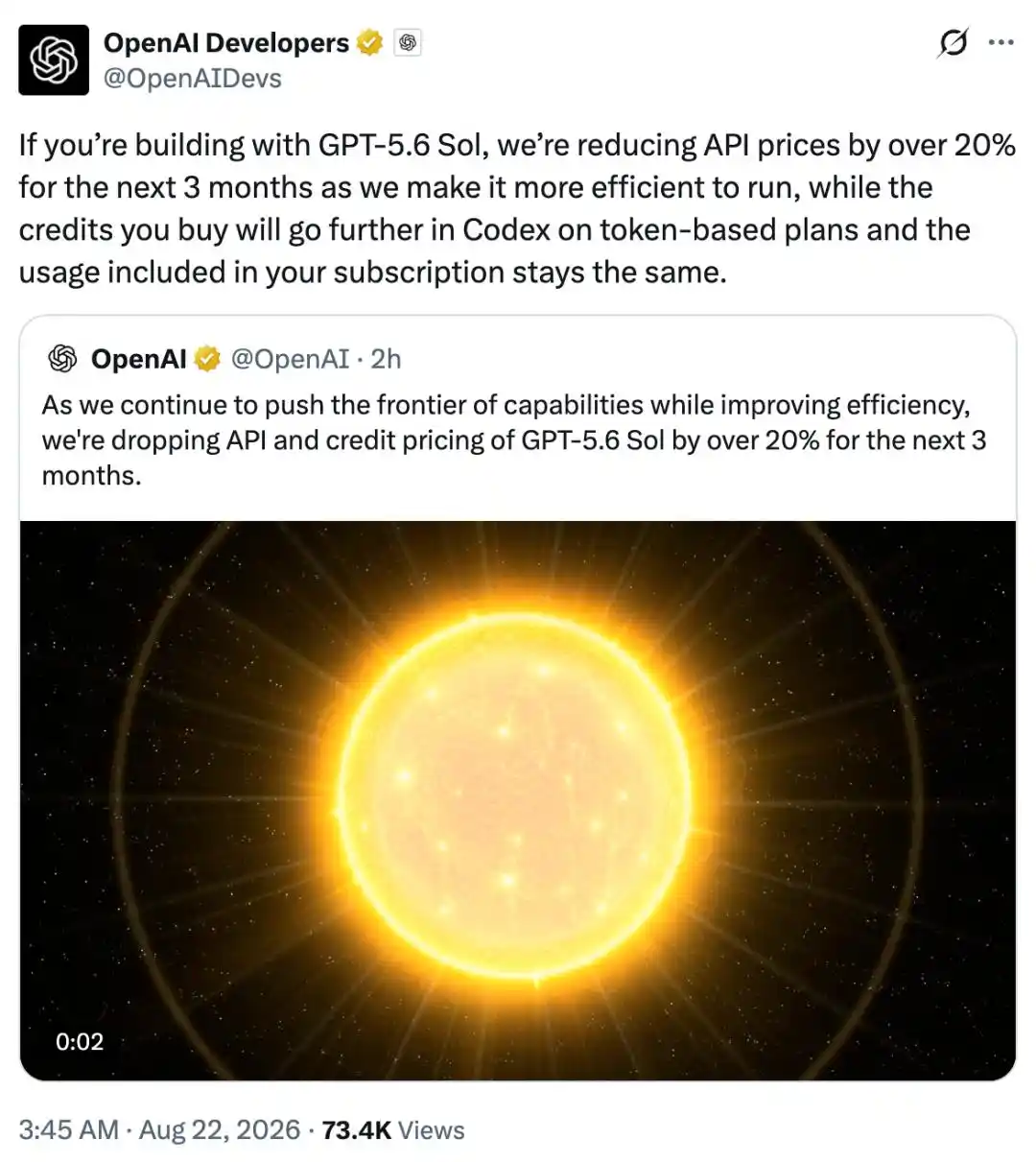
The ASI Duel Finals: Price Becomes the Second Battlefield

In OpenAI's previous round of price cuts, Sol was the only model that remained unchanged.

Luna was cut by 80%, the mainstay Terra by 20%. Only the flagship Sol held its original price, merely adding a free Fast mode for acceleration.

At that time, OpenAI's strategy was clear: cheaper models drive volume, while the most expensive card maintains prestige.

This time, Sol itself is entering the fray. And at this particular moment, it doesn't seem like a coincidence.

The tech influencer Chubby's assessment is direct: This is clearly aimed at Anthropic.

Anthropic is currently facing challenges. Negative feedback on Opus 5 hasn't been fully digested, and users are complaining about the rate limits of the Fable 5 subscription plan.

OpenAI's major price cut now is an attempt to poach Anthropic's users.

Tech journalist Tae Kim put it even more sharply: OpenAI is employing some business tactics during Anthropic's IPO roadshow.
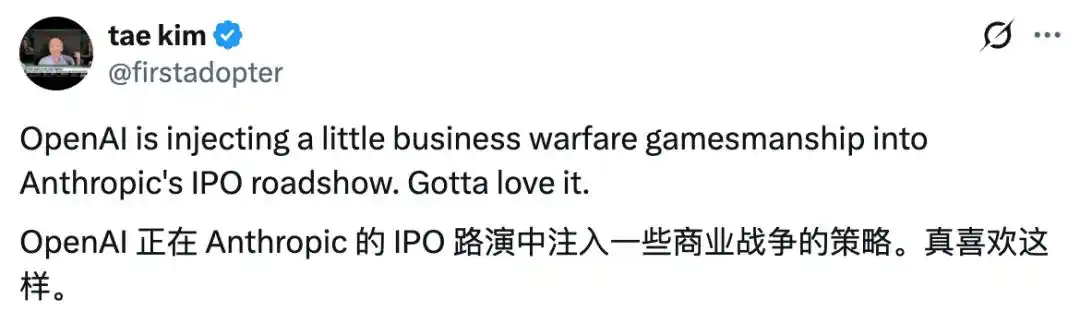
This isn't baseless speculation.

Anthropic filed a confidential S-1 with the SEC on June 1st this year, formally initiating the IPO process. According to multiple media reports, underwriters began arranging meetings between management and potential investors from mid-July, with the roadshow window precisely covering August to September.

Target listing time: As early as October, on NASDAQ, with a valuation targeting $2 trillion.

During a roadshow, the last thing a company wants is competitors causing trouble.

After the benchmarks battle, price has become the second battlefield in the ASI duel finals.

OpenAI's willingness to slash prices drastically isn't an impulsive move either.

Their earlier aggressive investments in building their own computing power and betting on more efficient model architectures are now paying off.

Just days ago, OpenAI announced securing approximately 8 IT-GW of computing power at the PORTS-Pike complex in Pike County, Ohio, signing a 20-year lease; NVIDIA is exclusively providing the AI computing infrastructure.

Previously, OpenAI also reached a five-year agreement with Oracle worth over $300 billion, corresponding to up to 4.5GW of new capacity, and signed a 6GW GPU deployment deal with AMD.

OpenAI confirmed in April this year that it had locked in over 10GW of AI infrastructure capacity, aiming to expand to 30GW by 2030.

The more developed the infrastructure, the lower the marginal cost, and the greater the room for price reductions. This creates a positive flywheel: Model efficiency improves → Inference costs drop → Price reduction space is created → Users flock in → Revenue grows → Reinvest in infrastructure.
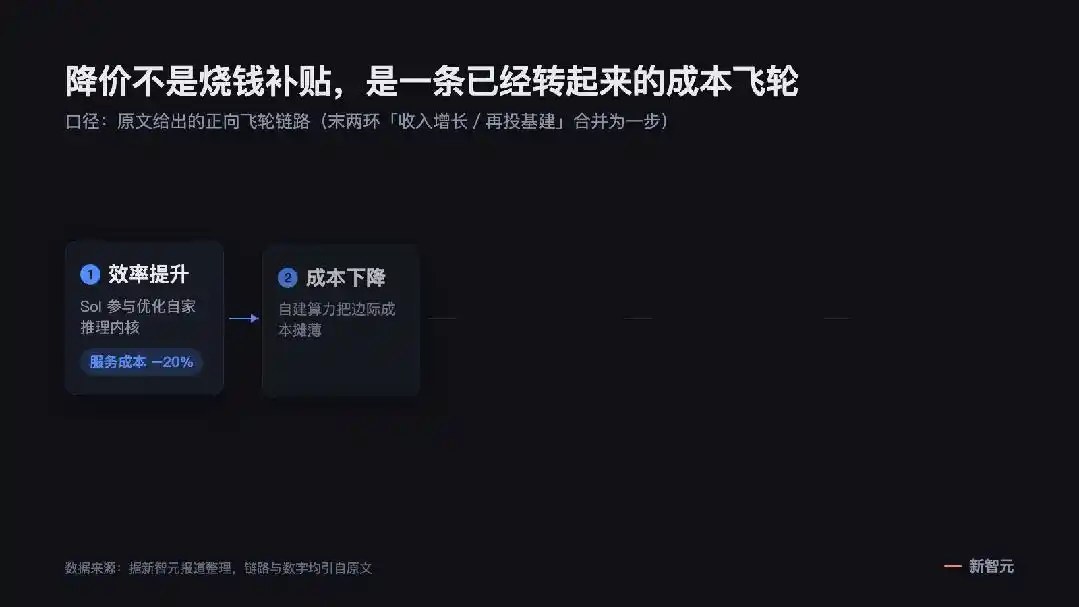
It can be said that OpenAI's flywheel is taking off. They themselves stated that GPT-5.6 Sol participated in optimizing its own production inference kernel, reducing end-to-end service costs by 20% and improving token generation efficiency by over 15%.

However, besides proactively creating pressure, this price cut also has a defensive element.

DeepSeek V4 Flash was officially released on July 31st, with pricing that seems almost free.

Even more stimulating is a mysterious model codenamed "Ox Alpha" that emerged two days ago. It boasts a 1M context window, supports text, image, and video input, and offers a week of free usage.

Now, Chinese open-source models are not only cheap but also steadily approaching the capabilities of frontier models.

Therefore, Sol's price cut is both an offensive move against Anthropic and a defensive counterattack against low-cost Chinese models.

Codex Surpasses 20 Million

Another set of numbers was announced on the same day.

Codex lead Tibo announced that Codex active users surpassed 20 million this week.
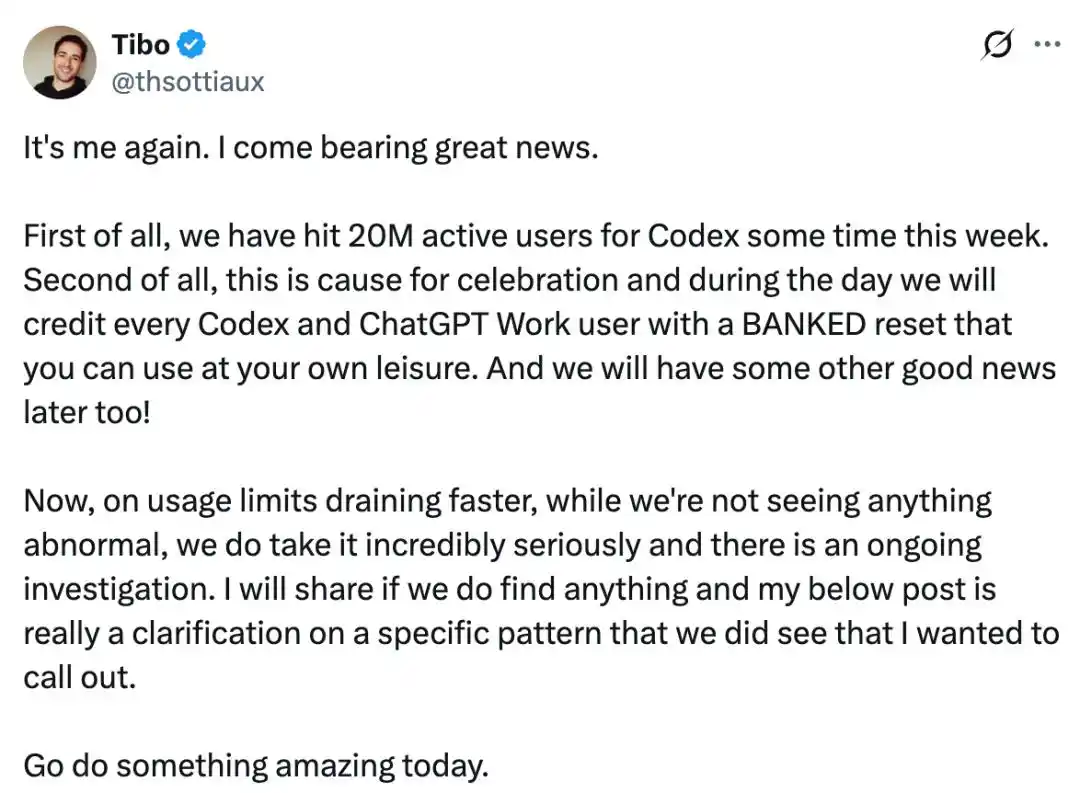
To celebrate this milestone, the team issued a one-time BANKED credit reset to all Codex and ChatGPT Work users.

However, regarding community feedback about credit consumption being too fast, Tibo said no abnormalities have been found so far, but a formal investigation has been launched, and results will be shared promptly.

He also drew a line: Officially, converting subscription accounts into API traffic via methods like sub2api for resale or multi-person sharing is not supported. Such usage patterns will be directly flagged by the risk control system.

The path of splitting a monthly subscription account to sell to a hundred people is blocked.

Using official clients, or open-source clients like Pi or OpenCode normally, is completely fine.

References:

https://x.com/OpenAI/status/2090885187634905500

https://x.com/OpenAI/status/2090885188897460249

https://x.com/kimmonismus/status/2090890956287492564

https://x.com/rohanpaul_ai/status/2090885980849050036

https://x.com/rohanpaul_ai/status/2090891370663989566

https://x.com/thsottiaux/status/2090766694897619318

This article is from the WeChat public account "新智元", author: ASI启示录, editor: Solomon

Трендовые криптовалюты

Связанные с этим вопросы

QWhat are the key price reductions announced for the GPT-5.6 Sol API, and how do they compare to the previous pricing?

AOpenAI has reduced the GPT-5.6 Sol API pricing from $5 per million input tokens to $4 (a 20% cut) and from $30 per million output tokens to $20 (a 33% cut). Cached input tokens dropped from $0.5 to $0.4, cached writes from $6.25 to $5, long-context input from $10 to $8, and long-context output from $45 to $30.

QAccording to the article, what is the primary reason OpenAI gives for being able to reduce the prices of its flagship model?

AOpenAI states that the price reductions are possible because the GPT-5.6 Sol model now runs more efficiently. The company has optimized its production inference kernel, reducing end-to-end service costs by 20% and improving token generation efficiency by over 15%.

QWho are the two main competitors the article suggests OpenAI is targeting with this price cut, and what are the strategic contexts for each?

AThe article suggests OpenAI is targeting two main competitors: 1) Anthropic, by applying pressure during its critical IPO roadshow period (aiming for a Nasdaq listing around October). 2) Low-cost Chinese models like DeepSeek V4 Flash and the mysterious 'Ox Alpha', as a defensive move against their aggressive pricing and improving capabilities.

QWhat major milestone did Codex announce, and what accompanying measure was taken for its users?

ACodex announced that its weekly active users surpassed 20 million. To celebrate this milestone, the team issued a one-time BANKED reset for all Codex and ChatGPT Work users.

QHow does the article describe OpenAI's long-term strategy involving infrastructure investment and its impact on pricing?

AThe article describes a 'positive flywheel' strategy: OpenAI's aggressive investment in its own compute infrastructure (locking over 10GW capacity, targeting 30GW by 2030) lowers marginal costs. This creates pricing room, attracts more users, increases revenue, and allows for further infrastructure investment, creating a self-reinforcing cycle of growth and cost efficiency.

Похожее

Цена биткоина отстает? Рекордный показатель глобального денежного агрегата M2 может стать трамплином для роста BTC

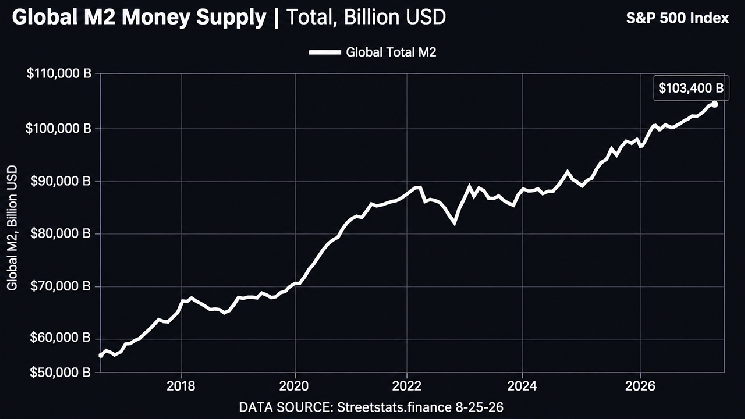
Глобальный денежный агрегат M2 достиг рекордного уровня около 103 трлн долларов, при этом в США он составляет 23,16 трлн долларов. Рост денежной массы может направлять избыточный капитал в поисках доходности в такие активы, как биткоин, чьё предложение ограничено 21 миллионом. Недавний рост цены BTC до 81 000 долларов вновь актуализировал дискуссию о ликвидности. Хотя цена всё ещё на 37% ниже исторического максимума октября 2025 года, разрыв с растущим M2 создаёт почву для потенциальной «догоняющей» торговли. Исторически бычьи циклы биткоина совпадали с расширением ликвидности. Ключевым фактором станет динамика доллара США: его ослабление может подтолкнуть капитал в альтернативные активы. Таким образом, рекордный M2 сам по себе не гарантирует рост BTC, но в условиях слабого доллара и перетока ликвидности «гонка наверстывания» может ускориться.

cryptonews.ru26 мин. назад

Цена биткоина отстает? Рекордный показатель глобального денежного агрегата M2 может стать трамплином для роста BTC

cryptonews.ru26 мин. назад

Партнер Blockchain Capital: Токенизация перестроит фундаментальную структуру рынка капитала

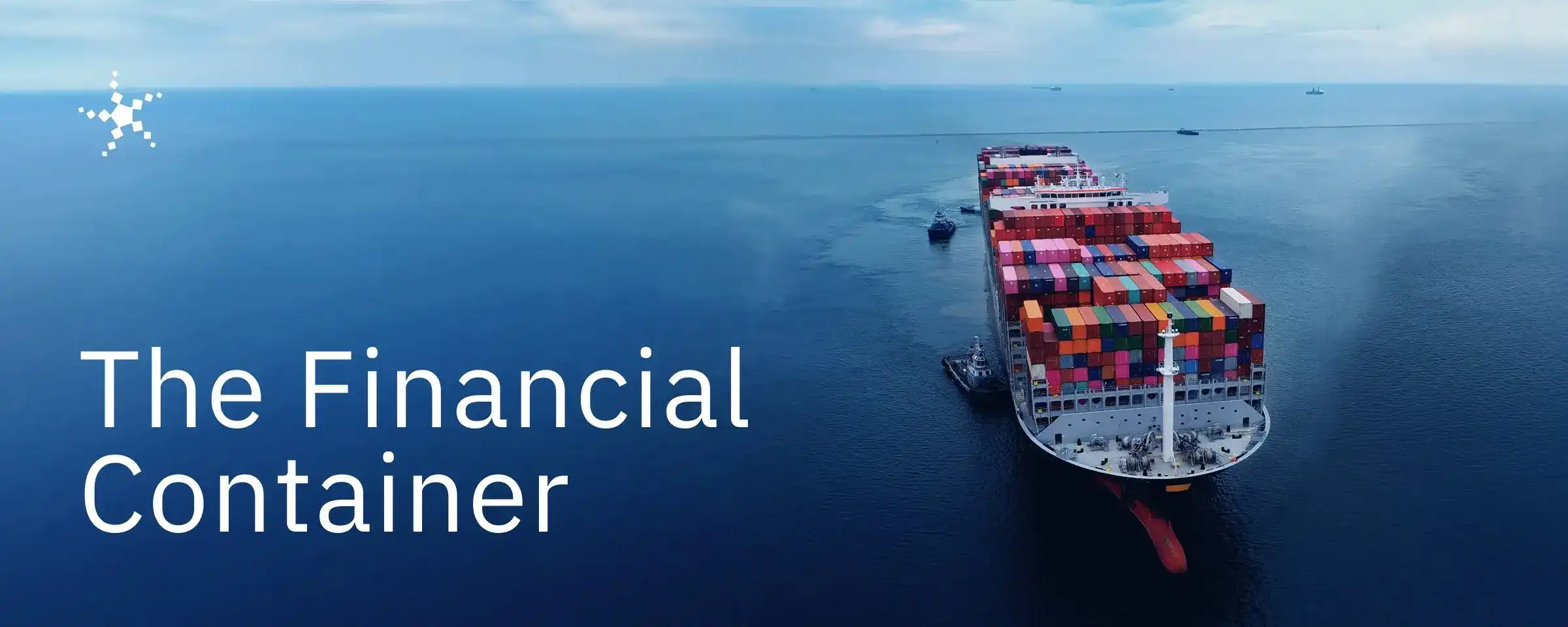
Автор, партнёр Blockchain Capital, проводит аналогию между токенизацией активов и контейнеризацией в логистике, которая в прошлом радикально снизила издержки и стандартизировала процессы. Современные финансовые рынки страдают от разрозненных систем учёта активов (ипотека, акции, фонды), что создаёт высокие транзакционные издержки и замедляет движение капитала. Токенизация решает эту проблему, создавая стандартизированные, машиночитаемые «контейнеры» для финансовых прав. Подобно тому, как контейнеры позволили перестроить всю глобальную логистику, токены позволяют перестроить рынки капитала. Актив, представленный в форме токена, может быть легко распознан и использован различными приложениями (биржи, кредитные протоколы, кошельки) без необходимости индивидуальной интеграции с каждой системой. Это меняет парадигму доступа к финансовым услугам: услуги начинают вращаться вокруг самого актива, а не вокруг отношений клиента с конкретным учреждением. Децентрализованные финансы (DeFi), такие как протокол Aave, уже демонстрируют эту модель, где смарт-контракты автоматически предоставляют кредиты под залог совместимых токенов. Сетевые эффекты уже видны на примере стейблкоинов (объёмом ~$300 млрд), которые создали глобальную сеть для дешёвых и быстрых расчетов. Теперь эта инфраструктура привлекает другие активы: казначейские облигации, фонды, частный кредит (общий объём превышает $40 млрд). В долгосрочной перспективе это может привести к созданию глобального, открытого рынка капитала, где стоимость активов будет определяться их качеством, а не доступом к посредникам. Токенизация, усиленная ИИ, сможет включить в финансовую систему ранее недоступные классы активов (например, мелкие требования, инфраструктурные проекты в развивающихся странах), повысив эффективность распределения капитала в мировой экономике.

marsbit26 мин. назад

Партнер Blockchain Capital: Токенизация перестроит фундаментальную структуру рынка капитала

marsbit26 мин. назад

Калифорнийский технологический институт использует ИИ для решения 60-летней проблемы квантовой химии: одна видеокарта выполняет работу 7800

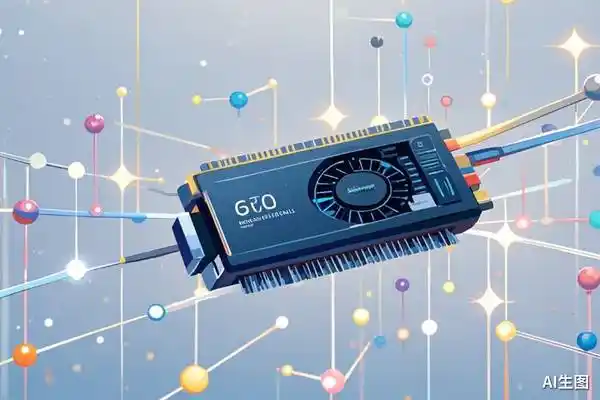
Калифорнийский технологический институт решает 60-летнюю проблему квантовой химии с помощью ИИ, заменяя 7800 GPU одной видеокартой. Традиционные методы, такие как теория функционала плотности (DFT), сталкиваются с экспоненциальным ростом вычислительной сложности (O(N³)), что делает расчёт систем со многими электронами непрактичным. Исследовательская группа под руководством Анимы Анандкумар предложила модель ИИ под названием Kohn-Sham FNO (Фурье-нейронный оператор), которая учится предсказывать электронную плотность в рамках итерационного процесса DFT. Вместо того чтобы давать окончательный ответ сразу (что приводит к большим ошибкам на новых данных), модель выполняет вычисления пошагово, подобно «цепочке рассуждений», обеспечивая стабильность и возможность самокоррекции. Модель демонстрирует почти линейную сложность O(N log N) и выдаёт точные результаты даже для систем, не представленных в данных обучения. В эксперименте с дефектом в магнии, содержащем 82 500 электронов, Kohn-Sham FNO успешно выполнил расчёты на одной видеокарте NVIDIA B300, в то время как аналогичный расчёт 2019 года потребовал около 7800 GPU NVIDIA V100. Этот прорыв открывает новые возможности для моделирования в фармацевтике, материаловедении и разработке аккумуляторов, значительно ускоряя и удешевляя процесс исследований.

marsbit31 мин. назад

Калифорнийский технологический институт использует ИИ для решения 60-летней проблемы квантовой химии: одна видеокарта выполняет работу 7800

marsbit31 мин. назад

UNDP и DFINITY займутся развитием ИИ-инфраструктуры

Программа развития ООН (UNDP) и DFINITY Foundation объявили о партнерстве в сфере суверенной облачной инфраструктуры и децентрализованного искусственного интеллекта. Цель сотрудничества — исследование применения данных технологий в госпроектах и цифровой трансформации государственных органов, организаций гражданского общества и инициатив UNDP. Партнёрство будет реализовываться по трём направлениям. SDG Blockchain Accelerator позволит страновым офисам UNDP тестировать суверенную облачную инфраструктуру и инструменты для разработки ИИ. Future of Work Academy поможет организациям гражданского общества создавать и тестировать приложения. Government Blockchain Academy совместно с правительствами разработает пилотные решения, учитывающие национальные приоритеты. В проектах будут использоваться Cloud Engines и платформа Caffeine AI от DFINITY, что позволит организациям создавать приложения в защищённой цифровой среде с локальным контролем управления. Партнёры также изучат возможности технологий для защиты конфиденциальных данных, повышения устойчивости инфраструктуры и развития местных технических компетенций.

cryptonews.ru51 мин. назад

UNDP и DFINITY займутся развитием ИИ-инфраструктуры

cryptonews.ru51 мин. назад

ПОСЛЕДНИЕ НОВОСТИ: Опубликованы данные Федеральной резервной системы по индексу потребительских цен (PCE), используемому для измерения инфляции! Вот первая реакция биткоина (BTC)!

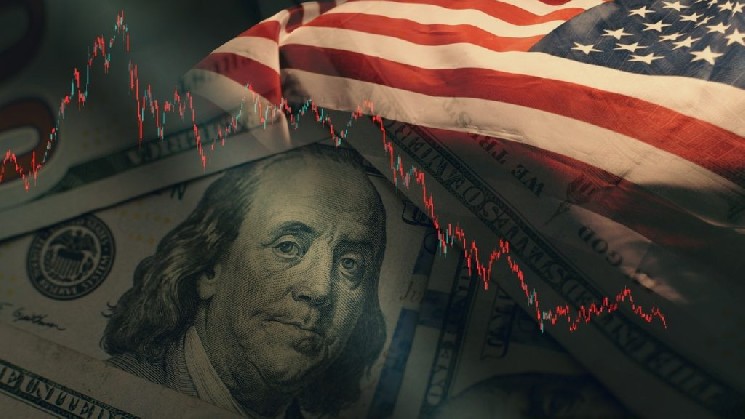
Криптовалюта Bitcoin удерживает высокие позиции накануне публикации ключевых данных по инфляции в США — индексу потребительских расходов (PCE), за которым пристально следит ФРС. В последнее время BTC демонстрировал быстрый рост с около 62 000 до более 80 000 долларов, даже краткосрочно превысив 81 000 долларов. Внимание рынка сейчас сосредоточено на отчёте PCE, так как его результаты могут повлиять на ожидания относительно денежно-кредитной политики ФРС. Отчёт ниже ожиданий мог бы поддержать ожидания смягчения политики, а данные выше прогнозов — ослабить надежды на снижение ставок и оказать давление на BTC. По опубликованным данным за июль: базовый годовой индекс PCE составил 3,3% (ожидание 3,3%), месячный — 0,2% (ожидание 0,2%). Годовой общий индекс PCE — 3,7% (ожидание 3,6%), месячный — 0,2% (ожидание 0,1%). Эти данные имеют критическое значение для прогнозов по ставкам и для краткосрочной динамики Bitcoin.

cryptonews.ru52 мин. назад

ПОСЛЕДНИЕ НОВОСТИ: Опубликованы данные Федеральной резервной системы по индексу потребительских цен (PCE), используемому для измерения инфляции! Вот первая реакция биткоина (BTC)!

cryptonews.ru52 мин. назад

Торговля

Спот

Популярные статьи

Обсуждения

Добро пожаловать в Сообщество HTX. Здесь вы сможете быть в курсе последних новостей о развитии платформы и получить доступ к профессиональной аналитической информации о рынке. Мнения пользователей о цене на SOL (SOL) представлены ниже.

活动图片