
Altman Admits: Overestimated AI Snatching Jobs! Huang Renxun: The Unemployment Narrative Is Completely Backwards

marsbitОпубликовано 2026-08-01Обновлено 2026-08-01

Введение

Sam Altman has revised his earlier predictions about AI rapidly replacing jobs, admitting he overestimated the speed at which AI would eliminate entry-level white-collar roles. Speaking on the "Invest Like the Best" podcast, he stated that people do not truly want an AI CEO, as accountability and human connection remain critical. He found that individuals prefer interacting with people who can be held responsible for decisions. Similarly, NVIDIA's Jensen Huang argued that the narrative of AI destroying jobs is misguided. He distinguishes between tasks and jobs, noting that while AI can automate specific tasks, entire jobs—encompassing communication, judgment, coordination, and accountability—are not eliminated. He cited examples like radiologists and software engineers, where demand for these roles has increased as AI handles repetitive tasks, allowing for business expansion and the creation of more positions. Data from a University of Maryland and LinkUp study supports this, showing that U.S. job postings for new graduates have actually risen, countering the fear of vanishing entry-level roles. However, a significant shift is occurring: the traditional entry-level tasks that help newcomers gain experience are being automated, making initial career access more challenging. The key insight is that as AI takes over standardized tasks, the enduring value of human work shifts toward areas of responsibility, trust-building, and final decision-making—aspects that AI cannot repli...

I would be ashamed if OpenAI were not the first major company managed by an AI CEO.

In October 2025, Altman made such a statement.

Nine months later, he changed his tune.

On July 28, in the podcast Invest Like the Best, Altman said people "don't really want an AI CEO" because they want to know who is actually making decisions for a company and who to hold accountable when something goes wrong.
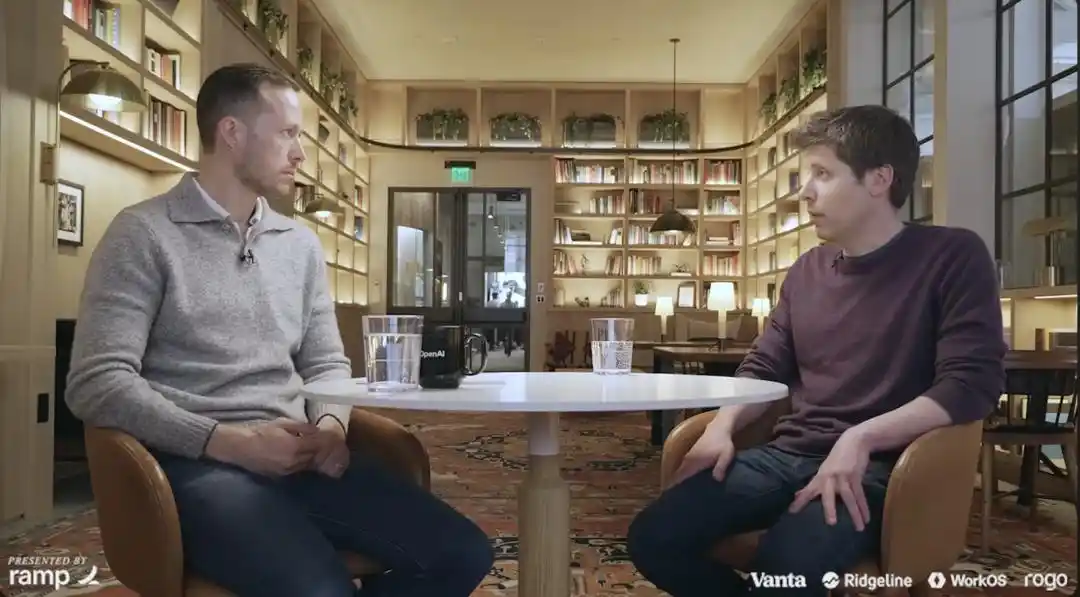
On July 28, Altman (right) guest-starred on episode 484 of the podcast Invest Like the Best, stating that people "don't really want an AI CEO."

Not only that, back in May this year, he also admitted that he had overestimated the speed at which AI would eliminate junior white-collar positions, and that kind of "job apocalypse" probably wouldn't happen.

Almost at the same time, Huang Renxun (Jensen Huang) threw out a line during a YC startup class: "The narrative of AI destroying jobs is completely backwards."

Huang Renxun at YC Startup School 2026, stating, "The narrative of AI destroying jobs is completely backwards."

One leads the world's most advanced models, the other holds the computing power.

Why did they both hit the brakes on the "unemployment apocalypse" narrative almost simultaneously?

Why Did Altman Change His Mind?

Altman says people want to know who is accountable for a company's decisions and who to go after when something goes wrong.

Therefore, people "don't really want an AI CEO."

He added that even today, most people still trust and prefer to work with real humans more. In other words, even if AI can make decisions, people might not be willing to hand the company over to it.

What prevents an AI CEO from taking the job isn't its lack of intelligence, but its inability to be truly held accountable.

AI can calculate the optimal solution in one second, but it cannot bear the consequences of a decision in court, in the boardroom, or in front of the public.

A small example from Altman's own experience illustrates this perfectly.

He once tried having an AI reply to his Slack messages and emails, signing off as "This is Sam's AI," but soon switched back to replying himself.

The reason was simple: he realized people really care about interacting with a person.

In fact, in that 2025 conversation envisioning an AI CEO, Altman had already assigned roles: real humans handle external matters, AI handles decision-making.

The difference this time is that he draws a clearer line between "AI can decide" and "humans must be accountable":

AI can make decisions, but it cannot be held responsible.

Huang Renxun: People Have Completely Reversed The Narrative About "AI Destroying Jobs"

Huang says people have reversed the narrative about "AI destroying jobs" because they've been equating "tasks" with "jobs."

He proposes this breakdown method.

A job has a purpose, and to achieve that purpose, many tasks need to be completed; AI can take over some of those tasks, but taking over tasks does not equal eliminating the entire job.

A job also involves communication, judgment, coordination, review, bearing consequences, etc. These aspects won't disappear along with the tasks replaced by AI.

He gave examples of radiologists and software engineers.

AI is increasingly taking over reading scans and writing code, yet the number of positions in these fields is actually growing.

According to Huang's figures: software engineering positions have grown by about 10% year-on-year, and radiology positions have increased by about 20% over the past few years.

Why the growth? Because there's a huge backlog.

The queues of patients in hospitals, the software waiting to be written, the piles of unprocessed demands—they were already overwhelming to begin with.

Once tasks are accelerated, companies and hospitals can instead handle more orders, expand their operations, and thus hire more people to do the remaining work that AI can't handle.

Altman also cited supporting evidence: a year ago, everyone said software engineers were doomed, but that didn't happen.

What really changed is the job itself: you almost never write code line by line anymore, yet it's still unmistakably software engineering.

The tasks have been replaced, but the job remains. However, not all jobs will remain.

Huang also acknowledged that all jobs will change, and indeed some professions will disappear entirely.

For his logic to hold, there's a hidden premise: companies must use the efficiency gains from AI to expand their business and hire more people.

If market demand remains static, or if bosses convert those gains directly into layoffs and cost-cutting, then positions will still decrease.

AI Hasn't Eliminated Junior Positions, But The Entry Step Is Being Pulled Away

The University of Maryland and LinkUp conducted a project analyzing 155 million US job postings since 2018.

The results show: as of Q4 2025, there is no evidence that AI has crushed hiring demand at the overall economic level.
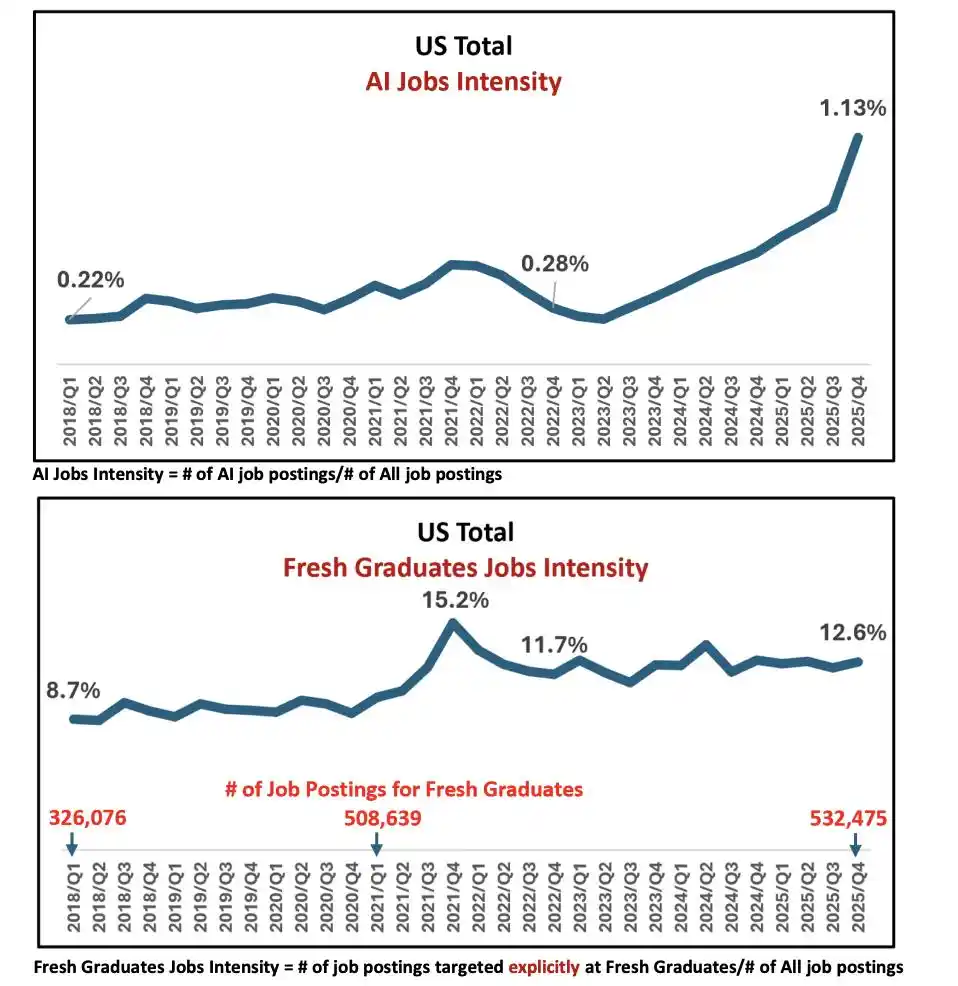
Top: US "AI Job Intensity" (AI jobs / all jobs), rising from 0.22% in Q1 2018 to 1.13% in Q4 2025; Bottom: "New Graduate Job Intensity," rebounding from 11.7% in Q4 2022 to 12.6% in Q4 2025. In Q4 2025, there were 532,000 job postings targeting new graduates.

The most counterintuitive data point is for new graduates.

The phrase "AI will eliminate junior positions first" has been repeated ad nauseam for the past two years. Yet, according to this data, the share of job postings explicitly targeting new graduates did not fall but rose, from 11.7% in Q4 2022 to 12.6% in Q4 2025.

In Q4 2025 alone, there were 532,000 such job postings, 63% higher than in Q1 2018.

Even in the math and computer occupations, which should be most vulnerable to AI "slaughter," new graduate job postings were 55% higher than in Q1 2018.

Seeing this number, the claim that "junior positions are disappearing" doesn't hold water, at least in terms of total volume.

The report also contains another counterintuitive observation:

Younger, less experienced employees are actually more likely to benefit from AI tools, because AI excels at instantly delivering vast amounts of experience to them. This makes them "cheap and effective" early adopters in the eyes of employers.

The Entry Step Is Getting Narrower

The total volume hasn't collapsed, but that doesn't mean there's no cost: there's something these nice numbers can't hide.

How did a young person grow in the past?

Often by starting with the most standardized entry-level tasks: data entry, basic coding, fundamental analysis, compiling materials, etc.

These tasks, though repetitive and tedious, were precisely how people slowly accumulated experience and judgment, honing those irreplaceable skills.

And these standardized tasks are exactly the ones AI is taking over first.

The gateway to junior positions is narrowing. For those just graduating or entering the workforce, this is the most immediate pressure they face right now.

Your Real Moat

Putting Altman's and Huang Renxun's statements together, we find:

The more capable AI becomes, the more the value of human work shifts upward, moving from "getting the work done" to "bearing responsibility, building trust, and setting goals."

Machines can replace tasks one by one, but they can't yet fill the gap of "who makes the final decision, who signs off on the results."

Instead of worrying "Will AI take my job?", perhaps ask a different question: How much of your job requires you to sign off and be responsible? How much requires your presence for others to buy in?

These parts that AI cannot replace are your real moat.

References:

https://open.spotify.com/episode/5bFBUf3X8QXaDFrve1Be5s?utm_source=chatgpt.com

https://conversationswithtyler.com/episodes/sam-altman-2/?utm_source=chatgpt.com

https://whbl.com/2026/05/26/openais-altman-says-ai-unlikely-to-lead-to-jobs-apocalypse/?utm_source=chatgpt.com https://youtu.be/I4B37S1dyQQ

Editor: Yuanyu

This article comes from the WeChat public account "AI新智元," author: ASI启示录

Трендовые криптовалюты

Связанные с этим вопросы

QWhat were Sam Altman's main reasons for changing his stance on AI CEOs?

ASam Altman revised his stance on AI CEOs because people want to know who is making decisions for a company and who can be held accountable when things go wrong. He stated that people do not truly want an AI CEO as AI cannot be held responsible for its decisions, and humans still prefer to trust and work with real people.

QHow does Jensen Huang argue that the narrative about AI destroying jobs is 'completely reversed'?

AJensen Huang argues that the narrative is reversed because people confuse 'tasks' with 'jobs.' AI can take over specific tasks within a job, but it does not eliminate the entire job. The remaining human responsibilities, such as communication, judgment, coordination, and accountability, persist. He cites examples like software engineering and radiology, where job numbers have grown as AI has taken over tasks, allowing industries to expand and handle more demand.

QAccording to the article, what is happening to the entry-level positions that AI was predicted to eliminate first?

AThe article states that, contrary to predictions, aggregate data shows the number of entry-level job postings, including for new graduates, has increased, not decreased. However, it notes that while the total number of roles may be stable or growing, the traditional entry-level 'stepping-stone' tasks that help newcomers build experience (like data entry, basic coding) are being automated, making the initial pathway into these careers narrower and more challenging.

QWhat key human qualities does the article suggest will become the 'real moat' in the age of AI?

AThe article suggests that the 'real moat' for human workers in the AI age are qualities and responsibilities that AI cannot replace. These include being the person who makes the final decision, signs off on results, builds trust, sets goals, and is ultimately accountable. The human value shifts from simply 'completing tasks' to 'assuming responsibility, building trust, and defining objectives.'

QWhat was the surprising finding in the data analysis of US job postings regarding recent graduates and AI exposure?

AThe surprising finding from the analysis of US job postings was that the share of job postings explicitly targeting new graduates actually increased from 11.7% in Q4 2022 to 12.6% in Q4 2025. Furthermore, it suggested that younger, less experienced employees might benefit from AI tools, as AI can instantly provide them with vast amounts of knowledge, making them 'cheap and effective' early adopters in the eyes of employers.

Похожее

Интервью с руководителем Robinhood: Стратегия привлечения клиентов "гантели" через мемы и токенизированные акции, все направления бизнеса приносят миллиардные доходы

**Интервью с топ-менеджером Robinhood: стратегия "двойного привлечения" клиентов (мем-токены + токенизированные акции) и миллиардные доходы по всем направлениям** Johann Kerbrat, старший вице-президент Robinhood по криптовалютному и международному бизнесу, раскрыл стратегию новой блокчейн-сети компании — Robinhood Chain. Через три недели после запуска недельный объем торгов на DEX превысил $30 млрд при TVL более $3 млрд. Стратегия сети описана как "двойная": с одной стороны, поддержка мем-токенов для привлечения сообщества DeFi, с другой — фокус на токенизированных реальных активах (RWA), в первую очередь акций. Уже доступно более 90 токенизированных акций для пользователей из 120+ стран, что решает проблему глобального доступа к рынкам США. Главная цель — перенести на блокчейн 27 млн фондированных счетов Robinhood, упростив сложный пользовательский опыт DeFi (кошельки, приватные ключи). Продукты вроде Robinhood Earn позволяют получать доход от стейблкоинов прямо в основном приложении. Robinhood Chain построена на стеке Arbitrum для скорости, низких комиссий и безопасности Ethereum. Kerbrat подчеркивает, что сейчас важнее расширять общий рынок токенизированных активов, а не конкурировать за долю с Base от Coinbase. Партнеры (Morpho, Lighter, 0x и др.) выбираются по критериям комплаенса, способности создавать уникальный опыт и дифференциации. Что касается доходов, то сейчас сеть оптимизируется для массового внедрения, а не для максимизации прибыли. Все основные бизнес-направления Robinhood (акции, опционы, криптовалюты и т.д.) уже приносят доход на уровне сотен миллионов долларов.

marsbit1 ч. назад

Интервью с руководителем Robinhood: Стратегия привлечения клиентов "гантели" через мемы и токенизированные акции, все направления бизнеса приносят миллиардные доходы

marsbit1 ч. назад

Фидделити в отчете за 3-й квартал: BTC, ETH и SOL продолжают формировать дно. Как долго еще продлится текущий крипто-медвежий рынок?

Отчёт Fidelity за 3-й квартал 2026 года анализирует состояние рынка криптоактивов, отмечая, что BTC, ETH и SOL продолжают формировать дно. **Ключевые выводы:** * **Общий рыночный настрой:** Взвешенный показатель NUPL (чистая нереализованная прибыль/убыток) упал до -0.01, что указывает на то, что рынок в целом находится на грани безубыточности. Только BTC сохраняет нереализованную прибыль, выступая стабилизатором, в то время как ETH и SOL находятся в зоне убытков. * **Доминирование Bitcoin:** Доля BTC в общей капитализации рынка выросла до 68%, что говорит о консервативных настроениях инвесторов и отсутствии ротации капитала в альткойны. * **Падение цен:** За год BTC упал на ~45%, ETH на 37%, SOL на 53%. Рынок демонстрирует признаки капитуляции, включая рекордный отток средств из спотовых ETP. * **Прогноз по дну:** Ссылаясь на исторические циклы (около 300 дней в 2018 и 2022 гг.), в отчёте предполагается, что текущий медвежий период, длящийся уже около 203 дней, может пройти около двух третей своего пути. Октябрь 2026 года упоминается как потенциальный временной ориентир для наблюдения, но не как точный прогноз. **Оценка по активам:** * **Bitcoin:** NUPL (0.09) и Yardstick (показатель «стоимость/хэшрейт») оцениваются позитивно, что может указывать на привлекательную оценку. Однако импульс и динамика относительно золота остаются негативными. Хэшрейт снижается из-за давления на майнеров и конкуренции с AI-сектором. * **Ethereum:** NUPL (-0.43) глубоко в зоне капитуляции, что исторически связано с высокими последующими доходами. Импульс негативный. Объём переводов стейблкоинов (позитивно) остаётся высоким, но комиссии сети и активность базового слоя снижаются (нейтрально/негативно). * **Solana:** NUPL (-0.72) также в зоне капитуляции с высокой исторической волатильностью. Импульс негативный. При этом фундаментальные показатели использования и объёмы стейблкоинов остаются устойчивыми (позитивно), а сетевые комиссии, возможно, приближаются к дну (нейтрально). Отчёт подчёркивает, что рынок находится в фазе консолидации и поиска дна, где BTC демонстрирует относительную силу, в то время как настроения в целом остаются подавленными. Долгосрочным инвесторам текущие уровни могут предоставить привлекательные возможности, если тенденция внедрения базовых сетей сохранится.

marsbit1 ч. назад

Фидделити в отчете за 3-й квартал: BTC, ETH и SOL продолжают формировать дно. Как долго еще продлится текущий крипто-медвежий рынок?

marsbit1 ч. назад

Как показали себя Bitcoin и Ethereum в августе? Вот основные факты, которые вам необходимо знать

Биткоин и Эфириум, завершившие июль ростом (18,5% и 7% соответственно), вступили в август с исторически слабыми сезонными показателями. Анализ динамики Ethereum за август с 2016 года показывает неоднозначную картину: из 10 периодов рост был лишь в 4 случаях. Средняя доходность месяца составляет 6,74%, но медианная отрицательна (-1,74%), что указывает на влияние единичных сильных ралли, подобных скачку на 92,86% в 2017 году. Исторические данные по Биткоину за август также не дают четкого бычьего сигнала: средняя доходность — 1,06%, а медианная — отрицательные -6,99%. Это означает, что убыточные закрытия в этом месяце случаются чаще. Таким образом, несмотря на положительные средние значения у обеих криптовалют, отрицательная медианная доходность свидетельствует о повышенной вероятности негативного завершения августа.

cryptonews.ru1 ч. назад

Как показали себя Bitcoin и Ethereum в августе? Вот основные факты, которые вам необходимо знать

cryptonews.ru1 ч. назад

Сенатор предложил создать бюро борьбы с криптовалютным бизнесом Трампа

Сенатор Чак Шумер предложил создать независимое федеральное бюро для расследования коррупции, связанной с криптовалютным бизнесом, и возврата незаконно полученных средств. Инициатива направлена на борьбу со злоупотреблениями госслужащих. Шумер также предлагает разрешить частным лицам и прокурорам штатов подавать иски против чиновников и компаний. В качестве примера он привёл доходы Дональда Трампа и его семьи, превышающие $5,4 млрд с 2025 года от таких проектов, как World Liberty Financial и мемкоины TRUMP и MELANIA. Белый дом отвергает наличие конфликта интересов. Споры вокруг криптобизнеса Трампа заблокировали законопроект CLARITY: демократы настаивают на включении в него запрета на получение прибыли от криптовалют для высших должностных лиц и их семей. Ранее Шумер с коллегами безуспешно пытался внести аналогичные поправки в закон о стейблкоинах GENIUS.

cryptonews.ru3 ч. назад

Сенатор предложил создать бюро борьбы с криптовалютным бизнесом Трампа

cryptonews.ru3 ч. назад

Руководитель HIVE: Графические процессоры для ИИ приносят в 10 раз больше дохода в час, чем майнинговые фермы

Руководитель HIVE заявил, что использование графических процессоров для вычислений в сфере искусственного интеллекта приносит в 10 раз больше дохода в час, чем майнинг биткоина. Конкретный кластер из 504 GPU Nvidia B200 приносит около $2,90 за GPU-час, в то время как майнинговые установки компании генерируют примерно $0,12 в час. Эта разница лежит в основе стратегии компании: инвестиции направляются в высокодоходный ИИ-бизнес при продолжении майнинговой деятельности. В 2026 финансовом году выручка HIVE выросла на 158% до $297,8 млн, а доход от нового подразделения ИИ и высокопроизводительных вычислений (HPC) составил $19,5 млн. Компания ранее сделала крупную ставку на чипы Nvidia, что дало ей преимущество с началом бума ИИ. HIVE строит в Торонто центр обработки данных для ИИ мощностью 320 МВт, который после запуска в 2027 году сможет приносить около $360 млн годовой выручки. Компания ставит цель увеличить доход от ИИ/HPC в десять раз к концу финансового года. Аналогичный тренд наблюдается и у других майнинговых компаний, таких как MARA, Hut 8 и Terawulf, которые также переориентируют мощности на более доходные контракты в сфере ИИ и HPC на фоне снижения маржинальности майнинга биткоина.

cryptonews.ru3 ч. назад

Руководитель HIVE: Графические процессоры для ИИ приносят в 10 раз больше дохода в час, чем майнинговые фермы

cryptonews.ru3 ч. назад

Торговля

Спот

Популярные статьи

Неделя обучения по популярным токенам (2): 2026 может стать годом приложений реального времени, сектор AI продолжает оставаться в тренде

2025 год — год институциональных инвесторов, в будущем он будет доминировать в приложениях реального времени.

1.9k просмотров всегоОпубликовано 2025.12.16Обновлено 2025.12.16

Неделя обучения по популярным токенам (2): 2026 может стать годом приложений реального времени, сектор AI продолжает оставаться в тренде

Обсуждения

Добро пожаловать в Сообщество HTX. Здесь вы сможете быть в курсе последних новостей о развитии платформы и получить доступ к профессиональной аналитической информации о рынке. Мнения пользователей о цене на AI (AI) представлены ниже.

活动图片