From 'Western Learning Ants' to Korean Pension Funds: Why Does Korean Capital Continue to Flow to the US?

marsbitОпубликовано 2026-07-29Обновлено 2026-07-29

Введение

Summary: "From 'Western Ants' to National Pension: Why Korean Capital Continues to Flow to the U.S.?" South Korea’s capital is increasingly moving toward U.S. markets, driven by two key investor groups. Individual retail investors, known as "Western Ants," actively trade U.S. stocks overnight, seeking exposure to major tech firms and higher returns often unavailable in Korea’s concentrated domestic market. Simultaneously, the National Pension Service (NPS), managing over $1.16 trillion in assets, is expanding its global investment footprint. Facing demographic pressures and the sheer size of its fund, NPS has steadily increased overseas allocations, with over half its financial assets now invested abroad. A recent memorandum of understanding with six top U.S. venture capital firms (including Sequoia and a16z) marks a strategic extension into Silicon Valley’s private investment ecosystem, aiming to access growth-stage tech opportunities while leveraging external managers’ expertise. While both flows reflect limitations of Korea’s home market, their risk profiles differ sharply: retail investors often pursue speculative, concentrated bets, whereas NPS must ensure long-term, diversified returns for national retirement security. This outward shift also creates macroeconomic tensions, as demand for dollars from both groups pressures the Korean won, prompting coordinated measures between NPS and the central bank to mitigate currency volatility. Ultimately, Korea’s growing finan...

Author: Zen, PANews

On July 25th, at an event named the "Silicon Valley Venture Capital Meetup" hosted by South Korean President Lee Jae-myung, the National Pension Service (NPS) of South Korea signed memorandums of understanding with six leading U.S. venture capital firms.
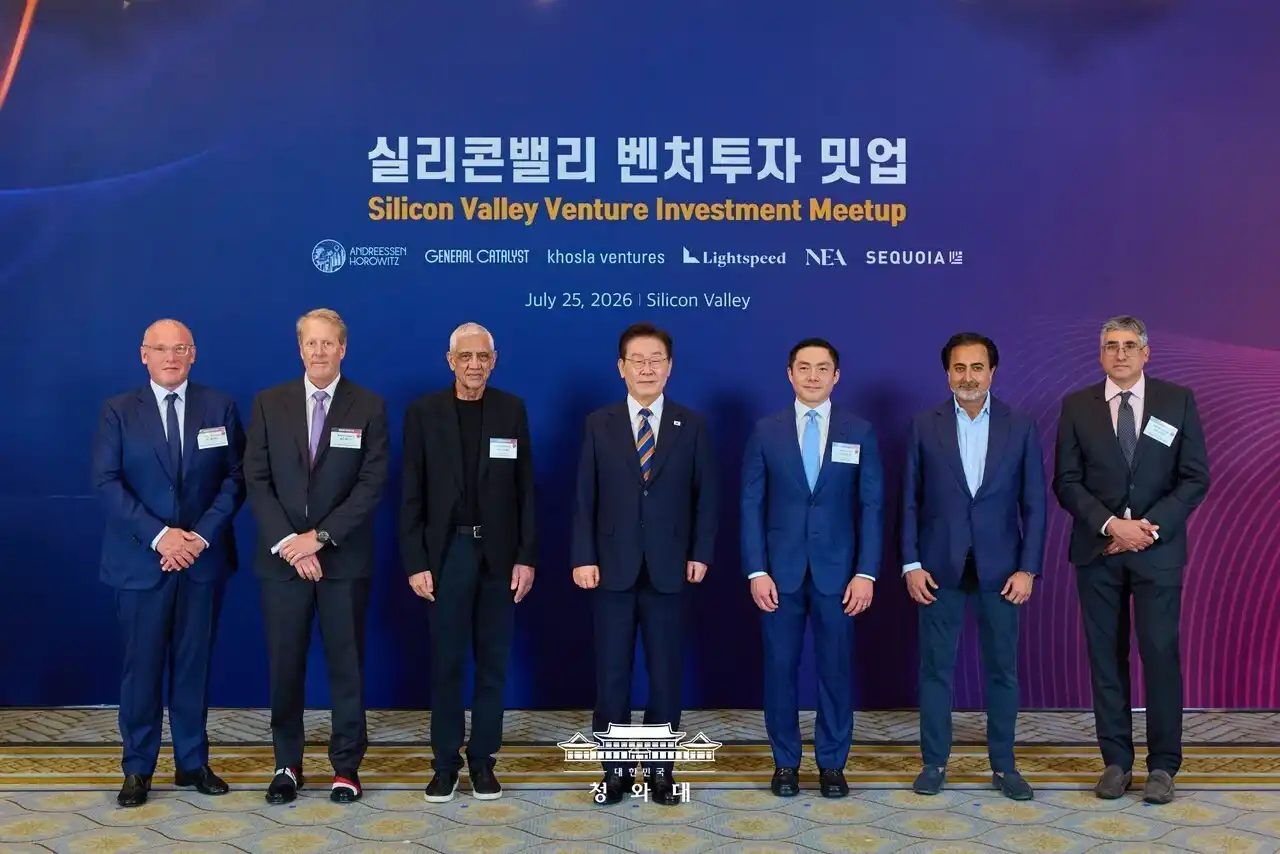
Sitting across the negotiating table were Sequoia Capital, a16z, Khosla Ventures, Lightspeed Venture Partners, General Catalyst, and NEA. These six firms collectively manage approximately $313 billion in assets, with investment portfolios covering well-known tech giants like Apple, NVIDIA, Google, OpenAI, and Anduril.

According to the MOUs, both sides plan to establish long-term cooperation channels to explore global venture capital opportunities and share market and project information. The South Korean government set the stage for this meeting, but the entity that actually brought its balance sheet to the table was the National Pension Service (NPS), managing assets of nearly 1,690 trillion won (about $1.16 trillion).

In South Korea, individual investors known as "Western Learning Ants" are already accustomed to opening their brokerage apps late at night, waiting for the New York market to open. Data from the Korea Securities Depository shows that as of June 2, 2026, the value of U.S. stocks held in custody by domestic South Korean investors through local brokerages reached about $206.3 billion, hitting a record high. After entering July, capital inflows accelerated again, with net purchases of U.S. stocks from July 1st to 24th accumulating to approximately $2.596 billion, already about four times the total for the entire month of June.

One bears the responsibility for national retirement, the other pursues personal wealth growth. These two types of funds have vastly different investment horizons, risk tolerance, and institutional constraints, but both are increasingly frequently crossing the Pacific Ocean.

Late-Night 'Western Learning Ants' and the Pension Fund that the Local Market Cannot Fully Accommodate

South Korean retail investors' enthusiasm for U.S. stocks has persisted for years. In South Korea's investment parlance, individual investors who stay in the domestic stock market are called "Eastern Learning Ants," while those venturing into overseas markets are "Western Learning Ants."

There's a time difference between the U.S. stock market and Seoul, with the normal trading hours coinciding with late night in South Korea, but this isn't a problem for South Koreans who love staying up late. Moreover, after South Korean brokerages began offering services like foreign currency exchange, fractional share trading, and extended trading hours, buying U.S. stocks has become not much different from buying Korean stocks.

This enthusiasm encompasses two factors. Part of the capital is engaged in normal global asset allocation. South Korea's economy boasts strong industries like semiconductors, automobiles, batteries, and shipbuilding, but its domestic listed company structure is relatively concentrated. Another part carries a stronger speculative flavor. South Korean retail investors have long favored thematic stocks, leveraged products, and high-volatility assets. They quickly concentrate funds during rallies, but also tend to cause stampedes when the market reverses.

Recently, South Korean regulators tightened access requirements for single-stock leveraged ETFs precisely to control market volatility caused by highly concentrated retail capital.

The NPS's move overseas follows another logic.

The South Korean National Pension System began in 1988, resembling a nationwide public pension insurance. Starting from July 2026, enterprise employees contribute 9.5% of their assessed monthly income as pension insurance premiums, with the employer and employee each bearing 4.75%; self-employed subscribers typically bear the full contribution themselves. After paying current pensions, the remaining funds form a surplus, which is then invested by the NPS into stocks, bonds, real estate, infrastructure, and private equity funds.

As of the end of April 2026, the assets of the South Korean National Pension Fund reached 1,670.7 trillion won. Since the system's inception, it has cumulatively received 945.5 trillion won in insurance premiums and other income, while cumulative investment returns amounted to 1,177.9 trillion won; pension payments and management expenses cumulatively totaled 452.8 trillion won.

The most notable point here is: The funds earned from NPS investments over the years have already exceeded the cumulative insurance premiums received. This means it has long transcended its role as an administrative body that merely "collects premiums and disburses pensions."

In 2025, South Korea completed its first major National Pension reform in 18 years. The contribution rate will gradually increase from the original 9% to 13%, while the pension replacement rate will be adjusted. The reform has pushed back the projected depletion time of the fund, but pressure from South Korea's aging population on its revenues and expenditures is still rising. In the future, investment returns will become a crucial variable in extending the fund's lifespan.

Simultaneously, the NPS has grown so large that it is difficult to concentrate long-term within South Korea's borders.

As of the end of April 2026, NPS had allocated 930.7 trillion won overseas, accounting for 55.7% of its financial assets. This includes 604.5 trillion won in foreign stocks, 103.1 trillion won in foreign bonds, and about 221.4 trillion won in foreign alternative assets. Domestic investments accounted for the remaining 44.3%.

If such a massive fund were primarily kept in South Korea, the NPS would continuously increase its holdings in large companies like Samsung Electronics and SK Hynix, and its buying and selling would significantly impact market prices. The South Korean stock market has high industry concentration, and if pensions, employment, resident income, and investment portfolios all simultaneously depend on the domestic economy, risks would be compounded.

Therefore, expanding overseas investments serves a dual purpose: on one hand, seeking more diverse sources of return; on the other hand, reducing constraints from the limited domestic market capacity and single economic cycle. Reuters once estimated NPS's asset size to be equivalent to about 60% of South Korea's GDP. This scale dictates that it must allocate funds on a global level.

From New York's Public Markets to Silicon Valley's Private Circle

The NPS's entry into Silicon Valley is not a sudden shift.

In 2002, NPS began delegating the management of overseas stocks to external institutions; in 2005, it entered global alternative investments; in 2011, it established a New York office, followed by layouts in London and Singapore. In 2024, NPS opened an office in San Francisco, extending its reach to the area most concentrated with U.S. tech startups and venture capital.

Today, over half of NPS's financial assets are managed by external management institutions. While the pension fund can directly purchase public market stocks and bonds, entering fields like private equity, venture capital, real estate, and infrastructure relies more on professional managers for deal sourcing, due diligence capabilities, and local networks.

The United States holds a significant position in this global allocation. The latest 13F filing submitted by NPS to the U.S. Securities and Exchange Commission shows that as of the end of March 2026, its disclosed holdings of U.S. listed securities were valued at approximately $131.7 billion, involving a total of 562 assets. The 13F only covers U.S. listed securities meeting the reporting criteria and cannot represent all of NPS's investments in the U.S., but it is sufficient to show its scale on Wall Street.

Signing agreements with the six VCs, including Sequoia and a16z, further pushes this route into the Silicon Valley venture ecosystem.

Large tech companies in the public markets have already entered mature stages. Early-stage projects in AI, robotics, biotech, and defense tech are primarily held by VCs. For NPS to build its own team to individually find, evaluate, and manage these startups would be very costly and lack local networks. Establishing fixed cooperation channels with leading VCs can help it gain access to fund interests, growth-stage projects, and market information.

For the six VCs, NPS is also attractive. Venture capital firms need to continuously raise new funds. Public pension funds, with their large scale and long-term capital, are important sources of institutional limited partners (LPs). Especially in the context of continuously expanding financing rounds for AI infrastructure, robotics, and deep tech, the value of long-term capital becomes even more pronounced.

However, this MOU currently remains a roadmap for cooperation. The officially disclosed content mainly involves exploring global investment opportunities, information exchange, and long-term cooperation. There are no specific fund commitments, nor is there evidence that NPS has already allocated large sums of money collectively to these six institutions. NPS emphasized in its announcement that it will evaluate investment opportunities, market conditions, and risk factors before gradually expanding overseas venture investments.

Additionally, the South Korean government hopes this channel can also serve domestic startups. Information released by the Presidential Office mentioned that both sides also discussed investment in South Korean startups and their entry into the global market. a16z has already established an office in South Korea. For NPS, investment returns and pension fund safety remain the primary measures. At the same time, helping South Korean companies connect with Silicon Valley may also bring industrial spillover effects.

The Same Dollar Direction, Two Different Sets of Risks

Both South Korean retail investors and NPS are expanding overseas investments, but they are engaging in fundamentally different trades.

Retail investors can concentrate their funds on a few tech stocks and use leverage to chase short-term trends. NPS needs to simultaneously manage stocks, bonds, real estate, infrastructure, and private assets, with an investment horizon spanning decades. Personal investment losses are borne by households, while significant mistakes by the pension fund can affect the retirement expectations of the entire society.

Their true commonality lies in the recognition of the boundaries of the South Korean domestic market.

Ordinary investors seek the growth opportunities offered by U.S. tech companies; NPS, on the other hand, must find sufficiently numerous and diversified assets for a fund exceeding 1,600 trillion won. When the South Korean economy cannot provide exposure to all industries and the necessary market capacity, capital naturally extends to global markets, with the United States becoming one of the most important destinations.

This choice is also starting to have macroeconomic impacts.

Purchasing overseas assets requires exchanging for U.S. dollars. The sustained buying of U.S. stocks by South Korean retail investors and NPS's continuous increase in overseas allocations both create demand for dollars. In early 2026, the buying frenzy of South Korean retail investors for U.S. stocks was seen as an important internal factor putting pressure on the Korean won; NPS's foreign exchange operations are on a much larger scale, where a single adjustment can influence market supply and demand.

To reduce the impact caused by the NPS's concentrated purchases of dollars in the spot market, the Bank of Korea and NPS have extended their foreign exchange swap arrangement until the end of 2026. NPS can obtain dollars for overseas investment through the central bank's foreign exchange reserves, reducing the need to directly sell won; during rapid won depreciation, NPS also conducts strategic foreign exchange hedging.

South Korean policy thus faces a long-standing balancing act: pension funds need global diversification and higher returns, while exchange rate stability and the domestic capital market hope funds remain somewhat within the country.

In May 2026, NPS raised its target proportion for domestic stocks to 20.8% by year-end, while setting the target for foreign stocks at 35.6% by the end of 2027. This adjustment considered both the rise in the South Korean stock market and responded to the pressure on the won caused by overseas investments, indicating that NPS's globalization path will be continuously calibrated according to market conditions.

Therefore, NPS entering Silicon Valley does not mean the South Korean government is starting to gamble the national pension fund on high-risk tech bets. It is more akin to an extension of its over-twenty-year globalization strategy: the fund size continues to grow, the domestic market capacity is limited, and demographic structure demands it seek higher, more diversified long-term returns. In this regard, pension funds from European countries like the Netherlands and Switzerland are ahead.

What is truly worth noting is that the wealth structure of South Korean residents is changing. Work, real estate, and pension responsibilities remain rooted in South Korea, but an increasing amount of financial assets is seeking growth in the U.S. and global markets. The MOU signed by NPS with the six Silicon Valley VCs is merely the latest node in this process.


Трендовые криптовалюты

Связанные с этим вопросы

QWhat is the meaning of 'Western Ants' (西学蚂蚁) in the Korean investment context?

AIn Korean investment terminology, 'Western Ants' (西学蚂蚁) refers to individual retail investors who invest primarily in overseas markets, particularly the United States. The term contrasts with 'Eastern Ants' (东学蚂蚁), who are investors that remain focused on the domestic Korean stock market.

QWhy is the National Pension Service of South Korea (NPS) significantly increasing its investments abroad?

AThe NPS is expanding overseas investments for two primary reasons: first, to seek higher and more diversified returns, which is crucial given Korea's aging population and the pressure on the pension fund's long-term sustainability; second, because the fund's enormous size (around 60% of Korea's GDP) makes it difficult to invest effectively without significantly impacting domestic market prices, necessitating a global allocation to find sufficient investment capacity.

QWhat was the recent key agreement between the NPS and US venture capital firms, and what is its stated purpose?

AOn July 25, the NPS signed a memorandum of understanding (MOU) with six leading US venture capital firms: Sequoia Capital, a16z, Khosla Ventures, Lightspeed Venture Partners, General Catalyst, and NEA. The stated purpose is to establish a long-term cooperation channel to explore global venture capital investment opportunities and share market and project information.

QHow has the NPS's investment strategy evolved in terms of its approach to the US market?

AThe NPS's US investment strategy has evolved from traditional investments in public markets (e.g., stocks and bonds traded on Wall Street) towards deeper involvement in the private technology and venture capital ecosystem in Silicon Valley. This evolution includes opening a San Francisco office in 2024 and signing the recent MOU with top-tier VCs to access early-stage technology startups and venture capital fund opportunities.

QWhat broader economic challenge arises from the trend of both Korean retail investors and the NPS moving money into US assets?

AA significant macroeconomic challenge is the pressure on the South Korean Won (KRW). Both retail and institutional purchases of US assets require converting KRW into US Dollars, creating persistent demand for USD and contributing to potential depreciation of the KRW. To mitigate this, the Bank of Korea has extended a foreign exchange swap arrangement with the NPS to supply it with USD from reserves, reducing the need for the pension fund to directly sell KRW in the spot market.

Похожее

Хранилищные гиганты сорвали куш, нижестоящие звенья не выдерживают

Недавно крупнейшие мировые производители памяти представили полугодовые финансовые отчеты, показавшие рекордную прибыльность. SK Hynix сообщила о росте операционной прибыли на 557%, а Samsung Electronics — на 1813,83%. Аналогичный бум наблюдался и среди китайских компаний, таких как Jiangbolong и佰维存储, чья прибыль выросла в сотни раз. Основной драйвер роста — взрывной спрос на память для серверов искусственного интеллекта (ИИ), особенно на память HBM. Производители подписывают долгосрочные контракты с ключевыми клиентами, гарантируя стабильные поставки, но ограничивая дальнейший рост цен. Однако рекордная прибыль производителей памяти означает резкий рост затрат для их клиентов. В мобильных телефонах доля стоимости памяти в общей структуре затрат выросла до 20-60%. В ответ несколько ведущих производителей смартфонов, включая OPPO и vivo, открыто отказались принимать новые повышающие цены от поставщиков. Это знаменует начало коллективного сопротивления со стороны индустрии. Хотя спрос на память для ИИ остается высоким, в сегментах ПК и потребительской электроники уже наблюдается спад, а цены на现货-рынке начали снижаться. Некоторые клиенты, например, в области edge-AI, ищут технологические решения (оптимизация алгоритмов), чтобы снизить зависимость от дорогой памяти. Таким образом, хотя восходящий тренд цен еще не развернулся, отрасль приближается к переломному моменту. Рекордная прибыльность производителей памяти достигла уровня, который цепочка поставок внизу начинает считать неприемлемым, что может привести к резкой коррекции сверхцикла.

marsbit20 мин. назад

Хранилищные гиганты сорвали куш, нижестоящие звенья не выдерживают

marsbit20 мин. назад

Анализ BIT: Два негативных фактора продолжают давить на рынок, почему биткоин всё ещё близок к цикличному дну?

Текущий рынок криптовалют находится в фазе коррекции под влиянием макрополитики и регуляторных ожиданий. Председатель ФРС Кевин Уорш сохраняет жесткую (ястребиную) позицию, что корректирует рыночные ожидания по траектории процентных ставок, а замедление процесса принятия закона «CLARITY» ослабляет прежние оптимистичные ожидания по регулированию. Несмотря на эти два негативных фактора, биткоин демонстрирует устойчивость, удерживаясь в диапазоне 62 000–66 000 долларов США. Объем торгов на криптовалютном рынке снизился примерно на 80% с пиков и на 60% с пика четвертого квартала 2025 года, а общая рыночная капитализация упала примерно на 50%. Рынок по-прежнему испытывает недостаток притока новой долларовой ликвидности. Однако на фоне низких объемов и охлаждения регуляторных ожиданий биткоин не демонстрирует более глубокого падения. Внимание рынка постепенно смещается от краткосрочных негативных факторов к вопросу о приближении к минимуму текущего цикла. Хотя обсуждение дальнейшего ужесточения политики ФРС активизировалось, а вероятность подписания закона «CLARITY» до конца 2026 года, по данным рынка прогнозов, составляет лишь 32%, биткоин показывает относительную силу. С момента пика рынка в октябре 2025 года тактические модели сохраняют перевес в сторону биткоина. За последнюю неделю, несмотря на совокупность негативных факторов, он скорректировался лишь примерно на 3%. Эта устойчивость говорит о том, что инвесторы, нуждавшиеся в перераспределении активов, возможно, в основном завершили его, и вероятность дальнейшего значительного снижения рынка с текущих уровней уменьшается. В целом, хотя рынок сталкивается с влиянием жесткой монетарной политики, замедления регуляторного прогресса и выжидательной позиции инвесторов, стабильность биткоина в условиях низких объемов и отсутствия притока ликвидности указывает на ослабление нисходящего давления в текущем цикле. Если впоследствии биткоин закрепится выше 70 000 долларов и переведет ряд индикаторов в бычий тренд, это станет дополнительным подтверждением формирования дна цикла.

marsbit25 мин. назад

Анализ BIT: Два негативных фактора продолжают давить на рынок, почему биткоин всё ещё близок к цикличному дну?

marsbit25 мин. назад

Проект Agorá БМР провел испытания токенизированных трансграничных платежей на сумму 1 млн долларов

Банк международных расчетов (БМР) сообщил об успешном завершении пилотных испытаний проекта Agorá, в ходе которых были проведены реальные расчеты с использованием токенизированных активов для трансграничных платежей. В тестах, состоявшихся в июле, приняли участие 28 финансовых институтов и центральных банков, включая Банк Англии, Банк Франции, Банк Японии, Банк Кореи и Швейцарский национальный банк, а также крупные коммерческие банки, такие как JPMorgan Chase, Citibank и Deutsche Bank. В рамках 17 различных сценариев транзакций было урегулировано около 800 000 швейцарских франков (примерно 1 млн долларов США) с использованием токенизированных резервов центральных банков и коммерческих банковских депозитов в шести валютах: швейцарских франках, евро, фунтах стерлингов, японских иенах, южнокорейских вонах и долларах США. Среднее время расчетов составило около 80 секунд. Проект Agorá, запущенный БМР в 2024 году, направлен на исследование возможностей улучшения трансграничных оптовых платежей с помощью технологии токенизации. Ранее, в мае, проект уже демонстрировал возможность атомарных расчетов в нескольких валютах и юрисдикциях. БМР назвал июльские испытания важной вехой и отметил, что тестирование будет продолжено по мере развития инициативы.

cointelegraph36 мин. назад

Проект Agorá БМР провел испытания токенизированных трансграничных платежей на сумму 1 млн долларов

cointelegraph36 мин. назад

Критический день на криптовалютном рынке: резкий рост стоимости опционов на биткоин и эфириум на 10,5 миллиардов долларов! Чего ожидают инвесторы?

Основная криптовалюта, биткоин, торгуется вблизи уровня 64 000 долларов в условиях неопределённости, вызванной политикой ФРС США и геополитической напряжённостью на Ближнем Востоке. В центре внимания рынка — крупные опционные контракты на сумму около 9,7 млрд долларов, срок действия которых истекает в последнюю пятницу месяца, 31 июля. Из них 9,69 млрд долларов приходятся на биткоин и 830 млн на эфириум. Ключевой индикатор — соотношение путы/коллы — составляет 0,28 для биткоина и 0,63 для эфириума. Низкое значение для BTC (0,28) указывает на преобладание опционов колл и доминирование бычьих настроений среди инвесторов, которые ожидают роста цены. Для ETH соотношение также свидетельствует о доминировании коллов, но оно выше, что говорит о большей осторожности трейдеров по сравнению с биткоином. Эксперты подчёркивают, что, хотя данные опционы важны, они не являются единственным фактором, определяющим цены. Макроэкономические события и общие рыночные настроения продолжают играть решающую роль в динамике криптовалютного рынка.

cryptonews.ru50 мин. назад

Критический день на криптовалютном рынке: резкий рост стоимости опционов на биткоин и эфириум на 10,5 миллиардов долларов! Чего ожидают инвесторы?

cryptonews.ru50 мин. назад

Анализ влияния ИИ на экономический рост и производительность

**Анализ влияния ИИ на экономический рост и производительность** Существуют три основных подхода к оценке влияния ИИ на экономику: оптимистичный, умеренный и пессимистичный. **Оптимисты** верят, что ИИ, способный автоматизировать НИОКР, может привести к резкому ускорению экономического роста, вплоть до "сингулярности" – взрывного, самоподдерживающегося роста. **Умеренные исследователи** признают потенциальный рост производительности, но подчеркивают множество ограничений: ограниченный выигрыш в эффективности для отдельных задач, структурные пределы автоматизации многих профессий (особенно требующих физических действий), физические и энергетические ограничения инфраструктуры, регуляторные барьеры. Эти факторы могут значительно снизить итоговую экономическую выгоду от ИИ. **Пессимисты** либо крайне скептически оценивают скорость и масштабы внедрения ИИ, либо фокусируются на рисках. Они предупреждают, что если ИИ в первую очередь будет *заменять* труд, а не *дополнять* его, это может снизить долю трудовых доходов. Это, в свою очередь, ослабит потребительский спрос и в конечном итоге затормозит экономический рост, создав "ловушку спроса". **Краткосрочный прогноз (1-2 года):** Основной вклад ИИ в рост ВВП будет обеспечиваться за счет инвестиционного бума (например, в инфраструктуру для обработки данных), а не за счет немедленного роста производительности. Данные обследований компаний показывают, что ощутимого влияния на производительность пока нет. **Среднесрочный прогноз (3-5 года):** Авторы выделяют три возможных сценария развития: 1. **Оптимистичный:** Быстрое внедрение без серьезных препятствий ведет к значительному росту производительности. Однако это может вызвать массовую замену рабочих мест и усиление неравенства, что социально неблагоприятно. 2. **Умеренный (наиболее вероятный):** Внедрение ИИ сталкивается с рядом преодолимых, но замедляющих его ограничений (технических, инфраструктурных, регуляторных). Рост производительности будет умеренным, отраслевое воздействие — неравномерным, возможны структурная безработица и волатильность на финансовых рынках. 3. **Пессимистичный:** Спрос на ИИ-приложения не оправдывает ожиданий, или технологии сталкиваются с непреодолимыми "узкими местами". Это приведет к коррекции на финансовых рынках, но замедлит вытеснение рабочих мест, что может быть социально более стабильным. **Вывод:** Путь к долгосрочному процветанию благодаря ИИ вряд ли будет гладким. Даже технически оптимистичный сценарий может иметь негативные социальные последствия без продуманной политики перераспределения доходов. Властям необходимо комплексно учитывать эти риски, отслеживать развитие ситуации и заранее готовить меры для обеспечения устойчивого и инклюзивного экономического роста.

marsbit58 мин. назад

Анализ влияния ИИ на экономический рост и производительность

marsbit58 мин. назад

Торговля

Спот

Популярные статьи

Как купить ZEN

Добро пожаловать на HTX.com! Мы сделали приобретение Horizen (ZEN) простым и удобным. Следуйте нашему пошаговому руководству и отправляйтесь в свое крипто-путешествие.Шаг 1: Создайте аккаунт на HTXИспользуйте свой адрес электронной почты или номер телефона, чтобы зарегистрироваться и бесплатно создать аккаунт на HTX. Пройдите удобную регистрацию и откройте для себя весь функционал.Создать аккаунтШаг 2: Перейдите в Купить криптовалюту и выберите свой способ оплатыКредитная/Дебетовая Карта: Используйте свою карту Visa или Mastercard для мгновенной покупки Horizen (ZEN).Баланс: Используйте средства с баланса вашего аккаунта HTX для простой торговли.Третьи Лица: Мы добавили популярные способы оплаты, такие как Google Pay и Apple Pay, для повышения удобства.P2P: Торгуйте напрямую с другими пользователями на HTX.Внебиржевая Торговля (OTC): Мы предлагаем индивидуальные услуги и конкурентоспособные обменные курсы для трейдеров.Шаг 3: Хранение Horizen (ZEN)После приобретения вами Horizen (ZEN) храните их в своем аккаунте на HTX. В качестве альтернативы вы можете отправить их куда-либо с помощью перевода в блокчейне или использовать для торговли с другими криптовалютами.Шаг 4: Торговля Horizen (ZEN)С легкостью торгуйте Horizen (ZEN) на спотовом рынке HTX. Просто зайдите в свой аккаунт, выберите торговую пару, совершайте сделки и следите за ними в режиме реального времени. Мы предлагаем удобный интерфейс как для начинающих, так и для опытных трейдеров.

632 просмотров всегоОпубликовано 2024.04.02Обновлено 2026.06.02

Как купить ZEN

Обсуждения

Добро пожаловать в Сообщество HTX. Здесь вы сможете быть в курсе последних новостей о развитии платформы и получить доступ к профессиональной аналитической информации о рынке. Мнения пользователей о цене на ZEN (ZEN) представлены ниже.

活动图片