Claude Doesn't Submit Code Directly After Writing It: Runs 4 Skills for Self-Check, Fixes Issues, Then Comes Back to You

marsbitОпубликовано 2026-07-27Обновлено 2026-07-27

Введение

Claude No Longer Submits Code Directly: 4 Self-Check Skills to Run Before Coming Back to You AI already writes code, but the burden of reviewing it still falls on you. To address this, Anthropic has built a "verification loop" into Claude Code. After writing code, Claude now runs four self-check skills before delivering the work: * `/code-review`: Finds potential bugs and provides review feedback. * `/simplify`: Cleans up the diff, removing redundant or over-complex implementations to reduce future maintenance costs. * `/verify`: Performs end-to-end validation, actually running the application to confirm the feature works, not just appears to. * `/design`: Used only for UI changes; cross-references the implementation against the project's DESIGN.md file. This loop extends the AI agent's workflow from "gather context → execute" to "gather context → execute → auto-verify → fix → re-verify." It tackles the new bottleneck in AI-assisted development: the speed of verifying code now outpaces human review. These skills are built on Claude Code's existing verification foundation (like running apps and using linters). Teams can create their own custom verification skills by documenting their repetitive manual checks in plain language as Markdown files. Verification can be triggered at four levels: manually (Standalone), embedded in a task, chained with other skills, or automatically on every PR (On every PR). The shift signifies that competition in AI programming is movin...

AI has taken over the task of writing code. But the job of acceptance still falls on you.

Whether a piece of code is written correctly or not is not AI's responsibility; ultimately, you still have to go through it line by line. This hurdle has stumped many people.

Recently, Anthropic has also integrated AI acceptance into the loop.

They made Claude, after writing code, not immediately hand it over. Instead, it runs four checks itself first:

/code-review to root out bugs, /simplify to clean up redundant implementations, /verify to perform end-to-end verification, and if the UI was touched this time, use /design to cross-check against the visual specifications in DESIGN.md.

Only after running through all four does it count as delivered.

On July 22nd, the Claude Code team publicly shared this internal "verification loop."

In other words, after Claude writes code, it first finds and fixes errors on its own before coming back to you.

This signifies AI evolving from "being able to write code" to "being able to check the code it wrote."

Agent Work Loop Gains an Extra Verification Step

Anthropic gave this system a name: the verification loop.

The official definition is simple: it's an iterative process where Claude checks and attempts to fix its own work.

What it changes is the agent's work cycle.

Previously, it was "gather context → execute action → manual check." The final step rested on humans: the AI hands over the work, and you have to review it line by line.

Now this line is extended to "gather context → execute action → automatic verification → fix → verify again." Checking and fixing are placed back inside the loop.
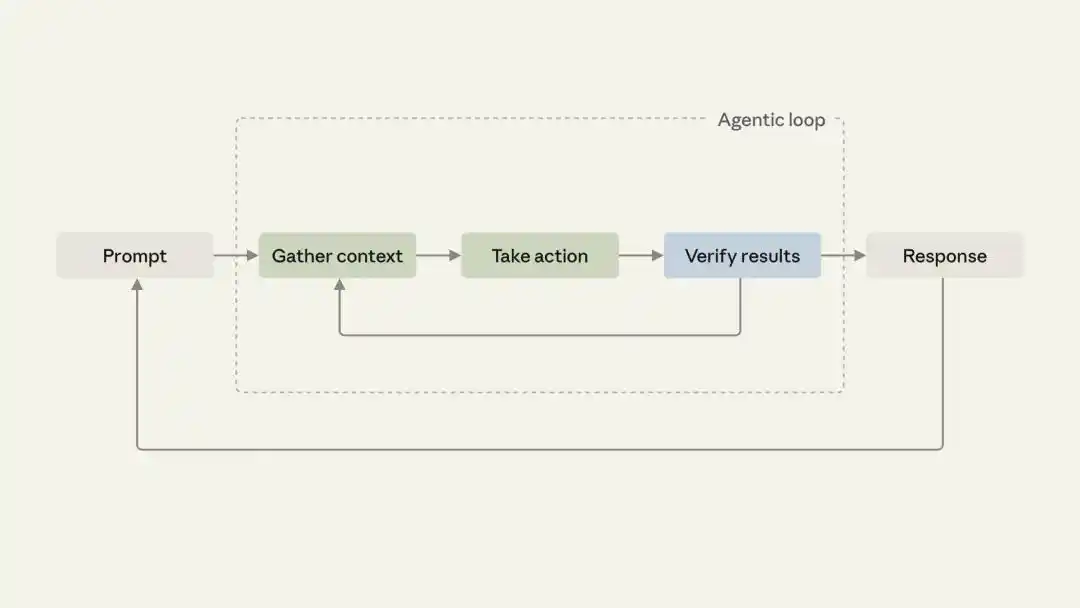
Anthropic's official agent cycle diagram: after a prompt comes in, Claude gathers context, executes actions, verifies results. If verification fails, it loops back; only when it passes does it return.

Some checks Claude already knows how to do. Deterministic signals in the codebase, like type checker, linter, running tests, runtime errors—it can read these and will fix them as it goes.

The real trouble lies with another category: whether the UI changes are correct, whether the user flow is smooth, whether this change has buried unseen pitfalls...

In the past, these could only be caught by humans watching, performing the same checks dozens or hundreds of times.

Anthropic's solution is to write down each of those manual checks you perform every time, package them into Skills, and have Claude execute them automatically for each task.

For decades, all software engineering processes—writing requirements, planning, layer upon layer of reviews, endless meetings—were essentially because: writing code was too slow, and engineers' time was too valuable.

But when AI makes the act of writing code faster and cheaper, this premise disappears.

The Claude Code team's own assessment is: the bottleneck hasn't vanished; it has merely shifted: from "writing code" to verification, code review, security, and other such stages.

Code is generated too quickly. The new problem becomes: are these codes correct, who will maintain them, can people keep up with the pace of reviewing code.

Faced with this new bottleneck, the Claude Code team first experimented on themselves.

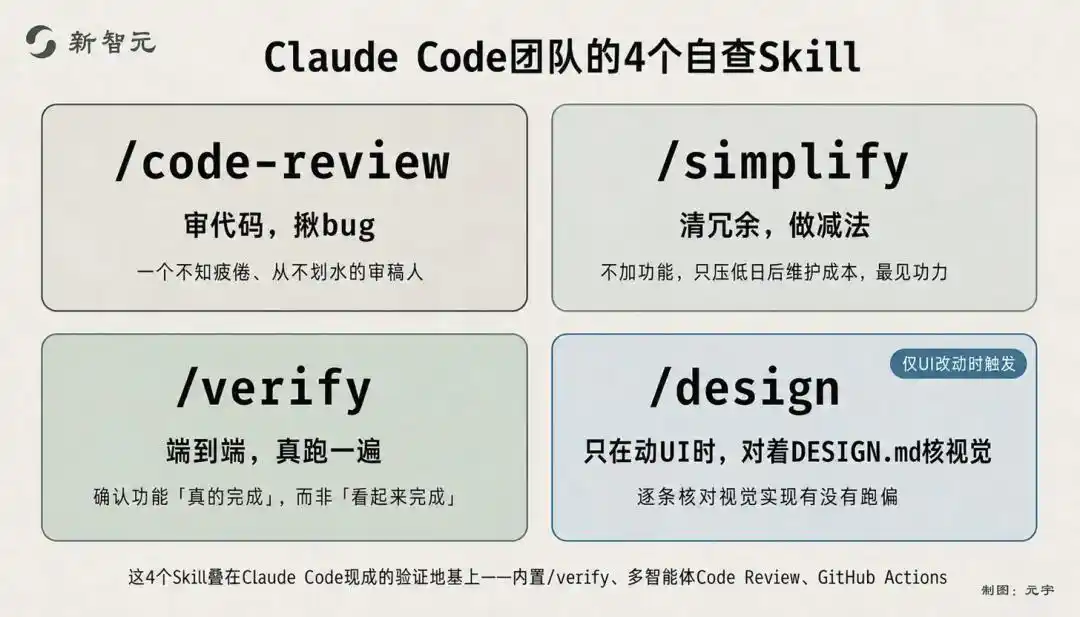
The 4 Self-Check Skills the Claude Code Team Uses Daily

Internally, the Claude Code team uses these four self-check Skills every day.

/code-review, specialized in reviewing code changes, rooting out potential bugs, and providing review comments along the way.

This is like having a tireless reviewer on standby.

/simplify, cleans up the diff for this change, removing convoluted, complex implementations to make the structure simpler.

It doesn't add features for you; instead, it removes redundancy, simplifies implementation, pushing down future maintenance costs.

This point is crucial and requires real skill. Most people write code by adding more; tools that proactively simplify are particularly valuable.

/verify, performs end-to-end verification, actually running things to confirm the feature is truly complete, not just "looks complete."

/design, only comes into play when the UI is touched. It cross-checks against the DESIGN.md in the repository, verifying point by point if your visual implementation has deviated.

These 4 Skills didn't appear out of thin air.

Underlying them, Claude Code has already laid a foundation of existing verification support:

The built-in /verify can run the application to observe changes; you specify the build and test commands in CLAUDE.md, and it follows them. There's also Code Review specifically for multi-agent reviews on PRs, and GitHub Actions that automatically trigger on every commit.

The team's 4 Skills are like adding their own layer of process on top of this general foundation.
How to Write Your Own Verification Skill?

Anthropic's method is also simple:

Write down that manual step you always perform in plain language, as if you were explaining precautions to a new colleague on their first day.

If you're even stuck on how to describe this check step, you can first ask Claude to provide a version of general best practices and then modify it.

Your version will likely differ from the generic approach at a few key points, and those differences are precisely the things most worth documenting.

Checks don't necessarily have to be vague judgments like "feels right or not."

For example: any change that deletes a database field without an accompanying data migration step should be rejected. This is a "local rule" that a generic linter will never catch but is specific to your project.

Any rule you've only been able to enforce by manually watching like a hawk is worth writing into a loop.

What to do after writing it?

Throw it to skill-creator to have it interview you back, or simply drop a Markdown file into .claude/skills/.

The simplest verification Skill is a few lines of instructions plus a body paragraph. Then test it once on a new task to confirm this check step actually runs. If not, fix it.

For Skills you can't modify, like built-in ones or those hosted by plugins, there's a workaround: write a wrapper Skill that first calls the original, then calls your verification. A detour, but it still embeds the check.

Verification Isn't One-Size-Fits-All; It Has 4 Levels

After packaging checks into Skills, the next question is: when should this thing trigger?

Anthropic provides 4 levels of automation, from loose to tight.

Standalone: You remember to manually invoke it.

Embedded: Embedded into a specific task flow, running alongside it.

Chained: Several verification Skills strung into a chain, automatically running one after another.

On every PR: The strictest level, automatically running on every code commit.

The official term for the middle layer transition is "from habit to contract."

What was "I always remember to run /verify after /simplify" as a personal habit becomes "automatically call /verify after /simplify runs" as a fixed contract once chained.

The entire chain completes the development loop on its own, only coming back to you when your approval is needed.

The longer the chain, the higher the reliability, but the official team specifically cautioned: chained verification will genuinely burn through tokens.

So don't immediately set all checks as PR gates that block every commit. The right approach is to first see if it's stable, then gradually add more.

Behind the 4 Skills: AI Programming is Changing Tracks

Behind the 4 Skills, the competition in AI programming is shifting from generation to verification.

The creator of Claude Code has given the same assessment.

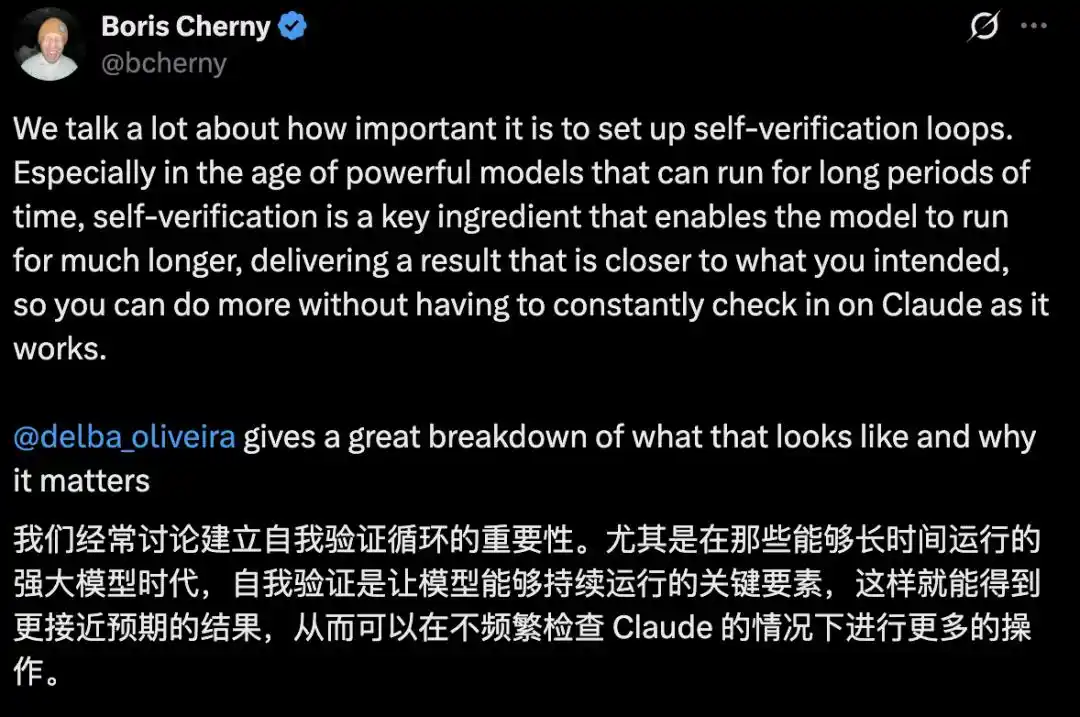
On June 9th of this year, he tweeted: In an era where powerful models can run autonomously for long periods, self-verification is key to letting models run longer and produce results closer to your expectations. You don't have to watch Claude frequently to hand over more work.

Simply put, the more solid the verification, the more confidently an agent can run; the longer it runs, the less hassle for humans.
In the past, we relied on prompts, but they have a ceiling too: they only solve the task at hand; next time you start from scratch.

Let's first correct a common misunderstanding: A Skill is not a piece of Markdown prompt.

It's a capability module containing instructions, file structure, scripts, tool calls, configuration, and an entire workflow. It's about solidifying a team's check steps, design norms, and lessons learned into a package readily available for Claude to reference when needed.

More crucially, Skills are evolving from a feature of Claude Code into an open standard across vendors.

According to industry analysis, GitHub Copilot, Cursor, OpenAI Codex, and Gemini CLI have already adopted the same format.

This means the Skills you solidify for your team won't be locked into one specific tool. They will encapsulate your team's experience, norms, and check processes, turning into reusable capabilities.

This also highlights a stark reality: the same Claude might yield efficiency differences of several times between different teams. This gap isn't due to the model but rather the workflow:

Have you written checks into Skills? Have you set up verification loops? Have you enabled the agent to run its own feedback loop to completion?

Ultimately, an agent's capability is an addition problem: model, plus tools, plus verification mechanisms, plus workflow.

The model aspect is becoming more similar across vendors. What truly creates distance are the latter three items, all of which are in the user's hands.

Of course, what this blog post demonstrates is the process optimization of AI-assisted development, not "AI can already write software independently." It still requires engineers and cannot handle production-grade delivery without humans.

Therefore, it's not about agents coming to take human engineers' jobs, but the direction is already clear.

In the past, we've been teaching AI how to write code. Now we need to start teaching it to verify if what it wrote is correct.

For someone who uses AI to write code every day, the day when "having to manually review everything before leaving work" can finally be entrusted to AI with peace of mind is the day it truly starts carrying the load for you.

References:

https://claude.com/blog/building-verification-loops-in-claude-code-with-skills

https://claude.com/blog/getting-started-with-loops?utm_source=chatgpt.com

This article is from the WeChat public account "New Zhiyuan", author: ASI Revelation

Трендовые криптовалюты

Связанные с этим вопросы

QWhat is the core innovation described in the article regarding Claude's code generation?

AThe core innovation is the introduction of a 'verification loop' where Claude, after writing code, automatically runs it through four specialized Skill checks (code-review, simplify, verify, design) to find and fix errors before delivering the final code to the user.

QWhat are the four primary verification Skills used by the Claude Code team internally?

AThe four primary Skills are: /code-review (to catch potential bugs and provide review comments), /simplify (to clean up and streamline the implementation), /verify (to perform end-to-end functional verification), and /design (to ensure UI changes align with a project's DESIGN.md file).

QWhat is the key difference between a traditional AI coding workflow and the new 'verification loop' workflow?

AThe traditional workflow is: 'collect context -> execute action -> human review'. The new 'verification loop' workflow extends this to: 'collect context -> execute action -> automatic verification -> repair -> re-verify', embedding the review and repair steps back into an automated loop before returning to the user.

QAccording to the article, what is the main 'bottleneck' that has shifted as AI code generation becomes faster?

AThe main bottleneck has shifted from 'writing code' to the verification, code review, and security aspects. The article states that the new problem is ensuring the rapidly generated code is correct, maintainable, and can be reviewed at the required pace.

QHow does the article describe the nature and importance of 'Skills' compared to simple prompts?

AA Skill is described not as a simple prompt, but as a modular capability package. It contains instructions, file structures, scripts, tool calls, configurations, and workflows. It is a way to encapsulate a team's review steps, design standards, and learned lessons into a reusable asset that Claude can access autonomously.

Похожее

Суперцикл искусственной памяти наступил: торгуйте DRAM, Micron и SanDisk в одном крипто-аккаунте

Цикл роста рынка памяти для ИИ начался: торгуйте DRAM, Micron и SanDisk в одной крипто-учетной записи. Все мировые ИИ-датацентры сталкиваются с одной проблемой — нехваткой памяти, а не вычислительных мощностей. Чипы памяти распроданы, а их производители стали одними из самых прибыльных активов 2026 года. На платформе WEEX всю эту тему можно торговать в едином аккаунте, расчеты в USDT, без брокеров. Ситуация уникальна: Goldman Sachs прогнозирует дефицит DRAM в 2026 году на уровне 4,9% — самый серьезный за 15 лет. Цены на DRAM выросли примерно на 90% только в первом квартале 2026 года, а на NAND — более чем вдвое за несколько месяцев. Это структурный кризис, вызванный бумом ИИ, который сейчас потребляет около 20% всего производства DRAM. Три инструмента на WEEX позволяют участвовать в этом цикле: 1. **DRAM/USDT (спот):** Прямая торговля дефицитом памяти, а не акциями конкретного производителя. 2. **Бессрочные фьючерсы MU (Micron):** Весь объем памяти высокой пропускной способности Micron на 2026 год уже продан по фиксированным контрактам. Выручка компании в центре обработки данных составляет более 56%. 3. **Бессрочные фьючерсы SNDK (SanDisk):** Более волатильная ставка на рынок NAND-памяти, который испытывает еще большее давление. Выручка SanDisk резко выросла на 97% в квартальном исчислении. Ключевое преимущество WEEX — возможность торговать всей этой макро-историей в одном аккаунте, быстро перераспределяя экспозицию между общей темой и конкретными активами без перевода средств. Дефицит памяти — главное узкое место эпохи ИИ, и теперь на нем можно торговать через крипто-аккаунт.

TheNewsCrypto35 мин. назад

Суперцикл искусственной памяти наступил: торгуйте DRAM, Micron и SanDisk в одном крипто-аккаунте

TheNewsCrypto35 мин. назад

UNI вырос вдвое за два месяца на фоне общего спада: пятилетняя задержка в восстановлении стоимости

В июне-июле 2025 года, на фоне общей волатильности крипторынка, токен UNI децентрализованной биржи Uniswap показал исключительный рост, почти удвоившись в цене с $2,3 до $4,6. Основная причина — реализация механизма сбора доли комиссий протокола (т.н. «переключатель комиссий») и их направления на выкуп и сжигание UNI, что изменило его статус с чисто управленческого токена на актив с реальным денежным потоком. Несмотря на то, что предложение было принято еще в декабре 2024 года, значимый эффект проявился только в июле 2025 года после запуска Robinhood Chain, ориентированной на токенизированные акции. Развернутые на ней пулы Uniswap резко увеличили объемы торгов и комиссий протокола. Ежедневные средства, направляемые на сжигание UNI, выросли примерно с $114 тысяч до $325 тысяч, причем более половины суммы генерировала Robinhood Chain. Ключевым фактором успеха механизма выкупа и сжигания для UNI стала зрелая и распределенная структура предложения токена, выпущенного еще в 2020 году, без крупных предстоящих разблокировок. Это отличает его от многих новых проектов, где эмиссия часто превышает объемы выкупа. Главный вопрос на будущее — сможет ли Uniswap сохранить высокие объемы торгов на Robinhood Chain после окончания 90-дневного периода субсидирования комиссий сети, или текущий рост окажется временным эффектом.

marsbit1 ч. назад

UNI вырос вдвое за два месяца на фоне общего спада: пятилетняя задержка в восстановлении стоимости

marsbit1 ч. назад

Экстренный отзыв функции генерации изображений Nano Banana 2 в Google Earth!

В Google Earth экстренно отозвали функцию генерации изображений Nano Banana 2 после того, как пользователи менее чем за день "сломали" её, создавая неподобающий или абсурдный контент (например, исторические памятники в постапокалиптическом стиле). Функция, позволявшая накладывать сгенерированные ИИ изображения на реальные спутниковые снимки и 3D-ландшафты в Google Earth, была временно отключена для усиления защитных мер. Эта технология, названная "геопространственным закреплением" (Geospatial Grounding), использует текущий спутниковый вид, данные рельефа и камеры для создания изображений, которые реалистично вписываются в реальную географию. Она открывала новые возможности: визуализацию исторических мест, создание информационных графиков и предварительный просмотр архитектурных проектов в их реальном окружении. Однако недостатки, такие как отсутствие поддержки режима Street View и неточности в генерируемой информации, а также возможность злоупотреблений, вынудили Google отозвать функцию. Этот шаг подчеркивает стратегию Google по использованию своего уникального массива географических данных для создания нового типа "правдоподобной" AI-визуализации, в отличие от конкурентов, сосредоточенных только на эстетике изображений.

marsbit2 ч. назад

Экстренный отзыв функции генерации изображений Nano Banana 2 в Google Earth!

marsbit2 ч. назад

Алтман признаёт: переоценил способность ИИ отнимать работу! Хуан Жэньсюнь: разговоры о безработице абсолютно ошибочны

Открытие OpenAI - не первая крупная компания под управлением ИИ, но Сэм Олтман изменил свою позицию. В подкасте «Invest Like the Best» он заявил, что люди «не хотят ИИ-гендиректора», поскольку им важно знать, кто принимает решения и несет ответственность. Он также признал, что переоценил скорость, с которой ИИ заменит младшие офисные должности. Дженсен Хуанг, глава NVIDIA, в свою очередь, заявил на YC Startup School, что нарратив об «ИИ, уничтожающем рабочие места», ошибочен. Он разграничил понятия «задача» и «работа»: ИИ берет на себя некоторые задачи, но не устраняет всю должность. Например, спрос на радиологов и разработчиков ПО растет, поскольку ИИ помогает быстрее обрабатывать накопленные объемы работы, позволяя расширять деятельность. Исследование Университета Мэриленда и LinkUp, охватившее 155 млн вакансий в США с 2018 года, не выявило общего снижения спроса на работу из-за ИИ. Доля вакансий для выпускников даже выросла. Молодые специалисты могут получить преимущество, используя ИИ для компенсации недостатка опыта. Однако стандартные вводные задачи (обработка данных, написание базового кода), которые раньше служили стартовой ступенькой для карьеры, теперь автоматизируются. Это сужает точку входа на рынок труда для новичков. Ключевой вывод: по мере автоматизации задач ценность человеческой работы смещается в сторону ответственности, построения доверия, принятия окончательных решений и личного взаимодействия. Эти элементы, которые ИИ не может заменить, становятся настоящим профессиональным преимуществом.

marsbit2 ч. назад

Алтман признаёт: переоценил способность ИИ отнимать работу! Хуан Жэньсюнь: разговоры о безработице абсолютно ошибочны

marsbit2 ч. назад

Крупные изменения в ФРС? Сообщается, что Ваш рассматривает возможность сокращения частоты заседаний по ставкам, нарушая 40-летнюю традицию

Председатель ФРС Уолш рассматривает возможность сокращения количества регулярных заседаний по установлению процентных ставок, проводимых Федеральным комитетом по открытым рынкам (FOMC) каждый год. Это изменение, если оно будет реализовано, станет одним из самых значительных преобразований в работе ФРС за последние десятилетия и打破ет практику, действующую с 1981 года, когда заседания проводятся восемь раз в год (примерно каждые шесть недель). Согласно информации The New York Times, Уолш вынес этот вопрос на обсуждение на заседании ФРС на этой неделе. Новый график может быть определен до следующего заседания в середине сентября, хотя конкретные изменения вступят в силу позже. Закон о банках 1935 года требует, чтобы FOMC проводил «не менее четырех заседаний в год». Сокращение количества заседаний уменьшит возможности для голосования по процентным ставкам и может ослабить способность ФРС оперативно реагировать на изменения в инфляции и на рынке труда. Это также сократит каналы получения рынком сигналов о денежно-кредитной политике и снизит прозрачность, что противоречит многолетнему тренду на ее усиление. Данный шаг соответствует общему стилю руководства Уолша, который уже сократил объем публичных заявлений и рассматривает возможность уменьшения количества пресс-конференций после заседаний. Это предложение является частью более широкой повестки Уолша по «институциональной реформе» ФРС. В истории ФРС частота заседаний менялась: до 1981 года они могли проводиться до 19 раз в год, как это было в 1956 году. Внутренняя памятная записка ФРС 1988 года признавала преимущества более частых заседаний для оперативного рассмотрения новой информации, но сочла существующий график из восьми заседаний подходящим. Реформа Уолша идет в противоположном направлении, и ее потенциальное влияние на гибкость политики и коммуникацию с рынком будет тщательно отслеживаться.

marsbit3 ч. назад

Крупные изменения в ФРС? Сообщается, что Ваш рассматривает возможность сокращения частоты заседаний по ставкам, нарушая 40-летнюю традицию

marsbit3 ч. назад

Торговля

Спот

Популярные статьи

Как купить 4

Добро пожаловать на HTX.com! Мы сделали приобретение 4 (4) простым и удобным. Следуйте нашему пошаговому руководству и отправляйтесь в свое крипто-путешествие.Шаг 1: Создайте аккаунт на HTXИспользуйте свой адрес электронной почты или номер телефона, чтобы зарегистрироваться и бесплатно создать аккаунт на HTX. Пройдите удобную регистрацию и откройте для себя весь функционал.Создать аккаунтШаг 2: Перейдите в Купить криптовалюту и выберите свой способ оплатыКредитная/Дебетовая Карта: Используйте свою карту Visa или Mastercard для мгновенной покупки 4 (4).Баланс: Используйте средства с баланса вашего аккаунта HTX для простой торговли.Третьи Лица: Мы добавили популярные способы оплаты, такие как Google Pay и Apple Pay, для повышения удобства.P2P: Торгуйте напрямую с другими пользователями на HTX.Внебиржевая Торговля (OTC): Мы предлагаем индивидуальные услуги и конкурентоспособные обменные курсы для трейдеров.Шаг 3: Хранение 4 (4)После приобретения вами 4 (4) храните их в своем аккаунте на HTX. В качестве альтернативы вы можете отправить их куда-либо с помощью перевода в блокчейне или использовать для торговли с другими криптовалютами.Шаг 4: Торговля 4 (4)С легкостью торгуйте 4 (4) на спотовом рынке HTX. Просто зайдите в свой аккаунт, выберите торговую пару, совершайте сделки и следите за ними в режиме реального времени. Мы предлагаем удобный интерфейс как для начинающих, так и для опытных трейдеров.

772 просмотров всегоОпубликовано 2025.10.20Обновлено 2026.06.02

Как купить 4

Неделя обучения по популярным токенам 4: В 2025 году экосистема TRON переживает взрывной рост, TRON укрепляет позиции лидера по переводу стейблкоинов

В 2025 году экосистема TRON быстро развивается, уделяя особое внимание взаимодействию, безопасности и практическому внедрению.

2.2k просмотров всегоОпубликовано 2025.12.30Обновлено 2025.12.30

Неделя обучения по популярным токенам 4: В 2025 году экосистема TRON переживает взрывной рост, TRON укрепляет позиции лидера по переводу стейблкоинов

Обсуждения

Добро пожаловать в Сообщество HTX. Здесь вы сможете быть в курсе последних новостей о развитии платформы и получить доступ к профессиональной аналитической информации о рынке. Мнения пользователей о цене на 4 (4) представлены ниже.

活动图片