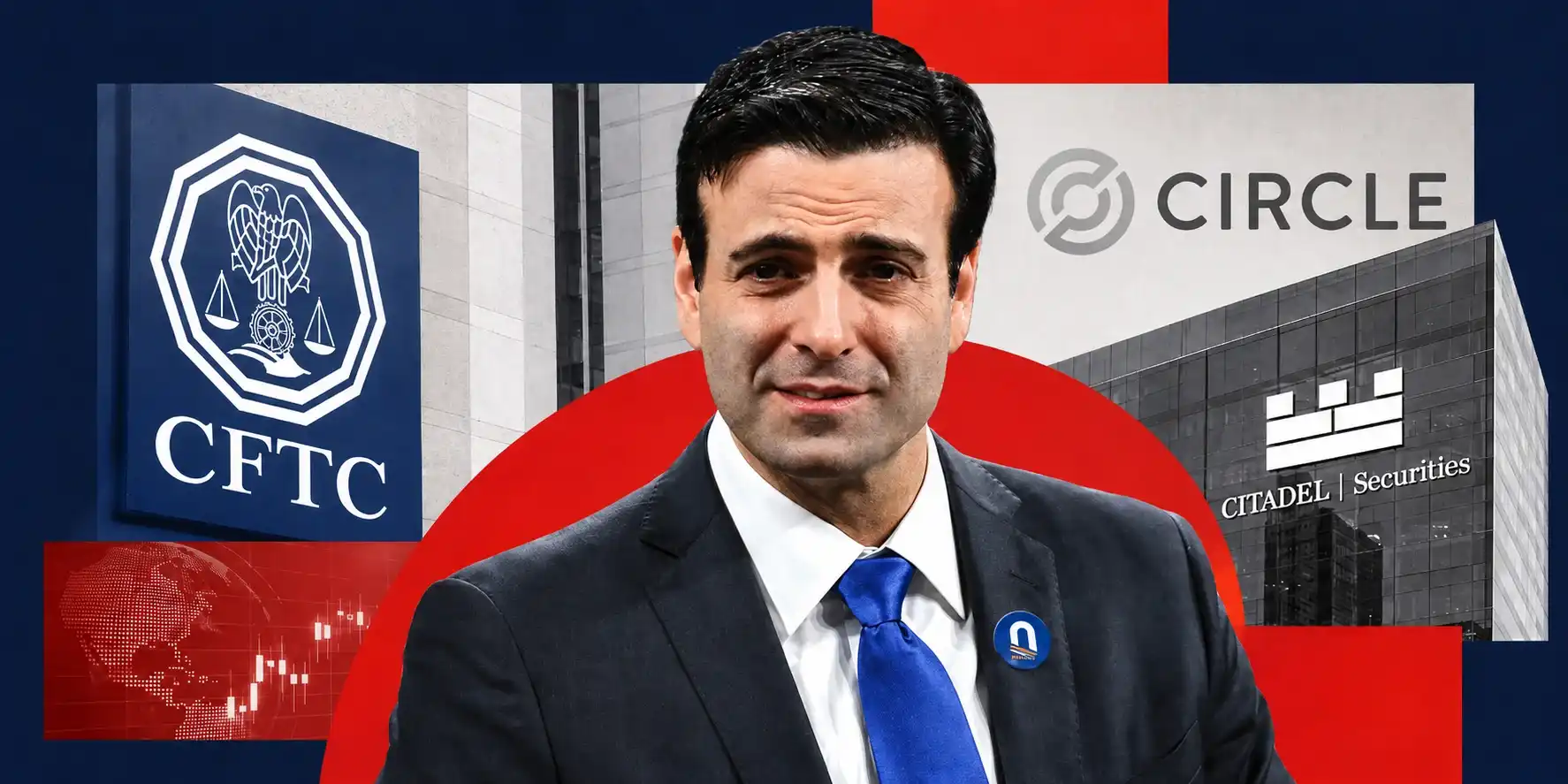
Former CFTC Chairman, Circle President Tarbert: Preaching Long-Termism While Cashing Out $30 Million Himself

marsbitОпубликовано 2026-07-22Обновлено 2026-07-22

Введение

Former CFTC Chairman and Circle President Heath Tarbert has consistently advocated for a long-term vision in public, urging patience from investors as Circle’s stock price has fallen significantly from its peak. However, it has been revealed that since Circle’s IPO, Tarbert has continuously sold his CRCL shares through pre-arranged trading plans, cashing out approximately $30 million, without making any public market purchases. This contrast between his public messaging and personal actions has drawn criticism. Tarbert joined Circle in July 2023 as Chief Legal Officer, leveraging his regulatory experience to help guide the company through its IPO and expansion. Despite promoting stablecoins as long-term infrastructure, he established a 10b5-1 trading plan just before Circle went public, leading to substantial stock sales over the following year. In March 2026, he initiated another plan to sell more shares. His career trajectory highlights a pattern of moving between high-level regulatory roles and influential positions in the financial sector. After resigning as CFTC Chairman in early 2021, he joined Citadel Securities as Chief Legal Officer just 27 days later, during a period of intense regulatory scrutiny for the firm. He later joined Circle, aiding its efforts to navigate regulatory challenges for its public listing. While Tarbert's expertise in policy and compliance is valuable to companies like Circle, his actions—advocating long-term confidence while personally dives...

Author: Zen, PANews

"Circle focuses on long-term development and believes the stock price will eventually provide the answer."

Facing the bleak reality of the stock price falling 70% from its peak and market value evaporating, former CFTC Chairman and Circle President Heath Tarbert, during an interview with FOX Business on July 14, was asked by the host what he would say to investors who bought Circle stock at its historical high. He calmly expressed the above viewpoint.

However, the reality is not favorable for Circle. Analysts from Mizuho Securities USA LLC recently downgraded Circle's rating from "Neutral" to "Underperform," giving it the lowest Wall Street target price of $50.

As the stock price continues to fall, it is indeed part of Tarbert's job as president to urge ordinary shareholders to choose long-termism and remain patient. Yet, it appears highly ironic when he was exposed for continuously selling CRCL shares since Circle's IPO completion, cashing out approximately $30 million in total, and never increasing his holdings. This stark contrast between public words and private actions stands out.

Frantically Cashing Out, Leaving the Verbal Long-Termism for the Market

The revolving door between government and business is a classic script for former US officials. As a former CFTC chairman friendly to cryptocurrencies, Heath Tarbert joined Circle in July 2023 as Chief Legal Officer and Head of Corporate Affairs. Tarbert's role was clearly to leverage his experience spanning the US Treasury, CFTC, White House, and Wall Street to help Circle communicate with regulators, accelerate business growth and its public listing, and promote USDC's integration into the traditional financial system.

Tarbert himself stated that he valued Circle's "regulation-first" development approach and hoped to promote the establishment of clear, consistent rules for digital assets. In early 2025, he was further promoted to become Circle's first President, overseeing legal, compliance, risk, public policy, communications, and international expansion.

Judging from his public statements, Tarbert has almost always been one of the most active promoters of Circle's "long-termism" narrative. He repeatedly emphasized that stablecoins should not be understood merely as crypto trading tools but as the next generation of payment, settlement, and internet finance infrastructure. Circle's current investments, he argued, cannot be measured simply by short-term profits or stock price fluctuations.

However, regarding his personal shareholding, he arranged something entirely different from his public stance even before Circle's listing. On June 4, 2025, the day before Circle's IPO pricing and official listing, Tarbert established a Rule 10b5-1 trading plan to sell up to 353,290 Circle shares within one year.

Consequently, in the 13 months following the IPO, he sold shares for 7 months, offloading over 360,000 shares in total and cashing out more than $30 million. Notably, on March 2, 2026, Tarbert sold 122,007 shares in a single transaction worth approximately $11.5 million, the largest of all his sales.

Rule 10b5-1 plans allow executives to preset the timing, quantity, or price conditions for future stock sales when they do not possess material non-public information, thus avoiding trading based on insider information. Most of Tarbert's sales were executed automatically by brokers through such plans, yielding profits of about $24.4 million.

Perhaps Tarbert felt his selling intensity was not strong enough. Before the first trading plan had even fully concluded, he established another Rule 10b5-1 plan on March 10, 2026, preparing to sell up to an additional 160,000 shares by the end of this year, including shares acquired through exercising options. Since Circle's IPO, Tarbert has never actively purchased company shares on the open market.

In reality, it is quite common for company executives to sell some equity to diversify personal assets. What has upset the community is that even after massively cashing out at relatively high stock prices, and while the price has fallen by about three-quarters, he continues to emphasize that the market should adhere to long-termism, yet he himself shows no intention to increase his holdings on the open market. This inevitably leads people to suspect that Tarbert actually just wants to cash in and leave, without ever having genuine confidence in Circle's long-term development.

Mastering the Revolving Door: Joined Citadel Securities 27 Days After Stepping Down as CFTC Chairman

Even before joining Circle's core management, Tarbert was very adept at leveraging his US political and commercial connections for personal gain.

He was trained early in law and finance, having worked at the White House, the Senate Banking Committee, and the Treasury Department. He also served as head of the banking regulatory practice at the international law firm Allen & Overy. During the Trump administration, Tarbert served as Assistant Secretary of the US Treasury for International Markets, participating in G7, G20, Financial Stability Board, and US-EU financial regulatory coordination, and once acting as Under Secretary of the Treasury for International Affairs.

In 2019, Trump nominated Tarbert as Chairman of the CFTC. Because he had both Republican administration experience and professional background in banking regulation, international finance, and law, his nomination faced no significant resistance. The Senate ultimately confirmed him as Chairman with 84 votes in favor and 9 against, with a term originally lasting until April 2024.

After the 2020 presidential election, Democrats regained the White House, and Tarbert stepped down on the day of Biden's inauguration. His public reason was to make way for the new president to choose a permanent Chairman, which is part of the normal power transition at US regulatory agencies after a change in administration.

However, Tarbert could have remained as a regular Commissioner until 2024 but chose to resign from all positions on March 5, 2021. Twenty-seven days later, Tarbert swiftly joined Citadel Securities, a top market maker directly impacted by financial regulatory policies, as its Chief Legal Officer.

This episode later shaped the basic public perception of him—exceptionally skilled at entering the regulatory system, accumulating institutional resources, and then converting those resources into compliance, lobbying, and policy influence capabilities for large financial firms.

From Citadel Securities to Circle: Controversy Begins with the "Revolving Door"

Beyond joining Citadel Securities as an executive less than a month after leaving a key regulatory position, the specific timing of his "urgent" entry into the company also raised external doubts.

In early 2021, large numbers of retail investors concentrated on buying stocks like GameStop that were heavily shorted by institutions, causing prices to soar dramatically and inflicting huge losses on some short funds. At the peak of this frenzy, Robinhood suddenly restricted users from buying GameStop, AMC, and other stocks while still allowing sales, causing related stock prices to plummet. Some investors later accused Robinhood of colluding with Citadel Securities to suppress stock prices, alleging the platform weakened retail buying pressure by disabling the "buy button" to bail out Wall Street short sellers.

In this controversy, Citadel Securities became a focal point of suspicion. On one hand, it was one of Robinhood's most important order execution partners and a source of payment for order flow; on the other hand, Ken Griffin, founder of Citadel Securities, had just injected capital into Melvin Capital, a hedge fund severely hit by the GameStop short squeeze. At that time, this leading market maker was facing intense scrutiny from Congress, regulators, and public opinion.

And precisely during this sensitive period, Tarbert, who had just left the CFTC, coincidentally took up the position of Chief Legal Officer at Citadel Securities, responsible for handling legal, compliance, and regulatory affairs. Tarbert possessed knowledge of how regulatory agencies operate, the policy-making process, and Washington connections—exactly what Citadel Securities needed most at that time: the ability to handle Congressional investigations and potential market structure reforms.

After joining Citadel Securities, Tarbert did not confine himself to traditional legal affairs. In 2023, during his tenure as Chief Legal Officer, Citadel Securities strongly opposed the SEC's proposed reforms for retail order auctions. The SEC wanted some retail orders to undergo open auctions before execution to increase competition among market makers. Citadel Securities submitted lengthy comments, arguing that the SEC's economic analysis contained serious errors and that the reform was an unproven "radical experiment" that could harm execution quality for retail investors.

Similar conflicts of interest appeared in the crypto market. In September 2022, Tarbert, as Chief Legal Officer of Citadel Securities, testified before the US Senate, supporting the Digital Commodities Consumer Protection Act and advocating for expanding the CFTC's regulatory authority over the crypto spot market. Meanwhile, Citadel Securities had already received an $11.5 billion investment from Sequoia Capital and crypto investment firm Paradigm and publicly stated plans to expand its business into crypto assets.

From a chronological perspective, a former CFTC Chairman, after joining a market maker preparing to enter the crypto market, publicly pushes for expanding the CFTC's power over that very market. This inevitably leads outsiders to question: Was he designing public rules as a regulator, or was he helping a potential new employer shape a more favorable market environment in advance?

In 2023, Tarbert left Citadel Securities and joined Circle instead. In late 2022, constrained by the regulatory environment, Circle's plan to go public via a SPAC fell through. Subsequently, Circle urgently needed a politically savvy executive to clear its listing obstacles and pursue a direct IPO. Two years later, Circle successfully completed its IPO, and Tarbert once again became one of the most important external representatives for a financial enterprise highly dependent on regulatory policy.

From the company's perspective, Tarbert is undoubtedly an extremely valuable executive. He understands how the regulatory system operates and excels at mobilizing policy, connections, and market resources, always helping the company cross critical thresholds related to compliance, financing, and market access when it most needs it.

Throughout Tarbert's career, a constant theme has been his precise judgment of policy cycles and market windows. What he truly excels at is converting the credibility and policy resources accumulated from his regulatory career, along with market opportunities, into his most valuable professional bargaining chips at different stages.

However, as he repeatedly switches identities between regulatory agencies and financial firms, cashing out at opportune moments, it is not him personally who bears the long-term risks, but rather the investors who believe in his public narrative.


Трендовые криптовалюты

Связанные с этим вопросы

QWhat contradictory behavior by Circle President Heath Tarbert does the article highlight?

AThe article highlights that while publicly advocating for long-termism and investor patience regarding Circle's declining stock price, Heath Tarbert has been consistently selling his CRCL shares since the company's IPO, cashing out approximately $30 million without any record of purchasing additional shares.

QWhat was the stated purpose of Heath Tarbert's 10b5-1 trading plans, and what did he do through them?

AHeath Tarbert's 10b5-1 trading plans were set up to allow pre-scheduled stock sales, ostensibly to avoid trading on material non-public information. Through these plans, he sold over 360,000 shares of Circle stock in 7 out of 13 months post-IPO, cashing out more than $30 million, including a single sale worth about $11.5 million in March 2026.

QHow does the article connect Tarbert's career moves to the concept of a 'revolving door'?

AThe article connects Tarbert's career moves to the 'revolving door' concept by detailing his transition from key regulatory roles (e.g., CFTC Chairman) to high-profile positions in financial firms (Citadel Securities and then Circle) shortly after leaving office. It suggests he leverages his regulatory experience, connections, and policy knowledge to benefit these companies during sensitive periods, such as Citadel's need during the GameStop controversy and Circle's push for an IPO.

QWhat specific event and timing raised questions about Tarbert's move to Citadel Securities?

ATarbert's move to Citadel Securities raised questions because he resigned from the CFTC on March 5, 2021, and joined Citadel as Chief Legal Officer just 27 days later. This timing coincided with the peak scrutiny Citadel faced during the GameStop short squeeze controversy, where it was accused of colluding with Robinhood, leading to suspicions that he was brought in specifically for his regulatory expertise and connections to navigate the crisis.

QAccording to the article, what is the core critique of Tarbert's actions from an investor perspective?

AThe core critique from an investor perspective is that Tarbert personally secures financial gains by cashing out stock at high valuations while publicly promoting a 'long-term' narrative for ordinary shareholders to hold onto declining stock. This creates a perceived hypocrisy where he transfers long-term risk to investors who believe his public statements, while he himself capitalizes on short-term opportunities.

Похожее

Вероятность повышения ставки ФРС на следующей неделе составляет 30%?

Автор: Ли Цзя Под влиянием роста цен на нефть и отсутствия четких перспективных ориентиров от ФРС рынок начинает переоценивать политические риски. Хотя большинство экономистов ожидают, что ФРС сохранит ставки без изменений на следующей неделе, **вероятность повышения ставки, заложенная в рыночные цены, выросла примерно до 30%**, что привело к росту доходности казначейских облигаций США. Доходность двухлетних бондов достигла максимума с начала 2025 года. Аналитики Citigroup в отчете от 23 июля поясняют, что такая рыночная оценка не означает, что инвесторы массово ожидают повышения ставки. **В большей степени это отражает требование инвесторов о более высокой премии за риск** на фоне неопределенности перспективных ориентиров и инфляционных рисков из-за роста цен на нефть. Рост доходности казначейских облигаций и оценка вероятности повышения ставки в 30% связаны с эскалацией на Ближнем Востоке и ростом цен на нефть, что усиливает опасения относительно инфляции. При этом опрос Bloomberg показывает, что ни один из 70 опрошенных экономистов не ожидает повышения ставки ФРС на следующей неделе. **Citigroup: 30% — это не прогноз рынка, а премия за риск.** Экономисты банка указывают, что риск на предстоящем заседании асимметричен, так как снижение ставки крайне маловероятно. **Неожиданное повышение ставки окажет на рынок облигаций гораздо более сильное воздействие**, чем сохранение статус-кво, поэтому инвесторы готовы платить дополнительную премию за этот "хвостовой" риск. В прошлом такая премия обычно составляла 1-2 базисных пункта, но с уменьшением четкости ориентиров от ФРС неопределенность и требуемая компенсация выросли. **Citigroup: Чем менее четки ориентиры, тем выше вероятность сохранения высоких ставок.** Рост цен на нефть стал катализатором переоценки, но более глубокая причина — в изменении коммуникационной стратегии ФРС. **В периоды четких перспективных ориентиров премия за риск была ничтожна, но сейчас каждое заседание несет большую неопределенность.** Это означает, что даже если ФРС оставит ставки без изменений, доходность облигаций может не снизиться значительно, так как премия за риск сохранится. Явление завышения ставок из-за премии за риск может сохраняться до тех пор, пока ФРС не восстановит более четкие рамки коммуникации.

链捕手9 мин. назад

Вероятность повышения ставки ФРС на следующей неделе составляет 30%?

链捕手9 мин. назад

После трёх кварталов падения: получится ли у крипторынка стабилизироваться в третьем квартале?

Криптовалютный рынок пережил худший квартал с 2022 года, общая капитализация упала на 12,6% до $2,1 трлн, а дневные объемы торгов снизились на 20,9%. Впервые за три года сократилась и капитализация стейблкоинов. Основные факторы спада — отток средств из биткоин-ETF, распродажа биткоинов корпоративным казначейством Strategy и ужесточение монетарной политики ФРС. Второй квартал завершился чистым оттоком $46,7 млрд из ETF, при этом в июне отток достиг рекордных $45 млрд. Ключевым событием третьего квартала станет заседание ФРС 28–29 июля. Мягкий сигнал может поддержать биткоин в диапазоне $68 000–84 000 и вернуть приток в ETF, тогда как жесткая риторика способна сместить торговый диапазон к $50 000–56 000. Законодательная неопределенность также давит на рынок: прогресс по закону CLARITY Act, определяющему регуляторные границы, замедлился, и вероятность его принятия в 2026 году упала до 40–45%. Несмотря на общий спад, два сегмента показали рост: объемы на рынках предсказаний выросли на 48,7%, а торговля токенизированными коллекционными предметами увеличилась на 143%. Сектор RWA продолжает стабильно развиваться, достигнув $28,1 млрд. Рынок, вероятно, миновал фазу острой распродажи, но для устойчивого восстановления необходимы ясность от ФРС и регуляторный прогресс.

marsbitВчера 08:38

После трёх кварталов падения: получится ли у крипторынка стабилизироваться в третьем квартале?

marsbitВчера 08:38

BIT Торговые часы: BTC по-прежнему под давлением 200 EMA на недельном графике, после отскока возможен перезапуск нисходящего движения; секторы хранения данных и полупроводников, выросшие ночью, начали падение в вечерней сессии

**Краткий обзор рынка: BTC под давлением, коррекция на рынке акций, внимание к данным и событиям** Рынок криптовалют демонстрирует осторожное восстановление. Bitcoin торгуется около $66 000, сталкиваясь со значительным сопротивлением в районе $68 000, где сосредоточены объемные "застрявшие" позиции. Ключевые технические уровни — 200-недельная скользящая средняя (~$63 333) и 200-недельная EMA (~$68 328). Аналитики отмечают низкую ликвидность, характерную для летнего периода. На фондовом рынке после сильного роста во вторник наблюдается коррекция. Фьючерсы на основные индексы США снижаются. Акции полупроводниковой и памяти, которые резко выросли накануне, падают в ночных торгах. Исключением стал SMCI, который вырос более чем на 15% после оптимистичного прогноза. На общий настрой негативно влияют рост цен на нефть (более $91 за баррель Brent) и доходности государственных облигаций США (10-летние — около 4,64%), что возрождает инфляционные опасения. Азиатские рынки показали нестабильную динамику. Индекс KOSPI в Корее вырос на 0,74%, а японский Nikkei 225 снизился на 0,18%. Основной риск для региона — ослабление японской иены до минимумов с 1986 года, что повышает вероятность вмешательства властей. **Ключевые события для наблюдения:** * **24 июля:** Финансовые отчеты Alphabet (Google), Tesla, IBM. Событие AMD, посвященное ИИ. * **25 июля:** Решение по процентной ставке ЕЦБ и пресс-конференция Кристин Лагард. Финансовые отчеты Intel, American Airlines, Honeywell и других. Данные по числу первичных заявок на пособие по безработице в США.

marsbitВчера 08:30

BIT Торговые часы: BTC по-прежнему под давлением 200 EMA на недельном графике, после отскока возможен перезапуск нисходящего движения; секторы хранения данных и полупроводников, выросшие ночью, начали падение в вечерней сессии

marsbitВчера 08:30

Бывший глава CFTC и президент Circle Тарберт: призывает к долгосрочной стратегии, но сам выводит $30 млн

Бывший председатель CFTC и президент Circle Хит Тарберт, публично пропагандируя долгосрочное видение компании для инвесторов на фоне падения акций на 70% с пиковых значений, сам активно распродавал свои акции CRCL. С момента IPO Circle он по плану 10b5-1 продал более 360 тысяч акций, выручив около 30 миллионов долларов, и при этом ни разу не докупал акции на открытом рынке. Эта разница между его публичными заявлениями и личными действиями вызвала критику. Карьера Тарберта демонстрирует классическое использование «вращающейся двери» между регулирующими органами и частным сектором. Уйдя с поста председателя CFTC в 2021 году, через 27 дней он занял должность главного юрисконсульта в маркет-мейкере Citadel Securities, который в тот момент находился под пристальным вниманием из-за скандала с акциями GameStop. Позже, уже работая в Citadel, Тарберт выступал за расширение полномочий CFTC на крипторынок, в то время как его работодатель планировал выход на этот рынок. В 2023 году Тарберт присоединился к Circle, где его опыт и связи сыграли ключевую роль в успешном проведении IPO компании в 2025 году. Однако его последующие массовые продажи акций, совпавшие с падением котировок и его же призывами к долгосрочным инвестициям, ставят под сомнение искренность его уверенности в будущем компании. Критики видят в его карьере образец превращения регуляторного опыта и политических связей в личную выгоду, в то время как риски несут обычные инвесторы, верящие его нарративам.

marsbitВчера 08:07

Бывший глава CFTC и президент Circle Тарберт: призывает к долгосрочной стратегии, но сам выводит $30 млн

marsbitВчера 08:07

Gate Research: Взлет «уолл-стритизации» криптофинансовых продуктов — это конкуренция или интеграция?

**Аналитический обзор Gate Research Institute: Волна "уолл-стритизации" криптофинансовых продуктов — конкуренция или интеграция?** Создание биткоина в 2009 году было ответом на финансовый кризис и стремлением построить децентрализованную систему без доверенных посредников. Однако к 2026 году значительная часть биткоинов (около 7,14%) хранится через ETF таких гигантов, как BlackRock. Это символизирует глубокую интеграцию традиционных финансов (TradFi) и крипторынка. С появлением биткоин-ETF, фьючерсов, RWA (токенизированных реальных активов) и государственных облигаций на блокчейне, традиционные институты получают всё больше влияния на выпуск, ценообразование, кастодию и дистрибуцию криптоактивов. Однако это не одностороннее поглощение, а взаимодополняющая конвергенция. Криптосфера приносит TradFi глобальную 24/7 ликвидность и программируемость, а TradFi предоставляет криптосфере регулируемые каналы, институциональное доверие и массовый доступ. Яркий пример — две противоположные, но ведущие к одной цели траектории: * **Путь А:** Криптобиржи, такие как Gate, начинают с токенизированных акций и CFD, а затем напрямую подключаются к инфраструктуре традиционных брокеров, предлагая реальную торговлю акциями США, Гонконга и Кореи за стейблкоины. * **Путь Б:** Традиционные брокеры, такие как Robinhood, интегрируют криптоактивы, а затем создают собственные Layer 2 для токенизации своих акций, стремясь к круглосуточной торговле. Обе стратегии нацелены на создание **универсального финансового аккаунта будущего** — единой точки доступа к акциям, криптовалютам, ETF, токенизированным облигациям и другим активам. Ключевой конкурентной борьбой становится не между CEX и брокерами, а между этими "супераккаунтами". Параллельно, слой RWA и токенизированных гособлигаций растёт даже на медвежьем рынке, становясь "прослойкой" для объединения капиталов. Хотя этот рынок (около $150 млрд токенизированных казначейских облигаций) ещё мал по сравнению с традиционным ($30 трлн), он демонстрирует устойчивый структурный тренд, привлекающий крупнейшие финансовые институты (JPMorgan, DTCC и др.). **Вывод:** "Уолл-стритизация" — это не поражение идеалов децентрализации, а формирование новой гибридной модели. Децентрализованные протоколы продолжают работать на базовом уровне, в то время как на уровне приложений и пользовательского опыта формируется более эффективный, глобальный и свободный объединённый рынок капитала, где активы TradFi и DeFi торгуются бок о бок в одном интерфейсе. Уолл-стрит не завоевала криптосферу, а криптосфера не обошла Уолл-стрит — они совместно строят новые финансовые рельсы.

marsbitВчера 08:04

Gate Research: Взлет «уолл-стритизации» криптофинансовых продуктов — это конкуренция или интеграция?

marsbitВчера 08:04

Торговля

Спот

Популярные статьи

Как купить S

Добро пожаловать на HTX.com! Мы сделали приобретение Sonic (S) простым и удобным. Следуйте нашему пошаговому руководству и отправляйтесь в свое крипто-путешествие.Шаг 1: Создайте аккаунт на HTXИспользуйте свой адрес электронной почты или номер телефона, чтобы зарегистрироваться и бесплатно создать аккаунт на HTX. Пройдите удобную регистрацию и откройте для себя весь функционал.Создать аккаунтШаг 2: Перейдите в Купить криптовалюту и выберите свой способ оплатыКредитная/Дебетовая Карта: Используйте свою карту Visa или Mastercard для мгновенной покупки Sonic (S).Баланс: Используйте средства с баланса вашего аккаунта HTX для простой торговли.Третьи Лица: Мы добавили популярные способы оплаты, такие как Google Pay и Apple Pay, для повышения удобства.P2P: Торгуйте напрямую с другими пользователями на HTX.Внебиржевая Торговля (OTC): Мы предлагаем индивидуальные услуги и конкурентоспособные обменные курсы для трейдеров.Шаг 3: Хранение Sonic (S)После приобретения вами Sonic (S) храните их в своем аккаунте на HTX. В качестве альтернативы вы можете отправить их куда-либо с помощью перевода в блокчейне или использовать для торговли с другими криптовалютами.Шаг 4: Торговля Sonic (S)С легкостью торгуйте Sonic (S) на спотовом рынке HTX. Просто зайдите в свой аккаунт, выберите торговую пару, совершайте сделки и следите за ними в режиме реального времени. Мы предлагаем удобный интерфейс как для начинающих, так и для опытных трейдеров.

1.7k просмотров всегоОпубликовано 2025.01.15Обновлено 2026.06.02

Как купить S

Sonic: Обновления под руководством Андре Кронье – новая звезда Layer-1 на фоне спада рынка

Он решает проблемы масштабируемости, совместимости между блокчейнами и стимулов для разработчиков с помощью технологических инноваций.

2.4k просмотров всегоОпубликовано 2025.04.09Обновлено 2025.04.09

Sonic: Обновления под руководством Андре Кронье – новая звезда Layer-1 на фоне спада рынка

HTX Learn: Пройдите обучение по "Sonic" и разделите 1000 USDT

HTX Learn — ваш проводник в мир перспективных проектов, и мы запускаем специальное мероприятие "Учитесь и Зарабатывайте", посвящённое этим проектам. Наше новое направление .

1.9k просмотров всегоОпубликовано 2025.04.10Обновлено 2025.04.10

HTX Learn: Пройдите обучение по "Sonic" и разделите 1000 USDT

Обсуждения

Добро пожаловать в Сообщество HTX. Здесь вы сможете быть в курсе последних новостей о развитии платформы и получить доступ к профессиональной аналитической информации о рынке. Мнения пользователей о цене на S (S) представлены ниже.

活动图片