AI Billing Black Box Exposed: 1.7 Million Overcharged, Anthropic Refunds But Doesn’t Admit Fault

marsbitОпубликовано 2026-06-29Обновлено 2026-06-29

Введение

A startup named Vaudit, founded by former Oracle director Michael Hahn, audits AI bills for companies and claims to have identified approximately $1.7 million in overcharges across 60 businesses, totaling $34 million in reviewed bills. The alleged discrepancies primarily involve charges for Anthropic's Claude Code. Common issues cited include billing for newer, more expensive models when older, cheaper ones were used; charging for failed or errored requests; and "retry storms" where AI agents silently retry failed tasks, accumulating costs unnoticed. Major clients like Panasonic, HP, and Honda were among those audited. While Vaudit reports that around 80% of the disputed charges were refunded by providers like Amazon, Google, Microsoft, Anthropic, and OpenAI after申诉, the AI companies largely deny systemic problems. Anthropic stated overcharges do not appear widespread and it does not bill for uncompleted requests or errors, while OpenAI said it found no evidence of such issues affecting its customers. The situation highlights the inherent opacity and complexity of AI billing, which is based on token usage that is difficult to track and predict, especially with multi-agent, multi-model workflows. This complexity is creating a new market for third-party AI bill auditing services like Vaudit, which charges fees based on recovered amounts. Separately, Anthropic faces a proposed class-action lawsuit alleging its high-tier subscription plans deliver far less usage than advertis...

A former Oracle director named Michael Hahn has recently started a business exposing fake AI bills.

His company, Vaudit, examined AI bills totaling approximately $34 million from 60 companies, primarily for the use of Claude Code, and identified about $1.7 million in overcharges.
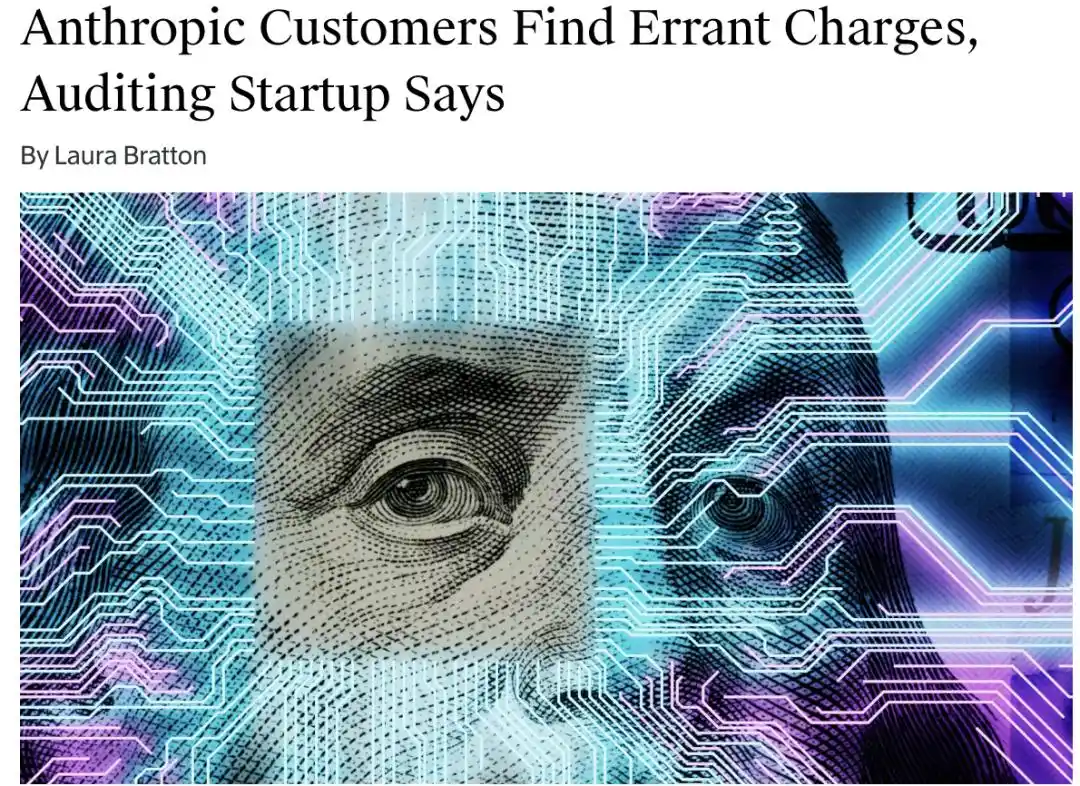
The Information reported: The auditing firm Vaudit stated that it identified about $1.7 million in suspected overcharges in the corporate AI bills it handled, mainly involving Claude Code.

The audited client list included major corporations such as Panasonic, HP, and Honda.

But if you ask the two AI giants on the other side of the bills, you get a different version.

Anthropic says it does not charge for unfulfilled requests or errors, nor does it secretly route requests to older models, and overcharging does not appear to be a widespread phenomenon.

OpenAI is more direct: there is no evidence that these issues occurred with its customers.

Both sides claim there is no problem.

However, after rounds of appeals by Vaudit and its clients, about 80% of these disputed amounts were ultimately refunded by Amazon, Google, Microsoft, Anthropic, and OpenAI.

Hahn says these companies were very cooperative when issues arose, agreeing to refund the money but refusing to admit any mistake.

Thus, the situation becomes strange: the auditing firm points to the ledger saying "I found it," about 80% of the overcharges were refunded, yet the model vendors collectively shrug and say "nothing happened."

If everyone claims there's no mistake, how did these refunds come about?

How Did This 1.7 Million Become "Excess"?

First, let's see what Vaudit uncovered.

Michael listed three of the most common overcharging methods, each hidden in inconspicuous corners of the bill where no one would normally check line by line.

The first: model misassignment.

The client actually called an older, cheaper model, but the bill was calculated based on a newer, more expensive tier.

For example, you bought an economy-class seat but were charged a first-class price. It's unnoticeable once or twice, but after millions of calls, the price difference becomes apparent.

The second: paying for failure.

An agent or chatbot that fails to complete a request, or even directly returns an error, is still included in the bill.

The third is the most insidious. Hahn calls it a "retry storm." An agent task fails, and it silently retries repeatedly in the background. The user has no idea money is being burned in the background, and the costs stack up layer by layer.

None of these three are caused by the user "actively using more."

The third one is the most frightening.

In the past, when you used software, you monitored it step by step, and could immediately stop it if it went haywire.

But the selling point of AI agents is precisely "let it work on its own," with the human stepping out of the process.

This means that when an AI agent hits a wall, retries, hits another wall, and burns tokens like crazy in the background, the person who would normally call a stop doesn't know about it, and the bill doesn't arrive until the end of the month.

Anthropic, OpenAI: We Didn't Overcharge

The point of this matter is not "who cheated whom."

Vaudit found it, but Anthropic and OpenAI didn't admit it. This is just the auditing firm's version. One cannot simply label the two companies as overchargers based on the phrase "found 1.7 million."

But they did cooperate when it came to refunds. The fact that 80% was refunded at once precisely shows that this 80% shouldn't have been charged in the first place.

Refunds are error corrections. The money is back, but the account is still a mess.

The reason for this "refund without admission" stalemate lies in the inherent algorithm of the AI billing business itself.

Why AI Bills Are Inherently Incomprehensible

The problem might not be "miscalculation," but "inherently impossible to calculate clearly."

Because it charges based on token usage—the more you use, the more you pay; the more complex the usage, the more you pay. Yet tokens are essentially invisible in the infrastructure dashboards you commonly use.

What's more troublesome is that it can fluctuate wildly. Asking the same question, depending on which model is used, how the prompt is written, and how the agent is orchestrated, the tokens burned can differ by orders of magnitude.

The more models move towards being "agentic," the more tokens they consume. An agent running a task for you could involve dozens or even hundreds of model calls in the background, each burning money.

Inherently unpredictable and hard to explain—this is how the ambiguous zone of "overcharging" emerges.

Hahn's words hit the nail on the head: AI bills are becoming increasingly opaque. This statement precisely hits the soft spot of the entire industry.

AI has evolved from the earliest "per-call billing" to today's "multi-model + multi-agent + cloud intermediary," stretching the billing chain longer and longer: the model vendor charges once, the cloud vendor charges once, and the SDK agent in the middle adds another layer.

Each layer looks reasonable on its own, but when the three are stacked together, it's hard to see at a glance where the money was actually spent.

What's even more critical is that money is often not burned where you can see it.

The scenarios that truly eat up the bill are almost all hidden in the background, and each one has publicly available GitHub issues or incident reports that can be checked.
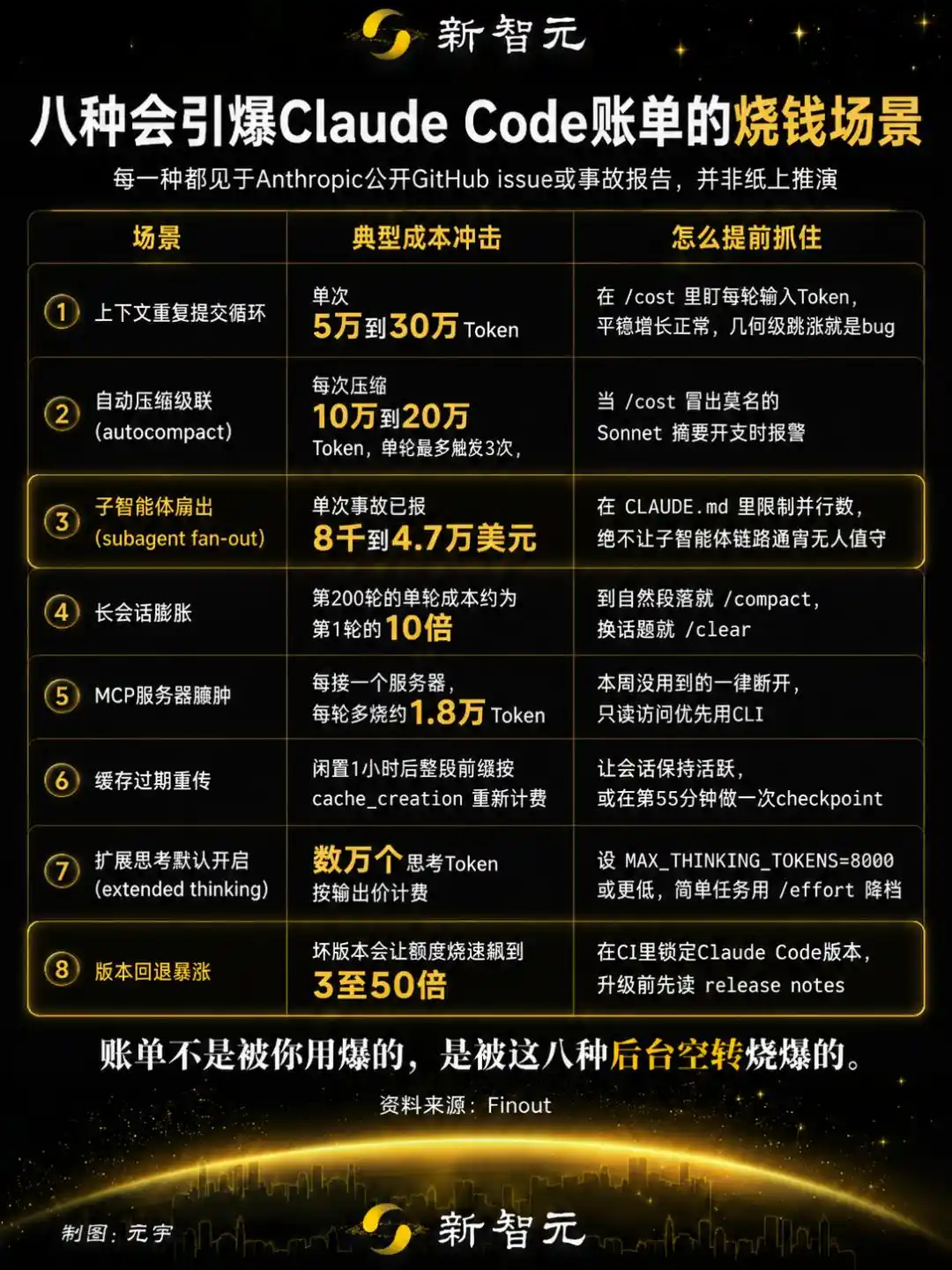
After looking at these eight scenarios, you'll find that either the context is repeatedly retransmitted, or sub-agents run idly overnight with no one watching, and the bill just grows larger and larger on its own, out of sight.

$200 Subscription, $50,000 Bill

This is not the first time Anthropic has faced challenges with AI billing.

On June 15, a client from Washington D.C., Karl Kahn, sued Anthropic in federal court, accusing it of failing to deliver on high-priced subscriptions.
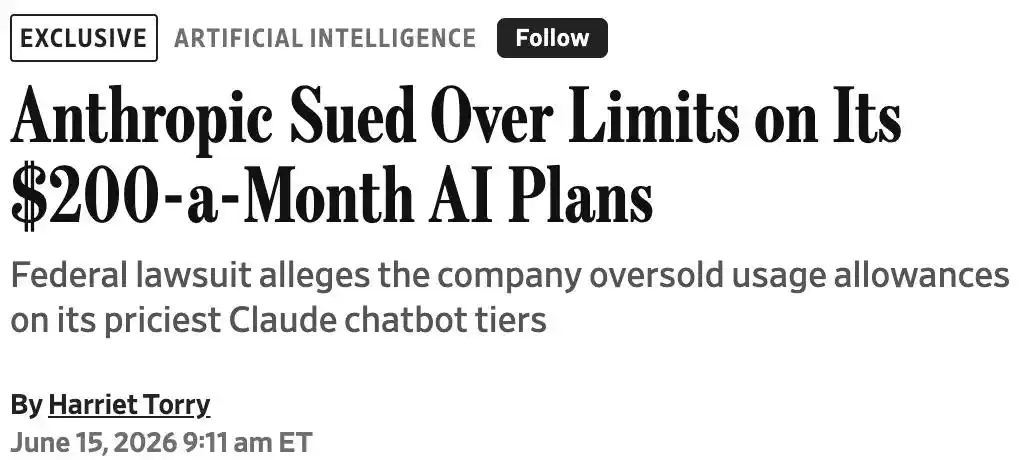
According to The Wall Street Journal, Anthropic's Max 5x costs $100 per month, and Max 20x costs $200 per month. The advertised selling point was 5 times and 20 times the usage limits of the Pro plan, respectively.

But Kahn says the actual usable amount is far lower than advertised.

He upgraded to Max 20x in April this year, but within weeks, he hit the weekly usage ceiling. One 5-hour sprint directly burned through 15% of his weekly quota.

He was left with only three options: stop work, use sparingly, or pay more for additional purchases.

The basis of this lawsuit is primarily a batch of emails sent by Anthropic in July 2025 to subscribers of different tiers, which specified the approximate weekly usage for each tier.

The plaintiff used these black-and-white emails to compare against the actual quotas received, concluding they were "far below the advertised amount."

The lawsuit seeks class-action status, covering all individuals who purchased these two tiers since April 2025.

Finding Errors in AI Bills Is Becoming a Business

Vaudit, which "exposes" AI bills, was founded in 2023 and has a team of about 30 people.

Founder Hahn is a former Oracle director. His old trade was auditing bills for logistics, transportation, advertising, and cloud services—essentially, he specialized in helping people "check accounts and save money."

Earlier this year, he applied this skill directly to AI bills.
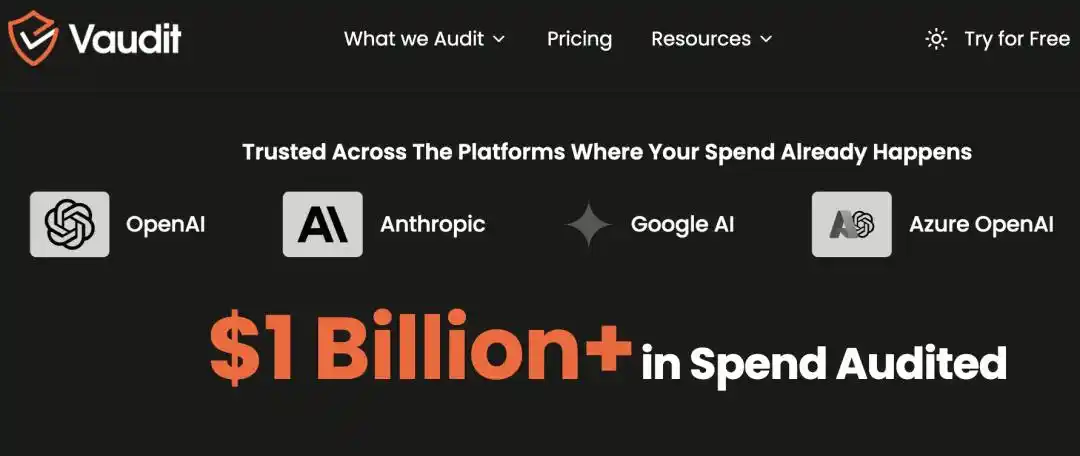
Vaudit's website states that it monitors and recovers every penny of your AI spending, having audited over $1 billion to date.

Vaudit's method is straightforward:

Clients install a piece of software into their AI environment, typically via a Software Development Kit (SDK), which quietly captures raw data on AI usage. This data is then compared line by line with invoices and bills. If they don't match, Vaudit files appeals on the client's behalf.

The fee structure is also direct: 1% of the audited amount, plus 30% of the recovered money. The more they recover for you, the more they earn themselves.

The fact that specializing in finding errors in AI bills can become a business in itself shows: AI billing has become so complex that hiring a "third-party auditor" is now necessary.

And all of this happens at a微妙 (subtle) point in time.

Both Anthropic and OpenAI are sprinting toward IPOs, rushing to pack new features for customers. On one side is the狂奔 (galloping) valuation and revenue, and on the other side are paying users frowning at incomprehensible bills.

Thus, a completely new profession has emerged: the "bill tax accountant" of the AI era.

And who has calculated that AI bill in your hand?

References:

https://www.theinformation.com/newsletters/applied-ai/anthropic-customers-find-errant-charges-auditing-startup-says?rc=epv9gi

This article is from the WeChat public account "New Zhiyuan," author: ASI Apocalypse.

Трендовые криптовалюты

Похожее

Грант Кардон увеличил свои холдинги биткоина до 2700 BTC – Почему сейчас?

Кардона Кэпитал, компания Гранта Кардона, увеличила свои биткоин-холдинги до примерно 2700 BTC (стоимостью около $159 млн), купив актив по средней цене $59 000 на фоне падения рынка. Эта покупка контрастирует с действиями крупнейшего корпоративного держателя, MicroStrategy, который впервые утвердил план продажи до $1,25 млрд биткоинов и уже начал распродажу. Направление задают и спотовые биткоин-ETF США, зафиксировавшие в июне рекордный отток средств примерно в $4,06 млрд. Несмотря на массовую продажу и слабые настроения, технический анализ указывает на возможное дно цены биткоина. На недельном графике цена достигла нижней полосы Боллинджера (зеленая линия), которая неоднократно выступала в качестве поддержки и предшествовала восстановлению.

ambcrypto34 мин. назад

Грант Кардон увеличил свои холдинги биткоина до 2700 BTC – Почему сейчас?

ambcrypto34 мин. назад

Чем останется биткойн в эпоху ИИ?

Недавнее падение биткойна ниже 60 000 долларов вновь поднимает вопрос о его ценности в эпоху ИИ. Автор рассматривает ИИ и биткойн как две стороны одной медали. ИИ радикально снизил стоимость создания контента (текстов, изображений, видео) почти до нуля, что привело к потоку информации, где подлинное и сфабрикованное становится все труднее отличить. В результате истинную ценность приобретает не сам контент, а возможность его **верификации** — подтверждения подлинности фактов, активов, записей. Здесь и проявляется суть биткойна. Его часто критикуют за огромное энергопотребление, которое, в отличие от ИИ, кажется непродуктивным. Однако автор предлагает другую точку зрения: если ИИ сжигает энергию для **создания** (генерирования контента и возможностей), то биткойн сжигает её для **верификации**. Его децентрализованная сеть, основанная на криптографии и консенсусе, создает неизменяемый и самостоятельно проверяемый реестр транзакций. Энергия тратится на то, чтобы сделать подделку истории или мошенническую транзакцию астрономически дорогой и практически невозможной без захвата всей сети. Проводя историческую параллель, автор сравнивает ИИ с печатным станком Гутенберга, который резко удешевил распространение знаний, а биткойн/блокчейн — с двойной бухгалтерией, которая снизила затраты на доверие в коммерции. Таким образом, ИИ и блокчейн не конкурируют, а дополняют друг друга в новой цифровой реальности: один отвечает за безграничное **создание**, другой — за надежное **доказательство** и проверку. Биткойн, в этой логике, — это не просто машина для создания монет, а «машина для создания верифицируемости». В мире, где ИИ может сгенерировать что угодно, конечной ценностью может стать не количество контента, а наличие независимо проверяемых фактов и активов. Будущее биткойна остается неопределенным, но его основная функция — обеспечение доверия без доверия — приобретает новую актуальность в эпоху повсеместных глубоких подделок.

marsbit38 мин. назад

Чем останется биткойн в эпоху ИИ?

marsbit38 мин. назад

В эпоху ИИ, что остаётся у биткоина?

Автор: Sevclub, Seven Research В эпоху искусственного интеллекта, когда генерация текстов, изображений и видео стала дешёвой и быстрой, подлинность информации становится всё более сомнительной. ИИ снижает стоимость производства контента почти до нуля, что приводит к переизбытку и смешению правды и лжи. В этих условиях ключевой ценностью становится возможность верификации — подтверждения истинности. В этом контексте можно по-новому взглянуть на Биткоин, который часто критикуют за высокое энергопотребление. Его суть не в вере, а в криптографической проверке. Биткоин тратит энергию не на вычисления, как ИИ, а на обеспечение "неизменяемости", повышая стоимость фальсификации истории транзакций. Это делает его своего рода машиной по производству "верифицируемости". Проводя параллель с эпохой Возрождения, можно сказать, что ИИ — это новая "печатная пресса", радикально снижающая стоимость создания. Тогда как блокчейн (и Биткоин как его первое воплощение) может стать аналогом "двойной бухгалтерии", снижающим стоимость проверки и установления доверия в цифровом мире. Они не конкурируют, а дополняют друг друга: ИИ генерирует, блокчейн доказывает и верифицирует. Таким образом, в эпоху, когда ИИ может создать что угодно, истинным дефицитом становится не сам контент, а возможность независимой проверки фактов. Биткоин представляет собой попытку создать основу для такой верифицируемости цифровых активов и записей.

链捕手47 мин. назад

В эпоху ИИ, что остаётся у биткоина?

链捕手47 мин. назад

Маркировка Cardano как "призрачной цепи" опровергнута? Почему 34 dApps ADA не раскрывают полной картины

Термин «ghost chain» («цепь-призрак») относится к блокчейну с минимальной активностью и развитием. Хотя Cardano (ADA) обвиняют в этом из-за малого количества dApps (34 против 442 у Solana и 1564 у Ethereum) и значительно более низких показателей транзакций и пользователей, статья объясняет это архитектурными особенностями. Cardano использует модель EUTXO и механизмы батчинга (объединения транзакций), которые повышают детерминизм и безопасность, но при этом статистика «недооценивает» реальную активность в сети. При этом разработка на Cardano остается интенсивной. Автор приходит к выводу, что, несмотря на разрыв в метриках с другими ведущими блокчейнами (Ethereum, Solana, Tron), лишь одно это не является достаточным основанием для ярлыка «ghost chain», так как Cardano занимает свою нишу, делая акцент на научно обоснованный подход, безопасность и соответствие требованиям институциональных клиентов.

ambcrypto1 ч. назад

Маркировка Cardano как "призрачной цепи" опровергнута? Почему 34 dApps ADA не раскрывают полной картины

ambcrypto1 ч. назад

Запас Ethereum у Bitmine достиг $9,8 млрд: «Лучшие годы для криптовалют еще впереди»

Криптокомпания Bitmine Immersion Technologies увеличила свои запасы Ethereum (ETH) на 27 084 монеты за последнюю неделю. Теперь в её казне находится 5 700 040 ETH, что составляет 4,7% от общего предложения Ethereum и оценивается примерно в 9,01 млрд долларов по цене 1569 долларов за монету. Это произошло на фоне падения цены ETH и оттока средств из ETF-фондов Ethereum в июне. Несмотря на слабые рыночные условия и критику в адрес аналогичной стратегии накопления биткоинов компанией MicroStrategy, Bitmine продолжает агрессивно покупать ETH. Председатель Bitmine Том Ли считает, что текущая волатильность отчасти связана с «оконной отделкой» перед концом квартала, и выражает уверенность в будущем крипторынка. Компания подчеркивает свою устойчивость, отмечая ежегодный доход от стейкинга в размере около 211 млн долларов, наличие 555 млн долларов денежных средств и ликвидных ценных бумаг, а также включение в индекс Russell 1000. Ли заявил, что лучшие годы для криптовалют ещё впереди, и ожидает, что токенизация и прогресс в области искусственного интеллекта подстегнут спрос на блокчейн и децентрализованные криптоактивы.

ambcrypto2 ч. назад

Запас Ethereum у Bitmine достиг $9,8 млрд: «Лучшие годы для криптовалют еще впереди»

ambcrypto2 ч. назад

Торговля

Спот

Популярные статьи

Как купить T

Добро пожаловать на HTX.com! Мы сделали приобретение Threshold Network Token (T) простым и удобным. Следуйте нашему пошаговому руководству и отправляйтесь в свое крипто-путешествие.Шаг 1: Создайте аккаунт на HTXИспользуйте свой адрес электронной почты или номер телефона, чтобы зарегистрироваться и бесплатно создать аккаунт на HTX. Пройдите удобную регистрацию и откройте для себя весь функционал.Создать аккаунтШаг 2: Перейдите в Купить криптовалюту и выберите свой способ оплатыКредитная/Дебетовая Карта: Используйте свою карту Visa или Mastercard для мгновенной покупки Threshold Network Token (T).Баланс: Используйте средства с баланса вашего аккаунта HTX для простой торговли.Третьи Лица: Мы добавили популярные способы оплаты, такие как Google Pay и Apple Pay, для повышения удобства.P2P: Торгуйте напрямую с другими пользователями на HTX.Внебиржевая Торговля (OTC): Мы предлагаем индивидуальные услуги и конкурентоспособные обменные курсы для трейдеров.Шаг 3: Хранение Threshold Network Token (T)После приобретения вами Threshold Network Token (T) храните их в своем аккаунте на HTX. В качестве альтернативы вы можете отправить их куда-либо с помощью перевода в блокчейне или использовать для торговли с другими криптовалютами.Шаг 4: Торговля Threshold Network Token (T)С легкостью торгуйте Threshold Network Token (T) на спотовом рынке HTX. Просто зайдите в свой аккаунт, выберите торговую пару, совершайте сделки и следите за ними в режиме реального времени. Мы предлагаем удобный интерфейс как для начинающих, так и для опытных трейдеров.

896 просмотров всегоОпубликовано 2024.03.29Обновлено 2026.06.02

Как купить T

Обсуждения

Добро пожаловать в Сообщество HTX. Здесь вы сможете быть в курсе последних новостей о развитии платформы и получить доступ к профессиональной аналитической информации о рынке. Мнения пользователей о цене на T (T) представлены ниже.

活动图片