A Clod of Chinese Soil Chokes Two Japanese Giants

marsbitОпубликовано 2026-06-16Обновлено 2026-06-16

Введение

"Chinese Soil Chokes Japanese Giants" The production of a key electronic specialty gas, tungsten hexafluoride (WF6), vital for manufacturing AI chips, was halted by two leading Japanese producers—Kanto Denka and Central Glass. Their shutdown was not due to a technological failure but a sudden, critical shortage of a raw material they had long taken for granted: ultra-high-purity (6N-grade) tungsten powder, which is almost entirely sourced from China. Following a quiet Chinese export announcement in January 2026, tungsten powder shipments to Japan dropped to zero for months. Despite frantic efforts, Japanese companies found no viable alternative; imported powder was three times more expensive and lacked the required purity. Their existing stockpiles were exhausted by mid-2026. WF6 is essential for depositing tungsten into the microscopic contact holes of High Bandwidth Memory (HBM) chips, which are crucial for advanced processors like those from Nvidia. While Japanese firms had mastered producing ultra-pure WF6 gas, their entire supply chain relied on China's 6N tungsten powder—a dependency now revealed as a fatal vulnerability. China's dominance in this "soil" results from decades of painstaking R&D by companies like Xiamen Tungsten and China Tungsten & Hightech. They overcame immense technical hurdles, such as separating chemically similar molybdenum from tungsten, to achieve mass production of the world's purest tungsten powder. With their primary suppliers gone, Kanto...

Two Japanese companies made a specialty electronic gas a world leader, with even TSMC and Samsung having to heed them.

Then overnight, they announced a permanent production halt. It wasn't a technology failure; it was a raw material cutoff. And that material, they had been buying entirely from China.

Cut Off

On January 6, 2026, the Ministry of Commerce issued Announcement No. 1 of the year. There was no press conference, no explanatory article, just quietly posted on the official website.

The Japanese didn't notice, Kanto Denka Kogyo didn't notice, Central Glass didn't notice.

They still had inventory. High-purity tungsten powder was piled in warehouses, enough for several months. The procurement department placed orders as usual, emails went out, ton-level shipments arrived—cheap, stable.

No one saw this as a risk.

February, customs data came out: Exports of tungsten carbide powder and tungsten powder to Japan—zero.

March, zero. April, still zero.

According to Kyodo News citing General Administration of Customs data, China's tungsten powder exports to Japan remained at zero for three consecutive months from February to April 2026.

Kanto Denka's inventory fell below the red line. Central Glass scrambled to find alternative suppliers. Mitsubishi Materials poured 10 billion yen into boosting tungsten scrap recycling.

Buying from other countries, the price was 3 times higher. As for purity, it fell far short of the 6N grade.

The two Japanese firms together accounted for nearly one-fourth of the global high-end tungsten hexafluoride production capacity. Kanto Denka Kogyo's president, Junichi Hasegawa, and Central Glass's president, Kazuhiko Maeda, now faced a brutal reality:

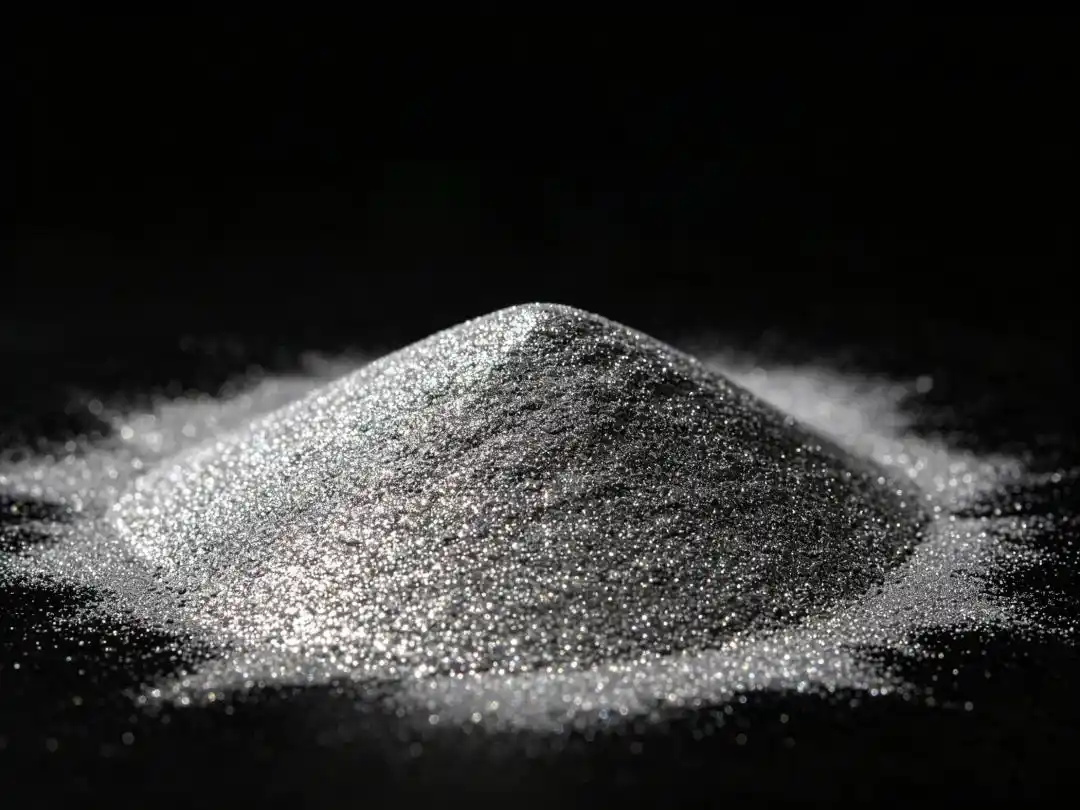
The raw material for making high-end tungsten hexafluoride—6N grade high-purity tungsten powder—was no longer available. And this powder, it's almost entirely in China.
Critical Point

First, what is tungsten hexafluoride?

The soul of AI chips is HBM (High Bandwidth Memory), where over a dozen layers of memory chips are stacked. These chips are densely packed with nanoscale contact holes, thousands of times thinner than a human hair.

Although other metals can be used for these contact holes, tungsten remains the absolute primary material for now. And the key specialty gas that deposits tungsten into these micro-holes is tungsten hexafluoride.

Without tungsten hexafluoride, there is no HBM. Without HBM, Nvidia's GPUs are just scrap metal.

In making this specialty gas, the Japanese were once the best in the world. Kanto Denka could achieve a purity of six nines (6N)—meaning only one impurity molecule per one million molecules.

But a six-nine gas needs six-nine powder.

For over a decade, Chinese tungsten powder was bought by the ton—cheap, stable. To the Japanese, the distillation column was the moat. What was powder? In a sense, just dirt.

But at the critical moment, what choked the Japanese was precisely this dirt.

The Japanese did struggle.

They tried using low-purity coarse powder, relying on distillation columns for forced purification. But the most deadly impurity in coarse powder is molybdenum—molybdenum and tungsten are in the same group on the periodic table, their chemical properties like twins.

Once in the reactor, reacting with fluorine gas, they both turn gaseous. Their boiling points are too close to separate.

You have money, policy, a sense of crisis, but you are powerless against the limits of chemical engineering.

Hard Grind

Leveling this wall was no overnight success for the Chinese either.

Purifying tungsten powder requires removing impurities, and one of the hardest to remove is molybdenum.

Molybdenum and tungsten have similar chemical properties; dissolved in water, they behave the same way. Separating molybdenum from tungsten is no less difficult than separating salt from MSG in a pot of soup.

The solution is to add a sulfidizing agent to the solution. Molybdenum, being more sulfur-loving than tungsten, rushes in first—grabbing the sulfur while tungsten remains unmoved. In that instant, the molybdenum is pulled away.

Sounds simple.

How narrow is that instant? If the pH is off by a bit, molybdenum lets go, mixing back with tungsten. The parameter window is as narrow as walking a tightrope.

To break through, there were no shortcuts, only the most arduous method:

Adjust pH, change adsorbents, modify extraction solutions, grinding through experiments group by group, even redesigning the adsorbents themselves.

Generations, grinding for decades, finally reducing molybdenum in the solution to an acceptable level.

Huang Changgeng, chairman of Xiamen Tungsten, joined the company in 1987 and never left until his recent retirement.

During that time, from the workshop to management, 39 years focused on just this one thing, leading the team from coarse powder to 6N, pushing Chinese tungsten powder to the global ceiling.
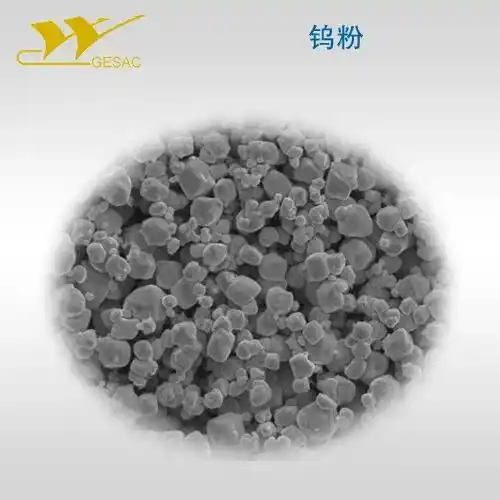
Image source: Xiamen Tungsten

Besides Xiamen Tungsten, there's also China Tungsten and Hightech.

These two are also, so far, among the very few companies globally capable of mass-producing 6N grade high-purity tungsten powder.

China had the high-purity tungsten powder. The Japanese bought the powder, produced tungsten hexafluoride, sold it to Samsung and TSMC, doubling the price.

This business seemed like easy money.

Then, the Japanese themselves smashed the door shut.

Turning the Tables

According to multiple media reports, Kanto Denka Kogyo and Central Glass have officially notified major customers like Samsung and SK Hynix:

June 30th, the last shipment. From July 1st, permanent production halt.

Since January 2026, imports of high-purity tungsten powder from China have essentially been zero. The two Japanese companies' inventories held out for five months, finally running dry.

Not only was the raw material cut off, but more crucially, the uncertainty. Even if they scraped together tungsten powder to restart the line, what about the next cutoff?

During shutdowns, residual tungsten hexafluoride in the pipelines hydrolyzes upon contact with water, producing hydrofluoric acid that corrodes valves and welds. Restarting and repairing is costly.

Repeated shutdowns and restarts are suicide.

When the news reached Seoul, Samsung and SK Hynix panicked. These two South Korean semiconductor giants had previously sourced most of their tungsten hexafluoride from Japan. Samsung's inventory wouldn't last past June.

No tungsten hexafluoride means no HBM, and Nvidia's orders go down the drain.

The certification cycle, the headache for Chinese companies, suddenly wasn't a problem anymore. Chinese tungsten hexafluoride suppliers became the darlings of leading wafer fabs.

The door is open, the players have changed.

Thirty years ago, China mined, others counted the money. Low-purity coarse powder was sold by the ton. Others purified it, made it into gas, into targets, and flipped it for dozens of times the value.

Thirty years later, the Chinese ground their way from 3N to 6N purity. The lowliest dirt overturned the highest throne.

On July 1st, the tungsten hexafluoride production line at Kanto Denka's Shibukawa factory will shut down.

Meanwhile, in Chinese high-purity tungsten powder production lines and tungsten hexafluoride factories, domestic materials are flowing out nonstop, loaded onto trucks heading for ports.

Only this time, Japanese manufacturers are absent from the destination list.

This article is from the WeChat public account "Huashang Strategic" (ID: hstl8888), author: Huashang Strategic


Трендовые криптовалюты

Связанные с этим вопросы

QWhat are the names of the two major Japanese companies mentioned in the article that were forced to permanently halt production?

AThe two major Japanese companies are Kanto Denka Kogyo Co., Ltd. (関東電化工業株式会社) and Central Glass Co., Ltd. (セントラル硝子株式会社).

QWhat is the critical raw material that Japan lost access to from China, leading to the production halt?

AThe critical raw material is high-purity 6N grade tungsten powder. This specific grade of powder is essential for manufacturing high-purity tungsten hexafluoride.

QWhy is tungsten hexafluoride (WF6) so crucial in the semiconductor industry according to the article?

ATungsten hexafluoride is crucial as it is the key electronic specialty gas used for depositing tungsten into the nano-sized contact holes within HBM (High Bandwidth Memory) chips. Without it, HBM production for advanced AI chips, such as those used by Nvidia, would not be possible.

QWhat was the primary technical challenge China faced and overcame in producing high-purity tungsten powder?

AThe primary technical challenge was separating molybdenum (Mo) from tungsten (W) due to their very similar chemical properties. China's breakthrough involved a complex purification process using sulfiding agents and precise control of parameters to exploit the slight difference in their affinity for sulfur, which required decades of persistent research and development.

QWhat were the consequences for South Korean semiconductor giants Samsung and SK Hynix due to the Japanese production halt?

ASamsung and SK Hynix faced a critical supply shortage of tungsten hexafluoride, with Samsung's inventory reportedly running out by June. This shortage directly threatened their HBM production capacity and, consequently, their ability to fulfill orders for companies like Nvidia.

Похожее

Goldman Sachs: в июле разрушили скученные сделки, бычий рынок на акциях США не прервался, но стало сложнее

По мнению аналитиков Goldman Sachs, июль на американском рынке акций характеризовался не крахом индексов, а масштабной ликвидацией перегруженных позиций. В то время как S&P 500 оставался стабильным, переживая узкий диапазон колебаний, наиболее спекулятивные и популярные сделки, такие как акции с высоким моментом и стратегии, связанные с искусственным интеллектом, подверглись резкой распродаже и снижению кредитного плеча. Это привело к значительной волатильности под поверхностью относительно спокойного рынка. Главный вывод заключается в том, что бычий тренд на рынке США не закончился — его поддерживают крепкая экономика, рост прибылей и масштабные капиталовложения в ИИ. Однако риск-доходность стала менее привлекательной, а потенциал для дальнейшего роста акций ослаб. Этап простой покупки и удержания закончился. Рынок переходит в фазу, где избыточный оптимизм и высокий леверидж наказываются, что требует от инвесторов большей избирательности, ликвидности и осторожности, особенно в условиях ужесточения коммуникации ФРС и давления со стороны долгосрочных процентных ставок.

marsbit11 мин. назад

Goldman Sachs: в июле разрушили скученные сделки, бычий рынок на акциях США не прервался, но стало сложнее

marsbit11 мин. назад

Ожидаемый закон о криптовалютах, известный как «Закон о ясности», находится на критическом этапе: Белый дом рассмотрит его в эти выходные

Закон CLARITY Act, определяющий полномочия SEC и CFTC на рынке криптовалют США, находится на решающем этапе. Его дальнейшая судьба зависит от согласия администрации Трампа с новым двухпартийным этическим предложением сенаторов Тиллиса и Гальего, которое передает право преследования федеральных чиновников за нарушение этических норм генеральным прокурорам штатов. Ожидается, что Белый дом рассмотрит это предложение в выходные. При достижении согласия возможен следующий шаг — голосование в Сенате, для которого, однако, пока не набраны необходимые 60 голосов. Законопроект, уже принятый комитетом Сената, создает всеобъемлющие правила для крипторынка, включая регулирование стейблкоинов. По этому вопросу достигнут компромисс, ограничивающий «процентные» выплаты за простое хранение токенов, но разрешающий вознаграждения за транзакции или лояльность. Если согласие по этическим нормам не будет найдено, продвижение закона снова застопорится, оставив неопределенность в регулировании стейблкоинов и реализации связанного с ними Закона GENIUS.

cryptonews.ru58 мин. назад

Ожидаемый закон о криптовалютах, известный как «Закон о ясности», находится на критическом этапе: Белый дом рассмотрит его в эти выходные

cryptonews.ru58 мин. назад

Интервью с руководителем Robinhood: Стратегия привлечения клиентов "гантели" через мемы и токенизированные акции, все направления бизнеса приносят миллиардные доходы

**Интервью с топ-менеджером Robinhood: стратегия "двойного привлечения" клиентов (мем-токены + токенизированные акции) и миллиардные доходы по всем направлениям** Johann Kerbrat, старший вице-президент Robinhood по криптовалютному и международному бизнесу, раскрыл стратегию новой блокчейн-сети компании — Robinhood Chain. Через три недели после запуска недельный объем торгов на DEX превысил $30 млрд при TVL более $3 млрд. Стратегия сети описана как "двойная": с одной стороны, поддержка мем-токенов для привлечения сообщества DeFi, с другой — фокус на токенизированных реальных активах (RWA), в первую очередь акций. Уже доступно более 90 токенизированных акций для пользователей из 120+ стран, что решает проблему глобального доступа к рынкам США. Главная цель — перенести на блокчейн 27 млн фондированных счетов Robinhood, упростив сложный пользовательский опыт DeFi (кошельки, приватные ключи). Продукты вроде Robinhood Earn позволяют получать доход от стейблкоинов прямо в основном приложении. Robinhood Chain построена на стеке Arbitrum для скорости, низких комиссий и безопасности Ethereum. Kerbrat подчеркивает, что сейчас важнее расширять общий рынок токенизированных активов, а не конкурировать за долю с Base от Coinbase. Партнеры (Morpho, Lighter, 0x и др.) выбираются по критериям комплаенса, способности создавать уникальный опыт и дифференциации. Что касается доходов, то сейчас сеть оптимизируется для массового внедрения, а не для максимизации прибыли. Все основные бизнес-направления Robinhood (акции, опционы, криптовалюты и т.д.) уже приносят доход на уровне сотен миллионов долларов.

marsbit2 ч. назад

Интервью с руководителем Robinhood: Стратегия привлечения клиентов "гантели" через мемы и токенизированные акции, все направления бизнеса приносят миллиардные доходы

marsbit2 ч. назад

Фидделити в отчете за 3-й квартал: BTC, ETH и SOL продолжают формировать дно. Как долго еще продлится текущий крипто-медвежий рынок?

Отчёт Fidelity за 3-й квартал 2026 года анализирует состояние рынка криптоактивов, отмечая, что BTC, ETH и SOL продолжают формировать дно. **Ключевые выводы:** * **Общий рыночный настрой:** Взвешенный показатель NUPL (чистая нереализованная прибыль/убыток) упал до -0.01, что указывает на то, что рынок в целом находится на грани безубыточности. Только BTC сохраняет нереализованную прибыль, выступая стабилизатором, в то время как ETH и SOL находятся в зоне убытков. * **Доминирование Bitcoin:** Доля BTC в общей капитализации рынка выросла до 68%, что говорит о консервативных настроениях инвесторов и отсутствии ротации капитала в альткойны. * **Падение цен:** За год BTC упал на ~45%, ETH на 37%, SOL на 53%. Рынок демонстрирует признаки капитуляции, включая рекордный отток средств из спотовых ETP. * **Прогноз по дну:** Ссылаясь на исторические циклы (около 300 дней в 2018 и 2022 гг.), в отчёте предполагается, что текущий медвежий период, длящийся уже около 203 дней, может пройти около двух третей своего пути. Октябрь 2026 года упоминается как потенциальный временной ориентир для наблюдения, но не как точный прогноз. **Оценка по активам:** * **Bitcoin:** NUPL (0.09) и Yardstick (показатель «стоимость/хэшрейт») оцениваются позитивно, что может указывать на привлекательную оценку. Однако импульс и динамика относительно золота остаются негативными. Хэшрейт снижается из-за давления на майнеров и конкуренции с AI-сектором. * **Ethereum:** NUPL (-0.43) глубоко в зоне капитуляции, что исторически связано с высокими последующими доходами. Импульс негативный. Объём переводов стейблкоинов (позитивно) остаётся высоким, но комиссии сети и активность базового слоя снижаются (нейтрально/негативно). * **Solana:** NUPL (-0.72) также в зоне капитуляции с высокой исторической волатильностью. Импульс негативный. При этом фундаментальные показатели использования и объёмы стейблкоинов остаются устойчивыми (позитивно), а сетевые комиссии, возможно, приближаются к дну (нейтрально). Отчёт подчёркивает, что рынок находится в фазе консолидации и поиска дна, где BTC демонстрирует относительную силу, в то время как настроения в целом остаются подавленными. Долгосрочным инвесторам текущие уровни могут предоставить привлекательные возможности, если тенденция внедрения базовых сетей сохранится.

marsbit2 ч. назад

Фидделити в отчете за 3-й квартал: BTC, ETH и SOL продолжают формировать дно. Как долго еще продлится текущий крипто-медвежий рынок?

marsbit2 ч. назад

Торговля

Спот

Популярные статьи

Как купить GAS

Добро пожаловать на HTX.com! Мы сделали приобретение GAS (GAS) простым и удобным. Следуйте нашему пошаговому руководству и отправляйтесь в свое крипто-путешествие.Шаг 1: Создайте аккаунт на HTXИспользуйте свой адрес электронной почты или номер телефона, чтобы зарегистрироваться и бесплатно создать аккаунт на HTX. Пройдите удобную регистрацию и откройте для себя весь функционал.Создать аккаунтШаг 2: Перейдите в Купить криптовалюту и выберите свой способ оплатыКредитная/Дебетовая Карта: Используйте свою карту Visa или Mastercard для мгновенной покупки GAS (GAS).Баланс: Используйте средства с баланса вашего аккаунта HTX для простой торговли.Третьи Лица: Мы добавили популярные способы оплаты, такие как Google Pay и Apple Pay, для повышения удобства.P2P: Торгуйте напрямую с другими пользователями на HTX.Внебиржевая Торговля (OTC): Мы предлагаем индивидуальные услуги и конкурентоспособные обменные курсы для трейдеров.Шаг 3: Хранение GAS (GAS)После приобретения вами GAS (GAS) храните их в своем аккаунте на HTX. В качестве альтернативы вы можете отправить их куда-либо с помощью перевода в блокчейне или использовать для торговли с другими криптовалютами.Шаг 4: Торговля GAS (GAS)С легкостью торгуйте GAS (GAS) на спотовом рынке HTX. Просто зайдите в свой аккаунт, выберите торговую пару, совершайте сделки и следите за ними в режиме реального времени. Мы предлагаем удобный интерфейс как для начинающих, так и для опытных трейдеров.

561 просмотров всегоОпубликовано 2024.04.17Обновлено 2026.06.02

Как купить GAS

Обсуждения

Добро пожаловать в Сообщество HTX. Здесь вы сможете быть в курсе последних новостей о развитии платформы и получить доступ к профессиональной аналитической информации о рынке. Мнения пользователей о цене на GAS (GAS) представлены ниже.

活动图片