ChatGPT Might Be Disappearing Soon

marsbitОпубликовано 2026-06-03Обновлено 2026-06-03

Введение

OpenAI announced at its "Intelligence at Work" event that its coding assistant, Codex, will be fully integrated into the ChatGPT app within weeks. This move marks a strategic shift from a conversational AI (Chat) towards a unified "agentic" platform capable of execution. Codex, originally launched to compete with Anthropic's Claude Code, has grown rapidly to 5 million weekly active users, with 20% being non-developers like analysts and designers. Its enterprise revenue now constitutes 40% of OpenAI's total. The integration is the first step in creating a super-app combining ChatGPT (interface), Codex (execution engine), and the Atlas browser (web access). OpenAI also unveiled new Codex features: specialized Agent plugins for six professional roles, an "Annotations" tool for direct document editing, and a "Sites" function to turn work into shareable web apps. Internally, this reflects a power shift; the Codex team now leads core product strategy. While the ChatGPT brand remains for its vast user base, the platform's future is focused on autonomous agents that perform tasks, not just chat. The article notes that competition with Claude Code pushed OpenAI's development, with Codex competing on cost-effectiveness and accessibility rather than raw coding quality. It concludes that the essence of "ChatGPT" is evolving from a chatbot into an AI agent platform, with the name potentially becoming a legacy symbol of its original function.

OpenAI's super app has finally 'taken shape'.

It's still called ChatGPT, but its core is about to gain a new member: Codex.

And ChatGPT is essentially just a shell now.

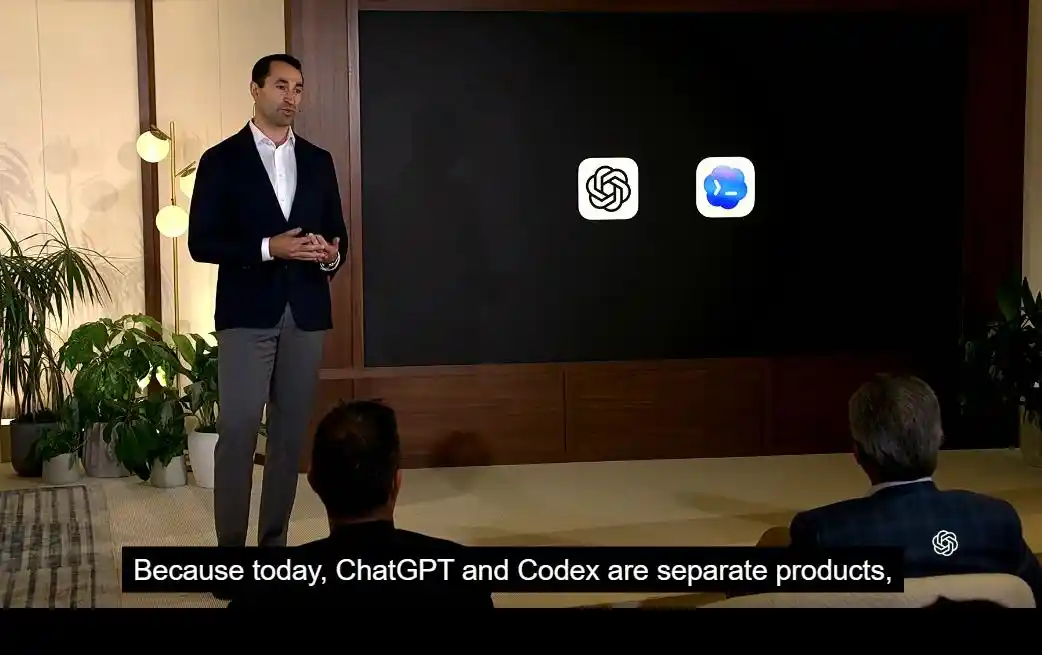
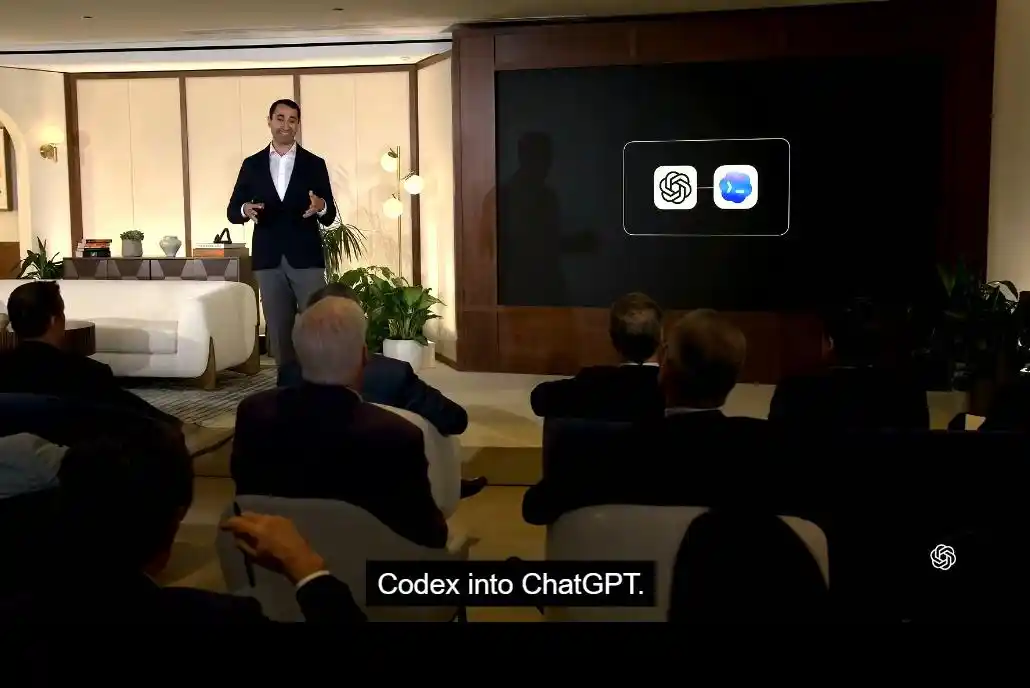
At the Intelligence at Work launch event just held by OpenAI, the company officially announced that Codex will be integrated into ChatGPT in the coming weeks.

Initially, this news was a bit confusing? Wasn't there always a Codex option in ChatGPT?

Only when I clicked on it today did I realize it was 'fake'—it prompts you to further download the Codex app, you can't use it directly within ChatGPT.

So, once the integration happens, chatting and working can be done within a single app, no need to switch between apps anymore.
But, did you think that's the end of the story?

At least from OpenAI's perspective, Codex might just be the beginning.

And through this launch event, we finally got a clear picture of the entire vision for the super app.

So Codex Was Just the First Step

The launch event lasted a full hour, packed with information, but it can be summarized into three key things.

1. ChatGPT will merge with Codex because times are changing.

2. Codex will continue to evolve, so three major updates were announced.

3. Codex is catching up to Claude Code, and GPT-5.5's 'efficiency' is a key factor.

Let's quickly go through them:

First, the somewhat surprising merger. Why is ChatGPT choosing to merge with Codex now?

One reason is that Codex, initially launched to catch up with Claude Code, can now speak for itself with results.

Codex weekly active users have surpassed 5 million, skyrocketing 6 times since the desktop version launched in February.

More crucially, 20% are not programmers at all, but knowledge workers like analysts, designers, and investment banking professionals, and this group is growing 3 times faster than developers.

This indicates Codex is achieving significant breakout momentum.

Regarding revenue, which OpenAI values highly (they followed Claude Code partly because they were envious of its revenue), OpenAI itself revealed that enterprise revenue currently accounts for 40% of OpenAI's total revenue, projected to reach 50% by year-end.
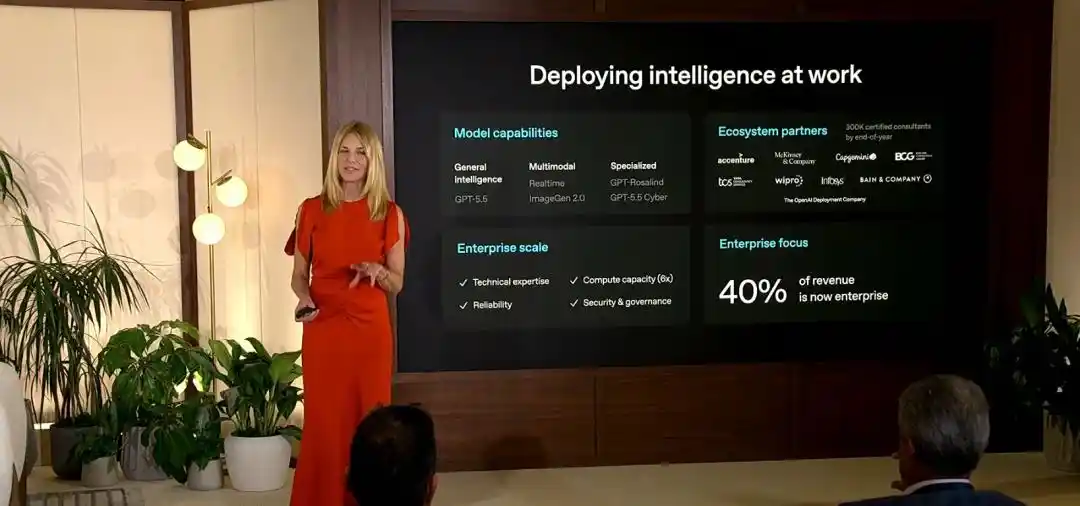
In short, Codex now has rapid user growth, broad user coverage, and is genuinely making money for OpenAI.

All signs seem to be telling OpenAI it's time to consider the next step.

And the direction of the next step, at least for now, seems very clear—from Chat to Agent, from conversation to execution.

Alexander Embiricos, OpenAI's Head of Product, said this during the launch:

You might not work 24/7, but your Agent in the cloud will.

A single line encapsulates the ultimate appeal of a super app. In the future, users truly won't need to switch between apps. You give an instruction, ChatGPT helps you understand it, and then Codex can call upon various Agents to execute for you.

So this integration is essentially OpenAI's first step toward a super app.

What's the next step? You might have guessed—Browser.

The browser is the final piece of this integration, providing the entry point for AI into the web world. It allows users to simply speak in ChatGPT, and Codex can automatically perform tasks like searching, operating backends, and handling work within the browser—everything that previously required manual clicks.

Thus, ChatGPT + Codex + Atlas browser, OpenAI finally has the potential to achieve execution across all scenarios through a single APP.

But for today, let's stick to talking about Codex.

To equip Codex with more 'soldiers' capable of doing work, OpenAI unveiled three more updates in one go:

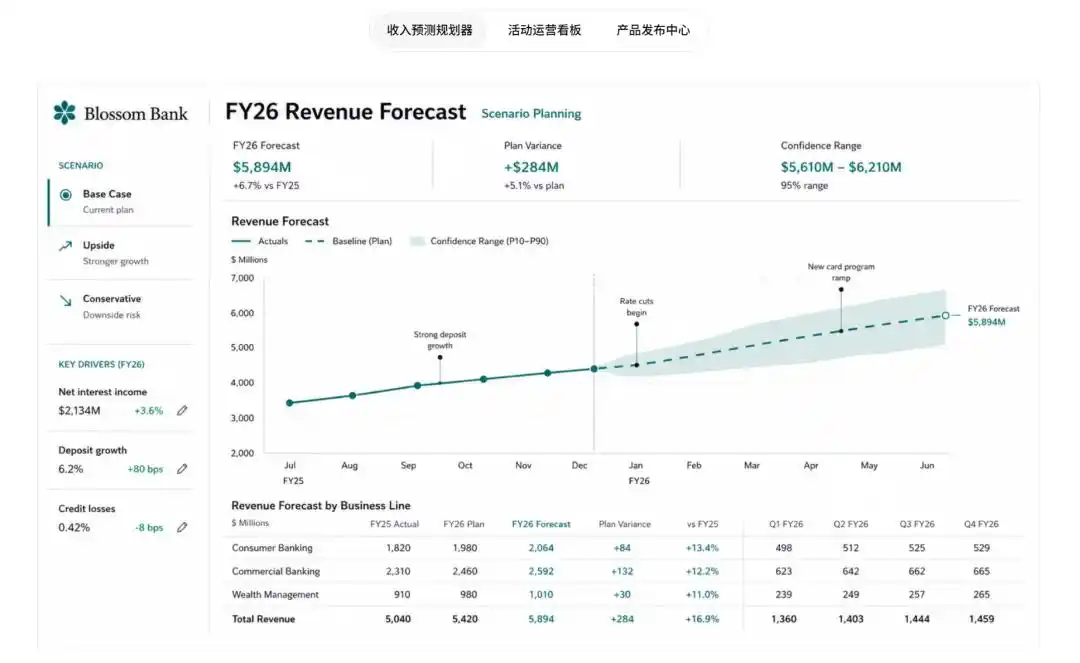
Six Professional Role Agent Plugins, covering data analysis, sales, creative production, product design, equity investment, and investment banking, directly integrating 62 enterprise apps like Snowflake, Figma, and Salesforce, and embedding 110 automation skills.

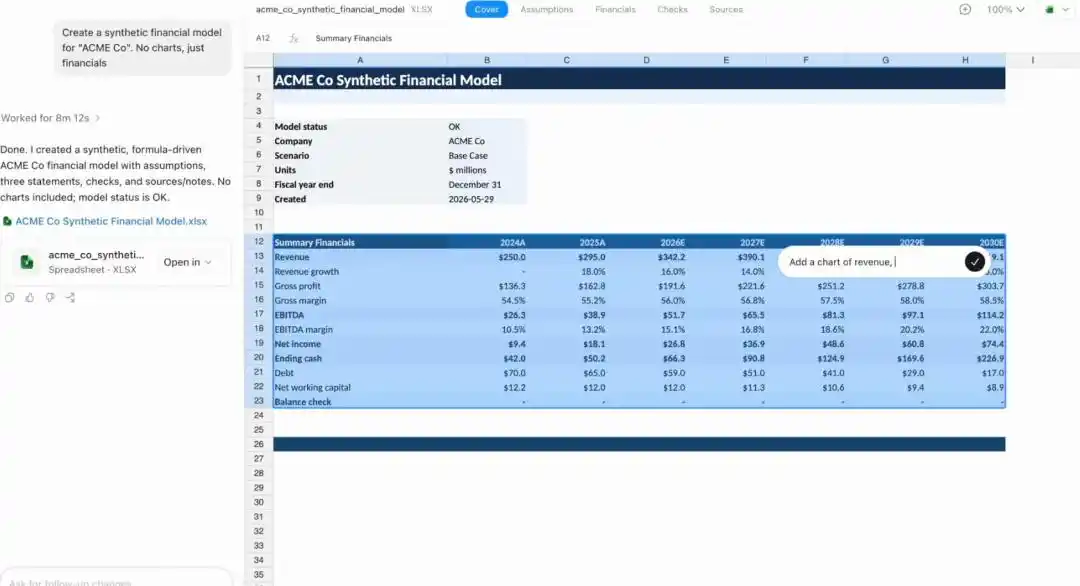
Annotations feature, allowing direct annotation and modification on the original text of documents, eliminating the need to regenerate entire pieces. Developers are already using this capability to modify code, Markdown files, and websites generated by Codex.

Now, it extends to content creation scenarios like documents, spreadsheets, and presentations.
Sites feature, enabling Codex to turn your work results into interactive web applications with one click, generating URLs to share directly with teams.

This feature feels quite practical. Previously, when developing a project, non-technical people could only vaguely describe their needs. Now, anyone can generate a clear, intuitive, visualizable demo, significantly reducing team communication costs.

This feature is currently in preview for Business and Enterprise customers.
See, OpenAI is betting that in the future, more and more ordinary people will shift from conversation to execution.

Some might ask, why isn't Codex absorbing ChatGPT instead?

It can be said that, superficially, this appears to be ChatGPT absorbing Codex, but piecing together a few details, the direction might be the exact opposite.

In the May organizational restructuring, Thibault Sottiaux, who built Codex into what it is, was promoted to Head of Core Product and Platform, overseeing consumer, enterprise, and developer lines. Nick Turley, who grew ChatGPT to 900 million weekly actives, was moved to the enterprise product line.

So now, it's the Codex team managing ChatGPT, not the other way around.

Furthermore, the wording in Brockman's internal memo is worth pondering—

He didn't write 'upgrade ChatGPT,' but 'invest in a unified agentic platform.'

Therefore, this merger is less about product integration and more about a strategic shift: from conversation to execution, from chat to Agent.

ChatGPT provides the massive user base of 1 billion, Codex provides the growth engine and future narrative.

The shell belongs to ChatGPT, but the soul belongs to Codex.

However, in the end, Codex's existence was forced by competitor Anthropic.

Even the GPT-5.5 mentioned during the launch can almost be considered a product born from this pressure.

Codex Was Forced Out by Anthropic

Looking back, if it weren't for Anthropic, Codex might still just be an inconspicuous auxiliary feature in ChatGPT today.

Let's rewind to the release of Claude Code's preview version last year.

Claude Code was an immediate success upon its debut, its annualized revenue breaking $2.5 billion by February this year, reaching $1 billion in just 6 months from launch, making it one of the fastest-growing commercial software products in history.

About 4% of global GitHub public commits come from it, and users spend an average of 20 hours per week on it.

It was the explosion of Claude Code that made OpenAI realize internally: they were already falling behind in the coding domain.

How to catch up? Just chase.

The default narrative in the AI industry had always been Anthropic following in OpenAI's footsteps—GPT releases first, Claude follows; ChatGPT becomes popular first, Claude emulates.

But on the Code front, the script was completely rewritten.

Claude Code launched in February last year, and OpenAI only released the competing Codex two months later; Anthropic made a desktop version first, OpenAI chased after it; Anthropic launched Cowork for knowledge workers, OpenAI later caught up with Plugins.

This time, OpenAI was following in Anthropic's footsteps.

But the chase was indeed rapid. Looking at the timeline: 14 months, from zero to 5 million weekly actives.

Codex Cloud preview went online in April last year;

Launched desktop App and dedicated model GPT-5.3-Codex in February this year;

Announced super App merger and acquisition of Python tool company Astral in March;

Launched ChatGPT Pro at $100/month to attract developers in April;

Released mobile version in May;

Officially integrated into ChatGPT in June.

It could be said that almost every step here has the shadow of Claude Code.

But to be honest, Codex didn't stage a comeback by directly competing on code quality.

After all, blind test data shows Claude Code still has a 67% win rate, and most programmers admit its outputs are more robust.

However, Claude Code's usage limits are simply too strict, and it's more expensive than Codex.

A discussion thread on Reddit involving over 500 developers condensed into one consensus:

Claude Code is smarter, but the limits are too strict for daily use; Codex is a bit worse but actually usable.
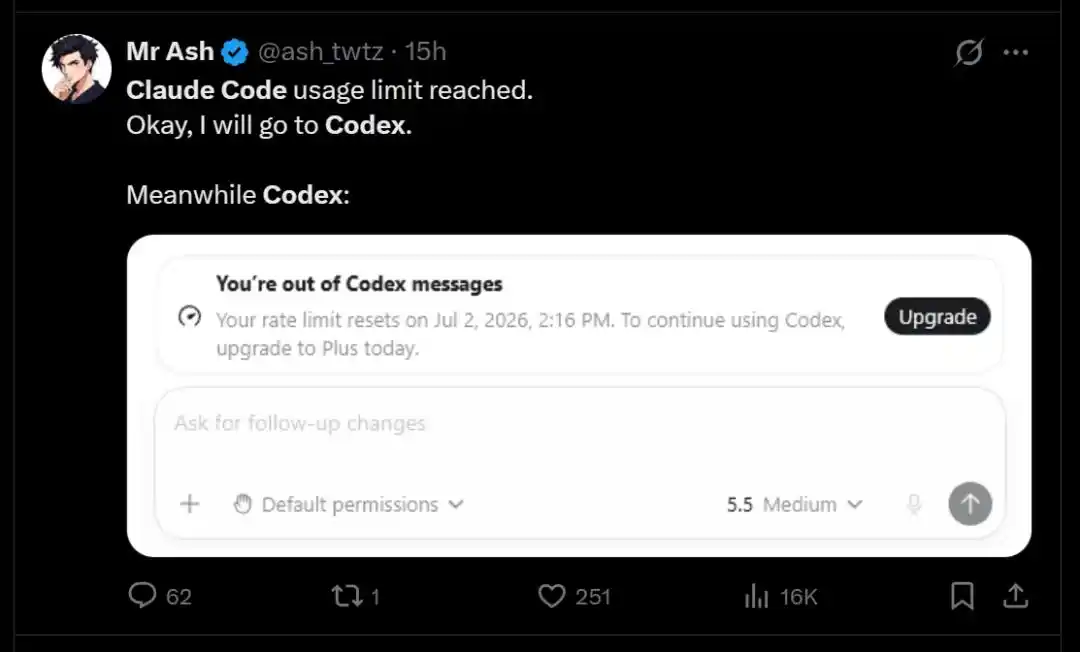
A smarter model that often gets tasks stuck midway and is more expensive, versus a slightly less intelligent but more affordable model.

Which would you choose? (doge)

Interestingly, during the launch, OpenAI's Head of Product Alexander also said this golden line:

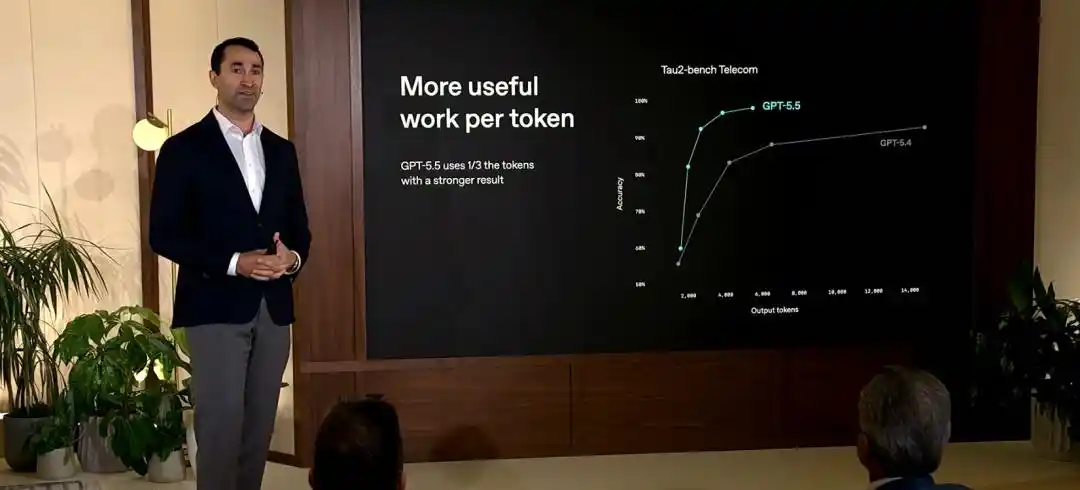
The one thing GPT-5.5 hates most is wasting tokens.

Using Codex with GPT-5.5 achieves the same quality output using only one-third of the tokens.

In short, on the path to catching up with Claude Code, Codex is making 'more intelligence with fewer tokens' its new guiding principle.
Undeniably, the AI programming field is now a duopoly.

One represents the strongest coding capability, the other the strongest productization capability.

But if we look further ahead, what Claude Code and Codex are competing for is no longer just the programming tools market.

As more and more ordinary people start using Agents as daily work partners, the entry point is actually the most important thing.

And this precisely presents a new opportunity for Chinese players—because in the Agent era, victory may not solely depend on model capability, but also on scenario, ecosystem, application connectivity, and understanding of local enterprise workflows.

In fact, major Chinese tech companies have already entered the field.

Among them, some are targeting developer entry points, some enterprise internal office entry points, and others full-process intelligent Agent platforms.

But regardless of the path, the goal is largely consistent—seize the core entry point of the Agent era.

Everyone understands clearly that how to leverage the time window of local scenarios to establish real competitive barriers at the Agent infrastructure level is the true urgent task.

So, next, let's see who will be the first to break through, running out China's versions of Claude Code and Codex?

And more crucially, who will become the new super entry point in China for the Agent era?

One More Thing

Returning to this merger event.

Considering Codex's current development momentum and the industry environment, I'm inclined to make a bold statement:

Rather than continuing to call the merged application ChatGPT, it would be better to directly call it Codex.

Think about it: ChatGPT sounds like an old relic from the 'Chat' era, but OpenAI's current bet is precisely no longer on Chat.

The people managing the product are from Codex, the internal memo mentions an agentic platform, the fastest-growing scenarios are execution-oriented, and none of the new features are related to chatting.

Is 'ChatGPT' usable? Yes. But is it accurate? No.

Of course, OpenAI likely won't rename it. After all, the three letters 'ChatGPT' have become synonymous with AI, brand assets of immeasurable value.

But not changing the name doesn't mean the essence hasn't changed.

Perhaps soon, when you open ChatGPT, what greets you won't be a dialog box waiting for your question, but an Agent that has already finished the work for you.

By then, whether it's 'Chat' or not will no longer be important.

In other words, ChatGPT might just be a spiritual symbol in the future...

References:

[1]https://www.techmeme.com/260602/p14#a260602p14

[2]https://openai.com/index/codex-for-every-role-tool-workflow/

[3]https://www.theinformation.com/articles/inside-openais-decision-combine-codex-chatgpt

This article is from the WeChat public account 'QbitAI', author: Focus on Frontier Technology

Трендовые криптовалюты

Связанные с этим вопросы

QWhat is the main announcement made by OpenAI in the article?

AOpenAI announced at its 'Intelligence at Work' event that Codex will be integrated into the ChatGPT app within the coming weeks.

QWhat is the primary strategic shift indicated by the integration of Codex into ChatGPT?

AThe integration signals a strategic shift from a focus on conversational AI (Chat) towards an agentic platform capable of executing tasks (Action/Agent).

QWhich competitor's product is cited as the primary reason for OpenAI's accelerated development of Codex?

AThe article states that the development of Codex was primarily accelerated in response to the success of Anthropic's product, Claude Code.

QWhat new functionality does the 'Annotations' update to Codex provide?

AThe 'Annotations' feature allows users to directly edit or comment on parts of a document (like code or text) without regenerating the entire content, extending this capability from code to documents, spreadsheets, and presentations.

QAccording to the author, why might the combined app not be accurately named 'ChatGPT' in the future?

AThe author suggests that since the core focus and capabilities are shifting from chat to task execution via agents, the name 'ChatGPT' no longer accurately represents the product's primary function, though the brand name will likely be retained for its value.

Похожее

Внезапно, сокрушительный удар для Google: ведущий сопредседатель Gemini переходит в OpenAI

Внезапная новость: Ноам Шейзер, один из соавторов знаменитой статьи «Attention Is All You Need», в которой был представлен архитектурный подход Transformer, и сопредседатель проекта Gemini в Google DeepMind, перешел в OpenAI. Он займет должность руководителя исследований в области архитектуры (Lead for Architecture Research), где будет заниматься изучением архитектур следующего поколения для ИИ-моделей и развитием Transformer. Шейзер проработал в Google почти 18 лет и сыграл ключевую роль в создании многих фундаментальных технологий, включая смешанных экспертов (MoE). В 2021 году он покинул Google и стал соучредителем Character.AI. В 2024 году Google вернул его и часть команды в DeepMind в рамках сделки на сумму около 27 миллиардов долларов, где он стал одним из руководителей Gemini. Его переход в OpenAI рассматривается как серьезный удар для Google и значительное усиление для OpenAI, особенно на фоне жесткой конкуренции с Anthropic. Шейзеру предстоит исследовать возможные преемники архитектуры Transformer, которая почти десять лет лежит в основе современных больших языковых моделей. Это событие подчеркивает остроту битвы за ведущие таланты в сфере искусственного интеллекта.

marsbit24 мин. назад

Внезапно, сокрушительный удар для Google: ведущий сопредседатель Gemini переходит в OpenAI

marsbit24 мин. назад

10 лет спустя, Олтман наконец получил человека, которого хотел

Нойм Шазер, один из ключевых авторов революционной архитектуры Transformer и бывший ведущий инженер Google, объявил о переходе в OpenAI. Это решение он подтвердил в своём аккаунте в X, отметив сложность ухода из Google и выразив гордость за работу с командой. Сэм Олтман, CEO OpenAI, заявил, что Шазер был одним из людей, с которыми он больше всего хотел сотрудничать с момента основания компании, и что «ожидание в 10 лет того стоило». Шазер займёт в OpenAI должность руководителя архитектурных исследований. Нойм Шазер — легендарная фигура в области ИИ. Помимо соавторства в основополагающей работе «Attention Is All You Need», его исследования в области смешанных экспертных моделей (MoE) и эффективного декодирования заложили фундамент для современных больших языковых моделей. В 2021 году он покинул Google из-за разочарования в бюрократии и стал сооснователем Character.AI, но в 2024 году вернулся в Google DeepMind в рамках сделки на 2,7 млрд долларов, чтобы возглавить техническое направление Gemini. Его новый уход менее чем через два года считается значительной потерей для проекта Gemini. В сообществе это событие восприняли неоднозначно: некоторые видят в этом серьёзный удар по конкурентоспособности Gemini, другие же иронично отмечают, что OpenAI получила экспертизу Шазера практически бесплатно. Этот переход считается важной победой OpenAI в войне за таланты в сфере ИИ.

marsbit29 мин. назад

10 лет спустя, Олтман наконец получил человека, которого хотел

marsbit29 мин. назад

«Выживание по побочному заработку» компании DAT: после остановки маховика накопления монет они начали спасаться

Компании, накапливавшие криптовалюты (DAT), столкнувшись с остановкой механизма роста курсов и падением премий к стоимости активов, ищут пути выживания. Крупнейшие игроки, такие как Metaplanet и Strategy, меняют стратегии, отказываясь от размытия акций и пробуя залоговое финансирование. Многие другие компании, подобные ETHZilla, вообще отказываются от модели DAT, возвращаясь к основному бизнесу. Наметились два основных направления трансформации. Первое — превращение в институциональные платформы управления активами и фонды дохода, как SharpLink Gaming и GameSquare, которые стремятся получать сверхдоходы через стейкинг и DeFi. Второе — переход к роли операторов блокчейн-инфраструктуры, особенно в экосистеме Solana (DeFi Development, SOL Strategies), где компании зарабатывают на услугах стейкинга и интеграции в DeFi-протоколы. Этот сдвиг отражает взросление индустрии: простая игра на повышение курса уступает место созданию реальной ценности, операционным преимуществам и участию в развитии экосистем. Однако новые стратегии несут риски (сбои в DeFi, зависимость от конкретных блокчейнов). В итоге, фаза перехода от капиталистической лихорадки к более устойчивым бизнес-моделям может стать признаком зрелости отрасли, где выживут те, кто строит реальную ценность, а не просто спекулирует активами.

marsbit33 мин. назад

«Выживание по побочному заработку» компании DAT: после остановки маховика накопления монет они начали спасаться

marsbit33 мин. назад

Доход 13 миллиардов, Microsoft получает 17,2 миллиарда: реальность сжигания денег в ИИ из утечки бухгалтерских книг OpenAI

Утечка финансового документа OpenAI за 2025 год показала, что, несмотря на рост выручки до $13,07 млрд (рост на 253%), операционные убытки компании составили $20,92 млрд. Чистый убыток, скорректированный с учётом разовых неденежных расходов, составил примерно $8 млрд. Ключевой причиной является высокий уровень затрат: на каждый заработанный доллар OpenAI тратит $1,6. Основные статьи расходов — это исследования и разработки ($19,18 млрд, включая платежи Microsoft) и вычислительные ресурсы для инференса ($7,5 млрд). Особое бремя представляет собой зависимость от Microsoft: общие выплаты ей в 2025 году достигли $17,2 млрд (50,5% от общих затрат OpenAI), что превышает всю выручку компании. Аналогичная ситуация с высокими затратами наблюдается у конкурентов. xAI в 2025 году имела операционные убытки в $6,4 млрд при выручке $3,2 млрд, а у Anthropic, несмотря на быстрый рост выручки, валовая прибыль оказалась ниже ожиданий из-за высоких затрат на инференс. При этом монетизация пользовательской базы OpenAI остается сложной задачей: из 900 млн еженедельных активных пользователей ChatGPT только около 50 млн (5,6%) являются платными. Текущая модель развития отрасли ИИ, основанная на масштабировании и высоких инвестициях в НИОКР и вычисления, ведет к огромным убыткам. Будущее устойчивости компаний зависит от способности радикально снизить предельные издержки, особенно на инференс. Пока же основным источником финансирования этого роста остается доверие и капитал инвесторов.

marsbit44 мин. назад

Доход 13 миллиардов, Microsoft получает 17,2 миллиарда: реальность сжигания денег в ИИ из утечки бухгалтерских книг OpenAI

marsbit44 мин. назад

Основатель zkSync «собственноручно уволил» ключевую команду: бывшая звезда масштабирования Ethereum полностью переходит на обслуживание банков

Автор: Клод, Deep Tide TechFlow **Введение:** Основатель Matter Labs Алекс Глуховский 17 июня объявил о новом раунде сокращений. Компания полностью сосредотачивается на «разрешенной» приватной цепи Prividium, предназначенной для обслуживания регулируемых финансовых институтов. Это второе сокращение за два года. Основатель, называющий себя «максималистом свободы», в итоге привел проект к регулированию, разрешениям и банкам. Реакция сообщества неоднозначна, самый острый вопрос: куда делись 458 миллионов долларов привлеченных средств? Токен $ZK торгуется около $0.019, потеряв около 93% от исторического максимума. История zkSync движется в направлении, противоположном первоначальным обещаниям. Были уволены опытные инженеры, дизайнеры и операционные сотрудники. Главное — смена стратегии: от публичной цепи «для всех» к приватной «разрешенной» цепи Prividium для банков, таких как Deutsche Bank и UBS. Это противоречит прошлым заявлениям о технологии как общественном благе. Сообщество раскритиковало решение, требуя отчета о расходах привлеченных средств. Ранее, в сентябре 2024 года, также были увольнения. Токен $ZK сильно просел, а его экономическая модель слабо связана с новой B2B-стратегией компании. Этот поворот отражает высокую конкуренцию на рынке L2-решений Ethereum (Arbitrum, Optimism, Base). После аирдропа в июне 2024 года активность в сети zkSync резко упала. Переход к нишевому обслуживанию банков — понятное коммерческое решение в условиях «красного океана», но оно отталкивает ранних сторонников идеи «безразрешительного» будущего. Matter Labs выбирает более реалистичный и прибыльный путь, жертвуя своими первоначальными идеалами.

marsbit1 ч. назад

Основатель zkSync «собственноручно уволил» ключевую команду: бывшая звезда масштабирования Ethereum полностью переходит на обслуживание банков

marsbit1 ч. назад

Торговля

Спот
Фьючерсы

Популярные статьи

Как купить S

Добро пожаловать на HTX.com! Мы сделали приобретение Sonic (S) простым и удобным. Следуйте нашему пошаговому руководству и отправляйтесь в свое крипто-путешествие.Шаг 1: Создайте аккаунт на HTXИспользуйте свой адрес электронной почты или номер телефона, чтобы зарегистрироваться и бесплатно создать аккаунт на HTX. Пройдите удобную регистрацию и откройте для себя весь функционал.Создать аккаунтШаг 2: Перейдите в Купить криптовалюту и выберите свой способ оплатыКредитная/Дебетовая Карта: Используйте свою карту Visa или Mastercard для мгновенной покупки Sonic (S).Баланс: Используйте средства с баланса вашего аккаунта HTX для простой торговли.Третьи Лица: Мы добавили популярные способы оплаты, такие как Google Pay и Apple Pay, для повышения удобства.P2P: Торгуйте напрямую с другими пользователями на HTX.Внебиржевая Торговля (OTC): Мы предлагаем индивидуальные услуги и конкурентоспособные обменные курсы для трейдеров.Шаг 3: Хранение Sonic (S)После приобретения вами Sonic (S) храните их в своем аккаунте на HTX. В качестве альтернативы вы можете отправить их куда-либо с помощью перевода в блокчейне или использовать для торговли с другими криптовалютами.Шаг 4: Торговля Sonic (S)С легкостью торгуйте Sonic (S) на спотовом рынке HTX. Просто зайдите в свой аккаунт, выберите торговую пару, совершайте сделки и следите за ними в режиме реального времени. Мы предлагаем удобный интерфейс как для начинающих, так и для опытных трейдеров.

1.5k просмотров всегоОпубликовано 2025.01.15Обновлено 2026.06.02

Как купить S

Sonic: Обновления под руководством Андре Кронье – новая звезда Layer-1 на фоне спада рынка

Он решает проблемы масштабируемости, совместимости между блокчейнами и стимулов для разработчиков с помощью технологических инноваций.

2.3k просмотров всегоОпубликовано 2025.04.09Обновлено 2025.04.09

Sonic: Обновления под руководством Андре Кронье – новая звезда Layer-1 на фоне спада рынка

HTX Learn: Пройдите обучение по "Sonic" и разделите 1000 USDT

HTX Learn — ваш проводник в мир перспективных проектов, и мы запускаем специальное мероприятие "Учитесь и Зарабатывайте", посвящённое этим проектам. Наше новое направление .

1.8k просмотров всегоОпубликовано 2025.04.10Обновлено 2025.04.10

HTX Learn: Пройдите обучение по "Sonic" и разделите 1000 USDT

Обсуждения

Добро пожаловать в Сообщество HTX. Здесь вы сможете быть в курсе последних новостей о развитии платформы и получить доступ к профессиональной аналитической информации о рынке. Мнения пользователей о цене на S (S) представлены ниже.

活动图片















