「精准拿捏」总统与第一夫人?他把“顶级流量”玩成提款机

比推Опубликовано 2025-10-23Обновлено 2025-10-23

继阿根廷总统米莱的“LIBRA”项目被指控为骗局后,一纸针对美国第一夫人“MELANIA”币的集体诉讼,将幕后操盘手Benjamin Chow及其团队Kelsier Ventures的“作案剧本”彻底公之于众。

这一次,诉讼揭露的已不仅是单个骗局,而是一套将国家元首声望「批量变现」的标准化流水线。

借用“第一夫人”与“总统”的信任红利

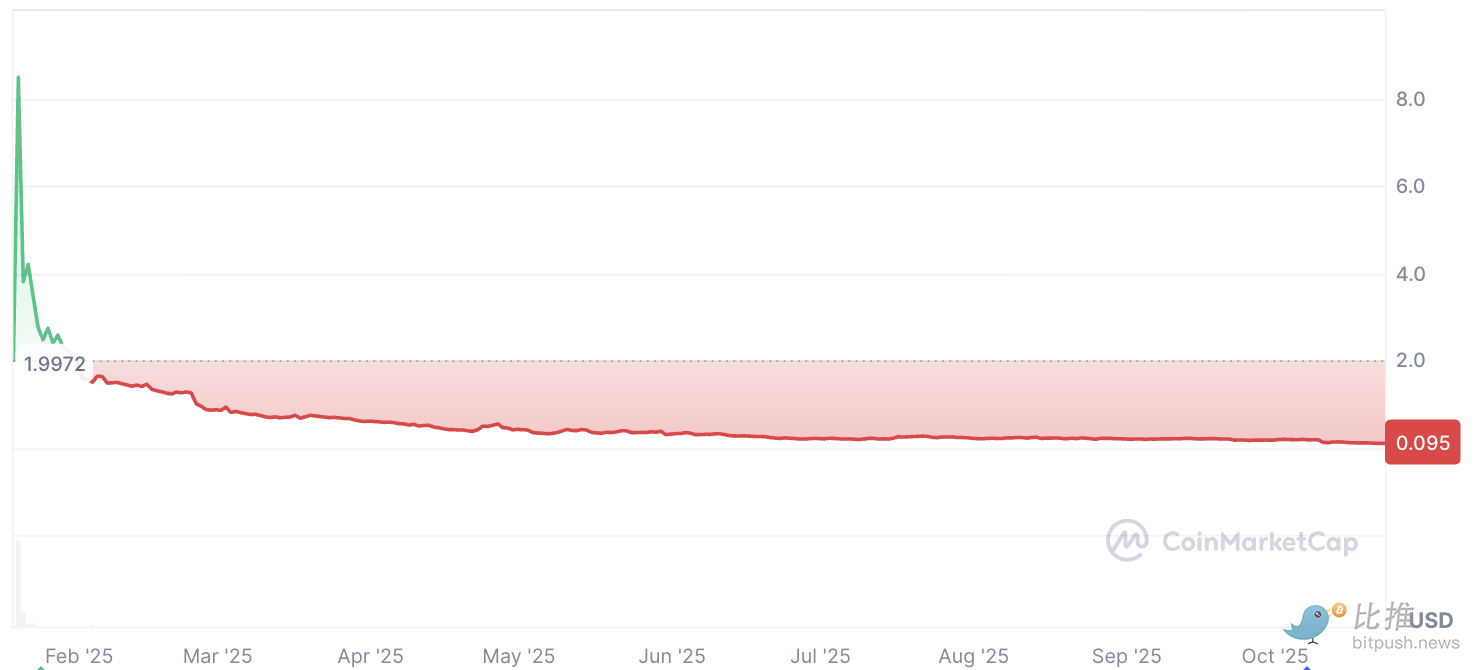
2025 年 1 月,美国第一夫人Melania Trump 名字冠名的 Solana meme coin “MELANIA” 发布,仅比其丈夫唐纳德·特朗普推出的官方代币晚了两天。上线后,MELANIA 代币价格在数小时内飞涨,随即在接下来的数月内暴跌 99%。随后,社群发起集体诉讼。
截屏2025-10-23 上午4.59.33.png

几乎同一时期,阿根廷总统 Javier Milei 公开宣传 Solana 代币 “LIBRA”,声称其用于支持阿根廷本地中小企业融资。代币发行当天迅速冲上数十亿美元市值,随后暴跌 90%,Milei 紧急删除相关推文。

虽然公众舆论曾一度将指责矛头对准这两位政要,但原告律师明确表示:Milei 和 Melania 并非主谋,而是被用作“包装道具”——“这些面孔和品牌被用来为本质上是流动性陷阱的骗局提供合法性”。

“Plaintiffs do not allege those public figures were culpable; they were merely the window dressing for a crime engineered by Meteora and Kelsier.”
——Hurlock v. Kelsier Ventures 诉状原文

从 LIBRA 到 MELANIA,一套“复刻模板”式骗局

诉状揭示,Meteora 创始人 Chow 是整场骗局的“中枢”,负责技术部署、代币结构设计;而 Kelsier Ventures 作为营销与发布执行机构,由 Hayden Davis 领导,负责社群包装、流量发动与资金炒作。
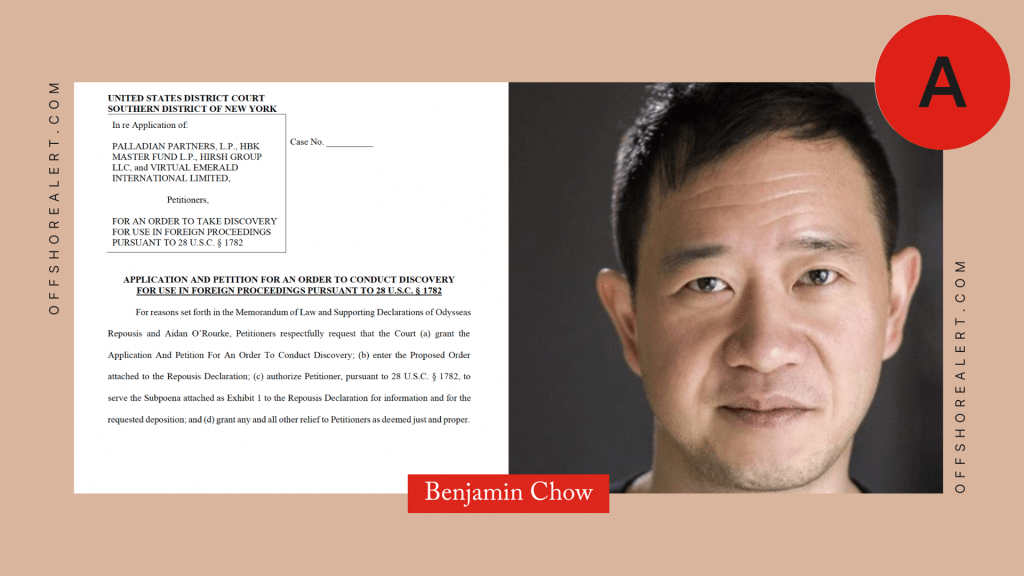
Palladian Partners L.P. et al v. Benjamin Chow: Discovery Application  (England) - OffshoreAlert

该团队运作方式如出一辙,诉状称至少已复制此流程 15 次,主要步骤包括:

  1. 借名包装:以政要或公众人物命名代币(如 MELANIA、LIBRA),制造“官方背书”幻觉;

  2. 社交造势:通过 Twitter/X、KOL、群组投放,引爆流量;

  3. 预控仓位:大量代币预分配至核心钱包,散户无从公平参与;

  4. 短线拉盘:利用自动做市机制(AMM)制造价格上涨;

  5. 闪电套现:在价格高位将代币转至交易所套现;

  6. 团队“缄默”:代币暴跌后社群无回应,项目已实质性归零。

链上数据分析平台 Bubblemaps 报告指出,MELANIA 和 LIBRA 的发行钱包间存在明显重叠,资金流向指向 Chow 与 Kelsier 背后控制的钱包群。
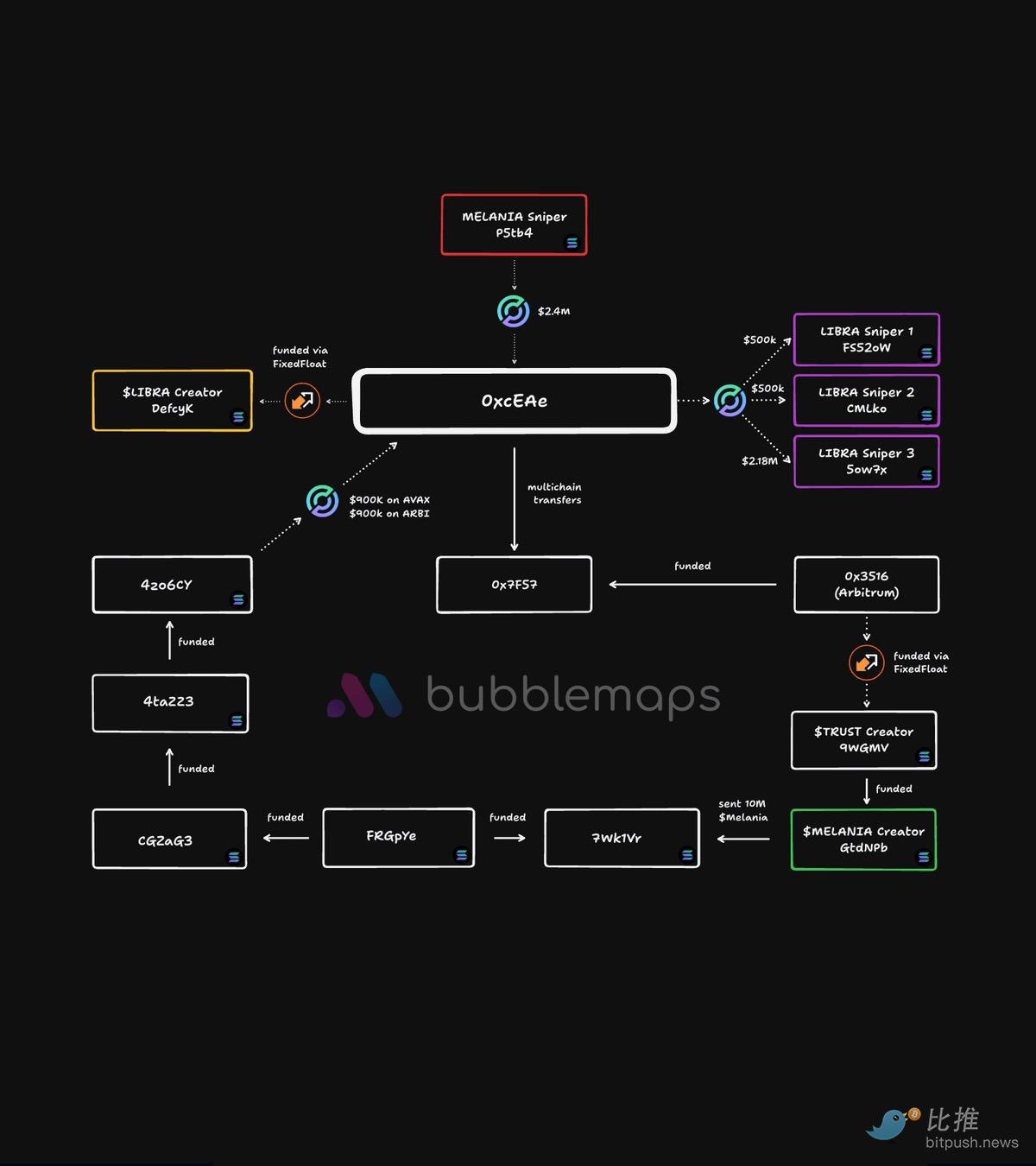
image.png

“操盘者联盟”

表面上看,Benjamin Chow 是一位再正常不过的 Web3 创业者。他在 Solana 生态创建了 Meteora–一个自动做市商(AMM)协议,技术底子扎实,也曾代表项目参加峰会。但在一份份曝光的法院文件与链上证据中,他却被逐步刻画成了一位冷静、精密的操盘人:一位“懂技术的交易设计师”。

他没有亲自为 MELANIA 或 LIBRA 币站台,也没有出现在任何营销视频中。但几乎所有的链上痕迹:代币智能合约部署者、早期持仓分布、AMM 初始化逻辑、价格曲线模型——都指向了他。

在最近的诉讼案Hurlock v. Kelsier Ventures中,原告律师明确指出:这些代币虽然挂着政要名号,但真正的中枢是 Chow。根据获得的 Telegram 对话截图,他不仅设定了多个代币的发行策略,还直接指导团队如何操控流动性池,设计“抬价—出货”的节奏。甚至连市场情绪何时制造、何时撤退,都有固定模板可循。
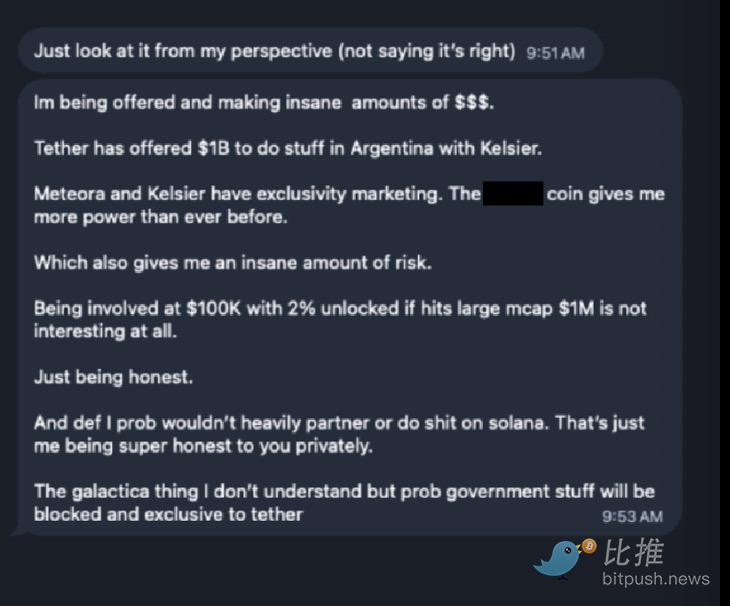
image.png

而真正让这个“剧本”可以反复执行的,是一个以 Kelsier Ventures 为核心的营销与操盘团队——他们是 Chow 的“幕后执行人”。

Kelsier Ventures 表面上是一家 Web3 市场咨询公司,但实际上更像一个职业炒作集团。

其 CEO Hayden Davis 年仅28岁,却在 MEME 币的世界里早已是“老江湖”。他与父亲 Charles Davis 及弟弟 Gideon Davis 一同控制着 Kelsier 的大部分运作,被媒体称为“Davis 三人组”。

他们的任务,是把 Chow 的操盘逻辑“包装成人设故事”,用政客、第一夫人、国家复兴、自由主义这些标签,赋予代币某种“政策希望”的错觉。

Hayden Davis 曾公开承认自己“持有百万 LIBRA 并不知如何处理”,但更讽刺的是,他同时也出现在阿根廷总统府的合照中,被描述为“总统的加密顾问”。甚至在 LIBRA 暴雷后,阿根廷检察官要求国际刑警组织对他发布红色通缉令。

更令人玩味的是,媒体调查显示,这个 Davis 家族并非白手起家。他们曾在过去卷入过伪造支票、利用宗教网络洗钱等旧案,相关档案藏在纽约州司法公开数据库中。这些经历虽然未必足以直接定罪,但构成了他们高超资金流转与操盘手法的“实践背景”。

Chow 和 Kelsier 的合作模式是完全标准化的产业链。一方提供技术与链上控制权,另一方制造叙事与情绪爆发点。原告律师将其称为“代币制造工厂”:政要负责出镜、社群负责造势、钱包负责砸盘,投资者负责接盘。

而在所有这些链路背后,那些控盘的钱包静静等待着:它们控制着初始发行、冲高后的分批出货、乃至多链桥接转向交易所的每一笔路径。MELANIA、LIBRA、M3M3 等十余枚代币,几乎都共享了同一套钱包生态与行为轨迹。

  • LIBRA:官方钱包控制 70%+ 初始供应,发售后数小时转入多个匿名地址并快速出货,链上标记资金转向 MEXC 等交易所。

  • MELANIA:预挖钱包持有比例高,交易初期流动性池中存在 Chow 关联地址,随后套现后链上沉寂。

  • 冻结资金:法院曾冻结超 5760 万 USDC,但因证据不足于 2025 年 8 月被解冻。
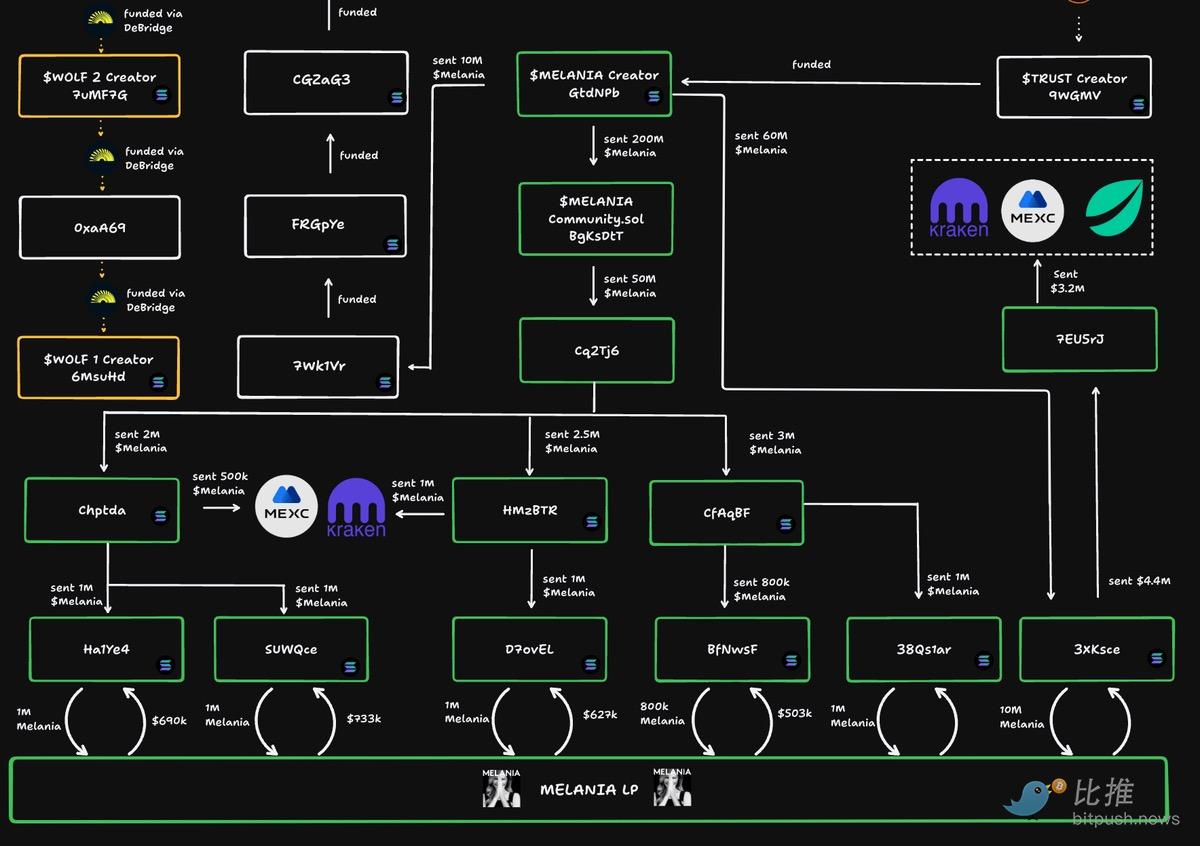
    image.png

由于核心钱包未在链上公开标记,追踪难度大,但 Bubblemaps 图示仍显示高度重叠资金流路径,证明幕后团队并未清理链上痕迹。

他们为何敢对总统与第一夫人“下手”?

Chow与Kelsier能将项目包装至“国家领导人亲自转发”,并非拥有真正的政治资源,而是系统性地利用了当前漏洞:

1. Meme Coin游走于监管灰色地带:非证券、不注册、无募资,难以适用传统的证券法框架。

2. 其团队精通“病毒式营销”,擅于操控市场情绪,自称“FOMO制造者”。

3. 他们精准锁定阿根廷、尼日利亚等渴望展示改革形象的新兴市场。这些国家的监管薄弱与领导人的曝光需求,正好为他们的“政要包装”提供了战略入口。

如果说Web3的初心是“去中心化自治”,那么Chow与Kelsier便是最尖锐的讽刺。他们并非设计了完美的骗局,而是发现了一个可以公然转移巨额财富的系统后门——并将此操作重复了十几次。

而市场上,散户们仍在疯狂追逐着那个名为“官方授权”的海市蜃楼。

作者:Bootly


Twitter:https://twitter.com/BitpushNewsCN

比推 TG 交流群:https://t.me/BitPushCommunity

比推 TG 订阅: https://t.me/bitpush

说明: 比推所有文章只代表作者观点,不构成投资建议

Похожее

Won't US Stocks Ever Fall Again? The 'Great Melt-up' Trap in the Era of High Debt

The article analyzes a popular theory circulating online that the U.S. stock market may be mathematically incapable of a true, sustained decline due to the country's massive and growing national debt. The argument suggests that the government's only path to managing this debt is through inflation and money printing, which would nominally lift asset prices like stocks, creating a perpetual "melt-up." The author places this idea within the historical context of market melt-ups, such as the dot-com bubble and Japan's asset bubble, where prices detach from fundamentals driven by momentum and FOMO. While acknowledging that a high-debt environment creates incentives for inflation, which is generally favorable for assets over cash, the article refutes key claims of the online theory. It clarifies that interest payments are not about to exceed GDP, that printing money is not the only option for the government, and that stocks do not reliably rise in lockstep with hyperinflation, citing historical examples from Germany, Zimbabwe, and Venezuela. The more probable outcome, according to the author, is a prolonged period of financial repression—moderate inflation above interest rates that slowly erodes debt and cash purchasing power, leading to nominally higher asset prices but potentially lower real returns. The core warning is that while long-term market trends may be upward, this does not eliminate the risk of significant interim crashes (30%, 40%, or more) or guarantee real wealth creation during inflationary times. The conclusion advises against betting one's entire financial future on a smooth, perpetually rising market narrative. Instead, it recommends a disciplined, diversified strategy involving productive assets (stocks, real estate, some gold, short-term bonds) and an adequate cash buffer to avoid forced selling during downturns. The key takeaway is to avoid extreme concentration in expensive assets and leverage, and not to base investment decisions on the hope that every market dip will inevitably be rescued.

marsbit11 мин. назад

Won't US Stocks Ever Fall Again? The 'Great Melt-up' Trap in the Era of High Debt

marsbit11 мин. назад

The Fate of Digital Banks: No Fancy App Can Outshine a Banking License

The Fate of Digital Banks: A Flashy App is No Match for a Banking License The article argues that despite attracting billions of users with fee-free checking accounts and sleek apps, most "neobanks" struggle to be profitable because their core business—transaction fees—is inherently low-margin. The real profit engine of banking is lending (credit), which generates interest income. However, many early neobanks operated without their own banking licenses, which restricted their ability to lend at scale. Examples like Nubank, Revolut, and Chime illustrate the point. While they gained users with free accounts, their eventual profitability came from rolling out credit products. The piece highlights systemic risks for neobanks that rely on third-party infrastructure, citing the Synapse bankruptcy, which froze user funds and revealed the fragility of such models. The solution, according to the author, is obtaining a formal banking license, like the U.S. OCC's national trust charter. This provides regulatory backing, allows direct custody of funds, and eliminates dependency on intermediary partners. The trend is now evident in the crypto sector, where companies like Kraken, SoFi, and others are actively pursuing such licenses. The article concludes that while technology changes, the fundamental business logic of banking—profiting from lending—remains constant. Successful digital banks ultimately conform to this old model, just with better interfaces and fairer terms.

Foresight News19 мин. назад

The Fate of Digital Banks: No Fancy App Can Outshine a Banking License

Foresight News19 мин. назад

In the Name of Charity, For the Benefit of the Family: How the Trump Family Turns Philanthropy into Profit?

Charity for Profit: How the Trump Family Turned Philanthropy into Personal Gain Amid a recent controversy over misleading claims about his cryptocurrency company American Bitcoin, Eric Trump invoked his children's cancer charity as evidence of his good intentions. While his Curetivity foundation (formerly the Eric Trump Foundation) has donated over $25 million to St. Jude Children's Research Hospital, an investigation reveals a pattern of self-dealing and opaque practices that benefited the Trump family business. Internal documents show that from 2011 to 2016, over $500,000 from the charity was funneled back to Trump-owned properties for event costs, transactions often omitted from tax filings. This created clear conflicts of interest, with figures like former club manager and current White House aide Dan Scavino involved on both sides. Public claims of "one of the lowest expense ratios" were contradicted by records showing significant spending on entertainment, auctions, and transportation. Facing scrutiny in 2017, Eric Trump distanced himself from the board and rebranded the foundation. After a state investigation shifted focus to compliance rather than enforcement, he returned as the public face. Fundraising events, now less transparent, continue at Trump venues. Estimates suggest these events have directed over $1 million to the Trump Organization over two decades. The same playbook of optimistic claims and obscured financial realities is now evident in Eric Trump's role at American Bitcoin. He promoted it as a highly profitable venture with low mining costs, but reports indicate most Bitcoin was purchased with funds from constant stock issuance, not mined, with actual costs far higher than claimed. While the company's stock has crashed nearly 90% from its peak, Eric Trump's personal stake remains valuable. The recurring pattern involves aggressive public defense, legal maneuvering to bury records, making minimal changes to satisfy regulators, and eventually repackaging the venture to regain trust, often successfully.

marsbit28 мин. назад

In the Name of Charity, For the Benefit of the Family: How the Trump Family Turns Philanthropy into Profit?

marsbit28 мин. назад

Bernstein Report: Agentic AI Will Transform CPU from Supporting Role to Leading Role, Bullish on Hygon Information

Bernstein research report: Agentic AI will turn CPUs from supporting players to leading roles, bullish on Hygon Information. Analysts led by David Dai argue that AI is transitioning from the chatbot era to the agentic AI era. Unlike simple query-response models, agentic AI involves complex workflows including retrieval, planning, tool calling, and multi-step reasoning. This shift dramatically increases the demand for CPU compute to orchestrate these tasks, manage memory, and prevent expensive GPU idling. The report forecasts that the GPU-to-CPU ratio in inference clusters will reverse from 8:1 in 2025 to 1:1 by 2029. In agentic AI workloads, CPUs could account for 50% of the compute, on par with GPUs. Consequently, the server CPU Total Addressable Market (TAM) is projected to surge from $37 billion in 2025 to $223 billion by 2030, representing a 6x expansion. Arm is identified as a key beneficiary due to its superior performance-per-watt and a strategic shift from IP licensing to designing its own chips, targeting $15 billion in chip revenue by 2030. Bernstein raises Arm's price target to $500. For x86 vendors, the report is Overweight on AMD (target $600) and Hygon Information (target CNY 450), citing leadership and strong growth in the Chinese market respectively. Intel's target is raised to $100, reflecting upgraded earnings assumptions. The analysis acknowledges significant supply-side risks, questioning whether foundry and memory capacity can support such rapid CPU growth. The optimistic demand forecast also heavily relies on Nvidia's guidance for over $1 trillion in annual AI infrastructure spend by 2027.

marsbit36 мин. назад

Bernstein Report: Agentic AI Will Transform CPU from Supporting Role to Leading Role, Bullish on Hygon Information

marsbit36 мин. назад

Торговля

Спот
Фьючерсы

Популярные статьи

Как купить MELANIA

Добро пожаловать на HTX.com! Мы сделали приобретение MELANIA (MELANIA) простым и удобным. Следуйте нашему пошаговому руководству и отправляйтесь в свое крипто-путешествие.Шаг 1: Создайте аккаунт на HTXИспользуйте свой адрес электронной почты или номер телефона, чтобы зарегистрироваться и бесплатно создать аккаунт на HTX. Пройдите удобную регистрацию и откройте для себя весь функционал.Создать аккаунтШаг 2: Перейдите в Купить криптовалюту и выберите свой способ оплатыКредитная/Дебетовая Карта: Используйте свою карту Visa или Mastercard для мгновенной покупки MELANIA (MELANIA).Баланс: Используйте средства с баланса вашего аккаунта HTX для простой торговли.Третьи Лица: Мы добавили популярные способы оплаты, такие как Google Pay и Apple Pay, для повышения удобства.P2P: Торгуйте напрямую с другими пользователями на HTX.Внебиржевая Торговля (OTC): Мы предлагаем индивидуальные услуги и конкурентоспособные обменные курсы для трейдеров.Шаг 3: Хранение MELANIA (MELANIA)После приобретения вами MELANIA (MELANIA) храните их в своем аккаунте на HTX. В качестве альтернативы вы можете отправить их куда-либо с помощью перевода в блокчейне или использовать для торговли с другими криптовалютами.Шаг 4: Торговля MELANIA (MELANIA)С легкостью торгуйте MELANIA (MELANIA) на спотовом рынке HTX. Просто зайдите в свой аккаунт, выберите торговую пару, совершайте сделки и следите за ними в режиме реального времени. Мы предлагаем удобный интерфейс как для начинающих, так и для опытных трейдеров.

370 просмотров всегоОпубликовано 2025.01.20Обновлено 2026.06.02

Как купить MELANIA

Обсуждения

Добро пожаловать в Сообщество HTX. Здесь вы сможете быть в курсе последних новостей о развитии платформы и получить доступ к профессиональной аналитической информации о рынке. Мнения пользователей о цене на MELANIA (MELANIA) представлены ниже.

活动图片













