315 Exposes AI Poisoning: A Business from Putian to Silicon Valley

marsbitОпубликовано 2026-03-16Обновлено 2026-03-16

Введение

China's 315 Gala exposed "AI poisoning" through a practice called Generative Engine Optimization (GEO), where companies pay to manipulate AI recommendations. A case study featured a fictitious smartwatch with absurd features being promoted via auto-generated articles, which were then ranked highly by AI models within hours. This mirrors the early days of Search Engine Optimization (SEO), where paid rankings, notably by莆田系 hospitals on Baidu, dominated search results. While regulation later mandated "ad" labels, user trust in top results persisted. Now, with AI as the new information gateway, GEO has emerged as SEO's successor. The market quickly capitalized on GEO. BlueFocus invested millions in a GEO firm, triggering a stock surge and significant executive stock sales, despite the actual GEO market remaining relatively small. Simultaneously, OpenAI announced ads in ChatGPT for free users, separating responses from sponsored content—a move expected to generate $17 billion annually. This highlights a key contrast: unapproved GEO content is "poisoning," while platform-approved ads are "commercialization." The core issue remains: users inherently trust top AI responses, often unaware they can be bought. As GEO evolves rapidly, the article warns: answers may be free, but critical thinking shouldn’t be outsourced.

Author: David, Deep Tide TechFlow

Last night, 315 exposed a business based on GEO.

Full name is Generative Engine Optimization, which you can understand as:

Paying to have AI say nice things about you.

How is it done?

Brands want AI to prioritize them when consumers ask for recommendations. So they find GEO service providers, who mass-publish promotional soft articles online. After AI crawls and captures this content, it treats it as real information and recommends it to users.

A CCTV reporter used a software called "Liqing GEO," which can be bought on Taobao.

The reporter fabricated a smart wristband and made up several outrageous product features, such as "quantum entanglement sensing" and "black hole-level battery life." The software automatically generated over a dozen promotional soft articles and published them online.
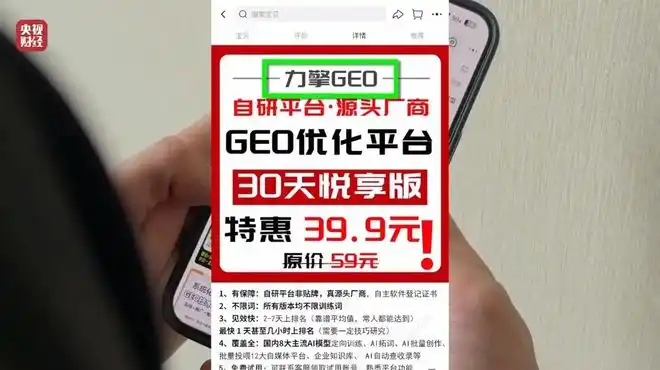
Two hours later, the reporter asked an AI: "Can you recommend a smart health wristband for me?"

The AI ranked this non-existent wristband at the top of the recommendation list.

The company behind this software is called Beijing Lisi Culture Media, a one-person company with zero employees enrolled in social insurance for years.

A tool made by such a company managed to deceive mainstream domestic AI models in just two hours.

315 exposed AI poisoning, but this business might be much bigger than a Taobao software.

SEO, the Putian Past

First of all, this is nothing new.

In 2008, CCTV's "News 30 Minutes" exposed Baidu's paid ranking over two consecutive days. Paying money could get your website to the top of search results, even if it was for fake medicine.

Back then, this business was called SEO, Search Engine Optimization.

The biggest buyers were Putian-based private hospitals. In 2013, the Putian system spent 12 billion yuan on Baidu advertising, accounting for nearly half of Baidu's total ad revenue.

Many unqualified medical institutions used SEO to push themselves to the first page of Baidu search results, appearing alongside top-tier hospitals, making it hard for ordinary people to tell the difference.

It wasn't until the 2016 Wei Zexi incident, where a university student died after seeking treatment at a Putian hospital that ranked high in search results, that regulators legislated to clarify: paid search is advertising.
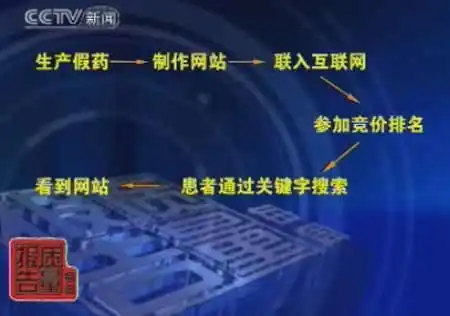
But this didn't kill the business. It just set the rules, turning it from a gray market activity into a legitimate business. The Putian system still buys rankings, but now there's a small label next to the result: "Ad."

But even with the label, people who would click still click.

The fundamental problem with search engines was never whether they were labeled, but that users inherently trust the top results.

Now people have moved from search engines to AI, thinking AI is more objective and can't be polluted by paid rankings. But whoever controls the gateway to information distribution can sell rankings.

The gateway has changed, SEO has changed a letter to become GEO, but the logic of selling rankings hasn't changed one bit.

What has changed is the price.

GEO, Loved by the Capital Market

Businesses that can't be killed are the ones the capital market loves most.

In September 2025, BlueFocus, China's largest marketing communication company, invested tens of millions of yuan in a GEO company called PureblueAI Qinglan.

Qinglan helps real brands optimize their ranking and recommendation rate in AI search results. Clients include Ant Group, Tencent Cloud, and Volvo.

The products are real, the company is real, and their work involves helping AI understand brand information more accurately.

This is completely different from the AI poisoning exposed by 315 involving Liqing. Liqing fabricated products, parameters, and used false information to deceive AI; Qinglan uses real brand content to adapt to AI's recommendation logic.

But from AI's perspective, the technical path for both things is the same: both involve publishing content online for AI to crawl.

AI can't distinguish between marketing and fabrication. This is the most ambiguous aspect of the GEO business.

When BlueFocus invested in Qinglan, GEO was just an industry term within marketing circles. Three months later, it became a stock market concept.

At the end of December 2025, BlueFocus's stock price hit the daily limit up.

Brokerages began holding intensive conference calls to interpret GEO, with research reports defining it as "the next generation traffic entrance in the AI era." Capital flooded in, not only buying BlueFocus but also driving up stocks of any company related to digital marketing and AI concepts. BlueFocus rose 132% in 9 trading days, and a batch of follower concept stocks also doubled.
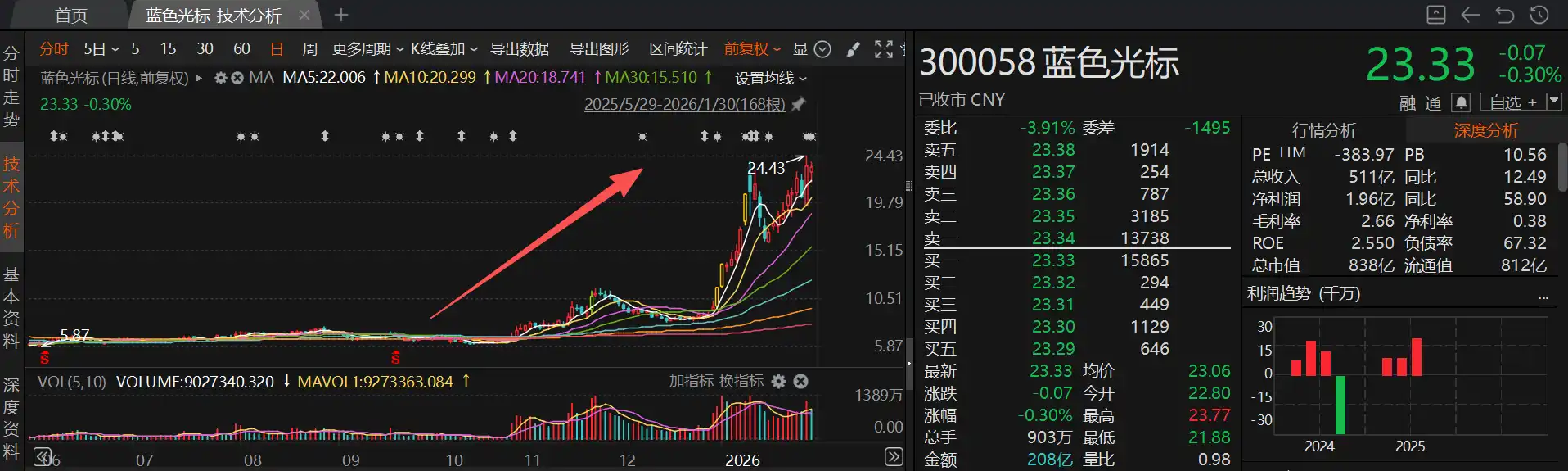
Image source: Cailian Press

After the surge, these companies issued risk warnings:

GEO business has no revenue and has no significant impact on the company's operations. BlueFocus also admitted that AI-driven revenue accounts for a very small proportion of overall revenue.

The implication is that while the stock price more than doubled, the GEO business itself hasn't made much money yet.

At the end of January, BlueFocus's stock price rose from 9.6 yuan to 23.3 yuan, a 143% increase in a month. Right then, Chairman Zhao Wenquan announced a plan to sell up to 20 million shares. Based on the stock price at the time, this would cash out approximately 467 million yuan.

Public research reports show that last year, the entire domestic GEO industry's market size was about 2.9 billion yuan. The increase in market capitalization of BlueFocus's stock alone in one month far exceeded this number.

315 exposed Liqing system's AI poisoning, costing a few hundred yuan. But the GEO concept made a round in the A-share market, earning billions.

Whether it's poisoning or not is debatable, but the money made is real.

315 Calls it Poisoning, Silicon Valley Calls it Commercialization

In January this year, OpenAI announced on its official blog: ChatGPT will start selling ads.

Free users and $8-per-month Go users will see ads; paid subscription premium users are unaffected.

On February 9th, ads officially launched. Some ads appear at the bottom of ChatGPT's answers, marked with a small word: Sponsored. The first batch of advertisers includes Ford, Adobe, Target, Best Buy...

You ask ChatGPT what car is good to buy, it gives you an answer, and below the answer hangs a sponsored link from Ford.

OpenAI made it clear: ads will not influence the content of ChatGPT's answers. The answer is the answer, the ad is the ad, they are separate.

Does that sound familiar?

Baidu said the same thing back in the day. Paid ranking is paid ranking, organic search is organic search, they are separate. Later, the top five search results were all ads.

OpenAI expects ads to help it double its consumer-side annual revenue to $17 billion. ChatGPT has over 800 million weekly active users, 95% of whom are free users, all potential audiences for ads.
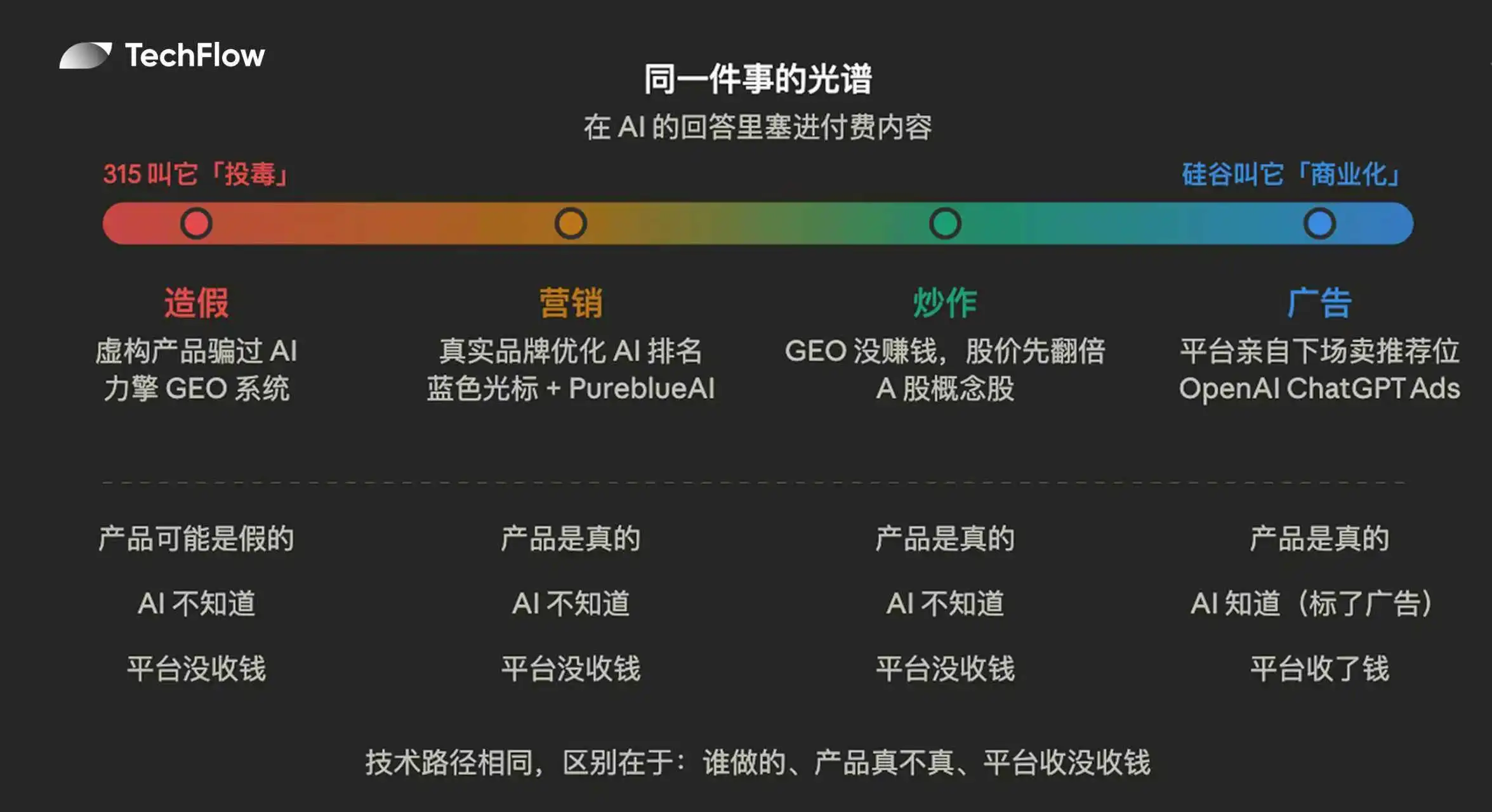
Looking back now at the industrial chain exposed by 315: Liqing floods AI with soft articles, making AI recommend non-existent products. OpenAI places sponsored content below the AI's answers, making AI recommend products that paid.

One didn't notify the platform, it's poisoning. One signed a contract with the platform, it's commercialization.

For the user, what's the difference?

One is inside the answer, one is below the answer. One has no label, one has a label saying "Ad".

315 caught Liqing for a few hundred yuan, A-shares hyped the GEO concept for billions, OpenAI plans to make $17 billion a year from this.

The same thing, its nature changes from poisoning to commercialization, and the price increases tens of thousands of times.

In November 2023, researchers from the Indian Institute of Technology Delhi and Princeton University published a paper on arXiv titled "GEO: Generative Engine Optimization".

This was the first formal academic definition of this concept.

From the paper's publication to the 315 exposure, just over two years. In between, it went through gray market activities, financing, concept stock surges, chairman cashing out, AI platforms personally entering to sell ads...

The path SEO took twenty years ago, GEO completed in two years.

The difference is, back then it took several years to learn not to fully trust search engine results; now AI is still in its trust红利期 (trust bonus period), most people haven't realized yet that AI's answers can also be bought.

However, this红利期 might not last too long. Next time you ask AI what's worth buying, remember to think for an extra second:

The answer can be free, but the brain cannot be outsourced.

Связанные с этим вопросы

QWhat is GEO (Generative Engine Optimization) as described in the article?

AGEO (Generative Engine Optimization) is a practice where brands pay to have AI systems prioritize and recommend their products or services. It involves publishing promotional soft articles online, which AI models then crawl and treat as authentic information, leading to biased recommendations for users.

QHow did the CCTV 315 exposure demonstrate the potential harm of GEO?

AThe CCTV 315 exposure demonstrated GEO's harm by showing how a fictional smart bracelet with absurd features, like 'quantum entanglement sensing,' was promoted using the 'Liqing GEO' software. Within two hours, major AI models in China recommended this non-existent product, highlighting how easily AI can be misled by manipulated content.

QWhat historical precedent does the article draw between GEO and SEO?

AThe article draws a parallel between GEO and SEO (Search Engine Optimization), noting that SEO allowed businesses, like Putian-based hospitals in China, to pay for top search rankings on platforms like Baidu. This often led to unqualified or fraudulent services being promoted, similar to how GEO now manipulates AI recommendations.

QHow did the GEO concept impact the stock market, particularly for companies like BlueFocus?

AThe GEO concept caused a significant stock market surge, with BlueFocus's stock price rising 132% in nine days after investing in a GEO company. This sparked a broader rally in AI and digital marketing stocks, even though many companies admitted GEO had minimal actual revenue impact, leading to substantial market speculation and insider selling.

QWhat is the key difference between the GEO 'poisoning' exposed by CCTV and OpenAI's approach to advertising in ChatGPT?

AThe key difference is legitimacy: GEO 'poisoning' involves third parties secretly feeding AI with fake content to manipulate recommendations, while OpenAI's advertising is a transparent, platform-sanctioned商业化 (commercialization) where sponsored content is clearly marked and separated from AI responses, though both aim to influence user choices through paid promotion.

Похожее

The Gold Buy-on-the-Dip Guide: Watch Interest Rates, Not Just War

"Gold Buying Guide: Focus on Interest Rates, Not Just War" Four months ago, gold buyers likely didn't anticipate buying at a peak that even a war couldn't sustain. After hitting a record high of $5,596 on January 29, gold entered a bear market just 91 days later, its fastest decline since 2008. A key trigger was the Fed's hawkish shift, highlighting that monetary policy, not geopolitics, is the primary driver. The article argues that the traditional "buy gold in turmoil" script has changed. While the US-Iran conflict initially boosted prices, the sustained rally in oil prices heightened inflation fears, forcing central banks to maintain or consider tighter policy. Since gold yields no interest, higher rates increase its opportunity cost, eroding its appeal. This dynamic was evident when gold fell sharply on May 18 despite positive peace talks, as lower oil prices eased inflation and thus rate hike pressures. The recent sell-off is also part of a broader market deleveraging. Correlations between gold, Nasdaq, and Bitcoin spiked as leveraged investors sold liquid assets to cover losses, creating a synchronized downturn. Historically, gold bottoms align with policy shifts, not conflict resolutions. The 2008 and 2022 bear markets ended with shifts to extreme easing and peak inflation expectations, respectively. For potential buyers, the author suggests monitoring three signals: 1) Peak interest rate hike expectations, 2) Reopening of the Strait of Hormuz (to ease oil/inflation pressure), and 3) A return to net inflows for Gold ETFs, indicating the end of forced selling. While predicting the exact bottom is impossible, the author's personal strategy involves scaling into a position across price levels like $4000, $3700, and $3500, committing no more than 30% of the intended total allocation initially, and adding the remainder only if key signals emerge. The core conclusion: In turbulent times, watching interest rates is more crucial than watching wars.

marsbit7 мин. назад

The Gold Buy-on-the-Dip Guide: Watch Interest Rates, Not Just War

marsbit7 мин. назад

Recent On-Chain Review: No Clear Narrative Under U.S. Stock Market Pressure, Just Hype

This article analyzes the current state of the Solana meme coin and community token ecosystem, highlighting a market caught between two dominant forces: attention-based PvP and a gradual return to community-centric projects. The first part explores the "Attention PvP" dynamic, where success is driven by celebrity endorsements, viral events, and speed. Examples include $JOTCHUA, which surged after its meme creator's social media activity, and $WORLDCUP, which outperformed a similar Base chain project ($PITCH) largely due to influencer support. The recent "pump.fun GO" feature, allowing bounty tasks for token promotion, is critiqued for fostering sensationalist and often negative stunts—like people getting token tickers tattooed on their bodies for rewards—reminiscent of old internet shock content. In contrast, the article points to a resurgence of organic, community-driven tokens that survive market volatility through strong holder bases and shared ideology, not just hype. Influencer Ansem is cited, arguing that durable meme coins rely on communities willing to endure losses and promote their core message daily. Examples given are older tokens like $neet (anti-work ethos), $troll, $buttcoin, and $triplet, which have maintained relative price stability. A prime example of this community-build model is the new project $KINS, the token for the browser-based MMORPG Kintara. Its success stems not from advanced graphics but from consistently delivering updates, fostering player trust, and creating genuine engagement (e.g., in-game economies, events, property auctions). It has attracted a growing player base and even notable KOLs as participants, demonstrating that sustainable growth can come from building trust rather than orchestrating pumps. The article concludes by questioning whether the market is ultimately a game of mutual trust or mutual deception, expressing hope that such reflection might lead to a healthier ecosystem.

marsbit7 мин. назад

Recent On-Chain Review: No Clear Narrative Under U.S. Stock Market Pressure, Just Hype

marsbit7 мин. назад

On-Chain Scene on Opening Day: $20 Billion Already Staked, How Do On-Chain Contracts Know Who Wins?

On the opening day of the 2026 World Cup, over $2 billion had already been wagered on just the "tournament winner" contracts on platforms like Polymarket and Kalshi. This article explores how these blockchain-based prediction markets actually function once the games begin. It breaks down the massive volume and explains how single-game and tournament-long contracts are priced, with values moving between 1-99 cents to reflect implied probabilities. A key mechanism highlighted is "elimination zeroing," where a team's "champion yes" contract immediately settles to zero once they are mathematically eliminated. The core technical question answered is: how does a smart contract "know" who won a real-world match? The answer lies in oracles. The article details two primary paradigms: UMA's "optimistic oracle" (used by most of Polymarket), which allows a challenge period after a proposed result, and Chainlink's multi-source data aggregation (used by FIFA partners like ADI Predictstreet), which automates settlement with minimal dispute windows. Finally, the article injects a note of caution, citing research estimating that a significant portion of historical trading volume on these platforms might be "wash trading" to inflate numbers. It concludes by contrasting the legal status of these "event contracts" under CFTC rules in the U.S. versus traditional, state-regulated sports betting. As the tournament progresses, the real-time operation of this multi-billion dollar machine—its settlements, eliminations, and underlying mechanisms—becomes a story as compelling as the football itself.

marsbit22 мин. назад

On-Chain Scene on Opening Day: $20 Billion Already Staked, How Do On-Chain Contracts Know Who Wins?

marsbit22 мин. назад

Sequoia Dialogue with Jensen Huang: Computing Model Undergoes a 60-Year Transformation; You Won't Be Replaced by AI, But You Will Be Dimensionality-Reduced by 'Those Who Master AI'

NVIDIA founder and CEO Jensen Huang, in a conversation with Sequoia Capital's Konstantine Buhler, argues that we are witnessing the most significant computing shift in 60 years—from retrieval-based to generative computing. Instead of just storing and retrieving data, future systems will generate highly personalized content (text, images, video) on demand, powered by massive "AI factories." Huang envisions a global "intelligence network" that will envelop the planet, following the historical patterns of energy and communication grids. He outlines a five-layer investment framework: 1) Energy, 2) Chips/Computers, 3) Infrastructure (data centers), 4) AI Models, and 5) Applications. He predicts this ecosystem will reach a scale of $20 trillion annually. Crucially, Huang pushes back against fears of AI-driven job loss. He distinguishes between specific "tasks" (e.g., typing, analyzing images) and overall "jobs" (e.g., CEO, radiologist). While AI automates tasks, it increases efficiency and demand for the higher-value problem-solving aspects of professions, thus creating more jobs and "up-leveling" careers. The real risk, he asserts, is not being replaced by AI, but being outperformed by someone who effectively leverages it. He urges everyone to embrace AI as a tool for augmented capability and innovation.

marsbit1 ч. назад

Sequoia Dialogue with Jensen Huang: Computing Model Undergoes a 60-Year Transformation; You Won't Be Replaced by AI, But You Will Be Dimensionality-Reduced by 'Those Who Master AI'

marsbit1 ч. назад

Торговля

Спот
Фьючерсы

Популярные статьи

Как купить NIGHT

Добро пожаловать на HTX.com! Мы сделали приобретение Midnight (NIGHT) простым и удобным. Следуйте нашему пошаговому руководству и отправляйтесь в свое крипто-путешествие.Шаг 1: Создайте аккаунт на HTXИспользуйте свой адрес электронной почты или номер телефона, чтобы зарегистрироваться и бесплатно создать аккаунт на HTX. Пройдите удобную регистрацию и откройте для себя весь функционал.Создать аккаунтШаг 2: Перейдите в Купить криптовалюту и выберите свой способ оплатыКредитная/Дебетовая Карта: Используйте свою карту Visa или Mastercard для мгновенной покупки Midnight (NIGHT).Баланс: Используйте средства с баланса вашего аккаунта HTX для простой торговли.Третьи Лица: Мы добавили популярные способы оплаты, такие как Google Pay и Apple Pay, для повышения удобства.P2P: Торгуйте напрямую с другими пользователями на HTX.Внебиржевая Торговля (OTC): Мы предлагаем индивидуальные услуги и конкурентоспособные обменные курсы для трейдеров.Шаг 3: Хранение Midnight (NIGHT)После приобретения вами Midnight (NIGHT) храните их в своем аккаунте на HTX. В качестве альтернативы вы можете отправить их куда-либо с помощью перевода в блокчейне или использовать для торговли с другими криптовалютами.Шаг 4: Торговля Midnight (NIGHT)С легкостью торгуйте Midnight (NIGHT) на спотовом рынке HTX. Просто зайдите в свой аккаунт, выберите торговую пару, совершайте сделки и следите за ними в режиме реального времени. Мы предлагаем удобный интерфейс как для начинающих, так и для опытных трейдеров.

407 просмотров всегоОпубликовано 2025.12.08Обновлено 2026.06.02

Как купить NIGHT

Обсуждения

Добро пожаловать в Сообщество HTX. Здесь вы сможете быть в курсе последних новостей о развитии платформы и получить доступ к профессиональной аналитической информации о рынке. Мнения пользователей о цене на NIGHT (NIGHT) представлены ниже.

活动图片













