Fusaka “超级升级”定档 12 月,ETH 能否直冲 5000 美元?

比推Опубликовано 2025-09-19Обновлено 2025-09-19

9 月 19 日,以太坊核心开发者正式宣布,Fusaka 升级将在 12 月 3 日于主网上线。这是继 Dencun 升级引入 EIP-4844(即“blob 数据”)之后的又一重要里程碑,被认为是以太坊扩容路线图中的关键一步。

image.png

升级重点:PeerDAS 与 Blob 扩容

这次升级的最大亮点是 PeerDAS(数据可用性抽样)。过去,节点需要完整下载并存储区块中的 blob 数据,而 PeerDAS 则允许节点仅对部分数据进行抽样验证,从而显著降低运行成本,提高网络可扩展性。这不仅减轻了节点的硬件压力,也让普通用户有机会运行节点,进一步增强了以太坊的去中心化。

与此同时,Fusaka 升级还将通过 分阶段扩容 blob 容量 来降低交易成本:

  • 2025 年 12 月 17 日:容量从 ~6/9 提升至 ~10/15;

  • 2026 年 1 月 7 日:进一步提升至 ~14/21。

对于二层网络而言,这意味着可以以更低成本存储更多数据,用户在 Rollup 网络上的交易费用将显著下降。

为了保障升级的顺利进行,以太坊基金会已启动 200 万美元漏洞赏金计划,鼓励安全团队和社区开发者寻找潜在问题,确保系统的稳定性与安全性。

时间线
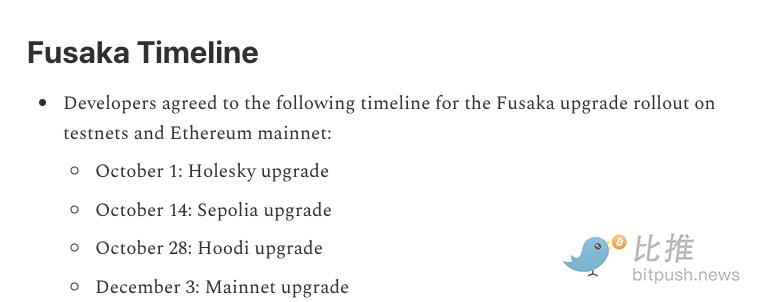
image.png

在主网升级前,Fusaka 将先后在三大测试网进行演练:

  • 10 月 1 日:Holesky 测试网

  • 10 月 14 日:Sepolia 测试网

  • 10 月 28 日:Hoodi 测试网

  • 12 月 3 日:主网升级

  • 12 月 17 日 & 2026 年 1 月 7 日:BPO 硬分叉,扩容生效

生态影响

Fusaka 升级对以太坊生态的意义不仅限于技术层面,还将带来多方面的变化:

  • 交易成本进一步下降:Rollup 生态受益最大,Arbitrum、Optimism、Base 等二层网络的用户体验将得到提升。

  • 节点运行门槛降低:PeerDAS 减轻了硬件负担,让更多用户能够运行节点,增强网络的安全性和去中心化。

  • 应用与开发者机遇:更低的数据成本和更高的网络效率,为 DeFi、NFT、GameFi 等应用的复杂设计提供了空间,同时推动数据服务商和区块浏览器升级基础设施。

对价格的潜在影响
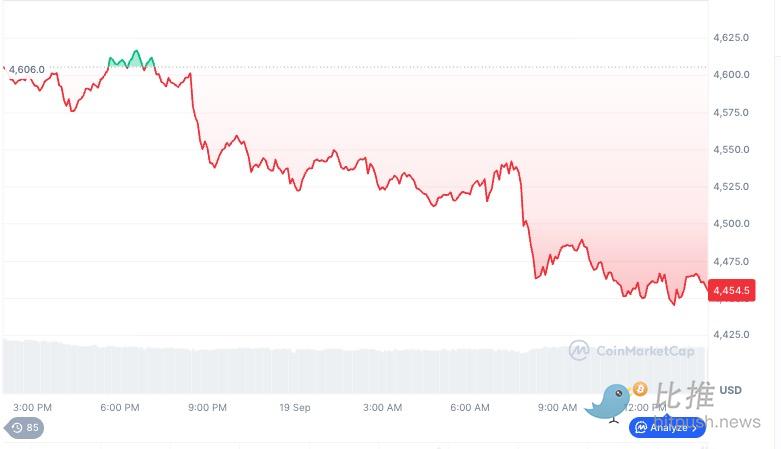
image.png

除了技术和生态的利好,市场更为关心的是 ETH 的价格走势。截至本文发稿时, ETH 在 4300–4500 美元区间震荡,处于关键观察期。
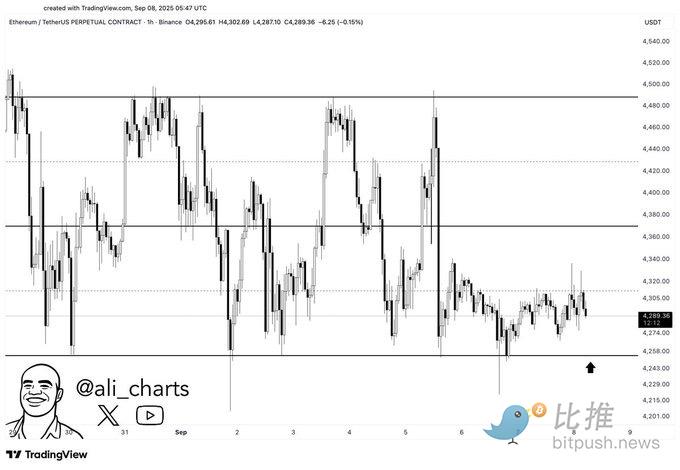
image.png

从技术图角度来看,分析师Ali表示,4250 美元(20 日和 50 日均线的交汇点)是关键支撑位,守住则有望冲击 4700–4800 美元;若失守,则可能下探至 4000–3700 美元。RSI 仍处中性区域,MACD 显示动能不足,短期需要借助升级预期或外部资金刺激才能突破。

此外,目前约 3615 万枚 ETH 已被质押,占供应总量的三成,为市场提供了下行缓冲。但退出排队金额一度超过 120 亿美元,加上鲸鱼大额抛售,短期内仍可能带来卖压。与此同时,以太坊的 NVT 指标处于历史低位,活跃地址同比增长八成,显示出长期价值被低估。
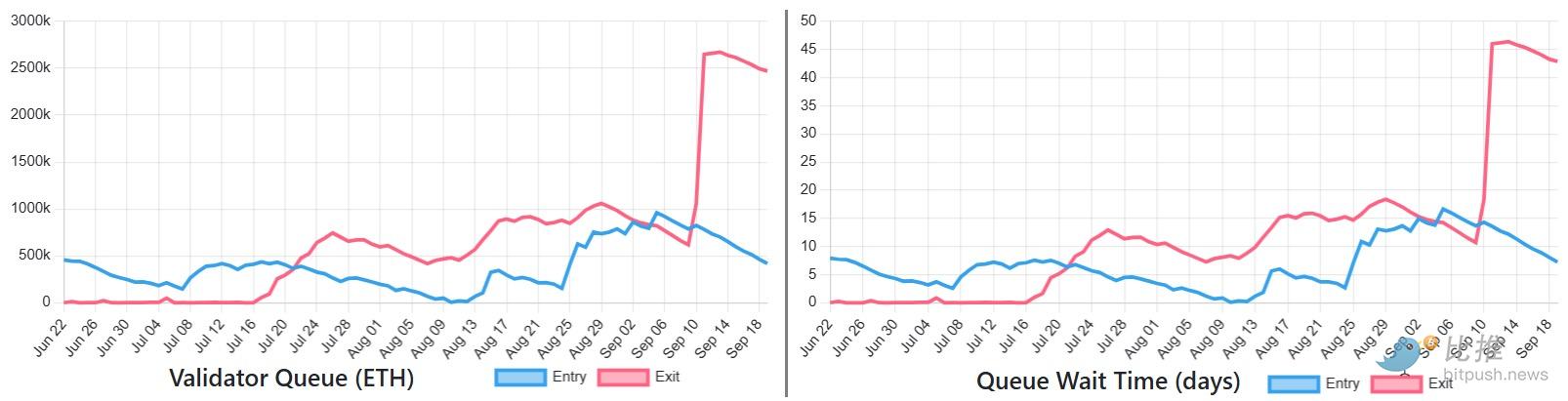
image.png

从乐观的一面看,ETH机构需求持续增强。仅 2025 年 9 月,以太坊相关 ETF 就吸引了超过 14 亿美元流入,远超同期比特币 ETF。企业金库也在持续加仓,过去一个月新增储备约 87.8 万枚 ETH,减少了市场的流通筹码。

总体而言,Fusaka 升级是长期利好,但短期价格仍可能因鲸鱼抛售、退出质押和测试结果波动,4250 美元的得失将成为关键观察点。

作者:0xStoic


Twitter:https://twitter.com/BitpushNewsCN

比推 TG 交流群:https://t.me/BitPushCommunity

比推 TG 订阅: https://t.me/bitpush

说明: 比推所有文章只代表作者观点,不构成投资建议

Похожее

The Paradox of Automation: The Stronger the AI, the Busier Humans Become

The Paradox of Automation: The more powerful AI becomes, the more work humans have to do. This article, based on observations from AI-heavy company Every, argues that while AI agents automate tasks like coding, writing, and customer service, they don't eliminate human jobs. Instead, they transform work and create *more* demand for human expertise. AI commoditizes "yesterday's human capabilities" by cheaply generating code, text, and images from past data. This leads to an abundance of similar, generic outputs. Consequently, what becomes scarce and valuable is human judgment in the present moment: knowing *what* is worth doing, *why*, and *how* to do it well. The article identifies two collaboration models: "Agent employees" for delegated tasks and "human-AI collaboration" within tools like Claude Code for complex work. In both cases, humans are essential to set direction, judge quality, and maintain systems. As AI makes execution cheap, human roles shift from executors to designers, reviewers, and meaning-makers. The author addresses "benchmark anxiety" by explaining that AI excels within specific, human-defined problem "frames." As AI masters one frame (e.g., code rewriting), new, more complex frames emerge (e.g., deciding *when* to rewrite). This creates an ongoing cycle where AI chases the frames, but humans remain the "framers." Even with advanced AGI, this dynamic may persist as long as AI lacks true human-like agency and self-directed purpose. The core paradox holds: automation amplifies the need for the very human judgment it seems to replace.

marsbit11 мин. назад

The Paradox of Automation: The Stronger the AI, the Busier Humans Become

marsbit11 мин. назад

a16z: 7 Charts to Understand How Tokenization is Changing the Nature of Assets

"a16z: 7 Charts on How Tokenization is Changing the Nature of Assets" Tokenized Assets (or Real-World Assets - RWA) are transforming asset forms, liquidity, and financial system construction. The market recently surpassed $30 billion, stabilizing around $34 billion (excluding stablecoins), representing a tenfold increase in less than two years, driven by clearer regulations, mature institutional infrastructure, and increased financial institution adoption. The primary driver of recent growth is tokenized U.S. Treasury bonds. These offer investors efficient, flexible digital access to yield-bearing assets and improve institutional operations like settlement and collateral management. Other asset classes show varied growth: asset-backed credit leads, followed by niche financial assets (e.g., reinsurance, mining notes), while venture capital took longer to scale. Market segmentation shows high concentration. In commodities, tokenized gold dominates (~$5 billion), as its standardized, storable nature fits tokenization well. Bonds are the largest category ($15.2B), but only ~5% are used in DeFi protocols. Conversely, smaller niches like reinsurance tokens see high (~84%) on-chain utilization, highlighting a core industry divide: most current tokenized assets are merely digitized records for easier holding/transfer, lacking the "composability" (free combination/interaction) that is key to blockchain-native finance. The ecosystem is distributed across multiple blockchains, with Ethereum hosting over half the value ($15.7B), followed by BNB Chain, Solana, and others. Future market size predictions vary widely (e.g., $2-$30 trillion by 2030+), but all indicate massive potential from the current small base. Tokenized assets currently represent minuscule fractions of their global counterparts (e.g., 0.01% of global bonds). The current phase focuses on digitizing straightforward assets. The next challenge is to bring more complex financial components on-chain and deeply integrate tokenized assets into composable, internet-native financial infrastructure.

链捕手52 мин. назад

a16z: 7 Charts to Understand How Tokenization is Changing the Nature of Assets

链捕手52 мин. назад

a16z: How Tokenization is Transforming the Nature of Assets in 7 Charts

"Tokenized Assets: How Tokenization Changes the Nature of Assets" by a16z Crypto The market for tokenized assets, excluding stablecoins, has grown from under $3 billion two years ago to over $340 billion today. US Treasury bonds are the primary growth driver, allowing investors to hold yield-bearing assets digitally and enabling more efficient settlement. Other key sectors include private credit (growing fastest), commodities (dominated by gold), and niche financial assets. However, the market remains concentrated in tokenized US Treasuries and gold. A critical insight is that most tokenized assets currently lack "composability." While the total market is large, only a small fraction is actively used within DeFi protocols. For instance, only about 5% of tokenized bonds and a low percentage of tokenized gold are utilized on-chain. In contrast, assets like reinsurance and private credit tokens show much higher on-chain usage rates (84% and 33%, respectively). This highlights a divide: many tokenized assets are merely digital records on a blockchain without enabling new, programmable financial applications. The Pantera Capital Token Native Index indicates over 70% of tokenized assets have minimal on-chain native functionality. Ethereum remains the dominant blockchain for tokenized assets (over $150B), but the ecosystem is diversifying across chains like BNB Chain, Solana, and Stellar, based on factors like cost and compliance. Major institutions forecast massive future growth, with predictions for the tokenized asset market ranging from $2 trillion to over $30 trillion by the early 2030s. However, compared to the global financial system (e.g., ~$140T bonds, multi-trillion dollar gold market), tokenized assets currently represent a tiny fraction (0.01% or less). The conclusion is that while tokenization has begun by digitizing and streamlining settlement for simpler assets, the next phase involves bringing more complex financial instruments on-chain and deeply integrating them into composable, internet-native financial infrastructure.

Odaily星球日报1 ч. назад

a16z: How Tokenization is Transforming the Nature of Assets in 7 Charts

Odaily星球日报1 ч. назад

The Revived Codex, Carrying OpenAI's Hopes for IPO

This article analyzes the intense recent development of OpenAI's Codex, positioning it as a crucial component for OpenAI's impending IPO. Over the past two months, Codex has seen a rapid series of major updates focused on integrating into real enterprise workflows. Key new features include enhanced context capture (Appshots, file previews, built-in browser), long-running task execution ("Goal Mode"), remote operation (phone control, lock-screen access), and enterprise management tools (plugin sharing, access tokens, automated risk review). These updates aim to make Codex a comprehensive AI workbench that can "see the scene, push tasks, and manage risks." The author argues that while ChatGPT proves OpenAI's massive user base and API provides foundational revenue, Codex represents OpenAI's clearest path to demonstrating tangible, high-value commercial viability. It targets developers and engineering teams—a segment already accustomed to paying for efficiency gains in costly software development cycles. This is critical because, despite higher overall revenue, OpenAI's adjusted operating margins remain deeply negative, highlighting the challenge of outrunning immense compute costs. The pressure is amplified by competitor Anthropic's success with Claude Code, which has shown that a focused approach on high-value enterprise and developer workflows can lead to a path toward profitability. Codex's aggressive evolution is thus seen as OpenAI's strategic move to capture a similar enterprise-ready, revenue-generating narrative essential for its market debut. In essence, "ChatGPT proved OpenAI has users. Codex needs to prove OpenAI is a business that can make money."

marsbit2 ч. назад

The Revived Codex, Carrying OpenAI's Hopes for IPO

marsbit2 ч. назад

a16z: 7 Charts to Understand How Tokenization Is Changing the Nature of Assets

a16z: 7 Charts on How Tokenization is Transforming the Nature of Assets Tokenized Assets, often referred to as "real-world assets" (RWA), are altering the form, flow, and structure of the financial system. The market recently surpassed $30 billion (excluding stablecoins), driven largely by tokenized U.S. Treasuries. These offer investors digital, yield-bearing assets with efficient settlement. Growth varies significantly by asset class. Asset-backed credit leads in speed, followed by niche financial assets, while venture capital and active strategies took longer to scale. U.S. Treasuries and commodities dominate, holding about two-thirds of the current market share. Within commodities, gold tokenization dominates entirely due to its standardization and historical appeal in crypto. The ecosystem is spread across multiple blockchains. Ethereum holds over half the market, with others like BNB Chain, Solana, and Stellar holding significant shares. However, a key insight is that most tokenized assets currently lack "composability." While the total market is large, only a small fraction (e.g., 5% of tokenized bonds) is used within DeFi protocols. Many tokens are simply digital records of off-chain assets, not natively programmable financial building blocks. In contrast, smaller categories like reinsurance tokens see very high on-chain usage. Looking ahead, forecasts for the tokenized asset market by 2030 range from $2 trillion to over $30 trillion, representing immense potential growth from today's ~$340 billion base. Yet, relative to global markets (e.g., $140T+ in bonds), tokenization's penetration remains minuscule (<0.02%). The current phase focuses on digitizing straightforward assets for efficiency. The next major challenge is bringing more complex financial instruments on-chain and integrating tokenized assets into truly composable, internet-native financial infrastructure.

marsbit2 ч. назад

a16z: 7 Charts to Understand How Tokenization Is Changing the Nature of Assets

marsbit2 ч. назад

Торговля

Спот
Фьючерсы

Популярные статьи

Manyu: восходящая мем-звезда на Ethereum, готовая открыть новую эру культуры Shiba

Manyu - это мемтокен на Ethereum, который приносит децентрализованную культурную и развлекательную ценность через вирусное влияние в соцсетях и вовлечённость сообщества.

1.9k просмотров всегоОпубликовано 2025.11.27Обновлено 2025.11.27

Manyu: восходящая мем-звезда на Ethereum, готовая открыть новую эру культуры Shiba

Неделя обучения по популярным токенам 14: Glamsterdam — самое ожидаемое обновление Ethereum в 2026 году

Ordinals/Runes по-прежнему стимулируют доходы от комиссий за блоки и активность разработчиков, рассматриваются как отправная точка «нативной эмиссии активов» в сети.

1.4k просмотров всегоОпубликовано 2026.04.29Обновлено 2026.04.29

Неделя обучения по популярным токенам 14: Glamsterdam — самое ожидаемое обновление Ethereum в 2026 году

Обсуждения

Добро пожаловать в Сообщество HTX. Здесь вы сможете быть в курсе последних новостей о развитии платформы и получить доступ к профессиональной аналитической информации о рынке. Мнения пользователей о цене на ETH (ETH) представлены ниже.

活动图片