Veteran Regulator Paul Atkins: A Potential Ally For Crypto In Trump’s SEC

bitcoinistОпубликовано 2024-11-28Обновлено 2024-11-28

Введение

As President-elect Donald Trump prepares to finalize his cabinet picks, Paul Atkins is reported to be a leading candidate to...

As President-elect Donald Trump prepares to finalize his cabinet picks, Paul Atkins is reported to be a leading candidate to head the US Securities and Exchange Commission (SEC) and a new pro-crypto agenda under Trump’s new administration.

According to Bloomberg sources familiar with the matter, Atkins has been interviewed by Trump’s transition team, positioning him as a strong contender to replace departing SEC Chairman Gary Gensler. 

A Pro-Crypto Choice To Replace Gensler

Gensler, who announced his resignation effective January, has faced criticism for his aggressive regulatory approach, particularly in the realm of cryptocurrencies, following high-profile collapses like the FTX exchange.

Atkins previously served as a Republican SEC commissioner during the George W. Bush administration and later founded Patomak Global Partners, a consulting firm focused on financial industry clients. 

His experience includes working with two former SEC Chairs, Richard C. Breeden and Arthur Levitt, which equips him with a comprehensive understanding of the agency’s operations.

Trump’s administration has promised a shift in regulatory strategy. The former president has committed to appointing crypto-friendly regulators and has vowed to create a strategic Bitcoin stockpile, an initiative that reportedly aligns with Atkins’ pro-crypto stance. 

Trump’s spokesperson, Karoline Leavitt, praised the speed of the decision-making process for cabinet appointments, indicating that more announcements are forthcoming.

SEC Under New Leadership

Atkins is not the only name in the running; current SEC Commissioner Mark Uyeda, former Commodity Futures Trading Commission Chairman Heath Tarbert, and Robert Stebbins from Willkie Farr & Gallagher LLP are also considered potential candidates. 

However, Fox journalist Eleanor Terret reports that Atkins holds a favored position among Trump’s inner circle, particularly at Mar-a-Lago, where discussions about the administration’s direction are taking place.

The anticipated changes at the SEC come at a critical time for the cryptocurrency industry, which has faced significant regulatory scrutiny under Gensler. His tenure was marked by an enforcement-heavy approach that many in the industry criticized as lacking clarity. 

Terret suggests that Atkins’ potential leadership could signal a shift back to what Republicans refer to as the “gold standard” of SEC operations—an approach that balances regulatory oversight with support for industry innovation.

While the SEC will continue to prioritize traditional enforcement areas such as combating fraud and insider trading, Atkins is expected to advocate for policies that encourage growth in the digital asset sector. Terret further stated:

He’s pro-crypto but perhaps more importantly, he’s got policy chops in other areas of the $100 trillion securities markets the SEC has oversight of… Now that most of Trump’s cabinet picks have been announced, the transition team is turning its attention to filling federal agency positions, but unclear when exactly those announcements will come. Could be any day now.

Crypto
The daily chart shows the total crypto market cap value at $3.26 trillion. Source: TOTAL on TradingView.com

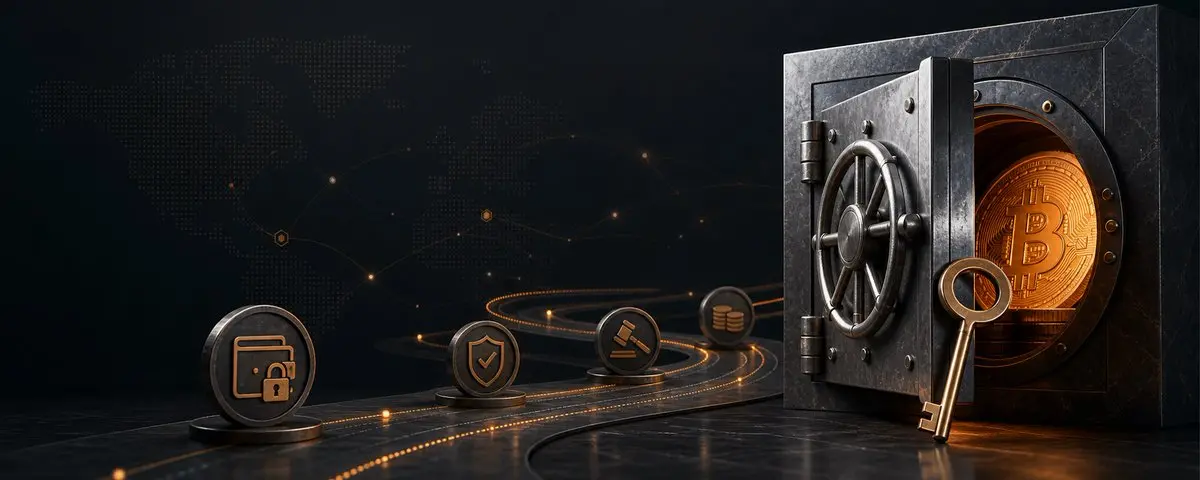
Featured image from DALL-E, chart from TradingView.com

Ronaldo Marquez

Ronaldo Marquez

Ronaldo is a seasoned crypto enthusiast with over four years of experience in the field. He is passionate about exploring the vast and dynamic world of decentralized finance (DeFi) and its practical applications for achieving economic sovereignty. Ronaldo is constantly seeking to expand his knowledge and expertise in the DeFi space, as he believes it holds tremendous potential for transforming the traditional financial landscape.

Похожее

Gemini 3.5 is Here! Tonight, Google Overtakes Google

Gemini 3.5 Launches: Google Renders Itself Obsolete at I/O 2026 At Google I/O 2026, the company unveiled a transformative suite of AI advancements headlined by three major releases. First, **Gemini Omni**, a true "omnimodal" model, can generate high-quality, coherent videos from any combination of text, image, audio, or video inputs, maintaining character consistency and physical logic across iterative edits. Second, the new flagship **Gemini 3.5 Flash** was introduced, decisively outperforming the previous Gemini 3.1 Pro on key benchmarks for coding, agent tasks, and multimodal reasoning. It is also significantly faster than competitors. This model powers the upgraded **Antigravity 2.0**, an independent Agent development platform that demonstrated the ability to orchestrate 93 sub-agents to build a functional operating system from scratch in just 12 hours. Third, **Gemini Spark** debuted as a personal, always-on AI agent. Running 24/7 in the cloud and integrated with Google Workspace, it can autonomously execute complex multi-step tasks like drafting emails, managing schedules, and planning events by accessing apps like Gmail, Docs, and Sheets. These releases collectively mark a significant leap, moving AI beyond simple generation towards autonomous understanding, decision-making, and task execution, signaling rapid progress on the path toward more advanced AI systems.

链捕手17 мин. назад

Gemini 3.5 is Here! Tonight, Google Overtakes Google

链捕手17 мин. назад

Cryptocurrency Asset Recovery: A Lucrative, Low-Profile Business

Summary: The article explores the growing business of cryptocurrency asset recovery, highlighting it as a quiet but profitable niche. While many assume recovery involves dramatic hacking or theft cases, the most common issues are everyday operational errors: sending crypto to the wrong blockchain network, forgetting transaction memos/Tags, hardware wallet failures, incorrect seed phrase backups, and frozen centralized exchange accounts. As cryptocurrency adoption expands to less technical users, the volume of such costly mistakes increases. This creates a genuine, recurring demand for professional recovery services. The article notes a paradox: while the technology emphasizes user-controlled assets, the complexity often necessitates expert intermediaries, similar to traditional financial services. However, the field is fraught with risks, including middlemen and secondary scammers who prey on desperate users. Truly professional teams avoid promising guaranteed results, instead focusing on diagnosing the specific problem—whether it's a technical wallet issue, an exchange compliance matter, or an unsolvable private key loss. The author concludes by noting the professionalization of this market and announces a partnership with a specialized recovery team, offering readers a preliminary assessment for issues like wrong-chain deposits, lost access, or frozen accounts, while emphasizing ethical practices and realistic expectations.

marsbit25 мин. назад

Cryptocurrency Asset Recovery: A Lucrative, Low-Profile Business

marsbit25 мин. назад

Cryptocurrency Asset Recovery: A Lucrative, Under-the-Radar Business

Cryptocurrency Asset Recovery: A Lucrative, Low-Key Business The article discusses the burgeoning business of cryptocurrency asset recovery, driven by common yet often crippling user errors rather than sensational hacking incidents. Key problem areas include selecting the wrong blockchain for a deposit, omitting required memos/tags when sending to exchanges, physical wallet device failures, errors in backing up or modifying seed phrases, and issues with frozen accounts or withdrawals on centralized exchanges. As cryptocurrency adoption grows among mainstream users—including retail investors and businesses—these operational mistakes increase. The decentralized nature of crypto places full responsibility for asset security on users, who may lack the technical expertise to navigate complex chains, wallets, and protocols. Even centralized exchanges, while offering some support, often present users with cumbersome, non-intuitive processes for resolving issues. This creates a persistent and growing demand for professional recovery services. However, the field is rife with risks, including middlemen without real expertise and outright scammers who promise guaranteed recovery, request sensitive information like private keys, or charge advance "fees." Legitimate service providers typically avoid absolute guarantees, as recovery feasibility depends heavily on the specific technical or administrative circumstances of each case. The business is evolving from an informal market into a professional one requiring a combination of technical analysis, exchange/platform communication, and legal/compliance knowledge. The article concludes by noting the author's partnership with a professional recovery team, offering preliminary assessments for issues like incorrect deposits, wallet access problems, or exchange account freezes, with an emphasis on realistic evaluation over promises.

链捕手31 мин. назад

Cryptocurrency Asset Recovery: A Lucrative, Under-the-Radar Business

链捕手31 мин. назад

YC Partner: How to Build a Self-Evolving AI-Native Company

YC Partner Tom Blomfield argues that the future lies in building AI-native companies designed as self-evolving systems, not just applying AI to traditional, hierarchical "Roman legion" structures. The core idea is to extract and codify all organizational knowledge—scattered across emails, Slack, documents, and human minds—into a central, AI-readable "company brain." This enables the creation of recursive AI loops that sense changes (from emails, support tickets, data), make decisions, execute via tools, and learn from feedback, all with minimal human intervention. YC exemplifies this with an agent that monitors failed queries, autonomously diagnoses the issue (e.g., needing a new database or index), writes code, submits it for review, and deploys fixes—optimizing the company while founders sleep. This shift redefines organizational structure: the bottleneck becomes token usage and context quality, not headcount. Middle management for coordination is largely obsolete. The critical human roles are individual contributors (ICs) and those handling high-risk, real-world judgments at the system's edge. Key steps include recording all organizational activity for AI, creating self-improving artifacts (like an AI-generated, living handbook), and treating internal software as temporary and disposable, while preserving valuable business context and data. The fundamental question for founders is whether to build their company as this new type of intelligent, self-optimizing system from the start.

marsbit36 мин. назад

YC Partner: How to Build a Self-Evolving AI-Native Company

marsbit36 мин. назад

Торговля

Спот
Фьючерсы
活动图片