Декабрьский крипторынок холоден, как погода.
Ончейн-транзакции давно в спячке, новые нарративы не появляются. Достаточно посмотреть, какие ссоры и сплетни обсуждают в китайском CT эти дни, чтобы понять: на этом рынке уже почти никто не играет.
Но в англоязычном сегменте в последние дни говорят о кое-чем новом.
Мем-токен под названием Snowball, запущенный 18 декабря на pump.fun, за четыре дня достиг рыночной капитализации в 10 миллионов долларов и продолжает обновлять максимумы; при этом в китайском сегменте о нём почти не упоминают.
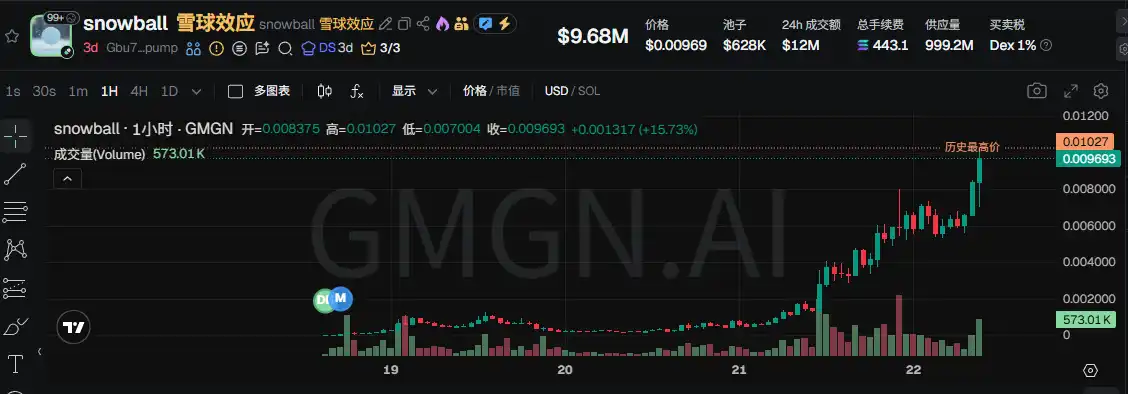
В нынешней среде, где нет новых нарративов и мемы уже «собаке не нужны», это одна из немногих вещей, которая бросается в глаза и создаёт некоторый локальный эффект богатства.
А само название Snowball (Снежный ком) и есть история, которую он пытается рассказать:
Механизм, позволяющий токену «расти как снежный ком».
Превращаем торговые сборы в покупательский спрос, раскатываем снежный ком
Чтобы понять, что делает Snowball, нужно сначала знать, как обычно зарабатывают на токенах pump.fun.
На pump.fun любой может создать токен за несколько минут. Создатель токена может установить «комиссию создателя» — по сути, процент от каждой транзакции, который идёт в его кошелёк, обычно от 0.5% до 1%.
Теоретически эти деньги можно использовать на развитие сообщества, маркетинг, но на практике большинство разработчиков (Dev) выбирают другой путь: накопили — и сбежали.
Это часть типичного жизненного цикла «собачки» (shitcoin). Запуск, накачка, сбор комиссий, бегство. Инвесторы ставят не на сам токен, а на совесть разработчика.
Snowball поступает иначе: он не берёт эти деньги от комиссии создателя.
Точнее, 100% комиссии создателя не идут ни в чей кошелёк, а автоматически переводятся ончейн-боту маркет-мейкинга.
Этот бот периодически выполняет три действия:
Первое: на accumulated funds покупает токены на рынке, создавая покупательскую поддержку;
Второе: добавляет купленные токены и соответствующий SOL в пул ликвидности, улучшая глубину торгов;
Третье: при каждой операции сжигает 0.1% токенов, создавая дефляцию.
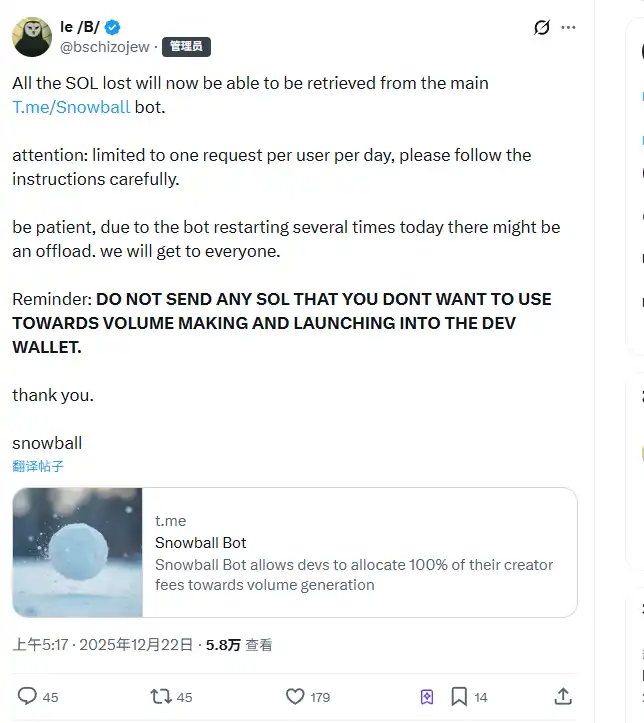
При этом размер комиссии создателя не фиксирован и варьируется от 0.05% до 0.95% в зависимости от рыночной капитализации.
При низкой капитализации комиссия выше, чтобы бот быстрее накапливал «боеприпасы»; при высокой — снижается, уменьшая трение при торговле.
Если概括这套机制的逻辑 одной фразой: каждая ваша сделка автоматически превращает часть денег в покупательский спрос и ликвидность, а не в карман разработчика.
Таким образом, легко понять этот эффект снежного кома:
Сделки генерируют комиссии → Комиссии превращаются в спрос → Спрос толкает цену вверх → Рост цены привлекает больше сделок → Больше комиссий... Теоретически может раскручиваться самостоятельно.
Данные в блокчейне
С механизмом разобрались, посмотрим на ончейн-данные.
Snowball был запущен 18 декабря, прошло четыре дня. Рыночная капитаization выросла с нуля до 10 миллионов долларов, объём торгов за 24 часа превысил 11 миллионов.
Для «собачки» с pump.fun в нынешних условиях это уже можно считать долгожителем.
Структура распределения токенов: на данный момент насчитывается 7270 адресов-держателей. На десять крупнейших держателей в сумме приходится около 20% общего предложения, крупнейший единоличный держатель владеет 4.65%.
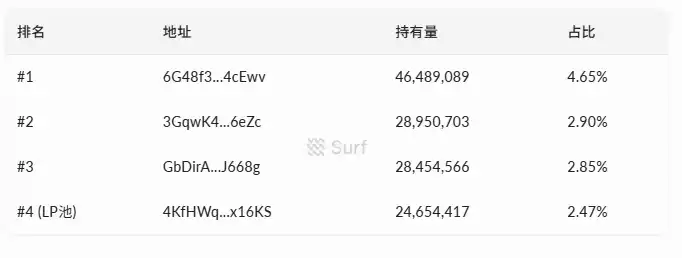
(Источник данных: surf.ai)
Нет ситуации, когда один адрес контролирует 20-30% supply, распределение относительно дисперсное.
Что касается данных о транзакциях: с момента запуска совершено累计 более 58,000 транзакций, из них 33,000 покупок и 24,000 продаж. Общая сумма покупок составила 4.4 миллиона долларов, продаж — 4.3 миллиона, чистый приток около 100,000. Покупки и продажи в основном сбалансированы, нет одностороннего давления на продажу.
В пуле ликвидности находится около 380,000 долларов, половина в токенах, половина в SOL. Для данного уровня капитализации глубина не очень большая, крупные ордера всё ещё будут иметь заметный проскальзывание.
Ещё один noteworthy момент: Bybit Alpha объявил о листинге этого токена менее чем через 96 часов после запуска, что в некоторой степени подтверждает краткосрочный ажиотаж.
Вечный двигатель встречается с холодным рынком
Походив по сообществам, можно увидеть, что обсуждение Snowball в англоязычном сегменте в основном сосредоточено на самом механизме. Логика сторонников прямолинейна:
Это первый мем-токен, который на 100% блокирует комиссию создателя в протоколе, разработчик не может просто взять деньги и сбежать, что, по крайней мере, структурно безопаснее, чем другие «собачки».
Разработчик (Dev) также поддерживает этот нарратив. Кошельки разработчика, кошельки бота маркет-мейкинга, логи транзакций — всё публично, акцент на «проверяемость в блокчейне».
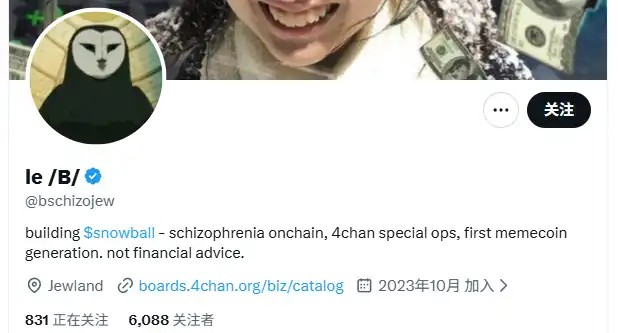
@bschizojew называет себя «ончейн-шизофреник, спецназ 4chan, ветеран мем-токенов первого поколения» — налёт самокритичного degen-духа, который очень по вкусу крипто-нативному сообществу.
Но безопасность механизма и возможность заработать — это две разные вещи.
Условие работы эффекта снежного кома — достаточный объём торгов, постоянно генерирующий комиссии, чтобы кормить бота для выполнения выкупа. Чем больше торгов, тем больше «боеприпасов» у бота, тем сильнее спрос, тем выше цена, привлекающая больше traders...
Это идеальное состояние так называемого маховика обратного выкупа (buyback flywheel) для любого мема в условиях бычьего рынка.
Проблема в том, что маховику нужен внешний импульс для запуска.
В какой среде находится текущий крипторынок? Ончейн-активность низкая, общий ажиотаж вокруг мем-токенов снизился,资金, готовых штурмовать «собачек», и так мало. В таком контексте, если новый покупательский спрос не поспевает, объём торгов сокращается, комиссий, которые получает бот, становится всё меньше, сила выкупа ослабевает, ценовая поддержка уменьшается, желание торговать падает ещё больше.
Маховик может вращаться вперёд, а может — и назад.
Более реалистичная проблема: механизм решает лишь один пункт риска — «разработчик забирает деньги и сбегает», но рисков, с которыми сталкиваются мем-токены, гораздо больше.
Сброс китами (庄家砸盘), недостаток ликвидности, выход нарратива из моды — случись что-то одно из этого, 100% комиссионный выкуп сможет сыграть весьма ограниченную роль.
Все уже напуганы и порезаны, один китайский братан довольно метко подытожил:
Играть можно, но без фанатизма.
Катится не один снежный ком
Snowball — не единственный проект, рассказывающий историю автоматического маркет-мейкинга.
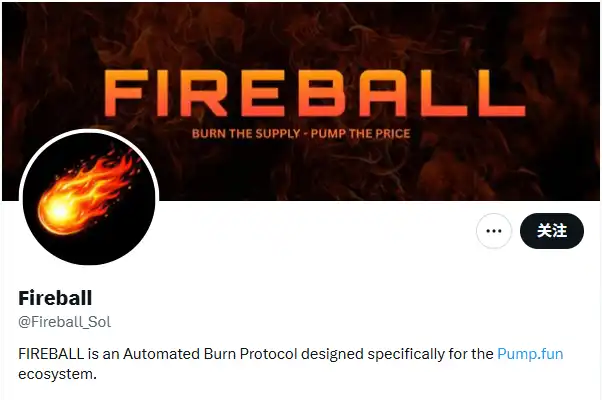
В той же экосистеме pump.fun токен под названием FIREBALL делает нечто подобное: автоматический выкуп и сжигание, упаковывая это в протокол, к которому могут подключаться другие токены. Но его рыночная капитаization намного меньше, чем у Snowball.
Это говорит о том, что рынок сейчас реагирует на направление «мем-токенов с механизмом».
Традиционные методы раскрутки, накачки, раскрутки сообщества всё хуже привлекают деньги, и рассказ истории о «структурной безопасности» через дизайн механизма, возможно, стал одним из недавних трендов мем-токенов.
Хотя говорить о создании некоего механизма искусственным путём — это не новый приём.
OlympusDAO с его (3,3) в 2021 году — самый яркий пример, упаковывающий механизм стейкинга в теорию игр, история была «если все не продают, то все зарабатывают вместе». На пике капитализация достигла нескольких миллиардов долларов. Конец истории все знают: спиральное падение, более чем на 90%.
Ещё раньше был приём Safemoon: «налог с каждой транзакции распределяется среди держателей» — тоже нарратив инновационного механизма, в итоге иск от SEC, основателей обвинили в мошенничестве.
Механизм может быть отличным крючком для нарратива, способным в краткосрочной перспективе собрать деньги и внимание, но сам по себе механизм не создаёт ценности.
Когда внешний приток денег прекращается, самый精巧的 маховик остановится.
В заключение давайте ещё раз пробежимся по тому, что же делает эта маленькая «золотая собачка»:
Превращает комиссию создателя мем-токена в «автоматического бота маркет-мейкинга». Сам механизм несложен, решаемая проблема очень конкретна — не дать разработчику напрямую забрать деньги и сбежать.
То, что разработчик не может сбежать, не означает, что вы заработаете.
Если после прочтения вам показался этот механизм интересным и вы хотите поучаствовать, запомните одну вещь: это в первую очередь мем-токен, и лишь во вторую — эксперимент с новым механизмом.