Big Short Burry Warns: Fed's RMP Aims to Conceal Banking System Fragility, Essentially a Restart of QE

深潮Published on 2025-12-12Last updated on 2025-12-12

Abstract

Michael Burry, of "The Big Short" fame, issued a warning that the Federal Reserve's new Reserve Management Purchases (RMP) program is a covert form of quantitative easing (QE) designed to mask deep-seated vulnerabilities in the US banking system. He argues that the need to inject liquidity, despite over $3 trillion in bank reserves, signals systemic fragility, not strength, stemming from the 2023 banking crisis. Burry contends that each crisis now forces the Fed to permanently expand its balance sheet to prevent funding crises. The market reaction showed rising 2-month Treasury yields and falling 10-year yield, alongside ongoing repo market volatility, raising concerns about year-end funding stress. He cautions against bullish bank stock advice and prefers Treasury money market funds for large deposits. While the Fed states RMP is a technical operation to ensure sufficient liquidity, Burry sees it as evidence of a weakened financial system reliant on constant central bank support.

Author: Zhang Yaqi

Source: Wall Street News

Michael Burry, the real-life inspiration for the movie "The Big Short," issued a stern warning about the Federal Reserve's latest bond-buying plan, pointing out that it is called "Reserve Management Purchases" (RMP) but actually exposes the deep-seated fragility of the U.S. banking system. He believes this move is essentially a restart of quantitative easing (QE), aimed at concealing the liquidity crunch facing the banking system, rather than the routine operation claimed by the Fed.

As previously reported by Wall Street News, the Fed announced overnight that it would begin purchasing short-term Treasury bonds as needed to maintain sufficient reserve supplies. The New York Fed simultaneously released a notice, planning to buy $40 billion in short-term Treasury bonds over the next 30 days. This is the latest action since the official halt to quantitative tightening last week. This move comes against the backdrop of unsettling interest rate fluctuations in the $12 trillion U.S. repo market recently, with ongoing turmoil in the money market forcing the Fed to act quickly.

However, Burry believes this action precisely indicates that the banking system has still not shaken off the aftermath of the 2023 small banking crisis. He warned that if the banking system still needs the central bank to "inject blood" despite having over $3 trillion in reserves, this is by no means a sign of strength but a strong signal of systemic fragility.

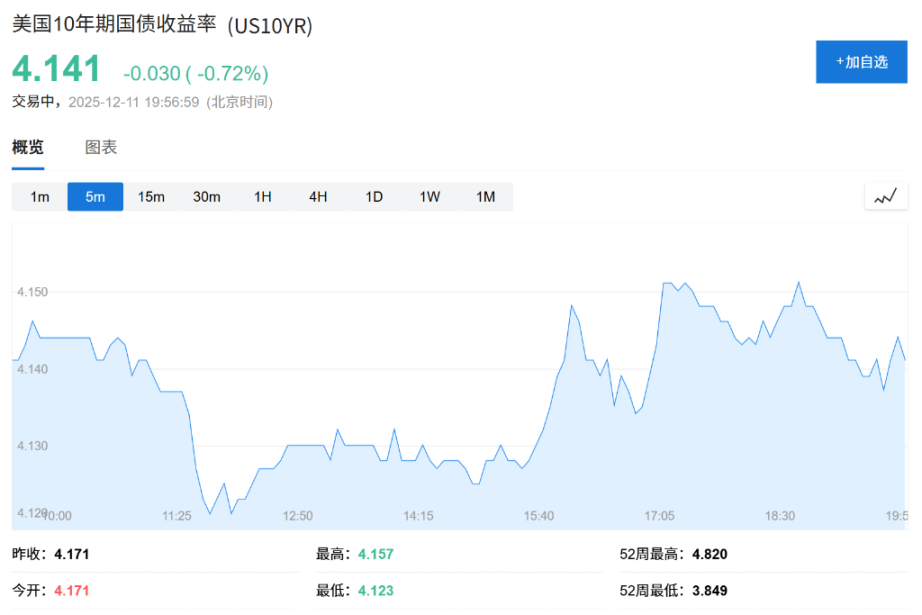
Burry further analyzed that each crisis seems to force the Fed to permanently expand its balance sheet; otherwise, it cannot avoid the outbreak of a bank funding crisis. The subsequent market reaction validated the tight funding conditions, with the U.S. 2-month Treasury yield jumping and the 10-year Treasury yield falling. At the same time, volatility in the repo market persists, sparking concerns about a year-end funding crunch and forcing investors to reassess the stability of the financial system.

Covert Quantitative Easing and a Fragile Banking System

Burry questioned the Fed's use of the term "Reserve Management Purchases," interpreting it as a covert move aimed at stabilizing the still struggling banking industry. According to FRED data, before the 2023 crisis, U.S. bank reserves were only $2.2 trillion, but have now climbed to over $3 trillion.

Burry issued a warning:

"If the U.S. banking system cannot operate without over $3 trillion in reserves or Fed 'life support,' this is not a sign of robustness but a symptom of fragility."

He added that the pattern now seems to be that after each crisis, the Fed needs to permanently expand its balance sheet, or else face the risk of bank funding chains breaking. While this mechanism partly explains why the stock market is performing strongly, it also reveals the financial system's extreme dependence on central bank liquidity.

Market Operation Mismatch and Hedging Strategies

From an operational perspective, Burry highlighted a significant strategic shift between the U.S. Treasury and the Fed: the Treasury tends to sell more short-term bills, while the Fed focuses on buying these bills. This strategy helps avoid pushing up the 10-year Treasury yield. As expected by the market, after the Federal Open Market Committee (FOMC) meeting, the U.S. 2-month Treasury yield rose, while the 10-year Treasury yield fell.
Given the ongoing volatility in the repo market, some analysts expect the Fed may need to take more aggressive action to avoid a year-end funding crunch. Against this backdrop, Burry sees this as further evidence of underlying weakness in the financial system. He warned investors to be wary of misleading advice from Wall Street about buying bank stocks and revealed that for funds exceeding the FDIC's $250,000 insurance limit, he prefers holding Treasury money market funds to hedge risks.

It is important to note that the primary goal of "quantitative easing" (QE) is to lower long-term interest rates by purchasing long-term Treasury bonds and MBS to stimulate economic growth. The purpose of RMP is more technical, focusing on buying short-term Treasury bonds to ensure there is enough liquidity in the financial system's "pipes" to prevent accidents. Bank of America stated that, based on the 2019 experience, liquidity injections will quickly lower the Secured Overnight Financing Rate (SOFR), while the response of the Federal Funds Rate (FF) will be relatively delayed. This "time difference" will create significant arbitrage opportunities for investors.


Related Questions

QWhat is Michael Burry's main criticism of the Federal Reserve's Reserve Management Purchases (RMP) program?

AMichael Burry criticizes the RMP as a covert form of quantitative easing (QE) designed to mask the underlying fragility of the U.S. banking system, rather than a routine operation as the Fed claims.

QAccording to Burry, what does the need for Fed 'lifesupport' despite over $3 trillion in bank reserves indicate about the U.S. banking system?

ABurry argues that if the U.S. banking system cannot function without over $3 trillion in reserves or Fed support, it is not a sign of strength but a symptom of systemic fragility.

QWhat market event prompted the Federal Reserve to initiate the RMP program?

AThe Fed's action was prompted by unsettling rate volatility in the $12 trillion U.S. repo market and ongoing turmoil in money markets, which forced the central bank to act.

QHow does Burry describe the pattern of the Federal Reserve's response to crises in relation to its balance sheet?

ABurry states that each crisis seems to force the Fed to permanently expand its balance sheet to avoid bank funding crises, revealing the financial system's extreme dependence on central bank liquidity.

QWhat investment strategy does Michael Burry recommend for funds exceeding the FDIC's $250,000 insurance limit?

AFor funds exceeding the FDIC's $250,000 insurance limit, Burry recommends holding Treasury money market funds to mitigate risk.

Related Reads

Interpreting Investment Opportunities in the Age of Great Navigation, Invesco Great Wall Fund Releases '2026 Report on Chinese Enterprises Going Global'

Invesco Great Wall Fund has released its "2026 China Corporate Globalization Report," titled "The 'Great Navigation Era' of Chinese Enterprises." The report analyzes the new trends and investment opportunities as Chinese companies expand globally, moving from simple product exports to comprehensive overseas operations involving services, branding, and local production. Driven by factors like trade friction, the pursuit of higher profit margins abroad, and policy support, globalization is becoming essential for Chinese companies. The report outlines an evolution: from early product export ("Globalization 1.0") to the current "Globalization 2.0," characterized by overseas capacity, capital goods investment, consumer brand expansion, and service exports. Chinese firms' competitive advantages are highlighted, including a vast engineer talent pool, low-cost and robust infrastructure, and complete industrial clusters. Specific sectors with significant出海 potential are identified: * **Capital Goods** (e.g., engineering machinery, power equipment): Benefiting from global demand, especially in Belt & Road markets and the AI-driven power grid upgrade cycle. * **Consumer Brands**: Transitioning from cost to brand advantage, leveraging供应链 efficiency. * **Technology & Innovation**: Including AI applications, optical modules within global tech supply chains, and new energy vehicles focusing on local production. * **Pharmaceuticals**: Chinese biotech firms are becoming preferred partners for global pharma, with potential for breakthrough drugs in areas like oncology and weight loss. The report concludes that corporate globalization represents a sustained, core theme for China's capital markets, though companies must navigate challenges like geopolitics and localization.

marsbit10m ago

Interpreting Investment Opportunities in the Age of Great Navigation, Invesco Great Wall Fund Releases '2026 Report on Chinese Enterprises Going Global'

marsbit10m ago

GitHub, Transfixed by AI

On the night of February 9th, GitHub suffered a major outage caused by a simple configuration change—reducing a cache refresh interval from 12 to 2 hours—that triggered a cascade of failures. This was not an isolated event, but part of a broader pattern. In early 2026, GitHub experienced at least 8 major incidents, failing to meet its promised 99.9% availability. These outages stemmed from structural issues: explosive growth in load, tight service coupling, and insufficient protection against abnormal traffic. This unprecedented load is driven by AI Agents. In 2025, GitHub handled ~1 billion commits. By 2026, weekly commits reached 275 million, projecting to ~14 billion for the year—a 14x increase. AI tools like Claude Code now contribute 4.5% of all public repository commits, with weekly submissions surging 25x in just three months. AI-generated pull requests jumped from 4 million to 17 million per month in half a year. Unlike human developers, AI Agents work continuously, generating commits at a scale that overwhelms infrastructure designed for human rhythms. The surge also shattered GitHub's business model. Copilot's flat-rate pricing, based on assisting human developers, became unsustainable as Agentic AI sessions consumed resources worth hundreds of dollars for a few dollars in fees. In response, GitHub imposed usage limits and, by June 1st, shifted to a pay-per-use "AI Credits" system. Facing this new reality, GitHub realized a 10x scaling plan was insufficient. It announced a need to *redesign* its architecture for 30x current scale—decoupling services, adding fault isolation, and improving change management to prevent cascading failures. Other platforms like Stripe and AWS are facing similar challenges with AI Agents. Fundamentally, GitHub is transitioning from a human collaboration platform to an "exhaust pipe" for automated AI workflows. Its detailed post-mortem reports aim to maintain trust during this turbulent rebuild. The February outage was not just a technical glitch, but a signal of the software industry's entry into a new, AI-driven era.

marsbit50m ago

GitHub, Transfixed by AI

marsbit50m ago

Both Suffer Massive Losses Exceeding $90 Billion, Which Is in Greater Peril: Strategy or Bitmine?

Facing massive paper losses exceeding $90 billion each amidst a sharp market downturn, "Digital Asset Treasury" (DAT) giants Strategy and Bitmine find themselves in a precarious position, but with different underlying risks. Strategy, heavily invested in Bitcoin (BTC), faces significant financial strain. Its strategy relies heavily on debt, including convertible notes and preferred stock (STRC) requiring substantial dividend payments. With its cash reserves dwindling and BTC offering no staking yield for cash flow, Strategy's high leverage makes it vulnerable. A continued price decline could force asset sales to meet obligations, potentially creating a negative feedback loop. Its market value has already fallen sharply. In contrast, Bitmine, an Ethereum (ETH) holder, appears on firmer financial ground. It primarily funds its purchases through equity offerings (like ATM programs), avoiding debt pressure. It also generates income by staking a large portion of its ETH holdings. While not immune to market drops and shareholder dilution concerns, Bitmine maintains more flexibility, recently announcing a new preferred share offering to raise further capital. The core divergence lies in their financing: Bitmine uses equity (investor money), while Strategy uses debt (borrowed money). Consequently, Bitmine currently faces less immediate liquidity pressure than Strategy, which must navigate the dual challenge of servicing debt/dividends and a declining core asset (BTC) price.

marsbit57m ago

Both Suffer Massive Losses Exceeding $90 Billion, Which Is in Greater Peril: Strategy or Bitmine?

marsbit57m ago

Trading

Spot
Futures

Hot Articles

Discussions

Welcome to the HTX Community. Here, you can stay informed about the latest platform developments and gain access to professional market insights. Users' opinions on the price of S (S) are presented below.

活动图片