Big Short Burry Warns: Fed's RMP Aims to Conceal Banking System Fragility, Essentially a Restart of QE

深潮Published on 2025-12-12Last updated on 2025-12-12

Abstract

Michael Burry, of "The Big Short" fame, issued a warning that the Federal Reserve's new Reserve Management Purchases (RMP) program is a covert form of quantitative easing (QE) designed to mask deep-seated vulnerabilities in the US banking system. He argues that the need to inject liquidity, despite over $3 trillion in bank reserves, signals systemic fragility, not strength, stemming from the 2023 banking crisis. Burry contends that each crisis now forces the Fed to permanently expand its balance sheet to prevent funding crises. The market reaction showed rising 2-month Treasury yields and falling 10-year yield, alongside ongoing repo market volatility, raising concerns about year-end funding stress. He cautions against bullish bank stock advice and prefers Treasury money market funds for large deposits. While the Fed states RMP is a technical operation to ensure sufficient liquidity, Burry sees it as evidence of a weakened financial system reliant on constant central bank support.

Author: Zhang Yaqi

Source: Wall Street News

Michael Burry, the real-life inspiration for the movie "The Big Short," issued a stern warning about the Federal Reserve's latest bond-buying plan, pointing out that it is called "Reserve Management Purchases" (RMP) but actually exposes the deep-seated fragility of the U.S. banking system. He believes this move is essentially a restart of quantitative easing (QE), aimed at concealing the liquidity crunch facing the banking system, rather than the routine operation claimed by the Fed.

As previously reported by Wall Street News, the Fed announced overnight that it would begin purchasing short-term Treasury bonds as needed to maintain sufficient reserve supplies. The New York Fed simultaneously released a notice, planning to buy $40 billion in short-term Treasury bonds over the next 30 days. This is the latest action since the official halt to quantitative tightening last week. This move comes against the backdrop of unsettling interest rate fluctuations in the $12 trillion U.S. repo market recently, with ongoing turmoil in the money market forcing the Fed to act quickly.

However, Burry believes this action precisely indicates that the banking system has still not shaken off the aftermath of the 2023 small banking crisis. He warned that if the banking system still needs the central bank to "inject blood" despite having over $3 trillion in reserves, this is by no means a sign of strength but a strong signal of systemic fragility.

Burry further analyzed that each crisis seems to force the Fed to permanently expand its balance sheet; otherwise, it cannot avoid the outbreak of a bank funding crisis. The subsequent market reaction validated the tight funding conditions, with the U.S. 2-month Treasury yield jumping and the 10-year Treasury yield falling. At the same time, volatility in the repo market persists, sparking concerns about a year-end funding crunch and forcing investors to reassess the stability of the financial system.

Covert Quantitative Easing and a Fragile Banking System

Burry questioned the Fed's use of the term "Reserve Management Purchases," interpreting it as a covert move aimed at stabilizing the still struggling banking industry. According to FRED data, before the 2023 crisis, U.S. bank reserves were only $2.2 trillion, but have now climbed to over $3 trillion.

Burry issued a warning:

"If the U.S. banking system cannot operate without over $3 trillion in reserves or Fed 'life support,' this is not a sign of robustness but a symptom of fragility."

He added that the pattern now seems to be that after each crisis, the Fed needs to permanently expand its balance sheet, or else face the risk of bank funding chains breaking. While this mechanism partly explains why the stock market is performing strongly, it also reveals the financial system's extreme dependence on central bank liquidity.

Market Operation Mismatch and Hedging Strategies

From an operational perspective, Burry highlighted a significant strategic shift between the U.S. Treasury and the Fed: the Treasury tends to sell more short-term bills, while the Fed focuses on buying these bills. This strategy helps avoid pushing up the 10-year Treasury yield. As expected by the market, after the Federal Open Market Committee (FOMC) meeting, the U.S. 2-month Treasury yield rose, while the 10-year Treasury yield fell.
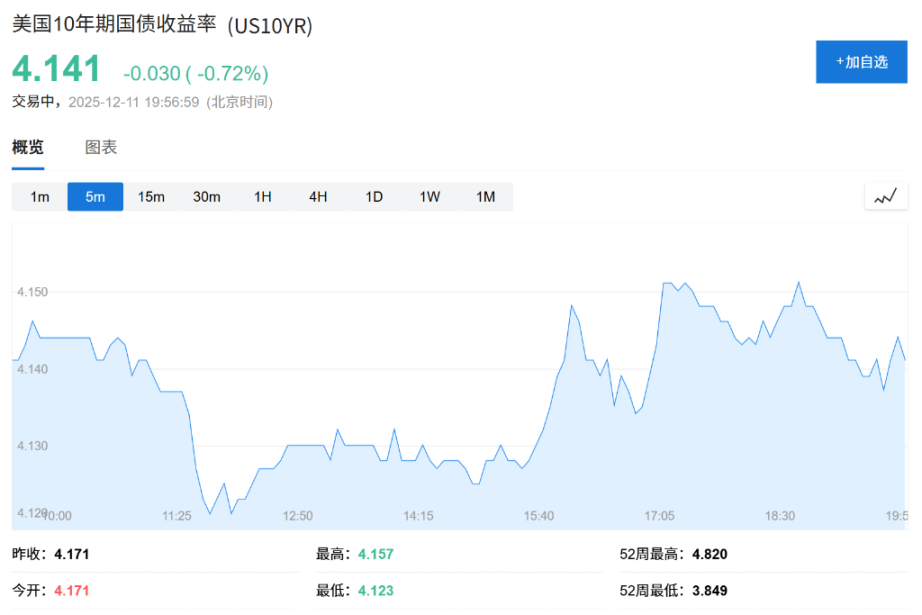
Given the ongoing volatility in the repo market, some analysts expect the Fed may need to take more aggressive action to avoid a year-end funding crunch. Against this backdrop, Burry sees this as further evidence of underlying weakness in the financial system. He warned investors to be wary of misleading advice from Wall Street about buying bank stocks and revealed that for funds exceeding the FDIC's $250,000 insurance limit, he prefers holding Treasury money market funds to hedge risks.

It is important to note that the primary goal of "quantitative easing" (QE) is to lower long-term interest rates by purchasing long-term Treasury bonds and MBS to stimulate economic growth. The purpose of RMP is more technical, focusing on buying short-term Treasury bonds to ensure there is enough liquidity in the financial system's "pipes" to prevent accidents. Bank of America stated that, based on the 2019 experience, liquidity injections will quickly lower the Secured Overnight Financing Rate (SOFR), while the response of the Federal Funds Rate (FF) will be relatively delayed. This "time difference" will create significant arbitrage opportunities for investors.


Trending Cryptos

Related Questions

QWhat is Michael Burry's main criticism of the Federal Reserve's Reserve Management Purchases (RMP) program?

AMichael Burry criticizes the RMP as a covert form of quantitative easing (QE) designed to mask the underlying fragility of the U.S. banking system, rather than a routine operation as the Fed claims.

QAccording to Burry, what does the need for Fed 'lifesupport' despite over $3 trillion in bank reserves indicate about the U.S. banking system?

ABurry argues that if the U.S. banking system cannot function without over $3 trillion in reserves or Fed support, it is not a sign of strength but a symptom of systemic fragility.

QWhat market event prompted the Federal Reserve to initiate the RMP program?

AThe Fed's action was prompted by unsettling rate volatility in the $12 trillion U.S. repo market and ongoing turmoil in money markets, which forced the central bank to act.

QHow does Burry describe the pattern of the Federal Reserve's response to crises in relation to its balance sheet?

ABurry states that each crisis seems to force the Fed to permanently expand its balance sheet to avoid bank funding crises, revealing the financial system's extreme dependence on central bank liquidity.

QWhat investment strategy does Michael Burry recommend for funds exceeding the FDIC's $250,000 insurance limit?

AFor funds exceeding the FDIC's $250,000 insurance limit, Burry recommends holding Treasury money market funds to mitigate risk.

Related Reads

Grayscale Report: Financial Privacy in the AI Era, Why Zcash Should Not Be Overlooked?

Title: Grayscale Report: Financial Privacy in the AI Era – Why Zcash Should Not Be Overlooked The article argues that privacy is a fundamental, not niche, attribute of functional money. It highlights that technological shifts, like the rise of AI and stablecoins, are driving a new wave of public focus on financial privacy. Zcash, a decentralized digital currency similar to Bitcoin but with built-in privacy via zero-knowledge proofs, is positioned to address this need. Unlike transparent blockchains, Zcash offers users the option to conduct "shielded" transactions that hide sender, receiver, and amount while remaining verifiable. The report details Zcash's evolution, noting key upgrades that improved usability and security. It points to rising on-chain usage of privacy features as evidence of real demand. Currently, ZEC holds a minimal share (~0.4%) of the total crypto market cap. Grayscale suggests this reflects a market assumption that privacy is a marginal concern. The investment thesis hinges on a potential market re-evaluation: if privacy is recognized as a core monetary feature in an era of enhanced surveillance, Zcash's current valuation represents significant upside potential. Key risks discussed include regulatory challenges, historical trusted setup concerns for older pools (mitigated by newer protocols), quantum computing threats, and execution risks associated with future technical upgrades. The conclusion is that while the future scale of private digital currency is uncertain, the market currently prices in little chance of its value increasing substantially, presenting a potential opportunity for investors.

marsbit1h ago

Grayscale Report: Financial Privacy in the AI Era, Why Zcash Should Not Be Overlooked?

marsbit1h ago

Vitalik Moves to Local Mixing as Obfuscation Series Reaches Third Stage

Ethereum co-founder Vitalik Buterin published the third part of his series on cryptographic obfuscation, focusing on a method called "local mixing." This method abandons lattices and elliptic curves in favor of ideas borrowed from hash function design. Buterin described local mixing as a "completely different way of cryptography," free from elliptic curves, prime factorization, and lattices, making it more akin to symmetric cryptography used in everyday encryption. The process begins with a circuit of logic gates like XOR, AND, and NOT. It undergoes a pipeline that ensures a correct output while obscuring any trace of the internal logic. Key steps include adding reversibility, strengthening, mechanization, mixing, and finally obfuscation. The mixing step scatters extra logic gates and shuffles their arrangement. Reversibility is foundational, allowing gates to be rewritten as other reversible gates with similar behavior. Buterin acknowledged local mixing is a "wild and risky undertaking," lying on the "graveyard of failed attempts at white-box cryptography." However, its proponents argue it needs more research effort and a willingness to accept higher overhead costs. Buterin suggested AI could accelerate its development. He called obfuscation the "final boss of cryptography," with the most complex constructions having runtimes exceeding the universe's age. The article concludes by explaining obfuscation's utility: it can encrypt a program so it still functions with normal inputs and outputs while hiding the code. Combined with blockchain, this moves toward a "trusted third party that requires no trust," enabling applications like private, collusion-resistant voting without relying on a trusted committee.

cryptonews.ru1h ago

Vitalik Moves to Local Mixing as Obfuscation Series Reaches Third Stage

cryptonews.ru1h ago

Trading

Spot

Hot Articles

Discussions

Welcome to the HTX Community. Here, you can stay informed about the latest platform developments and gain access to professional market insights. Users' opinions on the price of S (S) are presented below.

活动图片