UK seeks to extend finance laws to crypto from 2027: Reports

cointelegraphPublished on 2025-12-15Last updated on 2025-12-15

Abstract

UK lawmakers plan to introduce legislation to extend existing financial sector regulations to cryptocurrencies by October 2027, placing crypto companies under the oversight of the Financial Conduct Authority (FCA). The move aims to align crypto with traditional finance laws, providing clear rules for firms, enhancing consumer protections, and preventing illicit activities. Treasury head Rachel Reeves stated this will secure the UK’s position as a leading financial center. The legislation follows earlier proposals and aligns with similar regulatory efforts. Economic Secretary Lucy Rigby emphasized the UK's intention to lead in digital asset adoption with proportionate and growth-friendly rules. The FCA and Bank of England are also advancing related regulatory frameworks, including for stablecoins.

UK lawmakers are reportedly planning to introduce a bill to parliament to extend the country’s finance sector laws to cryptocurrencies by late 2027.

The government will introduce legislation on Monday that will bring crypto companies under existing finance laws by October 2027 under the oversight of the Financial Conduct Authority (FCA), The Guardian and Reuters reported, citing the UK finance ministry.

“Bringing crypto into the regulatory perimeter is a crucial step in securing the UK’s position as a world-leading financial center in the digital age,” said the head of the Treasury, Rachel Reeves.

“By giving firms clear rules of the road, we are providing the certainty they need to invest, innovate and create high-skilled jobs here in the UK, while giving millions strong consumer protections, and locking dodgy actors out of the UK market,” she said.
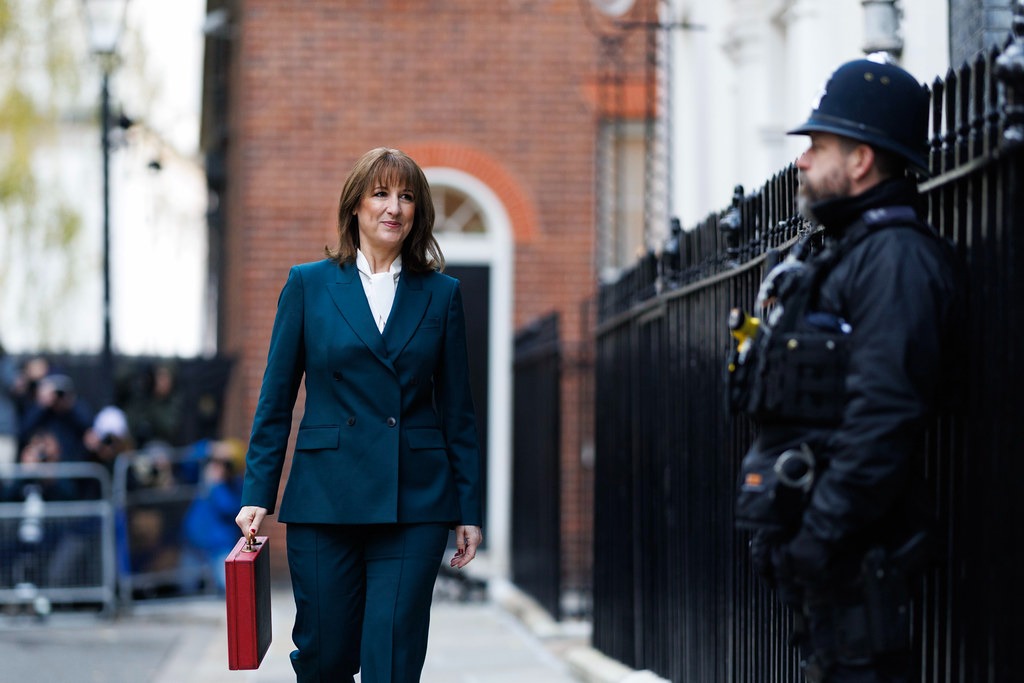
Rachel Reeves preparing to deliver the UK’s 2026 budget in November. Source: Prime Minister’s Office

In April, the Treasury proposed draft legislation for crypto exchanges, dealers and agents to be “brought into the regulatory perimeter,” which a ministry spokesperson told Reuters had seen only minor changes.

The changes aim to subject crypto to the same laws and consider protections as traditional finance products, such as stocks. Currently, crypto businesses, including exchanges, are required to register with the FCA, which primarily focuses on supervising risks related to money laundering.

The legislation would align the UK with the US, which is looking to pass a bill that carves up crypto among its market regulators. The two countries formed a task force in September to explore “short-to-medium term collaboration” on crypto.

UK plans to “lead the world” in crypto adoption

Economic secretary Lucy Rigby told the Financial Times that “bringing forward this legislation is a milestone. Our intention is to lead the world in digital asset adoption.”

“The rules we are putting in place are going to be proportionate and fair,” she added. “They are going to be good for growth, encourage firms to invest here and protect consumers as well. I don’t see any conflict between those things.”

Lucy Rigby addressing a crowd at a fintech event in Singapore in November. Source: Lucy Rigby

Related: UK takes ‘massive step forward,’ passing property laws for crypto

Rigby said the laws are designed for the UK, but added it “makes a good deal of sense to explore mutually beneficial market access opportunities and regulatory alignment, where that makes sense for the UK.”

The impending draft legislation comes after the FCA released a roadmap for crypto rules last month, with plans to consult on stablecoins, trading platforms and decentralized finance with the goal of finalizing rules by the end of 2026.

Last month, the Bank of England also revealed plans for regulating stablecoins, which a group of lawmakers claimed would turn the UK into a “global outlier” as the plan bans most wholesale use of stablecoins outside of a sandbox and imposes “impractical and anti-innovation” holding caps.

Magazine: EU’s privacy-killing Chat Control bill delayed — but fight isn’t over

Trending Cryptos

Related Reads

Private Credit in US Dollar

Stablecoins are evolving into a new type of money market fund, channeling crypto deposits into the $2 trillion private credit market. This mirrors the 1970s innovation where money market funds pooled small deposits to buy high-yield government securities, bypassing bank restrictions. Today, platforms like Apollo's ACRED tokenized fund and Figure's on-chain lending system allow stablecoin holders to access institutional private credit strategies with no minimum investment, offering yields of 8-12%. On-chain tokenization enables greater liquidity and DeFi composability (e.g., using tokens as collateral for leveraged positions) compared to traditional, locked-up private credit funds. Consequently, on-chain private credit has grown 15x in a year to $5.87 billion, though it remains a tiny fraction (0.3%) of the global market. However, this model carries significant risks, as illustrated by the failure of Goldfinch. Launched in 2021, it directed crypto deposits to motorcycle loans in Kenya and Nigeria. Critical issues included a lack of local oversight, leading to unauthorized fund transfers and borrower defaults. With $56 million now trapped in non-performing loans, its collapse highlights that while blockchain streamlines capital transfer, the essential 90% of lending—underwriting, monitoring, and recovery—remains a costly, localized challenge. Success requires robust, traditional credit infrastructure, not just on-chain execution.

marsbit15m ago

Private Credit in US Dollar

marsbit15m ago

Goldman Sachs: How to Invest in Tech Stocks in the Second Half of the Year?

Goldman Sachs remains bullish on tech stocks in the second half of the year, advising a shift from "buying the sector" to "picking individual companies." The firm's latest report indicates the AI-driven tech cycle shows no signs of peaking, with supply exceeding demand or technological progress slowing yet to materialize. Recent pullbacks are viewed as healthy corrections following rapid gains, not a trend reversal. Three core investment themes are highlighted: 1) Maintain overweight positions in AI server and data center-related hardware stocks. 2) Conduct more nuanced risk-reward assessments in sub-sectors where supply and demand are tightening. 3) During periods of declining risk appetite, consider software and IT services companies leveraging AI to create new business opportunities as a defensive play. The report emphasizes that future outperformance will depend more on individual company competitiveness (alpha) rather than broad sector momentum (beta). Companies likely to excel are those benefiting from price increases, possessing strong capacity expansion capabilities, having undervalued AI growth potential, or holding unique catalysts. For defense, Goldman suggests focusing on AI-enabling software and service firms—such as those in AI consulting, data infrastructure, and cybersecurity—which may see efficiency gains and new demand, rather than retreating to traditional defensive sectors. Overall, the strategy balances offensive exposure to AI infrastructure with defensive positioning in AI-applicable software and services.

链捕手20m ago

Goldman Sachs: How to Invest in Tech Stocks in the Second Half of the Year?

链捕手20m ago

Wall Street's Take on the June Fed Meeting Minutes: Focus on Core Inflation, No Short-Term Urgency to Hike Rates

Wall Street's View on Fed June Minutes: Inflation is the Key, No Urgency for Near-Term Hike The minutes of the Federal Reserve's June FOMC meeting revealed a unified Wall Street interpretation: inflation remains the true determinant for future policy moves. Major institutions including Goldman Sachs, Morgan Stanley, and Citigroup concluded that the Fed remains data-dependent, with its path hinging on upcoming inflation data. Key takeaways from the minutes: * **No Immediate Tightening**: Despite "a few" participants seeing reasons to hike, none actively advocated for it at the June meeting. The consensus was to hold the federal funds rate steady at 3.5%-3.75%. * **Inflation as the Decisive Factor**: The Fed outlined two primary scenarios. If inflation declines "soon" toward the 2% target, "almost all" officials would support maintaining or eventually cutting rates. If inflation persists high due to factors like AI demand or supply shocks, "almost all" would see some policy tightening as necessary. * **Patience is Warranted**: Officials noted inflation remains above target but cited anchored inflation expectations and a labor market not currently driving price pressures as reasons for patience. The Fed is focused on the *direction* of inflation over the next few months. * **No Policy Framework Shift**: The minutes reaffirmed a data-dependent approach rather than a fundamental shift toward pre-emptive tightening. Institutional Forecasts: * **Morgan Stanley**: Expects rates on hold in 2026, with potential cuts in 2027 if inflation cools. * **Goldman Sachs**: Baseline scenario sees rates unchanged through 2026, with inflation moderating gradually. * **Citigroup**: Takes a more dovish view, suggesting market pricing for a July hike is too aggressive and forecasting potential rate cuts starting in late 2026. Overall, the minutes were perceived as marginally dovish, emphasizing a watchful stance on inflation data with no near-term urgency to hike.

marsbit26m ago

Wall Street's Take on the June Fed Meeting Minutes: Focus on Core Inflation, No Short-Term Urgency to Hike Rates

marsbit26m ago

Trump Earns $2.2 Billion Annually, Two-Thirds from Cryptocurrency, with 87 Stock Trades Daily

Former U.S. President Donald Trump reported a personal income exceeding $2.2 billion in 2025, the highest annual income for a sitting president, according to U.S. government financial disclosures. This income primarily stemmed from cryptocurrency ventures and investments, starkly contrasting the standard presidential salary of $400,000. More than two-thirds ($1.4 billion) of his income originated from cryptocurrency-related activities. This includes over $1 billion in Bitcoin and Ethereum holdings, approximately $800 million from World Liberty Financial (a crypto project co-founded with his son), and about $635 million from sales of the TRUMP meme coin. Overall, Trump family crypto operations reportedly generated over $2.3 billion in profit after his 2025 inauguration. Trump's stock portfolio showed heavy trading activity, with over 22,000 trades executed in 2025—averaging 87 trades per day. Major holdings included tech giants like Google, Apple, Nvidia, and Microsoft. Notably, some large-scale stock purchases coincided with major policy announcements, such as tariffs, raising questions about potential insider trading. His traditional business empire, centered on real estate and branding, contributed $575 million. Additionally, he earned nearly $60 million through numerous "DT Marks" licensing companies, which leverage the Trump brand globally in locations like Dubai and Abu Dhabi. The report highlights significant conflicts of interest, as countries like the UAE and Saudi Arabia, whose entities invested in Trump's businesses, later received favorable U.S. policy treatment. Trump has stated he delegates financial management and is not directly involved in day-to-day investment decisions.

Odaily星球日报27m ago

Trump Earns $2.2 Billion Annually, Two-Thirds from Cryptocurrency, with 87 Stock Trades Daily

Odaily星球日报27m ago

Trading

Spot

Hot Articles

How to Buy CAP

Welcome to HTX.com! We've made purchasing Cap (CAP) simple and convenient. Follow our step-by-step guide to embark on your crypto journey.Step 1: Create Your HTX AccountUse your email or phone number to sign up for a free account on HTX. Experience a hassle-free registration journey and unlock all features.Get My AccountStep 2: Go to Buy Crypto and Choose Your Payment MethodCredit/Debit Card: Use your Visa or Mastercard to buy Cap (CAP) instantly.Balance: Use funds from your HTX account balance to trade seamlessly.Third Parties: We've added popular payment methods such as Google Pay and Apple Pay to enhance convenience.P2P: Trade directly with other users on HTX.Over-the-Counter (OTC): We offer tailor-made services and competitive exchange rates for traders.Step 3: Store Your Cap (CAP)After purchasing your Cap (CAP), store it in your HTX account. Alternatively, you can send it elsewhere via blockchain transfer or use it to trade other cryptocurrencies.Step 4: Trade Cap (CAP)Easily trade Cap (CAP) on HTX's spot market. Simply access your account, select your trading pair, execute your trades, and monitor in real-time. We offer a user-friendly experience for both beginners and seasoned traders.

276 Total ViewsPublished 2026.06.26Updated 2026.06.26

How to Buy CAP

What Is TradFi

TradFi (Traditional Finance) refers to a centralized financial system dominated by banks, securities exchanges, asset management firms, and regulatory institutions.

23.9k Total ViewsPublished 2026.07.01Updated 2026.07.01

What Is TradFi

Discussions

Welcome to the HTX Community. Here, you can stay informed about the latest platform developments and gain access to professional market insights. Users' opinions on the price of A (A) are presented below.

活动图片