Trump to ‘look into’ recently convicted Samurai Wallet co-founder

cointelegraphPublished on 2025-12-16Last updated on 2025-12-16

Abstract

US President Donald Trump has stated he will review the case of Keonne Rodriguez, the convicted co-founder of Samourai Wallet, suggesting a potential pardon. Rodriguez and co-founder William Lonergan Hill were sentenced to five and four years in prison, respectively, on charges related to operating an unlicensed money-transmitting business. Privacy advocates argue the case criminalizes open-source privacy tools. Rodriguez, set to begin his prison term, expressed hope for a pardon, citing Trump's own experiences with the DOJ. He believes a conventional appeal is unlikely after pleading guilty. Trump has previously pardoned high-profile crypto figures, including Binance's Changpeng Zhao and Silk Road's Ross Ulbricht.

US President Donald Trump says he will review the case of convicted Samourai Wallet developer Keonne Rodriguez, hinting he will explore the possibility of a pardon.

Samourai Wallet co-founders Rodriguez and William Lonergan Hill were sentenced on Nov. 19 to five and four years in prison on charges stemming from their involvement in the crypto mixing protocol.

“I’ve heard about it, I’ll look at it,” Trump said when asked about the case at a press conference about the Mexican border at the White House on Monday.

“Okay, let’s take a look at it. You know, you’ll have to tell me. I don’t know anything about it, but we’ll take a look,” he added.
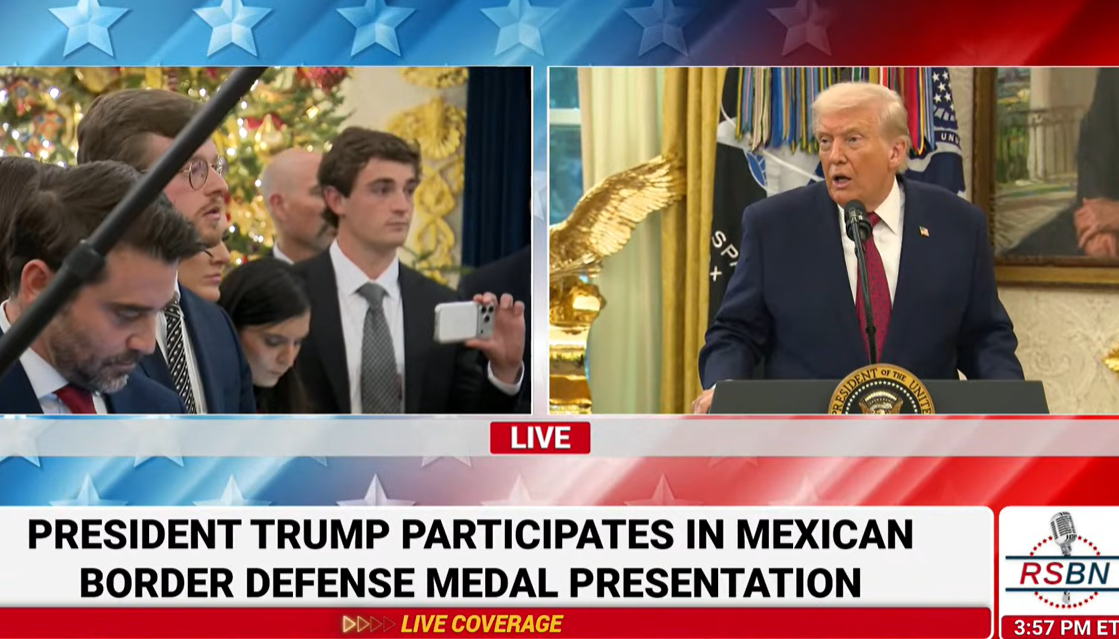
US President Donald Trump has promised to review the case of Samurai Wallet developer Keonne Rodriguez. Source: YouTube

Privacy advocates and crypto users have long been advocating for Rodriguez and Hill, along with Tornado Cash co-founder Roman Storm, arguing they shouldn’t be held responsible for the actions of third parties using their software, because their convictions risk criminalizing open-source privacy tools and restricting privacy rights.

Samourai co-founder says “noise is working”

Rodriguez, who is due to start his time behind bars this week, said in an X post on Monday that the “continued noise” from supporters is working. “Thank you to everyone pushing Donald Trump to pardon Bill and me. Let’s get this over the line.”

In an interview with Bitcoin educator Natalie Brunell on Friday, Rodriguez said he thought there was a chance of receiving a pardon if the case were presented to Trump and the top officials in the administration.

“Because President Trump has been touched by a DOJ that was weaponized against him, I think when he sees the facts laid out on the table, he will know exactly what’s going on,” Rodriguez said.

Conventional appeal is unlikely

Rodriguez also said it’s his understanding he waived his right to appeal the sentence when he took the plea deal, adding that he’s not “100% on that, but my understanding is appeal is pretty unlikely.”

Rodriguez and Hill initially pleaded not guilty but then agreed to plead guilty to one charge of operating an illegal money transmitter in July.

They faced at least 25 years in prison on charges of conspiracy to commit money laundering, which carries a maximum prison sentence of 20 years, and operating an unlicensed money-transmitting business, which carries a sentence of up to five years.

Up until the sentencing hearing, Rodriguez said he regretted pleading guilty but feared the judge wouldn’t allow key evidence to be used in his defense, such as receiving legal advice before launching Samourai Wallet.

Related: After Samourai, DOJ’s money-transmitter theory now looms over crypto mixers

After crunching the numbers, he also found a “conviction means 25 years, even if you appeal, that you’re sitting in prison for five years waiting for your appeal, your appeal is going to cost you another $7 million on top of the four and a half million you’ve already spent to get to this point. So the numbers just didn’t make any sense.”

Trump pardoned Changpeng Zhao, Ross Ulbricht

Since taking office, Trump pardoned Binance founder Changpeng “CZ” Zhao in October, after he pleaded guilty in November 2023 to failing to maintain an effective Anti–Money Laundering program at Binance, in violation of the Bank Secrecy Act.

Ross Ulbricht, the founder of the defunct darknet marketplace the Silk Road, was also granted a presidential pardon on his life sentence in January.

Magazine: Do Kwon sentenced to 15 years, Bitcoin’s ‘choppy dance’: Hodler’s Digest, Dec. 7 – 13

Related Reads

Warsh's First Day in Office, Markets Deliver a 'Wake-up Call': Rate Hike Expected This Year

On his first day in office, newly inaugurated Federal Reserve Chairman Warsh received a stark market warning, with expectations now fully pricing in a 25-basis-point interest rate hike this year. The shift was triggered by hawkish remarks from Fed Governor Waller, who stated that inflation is now the key policy "driver" and that the odds of a hike or cut are evenly split. This sent short-term Treasury yields higher. Waller signaled a significant pivot in his stance, citing disappointing inflation and labor data. He suggested removing "easing bias" language from Fed statements and did not rule out future rate increases if inflation fails to recede, though he noted immediate action isn't warranted without signs of unanchored inflation expectations. Chairman Warsh faces immediate pressure at his first FOMC meeting in June. With the preferred inflation gauge at a three-year high, analysts warn that failing to hike could be interpreted as an implicit easing of policy. The geopolitical situation in the Middle East is adding to existing price pressures. The market's expectation for a hike contrasts sharply with earlier forecasts for multiple cuts. While long-term Treasury yields have been contained by lower energy prices recently, analysts note they remain under structural upward pressure. Warsh's swearing-in at the White House highlights political scrutiny over Fed independence. However, the market has made it clear that inflation is the most urgent challenge, leaving the new chairman little time to settle in.

marsbit8h ago

Warsh's First Day in Office, Markets Deliver a 'Wake-up Call': Rate Hike Expected This Year

marsbit8h ago

Has Microsoft Lost Its Way in the AI Race, and Can Copilot Bring It Back on Track?

Microsoft, once seen as an early AI frontrunner due to its investment in OpenAI, is navigating a strategic shift amid increased competition. Its initial reliance on OpenAI’s GPT models has been complicated by OpenAI’s growing ambitions as a direct competitor, rapid advancements from rivals like Claude and Gemini, and the disruptive rise of AI agents, which challenge its traditional SaaS business model. These factors contributed to stock declines and slower-than-expected adoption of its flagship Copilot products. In response, CEO Satya Nadella has taken a hands-on role in product development, signaling the urgency of change. Microsoft is pivoting from a model-centric strategy to a "model-agnostic" enterprise platform approach. It aims to become the foundational layer connecting various AI models—from OpenAI, Anthropic, or its own new "Superintelligence" team—with enterprise workflows, data, security, and cloud services. Recent organizational changes merged consumer and enterprise Copilot teams to accelerate innovation, exemplified by new products like Copilot Tasks and Copilot Cowork. However, this transformation comes at a high cost. Microsoft faces massive capital expenditures, potentially reaching ~$190 billion by 2026, to support AI infrastructure. While its platform strategy shows early signs of traction with growing Azure AI revenue, it must balance startup-like agility with the reliability expected by enterprise clients. The core challenge is no longer being the sole AI winner but defending its position as the essential enterprise software entry point amidst rapid technological commoditization and the shift towards always-on AI agents.

marsbit8h ago

Has Microsoft Lost Its Way in the AI Race, and Can Copilot Bring It Back on Track?

marsbit8h ago

Trading

Spot
Futures
活动图片